Category Archives: Law

On the low morale of Gujarat Police: RB Sreekumar

This guest post by former Gujarat DGP RB SREEKUMAR is a letter to the Union Minister of Home Affairs.

Dear Shri P. Chidambaram,

I belonged to Gujarat cadre of Indian Police service (IPS)-1971 batch-and retired from service on 27.2.2007 in the rank of Director General of Police (DGP), Gujarat state.

2. As a senior citizen (age-65 years) staying in Gujarat since 1970s, I am constrained to write the following for your kind consideration and urgent remedial action.

3. The morale, self esteem and image of the Gujarat Police in general and of IPS officers giving leadership to police force in the state in particular, have been in steady decline since 2002 anti-minority genocide. The media, reputed human rights activists and national bodies like the National Human Rights Commission, the National Commission for Minorities and the National Commission for Women have thrown light on serious intentional acts of commission and omission by Gujarat government functionaries (except in cities like Surat, Bhavnagar and a few districts in South Gujarat and Saurashtra), that facilitated extensive and gruesome mass violence against minorities.

Continue reading On the low morale of Gujarat Police: RB Sreekumar

The Final Countdown in Nepal

Five years after a peace accord marked the end of a decade long civil war, Nepal’s political transformation has entered its final phase.

On May 27, 2012, the term of the Constituent Assembly — extended four times beyond its original two-year term — will expire. And this time, politicians will not find it easy to give the CA another lease of life due to a judicial stricture. The Supreme Court (SC) has declared that the current extension is final, and if the constitution is not promulgated, there should be another election or referendum. There is also rising popular pressure to wrap up the prolonged transition, which has been accompanied by abysmal service delivery.

That gives the political forces less than three months to wrap up the peace process and write a constitution. Together, this will shape the nature of Nepal’s political institutions and security apparatus. Continue reading The Final Countdown in Nepal

Free Waqar Ahmad

The text below comes from the FREE WAQAR CAMPAIGNfreewaqar.org

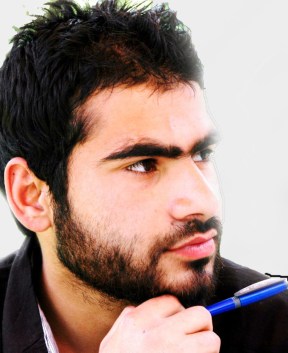
Waqar Ahmad Moharkan was born in Indian-held Kashmir in 1990. Currently, he is a final year student of Bachelor’s in Commerce at Srinagar’s Islamia College of Science and Commerce. Waqar was arrested on 4 October, 2011, during a raid on his house in Lal Bazaar on charges of participating in protests in the Downtown area of Srinagar. Waqar was arrested by police personnel from MR Gunj station. The court allowed his bail application on 23 October, 2011. Instead of being released, he was rebooked by same police station and shifted to Central Jail under judicial remand on 15 December, 2011 and suddenly slapped with the draconian Public Safety Act (PSA). Continue reading Free Waqar Ahmad

Why Geneva and not Matara, Jaffna or Batti?: Kusal Perera

Guest post by KUSAL PERERA

English: Photo of Mahinda Rajapaksa, president...
Mahinda Rajapaksa, President of Sri Lanka

Thousands of Tamils from across Europe protested in front of UN headquarters in Geneva Monday demanding the creation of an international tribunal to try “war crimes” committed in Sri Lanka…. [AFP report, 6 March 2012]

The battle is raging. It will go on till about the 23rd of March, 2012. In Geneva. The battle is against the Rajapaksa regime in Sri Lanka and not against Sri Lanka itself. It’s a battle over “war crimes and accountability” during the Sri Lankan war, in particular its final stages. Delhi’s vacillating position of “not right to interfere on a country basis” as regards the US Resolution to the United Nations Human Rights Council’s Session 19, is being challenged firmly in Chennai by the two major political parties in Tamil Nadu, the DMK and the AIDMK firm. Beijing and Moscow are clear about the issue. They will vote against the US Resolution, and also muster up support amongst other countries to vote with them. If they could collect 24 votes in total, they will have had their say and the Sri Lankan regime will not have to worry about Geneva anymore. Continue reading Why Geneva and not Matara, Jaffna or Batti?: Kusal Perera

On the arrest of Mohammad Ahmad Kazmi

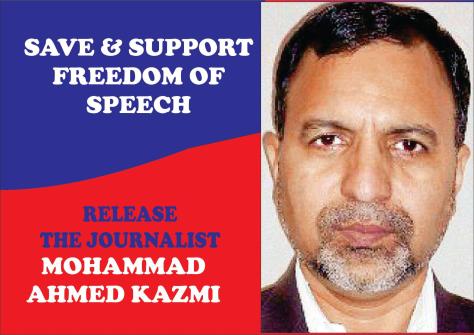
On 7 March, Delhi Police arrested Delhi-based journalist Mohammad Ahmad Kazmi on charges of being part of the plot to kill an Israeli diplomat’s wife in Delhi on 13 February. Many have expressed concern that Kazmi is being falsely implicated. Give below is the text of a letter to the Delhi Police Commissioner by the DELHI UNION OF JOURNALISTS, followed by a statement from the INTERNATIONAL FEDERATION OF JOURNALISTS, and thereafter by a statement issued by a group of citizens.

    9 March 2012 

The Commissioner of Police,
Delhi Police,
New Delhi

Sir: Continue reading On the arrest of Mohammad Ahmad Kazmi

Stop the Cycle of Revenge and Violence in West Bengal

This public statement is for immediate release. Please see the names of the signatories at the end. 

The news of continuous violence on a daily basis coming from West Bengal is deeply disturbing. Journalists have been attacked by the members of the ruling party, school teachers are being asked to prove their loyalty to the new ruling dispensation failing which they are being barred from doing their duty and are made target of systematic physical violence.

People suspected of affiliation with the CPM  are facing extortion threats and cases have been reported where they have been denied access to the means of their livelihood. Legitimate oppositional politics is not tolerated. Not only are ordinary members of the CPM  being attacked, even senior leaders are not spared . Recently an ex-MLA of the CPM along with another leader was killed in a mob-violence led by the members of the ruling  Trinamul Congress. Processions are not allowed. There have been incidents of intimidation by the ruling party to the supporters of the recent bandh call given by different trade unions. Continue reading Stop the Cycle of Revenge and Violence in West Bengal

Defending Narendra Modi: An Exercise in Obfuscation

In Outlook magazine last week, its web editor Sundeep Dougal asked 25 questions of Narendra Modi about the 2002 Gujarat pogrom and the subversion of justice since then. Predictably, the army of Narendra Modi Defenders began to spill outrage at such blatant compilation of true charges against Mr Modi. Doing the rounds of the internet is a point by point rebuttal to Dougal’s questions by a blogger, Shashi Shekhar, who goes by the name Offstumped, and is a known online Modi defender. Offstumped’s answers have been responded to by Dougal, and yet Offstumped’s rejoinder is being circulated all over the internet by Modi defenders in the hope of persuading public opinion that Mr Modi is a spotlessly clean man whose actions and inactions did not result in any loss of life, property or dignity of anyone in 2002 and later. The rather large army of Narendra Modi Fans on the internet hopes that by repeating their standard lies again and again, they will one day become accepted truth. Continue reading Defending Narendra Modi: An Exercise in Obfuscation

Batla House and the problem with the deluded journalist: Manisha Sethi

This guest post by MANISHA SETHI is a response to “Congress and the Problem with the Deluded Liberals” by Mihir Srivastava in Open magazine

Mihir Srivastava is very upset that the debate on Batla House refuses to die down. In his view, his piece in India Today – “Inside the Mind of the Bombers – appearing soon after the ‘encounter’ should have settled the debate once and for all. But he was surprised that it wasn’t received as a resolution. He is even more upset that deluded liberals (read Arundhati Roy) are no longer on talking terms with him.

“In the Batla House case, which I reported much the same way I had reported so many of the cases they were happy with, it is just that the facts I saw and reported did not mesh with what they wanted to believe.”

This is simply not true. The many stories that deluded liberals approved of, according to, Mr. Srivastava, and which he cites to bolster his own reputation, are in fact very different from his India Today’s ‘story’. His expose on the Red Fort terror attack in Tehelka, for example, critically examined the evidence produced by the police, verified and cross checked the statements made by the accused in court and even brought out the discrepancies in the observations made by the court and its eventual judgement which upheld the death sentence of Md. Arif alias Ashfaq alias Abu Hamad. ‘Wrong Man to the Gallows’ is an example of good investigative journalism, not because it confirms our worst suspicions about the ways in which investigative agencies frame innocents, but because it painstakingly pieces together evidence and doesn’t get swamped under nationalist hyperbole spun by the mainstream media to take a cold, hard look at the evidence. Continue reading Batla House and the problem with the deluded journalist: Manisha Sethi

A decade on, Gujarat justice incomplete: Human Rights Watch

This release was put out on 24 February 2012 by HUMAN RIGHTS WATCH

(New York) – Authorities in India’s Gujarat state are subverting justice, protecting perpetrators, and intimidating those promoting accountability 10 years after the anti-Muslim riots that killed nearly 2,000 people, Human Rights Watch said today. The state government has resisted Supreme Court orders to prosecute those responsible for the carnage and has failed to provide most survivors with compensation.

The violence in Gujarat started on February 27, 2002, when a train carrying Hindu pilgrims was attacked by a Muslim mob and caught fire, killing 59 people. In a retaliatory spree by Hindu mobs, hundreds of Muslims were slaughtered, tens of thousands were displaced, and countless Muslim homes were destroyed. Continue reading A decade on, Gujarat justice incomplete: Human Rights Watch

What does Gunnar Toresen know about children?: Suranya Aiyar

Gunnar Toresen (Photo credit: Marie von Krogh / http://www.rogalandsavis.no/)

Guest post by SURANYA AIYAR

Much has been made of the differences between Indian and western parenting in the wake of the removal of two small children from their Indian family in Norway by the Norwegian Child Welfare Service. But there is something more invidious than racism at work here?

The children were two and a half and four months old at the time of their removal to foster care. Observe any mother with children, babies rather, of this age, and you will see that the mother is the centre of a small child’s world. For a young breast-fed infant of the age of four months, as was Aishwarya, the mother is almost her entire world. That is how infants and toddlers experience the world. So let us, first and foremost bring to centre stage this very un-adult, unscientific, but immutable truth of a baby’s reality before we start to speak of its rights.

Let us also make a distinction between adults and babies. Babyhood has its own unique set of needs – physical and emotional; its own personality, quite separate from adult needs and perceptions. You cannot apply adult co-ordinates of well-being to an infant or young child. Continue reading What does Gunnar Toresen know about children?: Suranya Aiyar

Everything you wanted to know about the great Kingfisher Airlines scam but didn’t know who to ask

This slideshow requires JavaScript.

All your queries will be answered here.

Understanding Indian human rights movements through the lives of two human rights defenders: Jinee Lokaneeta

Guest post by JINEE LOKANEETA

Watching Advocate alongside Democracy Dialogues: a Tribute to Balagopal, both by Deepa Dhanraj, made for a powerful experience for its remarkable documentation of human rights movements in Andhra through the lives of these two human rights defenders and the collectives that they were a part of whether it was Andhra Pradesh Civil Liberties Committee, Human Rights Forum or People’s Union for Civil Liberties. There is of course a sharp sense of loss, since in the last few years we have lost both these incredible people but one was grateful for this effort to record and document their inspirational lives in such a beautiful manner. It also points to a further need for us to understand the connections of human rights groups to law, the relationship of human rights defenders to the courts, and their role in pushing for the realization of some of substantive aspects of the Indian Constitution in the process. Continue reading Understanding Indian human rights movements through the lives of two human rights defenders: Jinee Lokaneeta

Jashn-e-Azadi successfully screened at Delhi University despite right-wing threats & police pressure: AISA

Guest post by ALL INDIA STUDENTS’ ASSOCIATION (AISA)

AISA and Students of Sociology Department (DU) Successfully Screen Jashn-e-Azaadi in DU, Braving Attacks and Threats by ABVP and ‘Bhagat Singh Kranti Sena’! Hundreds of Delhi University Students Participate in Film Screening and Discussion with Sanjay Kak, Director of Jashn-e-Azadi!!

Today hundreds of DU students and teachers participated the screening of the documentary film  Jashn-e-Azaadi organized by AISA and students of sociology in the Department of Sociology, Delhi University. “Predictably this screening had to held in the teeth of opposition from right-wing fascist forces like ABVP and the Bhagat Singh Kranti Sena, who tried their level best to stall the screening. Moreover, the DU administration and the Delhi Police also shamefully sided with these forces and tried to pressurize the Sociology department to stop the screening”, said Harshvardhan Tripathi Secretary DU, AISA.

Continue reading Jashn-e-Azadi successfully screened at Delhi University despite right-wing threats & police pressure: AISA

Hindus offended by lack of offence: Sajan Venniyoor

Guest post by SAJAN VENNIYOOR

In the first few weeks of the year 2012, when members of the Muslim, Christian and Sikh communities were successively offended and humiliated, Hindus are feeling left out.

Even as the Hindu community was reeling under the refusal by a Russian court to ban the Hare Krishna version of the Bhagavad Gita, the year began well for Christians when Oscar-winning composer AR Rahman offended their sentiments by using the word ‘Hosanna’ in a song for Ekk Deewana Tha. The Catholic-Christian Secular Forum, which in the past has been shamefully humiliated by other films, many of which were not released in India, demanded the deletion of the H-word “claiming it is a sacred term for Christians and Jews and should be used only in prayer.” They admitted it was negligent on their part not to have taken offence when the song was released with the same hurtful lyrics in a Tamil film in 2010. Continue reading Hindus offended by lack of offence: Sajan Venniyoor

How India Makes E-books Easier to Ban than Books (And How We Can Change That): Pranesh Prakash

Without getting into questions of what should and should not be unlawful speech, this guest post by PRANESH PRAKASH chooses to take a look at how Indian law promotes arbitrary removal and blocking of websites, website content, and online services, and how it makes it much easier than getting offline printed speech removed.

Banning E-Books is Trivially Easy
E-Books Are Easier To Ban Than Books, And Safer
Contrary to what Mr. Sibal’s recent hand-wringing at objectionable online material might suggest, under Indian laws currently in force it is far easier to remove material from the Web, by many degrees of magnitude, than it is to ever get them removed from a bookstore or an art gallery. To get something from a bookstore or an art gallery one needs to collect a mob, organize collective outrage and threats of violence, and finally convince either the government or a magistrate that the material is illegal, thereby allowing the police to seize the books or stop the painting from being displayed. The fact of removal of the material will be noted in various records, whether in government records, court records, police records or in newspapers of record.

By contrast, to remove something from the Web, one needs to send an e-mail complaining about it to any of the string of ‘intermediaries’ that handle the content: the site itself, the web host for the site, the telecom companies that deliver the site to your computer/mobile, the web address (domain name) provider, the service used to share the link, etc. Under the ‘Intermediary Guidelines Rules’ that have been in operation since 11th April 2011, all such companies are required to ‘disable access’ to the complained-about content within thirty-six hours of the complaint. It is really that simple.
Continue reading How India Makes E-books Easier to Ban than Books (And How We Can Change That): Pranesh Prakash

The process is the bloody punishment

Sec. 153A of the Indian Penal Code – that favored child of the religious right- provides for punishment of upto three years imprisonment for the promotion by words (spoken or written) of disharmony, feelings of enmity, hatred or ill will between religious communities. The punishment laid down in this section has to one of the most redundant penal sanctions in the law since in this case the process is the bloody punishment.

There is a similar redundancy in Sec. 295A of the IPC which provides that “Whoever, with deliberate and malicious intention of outraging the religious feelings of any class of citizens of India, by words, either spoken or written, or by signs or by visible representations or otherwise] insults or attempts to insult the religion or the religious beliefs of that class, shall be punished with imprisonment of either description for a term which may extend to three years, or with fine, or with both.

Continue reading The process is the bloody punishment

Some Questions for the Maharashtra ATS Chief: JTSA

This release comes from the JAMIA TEACHERS’ SOLIDARITY ASSOCIATION

The Maharashtra ATS claims to have cracked the 13/7 blasts case. Its chief has revealed in a press conference that Indian Mujahideen was behind the Mumbai blasts. And yet, the Ministry of Home Affairs remains far from impressed—indeed, it appears rather irritated. And the press, also unusually, has been circumspect about his revelations. The ATS Chief says that he did not want to call a press conference. But the rumours about Naquee’s IB links were threatening the credibility of the ATS. Such were his compulsions when he launched into a monologue about the ‘breakthrough’ his team—under his guidance of course—had achieved.

Despite his loud proclamations however, there are few who are willing to buy the ATS’ arguments. Here are some issues for the ATS Chief to mull over: Continue reading Some Questions for the Maharashtra ATS Chief: JTSA

SAHMAT invites Salman Rushdie to Delhi

This release comes from SAHMAT, the Safdar Hashmi Memorial Trust, Delhi

We have watched with dismay the unnecessary controversy which erupted over the presence of Salman Rushdie at the Jaipur Literary Festival. We strongly disapprove of the threats – real or perceived – issued against the participation of Rushdie. The state has once again succumbed to retrogressive forces using works of creative expression for their own narrow, partisan and divisive political agendas. SAHMAT has stood by Rushdie in the past, when we defied an unofficial ban on The Moor’s Last Sigh by readings on the street in Delhi in 1995. Rushdie has been a frequent visitor to India in the last few years with no problems being raised. Indeed, he visited us at SAHMAT and was serenaded by chance by some of the greatest singers of the Rajasthani Manganiyar tradition.

SAHMAT is issuing an open invitation to Salman Rushdie to come to Delhi to deliver a lecture or participate in a discussion on literature at any time of his choosing. We will host him under any circumstances along with an exhibition of the works of the late MF Husain, driven into forced exile by the similar retreat by the state in it’s cowardly unwillingness to stand up against communal politics.

SAHMAT
New Delhi

Confuse and deceive – Email interception in Kerala and the formula for political survival: Yaseen Ashraf

Guest post by YASEEN ASHRAFassociate editor of the Malayalam weekly, Madhyamam

An article by Viju V Nair in Madhyamam Weekly (issue 727, 23 January 2011) has raised the hackles of the Kerala Government and its political allies. Strange, because the report was about the excesses of the police intelligence, something which can be – and should be – investigated and corrected. The investigative report claimed that 268 email accounts were ordered by the Kerala state intelligence to be tapped, out of which a huge majority belong to Muslims. None of these persons has any previous criminal history. So it is not clear why they are put under the cyber scanner. Continue reading Confuse and deceive – Email interception in Kerala and the formula for political survival: Yaseen Ashraf

The Gandhi Chawl Incident: Meena Menon

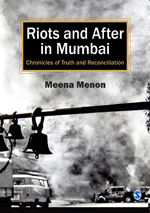
This guest post by MEENA MENON is an extract from her recently published book, Riots and after in Mumbai- Chronicles of Truth and Reconciliation

It was all in the eyes. Beneath the finely drawn brows, they were haunted and distant. For Naina Bane, the night of 8 January 1993 will remain a night of absolute terror. Her escape was miraculous as was her recovery. It took me several months and wrong leads before I met her finally at a family reunion in the suburbs. Dressed in a long mustard coloured ‘maxi’, her hair was drawn back tightly. I found it hard to recognize the same girl who was almost burnt alive on that fateful night in Gandhi chawl. Now 40, there is a faraway look about her and her eyes widen when I ask to speak to her. She got married in 1996 and lives outside Mumbai. Her 6-year-old son keeps her busy. Her husband worked for a mill which closed down, a typical story in Mumbai. He was a badli (temporary worker) and he lost his job. He now works as a watchman. Continue reading The Gandhi Chawl Incident: Meena Menon

Jaipur Literature Festival – Requiescat in Pacem

Did you know that the law had four corners? I didn’t, but whosoever writes press releases for the Jaipur Literature Festival does. Did you know that the ‘ideas can be exchanged and literature loved‘, ‘strictly‘ within these four corners? I didn’t, but whosoever writes press releases for the Jaipur Literature Festival does.

PRESS RELEASE SENT OUT BY THE JAIPUR LITERATURE FESTIVAL, January 20th, 2012

This press release is being issued on behalf of the organizers of the Jaipur Literature Festival. It has come to their attention that certain delegates acted in a manner during their sessions today which were without the prior knowledge or consent of the organizers. Any views expressed or actions taken by these delegates are in no manner endorsed by the Jaipur Literature Festival. Any comments made by the delegates reflect their personal, individual views and are not endorsed by the Festival or attributable to its organizers or anyone acting on their behalf. The Festival organizers are fully committed to ensuring compliance of all prevailing laws and will continue to offer their fullest cooperation to prevent any legal violation of any kind. Any action by any delegate or anyone else involved with the Festival that in any manner falls foul of the law will not be tolerated and all necessary, consequential action will be taken. Our endeavor has always been to provide a platform to foster an exchange of ideas and the love of literature, strictly within the four corners of the law. We remain committed to this objective. [via FirstPost]

Continue reading Jaipur Literature Festival – Requiescat in Pacem