
Category Archives: Law

The Headley Trail

I

Have you had a chance to browse through the latest media interaction of the US ambassador to India, a gentleman called Mr Timothy Roemer? (US wants Headley to be brought to justice: Roemer, February 18, 2010 17:53 IST, rediff.com ) And could anyone decipher that it was a response to the growing clamour in a section of the media about seeking access to American terror suspect Headley whose name has surfaced in the light of his links with the 26/11 plot and who is at present lodged in the US jail. There were also reports about Headley’s visit to India in March 2009 and his survey of the Osho Ashram, Chabad House as well as the German Bakery in Pune, which became a site of the bomb explosion in second week of February 2010. Continue reading The Headley Trail

‘Non-violent terrorism’ and India’s dirty war in Kashmir

Guest post by MOHAMAD JUNAID
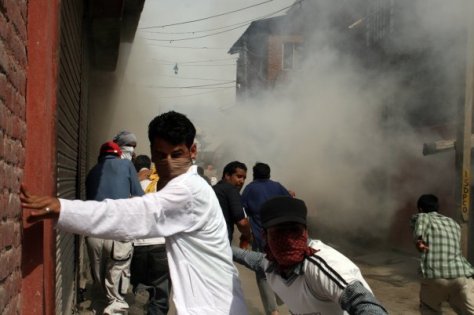
Dozens of young boys have been arrested across Kashmir under draconian laws over the last few weeks. The charges that have been filed against them range from “waging war against the state” to defiling “state honor”. In recent months Indian military and police commanders have described protests in Kashmir as “agitational terrorism” and “non-violent terrorism” in order to justify violent clampdown on protests by Kashmiris.

As the headlines go, Stone-pelting an act of war: J-K gov.

In the same period around 8 people, mostly teenagers, have been either shot to death or fatally injured by indiscriminate use of tear-gas shells. Over the last two years the number of dead in shootings is more than a hundred. Meanwhile thousands of people have been injured. Many of them will be left with permanent physical disabilities. The police authorities have banned any peaceful assembly of people. Many places in downtown Srinagar and other towns have reported police brutalities. Even the villages are not being spared. Only yesterday, mourning villagers were attacked by CRPF troopers in Redwani in South Kashmir. Dozens of them were injured by CRPF’s indiscriminate firing. Most of the injuries were inflicted above the waist showing an intention to kill Continue reading ‘Non-violent terrorism’ and India’s dirty war in Kashmir

Enemy Property

There have been several news reports recently about attempts by the builder Mafia to capture properties near the Jama Masjid in Shahjehanabad (popularly, known as old Delhi) to build a 100 room hotel. Reports have also suggested the involvement of a local politician, though the politician has refuted the allegations very firmly.

This piece is not about the builder mafia or the local politician, but about another issue that has cropped up during the investigation of the attempted land grab. It has been found that the ownership of one of the properties is under dispute and a case has been going on for close to two decades.

The reports say that the disputed property belongs to the “custodian of enemy properties”. Even a cursory reading of the reports would reveal the identity of the original owners of these properties. The original owners of these properties were Muslims of Delhi.

Muslims, who had lived in Shahjehanabad for generations, some for centuries like the families of my ancestors. Continue reading Enemy Property

The police detain 3 more in Gompad case

Konta: The mystery surrounding the killing of nine Adivasis in Gompad village in Dantewada district in October last year is deepening, with the Chhattisgarh police detaining three more witnesses to the incident and restricting all access to the area on the pretext of Operation Green Hunt.

Operation Green Hunt is a catch-all phrase, used by the police and media alike, for all major anti-naxal offensives since July 2009.

As previously reported by The Hindu, the Chhattisgarh police have assumed total control over the movements of Sodi Sambho – one of several witnesses in a Supreme Court petition that alleges that the 9 civilians were killed by the security forces.

On Friday, armed policemen and Special Police Officers (SPO) lined the length of the highway from Dantewada town to Konta, the block headquarters closest to Gompad, stopping vehicles and questioning commuters. Travelling with local journalists Anil Mishra of Nayi Duniya and Yashwant Yadav of Navbharat, this correspondent was repeatedly detained along the route and told that Gompad village was out of bounds as a major anti-naxal operation was underway. Non-journalists were, however, let through.

Continue reading The police detain 3 more in Gompad case

Protest and Terrorism, Is there a Difference?

Sufiya Madani of the PDP has been granted conditional bail by the Ernakulam Sessions Court Judge after a tense wait following her arrest on 17 December. She was remanded to judicial custody by the first class magistrate court at Aluva which had refused her bail. Meanwhile, the mainstream media went on a speculation-spree, even publishing ‘evidence’ that she had abetted terrorism and violence — the burning of a bus owned by the Tamil Nadu Road Transport Corporation at Kalamassery in 2005 during protests against the PDP leader Abdul Nasser Madani’s (Sufiya’s husband) continued detention in the Coimbatore jail . Continue reading Protest and Terrorism, Is there a Difference?

Savarna Terror Erupts in Kerala

(with inputs from Mythri Prasad Aleyamma)
I admit, this title sounds sensationalist. But one can hardly avoid resorting to it when confronted with utterly stupefying news of attacks on dalit colonies almost next door to Kerala’s capital city and nerve centre of Malayalee politics, and that too, by a minor anti-political force that has a legacy of anti-South Indian hatred — the Siva Sena. And of course when one is confronted with the hard, stony silence of almost all sections of the media about this. The mystery of the murder of an elderly, innocent morning-walker in Varkala, a town close to Thiruvananthapuram (of which I wrote in an earlier post) still remains a mystery; the police story is so full of holes that it looks like a sieve. But the Guardians of our Free Press are still lapping police versions and not conducting independent investigation. Activists who have dared to do so have been heckled and hounded, even senior and respected human rights activists like B.R.P.Bhaskar, by the Siva Sena, and their protests have been ignored. Meanwhile violence continues to be unleashed against the supporters of the group that has been accused of murder, the Dalit Human Rights Movement (DHRM).

Continue reading Savarna Terror Erupts in Kerala

Who’s at ‘Jihad’? : ‘Love Jihad’ and the Judge in Kerala

It looked as if the controversy over ‘Love Jihad’ ( ‘jihad defined as ‘war by other means’) had  blown over with state authorities in Kerala and Karnatake denying that such a threat ever existed.The Central Government informed the Kerala High Court early this month that there was no such thing and that the term ‘love jihad’ was being used by the media.However, today, the Kerala High Court openly voiced its scepticism of police reports, claiming that the reports were inconsistent and citing various technical flaws.The Court claims that it is abiding by the secular spirit of the Indian Constitution: it agrees that the freedoms to choose one’s faith and one’s partner in marriage are fundamental rights. However, it feels that the present instances of marriage and conversions that have been brought to its attention are not the exercise of freedom by individuals — specifically, by young women, though the Court does not say it that way. It is difficult to imagine a more anti-Muslim and anti-woman position; and it is a serious matter that the muddle-headed reasoning of the judge has been uncritically circulated in the dominant media.
Continue reading Who’s at ‘Jihad’? : ‘Love Jihad’ and the Judge in Kerala

Bhopal Disaster, Corporate Responsibility and Peoples’ Rights

2 December 2009 will mark the 25th anniversary of the Bhopal disaster. It was the night of 2nd December 1984 when over 35 tons of toxic gases leaked from a pesticide plant in Bhopal, owned by the US based multinational Union Carbide Corporation (UCC)’s Indian affiliate Union Carbide India Limited (UCIL). In the next 2-3 days more than 7,000 people died and many more were injured. Over the last 25 years at least 15,000 more people have died from illnesses related to the gas exposure. Today, more than 100,000 people continue to suffer from chronic and debilitating illnesses, for which treatment is largely ineffective. The disaster shocked the world and raised fundamental questions about government and corporate responsibility for industrial accidents that devastate human life and local environments. Yet 25 years later, the survivors and various organisations are still fighting for justice. Issues of plant site, toxic wastes and contaminated water have not been resolved. And strikingly, no one has been held to account for the leak and its appalling consequences. Bhopal is not just an incident of industrial disaster and human suffering from the last century. It is very much an issue of the present century of corporate accountability, peoples’ rights and government responsibility. The lack of mandatory laws and norms governing multinationals, legal complexities, and government failures are serious obstacles in ensuring justice for the people of Bhopal, and for the victims of corporate complicity in crimes against environment, peoples’ lives and safety. Continue reading Bhopal Disaster, Corporate Responsibility and Peoples’ Rights

Social Boycott of Dalits in MP: Uncivil Society, apathetic administration

(A Fact Finding Report issued by Nagrik Adhikar Manch and Yuva Samvad.)

(The situation in the Gadarwara Sub Division of District.Narsinghpur (MP) has been in a state of constant flux since last 3-4 months. The Dalits living in the villages adjoining Gadarwara have been condemned to a life of fear and intimidation.Their human rights and dignity are being at stake.

Obviously there is a concrete reason behind this sudden spurt in violence against them.They have refused to remain subservient to the interests of the upper/dominant castes and have decided to speak up.

Instead of taking concrete steps to guarantee the human rights of dalits granted to them under constituion, the administration has preferred to remain silent or at best supportive of the interests of the dominant castes only. One can easily see why Madhya Pradesh happens to be the state which tops the list of atrocities on tribals and stands second when it comes to cases of atrocities against dalits.)

Dist: Narsinghpur(Madhya Pradesh)
Tehsil: Gadarwara
Affected Area: Dalits (Ahirwar community) in Gadarwara and adjoining villages
Villages visited by the Fact Finding Team: Nander, Madgula, Devri and Tekapar

Date: 7th and 9th November 2009
Members of Fact Finding Team

Jai Bhim, Moolchand Ahirwar, Javed, Skand Shukla, Manoj, Satyam, Shivkumar, Nishant Kaushik

Brief Introduction to Narsinghpur District. Continue reading Social Boycott of Dalits in MP: Uncivil Society, apathetic administration

The long arm over-reaches

Last week, the Delhi High Court struck down an RTI application filed at the Election Commission of India, bringing an unprecedented standoff between two of India’s towering institutions of state to a temporary halt.

In the case of Election Commission of India (EC) versus Chief Information Commission & others, the decision came in favour of the EC, ruling that a citizen had no right to ask for confirmation of the results of the assembly elections of 2007 in three constituencies in Manipur.

To understand the implications of the Court’s order, imagine you suspect your ATM incorrectly displays the money available in your bank account. You could compare the printed account statement with the information displayed by the ATM, but what if your bank refuses to let you?

Continue reading The long arm over-reaches

Narendra Modi – Murdabad! Murdabad, murdabad!

Can you even imagine Indian politics, or even India, without Murdabad? Who in this country has not seen a protest with people shouting “murdabad” after the name of a politician? Murdabad literally means death be upon you. In Gujarat, though, wishing death upon Narendra Modi can land you in jail. After the chief minister contracted swine flu, one Umesh Anupchandra Jain in Surat sent his friend Nirav Jagdishchandra Rana an SMS that read: “Jay Shree Ram. Narendra Modi ne swine flu positive. Bhagwan ene jaldi uthavi le aevi prarthna. Jaisi karni vaisi bharni.” That translates as: ‘Jai Shri Ram. Narendra Modi is swine flu positive. Let’s pray that god takes him away soon. As you sow, so you reap.’

So what if the recipient, Nirav, further circulated this to another 500 people? And so what if some of those were Modi fans, who were infuriated enough to go to the police station with it? What in those words gives the police the right to arrest Umesh and Nirav under charges of promoting enmity between groups, criminal conspiracy and abetting a crime, besides the IT Act. The irony of the Narendra Modi government accusing somebody of promoting enmity amongst groups. You may say it’s in bad taste, you may invoke Gandhi and say and eye for an eye makes the whole world blind. But jail for an innocuous SMS makes Gujarat a police state. Continue reading Narendra Modi – Murdabad! Murdabad, murdabad!

Grootboom, Mayawati and Supreme Courts

Mrs Irene Grootboom lived with her and sister’s family in a shack, about 20 meters square in Wallacedene, an informal settlement without water, electricity, sewage or rubbish collection services in the western Cape Town, South Africa. Most of the residents had been on the waiting list for subsidised housing for years. Mrs Grootboom and a few hundred others decided to take matters into their hands in 1998 and occupied a vacant farm that was privately owned and had been earmarked for low-cost housing. They were evicted through a court order, their new-built homes were bulldozed and their possessions burned. When a High Court judgement granted them government shelter, the government appealed to the Constitutional Court. The Court had to interpret article 26 of the new South African Constitution, Republic of South Africa, which provides that a) ‘everyone has the right to have access to adequate housing’; b) ‘the state must take reasonable legislative and other measures (such as policy and programs) to achieve the progressive realisation of this right’; and c) ‘within its available resources. The court decided to test whether the Cape Metropolitan Council’s housing program was ‘reasonable’.
Continue reading Grootboom, Mayawati and Supreme Courts

नक्सलवाद के ख़िलाफ़ अभियान कि नाम पर

नक्सलवादियों के खिलाफ केंद्र का अभियान शुरू हो गया है. जनमत को अपने इस हिंसक अभियान के पक्ष में करने के लिए केंद्र ने अखबारों में पूरे पृष्ठ के विज्ञापन दिए  जिनमें ‘माओवादियों’ या ‘नक्सलवादियों’ के हाथों मारे गए लोगों की तसवीरें थीं. इनसे शायद यह साबित करने की कोशिश की गयी थी कि माओवादी हत्यारे  हैं, इसलिए उनके विरुद्ध चलने वाले अभियान में अगर राज्य की तरफ से हत्याएं होती हैं तो उन पर ऐतराज नहीं किया जाना चाहिए. इस विज्ञापन के फौरन बाद छतीसगढ़ में राज्य की कारवाई में साथ माओवादियों के मारे जाने का दावा किया गया.  छत्तीसगढ़ के मानवाधिकार कार्यकर्ताओं ने इसके प्रमाण पेश कर दिए कि मारे गए लोग  साधारण आदिवासी थे ,न कि माओवादी,  जैसा पुलिस का दावा था. केन्द्रीय गृहमंत्री ने इसी के आस-पास छत्तीसगढ़  में यह कहा कि माओवादियों के विरुद्ध राजकीय अभियान में मानवाधिकार कार्यकर्ताओं को रास्ते में नहीं आने दिया जाएगा. वे यह कहने की कोशिश कर रहे थे कि माओवादियों के खिलाफ चल रही जंग में मानवाधिकार कार्यकर्ताओं ने अड़ंगा डाला है, अब यह बर्दाश्त नहीं किया जाएगा. इस नए संकल्प पर हंसा भी नहीं जाता. मानवाधिकार कार्यकर्ताओं की अगर इतनी ताकत होती तो बिनायक सेन को दो साल तक जेल में न रहना पड़ता.

छत्तीसगढ़ जैसी जगह में मानवाधिकार की बात करना अपनी जान को जोखिम में डालना है , यह हिमांशु से पूछिए जिनके बीस साल पुराने आश्रम को गैर-कानूनी तरीके से बुलडोजर लगा कर ढाह दिया गया.हिमांशु कोई  माओवादी नहीं हैं, बल्कि वे तो माओवादियों के गुस्से के निशाने पर भी रहे हैं. फिर भी हिमांशु का न्याय-बोध डगमगाया नहीं और उन्होंने छत्तीससगढ़ में पुलिस और सलवा-जुडूम की कार्रवाई के बारे में हमेशा सच बताने की अपनी जिद बनाए रखी. हिमांशु इस धारणा के खिलाफ हैं कि छत्तीसगढ़ में सिर्फ दो पक्ष हैं, एक राज्य का और दूसरा माओवादियों का . वे वहां के आदिवासियों के अपने गावों में रहने , अपने जमीन पर खेती करने के हक की हिफाजत की लडाई में उनके साथ हैं. क्या यह सच नहीं और क्या इस पर बात नहीं की जानी चाहिए कि सलवा जुडूम   के दौरान गाँव  के गाँव जला दिए गए और आदिवासियों को मजबूर किया गया कि वे सरकारी शिविरों में रहें !क्या यह सवाल राज्य से नहीं पूछा जाना चाहिए कि तकरीबन साधे छः सौ गाँवों से विस्थापित कर दिए  गए दो लाख से ऊपर आदिवासी कहाँ लापता हो गए क्योंकि वे शिविरों में तो नहीं हैं! अगर शिविरों में अमानवीय परिस्थियों में रहने को मजबूर पचास हजार आदिवासियों के अलावा बाकी की खोज करें तो क्या इस पर बात न की जाए कि क्या वे बगल के आंध्रप्रदेश में विस्थापितों का जीवन जी रहे हैं और जो वहां नहीं भाग पाए वे छत्तीसगढ़ के जंगलों में छिपे हुए हैं। जंगलों मे छिपे,या बेहतर हो हम कहें कि जंगलों में फंसे आदिवासी क्या माओवादियों की सेना के सदस्य मान लिए गए हैं!
Continue reading नक्सलवाद के ख़िलाफ़ अभियान कि नाम पर

More on Murder from Kerala

These are happy days in which everyone in Kerala wants too settle the land dispute at Chengara. A happy consensus between the Left and the Right seems to be growing there, after the Congress leader of the Opposition, Oommen Chandy, decided to take on Godfathership of the land struggle. The very language of the struggle had changed – interestingly, from ‘we are landless squatters’ to ‘we are settlers’! Now, it is well-known in Kerala that these terms have had different sorts of political associations – ‘squatter’ with the Left, and ‘settler’ with (largely) the Right. Indeed, this was inevitable perhaps, given the fact that the New Left didn’t look very keen on ‘squatters’. However, it is clear that neither dalit or tribal organisations are going to be part of the negotiations towards the final package –today’s newspapers report that prominent tribal and dalit leaders have protested against the state’s reluctance to negotiate with them. It would be very convenient for both the Left and the Right to delegitimize – indeed criminalize – tribal and dalit organizations. And what luck that precisely that boon has been granted to them by the sudden eruption of a ‘lower-caste terrorist group’ (according to the police), the ‘Dalit Human Rights Movement’!

Continue reading More on Murder from Kerala

MRF United Workers’ Union Case: Ramapriya Gopalakrishnan

This guest post has been sent to us by RAMAPRIYA GOPALAKRISHNAN. She is a lawyer practising in the Madras High Court working on labour rights, environmental and human rights issues. She is one of the two lawyers who appeared for the MRF United Workers’ Union before the Madras High Court.

The MRF United Workers’ Union case – Ruling of the Madras High Court on the recognition of trade unions

The workers in the Arakonam factory of MRF Limited, a tyre major, ended their 125 day old strike on September 14, 2009 and resumed work following the pronouncement of the much awaited verdict in the case filed by the MRF United Workers’ Union before the Madras High Court concerning the recognition of the union by the management of the company.

The Arakonam factory of MRF Limited in Vellore District in Tamil Nadu is the largest of the six tyre manufacturing factories of the company.  The workers in the factory are paid piece rate wages with no transparency in the process. They do not have any information on what constitutes a ‘piece’ and the rate at which they will be paid for the ‘piece.’ Moreover, the number of ‘contract workers’ engaged in the factory for direct production work is more than twice the number of direct confirmed workers engaged for doing the same work. These facts by itself would indicate the status of labour law compliance in the factory. There was thus a long felt need among the workers for an independent and effective trade union to protect their interests.

Continue reading MRF United Workers’ Union Case: Ramapriya Gopalakrishnan

Do prisoners’ human rights stand suspended?

“What a state of society is that which knows of no better instrument for its own defense than the hangman, and which proclaims . . . its own brutality as eternal law? . . . Is there not a necessity for deeply reflecting upon an alteration of the system that breeds these crimes, instead of glorifying the hangman who executes a lot of criminals to make room only for the supply of new ones?”– Karl Marx, 1853

The letter sent by an undertrial Mukesh Kumar, as present lodged in Karnal Jail (Haryana) through his counsel to the Chief Justice of India makes depressing reading. The letter talks about the manner in which he was brutalised by the Jail staff for disobeying their orders. It is learnt that the Jail wardens compelled him to clean the toilets calling him names and ‘reminding’ him of his ‘caste profession’. His refusal to continue the dehumanising work led to his public thrashing and tonsuring/shaving of his head and moustache.

According to the administration, Mukesh Kumar is one of those persons who were arrested from different parts of Haryana from April to June 2009 as part of the state campaign ‘to curb Maoist activity’. Continue reading Do prisoners’ human rights stand suspended?

Right to Read Campaign

Right to Read Campaign – Problem Statement

Millions of Indians are unable to read printed material due to disabilities.
There are technologies available which can help them read print if the
material is converted into an alternate format such as large print, audio,
Braille or any electronic format. While the Indian constitution guarantees
the “right to read” as a fundamental right, the copyright regime does not
permit the conversion of books into accessible formats for the benefit of
persons with print impairment, as a result of which a “book famine” is
created. International conventions that India is a party to specifically
require India to amend its copyright laws for the benefit of persons with
disabilities and to make available information and material to persons with
disabilities on an equal basis as others. Publishers also do not make books
available in accessible formats as a result of which less than 0.5% of books
are available in accessible formats in India. As a result persons with print
impairments get excluded from the education system and it impacts their
career choices. In addition to this, there are no national Policies or
action plan to ensure that publications in accessible formats in all Indian
languages are available to persons with print disabilities all over the
country.

Objectives of the Right to Read Campaign

·    To accelerate change in copyright law
·    To raise public awareness on the issue
·    To gather Indian support for the Treaty for the Blind proposed by
the World Blind Union at the World Intellectual Property Organisation
(WIPO).

This campaign is part of the global Right to Read Campaign of the World
Blind Union.

As part of the campaign we are creating audio visual clips of eminent
persons, celebrities etc. supporting the Campaign. If you know any eminent
persons, celebrities etc. who are willing to support the campaign do mail me
(rahul.cherian@inclusiveplanet.com) so that we can arrange for their
testimony to be recorded. Your support is vital for the success of this
campaign. More details will follow.

Company Secretary to Replace Inspector

New Delhi: While the Manmohan Singh government’s Left-free second innings is expected to usher in changes to India’s archaic labour laws, the labour ministry is working on a quick-fix solution to help drop the country’s notorious ‘inspector raj’ tag.
If all goes to plan, India Inc would no longer have to deal with labour inspectors turning up at their premises to check compliance with 43 central and myriad state labour legislations. Instead, firms can submit a certificate from a company secretary that validates their compliance with the numerous employment laws.
( The Indian Express, Vikas Dhoot, Posted: Wednesday, Aug 05, 2009 at 0137 hrs IST)

Prime Minister Manmohan Singh led government’s ‘left free second innings’ seems to be taking the battle against ‘archaic labour laws’ full steam ahead. The outgoing Union Labour Secretary, Ms Sudha Pillai, some time back shared with the media about the draft which is being prepared in the labour ministry to this effect.
The proposal, which would be shortly submitted in the form of a cabinet note, seeks to ‘permit company secretaries to file compliance reports for labour laws, just like they give compliance reports for other laws.’ As of now the role of the company secretary is limited to certifying the said firm’s compliance with various statues, which includes the companies act, 1956 and also the listing agreement with stock exchanges and the issue of compliance with labour laws is handled by the labour inspectors.
Continue reading Company Secretary to Replace Inspector

Magistrate Tamang, a hero: Vasudha Nagaraj

By VASUDHA NAGARAJ via FeministsIndia List

You can download here the report by Magistrate Tamang.

I cannot resist but recount this account of exemplary courage and commitment of a Magistrate working in the Metropolitan Courts of Ahmedabad. He is none other than Magistrate Tamang who has been in the news for the past few days.

Brief facts: We all know about the encounter of Ishrat Jehan and three others in the outskirts of the city of Ahmedabad which took place in June, 2004. Soon after the encounter there were enquiries by human rights groups which declared that it was a cold blooded killing and not an encounter. To counter the demands the Crime Branch ordered a Magistrate to enquire into the matter. It has been reported that no Magistrate was willing to stick his neck into this issue. Finally on 12 August, 2009 the Chief Metropolitan Magistrate (CMM) ordered Magistrate Tamang to conduct the inquiry. The latter was supposed to conduct this inquiry under S 176 CrPC. This is the section of law in which a Magistrate is empowered to hold an inquiry into the cause of death whenever a person dies while in police custody or when it is a death in doubtful circumstances. Generally, under this section of law,  Magistrates record dying declarations of women who are dying and lying in the hospitals.

Continue reading Magistrate Tamang, a hero: Vasudha Nagaraj

Watching Films Blindfolded

(Published in Himal, September 2009)

Sometime in 1996, the High Court of Andhra Pradesh received an anonymous letter informing the court that pornographic films were being shown in a cinema hall called Ramakrishna 70MM. The court proceeded to send two ‘lady advocates’ to ascertain the facts. In their subsequent affidavit, the advocates informed the court that they had gone to watch a film in the theatre and, after repeated obstacles – the ticket seller refusing to sell them tickets, the doorman asking them to go home, etc – they finally managed to find a seat inside the theatre. There, they were promptly informed by the manager that the film that was to be screened could not be seen by ladies, and they were ordered to leave. Following the report by the advocates, the court proceeded to have all the prints seized, and arranged for a screening for various officers of the court. The officers found the films to be a hodgepodge of short films, films-division features, advertisement films, political-party propaganda films, Hindi and Telugu feature-film bits and, of course, lots of porn clips thrown in for good measure. The court then ordered the closure of the theatre.

This would seem like just another day at the office for someone interested in the relationship between law, cinema and sleaze. But let us pause and consider one moment in this narrative a bit longer, as it contains a key to understanding the secret relationship between law and cinema. Let us look more closely at the moment when the officers of the law are huddled together in a small dark room, with notepads and pens, watching a montage of images – what must that have been like? Was there a conspiratorial silence when the nude descended the stairs, or a nervous giggle when the camera lingered for a second too long on the French kiss?

Continue reading Watching Films Blindfolded

Reading Land and Reform in Pakistan

A number of activists from the South Asia Solidarity Initiative (SASI) in New York have initiated a reading group on South Asia.  The notes below are the first in a series of commentaries following reading discussions that some members of the reading group hope to post on Kafila.  This is an attempt to broaden the discussions and in the process make it a productive dialogue to understand developments in the region and deepen our solidarity.

Reading Land and Reform in Pakistan

— Svati Shah, Prachi Patankar and Ahilan Kadirgamar

“…any strategy to stem the tide of Taliban-Al Qaida led militancy cannot ignore the issue of land rights…. Any reforms that revalue and formally recognize the local management of common property resources, therefore, will elevate the authority of tribal leaders over religious clerics or TAQ militants.”
Haris Gazdar, ‘The Fourth Round, And Why They Fight On: An Essay on the History of Land and Reform in Pakistan’

Given the escalation of a multifaceted war in Pakistan, and given our own commitment to a peace with justice in South Asia, we have started reading and discussing issues of importance in Pakistan and South Asia more broadly.  This inquiry is informed by the alarming and rapidly changing situation in Pakistan, and by an interest in interrogating the category ‘South Asia’ itself.  While all are agreed that the term ‘South Asia’ is indispensable, we wonder how ‘South Asia’ could be used to describe more than a region or a set of places outlined by shared borders. We wonder how we can move beyond the limitations of finding historical unity in South Asia primarily through the lens of British colonialism?  We wonder how we could describe the political unities and potential solidarities of ‘South Asia’ in this moment?  We find it particularly helpful to approach these questions by seeing common issues in the region relating to labour, land and the role of the state in societies in South Asia.  At the same time, we want to move away from the received notions of South Asia, whether they be the statist conceptions of SAARC, South Asia as seen by the US State Department or, for that matter, as a region defined by area studies.

Continue reading Reading Land and Reform in Pakistan