Category Archives: Politics

CPI(M)’s Rectification Campaign and a Bit of History: Sankar Ray

Guest post by SANKAR RAY

The Rectification campaign (RC) in CPI(M) is in practice a PR exercise, vying with top corporate communicators. Take the judgment of killings on 27 July 2000 at Suchpur under Nanoor PS of Birbhum district of West Bengal. Forty-four members and sympathisers, including district committee member Ramprasad Ghosh and zonal committee members Nityanarayan Chattopadhyay, Golam Saror, Golam Mustafa and Badiujjaman were convicted for involvement in the ghastly killings of 11 landless agricultural labourers. None of them has even been suspended, let alone expelling them from the party. Party biggies from the general secretary Prakash Karat to the WB state secretary and polit bureau member Biman Bose often say they have reverence towards the judiciary, although their perception that in a class-divided society, justice is to be ‘class justice’ is judicious. But why should proven criminals be on the party roll, when the mandarins of A K Gopalan Bhavan, party’s national headquarters, boastfully talk of a continuous RC. WB party leaders assured months before the last Assembly polls in WB that hundreds of ‘corrupt’ members be thrown out out of the party. All this is remains on paper.

Continue reading CPI(M)’s Rectification Campaign and a Bit of History: Sankar Ray

Maruti Struggle Continues Despite Repression: Statement

The following is a statement issued by the MARUTI SUZUKI EMPLOYEES UNION (MSEU) on 1 September 2011
The management of Maruti Suzuki Industries Limited, Manesar plant (Plot 1, Phase 3A) has terminated 11 and suspended 38 workers on 29th and 30th August 2011, on completely fabricated charges of go-slow in production and that workers have been ‘undisciplined’. It is doing this as a continuation of harassing workers for our struggle for the right of Union formation and other legitimate rights from June 4th to 16th. It is using brute police force to intimidate us, and is also continuing to pay and use bouncers and lumpen force to continuously threaten us. The management is also spreading a rumour that the production has resumed yesterday 31 August through a handful of contract workers, some supervisors, engineers and robots. This disinformation campaign has also been splashed across the media.

Continue reading Maruti Struggle Continues Despite Repression: Statement

‘Muslim Quota’: Keep it Simple, Silly! – Khalid Anis Ansari

Guest post by KHALID ANIS ANSARI

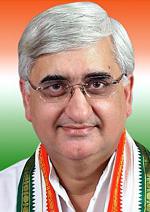
In an interview last month, Mr. Salman Khursheed was posed the query: ‘There are reports that you are considering Muslim reservations within the OBC quota?’ He responded affirmatively: ‘Absolutely. Sachar described them as SEBC, socially and educationally backward classes. This is a special segment within OBC.’

Nowhere in the Sachar report are Muslims categorized as SEBC (Socially and Educational Backward Classes). They are categorised merely as one of many SRCs (Socio-Religious Communities). Moreover, the Sachar Report has acknowledged caste-based stratification within Muslims and has suggested quite unequivocally: ‘Thus, one can discern three groups among Muslims: (1) those without any social disabilities, the ashrafs; (2) those equivalent to Hindu OBCs, the ajlafs, and (3) those equivalent to Hindu SCs, the arzals. Those who are referred to as Muslim OBCs combine (2) and (3) [p. 193 (emphasis added)]’.

So, according to the Sachar Report all Muslims cannot be conceived as a socially and educationally backward class (OBC) because the forward Muslims (ashrafs) are ‘without any social disabilities’. Well, one may ask if the minister who exhorted everyone to read the Sachar Report critically and not as gospel truth, has failed to practice what he himself preached. The honorable minister seems to have read the report incorrectly.

Strange are the ways politics affects one’s judgment! Continue reading ‘Muslim Quota’: Keep it Simple, Silly! – Khalid Anis Ansari

On Populism – A response to Partha and Aditya: Gyan Prakash

Guest post by GYAN PRAKASH

In following the discussion on the Anna Hazare phenomenon, I have found the references to populism very interesting.  In response to Partha, Aditya reminds us that populism should not be dismissed as non-political or anti-political. Partha clarified that he does not regard Anna Hazare’s populism as anti-political but as anti party-politics and anti government.  Team Anna narrowly defines politics as the domain of party politics and the government, which it then identifies with corruption. Om Puri’s rant and Kiran Bedi’s vaudeville performance expressed this sentiment.  Politics means netas, who are corrupt.  References to 2G, CWG, Kalmadi, and various land scams refer to politics in this sense.  Such a definition of politics allows the claim that the gathering at Ramlila was non-political or beyond politics.  Anna as a saintly Gandhian figure who does not seek office, and the status of Kiran Bedi and Kejriwal as civil society members, contributed to the representation that the mobilization of the “people” transcended politics.

Continue reading On Populism – A response to Partha and Aditya: Gyan Prakash

Populism and the Anna Hazare Event: Swagato Sarkar

Guest post by SWAGATO SARKAR

I have been trying to make sense of the Anna Hazare event. I agree that it was historical, but was it a tragedy, or a farce? The swift exchange between Partha Chatterjee (PC) and Aditya Nigam (AN) and their reference to Ernesto Laclau and ‘populism’ have given me a familiar frame to enter into the debate around the event. Here, I will concentrate on the question of populism and its normative status. However, unlike PC and AN, I have got nothing to offer to ‘the Left’ (Independent or Dependent), because I am not a leftist, rather one who likes sitting on the fence on a nice arm-chair and this piece will perhaps bear an imprint of that position. Also, apologies are due to the readers of Kafila as I have not read, just browsed through, the two pieces written by Shuddhabrata Sengupta, which have been wildly popular – if Facebook is an indicator – and have been referred to by both PC and AN. Therefore, I might be repeating what Sengupta has already said.

Continue reading Populism and the Anna Hazare Event: Swagato Sarkar

Harud Literature Festival ‘postponed’

I think it is sad that the Harud Literature Festival has been “postponed“. Sadder still is that the organisers are blaming those who asked very valid questions. All they needed to do was answer those questions and allay those concerns. Their response, two days after the release of the open letter, did not address those concerns. They even refused to withdraw, leave alone apologise for, the offensive word “apolitical”, or explain how they planned to be “apolitical” while “celebrating” literature in the midst of unmarked graves, militarised bazars and lanes, draconian laws, imprisoned teenagers and the state’s refusal to dispense justice. Continue reading Harud Literature Festival ‘postponed’

Ten lessons of the fortnight that was: Jay Mazoomdar

Guest post by JAY MAZOOMDAAR

The 13-day blockbuster— peddled as the second freedom struggle, panned as irresponsible blackmailing, and a lot in between — is over. Anna Hazare accepted honeyed coconut water from two little girls, introduced to the crowd as a dalit and a Muslim, and went on to recuperate in one of India’s most expensive hospitals, one branded after Hindu spiritual literature at that.

News TV is still fighting the vacuum by flogging the debate – so much so that seasoned correspondents are chasing a rather dismissive Dr Naresh Trehan to unravel the mystery of Anna’s endurance. Biker gangs have gone into a sulk and roads at India Gate are looking safer for traffic and women (which is not saying much in Delhi). What is more, India has started taking note that too many Indians have meanwhile drowned in floods. Continue reading Ten lessons of the fortnight that was: Jay Mazoomdar

Our Corruption, Our Selves: Arjun Appadurai

This is a guest post by ARJUN APPADURAI

Partha Chatterjee and Shuddhabrata Sengupta rightly argue that “corruption” is indeed a new Indian label for “the lives of others”. The East German Stasi also surely saw their vigilance as directed against the politics of “the enemies of the people”, except that in their case the state and the party were seen to contain all the good people, with the bad people choosing to remain in the unmobilized parts of civil society. Hence the pro-Hazare gatherings certainly have some of the disturbing echoes of mass rallies under Hitler and Stalin with the working and middle-classes adoring a mediocre and Chaplinesque figure who promises a new wave of moral cleansing. Continue reading Our Corruption, Our Selves: Arjun Appadurai

The North-South Question in Punjab: Umair Javed

click to enlarge

‘Sayeen, ham nay toh kabhee 5,000 banday kaa jaloos bhi nahee nikaala. Siyaasat kay liyay aik laash kya, aik zakham bhi nahee hay hamaray paas toh. Aur aaj lag aisay raha hay kay hamaari dheemi dheemi baaton ko sun kar yay Punjab kay tukray karnay lagain hain’  (Sayeen, we’ve never taken out a rally with 5,000 people. Forget martyrs, we don’t even have a bruise to flaunt for political mileage. And today, it seems they’ve heard our whispers and taken them to heart. Today, they’re talking about splitting Punjab.)

While talking to a few last month, I realized that most independent Seraiki activists privately acknowledge that the issue of a new province, or at the very least, a wholesale recognition of Seraiki grievances, was a cause that could only be made actionable when the People’s Party thought it to be worthwhile – and 9 times out of ten, a cause’s worth for a national level party is determined by its weight in the electoral matrix.  Continue reading The North-South Question in Punjab: Umair Javed

In the Ruins of Political Society – A Response to Partha Chatterjee

Partha Chatterjee’s post, following on Shuddha’s Hazare Khwahishein… is something of an eye-opener for me. I will not enter into a debate with him on his reading of Shuddha’s post as Shuddha and I have had our long online and offline exchanges and I have learnt immensely from these exchanges, even if a core of disagreement persists. I do think, however, that Partha is mistaken in thinking that this is the first time the question of corruption has been discussed on Kafila or elsewhere but since I am not interested in discussing that question here, I will leave that matter aside. I think I have said pretty much what I wanted to say on the movement and the myriad issues related to it and so I am no more interested in going over that territory all over again. Interested readers can see the Kafila archives if they so wish.

What has been an eye-opener for me is the way a certain other Partha Chatterjee has emerged, as soon as his theories were brought face to face with the hurly-burly of politics. The imprint of this other Partha is clearly evident in every word and sentence of this post, but most clearly in the concluding sentence where he claims that the indepdent Left has ‘its populist moment in Nandigram’. This sentence encapuslates the gist of our disagreements. It was this assessment that led Partha to write the essay, ‘Democracy and Economic Transformation‘ where, in some elliptical fashion, his own discomfort with popular politics  found expression. That is when he extended the definition of ‘political society’ to say that it was the sphere of ‘management of ‘non-corporate capital’ (of course, by capital and government). That Partha links his discomfort over the Anna Hazare movement to his discomfort over Nandigram, is in my view, a sign of the fact that his idea of ‘political society’ lies in ruins, that it collapsed at the precise moment of its encounter with the popular.

Continue reading In the Ruins of Political Society – A Response to Partha Chatterjee

Are We Talking to the People Who Are Out on the Streets? – Kavita Krishnan

Guest post by KAVITA KRISHNAN  (Editor, Liberation)

The people saying ‘I am Anna’ or ‘Vande Mataram’ are not all RSS or pro-corporate elites. They’re open to listening to what we have to say to them about corporate corruption or liberalization policies. The question is – are we too lofty and superior (and prejudiced) to speak to them?

Throughout the summer, student activists of All India Students’ Association (AISA) and Revolutionary Youth Association (RYA) engaged in this painstaking exercise for months. They campaigned all over the country, in mohallas, villages, markets where there is no visible Left presence. No, these were not areas of ‘elite’ concentration – mostly middle, lower middle or working class clusters, or students’ residential areas near campuses. In most places, people would begin by assuming they were campaigners of Anna Hazare. When students introduced their call for the 9 August Barricade at Parliament, they would be asked, ‘What’s the need for a separate campaign when Anna’s already leading one?’ They would then explain that they supported the movement for an effective anti-corruption law to ensure that the corrupt don’t enjoy impunity. But passing such a law could not end corruption, which was being bred by the policies that were encouraging corporate plunder of land, water, forests, minerals, spectrum, seeds… They learnt to communicate without jargon, to use examples from the state where the campaign was taking place. They would tell people about the Radia tapes, and the role of the corporates, the ruling Congress, the opposition BJP, and the media in such corruption.

Continue reading Are We Talking to the People Who Are Out on the Streets? – Kavita Krishnan

The Lokpal debate from a Dalit-Bahujan perspective

The video above shows a protest in Delhi demanding a Bahujan Lokpal Bill, and protesting against Anna Hazare. This was hardly given any coverage in the media. The video was made and uploaded by KHALID ANIS ANSARI, who writes at the Round Table India:

A supra-parliamentary Jan Lokpal and a very interventionist and unaccountable judiciary are a horror for the dalit-bahujan masses. All said and done the legislature is most respectful of social diversity as far as the three organs of government are concerned. The executive is bad and the judiciary is the worst in this regard. So I am presently in favor of taking the ‘political’ route than the civil society one which is in any way a club of the chattering classes. [Read the full post]

Given below is a note expressing a Dalit-Bahujan perspective on the Lokpal debate. The note has been put out by DINESH MAURYA: Continue reading The Lokpal debate from a Dalit-Bahujan perspective

Some Thoughts from Ramlila Maidan

This slideshow requires JavaScript.

Response to Gail Omvedt: Nirmalangshu Mukherjee

Guest post by NIRMALANGSHU MUKHERJEE

First of all I strongly object to the various insinuations posted in several comments. However, with due respect to a veteran activist, I think the older generation of left activists are by and large failing to come to terms with an unfamiliar form of protest in the IT-age. For them perhaps, Tahrir square looks full of promise at a distance from where all the finer dark spots get blurred; not so when it is happening in the neighbourhood.

The janlokpal campaign has three broad components: the core group with Anna in front, the bill itself, and the people. The Maoist campaign also has these components. There are serious problems with the first component in either campaign insofar as the condition of “democratic elections” are concerned. In the Maoist case, it is just an upper caste and largely upper class coterie of people thrust on the adivasis. The programme of proctracted war to establish “new democracy,” i.e., the second component, is also deeply flawed. Yet, the Maoist campaign is routinely advertised as a just campaign because it is supposed to be a people’s campaign driven by a people’s army. The current terminology is “bottom-up.” The reality of this proclamation is not the issue here, the structure of justification is. The Maoist campaign with its flawed first two components is justified because “people” have accepted and wanted them, contrary to fact as indicated. But the same commentators are terrified when the same structure is offered for the janlokpal bill. Or is it because Dandakaranya, likeTahrir Square, is safely remote while these “middle-class people” are dangerously close?

Continue reading Response to Gail Omvedt: Nirmalangshu Mukherjee

What is right-wing about the anti-corruption movement? – Saroj Giri

Guest post by SAROJ GIRI


A draft for discussion

A ruling class contradiction is being played out as anti-corruption movement. It is however politically articulated as ‘a movement of the people’ with possibly a space for the left to intervene. Can the tide be turned against the right-wing upper classes?

“What we are witnessing (the anti-corruption movement) is nothing short of a revolution. Only on two earlier occasions in recent memory such grand scale people’s participation was recorded. The first was under Loknayak Jayaprakash Narayan in mid-seventies. The second was during the Ayodhya movement, in the early nineties, propelled by L K Advani’s historic Rath yatra.” This is the RSS Organiser magazine (August 21-28, 2011).

“The anti-corruption movement must resist repression in every form and align itself with the struggles for democratic transformation in India. Only then can it defeat the UPA Government’s efforts to defend corruption and unleash repression, and expose the BJP’s false claims of championing democracy and resisting corruption.” This is the CPIML Liberation (ML Update, 07-13 June 2011)

Continue reading What is right-wing about the anti-corruption movement? – Saroj Giri

The People

Not enough people are asking what is motivating people to go to Ramlila Maidan in such large numbers. People like Ghazala Jamil and Anish Ahluwalia are not asking this question because for them the whole thing is an elite, middle-class conspiracy that is anti-Dalit, anti-OBC, anti-Muslim, anti-justice, anti-equality, anti-peace, anti-love and anti-sex.

These saviours of the marginalised, the poor and the vulnerable make the point that Anna Hazare’s means are showing contempt for the people by not letting people’s chosen representatives delay anti-corruption measures. They are making the point that unless Anna Hazare’s movements takes up issues of land reforms and justice for Gujarat’s Muslims, he should not be supported.  Continue reading The People

Three Questions to Friends

I have been taking my time to reflect on the positions that have emerged in the fairly polarised debate on the on-going anti-corruption struggle in Delhi. I take very seriously the questions raised by critics on the right-wing inclinations evident in the movement’s leadershi, but I think it is both a strategic mistake and a disawoval of responsibility on the part of those of us on the left of the political spectrum to stay out of it. We should engage with the movement from the inside, strategically and persistently, and this means thinking afresh on the means by which we may support the larger binding issue with clear awareness of the risks involved. In this connection, I want to raise three questions:

First, when did we start to be so reluctant to acknowledge the fact that any civil social movement is bound to be contaminated by regressive positions and ideologies and so we cannot avoid thinking of ways of participating in them guided by awareness of the risks? I have recently been trying to collect narratives remembering the fourth national conference of the Indian women’s movement held at Kozhikode, Kerala, in 1990. The participants who spoke to me often pointed to a contrast between the dominant left parties who opposed the conference from the outside, and many, many groups who participated in the conference fully, but raised sharp criticisms which were quite like those of the former. They remarked that these critics were listened to with considerable respect because they were inside, unlike the dominant left.The participant who mentioned this, a well-known radical activist here, still remembers their arguments vividly. Another participant remembered sharp disagreements between urban feminists and rural participants on the question of justice to rape victims. While the former were opposed to the ‘solution’ of marrying the victim off to the rapist, a senior participant from a rural area who spoke up approved of it. This was shocking and unexpected to the urban feminists, but then purity of positions wasn’t, apparently, an overwhelming concern then — and at that place.

Continue reading Three Questions to Friends

New Trade Union Initiative on Anti-Corruption Struggle

We are reproducing below a statement issued by NTUI

NTUI Statement On the Fight Against Corruption

Workers’ life and work experiences are very different from those of the middle class and the ruling elite; so is their experience with corruption. For the middle class, corruption is a mechanism to accelerate government procedures in the public or private sectors. For the working class, corruption deepens their experience of subordination. Instances of corruption that are directly experienced by the working people are the result of the unequal power relations that govern workers’ daily interaction with public institutions and is therefore contributing to a sense of distrust and loss of faith in these institutions. There can be little doubt that corruption affects the working class disproportionately more than it affects economically more privileged sections of society.

Continue reading New Trade Union Initiative on Anti-Corruption Struggle

Tired of Democracy? – Gail Omvedt

This guest post comes from  GAIL OMVEDT

Why are such masses of people (apparently: in our village some came out for a morcha organized by the Maharashtra Navnirman Samiti) following Anna Hazre, when it is now clear that his Lokpal is an authoritarian, centralized and undemocratically pushed proposal?

Several articles, including those by Arundhati Roy and Aruna Roy, have made this clear by now.  I can find only one point to disagree with in the otherwise excellent article by Arundhati:  that, like the Maoists, the Jan Lokpal Bill seeks the overthrow of the state.  It does not.  The movement wants to keep the state, in an even more centralized form, but replace its current rulers with a new set.  And Ranjit Hoskote’s comment that “Anna Hazare’s agitation is not a triumph of democracy [but] a triumph of demagoguery” deserves to be remembered.  The increasingly authoritarian, even fascist forms of activities are disturbing even many of its supporters.

Continue reading Tired of Democracy? – Gail Omvedt

The office of the Jan Lokpal and some thoughts on Nivedita Menon’s post: Anish Ahluwalia

Guest post by ANISH AHLUWALIA

The Jan Lokpal

A problem lies at the very core of Anna Hazare’s anti corruption campaign. This campaign wishes to march ahead by defining ‘corruption’ in the narrowest possible sense. Monies illegally made by politicians, members of judiciary, babus while remaining dreadfully silent on corporations, upper middle classes, middle classes who form the bulk of bribe payers…

Continue reading The office of the Jan Lokpal and some thoughts on Nivedita Menon’s post: Anish Ahluwalia

Anna’s ‘Second Azadi Movement’ via Satyakam and Rang De Basanti

At first Anna reminded me of this very unreasonable, uncompromising, ‘dry honest’ (a delicious Indianism, I guess) character of Satyakam in the eponymous film created by Hrishikesh Mukherjee in the late Sixties. He is so pathologically and pathetically honest that he does not even borrow the chair from the office downstairs when his boss, Sanjeev Kumar visits him. Dharmendra climbs stairs to meet Sanjeev Kumar at his residence only after having finished his work.

Transposed in the current scenario, the equation would be something like this:

Sanjeev Kumar = any one of us; Anna = Dharmendra. Historically of course we know that only Gandhi could be Gandhi, and not even Nehru could ever aspire to that special position in the people’s hearts even while we remind ourselves that a whole mass of little (good, bad, ugly) Gandhis contributed to the making of the one and only, most famous, Gandhi. Continue reading Anna’s ‘Second Azadi Movement’ via Satyakam and Rang De Basanti