Below is a note written by Udayakumar, one of the leaders in Kudankulam that is being circulated. Further below is an update from activist Nityanand Jayaraman on the Madras High Court interim orders in response to cases filed against all the illegal steps taken by the government on Kudankulam.
Recording of a report by Sundari from Idinthakarai, the village in Kudankulam where many are on fast unto death and 15000 people have gathered in protest of the Nucelar Plant. Sundari is a long time local activist in the region who has been part of the struggle against the Nuclear plant.
Police have cracked down on the village and there is now a complete blockade. Journalists are not being allowed at all. This is an effort to get news out regularly. This recording has been made possible by the efforts of activists who work with enabling reporting for community radio through mobile phones. These broadcast and others that will follow, will be sent to community radio networks within Tamilnadu and around the country. Please spread the news. A translation is available below.
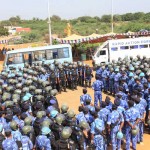
The Tamilnadu police in alliance with the paramilitary, rapid action force, Industrial security force has laid an utterly illegal and anti democratic siege on the peaceful struggle by fisherpeople and others in Idinthakarai village. In an attempt to terrorise the people and weaken their struggle the police in a nexus with civil administration has suspended electricity and water supply to the village. Vital supplies like milk powder, medicines and food stuff have been blocked entry. When neighbouring villagers tried to bring in firewood through the sea route they were blocked this morning. A pregnant woman who was in labour pain was detained by the police for quite some time and her admission into the hoispital was delayed. There are thousands of children, women, elder people and men in the protest site surrounded by layers and layers of police of every possible denomination and this is a peaceful struggle waged by the poor people of idinthakarai to safeguard their livelihoods and also to protect all of us all of humanity from yet another nuclear disaster.
So please take time and call/ message
Vijendra Bidari, SP, Tirunelveli : 09940193494
George, ADGP: o9442200913
Register your protest.
Demand them to stop intimidating the peaceful protesters.
SMS message: “Do not block media, food, water, medicines or movement of people in and out of Idinthakarai. Restore access to basic facilities and media freedom”
Kashana Flats, Paldi, Ahmedabad, as they stand today. Photo credit: Prateek Gupta
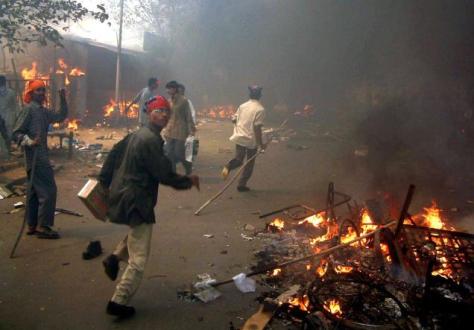
When the riots broke out in 2002 in Ahmedabad, after the burning of the Godhra coach, I was in the tenth standard. I remember listening to the news in the morning, just after which my best friend Ketan had called me and asked “Why did you guys do this?” I didn’t know how to respond to that. I think I just laughed it out and we began discussing what was happening in the city. My father took the phone away from me. I was preparing for my board exams and was just about to leave for one of the last days of school, after which we would go on a study leave. My father, who had experience with riots, told my two elder sisters and me to not go to school and stay at home that day. Continue reading Reflections of a Refugee from Modi’s Gujarat: Reza Noorani→
You must all be aware of the sustained struggle put up by the people of Idinthakarai and other neighbouring villages against the commissioning of the nuclear energy plant at Kudankulam. The struggle has been a concerted one, waged by fishers, agricultural labourers, small peasants and those in the artisanal trades. It has been a struggle for asserting people’s right to livelihood, life and liberty, all of which stand imperiled by the proposed nuclear reactor.
The struggle has now reached a crucial moment of crisis: the ministry of the ruling AIADMK government has passed a resolution asking for the plant to be reopened. This, after several months of promising support to the protesters, and offering to look into radiation effects, on human beings, the coastal environment and on the problem of nuclear waste. Continue reading Kudankulam: Letter from concerned activists in Chennai to Activists and Media persons→
These are moments when spaces like Kafila become so important.
On the 19th of March, news came in that Tamilnadu Police men of six districts led by the ADGP for Crime of the Tamilnadu Police, Mr. O.S.George were sent to Kudankulam. This meant 6000 armed police men, 3 DIGs and 20 SPs were in Kudankulam. The TV reports, when they were still possible, showed police violence and extensive police presence in the village. We also saw women from Kudankulam, the backbone of the movement, declaring that there will be a strong people’s response to this violence and that they cannot be taken peaceful protest cannot be taken for granted. The first project taken up by the police seems to have bee to block off the village from any outsiders. Nearby villagers who tried to approach the villages by sea were also arrested by the police. As of now, all roads to the village have been blocked. Communication systems have been tampered with. Continue reading Kudankulam: A brief history and a recent update→
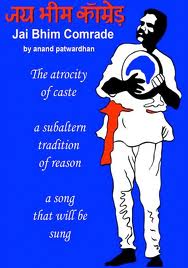
How many murdered Dalits does it take to wake up a nation? Ten? A thousand? A hundred thousand? We’re still counting, as Anand Patwardhan shows in his path-breaking film Jai Bhim Comrade (2011). Not only are we counting, but we’re counting cynically, calculating, dissembling, worried that we may accidentally dole out more than ‘they’ deserve. So we calibrate our sympathy, our policies and our justice mechanisms just so. So that the upper caste killers of Bhaiyyalal Bhotmange’s family get life imprisonment for parading Priyanka Bhotmange naked before killing her, her brother and other members of the family in Khairlanji village in Maharashtra, but the court finds no evidence that this may be a crime of hatred – a ‘caste atrocity’ as it is termed in India. Patwardhan’s film documents the twisted tale of Khairlanji briefly before moving to a Maratha rally in Mumbai, where pumped-up youths, high on testosterone and the bloody miracle of their upper caste birth are dancing on the streets, brandishing cardboard swords and demanding job reservations (the film effectively demolishes the myth that caste consciousness and caste mobilisation are only practised by the so-called ‘lower castes’). Asked on camera about the Khairlanji murders, one Maratha manoos suspends his cheering to offer an explanation. That girl’s character was so loose, he says, that the entire village decided to teach her a lesson.
This guest post by former Gujarat DGP RB SREEKUMAR is a letter to the Union Minister of Home Affairs.
Dear Shri P. Chidambaram,
I belonged to Gujarat cadre of Indian Police service (IPS)-1971 batch-and retired from service on 27.2.2007 in the rank of Director General of Police (DGP), Gujarat state.
2. As a senior citizen (age-65 years) staying in Gujarat since 1970s, I am constrained to write the following for your kind consideration and urgent remedial action.
3. The morale, self esteem and image of the Gujarat Police in general and of IPS officers giving leadership to police force in the state in particular, have been in steady decline since 2002 anti-minority genocide. The media, reputed human rights activists and national bodies like the National Human Rights Commission, the National Commission for Minorities and the National Commission for Women have thrown light on serious intentional acts of commission and omission by Gujarat government functionaries (except in cities like Surat, Bhavnagar and a few districts in South Gujarat and Saurashtra), that facilitated extensive and gruesome mass violence against minorities.
Five years after a peace accord marked the end of a decade long civil war, Nepal’s political transformation has entered its final phase.
On May 27, 2012, the term of the Constituent Assembly — extended four times beyond its original two-year term — will expire. And this time, politicians will not find it easy to give the CA another lease of life due to a judicial stricture. The Supreme Court (SC) has declared that the current extension is final, and if the constitution is not promulgated, there should be another election or referendum. There is also rising popular pressure to wrap up the prolonged transition, which has been accompanied by abysmal service delivery.
That gives the political forces less than three months to wrap up the peace process and write a constitution. Together, this will shape the nature of Nepal’s political institutions and security apparatus. Continue reading The Final Countdown in Nepal→
The text below comes from theFREE WAQAR CAMPAIGN, freewaqar.org
Waqar Ahmad Moharkan was born in Indian-held Kashmir in 1990. Currently, he is a final year student of Bachelor’s in Commerce at Srinagar’s Islamia College of Science and Commerce. Waqar was arrested on 4 October, 2011, during a raid on his house in Lal Bazaar on charges of participating in protests in the Downtown area of Srinagar. Waqar was arrested by police personnel from MR Gunj station. The court allowed his bail application on 23 October, 2011. Instead of being released, he was rebooked by same police station and shifted to Central Jail under judicial remand on 15 December, 2011 and suddenly slapped with the draconian Public Safety Act (PSA). Continue reading Free Waqar Ahmad→
This guest post byURVISH KOTHARIwas originally written in Gujarati and has been translated byVISTASP HODIWALA
Associated Press
Some facts are so simple and self-evident that they elude you completely at the time they happen. Digesting them takes time – 2, 3,7, maybe even 10 years. By that time, the passion and the anger has abated a bit and there is a sense of composure that pervades our beings.
Like the fact about the communal violence that gripped the State of Gujarat in 2002.
Of course, a mere mention of this is enough to get the chief minister’s fanboys roll up their sleeves, even as their opponents ready themselves to launch a counter onslaught. But with the passage of ten long years, the first question should not be about whether the Chief Minister was complicit in the crime or not. No, it cannot be.
Meena Kandasamy is the author of two compilations of poetry: Touch and Ms. Militancy. The following is an incredibly brave and extremely disturbing piece she published in Outlook last week. Her writing, and the violence this account describes, makes commentary shallow and inadequate. I was particularly shaken by the thought of a woman waking up, sipping coffee, watching television, participating the quotidian banalities of companionship with a man who could at any instant, for any reason, turn into a violent monster. This is the world we’ve built: rapists prowl the cities, abusive teachers stalk schools and universities; at home, violence breaks in waves.
As a bored housewife, I colour-code the domestic violence: fresh red welts on my skin, the black hue of blood clots, the fading violet of healed bruises. It appears that there is no escape from this unending cycle of abuse, remorse-filled apology and more abuse. One day, when I am whipped with a belt and cannot take it anymore, I threaten him with police action. He retorts that no man in uniform will respect me after reading a line of my verse. He challenges me to go to anyone anywhere. I have no friends in that small world—only his colleagues who think the world of him and his students who worship the earth on which he walks. I do not know whom to trust, even our neighbours could hand me back to him. In the middle of the night, I want to rush to a nearby convent, seek shelter. Would I be understood? Would it work out? How far can I run away in a city that does not speak my tongue, a city where young women in bars are beaten up?
Thousands of Tamils from across Europe protested in front of UN headquarters in Geneva Monday demanding the creation of an international tribunal to try “war crimes” committed in Sri Lanka…. [AFP report, 6 March 2012]
The battle is raging. It will go on till about the 23rd of March, 2012. In Geneva. The battle is against the Rajapaksa regime in Sri Lanka and not against Sri Lanka itself. It’s a battle over “war crimes and accountability” during the Sri Lankan war, in particular its final stages. Delhi’s vacillating position of “not right to interfere on a country basis” as regards the US Resolution to the United Nations Human Rights Council’s Session 19, is being challenged firmly in Chennai by the two major political parties in Tamil Nadu, the DMK and the AIDMK firm. Beijing and Moscow are clear about the issue. They will vote against the US Resolution, and also muster up support amongst other countries to vote with them. If they could collect 24 votes in total, they will have had their say and the Sri Lankan regime will not have to worry about Geneva anymore. Continue reading Why Geneva and not Matara, Jaffna or Batti?: Kusal Perera→
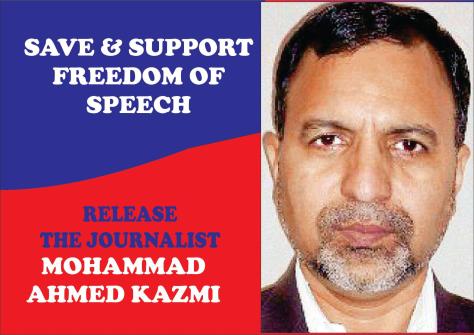
On 7 March, Delhi Police arrested Delhi-based journalist Mohammad Ahmad Kazmi on charges of being part of the plot to kill an Israeli diplomat’s wife in Delhi on 13 February. Many have expressed concern that Kazmi is being falsely implicated. Give below is the text of a letter to the Delhi Police Commissioner by the DELHI UNION OF JOURNALISTS, followed by a statement from theINTERNATIONAL FEDERATION OF JOURNALISTS, and thereafter by a statement issued by a group of citizens.
9 March 2012
The Commissioner of Police,
Delhi Police,
New Delhi
..to bring about military regeneration of the Hindus and to fit Hindu youths for undertaking the entire responsibility for the defence of their motherland.
to educate them in the ‘Sanatan Dharma’, and to train them “in the science and art of personal and national defence”
– From the aims of ‘Central Hindu Military Education Society,’ NMML, Munje Papers, subject files, n 24, 1932-36)
This training is meant for qualifying and fitting our boys for the game of killing masses of men with the ambition of winning victory with the best possible causalities (sic) of dead and wounded while causing the utmost possible to the adversary.
– Preface to the scheme of the Central Hindu Military Society and Its Military School’NMML, Munje Papers, subject files, n 25, 1935
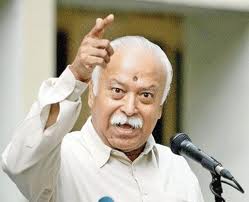
Nashik: Expressing concern over the dominance of ‘rich and powerful people’ in politics, besides the soaring inflation rate, Rashtriya Swayamsewak Sangh (RSS) chief Mohan Bhagwat said that India’s situation was better during the British rule…Speaking at a function organized by Bhonsala Military School (BMS) to celebrate its platinum jubilee year in Nashik on Monday, Bhagwat …laid stress on the need for imparting military education to students, citing rising threat to the nation.
– ‘India was better off under British rule: Mohan Bhagwat’, Times of India, Feb 22, 2012
Satish Chandra Mishra with Mayawati at a rally near Delhi during the Lok Sabha elections in 2009, amongst the last such appearances together
Even before the results came out, the Mayawati cabinet passed a resolution to dissolve the assembly. Never before has an incumbent shown such confidence about losing. Mayawati’s body language during the campaign was proof of the same lack of confidence. Mayawati was going to lose, the Samajwadi Party was in the air. And yet, Mayawati must be relieved right now. She knows that this defeat of hers is, ironically, a victory of the Bahujan Samaj Party and what it stands for. Here’s how.
This public statement is for immediate release. Please see the names of the signatories at the end.
The news of continuous violence on a daily basis coming from West Bengal is deeply disturbing. Journalists have been attacked by the members of the ruling party, school teachers are being asked to prove their loyalty to the new ruling dispensation failing which they are being barred from doing their duty and are made target of systematic physical violence.
People suspected of affiliation with the CPM are facing extortion threats and cases have been reported where they have been denied access to the means of their livelihood. Legitimate oppositional politics is not tolerated. Not only are ordinary members of the CPM being attacked, even senior leaders are not spared . Recently an ex-MLA of the CPM along with another leader was killed in a mob-violence led by the members of the ruling Trinamul Congress. Processions are not allowed. There have been incidents of intimidation by the ruling party to the supporters of the recent bandh call given by different trade unions. Continue reading Stop the Cycle of Revenge and Violence in West Bengal→
Bilkis Bano. Photo via a grab from a recent NDTV report
To mine the detritus of the Gujarat pogrom for positive stories may seem like sacrilege. But when memories are dredged up to mark a decade of the horrors of 2002, a little blasphemy could help balance the account books.
Mostly what we recount of Gujarat 2002 is deaths. Yet, more than the murder and mayhem, the pogrom stood out for an unprecedented scale of sexual violence that Muslim women were subjected to. George Fernandese in his capacity as the Union defence minister had explained to the Parliament after a quick tour of Gujarat that women raped or molested during riots was not surprising or exceptional. I will not go here into the polemics of why violating women’s sexuality is considered a means of dishonouring a community,
There’s an untold story about how the community handled sexual violence. If the dominant community legitimised rape driven by its insecurities and politics that stemmed from history and identity issues, it was perhaps for the first time that the persecuted community reacted to rape in a progressive way.
Rape is double-edged sword, first leading to physical violation and second to social ostracisation in most societies. Which is common to mask the identity of rape victims for fear of social stigma. Strangely, during the 2002 riots, Muslim women, some of them burqa clad and most of them from tightly-knit rural communities never betrayed the kind of shame or guilt that rape victims are expected to show. What was their fault? Why should the victim feel shame and guilt? And so it was that many of them did not cloak their identities, and instead chose to come out publicly to demand justice. Continue reading Three Stories of Resilience from Gujarat: Ayesha Khan→
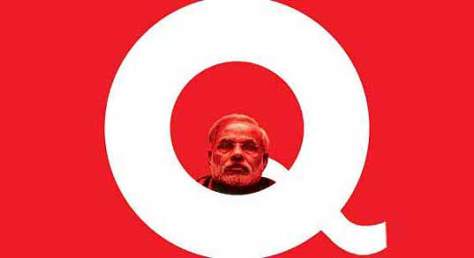
In Outlook magazine last week, its web editor Sundeep Dougal asked 25 questions of Narendra Modi about the 2002 Gujarat pogrom and the subversion of justice since then. Predictably, the army of Narendra Modi Defenders began to spill outrage at such blatant compilation of true charges against Mr Modi. Doing the rounds of the internet is a point by point rebuttal to Dougal’s questions by a blogger, Shashi Shekhar, who goes by the name Offstumped, and is a known online Modi defender. Offstumped’s answers have been responded to by Dougal, and yet Offstumped’s rejoinder is being circulated all over the internet by Modi defenders in the hope of persuading public opinion that Mr Modi is a spotlessly clean man whose actions and inactions did not result in any loss of life, property or dignity of anyone in 2002 and later. The rather large army of Narendra Modi Fans on the internet hopes that by repeating their standard lies again and again, they will one day become accepted truth. Continue reading Defending Narendra Modi: An Exercise in Obfuscation→
Mihir Srivastava is very upset that the debate on Batla House refuses to die down. In his view, his piece in India Today – “Inside the Mind of the Bombers – appearing soon after the ‘encounter’ should have settled the debate once and for all. But he was surprised that it wasn’t received as a resolution. He is even more upset that deluded liberals (read Arundhati Roy) are no longer on talking terms with him.
“In the Batla House case, which I reported much the same way I had reported so many of the cases they were happy with, it is just that the facts I saw and reported did not mesh with what they wanted to believe.”
This is simply not true. The many stories that deluded liberals approved of, according to, Mr. Srivastava, and which he cites to bolster his own reputation, are in fact very different from his India Today’s ‘story’. His expose on the Red Fort terror attack in Tehelka, for example, critically examined the evidence produced by the police, verified and cross checked the statements made by the accused in court and even brought out the discrepancies in the observations made by the court and its eventual judgement which upheld the death sentence of Md. Arif alias Ashfaq alias Abu Hamad. ‘Wrong Man to the Gallows’ is an example of good investigative journalism, not because it confirms our worst suspicions about the ways in which investigative agencies frame innocents, but because it painstakingly pieces together evidence and doesn’t get swamped under nationalist hyperbole spun by the mainstream media to take a cold, hard look at the evidence. Continue reading Batla House and the problem with the deluded journalist: Manisha Sethi→
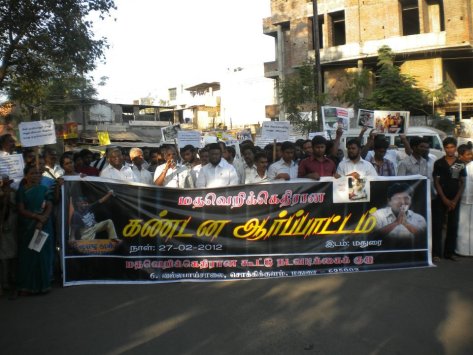
The photograph above is that of a small protest by People’s Watch yesterday, in Madurai, for justice and reparations in Gujarat. Such demonstrations were held across India. Nothing irks the Narendra Modi Fan Brigade than remembering. Move on, they say, move on, forget it. It happened. The struggle of man against power, said Milan Kundera, is the struggle of memory against forgetting.
The short film below, about making a memorial at Gulberg Society in Ahemdabad, was put out by the Teesta Setalvad-led Sabrang Trust in 2008. Yesterday, tenth anniversary of the day Gujarat began to burn for a few weeks in 2002, Sabrang Trust held a meeting at what is now the Gulberge Memorial. Given below the film is the text read out by Justice Hosbet Suresh read out at the Memorial meeting, which was webcast live by Sabrang Trust.

 Below is a note written by Udayakumar, one of the leaders in Kudankulam that is being circulated. Further below is an update from activist Nityanand Jayaraman on the Madras High Court interim orders in response to cases filed against all the illegal steps taken by the government on Kudankulam.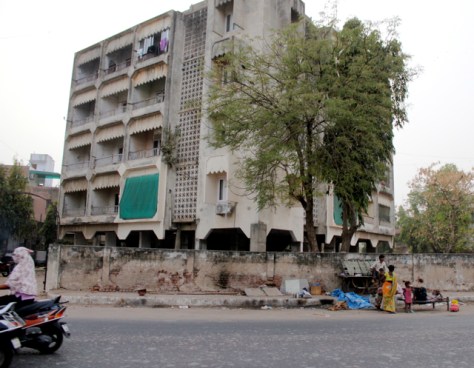
 How many murdered Dalits does it take to wake up a nation? Ten? A thousand? A hundred thousand? We’re still counting, as Anand Patwardhan shows in his path-breaking film Jai Bhim Comrade (2011). Not only are we counting, but we’re counting cynically, calculating, dissembling, worried that we may accidentally dole out more than ‘they’ deserve. So we calibrate our sympathy, our policies and our justice mechanisms just so. So that the upper caste killers of Bhaiyyalal Bhotmange’s family get life imprisonment for parading Priyanka Bhotmange naked before killing her, her brother and other members of the family in Khairlanji village in Maharashtra, but the court finds no evidence that this may be a crime of hatred – a ‘caste atrocity’ as it is termed in India. Patwardhan’s film documents the twisted tale of Khairlanji briefly before moving to a Maratha rally in Mumbai, where pumped-up youths, high on testosterone and the bloody miracle of their upper caste birth are dancing on the streets, brandishing cardboard swords and demanding job reservations (the film effectively demolishes the myth that caste consciousness and caste mobilisation are only practised by the so-called ‘lower castes’). Asked on camera about the Khairlanji murders, one Maratha manoos suspends his cheering to offer an explanation. That girl’s character was so loose, he says, that the entire village decided to teach her a lesson.



 KAFILA - COLLECTIVE EXPLORATIONS SINCE 2006