The Unknown Fate of Thousands in Sri Lanka: Leena Manimekalai

Guest post by LEENA MANIMEKALAI

‘By the wayside’

“This wreath/ with no name attached /is for you/who has no grave/ As the place of earth/ which embraced you/ could not be found/this wreath was placed by the wayside/Forgive me/ for placing a memorial for you/ by the roadside.”

…writes Basil Fernando about the memorial constructed by families of disappeared  at Radoluwa Junction in Seeduwa, a town near the city of Negombo, Srilanka.  When I visited the memorial with lingering faces of the disappeared, it signified an important attempt to keep the memories alive, a yearning to prevent recurrence of mass disappearances and seek justice on behalf of the victims of disappearances and their families. Srilanka which has a deep and complex history of political violence is struggling to redeem the past with a frozen present and a black hole future. Communal riots, political assassinations and ethnic conflict have been an element of the socio-political landscape of this tear nation for more than a century. Two heads of State, dozen national political leaders and numerous regional and local politicians, journalists, activists and artists have been assassinated by groups representing virtually every shade of political spectrum. The Srilankan state deploys disappearances and extra judicial killings as an instrument of public policy in the name of State Emergencies, Prevention of Terrorism Act, dubbing of persons as terrorists, unpatriotic, enemies of state. Brutal suppression of two armed insurrections in the Sinhala South in 1971-72, 1987-89 led by Peoples Liberation Front (JVP) and an armed Tamil Separatist Movement  since 1970s led by the Liberation Tigers of Tamil Eelam (LTTE) in the Tamil North and East of the island had spotted Srilankan state guilty of horrific human rights abuses. Now the nation is the world leader in number of disappeared crossing millions who have no date of death, no place of death, no body, and no grave or funeral rites. Obviously there is no shelling, no bombing in the island since 2009 and the State wants the world to believe that war is over but who will bring peace to the families who continue to lose their members to State Terror and also been denied their basic right to even open their mouth about the injustice. Continue reading The Unknown Fate of Thousands in Sri Lanka: Leena Manimekalai
Modi Goes To London

Image

Good news is followed by a flood of bad news.

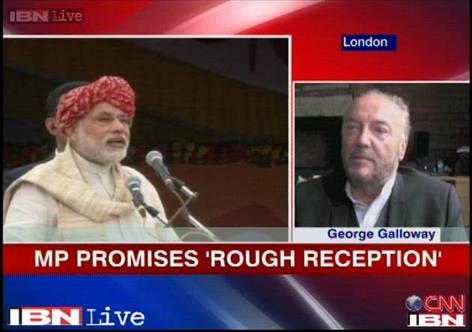
Narendra Modi, the ‘architect’ of today’s Gujarat, must be realising the truth of this dictum despite the fact that the corporate media – to quote an analyst – ‘loves’ him.

Whether it is the growing resistance of the peasantry inside the state to his vision of development, compelling him to withdraw a major chunk of villages from the much discussed Mandal-Becharaji Special Investment Region (SIR), or the crude manner in which his government’s anti Dalit stance is coming to the fore, the signals are definitely ominous. Continue reading Modi Goes To London

Europeans of An Other Colour – Why the Goans are Portuguese: R. Benedito Ferrão & Jason Keith Fernandes

Guest post by R. BENEDITO FERRÃO & JASON KEITH FERNANDES 

This article serves as a response to Sir Andrew Green’s comment on the alleged misuse of Portuguese citizenship by Indian nationals of Goan origin whom the Daily Star and the Daily Mail have characterized as immigrants who travel to Great Britain to take advantage of it. Green’s perspective from a few months ago mirrors prevalent xenophobic views on the rights of immigrants to Europe; hence, the counterpoint offered here hopes to challenge such bias as it will surely continue to be expressed.

On 13 May, 2013, the Goan Ethernet was aflame with outrage at statements made by Sir Andrew Green, chairperson of Migration Watch, carried in the Daily Star and the Daily Mail. The Daily Star reported, “An Indian national from Goa can obtain Portuguese citizenship if their parents were Portuguese citizens prior to 1961,” and quoted Green as saying, “They can then move straight to the UK with their family. On arrival they can avail themselves, immediately, of all the benefits available to UK citizens.” The Daily Mail seems to have been spurred on by Green’s statement, going on to claim that “[a] number of Indian nationals from the former Portuguese territory of Goa are thought to have taken advantage of the loophole. Indians living in Goa can claim they have Portuguese heritage and so claim Portuguese citizenship. They can then move directly to Britain – without ever having to visit Portugal – and bring a family without meeting any qualification test.”

Given the manner in which the matter regarding Goan access to Portuguese citizenship has been reported in the British press, as academics studying Goa and the Goan community, we believe that there is a need to redress such misrepresentations and firmly call out, not only the wilful amnesia about Britain’s imperial past, but also the Anglo-centric interpretation of colonialism, the post-colonial, and de-colonised world order that motivates such representations. In so doing, our aim is to address not merely a need for Goans and others of former Portuguese India to assert the legitimacy of their actions, but to also enable a view of the global order from a position that is more respectful of the formerly colonised. Continue reading Europeans of An Other Colour – Why the Goans are Portuguese: R. Benedito Ferrão & Jason Keith Fernandes

Mathura too did not scream: Forum Against Oppression of Women

Guest Post by FORUM AGAINST OPPRESSION OF WOMEN

As a feminist collective that was formed in the aftermath of the historic Mathura rape case in 1980, in which two police men had sexually assaulted a tribal girl within the police station, two recent cases of sexual assault (in Mumbai) have become matters of grave concern for us. These were filed by women against medical professionals who had committed the crime within their clinic or hospital,

On May 17th 2013, a 26 year old woman had gone, accompanied by her husband, to meet Dr. Rustom Soonawala who had been treating her for TB and later infertility since August 2012. This was at around 6 pm as per appointment. Upon examination, the doctor told them that the TB was almost cured and then asked the husband to go out of the examination room, locked the room, and raped her while covering her mouth with his hand. Continue reading Mathura too did not scream: Forum Against Oppression of Women

Grappling with media: The Hoot Reader

the-hoot-reader-media-practice-in-twenty-first-century-india-400x400-imadhbtch8jfgfjwThis is an excerpt from the introduction to The Hoot Reader: Media Practice in Twenty-First Century India edited by SUBARNO CHATTARJI and SEVANTI NINAN. The Reader commemorates a decade of TheHoot.org, still the only media-watch platform of its kind in India.
The notion of media power has come to loom large in India over the last decade, and has led to inevitable scrutiny of those who wield it. The men and women chasing stories become stories themselves when their first take is scrutinized to present a second take, to judge if that first draft of history was a job well done, or whether it was lazily or unethically constructed. Media criticism had been dormant in India over decades of journalistic practice, but its advent and subsequent blossoming are celebrated in this volume. Because, to report how the media covers India, is to report on the complexity and promise of India itself.

The decade of 2001–11 was when coalition politics took firm hold, terrorism began to rival militancy in attention commanded, naxalism spread, digital communication expanded, and the media became a noisy beast that grabbed more mind space than before. The North-East became less of a blank spot and Kashmir remained a media Mecca. Through it all, the old challenges remained as the media stories here bear witness—hunger did not disappear, women in flooded areas looked for secluded spaces to defecate in, caste prejudices thwarted aspiration, and so on. As subjects sexy and dreary competed for space, many stories also went untold. Continue reading Grappling with media: The Hoot Reader

To the German ambassador in India, a letter from Kashmir

This letter was faxed from Srinagar on 26 August 2013 to the German embassy in New Delhi and the Bavarian State Opera. List of signatories given at the end.

To,
Ambassador Michael Steiner,
German Embassy,
New Delhi, India.

Subject:  URGENT Protest Letter to German Embassy on scheduled Zubin Mehta concert in Srinagar, Jammu and Kashmir on 7 September 2013

On 22 August 2013, a press release was issued by the German Embassy that Zubin Mehta would be conducting an orchestra on 7 September 2013 at Shalimar Bagh, Srinagar, Jammu and Kashmir.

The press release quoted you as stating that the concert was for the people of Jammu and Kashmir by way of a cultural tribute. The press release also reads that the concert was intended to give a message of hope and encouragement to the people of Jammu and Kashmir. The concert, said to be a part of a “broader engagement” is being organized by the German Embassy and supported by the “competent authorities both at Central as well as at Union State level”. The costs of the concert are covered by “benevolent sponsors mainly from the business world in India and Germany, as well as “Incredible India‟ and the German Foreign Office”. Continue reading To the German ambassador in India, a letter from Kashmir

FTII Students’ Association Calls for Solidarity : Against violence by fascist forces

Students’ Association, Film and Television Institute of India, Law College Road, Pune

On the 21st of August 2013 students of the Film and Television Institute of India (FTII) and Yugpath, Pune organized a screening of ‘Jai Bhim Comrade’, followed by a discussion with Anand Patwardhan and a performance by members of the Kabir Kala Manch. At the close of this event, five students of FTII were physically attacked by twelve members of the Akhil Bharatiya Vidyarthi Parishad (ABVP).

Maharashtra has for centuries produced socially progressive activists. Dr. Narendra Dabholkar was one among them. The event on the 21st was organized by the students of FTII to also pay homage to Dr. Narendra Dabholkar. It is unacceptable that an attack of this nature can be inflicted on students for organizing cultural events, in a state, which has a rich and diverse cultural tradition.

This is not an incident in isolation. The attacks on Amdavad ni Gufa an art gallery in Ahmedabad and the cancellation of Sanjay Kak’s film at Symbiosis College of Arts and Commerce, Pune are recent examples of mindless violence by right-wing fascist groups. It is critical to challenge the growing impunity with which fascist groups are intolerant of artists, thinkers, students and any individual who are either opposed or not inclined to their politics. Such attacks by any fascist force violate the fundamental right to freedom of speech and expression. At a time when such attacks are becoming increasingly routine we appeal to the student community and all concerned individuals to register their protest.

On the 26th, this Monday, we are organizing a Solidarity March starting from FTII Campus, Law College Road to Omkareshwar Chowk at 4 PM. This march is a protest against the assassination of Dr. Narendra Dabholkar, the attack against the five FTII students, and all other acts of mindless violence by fascist forces. We demand that those guilty of attacking the FTII students be brought to justice and the charges against the FTII students be dropped immediately. Join us in solidarity as we peacefully march to celebrate the right to democratic dialogue and reclaim the right to expression.

We appeal to students and free thinking individuals across the country to voice their protest. We urge you to use your art, your words and your ideas in defiance of such fascist forces.

Vikas Urs

General Secretary

Students’ Association, F.T.I.I

Contact- 09158737954,

ftiistudentsbody@gmail.com,

http://ftiistudentsbody.blogspot.com


To travel or not to travel to India: Karen Dias

This is a Guest Post by KAREN DIAS

The most recent ‘Incredible India’ video ad campaign shows a young woman of seemingly European descent traveling alone through India. She is seen drinking coconut water and being friendly with a man, playing chess with holy men, being helped after a fall by two men, cheering at a snake boat race on a boat filled with men, playing Holi surrounded by more men and strolling on what looks like a deserted beach with a male mahout and his elephant. Sadly, the truth is far from what the video depicts for foreign women traveling in India, and most of them will try their best to not find themselves alone in situations like the ones shown in the video.  Stories of foreign women being verbally and sexually harassed are not new in this country and being accompanied by male friends or relatives is almost never a deterrent. Continue reading To travel or not to travel to India: Karen Dias

Joint statement on atrocities on cultural activists and Dalits

Please send endorsements to  asit1917@gmail.com

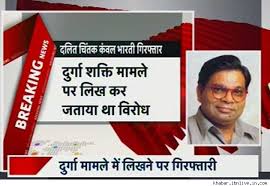
download (1)We, the undersigned, are appalled and outraged by the arrest of Kanwal Bharti eminent Dalit writer for his comments on Face book. If one looks seriously at the banner headlines in the corporate media, the Indian ruling classes are  the new economic power house of the world and India, the world’s largest democracy. Various clauses of the Indian constitution guarantee the fundamental rights of its citizens to to freedom of expression and to choose ones cultural and political views. The pretensions of the Indian state about it being a liberal democracy have proved to be a total mockery of the very meaning of the words like liberalism, democracy and rule of law. Since the past six decades, under draconian laws like AFPSA, UAPA, National Security Act, tens of thousands of people have died in ‘encounters’, thousands of youth have vanished from Kashmir and Punjab. There are genocides happening on the struggling people of oppressed Nationalities, thousands are tortured, there are thousand of unknown mass graves in Kashmir. Thousands of woman are raped, tortured and killed in police custody. Continue reading Joint statement on atrocities on cultural activists and Dalits

Network of Women in Media demands safety for women media professionals

The Network of Women in Media, India, (NWMI) is shocked and angry at the alleged gangrape of a woman journalist and the assault on her male colleague in the evening of August 22 while they were on assignment for a print publication near the Shakti Mills compound at Mahalaxmi in Central Mumbai.

The two journalists were accosted and intimidated by a few people who demanded to see their authorisation for shooting in the area. They took the woman journalist aside on the pretext of securing the authorisation for her, tied up her colleague and allegedly gangraped her. In all, five persons perpetrated the attack, according to preliminary reports. The woman journalist showed great presence of mind in freeing herself and also managed to free her colleague and the two then sought to file a complaint with the N M Joshi Marg police station. They are being treated at Jaslok Hospital now for multiple injuries.

The incident is a grim reminder of the deteriorating state of safety for women in Mumbai as well as the lack of security for media professionals, especially women media professionals. The harassment of women professionals in the media is on the rise and, along with work-place related harassment, journalists also have had to contend with anti-women prejudices and biased reactions from employers as well as law enforcement officers.

The Network of Women in Media, India extends all support and solidarity to the journalists who were assaulted. The NWMI also cautions its colleagues in the media to report on the incident responsibly and sensitively, without providing unnecessary details that provide markers to the identity of the journalists involved.

NWMI also demands that the police conduct a speedy investigation into the assault and ensure that justice is delivered without delay. It also urges media employers to ensure the safety and security of their staff.

Yours sincerely,

Geeta Seshu, Kalpana Sharma, Meena Menon, Sameera Khan, Sandhya Srinivasan, Laxmi Murthy, Sharmila Joshi, Ammu Joseph, Rajashri Dasgupta, Jyoti Punwani and others

on behalf of

Network of Women in Media, India

Why Do ‘They’ Love Narendra Modi ?: Shankar Gopalakrishnan

Guest Post by Shankar Gopalakrishnan

On August 14th, Narendra Modi declared that his Independence Day speech would attract as much attention as that of the Prime Minister. He appears to have been right. The fact that this is hardly unexpected should not obscure the deeper puzzle that it hides. It is a rare occurrence for a state level leader to suddenly get so much prominence in the media, and that too for such a long period. Why, then, have powerful forces in our society – including most of the media – chosen to endorse Modi? Why the sudden promotion of this particular leader at this particular time? What is it that he and his regime are offering?

Continue reading Why Do ‘They’ Love Narendra Modi ?: Shankar Gopalakrishnan

Iran-U.S. ties in the wake of Rouhani’s election: Maroosha Muzaffar

This is a guest post by MAROOSHA MUZAFFAR

After eight years of Mahmoud Ahmedinejad’s presidency, Iran elected to power the reformist leader Hassan Rouhani, 64, in elections held in June this year. On Sunday, August 4, he was sworn in as the President of Iran in a ceremony attended by dignitaries from at least 52 countries. Rouhani now holds a job that in the current political landscape of Iran entails, well, a lot of hard work. And his diplomatic skills that so many have already sung paeans to, will now be put to test.  Continue reading Iran-U.S. ties in the wake of Rouhani’s election: Maroosha Muzaffar

भाषा का सवाल और फ़िल्मी सदी का पैग़ाम

हलाँकि फ़िल्म हिन्दी में बन रही है, लेकिन (ओंकारा के) सेट पर कम-से-कम पाँच भाषाएँ इस्तेमाल हो रही हैं। निर्देशन के लिए अंग्रेज़ी, और हिन्दी चल रही है। संवाद सारे हिन्दी की एक बोली में हैं। पैसे लगानेवाले गुजराती में बातें करते हैं, सेट के कर्मचारी मराठी बोलते हैं, जबकि तमाम चुटकुले पंजाबी के हैं।

स्टीफ़ेन ऑल्टर, फ़ैन्टेसीज़ ऑफ़ अ बॉलीवुड लव थीफ़

 पिछले सौ साल के तथाकथित ‘हिंदी सिनेमा’ में इस्तेमाल होनेवाली भाषा पर सोचते हुए फ़ौरन तो यह कहना पड़ता है कि बदलाव इसकी एक सनातन-सी प्रवृत्ति है, इसलिए कोई एक भाषायी विशेषण इसके तमाम चरणों पर चस्पाँ नहीं होता है। आजकल ‘बॉलीवुड’ का इस्तेमाल आम हो चला है, गोकि इसके सर्वकालिक प्रयोग के औचित्य पर मुख़ालिफ़त की आवाज़ें विद्वानों के आलेखों और फ़िल्मकारों की उक्तियों में अक्सरहाँ पढ़ी-सुनी जा सकती हैं।[1] ग़ौर से देखा जाए तो बंबई फ़िल्म उद्योग के लिए ‘बॉलीवुड’ शब्द की लोकप्रियता और सिने-शब्दावली में ‘हिंगलिश’ की प्रचुरता एक ही दौर के उत्पाद हैं, और यह महज़ संयोग नहीं है। हालाँकि सिने-इतिहास में हमें शुरुआती दौर से ही अंग्रेज़ी के अल्फ़ाज़, मिसाल के तौर पर तीस और चालीस के दशक तक बड़ी मात्रा में प्रयुक्त दुभाषी फ़िल्मी नामों में, मिलते रहे हैं। लेकिन होता ये है कि एक दौर की लोकप्रिय या विजयी शब्दावली पूरे इतिहास पर लागू कर दी जाती है, जिससे एक महत्वपूर्ण ऐतिहासिक प्रक्रिया, और उसके भाषायी अवशेष, इतिहास के कूड़ेदान में चले जाते हैं। मसलन अब एक स्थानवाची शब्द लें: एक शहर का बंबई से मुंबई बनना एक हालिया और औपचारिक/सरकारी सच है, एक हद तक सामाजिक भी, वैसे ही जैसे कि हम जिसे ‘बंबई फ़िल्म उद्योग’ कहते आए हैं, वह भी एक ऐतिहासिक तथ्य रहा है, लेकिन हमें इस बात की भी अनदेखी नहीं करनी चाहिए कि आज़ादी से पहले, बंबई के सर्वप्रमुख केन्द्र के तौर पर स्थापित होने से पहले, पुणे, कलकत्ता, लाहौर, मद्रास और कुछ हद तक दिल्ली भी सिने-उत्पादन के केन्द्र रह चुके थे।

Continue reading भाषा का सवाल और फ़िल्मी सदी का पैग़ाम

FTII Students’ Statement on the Attack on them by the ABVP in Pune

FTII Students’ Association Press Release, 22/08/13
 
Five students of the Film and Television Institute of India (FTII) were attacked outside of the National Film Archives of India (NFAI) on Wednesday 21/08/13 by the Akhila Bharateeya Vidyarti Parishad (ABVP).
 
The attack took place soon after the screening of Anand Patwardhan’s documentary Jai Bheem Comrade and the performance of Kabir Kala Manch at NFAI. The programme was organized by the FTII student’s body in association with Yugpath, a youth forum based in Pune. This was the  first public performance of Kabir Kala Manch after two and a half years.
 
The five students attacked are Shameen a second year cinematography student, Ansar Sha a third year cinematography student, Kislay a third year Editing student, Sriram Raja also a third year Editing student and Ajayan a third year Sound student.
 
The screening of the documentary and the performance by Kabir Kala Manch (KKM) was finalized two weeks ago. There was a request to cancel the programme from various quarters respecting the call for bandh as a mark of protest against the murder of anti-superstition activist Narendra Dhabolkar. But Yugpath and the FTII student’s body decided to stick to their plan and go ahead with the screening and performance as a mark of respect and homage to Mr. Dhabolkar. Continue reading FTII Students’ Statement on the Attack on them by the ABVP in Pune

Assassination of an Activist : Who Killed Dr Narendra Dabholkar?

REPLUG: Narendra Dabholkar -- Duty to Develop Scientific Temper | NewsClick           ( Photo : Courtesy ‘Newsclick)                                                                   “There are only two ways to live your life. One is as though nothing is a miracle. The other is as though everything is a miracle.”

– Albert Einstein

Words have an uncanny ability of impinging on the receiver with clinical detachment. It is upto the receiver to unpack them or try to derive meaning out of them. It is still difficult to get over the sense of grief and shock one experienced when one received the news of the assassination of renowned rationalist Dr Narendra Dabholkar on the streets of Pune on Tuesday 20 th August.

Continue reading Assassination of an Activist : Who Killed Dr Narendra Dabholkar?

Communalisation in the name of Security and Sovereignt: JKCCS

As Kishtwar continues to be under curfew, this public statement put out on 15 August 2013 by the Srinagar-based JAMMU AND KASHMIR COALITION OF CIVIL SOCIETY is pertinent.
On 29 July 2013, Village Defence Committee [VDC] members were alleged to have killed 16 year old Shamim Ahmed Lone, resident of Noutaas, Thatri, Doda. Further, a few days prior to the murder of Shamim Ahmed, a 16 year old girl, resident of Kuntwara, Kishtwar, was kidnapped and raped by persons backed and protected by the VDC. According to newspaper reports from last over a month at many places in Doda-Kistwar region masked men have terrorized people. Over the last week, several places in the Jammu region, particularly Kishtwar, have been subjected to violence at the hands of VDC members, supported by Hindu communal groups, which resulted into loss of three lives, numerous injuries and loss of public property. The unabated support and encouragement to VDCs by Government of India, has ensured deepening communal strife. Continue reading Communalisation in the name of Security and Sovereignt: JKCCS

सार्वजनिक जगहों पर सामूहिक कब्ज़े की संस्कृति : किशोर

Guest post by Kishore

दिल्ली के उत्तर-पश्चिम में स्थित रोहिणी का इलाका लाखों मध्यम और निम्न मध्यम वर्ग परिवारों का बसेरा है. कुछ समय पहले यहाँ मेहनतकश मज़दूर वर्ग के नुमाइंदे भी झुग्गी-झोपडियों में रहा करते थे जिन्होने  रोहिणी  नाम के इस उपनगर को बसाया था. पर पिछले कुछ सालों में इन झुग्गियों को उजाड़ कर दिल्ली के बाहरी हिस्सों में पुनर्वासित किया गया है. ठीक गोरख पाण्डेय की कविता “स्वर्ग से  विदाई” की तरह.

रोहिणी एक नियोजित उपनगर है जिसे दिल्ली विकास प्राधिकरण ने बसाया है. एक शहरी बस्ती की जरूरतों के हिसाब से हर एक चीज़ का ध्यान रखा गया है. थोड़ी थोड़ी दूर पर “सार्वजनिक” पार्कों की व्यवस्था की गयी है और हर एक-दो किलोमीटर पर एक बड़े “सार्वजनिक” पार्क की भी व्यवस्था है जिसे डिस्ट्रिक्ट पार्क कहते हैं. Continue reading सार्वजनिक जगहों पर सामूहिक कब्ज़े की संस्कृति : किशोर

Modi’s ‘Singur’ : The Other Independence Day


Image


It was also an Independence Day celebration albeit of a different kind.

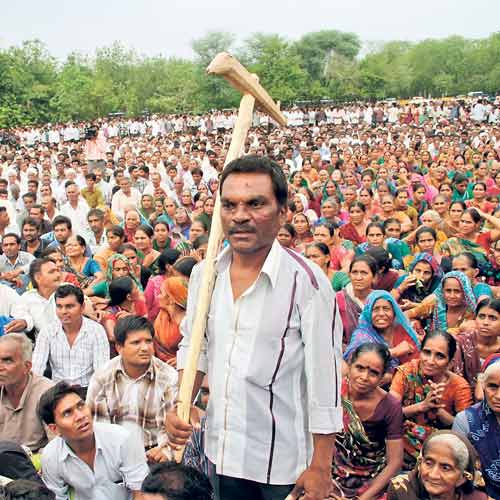
Far away from the 24 7 media and far away from the usual rhetoric one witnesses on any such date it was effectively people’s celebration which was resisted by the state at every level. Held at a non descript village called Dalod around 150 kilometers from Ahmedabad the state capital, it was attended by around 15,000 men and women, old and young, according to conservative estimates, .

There was unprecedented police patrolling and barricades on all roads leading to village Dalod and people coming to the flag hoisting were being stopped. One can easily guess that if the state would not have gone out of the way to thwart the programme, and had not cancelled the initial permission to hold it in Hansalpur, – where the Maruti Suzuki plant is supposed to come up – more than 50,000 people could have easily reached there. The celebration was attended by delegations from other groups waging a struggle against land acquisition in their areas, such as from Mahua (against the Nirma cement plant led by politician-activist Kanubhai Kalsaria), from Mithi Virdi in Bhavnagar (against the nuclear power project), the Junagadh by-pass road etc. who came there to show their solidarity. Continue reading Modi’s ‘Singur’ : The Other Independence Day

The Public Secret of Savita Bhabhi: Jyoti Singh

This is a  guest post by JYOTI SINGH

In May 2013, makers of the erotic comic strip came out with the Savita Bhabhi movie, where apart from Savita Bhabhi doing what she is best at, she also helps the two nerds, who mistakenly teleport her into their Orwellian India of 2070, take their revenge upon the notorious I&B Minister who bans all online porn but engages in all offline porn. With this, Savita Bhabhi was back in our ever-so-fickle public memory after 4 years of ban, but yet not quite. Her resurfacing was not as resounding as her going away. One could ascribe this to the spoken language of the movie being Hindi instead of English, which is the original language of the strip and also the official language of all modern day revolutions of the middle class on social media. Perhaps they misjudged the ‘maximum reach’ bit, which rendered her an orphan. Nevertheless, that aside, why isn’t Savita Bhabhi missed enough anyway?

Continue reading The Public Secret of Savita Bhabhi: Jyoti Singh

Decolonization of the Mind

Our modernity is incomplete, our secularism impure, our democracy immature, our development  arrested and our capitalism retarded: ask anyone trained in the social sciences, economics in particular, about what ails India today and you can be sure of getting one or all of these answers. And you can go on adding to the list of more and more things ‘we’ lack. We did not have ‘history’, we do not have social sciences – and of course, we do not have theory/ philosophy.

Everything, in other words, is about our ‘backwardness’ and our need to catch up with the West. And seen through the lens of social science, most of the world looks like this – living ‘inauthentic’ lives, always ever in the ‘waiting room of history’, to steal historian Dipesh Chakrabarty’s suggestive phrase.

In the world view of our state elites, this is actually a form of what one could call, paraphrasing Sigmund Freud, ‘Capital-Envy’. The ‘realization’ that ‘we do not have it’ can be a source of serious anxieties. That is what lies behind the current frenzied desire to ‘catch up’ with the West. And generations of feminist scholarship has challenged this unquestioned Freudian  assumption that the penis is the norm and not to have it, is Lack. Perhaps women do not want it? Freud never conceived of this as possible. Indeed in today’s world, there are many men who claim that they feel they are women trapped inside male bodies. Generations of scholarship has made us realize that the aura of that grand universal theory actually rested on the fact that it did not just describe the sexes; it produced the sexual norm itself.

The vision that propels our political elites and their parallel numbers who write in the media today, is something like that fantasy of Freud. The anxiety produced by this awareness of the ‘primordial Lack’, is what drives them today towards what has been the most violent phase of development in our entire history. Violent uprooting of populations from their land, often at gunpoint, coupled with the most ruthless plunder of our common resources by unscrupulous corporations – all this and more has been going on with the state elites looking on ‘benignly’. For they seem to know something ordinary mortals do not – that all this is but the necessary price to pay for becoming ‘modern’ like them. Continue reading Decolonization of the Mind

Nationalism in India: Rabindranath Tagore

From RABINDRANATH TAGORE‘s lectures on Nationalism, 1917

tagore-gandhi

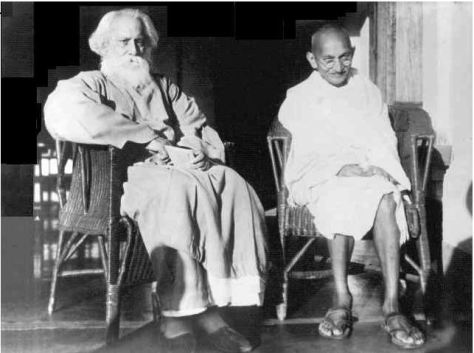
Our real problem in India is not political. It is social. This is a condition not only prevailing in India, but among all nations. I do not believe in an exclusive political interest. Politics in the West have dominated Western ideals, and we in India are trying to imitate you. We have to remember that in Europe, where peoples had their racial unity from the beginning, and where natural resources were insufficient for the inhabitants, the civilization has naturally taken the character of political and commercial aggressiveness. For on the one hand they had no internal complications, and on the other they had to deal with neighbours who were strong and rapacious. To have perfect combination among themselves and a watchful attitude of animosity against others was taken as the solution of their problems. In former days they organized and plundered, in the present age the same spirit continues—and they organize and exploit the whole world. Continue reading Nationalism in India: Rabindranath Tagore

DISSENT, DEBATE, CREATE