A Response from the Harud Literature Festival

In response to the open letter expressing a set of concerns about the forthcoming Harud Literature Festival, the festival organisers have responded:

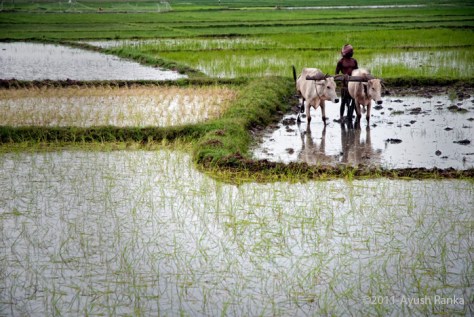
We wish to categorically state that the Harud literature festival is not government sponsored. It has been conceived with the intent of creating a platform for free and open debate, discussion and dialogue through contemporary narratives, literary fiction and poetry.

The festival seeks to showcase writing in urdu, kashmiri, dogri and english from the region and other Indian writers. We seek support for the spirit of the festival which is plural, inclusive and supports freedom of speech and expression. [Link]

Some Thoughts from Ramlila Maidan

This slideshow requires JavaScript.

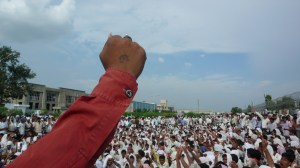
Some people at Ramlila Maidan

This slideshow requires JavaScript.

Response to Gail Omvedt: Nirmalangshu Mukherjee

Guest post by NIRMALANGSHU MUKHERJEE

First of all I strongly object to the various insinuations posted in several comments. However, with due respect to a veteran activist, I think the older generation of left activists are by and large failing to come to terms with an unfamiliar form of protest in the IT-age. For them perhaps, Tahrir square looks full of promise at a distance from where all the finer dark spots get blurred; not so when it is happening in the neighbourhood.

The janlokpal campaign has three broad components: the core group with Anna in front, the bill itself, and the people. The Maoist campaign also has these components. There are serious problems with the first component in either campaign insofar as the condition of “democratic elections” are concerned. In the Maoist case, it is just an upper caste and largely upper class coterie of people thrust on the adivasis. The programme of proctracted war to establish “new democracy,” i.e., the second component, is also deeply flawed. Yet, the Maoist campaign is routinely advertised as a just campaign because it is supposed to be a people’s campaign driven by a people’s army. The current terminology is “bottom-up.” The reality of this proclamation is not the issue here, the structure of justification is. The Maoist campaign with its flawed first two components is justified because “people” have accepted and wanted them, contrary to fact as indicated. But the same commentators are terrified when the same structure is offered for the janlokpal bill. Or is it because Dandakaranya, likeTahrir Square, is safely remote while these “middle-class people” are dangerously close?

Continue reading Response to Gail Omvedt: Nirmalangshu Mukherjee

What is right-wing about the anti-corruption movement? – Saroj Giri

Guest post by SAROJ GIRI


A draft for discussion

A ruling class contradiction is being played out as anti-corruption movement. It is however politically articulated as ‘a movement of the people’ with possibly a space for the left to intervene. Can the tide be turned against the right-wing upper classes?

“What we are witnessing (the anti-corruption movement) is nothing short of a revolution. Only on two earlier occasions in recent memory such grand scale people’s participation was recorded. The first was under Loknayak Jayaprakash Narayan in mid-seventies. The second was during the Ayodhya movement, in the early nineties, propelled by L K Advani’s historic Rath yatra.” This is the RSS Organiser magazine (August 21-28, 2011).

“The anti-corruption movement must resist repression in every form and align itself with the struggles for democratic transformation in India. Only then can it defeat the UPA Government’s efforts to defend corruption and unleash repression, and expose the BJP’s false claims of championing democracy and resisting corruption.” This is the CPIML Liberation (ML Update, 07-13 June 2011)

Continue reading What is right-wing about the anti-corruption movement? – Saroj Giri

The People

Not enough people are asking what is motivating people to go to Ramlila Maidan in such large numbers. People like Ghazala Jamil and Anish Ahluwalia are not asking this question because for them the whole thing is an elite, middle-class conspiracy that is anti-Dalit, anti-OBC, anti-Muslim, anti-justice, anti-equality, anti-peace, anti-love and anti-sex.

These saviours of the marginalised, the poor and the vulnerable make the point that Anna Hazare’s means are showing contempt for the people by not letting people’s chosen representatives delay anti-corruption measures. They are making the point that unless Anna Hazare’s movements takes up issues of land reforms and justice for Gujarat’s Muslims, he should not be supported.  Continue reading The People

An open letter on the ‘Harud’ literary festival

Srinagar-based photojournalist Showkat Shafi is seen in this photograph being assaulted by the Jammu and Kashmir Police on 19 August 2011. He was carrying out his professional duties, as is clear from the camera in his hand that the police is trying to snatch away. He and his Mexican photographer colleague were detained at the police station and beaten up, allowed to go and be hospitalised only five hours later. The police said they mistook them for stone-pelters. Photo credit: Faisal Khan

*
Given below is an open letter signed by fourteen of us. Should you want to add your name to it, please do so in the comments section of this post. I shall update the names of the signatories on the post itself. Please clearly indicate that you want your name added, and write your full name and profession.

Continue reading An open letter on the ‘Harud’ literary festival

Three Questions to Friends

I have been taking my time to reflect on the positions that have emerged in the fairly polarised debate on the on-going anti-corruption struggle in Delhi. I take very seriously the questions raised by critics on the right-wing inclinations evident in the movement’s leadershi, but I think it is both a strategic mistake and a disawoval of responsibility on the part of those of us on the left of the political spectrum to stay out of it. We should engage with the movement from the inside, strategically and persistently, and this means thinking afresh on the means by which we may support the larger binding issue with clear awareness of the risks involved. In this connection, I want to raise three questions:

First, when did we start to be so reluctant to acknowledge the fact that any civil social movement is bound to be contaminated by regressive positions and ideologies and so we cannot avoid thinking of ways of participating in them guided by awareness of the risks? I have recently been trying to collect narratives remembering the fourth national conference of the Indian women’s movement held at Kozhikode, Kerala, in 1990. The participants who spoke to me often pointed to a contrast between the dominant left parties who opposed the conference from the outside, and many, many groups who participated in the conference fully, but raised sharp criticisms which were quite like those of the former. They remarked that these critics were listened to with considerable respect because they were inside, unlike the dominant left.The participant who mentioned this, a well-known radical activist here, still remembers their arguments vividly. Another participant remembered sharp disagreements between urban feminists and rural participants on the question of justice to rape victims. While the former were opposed to the ‘solution’ of marrying the victim off to the rapist, a senior participant from a rural area who spoke up approved of it. This was shocking and unexpected to the urban feminists, but then purity of positions wasn’t, apparently, an overwhelming concern then — and at that place.

Continue reading Three Questions to Friends

Beyond ‘Middle Class’ and ‘Corruption’: Jeebesh Bagchi

Guest post by JEEBESH BAGCHI

I have been thinking that If we drop “corruption” and “middle class”  we may find some other way to understand what we sense unfolding from Ramila grounds and television studios.

The term middle class has bloated so much that it now holds within it Narayan Murthy to Shekhar Gupta via Nandan Nilekani to a student in Sonepat to all people in this list and on facebook.  And on the other hand corruption seem to have bloated much further in which commissions from infrastructure deals (in lakhs of crores), commissions for arms deals, someone delaying papers, to admission costs, to a hawker buying some uninterrupted time in the street (20 rupees) is all melted down.

Could one start from some other point? Continue reading Beyond ‘Middle Class’ and ‘Corruption’: Jeebesh Bagchi

New Trade Union Initiative on Anti-Corruption Struggle

We are reproducing below a statement issued by NTUI

NTUI Statement On the Fight Against Corruption

Workers’ life and work experiences are very different from those of the middle class and the ruling elite; so is their experience with corruption. For the middle class, corruption is a mechanism to accelerate government procedures in the public or private sectors. For the working class, corruption deepens their experience of subordination. Instances of corruption that are directly experienced by the working people are the result of the unequal power relations that govern workers’ daily interaction with public institutions and is therefore contributing to a sense of distrust and loss of faith in these institutions. There can be little doubt that corruption affects the working class disproportionately more than it affects economically more privileged sections of society.

Continue reading New Trade Union Initiative on Anti-Corruption Struggle

Tired of Democracy? – Gail Omvedt

This guest post comes from  GAIL OMVEDT

Why are such masses of people (apparently: in our village some came out for a morcha organized by the Maharashtra Navnirman Samiti) following Anna Hazre, when it is now clear that his Lokpal is an authoritarian, centralized and undemocratically pushed proposal?

Several articles, including those by Arundhati Roy and Aruna Roy, have made this clear by now.  I can find only one point to disagree with in the otherwise excellent article by Arundhati:  that, like the Maoists, the Jan Lokpal Bill seeks the overthrow of the state.  It does not.  The movement wants to keep the state, in an even more centralized form, but replace its current rulers with a new set.  And Ranjit Hoskote’s comment that “Anna Hazare’s agitation is not a triumph of democracy [but] a triumph of demagoguery” deserves to be remembered.  The increasingly authoritarian, even fascist forms of activities are disturbing even many of its supporters.

Continue reading Tired of Democracy? – Gail Omvedt

The office of the Jan Lokpal and some thoughts on Nivedita Menon’s post: Anish Ahluwalia

Guest post by ANISH AHLUWALIA

The Jan Lokpal

A problem lies at the very core of Anna Hazare’s anti corruption campaign. This campaign wishes to march ahead by defining ‘corruption’ in the narrowest possible sense. Monies illegally made by politicians, members of judiciary, babus while remaining dreadfully silent on corporations, upper middle classes, middle classes who form the bulk of bribe payers…

Continue reading The office of the Jan Lokpal and some thoughts on Nivedita Menon’s post: Anish Ahluwalia

The Fallacy of Progressive Yearnings: Ghazala Jamil

Guest post by GHAZALA JAMIL

I suppose some clarifications are in order. I do doubt that Anna’s Lokpalmobilisation is a movement. Just as Anti-Mandal was, just as Ramjanmbhoomi is, but not the way Dalit Panthers was or NBA and MKSS are.  I also want to clarify that my position is not of frivolous dismissal of this mobilisation as a middle class picnic but one of grave concern against what I feel is a uni-dimensional, one point demand around which an entirely regressive and casteist politics can be and is being wrapped up. A collectivity of SC/ST and Minority groups yesterday organised a protest march in Central Delhi. It was reported in many dailies- highlighted as having affected traffic in the area for 45 minutes thus dismissed as not being any valid counterpoint to ‘I am Anna’ wave.

Continue reading The Fallacy of Progressive Yearnings: Ghazala Jamil

A Great Opportunity, A Serious Danger: A Statement

A Statement Issued by some individuals and friends in social movements

The Anna Hazare situation invites two common reactions: many dismiss it as a middle class driven “urban picnic”; and others, notably the mainstream media, describe it as just short of a revolutionary movement to establish “people’s power.” The same divide exists among progressives and those concerned with social change. Strategies differ on the basis of where one stands on this divide. The problem, however, is that neither of these reactions fully reflects the reality of what is happening.

Continue reading A Great Opportunity, A Serious Danger: A Statement

Anna’s ‘Second Azadi Movement’ via Satyakam and Rang De Basanti

At first Anna reminded me of this very unreasonable, uncompromising, ‘dry honest’ (a delicious Indianism, I guess) character of Satyakam in the eponymous film created by Hrishikesh Mukherjee in the late Sixties. He is so pathologically and pathetically honest that he does not even borrow the chair from the office downstairs when his boss, Sanjeev Kumar visits him. Dharmendra climbs stairs to meet Sanjeev Kumar at his residence only after having finished his work.

Transposed in the current scenario, the equation would be something like this:

Sanjeev Kumar = any one of us; Anna = Dharmendra. Historically of course we know that only Gandhi could be Gandhi, and not even Nehru could ever aspire to that special position in the people’s hearts even while we remind ourselves that a whole mass of little (good, bad, ugly) Gandhis contributed to the making of the one and only, most famous, Gandhi. Continue reading Anna’s ‘Second Azadi Movement’ via Satyakam and Rang De Basanti

Reading Ur-Fascism in our times

When people are marching to barricades, I go back to my library . I know that streets across India are now re-educating many of us and we are keen to get enrolled in this university of action. Yet I want first to understand this moment of action we are being advised to be part of.

Continue reading Reading Ur-Fascism in our times

Why Jai Karan supports Anna Hazare

Jai Karan in The Times of India

My own feelings about the Anna Hazare movement are mixed, or you could say confused. I like the way the movement is bringing an arrogant government to its knees, and though I don’t know if their version of the Lokpal Bill is the best way to fight corruption, I appreciate how they have exposed the UPA’s farce of a bill. I get the point that fellow-travellers Nivedita Menon and Aditya Nigam are making about democracy and political movements, but as one unit of ‘the people’, I don’t see why I should support a movement just because it is popular. Perhaps it is my elitism and naivete and cynicism. Or perhaps I’m just confused by now. The taste of the pudding is in the eating, and I’d like to see where this takes us.

While I sort out my confusion, I see a message on Facebook, attributed to Anu Ramdas, that says:

Continue reading Why Jai Karan supports Anna Hazare

If only there were no people, democracy would be fine…

This post has been jointly written by Nivedita Menon and Aditya Nigam

At Ramlila Maidan

We went to Ramlila Maidan yesterday, the four of “us” considerably swelling the numbers of about a lakh and a half of people there by 6.30 pm, when we left. They were either sitting inside, milling about outside all around its walls, or pouring in having walked from India Gate.  (Is the media exaggerating the numbers? In our opinion it is underestimating them considerably).

Continue reading If only there were no people, democracy would be fine…

A Case for Fractured Solidarities and Skepticism: Ghazala Jamil in response to Nivedita Menon on Anna Hazare

Guest post by GHAZALA JAMIL

On August 17 at 5:30 in the morning I sat up to follow the latest developments on Hazare front (for sleepless nocturnal souls like me it helps that Ramzan are on). Logged into my facebook account and found that I have been labelled ‘a cynic’ for my status updates and posts on Hazare mobilisation. Got into a facebook ‘discussion’ argument with a friend abroad (All my homesick friends abroad have been smelling wafts of the ‘Arab Spring’ in all this).

Continue reading A Case for Fractured Solidarities and Skepticism: Ghazala Jamil in response to Nivedita Menon on Anna Hazare

Many Halves of a Split Screen

I’ve been struggling to write on the Hazare moment but in her piece here, Nivedita Menon has begun going where I wanted to so I shall just add to her conversation with a second set of experiences and questions. Forgive the fragments.

In a post earlier that was written after the first stirrings in Egypt, I had asked a set of questions about politics, protests and publics:

“Could reclaiming public space for conversations, debates and voices – regardless of what these voices want to say and whether “we” agree with “them” or not – become a single point agenda for a movement of our own? Could the idea of the public bring urban residents together – regardless of what we want to do once we’re in that space? Could public space be an answer that rallies people together – the more voices, the more noise, the more debates, the more antagonism that come, from any point of view, would that noise not represent a resistance to the single story being told about India today?

Could such spaces be created? Would anyone come? How can they be sustained? How can we use new forms of information flows and technologies in this process? What are the new sites and spaces of struggle open to us?”

I believe, in one sense, this moment has been brought to us. I had been speaking about “inequality” in that post as an ideal broad concept that brings people together. It isn’t what has happened here and that is not something to forget. It is “corruption” – narrowly defined, poorly understood but deeply felt. So be it. The Noise is here. Now what?

I was walking through hordes of people last week in Jantar Mantar, on India Gate. It was the first time I’ve been among publics in this city with city streets so alive and full of people and yet felt totally emotionally, politically and intellectually disconnected from them. It was an uncomfortable, strange feeling. After years of thinking about what it would take to get people onto the streets in anger, seeking change, how could the moment feel so empty? Is Nivedita right – are “we” missing something? Am I? How is one meant to engage?

Continue reading Many Halves of a Split Screen

Resisting The Popular

The drama that is being enacted in Delhi for the last one week, rather five months, has thoroughly exposed the intellectual hollowness of the political life of India. This moment would also be remembered as the lowest to which collective intelligence of a people can descend to. Critiquing people is not the job of the politicians or the media, not in our times at least . Gone are the days when you had a Mohan Das Karamchand Gandhi who could stand up to the masses and withdraw a popular movement risking their wrath or a Jawaharlal Nehru who commanded the authority to chide his own people. The days of Rabindra Nath Tagore are also over who had the courage to openly challenge, criticize a saint like Gandhi and write ‘anti-people’ novels like Ghare baire. If we have time and patience to turn the pages of our history , we would find that their criticism was an integral part of their long and continuous engagement with their people. Theirs was not a utilitarian relationship . People knew that they love them and care for them and that is why they never turned away from them.

The names we have mentioned above belong to an era when the grammar and vocabulary of popular politics were being transformed. They refrained from simplifying things and devised a language which people were challenged to learn. It was their inexhaustible trust in the intelligence of their people that encouraged them to constantly innovate and complicate rather than simplify. It was this air which a young man Bhagat Singh was breathing, who, going against the grains, wrote that violent methods were no substitute to popular political mobilisation, who knew that the appeal of Subhas Chandra Bose was dangerous and it was Nehru, with a scientific and internationalist outlook, he advised the youth to follow.

Continue reading Resisting The Popular

DISSENT, DEBATE, CREATE