Tag Archives: Delhi

Where have all the ghosts gone?

Two friends and I had gone to interview an old lady born 90 years ago in 1922. We had hoped to jog her memory about events that she had seen unfold, and events that she had heard her parents and grandparents talk about. We were hoping to get a slice of history going back a century and a quarter, but things did not work out as well as we had thought. Nevertheless, we got lucky through Saeed-ur-Rehman, her 72 year old son. He told us much about Delhi and about a real life encounter that his maternal grandfather and uncle had with the Jinn of Ferozeshah Kotla.

 This is how he related the encounter:

 “My Nana [maternal grandfather] was a great one for fishing and his favourite spot for fishing was the Firozeshah Kotla. In those days the Jamuna used to flow right next to the Kotla wall, and my Nana would go there often. He would carry his huqqa with him, cast the line and sit puffing away at and wait for the fish to take the bait. He would spend the better part of the day there and return with a bagful of fish in the evening. One afternoon he asked our Mamu [maternal uncle] to accompany him and this is what our Mamu told us about the events of the day. Continue reading Where have all the ghosts gone?

An Unrecorded Festival – Pictures from Parliament Street: Siddhi Bhandari

April 14 was Ambedkar’s birth anniversary. There is no single pan-India political icon, certainly not Gandhi, whose birth and death anniversaries are celebrated as public festivals, by the public, in the way the Ambedkar’s is. Some newspapers on 15 April typically had photos of the top leaders of the country paying homage to Ambedkar but that’s about all. When historians turn these pages they will not find, in the first drafts of history, any reports about how people celebrated Ambedkar’s birthday like a festival. They will not find a record of the singing and dancing, of drums and plays, of Dalit housing socities and employees’ unions holding celebrations bang under the nose of the Indian Parliament at Parliament Street as much as in Dalit bastis is villages across India. Such is the public ignorance of this celebration at Parliament Street in Delhi that most Delhites enjoying a free holiday don’t even know about it. Parliament street is where SIDDHI BHANDARI took these photos in 2010.

This slideshow requires JavaScript.

The Many Uses of a U.P Election

I live in Noida, which is the child of an extra-legal union between Delhi and Uttar Pradesh. Noida is not-quite Delhi, not-quite U.P, not quite itself on most days. Living in a cusp has several advantages, however, the main one being that one can look either way, up at Delhi and right down over U.P’s scruffy head. I found myself doing both in the recently-concluded U.P election. Curiously it seemed, for Delhi people, U.P’s 2012 elections were flush with new meaning. For decades the favourite whipping boy of Delhi, U.P had overnight become its favourite gap-toothed angel. For Pratap Bhanu Mehta of the Delhi-based Centre for Policy Research, the U.P election was a historic battle between empowerment and patronage, the future and the past, performance and rhetoric, sincerity and cynicism, and (this is my favourite) ‘rootedness over disembodied charm’. Mehta believes that while voters ‘carefully assessed’ candidates through the ‘prism of local circumstances’, they were no longer prisoners of their identity. Most confounding is Mehta’s view of democracy, “In a democracy, where you are going should be more important than where you are coming from”. These U.P elections “redeemed that promise” according to Mehta, since they were “without a trace of community polarisation: no one felt on the edge or under siege, all could exercise options without being unduly burdened by the past.”

Continue reading The Many Uses of a U.P Election

This is the story of the monkeys of Delhi

From 2009 to early 2011, I lived in a south Delhi barsati which had an enormous terrace area. When I moved in, this open space looked sad and empty, so I spent many thousands of rupees doing it up with all kinds of plants. Then came the monkeys. A team of five to ten. On finding the kitchen locked, they would break the pots, and sometimes eat the plants. No flower was allowed to bloom.

I replaced the mud pots with heavy cement ones. The monkeys broke fewer of them but ate more shoots and leaves. They would come at night. Soon they’d come at dawn, and make such a commotion I’d wake up terrified. Mild banging on the door wouldn’t ward them off, nor would the other tactics I tried. I was afraid of them. They could be aggressive and strong and these traits were multiplied because they operated in gangs. I felt caged in the small room of my large barsati. All I could do was share my misery on Facebook. “Be careful,” a friend warned in a comment, “they once killed the deputy mayor of Delhi.” Read more…

When the Wandering Falcon came to Delhi: Pragya Tiwari

Guest post by PRAGYA TIWARI

Nilanjana Roy moderating the prize ceremony; Jamil Ahmad in the background via Skype. Photo courtesy: The Shakti Bhatt Foundation

There is this world among the many worlds of Delhi, the world of book events. You show up for a reading followed by a conversation between the author and some other prominent member of the fraternity. Afterwards you drink wine and exchange news with everyone you know there. And you know everyone there. The scale of some of these events would make you think books actually sell. But the greater riddle for those of us who show up is this: Why do we show up? To see friends, to socialise and occasionally to celebrate books, or perhaps the very existence of books irrespective of quality; to register our support for words and stories bound by charming jackets; to toast these objects of desire in a simulated bubble where they shine on undeterred. Debatable as their meaning might be, for most part these events are mere rituals. On the 21st of December, however, for a brief moment I was made to see that they could be more than that. The man who made that apparent was not even physically present in the room. Continue reading When the Wandering Falcon came to Delhi: Pragya Tiwari

Happy 100 Years of the Delhi Durbar

The Delhi media celebrated on 11 December the above event, which took place on 11 December 1911. The Delhi media will celebrate anything that is worth celebrating, and everything that is not worth celebrating. Someone just has to set the alarm bells and hours of programming, reams of newsprint will be dedicated to an orgy of unthinking celebration. The only thing other than Celebration that sells is Outrage.

Sohail Hashmi has written on Kafila about why 11 December could not be the centennial of “New Delhi” but only the Delhi Durbar. That was only one problem with the Celebrations; here are some more.

From Dehli to New Delhi, it wasn’t 1911

Amidst the cacophony of celebrating 100 years of Delhi, several details seem to have escaped the attention of our ever vigilant media, both print and electronic. This post is to draw your attention to a few of these ‘details’ in an attempt to place the celebrations in what appears to this author to be the correct perspective.

The 12th of December, 2011, can not by any stretch of imagination be described the centenary of Delhi, because there were at least 7 Dehlis before New Delhi came up, in fact 9 Dehlis if one were to add Kilokhri and Kotla Mubarakpurpur, Dehlis in their own right, to the generally accepted list of Qila Rai Pithora, Siri, Tughlaqabad, Jahan Panah, Firozeshah Kotla, Din Panah or Sher Garh or Purana Qila and Shahjahanabad. All of these came up at different times from the  11th century to the 17th century and all of these were more than a 100 years ago.

All that the 12th of December 2011 can claim to be the centenary of, therefore, is New Delhi. Let us look at even that claim a little more closely. What exactly transpired on the 12th of December 1911 that is causing so much excitement a 100 years later? Continue reading From Dehli to New Delhi, it wasn’t 1911

A woman in Delhi Metro, two women in a bus

Many years ago, I was travelling in a DTC bus – or was it a private-run Blueline? – in which the usual sense of calm-with-commotion was disturbed by a sudden act of strategic, small-scale violence, followed by a moment of stunned silence, then some bickering.

Two women were travelling in a bus full of men, and one of them had slapped a man. The man tried to argue and claim innocence, but to no avail. It was obvious to everyone in the bus that the woman would not slap him without a reason. He must have molested her. Most passengers watched silently, eager to closely observe the tamasha so they could relate it to others, like I’m doing now. But quite a few voiced their support of the women, and the bus conductor asked the man in question to get down at the next stop, returning his entire fare. Continue reading A woman in Delhi Metro, two women in a bus

यहाँ से शहर को देखो…

(नई दिल्ली का सौवां साल शुरू होने पर हिंदी साप्ताहिक आऊटलुक  में यह लेख पहली बार प्रकाशित हुआ था.)

अब जबके हर तरफ यह एलान हो चुका है के दिल्ली १०० बरस की हो गयी है और चारों ओर नई दिल्ली के कुछ पुराने होने का ज़िक्र भी होने लगा है, इन दावों के साथ साथ के दिल्ली तो सदा जवान रहती है और देखिये ना अभी कामन वेल्थ खेलों के दौरान यह एक बार फिर दुल्हन बनी थी वगेरह वगेरह तो हमने सोचा के क्यों न इन सभी एलान नामों की सत्यता पर एक नजर डाल ली जाए, और इसी बहाने उस दिल्ली वाले से भी मिल लिया जाए जो इस अति प्राचीन/ मध्य कालीन/ आधनिक नगरी का नागरिक होते हुए भी वैशवीकरण के झांसे में इतना आ चुका है के वो अपने आप को २१वीं शताब्दी के पूर्वार्द्ध में आने वाले आर्थिक संकट को पछाड देने वाले चमचमाते भारत देश की राजधानी का शहरी  होने का भरम पाले हुए है. Continue reading यहाँ से शहर को देखो…

Arrested Development – a comparative study of Delhi’s schools and prisons: Sajan Venniyoor

Guest post by SAJAN VENNIYOOR

“Schools are prisons,” sang the Sex Pistols. “Another brick in the wall,” raged Pink Floyd, “Teacher, leave them kids alone!” Schools and prisons have been so frequently equated in the popular imagination that it has become a cliché almost never held up to scrutiny. But even a cursory study of Delhi’s schools and prisons belies the comparison.

Sure, Delhi’s schools and prisons are both dreadfully overcrowded. Delhi’s jails, built for 6250 prisoners, house 10500 on an average.  We cannot say with any statistical certainly just how overcrowded our schools are, as the Dept. of Education has no idea how many schools it runs or the actual number of teachers and students therein.

But in almost every major indicator of human development, the penal system far outperforms the public school system in Delhi. Continue reading Arrested Development – a comparative study of Delhi’s schools and prisons: Sajan Venniyoor

Dilli

Dilli, the name most people of Delhi use for their city, is “a multiple-award winning documentary that has played in over 50 international film festivals across North America, South America, Africa, Europe and Asia”. Recently released online.

Continue reading Dilli

A few questions about a few thousand new auto-rickshaws in Delhi: Simon Harding

Guest post by SIMON HARDING

On Friday, Supreme Court judges KS Radhakrishnan and CK Prasad gave the go-ahead for 45,000 new auto rickshaw permits to be issued in Delhi. The move has the potential to drastically improve the city’s auto-rickshaw service for passengers and drivers alike, but many unanswered questions about distribution, implementation and numbers remain.

There are currently around 55,000 auto-rickshaws in the capital. The number of autos has not grown since the Supreme Court stopped the issuing of new auto permits in 1997 due to concern about the pollution emitted from the old dirty two-stroke petrol engines (now replaced with CNG).

The number has not remained frozen. Evidence suggests that it has actually fallen since 1997 because around 20,000 autos were lost during the CNG switchover as many drivers had their permits cancelled as they were too slow to convert their autos to the new fuel or simply could not afford the conversion. The fall in numbers contrasts with the growing demand for autos from Delhi’s population, which grew 21.6% in the period 2001-2011.

Continue reading A few questions about a few thousand new auto-rickshaws in Delhi: Simon Harding

A Curious Silence and an Un-Crossed Line: In the Wake of A Disbanded Exhibition

A news item from some weeks ago, which has gone curiously unremarked and un-commented upon has made me think about the limits that the freedom of expression debate and the discourse on secularism in India unwittingly or knowingly does not seem to be able to cross, despite repeated provocation.

We all know that when the Hindu right comes to town –  declaring that this or that text should not be taught in the university, or this or that painting should not be seen, or this or that film should not be shown – the secular left-liberal intelligentsia in India automatically gets outraged, signs petitions, holds press conferences and generally vents it righteous anger. I know this because I do all these things, along with all my friends. I sign the online petitions, attend the demonstrations, express my anger and do some (or all) of that which needs to be done, that should be done. We should never give an inch to the hoodlums of Hindutva.

However, when it comes to responding to the equally aggressive, reactionary and utterly arbitrary actions of sections of the Muslim clergy and other self appointed leaders on the ‘Muslim Right’ a strange inertia seems to take hold of the best and boldest foot-soldiers of secularism in India.

Continue reading A Curious Silence and an Un-Crossed Line: In the Wake of A Disbanded Exhibition

25 Years of Delhi’s Lotus Temple

On a hot Sunday morning, tourists wait 30 minutes in a queue to get inside the House of Worship of the Bahá’í in Kalkaji, better known by its unofficial name, the Lotus temple. Once inside, they spend less than 30 seconds. The tourists, who include burqa-clad women and sadhus in saffron, don’t seem to be in need of a multi-faith prayer hall. The multi-faith prayer service, held thrice a day, is also sparsely attended. People are apparently disappointed there’s only a large hall inside that beautiful white Lotus building, and they can’t even take photos of this hall.   Continue reading 25 Years of Delhi’s Lotus Temple

Be a man. Drive like a woman

The Delhi Traffic Police says women make better drivers:

“The number of women drivers is just a fraction of the number of men who drive. But even proportionately, women are involved in far fewer accidents and incidents of rash driving than their male counterparts,” said joint commissioner of police (traffic) Satyendra Garg.

“Our impression is women are far safer drivers, with a tendency to follow traffic rules. This disproves the contention that women cannot drive,” he added. [Don’t miss the colourful comments there!]

The unspeakable horrors of Delhi, 1947

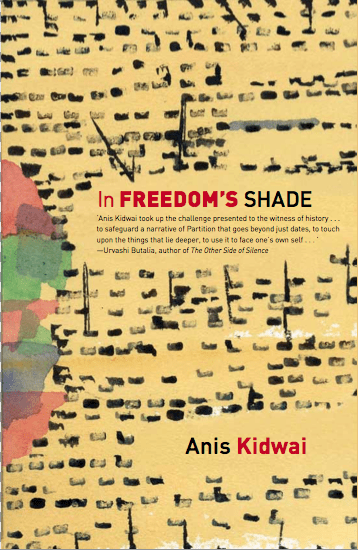
In Freedom’s Shade, by Anis Kidwai; translated from Urdu by Ayesha Kidwai; Penguin Books India 2011, Pp 382, price Rs. 450

Anis Kidwai belonged to the illustrious Kidwai family of Barabanki. The family has made more than a signal contribution to the making of India. Not only in politics and governance but also in diverse fields of creative endeavour. This short piece, though, is not about her or about her family but her most remarkable record of the unfolding tragedy in the Capital of India and in its surroundings in the aftermath of independence and partition.

Anis Kidwai, though extremely politically aware with sharp and clear views on what she saw happening, was not a political activist and would have probably continued to lead a well settled, almost sedentary life in Mussoorie, had the unthinkable not happened. Her husband, Shafi Ahmad Kidwai, the administrator of the Municipality, who had almost single handedly tried to keep peace in Mussoorie when everyone else had either given up or joined the rioters, was murdered.

Continue reading The unspeakable horrors of Delhi, 1947

The Biometricwallah

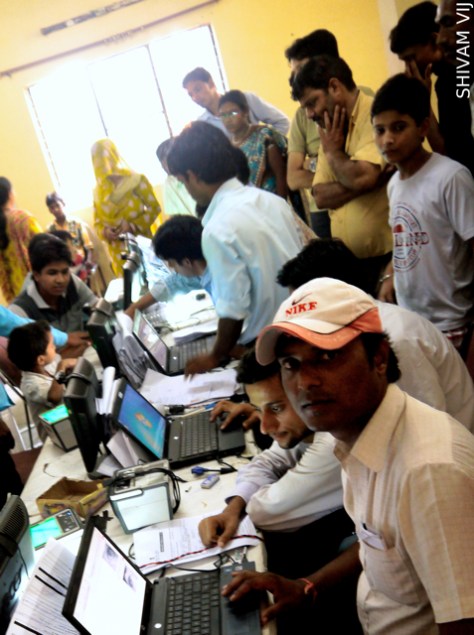
Contrary to what his name suggests, Bechu Lal Yadav, 29, isn’t a seller of goods. He is a recordist of identity. He is amongst a new breed of technical professionals that have come up overnight – the Biometricwallahs.  Continue reading The Biometricwallah

In the Courtyard of the Beloved

*

In the Courtyard of the Beloved is a visual and aural portrait of Nizamuddin Auliya Dargah, a Sufi shrine in New Delhi, India. Made from over 18,000 still images and ambient sounds recorded on-site, rapid-fire bursts of kaleidoscopic imagery assemble into fractured collages.

Each day, hundreds of pilgrims travel by airplane, train, car, rickshaw and foot to reach this shrine, which honors a 12th century Sufi mystic who believed in drawing close to God through renunciation of the world and service to humanity. Beginning with imagery from these journeys, the film then enters the physical space of the shrine; a unique nexus of marketplace, social space and spiritual haven, where devotees come to offer their prayers and find a moment of reflection away from the din of Delhi traffic. As the sun sets behind the dome, musicians begin the qawwali, a style of Sufi devotional music that ranges from contemplative religious elegy to raucous crescendo.

Executive Producer Samina Quraeshi
Original tabla score by Suphala
Audio post-production by Paul Bercovitch
Produced by Sadia Shepard
Photographed and edited by Andreas Burgess

[via]

Of Seven Cities and New Delhi

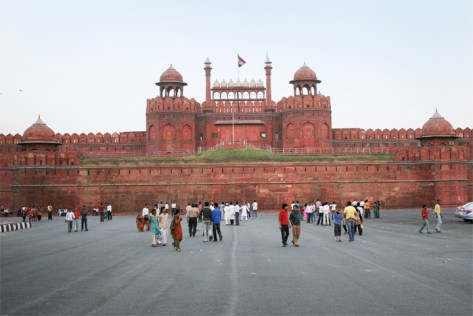
Historically, Delhi was a place that all its conquerors made their home, but for the British it was a city that only glorified the power of Imperialism. Photos: Sohail Hashmi/Himanshu Joshi

Red Fort

Continue reading Of Seven Cities and New Delhi

The Values of Property

The recently announced Rajiv Awaas Yojana (RAY) has brought back an old ghost to debates on how to allow the urban poor a foothold into the city and the possibility of upward mobility. The central policy initiative of the Ministry of Housing and Urban Poverty Alleviation is the most significant contemporary attempt to address urban poverty through providing housing to the urban poor. The “slum-free city” is back. Now more than ever, then, it is time to ask: what is a “slum-free city”?

Continue reading The Values of Property

A Free Man

Mohammed Ashraf is short and stubby, with a narrow but muscular chest and small, broad hands balanced on strong, flexible wrists. But Ashraf does not grudge the throw of the dice that has made him a safediwallah with a mazdoor’s body. A small man’s body can do things that a slenderchamak-challo cannot even contemplate.

A small man carries the ground close to him wherever he goes, even as he hangs along the side of a building three storeys high. The memory of the ground that allows him to crawl into crevices, perch on narrow ledges and balance on wobbly parapets. A short man knows the limits of his body, the extent of his reach, the exact position of his centre of balance. Unlike the tall man, he holds no illusions regarding his abilities or his dimensions; he will never overreach, overextend or overbalance.

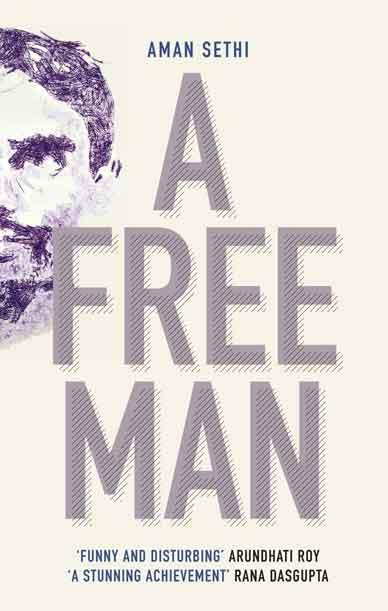
A Free Man, my first book, should be in stores this July. Read the rest of the excerpt