[This concluding essay of the series in Kafila titled Decolonial Imaginations. Links to the previous essays are given at the end.
The terms ‘decolonization’ or ‘decolonial’ have become quite critical now, given that the impulse of justice lies at the core of these concepts. Neither postcolonial nor decolonial perspectives are compatible with right-wing ideologies but the fact that Hindutva ideologues in India and the rightwing globally are now trying to appropriate that language makes it seem to some that the very idea of the postcolonial or decolonial is suspect. We believe that this demonizing of decolonial theory from a position defensive of the European Enlightenment needs to be unpacked in the interests of a mutually productive debate. Kafila has been publishing a series of interventions on what the idea of the decolonial imagination involves, locating decolonial theory as speaking from the margins, drawing attention to identities which the orthodox Left subsumed under ‘class’ and which the rightwing in India seeks to assimilate into Brahminism. Additionally the orthodox Left’s rejection of spiritual beliefs and inability to engage with them is also a factor that may have produced the space for right wing appropriations of a field marked “religion”.
We hope that these interventions will clear the ground for productive conversations on the Left rather than polarised and accusatory claims that mark some spurious claims to ‘correctness’.]
Register
In a superbly crafted, and provocative, essay titled ‘In Defense of Presentism,’ the historian David Armitage (2023) has tried to re-present the prospects of ‘presentism’ for historians particularly (even though the essay has its lessons for various practitioners across domains, critical or otherwise). As he notes: ‘Historians are trained to reject presentism: we are likely to argue that our duty is to the past and its inhabitants – and not to the present and certainly not to the future.’ But, as he shows with great analytical acuity and detail, historians are deploying the word ‘presentism’ in a variety of ways, which he then goes on to unravel, while making a case for what historians ought to be opposing and what about the present they can comfortably be accepting. My brief is surely not to detail the intricacies of Armitage’s argument for my readers here – although I would urge them to read and absorb the essay themselves (even as my moves here have been made possible by it). Rather, my effort is to quickly address some critical aspects of the ‘presentism’ that underwrites contemporary scholarship in India (and elsewhere) – although, again, for the purposes of this formulation, I shall limit myself to Meera Nanda (2025) and the terms of her critique of postcolonial and decolonial theory (henceforth PDT). My own relationship with PDT has been an ambivalent one – and, hopefully, a recent contribution will clarify that (Hegde 2025) – and there are also aspects of the critique mounted by Meera Nanda that I agree with. But this is not the ground that I will be traversing here in this short note. Continue reading A Shadowed Present and the Onus of Thought – Remarks, Non-Polemical or Otherwise: Sasheej Hegde→
[ YouTube links of Ravi Sinha’s Informal talk in Lucknow in April 2025 on “Indianity and Modernity”. Credits to Kumar Sauvir for recording, editing and posting. The title and intro are also by him ]
[ Ravi Sinha is an activist-scholar who has been associated with progressive movements for around five decades. Trained as a theoretical physicist, Dr. Ravi has a doctoral degree from MIT, Cambridge, USA. He worked as a physicist at University of Maryland, College Park, USA, at Physical Research Laboratory, Ahmedabad and at Gujarat University, Ahmedabad before resigning from the job to devote himself full time to organizing and theorizing. He is the principal author of the book, Globalization of Capital, published in 1997, co-founder of the Hindi journal, Sandhan, and one of the founders and a leading member of New Socialist Initiative.]
Bhakti Era as the Plebeian Plateau in the Civilizational Landscape of India
Guest Post by Ravi Sinha on a possible framework for looking at the millennial trajectory of Indian civilization
We have by now devoted several sessions to mapping the millennial trajectory of the Bhakti Movement across the history and the cultural geography of the subcontinent. Starting with the Tamil lands in the 7th century we followed Bhakti performing the pradakshina of the cultural landmass of the subcontinent, crossing the Vindhyas in its northward journey sometime in the 13-14th century. Our endeavour has been to understand the role of Bhakti in shaping the cultural and the civilizational mind of India. This, in turn, has been motivated by task of making sense of the role this mind plays in contemporary politics and in the rise of fascistic Hindutva in recent decades.
As we stated in the proposal to a previous session, we seek to understand the impact of Bhakti at two different time-scales. On the shorter time-scale of contemporary politics one looks at the phenomenon of communalism. The mainstream of the anti-colonial national movement considered Bhakti Movement as the harbinger of religious tolerance and syncretism that would help evolve the Indian brand of secularism. The subsequent history, however, paints a mixed picture. A social fabric and a cultural mind weaved by the Bhakti ideologies do not offer the kind of resistance to communalism and sectarianism as was expected of them. In our previous sessions we mainly stayed with evaluating the impact of Bhakti at the political-historical time-scale characterized by the problem of communalism and the rise of Hindutva.
On a longer – millennial – time-scale, however, one can evaluate the Bhakti phenomenon in the civilizational context. One can ask something like the Needham Question – why did the Indian civilization, despite its glory and accomplishments in the ancient and the medieval periods, fail to realize its cultural and scientific potentials? Why was it defeated often and why was it eventually colonized? Why did the West forge ahead, why has India lagged behind? Did the cultural mind and social ethos prepared by the Bhakti Movement play a role in the civilizational decline of India? These are very large questions not amenable to easy answers. But one must prepare to wrestle with them as they are of crucial importance for imagining and fashioning a desirable future for India. In this session, we finally arrive at the task of outlining a framework for asking and answering these questions.
For this purpose, we propose to take help of two large concepts – one of Axiality and the other of Modernity. The idea of axial revolutions was proposed for the civilizational breakthroughs that happened in the middle centuries of the first millennium BC in several different and unconnected societies – Judea (land of the Old Testament in the era of prophets), Greece (of pre-Socratic philosophers as well as of Socrates, Plato and Aristotle), China (of Confucius, Mencius and others) and India (of Upanishads, six systems of philosophies, and of Buddha) being the prime examples. We will briefly go through the idea of Axiality and see how we can understand it in the sequence of human cultural and cognitive evolution progressively from the mimetic (pre-linguistic, primarily based on gestures, rituals and body-language) to the mythic (linguistic but largely oral and narrative-based) to the theoretic (rational, abstract, normative and self-reflective). We will try to locate the Indian antiquity in the sequence of cultural evolution.
We will then make a millennial jump and outline the idea of Modernity, which can, in this context, be seen as a new kind of axial transition. The first axial transition did take the civilizations concerned from the mythic era to the theoretic era, but it still depended on the idea of the transcendental to reorder life in the realm of the mundane. The transition to Modernity, for the first time in human history, brings human autonomy to the centre-stage of history and civilization. Elimination of human dependence on the super-natural and on the transcendental is brought explicitly on the agenda and an objective and scientific knowledge of the cosmos is deployed into the service of human emancipation and freedom.
While the Indian civilization was a key example of the axial breakthrough two and a half millennia ago, its transition to Modernity has been faltering and patchy. While this may be true for many civilizations, it is especially disconcerting in the case of India which has had such a glorious antiquity at least in the domains of the mythic and of the theoretic. Of course, entire history of the intervening two millennia culminating in the colonial subjugation at the hands of the modernist imperialists is implicated in the complex and faltering progress of Modernity on the subcontinent and it cannot be explained on the basis of one cause or developments in any single arena. But one can be reasonably certain that the developments in the cultural-religious-civilizational arena play an important role in the civilizational transitions and transformations. The role of the millennial march of Bhakti must be assessed and evaluated in this context.
We will also engage with the theoretical issues that arise in this context of the materialist explanation of historical progress. There is no doubt that the historicalbreakthroughs and the transitions from one stage of history to the next happen through the push of advancing forces of production and, in this respect, the cultural-civilizational transformations are correlated with the developments in the material conditions of life. But there is a significant difference between the respective dynamics of systems and civilizations. While history progresses through replacement of one system by the next, in case of civilizations the older ones never entirely go out of existence. The older ones merely become the subterranean layers on which new layers arise or get deposited. The mimetic-ritualistic and the mythic, for example, have not disappeared from human civilization even after the axial-theoretic and the modernist-scientific stages have become increasingly entrenched.
Once again, I am not sure whether all this can be covered in one session even at the level of very sketchy outline of the argument. But the idea is to start thinking about these issues which, abstract and theoretical as they may sound, are of critical importance in making sense of contemporary politics and history.
Select Bibliography
Johann P Arnason, “The Labyrinth of Modernity: Horizons, Pathways and Mutations”, Rowman and Littlefield, 2020
Robert N Bellah, “Religion in Human Evolution: From the Paleolithic to the Axial Age”, Harvard University Press, 2011
S N Eisenstadt, “The Great Revolutions and the Civilizations of Modernity”, Brill, 2006
Neville Morley, “Antiquity and Modernity”, Wiley-Blackwell, 2009
Sheldon Pollock, “The Language of the Gods in the World of Men: Sanskrit, Culture, and Power in Pre-modern India”, University of California Press, 2006
Far away from Peshawar five men and a woman sat in a physician’s waiting room in Lucknow. The television screen that ordinarily shows some Bollywood film or a cricket match had a news channel on. It was day after the slaughter of children. The assistant who maintains the waiting list of patients and collects the doctor’s fee said something very predictable, even if heart-felt, expressing his horror and revulsion. The matter would have passed as unremarkably as most things do most of the times, except for what an elderly gentleman waiting to see the doctor had to say in response.
In a feeble yet firm voice whose conviction and sincerity was unmistakable, he said – dhaarmikata ko badhaava doge to kattarta badhegi; kattarta badhegi to aatank upajega, haivaaniyat saamne aayegi. (If you will promote religiosity, fundamentalism will grow, and from that will emerge terror and barbarism.) After a pause he added – hamaare desh mein bhee yahee ho rahaa hai, haalaan ki abhee hum pehle daur mein hain, dhaarmikata badhaane ke daur mein. (Same thing is happening in our country too, although we are in the first phase so far – that of promoting religiosity.) Continue reading Impossible Lessons: Ravi Sinha→
Meanwhile, with Shiv Visvanathan entering the debate, flogging the long dead secularist horse, sections of the liberal and left intelligentsia seem to have gone into a tizzy. Shiv’s argument merely restates in 2014 what political analysts like Ashis Nandy had been saying at least since the mid-1980s and it does so without its nuance. The long and short of this argument is that secularism is the creed of a deracinated English-speaking, West-oriented elite which cares little about the beliefs and ways of thinking and being of the majority of their compatriots. (See also Visvanathan’s piece in Economic and Political Weekly, May 31, 2014, on ‘Narendra Modi’s Symbolic War’)
Somewhere between the two poles of the fast-dwindling tribe of the Leftist gung-ho secularist and the breast-beating liberal, the possibility of a serious debate dies a quiet death. The 1980s-1990s debate on secularism had raised all the important questions about secularism and its problematic practice that Shiv Visvanathan’s piece raises but which, it seems bypassed a whole generation of Leftists who either still seem to find it scandalous to relate to religion or are suddenly discovering their alienation or worse, the virtues of religiosity. Needless to say, such a rediscovery, in the face of political adversity is not likely to be anything more than instrumental use of religion.
Our modernity is incomplete, our secularism impure, our democracy immature, our development arrested and our capitalism retarded: ask anyone trained in the social sciences, economics in particular, about what ails India today and you can be sure of getting one or all of these answers. And you can go on adding to the list of more and more things ‘we’ lack. We did not have ‘history’, we do not have social sciences – and of course, we do not have theory/ philosophy.
Everything, in other words, is about our ‘backwardness’ and our need to catch up with the West. And seen through the lens of social science, most of the world looks like this – living ‘inauthentic’ lives, always ever in the ‘waiting room of history’, to steal historian Dipesh Chakrabarty’s suggestive phrase.
In the world view of our state elites, this is actually a form of what one could call, paraphrasing Sigmund Freud, ‘Capital-Envy’. The ‘realization’ that ‘we do not have it’ can be a source of serious anxieties. That is what lies behind the current frenzied desire to ‘catch up’ with the West. And generations of feminist scholarship has challenged this unquestioned Freudian assumption that the penis is the norm and not to have it, is Lack. Perhaps women do not want it? Freud never conceived of this as possible. Indeed in today’s world, there are many men who claim that they feel they are women trapped inside male bodies. Generations of scholarship has made us realize that the aura of that grand universal theory actually rested on the fact that it did not just describe the sexes; it produced the sexual norm itself.
The vision that propels our political elites and their parallel numbers who write in the media today, is something like that fantasy of Freud. The anxiety produced by this awareness of the ‘primordial Lack’, is what drives them today towards what has been the most violent phase of development in our entire history. Violent uprooting of populations from their land, often at gunpoint, coupled with the most ruthless plunder of our common resources by unscrupulous corporations – all this and more has been going on with the state elites looking on ‘benignly’. For they seem to know something ordinary mortals do not – that all this is but the necessary price to pay for becoming ‘modern’ like them. Continue reading Decolonization of the Mind→
Science and modernity are widely considered among the most celebrated features of contemporary human civilization. Increasingly they are taken as the defining elements that distinguish our times from the times gone by. At such a sweeping level, there can be many other ways to characterize the contemporary. One can, for example, refer to capitalism, market, globalization, democracy or nation-states. One can also include various critiques of capitalism and the widespread resistance to its hegemonic and imperialistic avatars among the characteristic features of our times. Such characterizations, however, belong to a layer of historical reality that is more systemic than civilizational. Science and modernity, especially when taken as a correlated pair, characterize our times at a deeper level. They have, so to speak, seeped into the subterranean layers of contemporary historical reality.
On the face of it, such an assertion would appear to be far removed from the actual state of affairs in the real world. It would be rare, for example, to find a person whose beliefs and practices are fully consistent with established precepts of science. Such a search would be a fruitless endeavour, more or less, in any society on the planet. A similar anomaly is apparent in the case of modernity too. One can safely say that an overwhelming majority of humans in the contemporary world does not live by the canons or conventions of modernity. While few may be completely untouched by the laws and institutions of a modern polity or by the processes and pressures of a modern economy, most live by traditions and practices that do not sit well with basic attributes of modernity. Continue reading Science and Modernity : Ravi Sinha→
Modernity and socialism can be daunting subjects. Both have had a long history and both have impacted on humanity in ways few other ideas, systems or forms of life have. In a famous incident, perhaps not entirely apocryphal, Chou En Lai, when asked about the impact of the French Revolution on the western civilization by Richard Nixon, is supposed to have answered, “It is too soon to tell.”[1] It seems to me that Chou’s riposte would hold well, and with a far greater force, if the same question were to be asked a few hundred years from now about the impact of modernity or of socialism on the entire human civilization.
One asks for trouble on other counts too when proposing to deal with these topics. They have both been explored and debated endlessly and both remain enormously controversial. In the domain of ideas and theories, they generate intense, sometimes fierce, intellectual passion. In the domain of real life, they give rise to monumental conflicts and struggles even as their influences continue to seep imperceptibly into ever deeper layers of societies and forms of life through pathways that are hard to track. One must have a good reason for raking up, as many might say, a subject where ashes of time find it difficult in any case to settle on an exasperatingly burning fire. Those too, who would like to continue stoking the fire of historical and emancipatory transformations promised by these words, would need a good reason for re-entering the subject. Whether I have one or not should best be left to be judged at the end of the hour, but one must hope to add something useful and meaningful to the debate. Continue reading Mutant Modernities, Socialist Futures: Ravi Sinha→
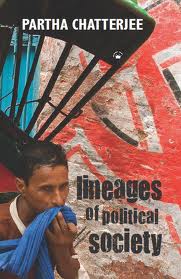
Lineages of Political Society, by Partha Chatterjee, Permanent Black, Ranikhet, 2011. Pages: 278, hardcover, Rs 750.
Over a decade ago, political theorist Partha Chatterjee embarked on what was a novel journey in the history of political thought in India and perhaps, in the postcolonial, non-Western world. Bringing together the results of decades of his own intellectual engagement with Indian politics and the question of subalternity in particular, Chatterjee began articulating a concept that has now acquired wide currency: his concept of ‘political society’. ‘Political society’, in Chatterjee’s hands, was a way of recuperating a sphere of politics that had been a permanent source of anxiety for theorists of Indian (and postcolonial) modernity and democracy – the vast domain that existed outside the designated spheres of modern politics, where the untutored masses made claims on the state and formed their own associations and organizations, unmindful of the formal grammar of rights and citizenship. A crucial part of what defines activities in this domain is ‘illegality’, or, at any rate, non-legality, where the state itself places the law in suspension in order to recognize the claims of the governed. Thus for instance, squatting by the poor on government land that is strictly speaking, encroachment in legal terms and can never acquire the status of a ‘right’, is nevertheless allowed by governments to continue through the recognition of some kind of moral claim of the poor on governments and society at large.
Even after half-a-century of introduction of metric measure in India, certain commodities like cloth, paper, furniture, land, time etc are being traditionally manufactured/measures in old units or their metric-converts. For example, cloth is usually manufactured in widths like 36” (91 cms), 48” (122 cms), 50” (127 cms), 54” (137 cms), 120” (305 cms) etc which should now be woven in metric-measures in multiples of 10 cms. It is time that measuring tapes may be available only in metric units after some specified date.
[Following my previous post, ‘We are Proud Hindus’, there has been an expected barrage of comments – all along very predictable lines. Most of them, characteristically, turn every critique of reprehensible caste practices of Hindu society into an expression of ‘casteism’ and immediately displace the criticism to their favourite enemy, Islam. For the benefit of readers who might be interested in a more reasoned debate, I post here an essay, which was written some years ago and a version of which published in South Asian Journal. This is just by way of making my own position clear. – AN ]
Politics in contemporary India is marked by the ‘resurgence’ of ‘caste politics’. In a sense, this is true. The past two decades have seen a dramatic collapse of the old political formations and parties, which had dominated the politics of the Nehruvian era.[1] Even the movements of that period, right up to the mid-1970s, were largely movements on economic issues and questions of corruption, black-marketing, hoarding and food shortages. Through the decade of the 1980s, there was a gradual erosion of the Nehruvian secular-nationalist imagination, and one of the factors responsible for it was the ‘re-emergence’ of caste in public discourse.
The watershed in this respect of course, was the famous ‘Mandal Commission’ agitation – which has become something of a metaphor in contemporary Indian politics. The Commission, which was instituted in 1978, during the Janata Party government, under the stewardship of B.P. Mandal, a socialist leader from a ‘backward caste’, was given the task of looking into the question of ‘backwardness’ of certain castes and suggest remedies for its redressal. For about a decade after it submitted its recommendations in 1980, it lay in cold storage after the Congress under the leadership of Mrs Indira Gandhi (subsequently taken charge of by her son Rajiv) returned to power. It was implemented under extremely contentious circumstances in 1990 under the Prime Ministership of V.P. Singh. As is well-known, its main recommendations included 27 percent reservations in public employment for these castes (known in India as the ‘Other Backward Classes’ or OBCs).


 KAFILA - COLLECTIVE EXPLORATIONS SINCE 2006