Tag Archives: Palestine

Citizens as Infants? – Judiciary ‘Schools’ People in Patriotism

Could it be argued that Bombay HC’s highly debatable decision on a peaceful rally against Gaza genocide is an attempt not to inconvenience the ruling dispensation?

It was the year 1763, when Genevaís ecclesiastical assembly ordered one Robert Covelle to genuflect and listen to a reprimand for having fathered an illegitimate child. Covelle refused to kneel and turned to Voltaire for help.

Voltaire, a leading light of enlightenment, outraged at the very idea that religious authorities daring to make a citizen kneel, wrote a pamphlet against genuflection comparing the act with a tyrant punishing slaves or pedant correcting children. The rest of the philosophes rallied behind Voltaire and after six years of agitation, the Genevaís ecclesiastical assembly was forced to abolish genuflection from its code 

Meera Nanda, writer and historian of science discusses, this episode in one of her monographs

Rereading this episode and seeing if around two-and-half centuries ago, the Church could be compelled to see incongruence, injustice and unreason in its own ruling, can a a similar thing be possible vis-à-vis the judiciary in the 21st century in the ‘biggest democracy in the world’?

This poser is related to a recent debatable decision of the Bombay High Court, which has rightly received enough opprobrium.

( Read the complete article here : https://www.newsclick.in/citizens-infants-judiciary-schools-people-patriotism_


Conversations on Palestine: Teredide Mane O Baa Athithi

Conversations on Palestine with an activist, a poet, a scholar

Teredide Mane O Baa Athithi (Come in, I have opened my doors dear guest) is an offshoot of Mere Ghar Aakar Toh Dekho, a national campaign in India, in Karnataka. It aims to counter the forces of hate, bigotry and polarization that have gained ground in the country by redrawing boundaries and expanding notions of trust and community. The campaign involves participants from diverse backgrounds opening their own homes and hearts to guests from equally varied locations. Teredide Mane has grown as a community, learning and unlearning through practice the concepts of guest and host, home and house, consent and comfort, celebration and sharing, listening and observing—both commonalities and diversity. [Content and editing by Madhu Bhushan, Winnu and Anita Cheria. Illustrations and design by Winnu]

We invite you into this moving and powerful conversation that has been reproduced largely in the speakers’ own words, and hope that you will add to it and take it forward. Read the whole conversation here (https://shorturl.at/JzvI5). Or a shorter note on the conversation here (https://shorturl.at/NkLHz).

Over the past months, the genocide in Palestine has come up multiple times in our meetings. Apart from engaging in acts of protest and solidarity, there was a need to go beyond ‘news noise’, and meet people engaged with and from Palestine. We decided to create a virtual space, one that was safe and intimate, to be able listen deeply to friends we had connected with in the course of our work and life journeys. This conversation, with Lisa Suhair Majaj, Smadar Lavie and Issa Samander in October, 2024, came about as a result of this intention.

Lisa Suhair Majaj is a passionate Palestinian American poet whose writings and poetry echo with the spirit of the land and people that she was herself exiled and alienated from.

Continue reading Conversations on Palestine: Teredide Mane O Baa Athithi

Statement of Support for Prof. Sameena Dalwai, Jindal University

This is a statement of support for Prof. Sameena Dalwai from the global and national academic community. We, the undersigned writers and teachers, are deeply concerned with the ordeal that Sameena Dalwai has faced for the past several weeks.

Education is key to the spirit of democracy. Autocratic regimes fear critical thinking and educators that foster it. In the series of relentless attacks on Indian universities, Prof. Sameena Dalwai is the latest.

It started with an email exchange on 7 November 2023, about Palestine shared within the university faculty that was leaked to the trolls. Dalwai was targeted as being ‘Hindu-phobic’ even though her email called for tolerance of opposing ideological views within the safe space of universities. Continue reading Statement of Support for Prof. Sameena Dalwai, Jindal University

The Gaza Siege and Need for Subaltern Internationalism – Going Beyond Hanukkah of Uncle Sam: Maya John

Guest post by MAYA JOHN

Herodotus, widely considered as the father of history, mentioned the existence of Palaistinê between Phoenicia and Egypt, and still failed to condemn Hamas. Damn all historians! – An Anonymous Disappointed Liberal

But you are neither a Palestinian nor a Muslim. Why put yourself out there in this climate? –   An Anonymous Sanctimonious Liberal

When I look at the partition of Palestine in 1947 and 1967, the ghost of India and Pakistan rise like smoke from charred buildings of Karachi and Kolkata. Tithi Bhattacharya (A historian from partitioned Bengal)

The solidarity that is needed today will have to be built primarily by the peoples themselves. Only then can hope be reborn…– Samir Amin (Egyptian-French economist of Marxist persuasion)

                On 7 October 2023, the Hamas led an attack on the Gaza envelope, which is part of the southern district of Israel, killing reportedly 1200 people. The Hamas is a political and military organization governing the Gaza Strip of Palestinian territories that are under occupation by Israel. Many considered the military incursions of 7 October as an outright terrorist attack on civilians. Yet, others called this a ‘jail-break’ in terms of a reaction to Palestinian people bearing the burden of around seventy-five years of displacement, apartheid, surveillance, and endless other atrocities. Majority of inhabitants in the Gaza Strip are descendants of refugees who were displaced from the region which became Israel after the 1948 Arab–Israeli War. Nearly two million Palestinians have been notoriously cornered into this densely populated enclave where their movement has been severely restricted, and food, water and electricity supply has been controlled by the Israeli government; making such habitation the largest open-air jail in the world. After this attack, the Israeli military has launched a disproportionately brutal retaliation, resulting in massive suffering and a mounting death toll.  

                Some, of course, seek to rationalize the ensuing Israeli-Palestinian conflict by drawing on the belief that Israelis are the original inhabitants of this region and have suffered two millennia of exodus, and that they have the right to return and settle in what is considered as the ‘promised land’ as per the Biblical belief. Others consider that Israel is a settlers colony, and that Palestinians have all the rights to recover their country. Not so long back, the compromises of the Oslo Accords were thought to be a way forward in settling the crisis by creating two states, within which Israelis and Palestinians would achieve the long-lost peace in the region. Yet, such peace has failed to materialize. In the context of rising Islamophobia, conservative popular opinion asserts that the lack of peace in the region is due to a longer history of religious strife and supposed Muslim bigotry. Needless to say, history is more complex.

Continue reading The Gaza Siege and Need for Subaltern Internationalism – Going Beyond Hanukkah of Uncle Sam: Maya John

Diwali in times of War against Children

Diwali, or Deepavali as it is called in the south, is a joyous occasion but this time it has brought only tears. What a bizarre Deepavali it is this year, with the awful blazing fires in the sky and the earth, with ear-splitting sound from non-stop bombing. I may not be in Gaza, but my mind refuses to leave the place and my very soul shudders each moment.

Continue reading Diwali in times of War against Children

Reflections on Dissent -How Is Hannah Arendt Relevant for Contemporary Israel and India? Ira Chadha-Sridhar

This is a guest post by IRA CHADHA-SRIDHAR

In 2016, the age-old conflict between Israel and Palestine has become tougher and more violent at the ground level. The year has come with several disturbing developments in the region- the intensification of the Gaza blockade, the subsequent statement by the Hamas threatening to implement an explosion unless the blockade is lifted and Israel’s rejection of the French peace treaty for the region. Jean-Marc Ayrault, French Foreign Affairs Minister said, in April 2016 that, “The two sides are further apart than ever.” In other news, Ken Livingstone, the former mayor of London, has been criticized for his statements claiming Hitler himself was a Zionist before “he went mad and ended up killing six million Jews”. The merits of Livingstone’s statements and the fallacious reasoning he employs has been rightly criticized by several international commentators. However, he has unknowingly raised larger, more important questions by his statements about how to criticize the Israeli state without being branded as “anti-Semitic” within international discourse- a problem that several commentators critical of the Israeli regime have faced. How can the international community legitimately advance its criticism of the Israeli state? Although critics of Israel are usually non-Jews, there has been a vibrant critique of the oppressive Israeli regime from the Jewish diaspora itself. For historical instruction, in this article, I draw upon the work of one of the earliest and most controversial voices of critique from the Israeli diaspora- the brutally honest voice of 20th century political philosopher, Hannah Arendt. Her book of unparalleled political influence, ‘Eichmann in Jersulelam: A Report on the Banality of Evil’, created what scholars often refer to as a “war” amongst intellectuals across the world that brought to question the validity of her theories and their political and global ramifications. (Elon 2006) Amongst the Jews, and, in particular, in Israel, Arendt’s work was met with anger and severe political backlash. She was labelled “Anti-Jew”, “Nazi” and a “Jew-hater”- labels that were intended to act as violent threats against her distinct, free intellectual voice. (Elon 2006). Continue reading Reflections on Dissent -How Is Hannah Arendt Relevant for Contemporary Israel and India? Ira Chadha-Sridhar

When I see them, I see us

Received via LINDA GORDON

Produced by Black Palestinian Solidarity

Remember the Indian commitment to Palestine! Palestine Solidarity Committee in India

Personally, it’s reached a point where there isn’t one single thing done in the name of ‘India’ that doesn’t make me deeply ashamed…(NM)

Statement from Palestine Solidarity Committee in India

The Palestine Solidarity Committee, the All India Peace and Solidarity Organisation and Indian Campaign for the Cultural and Academic Boycott of Israel condemns the government of India’s abstention from a UN Human Rights Council (UNHRC) vote for adoption of a UN Inquiry Commission report on Israel’s attack on Gaza, Palestine, last year. This is a blatant reversal of India’s longstanding policy of support to the Palestinians against Israel’s occupation of the West Bank and Gaza. The vote in the 47-member Council was overwhelmingly against Israel; 41 countries vote in favor of the resolution, only one – the U.S. – voted against it; India was one of the 5 countries who abstained.

This is the first time India has abstained on such a resolution in the UNHRC. Even in July last year, New Delhi voted in favour of a UNHRC resolution criticizing Israel for the Gaza war.

Continue reading Remember the Indian commitment to Palestine! Palestine Solidarity Committee in India

Boycott the Israeli embassy sponsored performance of the Maria Kong Dance Company in Delhi: INCACBI

Statement from The Indian Campaign for the Academic and Cultural Boycott of Israel 

Don’t let apartheid onstage!

Protest against the ‘Israel in India’ initiative!

Boycott the Israeli embassy sponsored performance of the Maria Kong Dance Company at Kamani Auditorium, New Delhi, November 4, 2014

On 4th November, 2014, the Maria Kong Dance Company will perform at the Kamani Auditorium as part of the “Israel in India” initiative, with support from the Israeli embassy in India. This is part of the 8th Delhi International Arts Festival, organised by the Prasiddha Foundation with the support of organisations including the ICCR.

The festival aims to “serve as a significant platform for cultural diplomacy” and “provide a common ground for interaction between the artists and the mass audience”. Is a common ground possible between the Israel and Indians of conscience, whether artists or citizens? Is “cultural diplomacy” possible with Israel when it has attacked Gaza so brutally earlier this year, and held its people to ransom for years? Since Israel does not respect international law and recognize the Palestinian people’s right to freedom, equality and justice, the Indian Campaign for the Academic and Cultural Boycott of Israel (InCACBI) demands that Israel be boycotted from the Indian cultural arena.

Continue reading Boycott the Israeli embassy sponsored performance of the Maria Kong Dance Company in Delhi: INCACBI

When David Became Goliath: Lee-Alison Sibley

Guest post by LEE-ALISON SIBLEY

Back in the 1960s when Hollywood was making a number of movies based on biblical stories, they came out with Orson Welles as King Saul in “David and Goliath.” I was a little kid when I saw this movie, but I remember identifying with little David who yes, played beautifully on his harp, and used his slingshot with divine accuracy. I also remember the monster Goliath – he was huge and ugly and represented the Philistines, our enemies.  I cheered in my head and my heart for David to defeat the monster and he did, so that I could feel the good guys won and God was indeed on our side, the side of the Israelites.

Like any idealistic Jew, though not religious, I went to Israel to work on a kibbutz in the summer of 1971.  I was in the south, near Eilat and the border with Jordan.  Young and naïve, I was friendly with everyone I met — the Sabras of Israel, the Christians in Bethlehem, and Arabs in Gaza. In Gaza?  Yes, I was there with a British fellow from the kibbutz who was picking up some cane furniture he had ordered.  I wasn’t supposed to be there, of course, and when an Israeli army jeep spotted me, my friend was in big trouble.  “Get her out of here immediately!” was the order he shouted.  I guess it had something to do with my appearance and that there were no other women on the street at that time.  Like I said, I was friendly with everyone – my parents did not raise me to hate, they raised me to love.  The Israelis tried to make me feel guilty for not staying in Israel, but I kept saying, “I’m an American, my home is the U.S.A.”  Still, I certainly supported Israel and every person I met there had lost someone, a family member or a friend in a war and I felt very sad for them and angry that they lived with the constant threat of attack. Continue reading When David Became Goliath: Lee-Alison Sibley

स्तब्धता और खामोशी

स्तब्धता क्या हमेशा भाषा के लोप या उसकी असमर्थता की अवस्था है? ऐसे अवसर होते हैं जब स्तब्धता अपने आप में भाषिक प्रतिकार या भर्त्सना बन जाती है.अगर चीखना एक छोर है भाषा-व्यवहार का, तो खामोश हो जाना दूसरा छोर. यह भी होता है चीख इतनी तेज़ हो और इतनी तीव्र कि साधारण श्रवण-क्षमता के बाहर हो जाए.

जिसे चुप्पी कहा जाता है, वह कुछ मौकों पर एकतरफा और कई बार दोतरफा फैसले का नतीजा होती है. खामोशी,मौन या स्तब्धता प्रायः इस बात का सूचक होती है कि भाषा के लिए जिस सामाजिक पर्यावरण की व्याप्तता को सहज माना जाता है,वह छिन्न-भिन्न हो गया है.यह नहीं कि बोलने को कुछ नहीं है, लेकिन बोलने वाला जान चुका होता है उसका बोलना व्यर्थ है क्योंकि उसे सुनने की पात्रता सामने का पक्ष खो बैठा है. Continue reading स्तब्धता और खामोशी

African Solidarity with Palestine: African scholars and scholars of Africa

We, the undersigned African scholars and scholars of Africa, hold that silence about the latest humanitarian catastrophe caused by Israel’s new military assault on the Gaza Strip—the third and most devastating in six years—constitutes complicity. Member state of NATO which mounted an air war on Libya ostensibly to protect civilians in Benghazi have been by and large quiet about the fate of civilians in Gaza. World governments and mainstream media do not hold Israel accountable for its violations of international law. We, however, as a community of scholars have a moral responsibility to do so.

Neither the violation of international law nor the destruction of Palestinian life in Gaza, however, began or will end with the current war[1]. The suffering of Palestinians is not limited to Gaza: the occupation and dispossession in East Jerusalem, the Naqab (Negev), and the West Bank; the construction of walls and fences around the Palestinian population, the curtailment of Palestinian freedom of movement and education, and the house demolitions, all have long histories that will have to be addressed. 

Continue reading African Solidarity with Palestine: African scholars and scholars of Africa

Gandhi, Palestine and Israel: Irfan Ahmad

Guest post by IRFAN AHMAD

Amidst Israel’s recent deadly attacks on Gaza and what Venezuela’s President called ‘its policy of genocide’, many have invoked Mohandas Karamchand Gandhi (1869–1948) on two counts. First, he opposed settler colonialism. One analyst in The Economic Times gave a quote, also shared on Facebook: ‘Palestine belongs to the Arabs in the same sense that England belongs to the English and France to the French’. Second, implicit in invoking Gandhi is the idea that he stood for non-violence and thus the indicting advice to the terrorised Palestinians to ‘choose peace’.

Both these positions linked to Gandhi, when analysed historically, are misleading, even incorrect and wrong. In 1921, Gandhi did oppose the imposition of Jews over the Arab land. However, later he subtly endorsed settler colonialism. As for Gandhi’s official preaching of non-violence and civil disobedience (satyagraha), they were at best tactical, contextual and temporary. Contrary to his deified mythology as apostle of non-violence, Gandhi indeed justified killing, even felt proud of violence, and opposed civil disobedience when both suited his political and national interests. Continue reading Gandhi, Palestine and Israel: Irfan Ahmad

Breaking the Silence about Gaza from Israel: Yehuda Shaul

Guest Post by YEHUDA SHAUL

In November 2012, Israel launched a military operation in the Gaza Strip called “Amud Anan”, the literal English translation of which is, “Pillar of Clouds”. Though, the official name in English was deemed, “Pillar of Defense”. A few days ago we launched another operation named, “Mighty Cliff”, which is officially called, “Protective Edge”. Both chosen titles are highly defensive in their essence. When I hear the names given to military operations in Gaza – especially the versions chosen for an international audience – I am reminded of my military service as a combatant in the Israeli army, whose full name (both in Hebrew and English) is: the “Israel Defense Forces” (IDF).

Continue reading Breaking the Silence about Gaza from Israel: Yehuda Shaul

Concerned Public Health Professionals on the Israeli attack on Gaza

The following is a statement issued by some concerned public health professionals in New Delhi, on 21st July, 2014

The world is once again witness to the macabre dance of death in Gaza unleashed by the Israeli aggressors, and once again the news of scores of innocent Palestinian deaths, including those of a number of women and children, is flooding in. The tragedy is compounded many-fold by the conspiracy of silence on this issue entered into by all the major powers of the world, who have singularly failed to take any effective measure to restrain the Israeli aggressors. The only exception to this silence is USA, Israel’s long time sponsor, which has once again blocked efforts at the United Nations to pass any motion of censure against Israel.

Israel’s alibi for the latest attack – to punish perpetrators of abduction and murder of three Israeli boys, holds little merit when Israel is the occupying force in first place and its leaders are belligerently calling for annihilation of ordinary Palestinian lives without discretion in accordance with their doctrine of ‘collective responsibility.’ The deputy speaker of Israeli Knesset, Moshe Feiglin has called Arab people “a gang of bandits” and has argued in favor of Israeli government cutting off electricity supply to Gaza in order to paralyze its hospitals. His reported statement is – “The blood of a dialysis patient in Gaza is not redder than the blood of our IDF (Israeli Defense Forces) soldiers who will, God forbid, need to enter Gaza.” Continue reading Concerned Public Health Professionals on the Israeli attack on Gaza

Last Night in Gaza: Mads Gilbert

This correspondence has been received from Mads Gilbert

Dearest friends

The last night was extreme. The “ground invasion” of Gaza resulted in scores and carloads with maimed, torn apart, bleeding, shivering, dying – all sorts of injured Palestinians, all ages, all civilians, all innocent.

The heroes in the ambulances and in all of Gaza’s hospitals are working 12-24hrs shifts, grey from fatigue and inhuman workloads (without payment all in Shifa for the last 4 months), they care, triage, try to understand the incomprehensible chaos of bodies, sizes, limbs, walking, not walking, breathing, not breathing, bleeding, not bleeding humans. HUMANS! Now, once more treated like animals by “the most moral army in the world” (sic!).

My respect for the wounded is endless, in their contained determination in the midst of pain, agony and shock; my admiration for the staff and volunteers is endless, my closeness to the Palestinian “sumud” gives me strength, although in glimpses I just want to scream, hold someone tight, cry, smell the skin and hair of the warm child, covered in blood, protect ourselves in an endless embrace – but we cannot afford that, nor can they. Continue reading Last Night in Gaza: Mads Gilbert

Last of Warsaw Ghetto Survivors Calls for Rebellion Against Israeli Occupation

Rebel against the Occupation. No–it is forbidden for us to rule over another people, to oppress another [people].  The most important thing is to achieve peace and an end to the cycle of blood[letting].  My generation dreamed of peace.  I so want to achieve it.  You have the power to help.  All my hopes are with you.  If only [you could]. – Chavka Fulman-Raban, arrested and imprisoned at Auschwitz, two of her family members died as resistance fighters.

Last year, long before this current round of blood-lust, Chavka Fulman-Raban, among the last of the Warsaw Ghetto survivors delivered, On Yom Ha-Shoah (Holocaust Remembrance Day), “a fierce denunciation of evil and injustice, including the Israeli Occupation. Her speech was offered to guests at the ceremony of Beit Lohamey Ha-Getaot (the Ghetto-Fighters House)”, says Richard Silverstein, who has translated the speech into English.

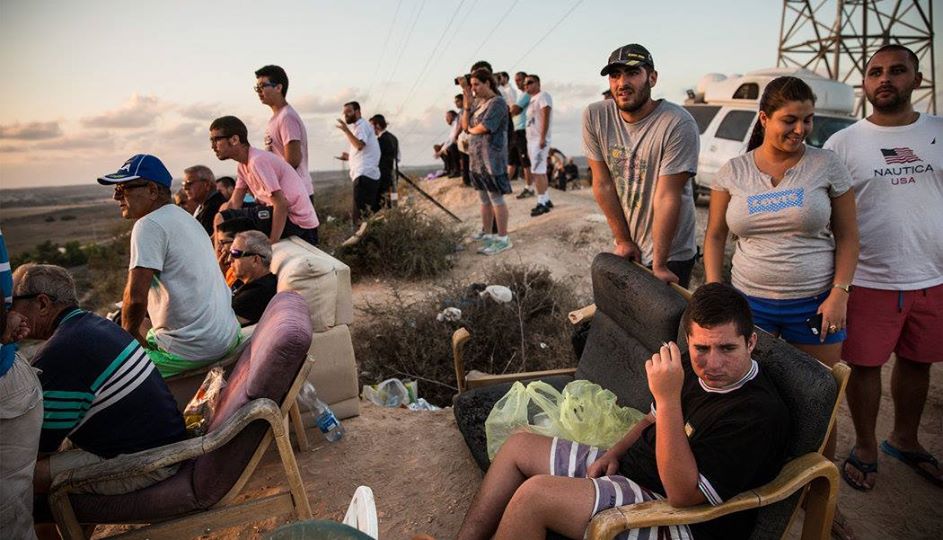
The once-invincible Nazism did not last. Zionazism too will not last, however invincible it might appear today. And we must say it loud and clear: Zionism is not about Jews and Judaism. To oppose Zionism is not anti-Semitism. As if this simple fact needs to be stated. But it seems it does, over and over again. Just as Judith Butler had to recently, contesting Lawrence Summers, President, Harvard University. So virulent is the mobilization of the Zionist fascists, especially inside Israel, that what David Shulman recently referred to as “lynch gangs” and “organized fascist groups”, have been on the prowl attacking, killing Palestinians and protestors against the bombings. And cheering the lynch mobs and fascists gangs are spectators of the kind we see below:

Israeli viewers enjoy the spectacle of Gaza

Continue reading Last of Warsaw Ghetto Survivors Calls for Rebellion Against Israeli Occupation

Life in a ‘Sterilized’ Zone, Hebron, Palestine: Ravinder Kaur

Guest Post and Photograps by RAVINDER KAUR

Map of Hebron, Courtesy ‘Breaking the Silence

On 12th June, 2014, the kidnapping of three Israeli teenagers near Hebron resulted a massive military search operation in the area. Since 30th June when their dead bodies were found north of Hebron, a Palestinian teenager has been abducted and killed in a revenge attack in East Jerusalem, and concerted air strikes have been launched on Gaza by the Israeli forces as punishment to Hamas who Israel holds responsible for the abduction and murder of the teenagers. In ten days of Israeli air strikes more than 216 have been killed in Gaza, and rocket firing by Hamas has claimed one life in Israel. A ground invasion began yesterday evening. Even as talks of a possible ceasefire, and resuming normal life, take shape, one might consider what ‘normality’ constitutes in a place like Hebron that has been at the center of the current conflict. It is in the normal, the routine that the spectacular violence takes shape.

Continue reading Life in a ‘Sterilized’ Zone, Hebron, Palestine: Ravinder Kaur

Israel’s Template for the Globe’s Future:Satya Sagar

 Guest Post by Satya Sagar

For all those who think that Israel is run by the most despicable, racist and repressive regime in the world here is some very bad news indeed.

Not only are the Israeli state and its ruthless methods here to stay they could also be, very frighteningly, a prototype of our collective global future.

 Watching the unbelievable destruction wrought by the Israelis in Gaza a simple question very high on many minds must be “How in hell does this artificially concocted child of European guilt and American ambition get away with all this again and again and again?”’

The answer is that instead of being a strange historical aberration Israel may well be a model state that global elites want to establish to control the world in the days to come. Continue reading Israel’s Template for the Globe’s Future:Satya Sagar

Scholar David Shulman on the Gaza Bombings

The following is a report from the indefatigable Prof David Shulman, who teaches at the Hebrew University of Jerusalem. Prof Shulman works on the history of religion in South India and poetry and poetics in Tamil, Telegu and Sanskrit. David Shulman writes as protests inside Israel increase, as do right-wing attacks on the protestors. This report has been circulated by Prof Louise Bethlehem of the Hebrew University of Jerusalem.

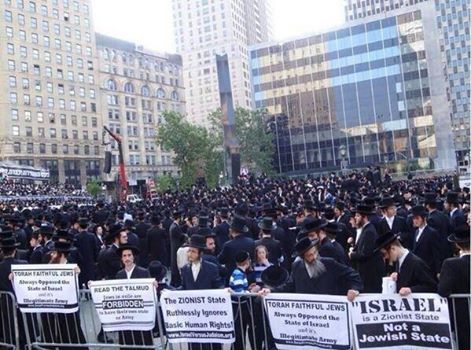
Jews demonstrate in New York Against Bombings

July 12, 2014 Umm al-Ara’is, Susya, Bi’r al-‘Id, Ma’asara

Business as usual in the South Hebron hills. There’s a war on in Gaza, but that too is business as usual, the meaningless biannual ritual in which both sides gleefully smash one another before reverting to the status quo ante. The Israeli media are drowning us in words, a vast and raucous flood, and the government is putting out its familiar, mendacious statements; perhaps in recent days only Abu Mazen has spoken the truth. The only solution, he said, is a political one, and Netanyahu is no partner. Meanwhile, rockets are flying, the Air Force is bombing, children are dying, soldiers are doing what soldiers mostly do, that is, wait around, and in South Hebron the land-grab proceeds apace, as always. Nothing, it seems, can stop that.

But wait a minute, some things have changed. Since the horrible murder of three Israeli teenagers, followed by the equally abominable revenge killing of the Palestinian boy from Shuafat, Israel has witnessed a wave of racist hatred on a scale perhaps not known before. Part of it has to do with the near-infinite opportunities of the internet: tens of thousands of virulent hate messages sent by ordinary Israelis have clogged the major sites; thousands of them call openly for revenge. I remember a time somewhat like this one, in the summer and autumn of 1982, the days of the first Lebanon War; the nadir came when a hate-filled nationalist threw a grenade into a Peace Now demonstration, killing my student, Emil Grunzweig. Some of the internet sites these days have called for the execution of leftists. Perhaps most striking of all is the utter shamelessness of this wave. Probably people used to have these same feelings but were not so ready, or eager, to state them in public. Decades of demagoguery and xenophobic incitement by the right, including, famously, by Netanyahu himself, have had an effect. The sluices are open. Continue reading Scholar David Shulman on the Gaza Bombings

The Memory of Fifty Seven Seconds: After Watching an Israeli Missile Strike in the Gaza Strip on Al-Jazeera

A short fragment of video, fifty seven seconds long, taken from behind a window in a building in the Gaza Strip which was aired last night on Al Jazeera television brought home (once again) the sheer horror of the Israeli Defence Forces’ (IDF) brutal, ongoing offensive against the people of Palestine with devastating clarity.

Continue reading The Memory of Fifty Seven Seconds: After Watching an Israeli Missile Strike in the Gaza Strip on Al-Jazeera