
Tag Archives: secularism

Why I joined AAP and Quit the CPI: Kamal Mitra Chenoy

Guest post by KAMAL MITRA CHENOY

I first became conscious of politics as a student of economics in Kirorimal College, Delhi University in 1969 when I was elected to the students union executive committee. The same year I was persuaded by a senior to stand for the Delhi University Students Union’s Supreme Council. The latter body elected the DUSU office bearers. These were heady days with some of the leading pro- Naxalites students, students like Avdesh Sinha, who later became a highly respected IAS officer, and Rabindra Ray now a sociology professor in Delhi University. Another leading star who has written on his experiences was Dilip Simeon. I also became Left but did not agree with armed struggle. At this stage I watched the mainstream Left parties and along with Marxist texts read some Left Party pamphlets.

However, a deeper and much more expansive debate was snowballing where I joined in JNU in 1972. Prakash Karat who had earlier written a thought provoking book on the nationality and language question in India was widely respected as a political leader of the JNU students and a formidable theorist. In 1973, the Student Federation of India and the All India Students Federation of which I was the unit secretary aligned for the first time after the split in the communist movement in 1964. We called the alliance progressive democratic front. We were also attacked by an extremely erudite Trotskyist Jairus Banaji who considered us revisionist and quoted extensively from Marxist classics as well as literature, philosophy and the social sciences. Because of this challenge all of us had to do our readings. Continue reading Why I joined AAP and Quit the CPI: Kamal Mitra Chenoy
Lies, Damn Lies and NaMo – Why I do not support Modi and why you shouldn’t either: M Akhil

ImageGuest Post by M AKHIL: Listen to the flourish. The stage is set, the side-kicks are in place and the sycophants are scampering tirelessly to welcome their emperor. Narendra Modi has started his journey to the high seat of Indraprastha.

Curiously enough, his current ride is being celebrated as a victory lap by his ardent supporters. A bit too quick, don’t you think? Especially for a man who was only a few years ago, in terrible danger of being convicted for one of the most gruesome state-sponsored genocides in the history of independent India. Of course, he hasn’t been convicted yet, but many of his ministers and close aides have been. Babu Bajrangi’s confessions on record must be more than enough proof for Modi’s culpability. 1 Alas! Facts get twisted in the most unimaginable ways as they threaten to blow away an edifice carefully built by a dominant plutocracy with immense help from the ‘State-Temple-Corporate Complex’. 2 Here, I shall attempt to bust the Modi bubble which is being ridiculously pumped up by the holy nexus, even as you are reading this. After all, the BJP is possibly the party with the highest following among Indian netizens and the online publicity team of the current supremo is meticulous. An alternative view will be stark, but hopefully it will serve as food for thought for those among us getting nauseated by the dominant narrative. Continue reading Lies, Damn Lies and NaMo – Why I do not support Modi and why you shouldn’t either: M Akhil

Asghar Ali Engineer (1939-2013)

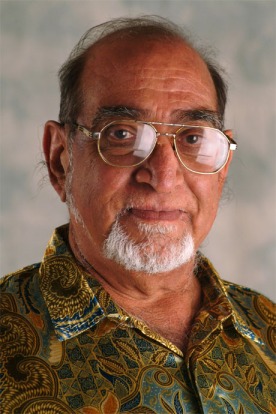
B_-_portrait.Ashgar_Ali_Engineer-Salzb05__c__RLA_Foundation__Ulrike_AltekruseAn obituary by ZAHIR JANMOHAMED: I first met Asghar Ali Engineer in January 2002 in Mumbai. I was a fellow with the America India Foundation and a few weeks later I would be posted to work with an NGO in Ahmedabad.
A few minutes before his presentation, I noticed him standing off to the side in silence, staring at the ground. I walked up and introduced myself. I was young, in my twenties, and I did not know what to say.

“As-salaam alaikum,” I said.

“Wa-alaikum salaam,” he replied.

I am not sure what response I expected but I thought that perhaps because he and I share the same faith that we might have a special bond, that my greeting would spark a conversation. After all, I always thought phrases like these serve less as greeting and more as an announcement, as in, I am part of the same religion as you.

But Asghar saab just held my hand and then put his hand on his heart. “Nice to meet you,” he said, and then stared at the ground again in silence. I thought it was odd, rude even.

As I continued to meet Asghar saab, I realized that he had very little patience for superficial connections. I witnessed this when I saw him greet crowds after his lectures. If you told him you were from the same caste or city he would not be as excited as if you told him that you also believe that we must fight patriarchy with the same vigor that we must fight communalism. Continue reading Asghar Ali Engineer (1939-2013)

Spin Doctors, Propagandists and the Modi Make-over

Elsewhere on Kafila, we have published a 7000 word long response by Madhu Kishwar to Zahir Janmohamad’s open letter to her which appeared on 15 January, followed by Zahir Janmohamad’s response. Perhaps a few things need to be stated here clearly with respect to her ‘response’. It seems to me to violate every tenet of reasoned debate and argument and is replete with name calling and stereo-typing of not just the secularist ‘other’ [who is her real other, not the Muslim] but even of the adversary she is arguing with. So if Zahir is a  Muslim, he has to be X, Y, Z and has to be believing in A, B, C. Everything starts and ends in bad faith. But then that is what distinguishes Madhu Kishwar from others. She is in her element especially in relation to those whom she disagrees with. With her there can be no disagreement – you have to be sneered and jeered at, irrespective of whether you are a Medha Patkar or an Aruna Roy. I suppose these are matters of personal style and I shall not dwell on them further.

Let me rather, turn to some of the more substantive issues raised in Madhu’s response. Zahir has answered most of them but it seems to me that a couple of vital questions still remain. Even here, though, a caveat is necessary. I have great admiration for Madhu Kishwar’s battle in defense of the rikshaw pullers in Delhi and have often said so openly to her as well as others. However, I do know that it is possible to talk to her when only we agree, which is very rare. On matters that we disagree about, I have decided that I do not want to enter into any kind of an argument with her. In any case, large parts of her ‘response’ are like Modi’s PR handouts, served to us without any sense of critical examination. Therefore, what follows below is not my reply to her but my reactions to a set of allegations she has raised about whosoever is opposed to Narendra Modi – all lumped together in a breathtaking move of reductio ad absurdum, first as secularists , who are reduced to Leftists/ NGO activists and finally to Congress-supporters (because, she says in her Modinama1, the Congress has been equally responsible for all the riots till date). I therefore, lay my cards on the table at the outset: I am an inveterate Modi-hater (and a Congress-hater as well, if that makes sense to anyone in her dichotomized universe) and Kafila is a forum with a certain, if very broad, politics that, at the minimum rules out being pro-Modi. Continue reading Spin Doctors, Propagandists and the Modi Make-over

Meanderings of a Female Atheist Muslim Indian: Samina Motlekar

This is a guest post by SAMINA MOTLEKAR: I come with baggage, with tags not all of my own making. I was born female, and as much as I want to be acknowledged as a person, I learnt early that it was pointless to deny so physical a part of my identity. I was born to Muslim parents, but that does not make me Muslim, a distinction that is unfortunately far too subtle for many minds to comprehend. Complacent in their own inherited identities, they pile on the labels smothering me into little  boxes of their making. Female, Muslim, Indian – all accidents of birth. But not all of me is accidental. By age eleven, the idea of a deity in the sky, concepts of heaven and hell, were at best stories, at worst ramblings of deluded minds to me. Not for me the fence sitting of agnosticism. I was an atheist before I hit my teens, and my belief system has endured the trials and tribulations of time. Yet they call me Muslim.

Continue reading Meanderings of a Female Atheist Muslim Indian: Samina Motlekar

Why is Naipaul Being Honoured?: Girish Karnad

This is the text of GIRISH KARNAD‘s speech at the Mumbai Literature Festival, as compiled by Outlookindia.com from various sources.

On Friday afternoon at the Tata Literature Live! festival in Mumbai, playwright Girish Karnad surprised audiences with an unexpected and spirited critique of Nobel laureate Vidia Naipaul. Naipaul was awarded the Landmark and Literature Alive’s Lifetime Achievement Award on October 31. Karnad was originally supposed to talk about “his life in theatre” in his session, but instead launched into a scathing critique of Naipaul and the conferral of the award to him

This is what he said at the festival:

At the Mumbai Literature Festival this year, Landmark and Literature Alive have jointly given the  Lifetime’s Achievement Award to Sir Vidia Naipaul.

The award ceremony held on the 31st of October at the National Centre of the Performing Arts coyly failed to mention that Naipaul was not an Indian and has never claimed to be one. But at no point was the question raised. Continue reading Why is Naipaul Being Honoured?: Girish Karnad

Of Shared Spaces and Experiences in Gujarat: Ayesha Khan

This is a guest post by Ayesha Khan

The other day, my brother dug out an old DD animation film on unity in diversity – Ek Titli, Anek Titli… We replayed it umpteen times in a fit of summer nostalgia, until we got all the lines correct. We  ignored the political subtext.  But only until it rebounded starkly on us, with the wails of  a baby that had newly come in to the family. The little one foisted on us the first ponderous responsibility – finding him a name.

The family brief for me, aunt to a six day old nephew, and equally to childhood pal Vandana, who is soon-to-be aunt to a niece in US,  was to think up  names resonating a core Indian-ness, the Muslimness, the TamBram-ness (in Vandana’s case), with a universal appeal and encapsulating  everything that is pious, lucky and great.

Continue reading Of Shared Spaces and Experiences in Gujarat: Ayesha Khan

New friends of ISKCON? On the Gita controversy

The Parliament which has remained rather dysfunctional for different reasons all the year witnessed a strange bonhomie few days back. It was difficult to believe that they are the same representatives of people who could not see eye to eye on various issues of concern and were always keen to score their point over their political adversaries. Led by the likes of Laloo Prasad Yadav – interspersed with slogans of ‘Jai Krishna’ –  the government’s alleged silence on the developments in a faraway court in Russia was called into question.

Interestingly, BJP the party which happens to be the chief opposition party, found itself playing second fiddle to the troika of Laloo, Mulayam and Sharad Yadav on this matter. The issue related to proceedings in a court in Tomsk which supposedly had found portions of ‘Gita’ objectionable and ‘extremist’ and was contemplating to ban it.

Continue reading New friends of ISKCON? On the Gita controversy

A Curious Silence and an Un-Crossed Line: In the Wake of A Disbanded Exhibition

A news item from some weeks ago, which has gone curiously unremarked and un-commented upon has made me think about the limits that the freedom of expression debate and the discourse on secularism in India unwittingly or knowingly does not seem to be able to cross, despite repeated provocation.

We all know that when the Hindu right comes to town –  declaring that this or that text should not be taught in the university, or this or that painting should not be seen, or this or that film should not be shown – the secular left-liberal intelligentsia in India automatically gets outraged, signs petitions, holds press conferences and generally vents it righteous anger. I know this because I do all these things, along with all my friends. I sign the online petitions, attend the demonstrations, express my anger and do some (or all) of that which needs to be done, that should be done. We should never give an inch to the hoodlums of Hindutva.

However, when it comes to responding to the equally aggressive, reactionary and utterly arbitrary actions of sections of the Muslim clergy and other self appointed leaders on the ‘Muslim Right’ a strange inertia seems to take hold of the best and boldest foot-soldiers of secularism in India.

Continue reading A Curious Silence and an Un-Crossed Line: In the Wake of A Disbanded Exhibition

The myth of India’s Hajj subsidy: Muhammad Farooq

Guest post by MUHAMMAD FAROOQ

Recently the Supreme Court of India upheld the constitutional validity of extending subsidy on air fare to the Hajj Pilgrims. This year Rs.280 Crores were reportedly spent by the Government of India to subsidise the air fare of one lakh pilgrims. This amounts to a subsidy of Rs.28000/- per pilgrim. The subsidy provided to the pilgrims has understandably generated a lot of debate within political and social circles in India. While the right wing political parties, when not in power, consider it as an unnecessary appeasement of Indian Muslims, the governments formed by any party have always seen it as a necessary expenditure to help Muslims perform their religious obligation of Hajj.

Since I have also performed my Hajj this year, I decided to do some quick calculations to check the veracity of the tall claims made by the GoI and the Hajj Committee regarding the subsidy amount (see box). The results were quite shocking. I checked with one of the service providers —‘makemytrip.com’— and it showed up the Saudi Airline’s fare of a little over Rs.26000/- for a return Delhi-Jeddah ticket with a gap of around forty days. It was amazing to find that the total airfare of Rs.26,000 for a hajj pilgrimage is even lower than the subsidy amount  of Rs.28,000 thousand which is allegedly paid by GoI to airlines to subsidise the “high cost” of the air tickets. Continue reading The myth of India’s Hajj subsidy: Muhammad Farooq

‘Islamic secularism’ in Bangladesh: Jyoti Rahman

'Bengal's mothers and daughters are all freedom fighters'

Guest post by JYOTI RAHMAN

Bangladesh will mark its 40th year of independence in 2011.  The celebrations have already begun, and will continue until next December.  The TV channels are already playing patriotic tunes.  One such tune is Shona shona shona.  The song says the land, mati, of Bangladesh is better than gold, and under this land sleeps many heroes: Rafiq, Shafiq, Barkat, Titu Mir and Isa Khan.

Who are these heroes?  Rafiq, Shafiq and Barkat were killed by the Pakistani authorities during the language uprising of 1952 — a milestone moment in Bangladesh’s nationalism. Titu Mir defied the East India Company and organised a peasant revolt in the 19th century. Isa Khan was a Bengali chieftain who resisted the Mughals in the 16th century.

Notice how all of these heroes are Bengali Muslim men?

Continue reading ‘Islamic secularism’ in Bangladesh: Jyoti Rahman

“I Am Still Alive”: Amitava Kumar

Guest post by AMITAVA KUMAR

Till a few days ago, I hadn’t heard of Aqeel Shatir. A friend sent me a link to a report in the Indian Express on December 20 about a poet who had been asked to pay for an anti-Narendra Modi remark in his anthology, Abhi Zindaa Hoon Main (I Am Still Alive). I got in touch with the reporter, in Ahmedabad, who had filed the story and soon after that spoke on the phone with Shatir.

Aqeel Shatir is his takhallus or literary alias. The name his parents gave him was Aqeel Ahmed. His ustad offered him a choice of two pen-names. One was Aazar, which means a sculptor, someone who carves beautiful forms from marble. The other was Shatir, whose literal meaning is chess-player but denotes someone who possesses cunning. Continue reading “I Am Still Alive”: Amitava Kumar

City in Terror: Dilip D’Souza

Guest post by DILIP D’SOUZA

Starting today eighteen years ago, for much of December and January (and then March 12), Indian killed Indian on the streets of my city. Terror at its most elemental: I felt it then. I saw it then. Others told me about it then.

Some memories of those weeks, in no particular order but they all still make my hair stand on end.

The Ghost of Jinnah, Advani and Jaswant Singh

[That the BJP expelled Jaswant Singh for writing a book on Jinnah is hardly surprising, even if it represents really the most rotten part of contemporary India’s political culture from the Right to the Left: intolerance of intellectual differences. What is intriguing is that Jaswant Singh wrote the bookknowing well that this would be the end of his political career; even LK Advani could not survive his praise of Jinnah and even though he came back, he remains a pale shadow of his former self. So Jaswant never really had a chance. I have not yet read the book but have tried to follow those who have. While a more detailed analysis will have to wait, I am posting a piece I had written sometime ago as part of a larger academic paper which deals with Advani’s Jinnah episode and the seductions of secularism. – AN ]

Advani Meets the Ghost of Jinnah
On 5 June 2005, Bharatiya Janata Party leader and former Deputy Prime Minister, Lal Krishna Advani unleashed a storm within his party and its allied organizations of the Hindu Right. On that day, speaking at a function organized by the Karachi Council on Foreign Relations, Economic Affairs and Law (KCFREAL), Advani referred to Mohammed Ali Jinnah’s speech in the Pakistan Constituent Assembly on 11 August 1947 and described it as ‘a classic exposition of a Secular State’ and Jinnah as a genuine secularist (Advani 2005). In this speech, sections of which Advani read out at length, Jinnah, the founder of the ‘Islamic state of Pakistan’ had said: ‘You are free, you are free to go to your temples. You are free to go to your mosques or any other places of worship in this State of Pakistan. You may belong to any religion or caste or creed; that has nothing to do with the business of the State…You will find that in the course of time Hindus will cease to be Hindus and Muslims would cease to be Muslims, not in the religious sense, because that is the personal faith of each individual, but in the political sense as citizens of the State’ (Jinnah 2005).

On the previous day, Advani had already fired his first salvo. He had visited the Qaid-e-Azam mausoleum where he made the following entry in the visitor’s book: ‘There are many people who leave an inerasable stamp on history. There are very few who actually create history. Qaid-e-Azam Mohammed Ali Jinnah was one such rare individual.’ And further, recalling Sarojini Naidu, underlined: ‘Sarojini Naidu, a leading luminary of India’s freedom struggle, described him as an ambassador of Hindu Muslim unity. His address to the Constituent Assembly of Pakistan on August 11, 1947, is really a classic, a forceful espousal of a secular state…’ (Sarwar 2005, Kapoor 2005). If there was any doubt in anybody’s mind that this was not just a polite entry in a visitor’s book, made in a formalistic way, Advani hastened to clear it in the speech that followed the next day.
Continue reading The Ghost of Jinnah, Advani and Jaswant Singh

Why don’t leftists get agitated over caste?

It is this silence — ‘indifferentism’ as Ambedkar had prophetically termed the caste Hindu/liberal attitude to anti-caste concerns — that continues to echo for Badhal… When only Dalits are forced to bear the burden of articulating Dalit issues they are dubbed sectarian; the casual betrayal of Dalits by the rest of society passes for secularism.

Navayana publisher S. Anand wonders why the left-liberal set stood up for an art student in Baroda but not for Dalit students at AIIMS.