The Return of Daya: Prasanta Chakravarty

Guest post by PRASANTA CHAKRAVARTY

A close friend of mine—a fine political scientist with nuanced literary sensibilities, once suggested that he is inherently suspicious of carefreeness and gaiety in relationships, friendships and in public exchanges. One must take time, let matters marinate (‘jaarano’ he proposed in Bangla) and not be prematurely upbeat and exuberant while forging bonds and taking actions. The deficient modes of resting and concealment are important preconditions in order to take on varieties of political manipulation, social one-upmanship and literary cleverness that besets our time.

Continue reading The Return of Daya: Prasanta Chakravarty

The Blue Line Bus Saga: Aman Trust

The article is based on AMAN Trust‘s research on informal labour in Delhi.
Sent by Jamal Kidwai

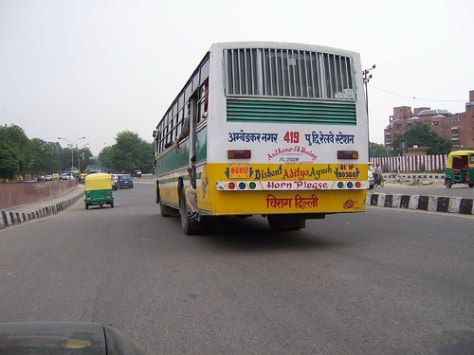
The Delhi government has announced a phasing out of nearly 3000 blue line buses from the streets of Delhi in the next few months. These buses will be replaced by nearly new 1000 low floor buses purchased to ferry athletes and dignitaries for the Commonwealth games. According to the Delhi Transport minister Arvinder Singh Lovely the phase out will be enforced under section 115 of the Central Motor Vehicle Act that deals with the emission norms. The decision has been taken even despite a petition pending in the Delhi High court regarding the decision to phase out 600 routes. According to Lovely “We will apprise the High Court about the decision and I am confident that the court will accept our proposal.”

Continue reading The Blue Line Bus Saga: Aman Trust

Aim for the Insurgent…

Source: historycommons.org

… and you just might hit the wedding party. A fascinating intellectual property rights dispute offers up a possible reason for the number of civilians killed by American drone strikes.

To quote from the article from The Register:

The dispute surrounds a location analysis software package – “Geospatial” – developed by a small company called Intelligent Integration Systems (IISi), which like Netezza is based in Massachusetts. IISi alleges that Netezza misled the CIA by saying that it could deliver the software on its new hardware, to a tight deadline. Continue reading Aim for the Insurgent…

Minutes of the seminar on ‘Azadi: The Only Way’

(Shuddhabrata Sengupta has written eloquently his account of the day-long seminar, ‘Azadi: The Only Way’. The seminar was organised by the Committee for the Release of Political Prisoners. Given below are CRPP’s minutes of the seminar. You can also see, on YouTube, two short videos showing the ruckus that some Kashmiri Pandits created before Syed Ali Shah Geelani was to speak (1, 2). Also on YouTube, in two parts (1, 2), is Arundhati Roy’s speech, for which some want her booked for sedition. Those on Facebook can also see most of SAS Geelani’s speech (1, 2, 3). A small part of Geelani’s speech is on Youtube, here. Those hurling abuses at Roy and Geelani would do well to read this text, see these videos, and engage with these ideas intellectually, instead of asking for individuals to be jailed and persecuted.)

Continue reading Minutes of the seminar on ‘Azadi: The Only Way’

GQ Boy’s platinum pain

Guest post by HILAL MIR


There are various divisions of pain the different classes of people feel in Jammu and Kashmir. Like those bank credit cards which classify customers according to precious metals—Platinum, Gold, Silver—pain is a class thing. For example, when PDP veteran Muzaffar Hussain Baig, after making a long convoluted speech in the Jammu and Kashmir Assembly, said Omar Abdullah’s name figured in the list of the people who used their authority to sexually exploit girls, the junior Abdullah was transformed into a character from a Greek tragedy.

Continue reading GQ Boy’s platinum pain

Daayen Ya Baayen

Tradition-modernity. Rural-urban. Hope-despair. Consumption-frugality. Experience-theory.

Doesn’t it sometimes seem like we may end up spending our entire lives pendulum-ing between these poles? Dipping into her Uttaranchal childhood, first-time director Bela Negi negotiates these heavy-duty extremes in the most delightfully humble way, only to emerge with an incandescent little gem of a film. Daayen ya Baayen is the story of an utterly inconsequential human being – a small blip on the grand radar of things, a man named Ramesh Majhila who returns from Mumbai to his village in the Uttaranchal hills. Continue reading Daayen Ya Baayen

The Restitution of the Conjugal Rights of the State

Despite the many thoughtful critiques of the relationship between family and the state, I have always found it a little surprising that there is very little commentary on the relationship between two strange legal fictions. The first is the idea of the restitution of conjugal rights (RCR), and the other is sedition. The restitution of conjugal rights basically consists of the right of a spouse to demand that his or her- though more often his than her- spouse cohabit with him after she has ‘withdrawn from his society’. Away from the misty world of legal euphemisms, we all know what this means: that you can be forced to sleep with a somewhat less than pleasant person against your wishes. A legal commitment to love in a marriage is a serious thing indeed which only warns us that we must proceed with such a choice very carefully.

But like many marriages, the question of choice is somewhat restricted for many people- as is indeed the case of the choice of loving your country. After all isn’t sedition a crime of passion, and the punishment of an offence of the withdrawal of love for your nation. It is interesting to see that while treason in Sec. 121 of the IPC is about the waging of war against the state, sedition is about a forced love. It is about the creation of ‘disaffection’. As Nivedita Menon points out in her post, disaffection means “the absence or alienation of affection or goodwill; estrangement”.

A legal commitment to love your nation is also a serious thing indeed, and what then is the punishment of sedition if not, the restitution of the conjugal rights of the state?

Sedition: ‘The highest duty of a citizen’

Sedition: the attempt “to excite disaffection towards the Government established by law in India”, a crime under Section 124 A of the Indian Penal Code, a provision introduced by the British colonial government in 1860.

The only revisions to this colonial legal provision since its passing have been over the years, to remove anachronistic terms like “Her Majesty”, “the Crown Representative”, “British India”, “British Burma” and “Transportation for life or any shorter term”.

But it seems “Disaffection towards the government”, the archaic usage notwithstanding, is a timeless crime. Section 124A, therefore, these few cosmetic changes apart, has remained unchanged for the last 150 years.

Continue reading Sedition: ‘The highest duty of a citizen’

Sedition provision gags free speech: Barun Das Gupta

This is a guest post by BARUN DAS GUPTA

The detractors of Arundhati Roy have found a fresh casus belli against her for her recent speech (Oct. 21) in New Delhi, on Kashmir. The participants in the polemics include such intellectuals as Swapan Dasgupta, a journalist and a BJP leader. The burden of their criticism is that Arundhati should be arrested for sedition because by her speeches she has caused hatred and disaffection towards the Government and actually championed the secession of a part of India, that is, Jammu and Kashmir.

Let us examine this matter of “creating hatred and disaffection” towards the Government, not from the legal point of view but from the political point of view. Section 124A of the Indian Penal Code says: “Whoever brings or attempts to bring in hatred, contempt or excites disaffection towards the Government shall be punished ……” Before proceeding further, let us note that the concerned section speaks of “disaffection towards the Government”, without specifying whether by “Government” the Central Government is meant or the State Governments. Since there is no explanation, it may be inferred that “Government” means both Central and State Governments. Continue reading Sedition provision gags free speech: Barun Das Gupta

Kashmir: A “No-Peace” Political Initiative

Guest post by ANGANA CHATTERJI

The 8-point Plan, New Delhi’s political initiative to address the crises in Kashmir, attests to the parallel and incommensurate realities of the sovereign and the subjugated, the Indian state and the Kashmiris.

The 8-point Plan renders obvious New Delhi’s limited comfort zone. The Plan is not an overture to healing the reality of suffering and outrage inside Kashmir. Rethinking militarization and military governance is not the priority. The ambition is to manage Kashmiris and to keep the disarray concealed from the international gaze.

New Delhi announced its 8-point Plan on September 25, 2010, following the visit to India-ruled Kashmir of a 39-member All Party Delegation from New Delhi led by Union Home Minister Palaniappan Chidambaram, and parallel to the 65th Session of the United Nations General Assembly meetings in New York City. That Defence Minister Arackaparambil Kurian Antony did not accompany the All Party Delegation was indicative of New Delhi’s mood.

Continue reading Kashmir: A “No-Peace” Political Initiative

Chhattisgarh Field notes

Over the last month, the levels of violence in Chattisgarh appear to have de-escalated to a degree. I say de-escalated rather than reduced because the violence is largely driven by raids and counter-raids between the Maoists and the security forces, which is very different from the chaotic and un-nerving violence described in the recently leaked Iraqi war-logs covered by the Guardian and the NYT.

Sources in the police and the Maoists agree that the reduction is largely due to this year’s torrential monsoons which submerged large parts of the interiors in Dantewada and Bijapur. In the monsoons, the jungle tracks used by both forces turn into fast moving streams, making it difficult to launch operations and confining the forces to their camps.

Continue reading Chhattisgarh Field notes

WikiLeaks, Azadi and Arnab Goswami: Monobina Gupta

Guest post by MONOBINA GUPTA

This Friday Dean Baquet, Washington Bureau Chief of the New York Times defended his paper’s publishing of explosive information gathered by WikiLeaks, putting the US intelligence and the military establishment squarely in the dock for the Iraq war. The largest ever classified military leak in history, the WikiLeaks revelations have exposed the complicity of the US military and civil administration in whittling down the number of civilian deaths/casualties as well as ignoring hard information about the torture of US soldiers in the hands of Iraqi forces.

Baquet said that his paper worked on stories culled from nearly 4,00,0000 documents furnished by WikiLeaks as “it would any other journalistic project.” He also pointed out that it is not often that reporters get to scrutinize documents testifying to the largest US intelligence leak ever.

Continue reading WikiLeaks, Azadi and Arnab Goswami: Monobina Gupta

Bhagwat Purana of a Different Kind

(This post is by SUBHASH GATADE. It was initially inadvertently posted under Aditya Nigam’s name. The error is deeply regretted.)

I. Conflating Hinduism and Hindutva

Mr Mohan Bhagwat, the ‘young’ Supremo of an eighty plus year old exclusively male cultural organisation called Rashtriya Swayamsevak Sangh is in high spirits these days.

It is not very difficult to understand the glee on his face which has to do with the latest developments in the cause celebre of Sangh Parivar. One can even notice that every member of this different kind of ‘family’ also seem to be upbeat , whose representatives can be traced on neighbourhood playground in the morning doing drills, playing games or listening to ‘sermons’ of their seniors which they call Baudhik.

Continue reading Bhagwat Purana of a Different Kind

Let Delhi have its thali

Guest post by HILAL MIR

During the convention, Azadi the only Way, at LTG auditorium on Thursday, a potbellied man was standing on the aisle, listening intently to the speech of professor of history at Jadavpur University Sugata Bhadra. The man, I reckon, might be easily burdening earth with nearly 130 kilograms of his fair, north Indian bulk.  The professor was stripping the Indian state to its bare minimum and the audiences clapped. The man could stand it no more. I soon found out his voice was equally weighty, and gravelly—a cross between Shatrugan Sinha and Kulbushan Kharbanda. Quite audibly he said jis thali ma khatey hai usi main chaid kartey hain. In Bollywood films this saying condemning treachery is reserved for domestic helps who fall in love with the pretty daughters of their employers. Here, the context was different. A Maoist sympathizer was sharing the dais with a Kashmiri pro-freedom leader who was sharing the dais with a Sikh secessionist who was sharing the dais with a Naga human rights defender…A veritable thali of secessionism and dissent indeed. No wonder Arnab Goswami was hysterical. Continue reading Let Delhi have its thali

The Japanese are telling you something, MMS

Manmohan Singh is in Tokyo, trying to conclude yet another nuclear deal with yet another country. As the deal is under a cloud, many Japanese citizens have written an open letter to him:

It is true, as India has repeatedly pointed out, that the Nuclear Non-Proliferation Treaty (NPT) is an unequal treaty. However, looking at India now, one cannot help thinking that India believes power and prestige derive from the possession of nuclear weapons. India might have adopted a nuclear no-first-use strategy, but seen from the perspective of the experience of the Hibakusha, the possession of nuclear weapons is by no means a source of power and prestige. Rather, it is the epitome of immorality.

India reaffirmed its moratorium on nuclear testing when the Nuclear Suppliers Group (NSG) amended its guidelines to allow a special exemption permitting nuclear cooperation with India, which is not a member of the NPT. However, India has not promised never again to conduct a nuclear test. Nor has it agreed to IAEA safeguards that would prevent it from using domestically produced material to produce nuclear weapons. Under these circumstances, given that India has not promised not to produce nuclear weapons in future, if Japan were to proceed with cooperation on nuclear technology with India, this would be interpreted by other countries, including Pakistan and other Islamic countries, as meaning that Japan, the victim of nuclear weapons, is cooperating in India’s development of nuclear weapons. [Read the full letter]

Azadi: The Only Way – Report from a Turbulent Few Hours in Delhi

Dear Friends,

I was present and speaking a few hours ago at a meeting titled ‘Azadi: The Only Way’ on the situation in Jammu and Kashmir, organized by the Committee for the Release of Political Prisoners at the Little Theatre Group in Delhi yesterday (21st October). I was not present from the beginning of the meeting as I was traveling from another city, but can vouch for what occurred from around 4:30 pm till the time that the meeting wound up, well after 8:00 pm in the evening.

The meeting took place in the packed to capacity auditorium of the Little Theatre Group on Copernicus Marg at the heart of New Delhi. Several speakers, including the poet Varavara Rao, Prof. Mihir Bhattacharya, Sujato Bhadra, Gursharan Singh, Mr. Shivnandan (?) an activist from Jammu, Professor G.N.Saibaba, Professor Sheikh Showkat Hussain – Professor of Law, Srinagar University, the journalist Najeeb Mubaraki, Dr. N. Venuh of the Naga Peoples Movement for Human Rights, the writer Arundhati Roy and myself spoke at the meeting. (I may be missing out some names, for which I apologize, but I was not present for a part of the meeting, at the very beginning) The climax of the meeting was a very substantive and significant speech by Syed Ali Shah Geelani of the Hurriyat Conference (G), which spelt out the vision of liberation (Azaadi) and Justice that Syed Ali Shah Geelani held out before the assembled public, of which I will write in detail later in this text.

Continue reading Azadi: The Only Way – Report from a Turbulent Few Hours in Delhi

Lovely’s Lane: Alok Rai

Guest post by ALOK RAI

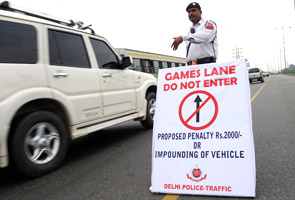
It was bound to come sooner or later. The wonder – the absolute, outrageous, impudent surprise of it all is that it has come so soon. The Games have barely limped to their pathetic conclusion – and those of us who are waiting for the post-Games reckoning are waiting but impatiently, inadequately consoled by the sound of the sharpening of the knives, the braiding of the hangman’s rope – or, most likely, the Japanese water torture of the promised Shunglu probe. And in the midst of this unfolding fiasco, this still-running disaster, the lovely Mr Arvinder Singh Lovely, Delhi’s Transport Minister, has made the suggestion that the insult of the Games lane, the closing off to the public of a significant part of the road which has been made with public money, be made permanent. This – as we were told in full-page ads paid for by us – was done with threats of  a hefty fine or, worse, far worse, being exposed to the courtesies of a Delhi cop. The ineffable experience of crawling along patiently (but proudly, always proudly!) while sundry others flashing CWG insignia whizzed past in the CWG lane – an experience that so many of us chose to miss, could now become a permanent feature of the metro experience. I can’t wait!

Continue reading Lovely’s Lane: Alok Rai

Reading Ayodhya Judgement II: Biswajit Roy

Guest post by BISWAJIT ROY

In my earlier piece, I had noted Justice Khan’s pluralist-nationalist sentiments and his anguished pleas to Muslims to ‘avail the opportunity to impress others with the message’ of ‘peace-friend ship- tolerance’ by accommodating Hindu faith-based claims to the area under the central dome of the demolished mosque as Ram Janamsthan. But I failed to find similar sentiments or espousal of the need of inter-community reconciliation on equal footing in the ‘bulky’ exposition of Justice Agarwal, despite his concurrence to Khan’s order for three-way partition of the disputed land, as well as justice Verma’s judgment that had awarded entire place to Hindus.

Continue reading Reading Ayodhya Judgement II: Biswajit Roy

After the Games: Alok Rai

Shera

Guest post by ALOK RAI

I had imagined that there would be time after the Games. Kalmadi and his cronies would have to hang, of course, but it could have been done in a measured fashion. Now, it appears that there is no time to lose. The Shameless One has actually said something about bidding for the Olympics! And with the promise of enough money in the trough, we can expect the pigs to grunt their approval too – just like they did the last time. But in the name of all the people who have been uprooted, and had their livelihoods destroyed; the students who have been thrown out of their hostels; the long-suffering citizenry of Delhi that is currently undergoing the final stage of the insult and humiliation that has been heaped on them over the past year in the name of the Games, I say, enough! Hang the bastards, now!

But I should clarify quickly. I am not so naïve as to be outraged by the corruption. It is the stupidity I am particularly offended by. After all, corruption is only one half of the story. And, frankly, the corruption is hardly surprising. Corruption, to my lay understanding, is the whole point of these large “public” enterprises – it enables the crooks-in-power to get their hands on the money that has been gouged from the poor. That is exactly what everyone expects – the poor victims, the crooked beneficiaries. But surely the stupidity is gratuitous?

Continue reading After the Games: Alok Rai

No to social apartheid! JNU students protest today against CWG ‘view cutters’


AP photo by Manish Swarup


Latest Indian addition to the English language: View cutter.
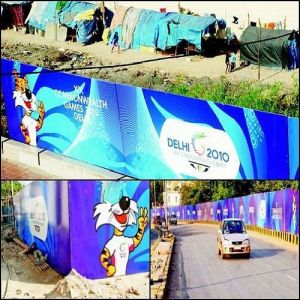
The government and civic agencies in association with the Commonwealth Games Organising Committee (OC) had identified several sites central to hosting the Games where view cutters were put up to conceal the eyesores as well as for security reasons.
A government official said one of the purposes to put up the view cutters was to screen the beggars who crowd major religious and historical landmarks.
The plan is to relocate the destitute to parks and surround the place with slick banners and paraphernalia sporting Games mascot Shera and other logos, the official said.
Protest March today, 13th of October, 4 p.m. from Ganga Dhabha to the slum dwellings at the Priya crossway. 


Leaflet issued by the joint protest committee, JNU

Friends, CWG 2010 is now almost coming to an end. The whole country has been in a celebratory frenzy for the last two weeks. The government has made the successful completion of these games an issue of “National pride”. They have left no stones unturned to impress the whole world. The same government which claims to have no money when it comes to the issues of drought, health and education has wasted thousands of crores on just the opening ceremony. It is distressing to see that while we are counting medals won by India, we have completely forgotten that there is a vast section of people who instead of benefitting are adversely affected during our blind celebration of this “colonial hangover”.

Continue reading No to social apartheid! JNU students protest today against CWG ‘view cutters’