When the State Celebrates the People’s Independence but the People Don’t: Twelve Questions for the Press Trust of India

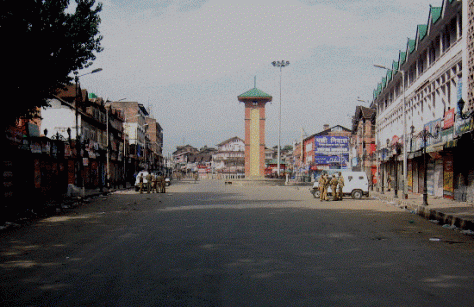
Srinagar's Lal Chowk on 15 August 2011. Photo credit: Zahoor Zargar / KashmirDispatch.com

To:

The Editor,
The Press Trust of India,
New Delhi.

Dear Editor:

This is regarding your news report, “I-Day Celebrated Peacefully in Kashmir Valley“.

While the news report tells us how the celebrations were held by the chief minister in Srinagar and the deputy chief minister in Jammu, and what arrangements were made for the celebrations to take place, there’s one line in that report that tells us:

Meanwhile, normal life was was affected in Kashmir Valley due to a shutdown called by both factions of Hurriyat Conference and tight security restrictions for the Independence Day.

I have a few questions for you.

Continue reading When the State Celebrates the People’s Independence but the People Don’t: Twelve Questions for the Press Trust of India

जोश मलीहाबादी की एक नज़्म – आज के नाम

जोश मलीहाबादी की नज़्म ‘रिश्वत’ के कुछ टुकड़े, इस स्वाधीनता दिवस के नाम.

[Apologies for some missing nuqtas, despite my best efforts.]

लोग हमसे रोज कहते हैं ये आदत छोडिये
ये तिजारत है खिलाफे-आदमियत छोडिये
इससे बदतर लत नहीं है कोई, ये लत छोडिये
रोज अखबारों में छपता है की रिश्वत छोडिये

भूल कर भी जो कोई लेता है रिश्वत, चोर है
आज कौमी पागलों में रात-दिन ये शोर है. Continue reading जोश मलीहाबादी की एक नज़्म – आज के नाम

Onwards to the Independence of the Corrupt!

Let us pledge this 15th of August, that we will tirelessly work towards the independence – nay dictatorship – of the corrupt. We must tirelessly fight every attempt to raise  corruption as an issue – by gullible people who do not understand that corruption is not a real issue. We will not allow such people to be misled by demagogues and fascists who are  interested only in power – even if they do not show their hunger for power by contesting elections. Indeed, precisely because they do not contest elections.

Is the new mantra of democracy? How else do we understand the deafening silence on the series of dictatorial measures adopted by the government, on the part of all those who have been vocal, indeed strident, in their attack on the Anna Hazare movement? It is one thing to be opposed to the Anna Hazare movement but the silence – from parties as well as intellectuals, democratic rights groups and self-righteous editorial commentators of the Indian Express – on the desperate measures being adopted by one of the most corrupt governments ever, is inexplicable. It is as if the only threat to democracy today comes from a group of people who want to raise their voice in civil disobedience against public money being looted by elected representatives acting at the behest of powerful corporate interests.

First the Delhi Police simply refused permission to Anna Hazare and the India Against Corruption fast. Then they asked them to hold their protest in Burari! That is to say on the border of Haryana. This was but another way of disallowing it. Then they came out with a novel idea – a set of preconditions that include an undertaking that there will not be more than 5000 people and that the fast will be wound up in three days. Clearly, no self-respecting set of protestors will agree to such conditions and so ‘Team Anna’ refused to sign the undertaking.

Continue reading Onwards to the Independence of the Corrupt!

Songs After Independence

Guest Post by Indu Vashist

Click here for full broadcast: Songs After Independence

Acknowledging Independence day without nationalism, the hosts of Desi Dhamaka use Independence Day as a platform to explore contemporary social and political issues in South Asian. Featured are songs in Urdu, Hinglish, Tamil, Bengali, Punjabi, English, just to name a few. The artists featured range from Iqbal Bano singing to Faiz Ahmed Faiz’s lyrics to Indian Ocean, from Alisha Chinoy to Mohd Rafi, and much more.

Montreal based Indu Vashist and Srinath Baba are the hosts of Desi Dhamaka, a South Asian music show with a political and social twist. It airs on CKUT, a non-profit, campus-community radio station based at McGill University. CKUT provides alternative music, news and spoken word programming to the city of Montreal and surrounding areas, 24 hours a day, 365 days a year. Hear us at 90.3 MHz on the FM dial, 91.7 by cable, or listen on-line.

What caste do you think the Financial Times is?

See update below.

So… I get a phone call yesterday. It’s a reporter from the Financial Times who wants to know what I feel about the recent ban on the movie Aarakshan in certain states, and also what do I feel about caste-based reservations in general, whether caste is still relevant in the India of today, the theory that quotas just increase inequality etc.. I tell her I haven’t seen the movie, and if she still wants to know what I feel about caste-based reservations we could talk for a bit. She says she absolutely wants to know. So I say fine, and we have a 45-minute conversation. Allow me to reproduce a very simplified version of that conversation (in Q&A forrmat):

1. Q: Do you believe movies like Aarakshan can be provocative or controversial; as in, are certain groups justified in taking offence and asking for a ban? Continue reading What caste do you think the Financial Times is?

Letter from Ladakh

13th August 2011

Dear Chintan,

Some days ago, I was at Pangong Tso. Pangong is a lake, a large saltwater lake. I heard some days ago that the lake is not very deep. The waters were blue, green and clear at different spots, reminding me of my first visit to Robben Islands in Cape Town in 1999 where I was awed at the different colours that the sea assumed in the course of its course. There is no fish in Pangong lake, as I was also told some days later. We only saw a mother duck swimming with her babies and a few insect-like fish. Also, there is no boating permitted on the lake. This is because Pangong Tso is a border area where India border with China and for security reasons, no activity is permitted on the lake.  Continue reading Letter from Ladakh

Issues in sri lanka today: A primer for activists in india

Originally written for the forthcoming Human Rights Forum Bulletin

Very often issues related to sri lanka are spoken in a manner that is disjointed from one another. We often do not have a clear holistic picture. Many of the problems in stands vis-à-vis sri lanka come from this lack. We need a holistic picture not just of the present situation but of past histories. The holistic picture needs to be rigorous and honest; based on continuous work on the area and gathering of knowledge. In the case of sri lanka, as in many other things in the world, the significance of this cannot be stressed enough. We barely have any reports that have come out of sri lanka that are either biased or have had to struggle to expose many things and those concerned have often paid a heavy price; sometimes the price has been their life.

A friend from sri lanka, who lives in Colombo, recently commented that, right now, the situation is worse than during the war in some senses. The surveillance and the hidden violence is so intense and widespread that it is hard to escape it and there is never enough warning. The quest to turn sri lanka into a Sinhala Buddhist nation governed by a fascist is well underway. All of this being done under the garb of democracy; a garb that has not been hard to look right through. Continue reading Issues in sri lanka today: A primer for activists in india

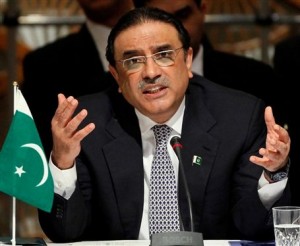
In Defence of Asif Ali Zardari: Abdullah Zaidi

Guest post by ABDULLAH ZAIDI

What comes to your mind with the mention of Asif Ali Zardari? “A cunning, vile, and corrupt man,” said my 19 year old cousin. This was a good summation of what the urban middle-class thinks of him. The more I hear people talking about him the more I am convinced of the power of propaganda. “Give the dog a bad name and hang him,” Zardai once said about himself. That is what is at work here.

Despite what has been said about him, Zardari did have a political background. His father Hakim Ali Zardari entered politics well before Partition and was a member of the Khaksaar Tehreek in 1931. He was first elected to the National Assembly in 1970s. All this talk of Zardari as a political orphan who hogged the Bhutto dynasty upon marriage with Benazir, is a non-starter. In Benazir’s husband, the Bhutto family wanted someone who would remain loyal to her. That is exactly what they got in him. For Zardari, family would always come first. This was the case at the time of Benazir’s death, when he kept the family together. Benazir would often tell close aides that despite his failings, Zardari always remained loyal to the family. Continue reading In Defence of Asif Ali Zardari: Abdullah Zaidi

Breivik’s model nation and migrants in South Korea: Bonojit Hussain

Guest post by Bonojit Hussain

Norwegian mass killer Anders Behring Breivik, in his manifesto, hailed Hindutva forces in India as an important ally in his envisaged fight against what he calls the “cultural Marxist/social humanist” world order. But he seems to be far more impressed by the conservative cultural milieu of South Korea as far as migrants are concerned; so much so that his manifesto is not only replete with praises for South Korean society and State but also his stated goal for Europe is to achieve a “mono-cultural” ethos, modeled on South Korea. Breivik believes that South Korea being a “scientifically advanced, economically progressive” society “out rightly rejects multiculturalism and Marxist cultural principles”.

Breivik’s manifesto might appear to be full of rambling political rants; but it seems he is not radically off the mark in understanding Korea’s hatred for migrants. So much so that right wing groups in Korea must have smiled and said in Unison “At last! Somebody recognizes our real value”.

Continue reading Breivik’s model nation and migrants in South Korea: Bonojit Hussain

Why Devender Pal Singh Bhullar should not be hanged

This public statement was issued by AMNESTY INTERNATIONAL in June

India: Amnesty International calls for death sentence on Devender Pal Singh not to be carried out

AI Index ASA 20/033/2011

Amnesty International calls on the Government of India not to carry out the death sentence imposed on Devender Pal Singh in 2001 after his conviction in an unfair trial. Under international law, the execution of a person convicted and sentenced to death in an unfair trial is a violation of the right to life. Continue reading Why Devender Pal Singh Bhullar should not be hanged

Parliamentary Sovereignty or an Active Citizenry? V. Krishna Ananth

Guest post by V. KRISHNA ANANTH*

The political class, cutting across the spectrum, is now being haunted by a spectre. Anna Hazare has captured the imagination of a cross section of the people and his campaign is certainly gathering support. It remains to be seen if this support translates into a movement on the streets and more so against the state machinery that is threatening to pull all the stops. The people have shown such courage in the past. That is another matter.

Team Anna’s decision to go ahead with protests against the draft Lok Pal Bill, as approved by the Union cabinet, has spurred a debate. The proponents of the draft bill as well as sections in the political arena who claim to oppose the Government are united against another round of fast by Anna Hazare; they call it blackmail and an attempt to usurp Parliament’s power to legislate. They also claim that the principles of democracy shall not be sacrificed.

A number of them are on record that the draft proposals are subject to amendments and that the power to propose amendments and decide on them shall rest with the elected representatives of the people. It is another matter that the Prime Minister, who heads the cabinet, qualifies as a representative of the people only because membership of the Rajya Sabha is considered as good as being a member of the Lok Sabha to remain a minister under Article 75(5) of the Constitution. In any case, the fact is that Dr. Manmohan Singh has claimed, in an affidavit, that he is ordinarily a resident of Assam! We all know the truth but that too is besides the point.

Continue reading Parliamentary Sovereignty or an Active Citizenry? V. Krishna Ananth

India and Pakistan: A Matter of Taste

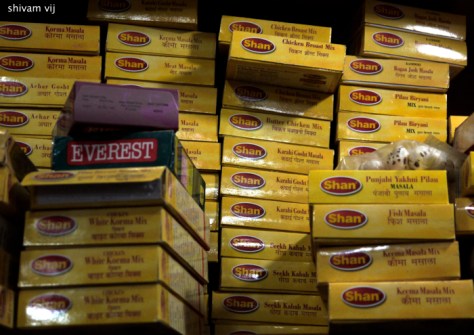
Imported from Karachi, Shan masalas are a hit in Delhi. They make sure anyone can make good Biryani or Korma. Photo taken at a grocery store in south Delhi by Shivam Vij
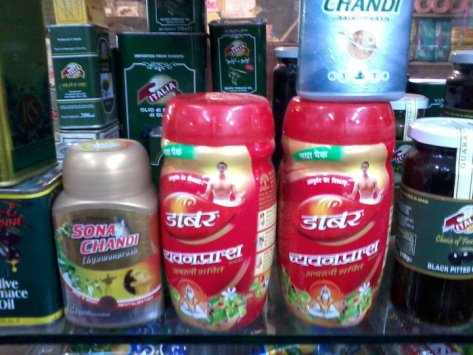
Dabur Chawanprash at a grocery store in Lahore. The Devnagiri script on the pack would be a rarity in Pakistan! Photo credit: Shiraz Hassan

Democracy, Populism and the ‘Middle Class’: The Return of ‘Anna Hazare’

[This is a considerably expanded version of an article that was published in Himal May 2011. It is being re-published, elaborated and updated, in the context of the farcical draft of the Lokpal Bill roduced by parliament and the threatened round 2 of the movement. – AN]

Corruption – a Systemic Affair?

Let me start with an ’emperor’s new clothes’ kind of question: What is a systemic understanding of ‘corruption’? What is a political understanding about corruption as opposed to say, a touchy-feely ‘moral’ problem? Yes, some of these phrases are straight from Arundhati Roy’s ‘When Corruption is Viewed Fuzzily’, published in the Indian Express on 30 April. But my question is not directed only at her. She represents – at least on this issue – a much wider consensus among sections of the radical intelligentsia.

Roy herself has left nothing to the imagination as to what she means:

“Among the millions of understandably furious people who thronged to Jantar Mantar to support Anna Hazare and his team, corruption was presented as a moral issue, not a political one, or a systemic one — not as a symptom of the disease but the disease itself. There were no calls to change or dismantle a system that was causing the corruption. Perhaps this was not surprising because many of those middle-class people who flocked to Jantar Mantar and much of the corporate-sponsored media who broadcast the gathering, calling it a “revolution” — India’s Tahrir Square — had benefited greatly from the economic reforms that have led to corruption on this scale.”

To her, the system that lies at the root of corruption is embodied in the ‘economic reforms’, which have led to corruption on this scale. I have no way of measuring the scale – though I might be inclined to agree with her that in my living memory, I have not seen so much compressed into such little time-space – from CWG to l’affaire Niira Radia to Adarsh Housing scam and the Bellary brothers – not to speak of the daily corruption in land acquisitions that dot the landscape of the country. Nonetheless, I do remember that something like the Bofors scandal or the ‘irresistible rise’ of Dhirubhai Ambani – all predate the ‘economic reforms’. And of course, I will not even try to mention the innumerable cases of corruption from Nagarwala onwards – including political corruption that led to big mass movements in Gujarat and Bihar in the 1970s. Those were the days when Mrs G proclaimed that ‘corruption is a global phenomenon’. To me saying corruption is systemic and must be analyzed ‘politically’ (whatever that means), sounds pretty much the same.  So, if neo-liberalism is responsible for corruption, how do we explain the instances mentioned above? How do we understand the great socialist states which secreted corruption from every pore? What does a ‘systemic analysis’ of corruption really tell us?

However, Arundhati Roy was making this point, it seems to me, not in order to analyze the phenomenon of corruption but to comment on the Anna Hazare movement and its ‘character’:

“When corruption is viewed fuzzily, as just a touchy-feely “moral” problem then everybody can happily rally to the cause — fascists, democrats, anarchists, god-squadders, day-trippers, the right, the left and even the deeply corrupt, who are usually the most enthusiastic demonstrators.”

Continue reading Democracy, Populism and the ‘Middle Class’: The Return of ‘Anna Hazare’

Deconstructing The NAC : Ruchi Gupta

Guest post by RUCHI GUPTA

The past couple of months have seen a renewed attack on the National Advisory Council (NAC). The NAC has been decried as an unconstitutional, undemocratic, “super-cabinet” where unaccountable “jholawalas” hatch harebrained schemes guaranteed to run the government aground. Another line of criticism has focused on the process of the formation of the NAC, its space within the Indian Constitution, and its capacity to influence policy. The two criticisms merge with the demand to disband the NAC on the count that the NAC does not have to face the outcome of its recommendations, and by virtue of it being chaired by the head of the ruling Alliance, can arbitrarily force the implementation of its recommendations.

There is however, a need to examine how the NAC has functioned, what it has done, as well as understand the space it occupies in the policy-making paradigm of the country. While the concerns about the legitimacy of the NAC relate to important issues of Constitutionality, the criticism about the nature of its policy recommendations is motivated by ideology and is of much less relevance to its impact on democratic processes.

It is true that the NAC is an entity created to give the leader of the ruling alliance a role in policy making. Nevertheless, partly through the kind of members chosen, and the norms of functioning it has evolved, it has opened up the otherwise closed and secretive processes of formulation of law and policy, beyond its own membership to citizens groups and people with expertise. It can, in fact with some effort become a platform to further a more just and participative democracy. In this essay, we deconstruct the NAC and situate it in its political context to understand both its pitfalls and potential.

Continue reading Deconstructing The NAC : Ruchi Gupta

यहाँ से शहर को देखो …..

[यह लेख “बस्ती तो बसते बसती है” शीर्षक से आउटलुक हिंदी  के  स्वाधीनता विशेषांक में छपा है.]

अब जबके हर तरफ यह एलान हो चुका है के दिल्ली १०० बरस की हो गयी है और चारों ओर नई दिल्ली के कुछ पुराने होने का ज़िक्र भी होने लगा है, इन दावों के साथ साथ कि “दिल्ली तो सदा जवान रहती” है और “देखिये ना अभी कामनवेल्थ खेलों के दौरान यह एक बार फिर दुल्हन बनी थी”, वगेरह वगेरह, तो हमने सोचा के क्यों न इन सभी एलाननामों की सत्यता पर एक नजर डाल ली जाए, और इसी बहाने उस दिल्लीवाले से भी मिल लिया जाए जो इस अति प्राचीन/ मध्यकालीन/ आधुनिक नगरी का नागरिक होते हुए भी वैशवीकरण के झांसे में इतना आ चुका है के वो अपने आप को २१वीं शताब्दी के पूर्वार्द्ध में आने वाले आर्थिक संकट को पछाड देने वाले चमचमाते भारत देश की राजधानी का शहरी  होने का भरम पाले हुए है.

अब सब से पहले तो यह फैसला कर लिया जाए के नई दिल्ली है किस चिड़िया का नाम? पाकिस्तान के मशहूर व्यंग कार इब्न-ए–इंशा ने अपनी विख्यात पुस्तक उर्दू की आखरी किताब में एक अध्याय लाहौर के बारे में लिखा है.  इस अध्याय में इंशा कहते हैं “ किसी ज़माने में लाहौर का एक हुदूद-ए–अरबा (विस्तार) हुआ करता था अब तो लाहौर के चारों तरफ लाहौर ही लाहौर वाके (स्थित) है और हर दिन वाके-तर  हो रहा है”

एक फर्क है, इब्न-ए-इंशा के लाहौर में पुराना लाहौर और नया लाहौर दो अलग अलग चीज़ें नहीं हैं मगर दिल्ली के मामले में ऐसा नहीं है, एक समय था के नई दिल्ली में बाबू बसा करते थे और नई दिल्ली के पास शाहजहानाबाद था जो शहर था, अब नई दिल्ली वालों के हिसाब से पुराना शहर सिर्फ शादी के कार्ड, आचार मुरब्बे और हार्डवेअर खरीदने की जगह है, या उसे इस लिए बनाया गया है के उनकी पार्टियों के लिए बिरयानी, चाट, कुल्फी वगेरह मुहैया करवाए और जब उनके विदेशी मित्र या एन आर आई सम्बन्धी यहाँ आयें तो उन्हें इस जीते जागते संघ्राल्य के दर्शन करवा सकें. मुसलमान और सिख वहाँ धार्मिक कारणों से भी जाते हैं, मगर उनकी बात अलग है वो तो अल्प संख्यक हैं हम तो आम लोगों की बात कर रहे हैं.

Continue reading यहाँ से शहर को देखो …..