All posts by Aditya Nigam

Caste Discrimination in Cyclone Thane in Tamil Nadu and Pondicherry: NDW-NCDHR

A preliminary report of an investigation into caste discrinimation with regard to Cyclone Thane by National Dalit WatchNational Campaign for Dalit Rights  conducted on 18, 19 January 2012

Cyclone Thane

Cyclonic Storm Thane was the strongest tropical cyclone of 2011 within the North Indian Ocean. Thane initially developed as a tropical disturbance within the monsoon trough to the west of Indonesia. Over the next couple of days the disturbance gradually developed further while moving towards the northwest, and was declared a Depression during December 25, before being declared Cyclonic Storm Thane during the next day. As it was named, Thane started to turn towards the west under the influence of a subtropical ridge of high pressure before its development slowed down during December 27, as a strong outflow and marginally favourable sea surface temperatures fought with persistent vertical wind shear. After its development had slowed down during December 27, Thane became a Very Severe Cyclonic Storm during December 28, before as it approached the Indian states of Tamil Nadu and Andhra Pradesh, it weakened slightly. Thane then made landfall early on December 30, on the north Tamil Nadu coast between Cuddalore and Pondicherry and rapidly weakened into a depression.

Cuddalore and Vilipuram Districts in Tamil Nadu and Pondicherry were the worst affected due to Cyclone Thane. All roads in these three districts are line by wreckage of fallen trees including large tracts of Casuarina plantations completely wiped out. The only trees that seem to have withstood the fury of the cyclone seems to be the Borassus flabellifer or the Palmyra Palm. According to government estimates at least 39 people have been killed by this cyclone in Tamil Nadu and 7 in Pondicherry. Apart from the loss of life, the Cyclone left huge destruction in terms of livelihood, particularly agricultural livelihood and ripped apart the green cover in these already arid districts.

Continue reading Caste Discrimination in Cyclone Thane in Tamil Nadu and Pondicherry: NDW-NCDHR

उत्तर प्रदेश चुनाव 2012 और पसमांदा मुस्लिम समाज

This is the text of a pamphlet released by the PASMANDA INTELLECTUALS FORUM, Lucknow. It comes to us via Khalid Anis Ansari

पसमांदा समाज की मुख्य माँगें

हमने उत्तर प्रदेश विधान सभा चुनाव, 2012 के मद्देनज़र पसमांदा (दलित और पिछड़े) मुसलमानों   की पांच बड़ी मांगें तय की हैं. आइए, आगे बढ़ने से पहले हम इन मांगों पर नज़र डालें:

  1. पसमांदा मुसलमानों की उत्तर प्रदेश में 15% आबादी है. इस कारण सारी पार्टियां उनकी आबादी  के हिसाब से टिकट दें;
  2. सवर्ण (अशराफ) मुसलमानों को सर्वोच्च न्यायालय के मंडल (इंदिरा साहनी) फैसले (1992) के तहत आरक्षण की  परिधि से बाहर रखा जाये क्योंकि वह संविधान केअनुच्छेद 16 (4) और 15 (4) के तहत ‘सामाजिक और शैक्षिक’ तौर पर पिछड़े तबके नहीं माने जा सकते हैं;
  3. केन्द्र और उत्तर प्रदेश की ओबीसी लिस्ट को बिहार फार्मूले के तहत पिछड़ा वर्ग और अति-पिछड़ा वर्ग में विभाजित किया जाये और सारे पिछड़े मुसलमानों को सामानांतर रूप से पिछड़ी हिंदू जातियों के साथ अति-पिछड़ा श्रेणी में विधिवत शामिल किया जाये;
  4. दलित मुसलमानों / ईसाइयों को 1950 के राष्ट्रपति आदेश (पैरा 3) को रद्द कर के एससी लिस्ट में शामिल किया जाये;
  5. भूमंडलीकरण और नवउदारवादी आर्थिक नीतियों के चलते पसमांदा समाज के कारीगर/दस्तकार/मजदूर तबकों और लघु-उद्योग की बर्बादी को रोका जाए और उनको फिर से पटरी पर लाने वास्ते उचित नीतियां बनाई जाएँ.

Continue reading उत्तर प्रदेश चुनाव 2012 और पसमांदा मुस्लिम समाज

Jaypee and Mahyco as Indian Express sponsors: There is conflict of Interest here, Sir

[The following is a statement issued by concerned individuals regarding the sponsorship of the ‘Excellence in Journalism’ awards organized by the Indian Express.]

On January 10 and 11, 2012, half page advertisements in the Indian Express (IE) newspaper (at least in the Delhi edition) announced that on Jan 16, 2012 the IE Excellence in Journalism Awards will be given. The advertisement also said that the main sponsor is Jaypee Group and among other sponsors include the Mahyco Monsanto.

One may recall that Indian Express has been on a campaign mode advocating big dams in general. It has been specifically campaigning against the movements like the Narmada Bachao Andolan. In March April 2006 the paper specifically ran a campaign against NBA and also against the then Union Minister Prof Saifuddin Soz[1]. In Oct 2010 the paper ran a campaign for large hydro projects in the North East India when the then Environment Minister Jairam Ramesh held an open public hearing on these projects in Guwahati and then wrote to the Prime Minister, raising concerns about so many hydro projects being taken up in NE India and the impacts thereof.

Continue reading Jaypee and Mahyco as Indian Express sponsors: There is conflict of Interest here, Sir

A Tribute to Narahari Kaviraj (1917-2011): Sankar Ray

Guest post by SANKAR RAY

Narahari Kaviraj, eminent Marxist historian and an ideoligue of CPI, breathed his last in the wee hours of Wednesday, the 28th of December 2011. He was born on 17 February 1917 and was the last disciple of Bhupendranath Dutta,the youngest brother of Swami Vivekananda, whom Lenin had once requested, in reply to an article (draft), to devote himself to studying and writing on agrarian issues in India. As a scholar, Narahari Kaviraj was also a favourite of Puran Chand Joshi, general secretary of CPI (1935–47). The anecdote goes that when PCJ first heard that Kaviraj’s son, Sudipta ( now a scholar of international repute as a political theorist and department chair of the Middle Eastern, South Asian, and African Studies department at Columbia University) , joined JNU, he asked, ” Is he more brilliant than his father Narahari ?”

Continue reading A Tribute to Narahari Kaviraj (1917-2011): Sankar Ray

A Caste(d) Drive – Paramakudi to Pasumpon: Bobby Kunhu

Guest post by BOBBY KUNHU


Between the occasion of the memorial anniversary of Immanuel Sekharan that falls on 11th September and that of Muthuramalinga Thevar on 30th October are 30 odd road kilometers, 49 days, incalculable castiesm and this year (2011) 7 more Dalit lives. Almost the entire Big Media portrayed the 11th September, 2011 murders at Paramakudi as retaliatory State violence to an unruly and violent mob – to the convenient delight to the defenders of the State administration. Dissenting voices mostly Dalit – located the violence squarely where it belongs – in caste. In his note “Paramakudi Violence: Against Dalits, Against Politics”, inthe November 5th, 2011 issue of the Economic and Political Weekly, Muthukaruppan Parthasarathi clearly outlines the historical and current context in which the this year’s spate of violence that claimed 7 lives happened!

Continue reading A Caste(d) Drive – Paramakudi to Pasumpon: Bobby Kunhu

When Media is Nuked!: PK Sundaram

Guest post by PK SUNDARAM

After armed forces, nuclear establishment is another holy cow in the post-independence India. Our media does not only outsources all final judgements on nuclear issues to the nucleocrats, but has also happily joined them in slanders against the grassroots anti-nuclear movements.

We have seen the media discourse on nuclear weapons being shadowed almost entirely by national security and nuclear deterrence arguments. On the recent upsurge of mass protests against nuclear energy projects across the country, media is playing the official tune where people challenging these projects are reduced to illiterate crowd, foreign-funded groups, religious identities and even anti-nationals. On 24th this month, the Tamil newspaper Dinamalar published a story titled Truth and hype behind the Koodankulam row. This report is nothing but an utterly malicious piece of journalistic writing with ugly slanders against the leading activists of the ongoing anti-nuclear movement in Koodankulam – S P Udayakumar, M Pushparayan and M P Jesuraj.

Continue reading When Media is Nuked!: PK Sundaram

तिलिस्म-ए-होशरुबा, उर्फ़ पूंजी की अनकही कहानी

[यह लेख हाल में प्रभात खबर के दीपावली विशेषांक में छप चूका है  और मेरी हालिया किताब डिजायर नेम्ड डेवेलपमेंट के कुछ अंशों पर आधारित है.]

एक ज़माना था जब इंसान जिंदा रहने के लिए पैदावार किया करता था. बहुत पुरानी बात नहीं है – यही कोई सौ डेढ़ सौ बरस पहले का किस्सा है. आज जब हम जिंदा रहने के लिए नहीं बल्कि ‘जीडीपी’ या ‘सेंसेक्स’ जैसे कुछ अदृश्य देवताओं का पेट भरने के लिए पैदावार करते हैं, तब यह बात हमारी याद्दाश्त से तकरीबन गायब हो चुकी मालूम होती है की ये देवता दरअसल बहुत नए हैं. ‘जीडीपी’ की उम्र बमुश्किल अस्सी साल होगी, और ‘सेंसेक्स’ तो हमारे यहाँ १९७९ में ही वजूद में आया है. याद रखने काबिल बात है की इन दोनों का लोगों के वास्तविक जीवन से कोई रिश्ता नहीं है और यह बिलकुल मुमकिन है कि लोगों के जीवन-स्तर में लगातार गिरावट के साथ साथ आंकड़ों में हमें दोनों में अच्छी खासी बढोतरी दिखाई दे. मसलन, यह संभव है कि आप जंग के वक़्त लगातार जीडीपी में इज़ाफा देखें जब वास्तव में लोगों कि ज़िंदगियाँ बद से बदतर होती जा रही हों.

Continue reading तिलिस्म-ए-होशरुबा, उर्फ़ पूंजी की अनकही कहानी

Esther’s Story – Battling the Land Mafia in Hardwar: Sumantra Maitra

Guest post by SUMANTRA MAITRA

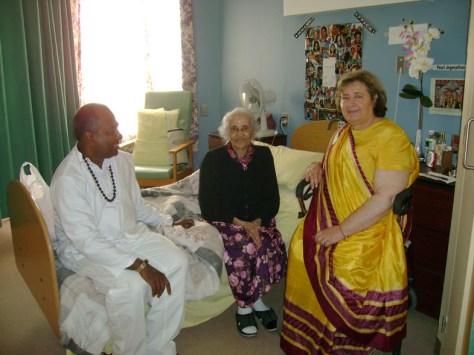
When you are in journalism, something that slowly builds up in you is your immunity to suprise. You can feel fear, sadness, hopelessness, impatience, and even joy, though the last emotion is increasingly becoming a rare thing in this field. But whatever you feel, one thing is for sure, that you generally don’t get surprised. So when I initially heard about a lone Canadian woman of advanced age and energetic spirits, who had come to India at the age of 19 in the 1960s, fighting the land mafia in Hardwar, without any help from anyone, I was intrigued, but NOT surprised.

I decided to chase the story.

Continue reading Esther’s Story – Battling the Land Mafia in Hardwar: Sumantra Maitra

Development in the ICU: Swagato Sarkar

Guest post by SWAGATO SARKAR

Montek Singh Ahluwalia (MSA) has taken over the English news channels [okay, perhaps not all, but two “exclusive” interviews to Headlines Today and CNN-IBN’s FTN (F stands for ‘Face’, btw)] tonight to shoot back at his opponents and detractors, the likes of Roys, Drezes, Aiyars. The discourse had three parts: the sermon, gloss and proto-penance, and the affirmation of the revealed Truth.

The Planning of Commission of the sovereign, socialist, secular, democratic republic of India is not a Stalinist Planning Commission. It has the solemn duty of finding India’s rightful place in the world at the average rate of 8% per year. But India is a poor country [exclusive news which cannot be shared at Davos]. The GDP has to enlarge. Market is what will make it happen. But market has limits. Hence, welfare. But MSA is not happy that the Growth-Decline story did not work out as he would have wished. But that is no reason to be anti-Growth [now go to the first line of the para and read it all over again.]

Continue reading Development in the ICU: Swagato Sarkar

Occupy Wall Street – An American Spring Amidst Media Blackout?

As governments across the world prostrate themselves before corporations and corporate greed takes over the daily business of governing, mass struggles are breaking out all over the world. What started as the much propagated ‘Arab Spring’ – apparently the Arab world’s yearning for American and Western values represented by ‘democracy’, has now, after spreading through Europe (France, Greece, Spain, Portugal…) engulfed the heart of Empire – the United States of America. The Occupy Wall Street movement that started almost three weeks ago, with thousands of people assembling in Zucotti Park in Lower Manhattan, New York, has now spread amdist media blackout and police repression, to other parts across the United States. A glimpse of the situation about a week ago:

Continue reading Occupy Wall Street – An American Spring Amidst Media Blackout?

The Decline of Communist Mass Base in Bihar: Jagannath Sarkar

[JAGANNATH SARKAR, who passed away in April, was among those who led the spectacular rise of CPI in Bihar in the 1960s and 1970s. He was among a handful of Bihar CPI leaders who envisioned the crisis in CPI in the mid-1970s. Today is his first birthday after he passed away – he was born on 25 September 1919.  The piece below is an important document that gives a glimpse of the debate on new caste assertions in the CPI. It was written by Sarkar in 1998, following the National Council meeting of the CPI. It has been translated by Raj Ballabh from Hindi. – AN]

The National Council of the CPI accepted, if belatedly, in its review report of March 1998 that there has been a serious decline in the basic mass base of the party and its class-based mass base has fragmented on the basis of caste. It has accepted that the party could not face the deviation of ‘social justice’ in the form of ‘backward casteism’ in its theatricality, or indeed politically and practically; that the party could not maintain its distinct identity, as a party that was politically and practically different from the Laloo-led Janata Dal Government. What is more, the toxin of casteism began to show its effects within the party as well. Indeed, it is an issue of serious concern which should be analyzed in detail.

Continue reading The Decline of Communist Mass Base in Bihar: Jagannath Sarkar

The Utopian Instinct – Aflatoon, Kiran Bedi and Nandan Nilekani: Taha Mehmood

Guest post by TAHA MEHMOOD

A pilgrimage to the cave

One day Cleinias, a Cretan invites Athenian and Megillos, a Spartan for a religious pilgrimage. Cleinias proposes to visit the cave of Zeus, just as Minos used to do. Minos was the legendary Cretan king. Every nine years Minos would walk along a path to the cave where he will hear revelations on the laws from Zeus. Perhaps the act of a man going to the cave to seek revelations from God was part of an ancient Cretian tradition. In the islandof Crete Minos played the role of a Lawgiver, in Athens– Zeus, while in Megillos’s state Sparta this role was played by Apollo.

Magnesia: The last idolum of Plato

This was the setting of the last dialog of Plato. He called it The Laws. In this dialog Plato tries to define the legal framework of an imaginary state named Magnesia. Throughout his life Plato was preoccupied with the question of how to name and define things. He believed one could even name abstract entities like numbers and define it as even or odd. In this dialog Plato makes an attempt to name various types of laws and define it.

Continue reading The Utopian Instinct – Aflatoon, Kiran Bedi and Nandan Nilekani: Taha Mehmood

Let us break the ‘silence’on Telengana movement: Sridhar Modugu

Guest post by SRIDHAR MODUGU

It is no exaggeration to say today that Telangana is burning. Nor will we be far off the mark if we suspect that a paralyzing fear has encased its ‘intellectuals”. Everyone is lost in providing testimonies to prove themselves to be pro-Telangana and everybody is a self-accomplished activist.  In fact, the intellectuals have lost themselves as spectators. They have become immune to understand what is happening before them.

The demand for statehood for Telangana is undoubtedly a democratic and judicious demand. It has been held back since 1950s and suppressed time and again.  No doubt Mr. Kalvakuntla Chandra Sekhar Rao (KCR), the President of Telangana Rastra Samithi (TRS) did maintain the public talk with occasional tactical moves and has been considered an icon of “Telangana vaadam” as last ten years of Telangana politics are referred to.  Since 2009 November the movement could attract large mass of diversified sections of people from all walks of life and engage the attention of the people with hopes of achieving the state any day thanks to the enthusiastic role play of the media and political parties – in power or opposition. It is indeed noteworthy that since November 2009 the movement has been able to attract a large number of diverse sections of people from all walks of life in thousands. They have mobilized voluntarily and have conducted meetings in the most democratic way. That there has been considerable restraint among the people who have been dishonored, alienated and humiliated under the Andhra Pradesh rulers is without dispute. These people have mobilized democratically despite the war-like surveillance and suppression of both the para-military and the state police force.  Historical injustice – political, economic and cultural of the people of this region is well highlighted.

Continue reading Let us break the ‘silence’on Telengana movement: Sridhar Modugu

CPI(M)’s Rectification Campaign and a Bit of History: Sankar Ray

Guest post by SANKAR RAY

The Rectification campaign (RC) in CPI(M) is in practice a PR exercise, vying with top corporate communicators. Take the judgment of killings on 27 July 2000 at Suchpur under Nanoor PS of Birbhum district of West Bengal. Forty-four members and sympathisers, including district committee member Ramprasad Ghosh and zonal committee members Nityanarayan Chattopadhyay, Golam Saror, Golam Mustafa and Badiujjaman were convicted for involvement in the ghastly killings of 11 landless agricultural labourers. None of them has even been suspended, let alone expelling them from the party. Party biggies from the general secretary Prakash Karat to the WB state secretary and polit bureau member Biman Bose often say they have reverence towards the judiciary, although their perception that in a class-divided society, justice is to be ‘class justice’ is judicious. But why should proven criminals be on the party roll, when the mandarins of A K Gopalan Bhavan, party’s national headquarters, boastfully talk of a continuous RC. WB party leaders assured months before the last Assembly polls in WB that hundreds of ‘corrupt’ members be thrown out out of the party. All this is remains on paper.

Continue reading CPI(M)’s Rectification Campaign and a Bit of History: Sankar Ray

Maruti Struggle Continues Despite Repression: Statement

The following is a statement issued by the MARUTI SUZUKI EMPLOYEES UNION (MSEU) on 1 September 2011
The management of Maruti Suzuki Industries Limited, Manesar plant (Plot 1, Phase 3A) has terminated 11 and suspended 38 workers on 29th and 30th August 2011, on completely fabricated charges of go-slow in production and that workers have been ‘undisciplined’. It is doing this as a continuation of harassing workers for our struggle for the right of Union formation and other legitimate rights from June 4th to 16th. It is using brute police force to intimidate us, and is also continuing to pay and use bouncers and lumpen force to continuously threaten us. The management is also spreading a rumour that the production has resumed yesterday 31 August through a handful of contract workers, some supervisors, engineers and robots. This disinformation campaign has also been splashed across the media.

Continue reading Maruti Struggle Continues Despite Repression: Statement

On Populism – A response to Partha and Aditya: Gyan Prakash

Guest post by GYAN PRAKASH

In following the discussion on the Anna Hazare phenomenon, I have found the references to populism very interesting.  In response to Partha, Aditya reminds us that populism should not be dismissed as non-political or anti-political. Partha clarified that he does not regard Anna Hazare’s populism as anti-political but as anti party-politics and anti government.  Team Anna narrowly defines politics as the domain of party politics and the government, which it then identifies with corruption. Om Puri’s rant and Kiran Bedi’s vaudeville performance expressed this sentiment.  Politics means netas, who are corrupt.  References to 2G, CWG, Kalmadi, and various land scams refer to politics in this sense.  Such a definition of politics allows the claim that the gathering at Ramlila was non-political or beyond politics.  Anna as a saintly Gandhian figure who does not seek office, and the status of Kiran Bedi and Kejriwal as civil society members, contributed to the representation that the mobilization of the “people” transcended politics.

Continue reading On Populism – A response to Partha and Aditya: Gyan Prakash

Populism and the Anna Hazare Event: Swagato Sarkar

Guest post by SWAGATO SARKAR

I have been trying to make sense of the Anna Hazare event. I agree that it was historical, but was it a tragedy, or a farce? The swift exchange between Partha Chatterjee (PC) and Aditya Nigam (AN) and their reference to Ernesto Laclau and ‘populism’ have given me a familiar frame to enter into the debate around the event. Here, I will concentrate on the question of populism and its normative status. However, unlike PC and AN, I have got nothing to offer to ‘the Left’ (Independent or Dependent), because I am not a leftist, rather one who likes sitting on the fence on a nice arm-chair and this piece will perhaps bear an imprint of that position. Also, apologies are due to the readers of Kafila as I have not read, just browsed through, the two pieces written by Shuddhabrata Sengupta, which have been wildly popular – if Facebook is an indicator – and have been referred to by both PC and AN. Therefore, I might be repeating what Sengupta has already said.

Continue reading Populism and the Anna Hazare Event: Swagato Sarkar

In the Ruins of Political Society – A Response to Partha Chatterjee

Partha Chatterjee’s post, following on Shuddha’s Hazare Khwahishein… is something of an eye-opener for me. I will not enter into a debate with him on his reading of Shuddha’s post as Shuddha and I have had our long online and offline exchanges and I have learnt immensely from these exchanges, even if a core of disagreement persists. I do think, however, that Partha is mistaken in thinking that this is the first time the question of corruption has been discussed on Kafila or elsewhere but since I am not interested in discussing that question here, I will leave that matter aside. I think I have said pretty much what I wanted to say on the movement and the myriad issues related to it and so I am no more interested in going over that territory all over again. Interested readers can see the Kafila archives if they so wish.

What has been an eye-opener for me is the way a certain other Partha Chatterjee has emerged, as soon as his theories were brought face to face with the hurly-burly of politics. The imprint of this other Partha is clearly evident in every word and sentence of this post, but most clearly in the concluding sentence where he claims that the indepdent Left has ‘its populist moment in Nandigram’. This sentence encapuslates the gist of our disagreements. It was this assessment that led Partha to write the essay, ‘Democracy and Economic Transformation‘ where, in some elliptical fashion, his own discomfort with popular politics  found expression. That is when he extended the definition of ‘political society’ to say that it was the sphere of ‘management of ‘non-corporate capital’ (of course, by capital and government). That Partha links his discomfort over the Anna Hazare movement to his discomfort over Nandigram, is in my view, a sign of the fact that his idea of ‘political society’ lies in ruins, that it collapsed at the precise moment of its encounter with the popular.

Continue reading In the Ruins of Political Society – A Response to Partha Chatterjee

Are We Talking to the People Who Are Out on the Streets? – Kavita Krishnan

Guest post by KAVITA KRISHNAN  (Editor, Liberation)

The people saying ‘I am Anna’ or ‘Vande Mataram’ are not all RSS or pro-corporate elites. They’re open to listening to what we have to say to them about corporate corruption or liberalization policies. The question is – are we too lofty and superior (and prejudiced) to speak to them?

Throughout the summer, student activists of All India Students’ Association (AISA) and Revolutionary Youth Association (RYA) engaged in this painstaking exercise for months. They campaigned all over the country, in mohallas, villages, markets where there is no visible Left presence. No, these were not areas of ‘elite’ concentration – mostly middle, lower middle or working class clusters, or students’ residential areas near campuses. In most places, people would begin by assuming they were campaigners of Anna Hazare. When students introduced their call for the 9 August Barricade at Parliament, they would be asked, ‘What’s the need for a separate campaign when Anna’s already leading one?’ They would then explain that they supported the movement for an effective anti-corruption law to ensure that the corrupt don’t enjoy impunity. But passing such a law could not end corruption, which was being bred by the policies that were encouraging corporate plunder of land, water, forests, minerals, spectrum, seeds… They learnt to communicate without jargon, to use examples from the state where the campaign was taking place. They would tell people about the Radia tapes, and the role of the corporates, the ruling Congress, the opposition BJP, and the media in such corruption.

Continue reading Are We Talking to the People Who Are Out on the Streets? – Kavita Krishnan

Response to Gail Omvedt: Nirmalangshu Mukherjee

Guest post by NIRMALANGSHU MUKHERJEE

First of all I strongly object to the various insinuations posted in several comments. However, with due respect to a veteran activist, I think the older generation of left activists are by and large failing to come to terms with an unfamiliar form of protest in the IT-age. For them perhaps, Tahrir square looks full of promise at a distance from where all the finer dark spots get blurred; not so when it is happening in the neighbourhood.

The janlokpal campaign has three broad components: the core group with Anna in front, the bill itself, and the people. The Maoist campaign also has these components. There are serious problems with the first component in either campaign insofar as the condition of “democratic elections” are concerned. In the Maoist case, it is just an upper caste and largely upper class coterie of people thrust on the adivasis. The programme of proctracted war to establish “new democracy,” i.e., the second component, is also deeply flawed. Yet, the Maoist campaign is routinely advertised as a just campaign because it is supposed to be a people’s campaign driven by a people’s army. The current terminology is “bottom-up.” The reality of this proclamation is not the issue here, the structure of justification is. The Maoist campaign with its flawed first two components is justified because “people” have accepted and wanted them, contrary to fact as indicated. But the same commentators are terrified when the same structure is offered for the janlokpal bill. Or is it because Dandakaranya, likeTahrir Square, is safely remote while these “middle-class people” are dangerously close?

Continue reading Response to Gail Omvedt: Nirmalangshu Mukherjee

New Trade Union Initiative on Anti-Corruption Struggle

We are reproducing below a statement issued by NTUI

NTUI Statement On the Fight Against Corruption

Workers’ life and work experiences are very different from those of the middle class and the ruling elite; so is their experience with corruption. For the middle class, corruption is a mechanism to accelerate government procedures in the public or private sectors. For the working class, corruption deepens their experience of subordination. Instances of corruption that are directly experienced by the working people are the result of the unequal power relations that govern workers’ daily interaction with public institutions and is therefore contributing to a sense of distrust and loss of faith in these institutions. There can be little doubt that corruption affects the working class disproportionately more than it affects economically more privileged sections of society.

Continue reading New Trade Union Initiative on Anti-Corruption Struggle