All posts by Nivedita Menon

Feminist Reflections on the Tragic Suicide of Khurshid Anwar

THIS ARTICLE HAS BEEN COLLECTIVELY WRITTEN BY THE PEOPLE WHOSE NAMES APPEAR AT THE END

In the aftermath of the suicide of Khurshid Anwar, friend and comrade to many of us, on December, 18th 2013, there has been a concerted attack by some democratic and secular people on ‘feminists’ who supposedly drove him to take this extreme step. The charge is that feminists did not support him when an accusation of rape was made against him by a young woman, and exacerbated the situation by their irresponsible handling of the issue.

As feminists, we feel it necessary at this trying time to recognize that this pitched battle is after all, taking place amongst allies in a bigger struggle for democracy and secularism, and to think seriously about how we can move ahead. Rather than being a definitive statement of any kind, this collectively written piece is an attempt to think through a very messy situation. Continue reading Feminist Reflections on the Tragic Suicide of Khurshid Anwar

Legal notice to Penguin Books India for violation of rights of readers

Advocate LAWRENCE LIANG  has served this legal notice to Penguin Books, India, on behalf of Shuddhabrata Sengupta and Aarti Sethi. 

Under instructions from, for and on behalf of my clients Sh. Shuddhabrata Sengupta and Ms. Aarti Sethi, both residing at New Delhi, I serve upon you this legal notice for the following reasons and purposes:

  1. My client, Mr. Sengupta, is an artist and writer based in New Delhi with a longstanding interest in the comparative history of religions. Ms. Sethi is an anthropologist with a deep interest in Hindu philosophy. Both Mr. Sengupta and Ms. Sethi are avid bibliophiles, ardent supporters of freedom of speech and expression and have in the past been admirers of Penguin Books.
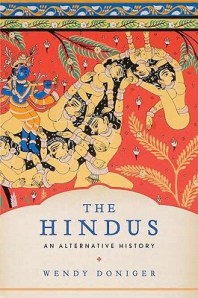
  2. My clients were delighted when YOU NOTICEE published Wendy Doniger’s  “The Hindus: An Alternative History” and as people who have closely followed the scholarly contributions of the said author they regard this book to be a significant contribution to the study of Hinduism. They consider Ms. Doniger’s translations of Indian classical texts and her work on various facets of Hinduism from morality in the Mahabarata to the erotic history of Hinduism as an inspiration for their own intellectual pursuits.
  3.  It has come to the notice of my clients that YOU NOTICEE have withdrawn publication of the book “The Hindus: An Alternative history” pursuant to an agreement entered between YOU NOTICEE and Shri. Dinanath Batra; O.P.Gupta, Sharvan Kumar and a few other busybody etcetera’s on the 4th of February 2014. YOU NOTICEE have further agreed not to sell, publish or distribute the book and also to pulp all unsold copies of the book. Continue reading Legal notice to Penguin Books India for violation of rights of readers

This is not Wendy Doniger’s The Hindus – An Alternative History

download

“This is not a pipe” (Rene Magritte)

5263037

This is not Wendy Doniger’s The Hindus. An Alternative History

None of the following are, either. They are links from which you can download the entire text:

Epub version
pdf version 


 WENDY DONIGER: Finally, I am glad that, in the age of the Internet, it is no longer possible to suppress a book. The Hindus is available on Kindle; and if legal means of publication fail, the Internet has other ways of keeping books in circulation.

People in India will always be able to read books of all sorts, including some that may offend some Hindus.

And no, this is not a penguin, a notoriously brave bird!
chicken

Kumar Vishwas – a Work in Progress in the Times of YouTube : Akhil Katyal

Guest Post by AKHIL KATYAL

kv

On the internet you can never really begin from scratch, that is to say, you can never really begin from a desired point in space and time, erasing all the befores.

One of the most difficult conversations about the form of the internet is that descriptive metaphors that work for some other mediums do not work for it. Things do not, for instance, easily die on the internet or age gracefully. In a manner of speaking, shelves do not gather dust here. A 2004 video takes no longer to load than a 2014 video; it is not stored behind or below it. The desire to order space and time online runs against the grain of this form, in the sense that, knowledge is not arranged as sequence on the internet, it is arranged as infinite sets of adjacencies. 

These sets of adjacencies are attempted to be given shape by algorithms that make you reach where you want to reach. But despite them, the non-sequential nature of knowledge on the internet is evident from the fact that any keyword search would always allow you to look for that keyword in a variety of ways – each way an attempted but always incomplete ordering, whether by significance, language, region, time, domain, web page location, level of adult content, reading difficulty, file types or license types. However, these algorithms never fully master the adjacencies that they seek to make legible to us. And adjacencies – of different videos, articles, photographs, memes – do not make for calm political stories, they make for political drama. Continue reading Kumar Vishwas – a Work in Progress in the Times of YouTube : Akhil Katyal

Love Outside the Gurdwaras: Pukhraj Singh

Guest Post by PUKHRAJ SINGH

Picture 1

Balmiki temple in Dhotian  village, Tarn Taran

The latent passions of this land are steeped in love and longing. If one sees Punjab solely from the perspective of its oral traditions, local continuities and folklore, then the picture which emerges is in complete contrast to the drubbed, kitschy monochrome making its way to the mainstream. It is the unquestionable faith and conviction of its peoples, which have often subverted the rigid precepts of religion and nationalism, to create identity markers that are more organically rooted in the mythos and geography.

By innately focusing on the unseen and the unsaid, there will be an emotional realization of a certain kind of inexplicable absence, and the purity of absence, overwhelming its verdant backdrop. The dirt-tracks crisscrossing the rural outliers are pockmarked with the signage of a time bygone, managing to exist somewhere between the interstices of memory and history. Continue reading Love Outside the Gurdwaras: Pukhraj Singh

Theatres Of Rape: Srimati Basu

Guest Post by SRIMATI BASU

The Birbhum rape has thrown up images of the ‘kangaroo court,’ evoking the savagery of tribal subjects — but rather than feeling complacent at the exception and difference of this location, we might concentrate on the common modes of gendered control achieved by the rapes.

Jyoti Singh’s rape and murder in a Delhi bus in December 2012 seemed to evoke a sense of horror at the ultimate in human depravity. But in the time since, no week seems to go by without yet another gruesome gang rape, almost a one-upping of sadist violence across these uncoordinated episodes. Gang rapes have come to appear as the spectacular trendy crime of the moment. They underline the lethal consequences of women’s daily cultural transgressions: going to school, going to a night show movie, going to work, having a drink, being in politics. Even though we know they are miniscule in the corpus of sexual violence, which overwhelmingly happens in private and domestic spaces and among people who know each other, they have irritatingly given the impression that public spaces have become more unsafe, and further strengthened restrictions by families and communities on women’s mobility and choices.

As if the New Year’s report that a Kolkata schoolgirl was burned alive after being gang raped twice (the burning and second rape allegedly being retaliations to her police complaint) was not ghastly enough, this week we are talking about another woman in West Bengal (Birbhum), gang raped by diktat of the village council, on a public platform erected for optimal viewing. Continue reading Theatres Of Rape: Srimati Basu

Efforts to save the endangered oral traditions of Rajasthan: Vishesh Kothari

Guest Post by VISHESH KOTHARI

574802_10151322516287197_1967840932_nMedieval feudal social systems and attitudes in Rajasthan persisted until very recently. This, and perhaps a host of other reasons, allowed several aspects of culture to remain preserved here for much longer than in other parts of our country. While Rajasthan has become well known for its architectural heritage, it is the intangible heritage of this state that is in need of the most urgent intervention to protect it from being lost – from the oral lore to the epic ballads, everything is threatened by the onslaught of modernity.

Komalji Kothari and Vijaydanji Detha embarked on such a project many years ago and achieved great success – however an even greater amount remains to be done. For more than a decade now, the Jaipur Virasat Foundation has been continuing and enhancing this project to protect, preserve and promote the oral musical traditions of this state. Continue reading Efforts to save the endangered oral traditions of Rajasthan: Vishesh Kothari

Why sue a ‘skin’ colour? Chirayu Jain

A law student from Bangalore has filed a complaint against Hindustan Pencils at a consumer court, accusing the company of racism for producing a skin tone crayon that is not the skin tone of most people in India.

That law student CHIRAYU JAIN explains here here why he took up this issue.

DSC_0938It was May 2012, I was at Bangalore Airport, where they had a promotion going on – giving out free crayons and colouring sheets, inviting travellers to ‘revisit their childhood’.  I  jumped at the invitation and so I did revisit my childhood that day. Continue reading Why sue a ‘skin’ colour? Chirayu Jain
Gandhi’s Dystopia – More Mobile Phones Than Toilets: Apurv Mishra

Guest Post by APURV MISHRA 

Sanitation is more important than independence”, said Gandhi, the godfather of our freedom fighters, in 1925. Unlike Nehru, who believed that sovereignty and self-rule were a prerequisite for social change, Gandhi insisted that true Swaraj could only be achieved when political independence was accompanied by a parallel program of social reform. As we go through the perfunctory national routine of remembering Gandhi on his death anniversary every year, it is a good time to take stock and reflect on the irreconcilable gap between Gandhian values and our societal priorities. I am not talking about the ambitious Gandhian ideas of village republics, Nai Talim, strict vegetarianism, zealous celibacy or his suggestion of disbanding the Congress, but simple principles like cleanliness and sanitation.

Out of the 1.1 billion people around the world who openly defecate everyday, 626 million belong to India. Indonesia is second with 63 million. Our step-sibling China has just 14 million who defecate in the open, despite having a larger population. In fact, India has more than twice the number of the next 18 countries combined. Just think over these numbers for a minute.

This is not just a hygiene issue; open defecation is the single largest threat to the long term well-being of our country. Continue reading Gandhi’s Dystopia – More Mobile Phones Than Toilets: Apurv Mishra

Protesting the Indian Republic at Kangla Fort, Manipur

A-police-personnel-tries-toREPEAL ARMED FORCES SPECIAL POWERS ACT

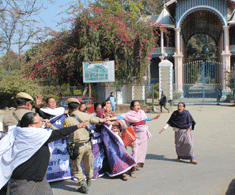
The Sangai Express (Imphal) reported that women from different corners of Manipur staged a demonstration on January 25, 2014 in front of the Western Kangla Gate to denounce Prime Minister Dr Manmohan Singh’s failure to keep his promise to replace Armed Forces Special Powers Act with a humane legislation.

Displaying placards and festoons inscribed ‘Remove AFSPA,’ ‘Save Sharmila,’ the demonstrators also raised slogans demanding the resignation of Prime Minister Manmohan Singh. Pandemonium erupted at the site when police personnel tried to seize the festoons from the agitating women.

Later, RK Radhyasana Devi, one of the protestors speaking to media persons, highlighted that the Prime Minister Dr Manmohan Singh, while handing over the historic Kangla Fort to the people on November 20, 2004, had assured the people of the State that AFSPA would be replaced with a more humane Act .

She pointed out that the promise Dr Manmohan Singh made a decade back has not been translated into action till now.

Strongly demanding that the AFSPA, 1958 should be repealed, Radhyasana further asserted that the movement of Meira Paibi organisations would go on until the Act is scrapped from the State.

In 2004, at the same historic Kangal Fort, Manipuri women had staged a militant nude protest to denounce AFSPA in the aftermath of the extra-judicial killing of Thangjam Manorama Devi by Assam Rifles troopers.

And meanwhile, Irom Sharmila, in the 14th year of her fast against AFSPA, continues to be held in isolation by the Indian state, a prisoner of conscience.


The Politics of Raid Governance – Aam Aurat v. Khas Aurat: Pratiksha Baxi

Guest Post by PRATIKSHA BAXI

Following the terrible gang-rape of a Danish woman in Delhi, Chief Minister Mr Kejriwal castigating the police for dereliction of duty pronounced his theory about how rape tendencies form. We are told that rape tendencies flow from drug and sex rackets; and when police corruption sustains these rackets, rates of gangrape are bound to escalate. Rape in this formulation is not an expression of sexualized power or preferred and targetted male violence against women. Rather it is linked to a series of vices located in certain geographies, circuits, substances and bodies, which produce a specific form of sexual venality. And, the technique of “raid” is a privileged form of sexual governance.

To sustain the technique of raid (or sting operations) as the privileged form of governance to stem sexual violence, a certificatory genealogy is instituted. A leader of AAP recites his gender credentials by tracing raid governance to the “damini” protests and experiences of state violence during these anti–rape protests. Mallika Sarabhai’s gender credentials are now interrogated by citing her purported absence from the “damini” protests. Some of us who did not experience police violence during the protests are now vulnerable to the charge of faking our commitment to the anti–rape movement, since certification comes from one kind of participation in the “damini” protests. However, can the badge of being invested in the kind of transformative politics required to challenge rape culture be so easily earned? When men participate in anti–rape protests, we are expected to applaud them and not feel offended when they deride women like Mallika Sarabhai who risked their being to speak against rightist manifestations of sexual impunity and immunity in Gujarat. Continue reading The Politics of Raid Governance – Aam Aurat v. Khas Aurat: Pratiksha Baxi

Of AAP, dreams and nightmares: Nityanand Jayaraman

Guest post by NITYANAND JAYARAMAN

I am avowedly anti-police. I am only half-convinced when I say that they are a necessary evil. The “necessary” part is what I get doubtful about. This last Saturday was different. I found myself uncomfortably on the same side as the police as I read the newspapers about Somnath Bharti’s self-righteous and racist escapades. To tell the truth, I did not immediately believe what I read. That was not because I had some personal knowledge of Bharti’s antecedents. But because, AAP was a phenomenon that I wanted to work.

These last few weeks, ever since AAP’s dramatic rise to power, I have been wafting in and out of mental states, between dreams and wakefulness. Dreams are fragile things. For me, AAP’s upsurge was a dream coming true. I come from a generation of Tamils that takes joy no matter whether AIADMK or DMK wins as long as the ruling party loses horribly. Ditto with Congress and BJP.
Now, this AAP thing was an early morning dream. I could see it, feel the joy of seeing disbelief and confusion writ large in the faces of BJP and Congress wallahs. I loved it. I did not know whether I liked AAP or not. But I liked what they did, how they did it. In terms of what they proposed to do, I had questions, suggestions and critical comments. To me, the stated lack of ideology – to begin with – was both an opportunity and a challenge. Continue reading Of AAP, dreams and nightmares: Nityanand Jayaraman

Letter to Arvind Kejriwal: Women against Sexual Violence and State Repression

Women against Sexual Violence and State Repression condemns the racial profiling, sexual violence and vigilantism by AAP against Ugandan women.

Women Against Sexual Violence and State Repression (WSS) is a network of women’s rights, Dalit rights, human rights and civil liberties organizations and individuals across India. It is a non-funded grassroots effort by women to stem the violence being perpetrated upon our bodies and on our societies by the State’s forces, by non-state actors and by the inability of our government to resolve conflict in a meaningful, sustainable and effective manner.

Women against Sexual Violence and State Repression strongly condemns the illegal raid conducted by the AAP cabinet law minister, Somnath Bharti and his mob of supporters, on the premises of the Ugandan women on 17th January 2014 residing in Khidki village, New Delhi.

One media report states that four women who were kept in a taxi for 3 hours were accused of conducting ‘drug rackets’ and ‘sex rackets’; and were terrorized by your cabinet minister and his mob. The women, who were eventually helped by the police, have registered their statements. Two of them have stated that they were physically assaulted by the mob and were also subjected to intense racist abuse – “black people break laws.” Continue reading Letter to Arvind Kejriwal: Women against Sexual Violence and State Repression

Kunan Poshpora – The Other Story : Shrimoyee Nandini Ghosh

This guest post by SHRIMOYEE NANDINI GHOSH is based on two essays about the men and women of Kunan Poshpora, that appeared in the Kashmir Reader dated 1 September 2013, and 13 January 2014

Information and updates about the campaign for justice and truth for the survivors of Mass Rape and Torture in Kunan Poshpora are available at https://www.facebook.com/KunanposhporaCampaign.

Beneath the horrors of the mass rape committed by  Indian troops in the twin villages that night in February 1991, lies the untold story of systematic torture of men, carried out by the same forces with the precision and deliberation of a planned military operation.

In June 2013, a Public Interest Litigation filed in the  Jammu and Kashmir High Court,   by fifty Srinagar based women, supported by human rights group Jammu and Kashmir Coalition of Civil society (JKCCS) had resulted in a Magisterial order for the  further investigations of the mass and gang rape by Indian army personnel of the women of Kunan, and neighbouring hamlet Poshpora, in Kupwara District of North Kashmir on the night of February 23rd-24th 1991. The police, it appears from the lack of any remotely investigative activities in the villages to have done little if anything, by way of following the court order in the last six months. On 14 September, 2013 they asked for and were granted an additional three months time for further investigations, without notice to the survivors who are legally represented in the case.

However, the closure report, which police had failed to file for twenty – two years, and which had been presented before the Magistrate of Kupwara just weeks before the Public Interest Litigation, in March 2013, had yielded several important previously unavailable official documents. Continue reading Kunan Poshpora – The Other Story : Shrimoyee Nandini Ghosh

Cooking gas subsidy and the myth of market distortion

Have you been receiving SMS’s saying:

Dear XXXgas Consumer, to avail LPG Subsidy in your bank account, kindly submit your Aadhaar to your Distributor and to your Bank immediately

These SMS’s are being sent by Hindustan Petroleum Corporation Ltd (HPCL),  India Oil Corproation (IOC) and Bharat Petroleum Corporation Ltd (BPCL) to its consumers, in violation of the Supreme Court’s interim order that no one can insist on Aadhaar for any government schemes like ration card, bank account, cash transfer or issue of LPG subsidies.

This has been confirmed today by Oil Minister M Veerappa Moily. The unique identification card will no longer be mandatory for giving subsidies unless Supreme Court gives a clearance.

What ‘cash transfer’ essentially means is that instead of paying less at the point of purchase, the higher price must be paid, and the difference will be paid into your bank account.

The neoliberal theology against subsidies is that “Subsidies Create Market Distortions”. The unquestioned assumption we are supposed to accept here is that the market is  a natural phenomenon, like rain or snowfall, and that any state intervention will distort its finely tuned natural functioning. (And we all know how strongly capitalism and economics stands for preserving “other” natural entities like forests and rivers and mineral resources!) Continue reading Cooking gas subsidy and the myth of market distortion

The Conundrum of Agency in Sexual Violence

This is a revised version of an article that appeared in Seminar January 2014.

The past year is bookended by two extraordinary moments, both of them inspired by the courage and determination of young women who refused to take sexual violence as routine.

December 2012 – a young paramedic fought till her last breath for justice.

November 2013 – a law intern exposed the sexual assault she faced from a retired Judge and a Tehelka journalist taught Tarun Tejpal a long deferred lesson – No Means No.

The massive mobilization of public opinion around these incidents has reopened the question of ‘agency’ in familiar and unfamiliar ways.

Feminists have long asserted women’s agency in contexts of sexual violence by attempting to desexualize rape – in law and in everyday life. Taken out of patriarchal discourses of honour, rape is merely an act of violence that violates bodily integrity. This delicate balance between two opposing notions – on the one hand, that sexual violence has a distinctive character, it is more humiliating, more paralyzing than physically less harmful actions; and on the other, that sexual violence is merely another kind of physical violence – this is the razor’s edge occupied by feminist understandings of rape. Continue reading The Conundrum of Agency in Sexual Violence

Anatomy of a Take Back the Night campaign : Nandini Rao

Guest post by NANDINI RAO 

Picture credits: Rakesh and Alana

TBTN

 “I want to break free…”. The Freddy Mercury anthem rang out in the cold winter night, in the middle of a busy marketplace in Delhi. One by one, a group of women appeared out of the crowd and started dancing to its compulsive beat. People gathered around, cheering them on and some women from the audience joined in too. Synchronising steps, the dancers swayed to the medley of music as it moved on to Hindi songs, a snatch of Spanish and finally, the compelling Punjabi phrase “Sadda haq, aithey rak!”. This was officially the first flash mob (or “mob dance”, as we call it) of the members of the Citizens’ Collective against Sexual Assault (CCSA).

The Citizens’ Collective against Sexual Assault (CCSA) is a Delhi/NCR-based group of organisations, individuals and activists from women’s movements and progressive movements. It works towards addressing issues of sexual violence against women, girls and transgender people. It raises awareness among the public, media, administration and the police on issues of gender rights. It works collectively to build an environment of safety in Delhi, Noida and Gurgaon. Continue reading Anatomy of a Take Back the Night campaign : Nandini Rao

Enumerative Practices of the Indian State and the Disabled: Avinash Shahi

Guest post by AVINASH SHAHI

The 2011 Census release on disabled population in India is shocking, exposing the fallacious methodology and technique used by census enumerators while counting the disabled population in the country. According to census figures, the population of disabled people has gone up to 26.8 million in 2011. In the last decade the numbers have increased just below six million from 21.9 million in 2001. Surprisingly, these low numbers follow the collaboration between the Census Commission, NCPEPD and Diversity and Equal Opportunity Centre (DEOC) for sensitizing, and imparting training to census master trainers.

The idea was to frame questions on disability and include these in the Census questionnaire. Nonetheless, millions have yet again been rendered invisible.  In 2001, the Census Commission collected data on five categories of disability among different disabled groups, and found that visual disability emerged as the top category at 48.5%. The other disabilities population enumerated by the census were as follows in descending order: In movement (27.9%), Mental (10.3%), in speech (7.5%), and in hearing (5.8%). In contrast, the 2011 Census initial release percentage among different disabled categories has changed drastically. The persons with blindness now stand at third place.  Continue reading Enumerative Practices of the Indian State and the Disabled: Avinash Shahi

Bar Association in Kerala suspends woman lawyer…

…for her Facebook post on the “silly” behaviour of her male colleagues, who

address women as ‘sugar candy’ ‘dear’ and follow them with comments such as ‘you are so beautiful’ and the like. All of them follow the ‘Prem Nazir’ style of old Malayalam films. They dont seem to be familiar with newer films. It’s the same old way of making women either lovers or sisters; destroying them either by ‘caring’ for them or ‘keeping’ them. I pity all those who follow such a style.

Anima Muyarath’s Facebook post in Malayalam here.

Ah, would that Calicut Bar Association had acted with such alacrity to discipline and re-train its male members.

Of Indians and Justice – The Khobragade Affair: Godfrey Pereira

Guest Post by GODFREY PEREIRA

Devyani Khobragade was arrested on December 12th on charges of visa fraud and misrepresentation. At the time of her arrest, she was functioning as deputy consul general at the Indian Consulate in New York.

Soon after her arrest, the Indian government hastily transferred Khobragade to the permanent mission of India to the United Nations (UN), hoping that that this would give her the necessary Diplomatic immunity from arrest. Diplomatically this move was a “by the book” maneuver.

Question: If she had Diplomatic Immunity, why was she transferred to the permanent mission?

Question: If she had Diplomatic Immunity, why was a formal official application forwarded to U.S. authorities for full Diplomatic immunity AFTER she was arrested? Legally the Indian government should have, could have stood their ground, if they really believed that she had diplomatic immunity in the first place; because that’s what they were shouting about through their malfunctioning megaphones from the beginning. Right…Yes…No….Maybe… Continue reading Of Indians and Justice – The Khobragade Affair: Godfrey Pereira

Why I prefer the company of homophobic people: Anonymous

Guest post by ANONYMOUS

It may be a strange thing for a gay man to say, but I welcome the Supreme Court judgement re-criminalising the sexual acts I feel naturally inclined to engage in.

As someone who chooses to admit to his sexuality only before other gay men, and that too very selectively, you could call me closeted. Which means that I don’t feel as unfortunate as the ‘out’ lot which feels as though Indian law is asking it to go back into the closet.

I personally welcome the Supreme Court judgement because it will drill some sense of reality into my straight liberal friends who keep pestering, taunting, hinting, trying to make me say, ‘I am gay’. They will realise that there’s enough homophobia out there, enough of it for the Indian Supreme Court, considered a liberal institution, to re-criminalise ‘unnatural sex’. That gives me some semblance of an excuse, or so I hope, to remain closeted. Continue reading Why I prefer the company of homophobic people: Anonymous