All posts by Sunalini Kumar

State and the cult of ‘Delusional Desire’: Ashfaq Saraf

Guest post by ASHFAQ SARAF

In the summer of year 2010, Bangalore was peevishly hot. The month was April; its last days marking the end of a three month long training vocation Wipro technologies subjected us through. I had joined the Indian Corporate giant after having done my four years of bachelors at NIT Srinagar. We were a company of two Kashmiri friends—together in college and from there into this Job. Nothing was to remain of those months—like of all the days that come as routine and return the same—except for few friendships we sketched through— nothing more. Sometimes in a moment of recall I am reminded, however, of a couple of occasions when both of us were labeled rebellious for protesting against the strict dress code imposed on participants during the training period. It did not make much sense to me then—given the purpose the dress code was expected to serve—and it does not make sense to me now. It was a small act of rebellion: whose execution further revealed to me the nature and dexterity of shallow laws designed to mould populations into an abject form of controlled recipience. The act of rebellion—a promise to keep the notion of Justice viable—is the only instance one is inclined to think, in man’s life when he assumes the role of his own redemptory. Camus, the philosopher of absurdity, notably wrote that “Every act of rebellion expresses nostalgia for innocence and an appeal to the essence of being.” One has little recourse to not remember all the days when they have felt supremely undead.

Continue reading State and the cult of ‘Delusional Desire’: Ashfaq Saraf
Of Complicity and Contamination in the Neoliberal Academy: Oishik Sircar

Guest post by OISHIK SIRCAR

Many years back as a naïve leftist graduate student in Toronto I discovered the meanings of complicity and contamination through a most ordinary event. As someone who believed that no artistic work should ever have restricted access because of copyright, I bought an online software programme that could break copy protected DVDs. I would get film DVDs from the university library and use the software to copy them onto my hard drive. In the one year that I spent there, I copied over 1000 films. Over the years I have distributed many of these films to my students and friends, and have made extensive use of them in my teaching and workshops.

By the time I was nearing the end of my stay in Toronto, I wanted to figure out whether the software would work in India – so that I can continue my copyright breaking enterprise. I was delighted to find out that it would, as long as I paid to extend the software’s use for another year. And at the time of making this payment, to my utter surprise, I saw that this software was copyrighted. The fact that a copyright breaking software could itself have a copyright was bizarrely enlightening. The software was a tool to rip through the oppressive regimes of copyright, and in doing so it also sought recognition from that very language of privatizing innovation. It got me thinking whether we could ever espouse and practice a politics that is not a constant negotiation between complicity and contamination. Whether a search for a politics of purity is both foolish and counterproductive? My naïveté has been gradually undone through events that I have observed and experienced since then. While I can treat this as a process of acquiring wisdom, it is nevertheless a disturbing wisdom to possess. It has also left a feeling of yearning for utopia in this world of cruel contradictions.

After returning from Toronto, I shook off my naïveté with such force that I ended up with a job at a university funded by one of India’s largest steel companies whose operations have wreaked havoc in the lives of adivasi populations in several parts of India. Continue reading Of Complicity and Contamination in the Neoliberal Academy: Oishik Sircar

Desires of planning and the planning of Desires: Vignettes of a Rape Culture and Beyond: Rijul Kochhar

Guest post by text by RIJUL KOCHHAR photos by CHANDAN GOMES

Each person, withdrawn into himself, behaves as though he is a stranger to the destiny of all the others. His children and his good friends constitute for him the whole of the human species. As for his transactions with his fellow citizens, he may mix among them, but he sees them not; he touches them, but does not feel them; he exists only in himself and for himself alone. And if on these terms there remains in his mind a sense of family, there no longer remains a sense of society.

~Alexis de Toqueville (Epigraph to Richard Sennett, The Fall of Public Man)

Friends! You drank some darkness

and became visible

~Tomas Tranströmer (“Elegy”)

An hour is what it took for a band of six males to show a woman, a paramedic, ‘her place’ in contemporary Delhi. Often, in our pathological public places, it takes a mere moment. This case is different because it compels us to think through the limits of brutality of the living; it compels us to confront the limits of our capacity to inflict violence. But the night of December 16, 2012 also confronts us with the kind of cities we are building and the kind of places we want to inhabit. It is a different, by no means less important, matter that this woman—from whatever one has gathered these past weeks through the periodic medical bulletins—has battled to compel us to confront all of this and more, for the pain of her body and the brutality of an experience that she had survived for two weeks, serves a specular role—through it, we bear witness to ourselves, or so one hopes.

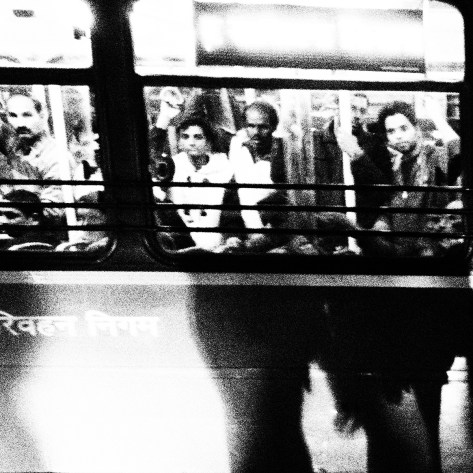
Passengers in a DTC bus try and catch a glimpse of the candle light vigil organised outside Safdarjung Hospital. Thousands of commuters became witness to today’s meet – some got down from their buses to join the vigil. Some joined their hands when their gaze fell on the bed of candles. An old woman took out her hair clip that was shaped like a flower and threw it towards us.

Continue reading Desires of planning and the planning of Desires: Vignettes of a Rape Culture and Beyond: Rijul Kochhar

Dreamum Wakeupum, HRD Ministry!

Monobina Gupta, who writes on Kafila had a piece in Times of India recently on the ravages of restructuring at Delhi University. While researching this piece Gupta sent me and several others a list of questions about the reforms. I reproduce below her questions and my answers in full. If you’re convinced by what follows, please sign this petition.

  1. How has the academic culture/ environment changed over the last five years? Has it been a slow process of attrition or sudden negativity with Kapil Sibal getting more and more aggressive?

Interestingly, strictly speaking, we’ve seen not so much attrition as an acceleration of initiatives in the purely quantitative sense accompanied by academic chaos and a disturbing decline in intellectual input. It’s possible that we now have a greater variety of courses on paper, more research projects and more published papers by faculty, but the quality of each of these has to be questioned in the light of the pressure under which they are being produced. Intellectual activity, whether anybody likes it or not, cannot be compared to most other types of output or production. It requires a very different administration, temporality (like any creative activity) and support. It needs to be largely self-directed and self-motivated, with a few broad parameters set by authority. There can consensus on standards, but these need to be set by the academic community in a public and transparent way. They cannot be set by bureaucrats and administrators and enforced by the gun. What Sibal’s regime did, consciously or unwittingly, was to define the entire teaching class as enemies, at the administrative level. The effect was that Delhi University’s VC found it in himself to bypass established democratic and consultative procedures and ram through the proposed changes. Every time teachers asked that established norms be respected and we be consulted through due process or if we suggested that intellectual and scholarly processes take time, the administration stonewalled us and threw us out of the reform process. Under Sibal, decades of collegiate functioning was torn apart, and every fight got ugly. Suddenly, ‘debate’ and ‘democratic consultation’ became dirty words. It is to be expected that a change in the higher education policy of a country as massive as India would generate passionate debate. Since this debate was not taking place in the national media, we teachers should have been considered the most valuable interlocutors, but we were stunned by the speed and ferocity of the reform process, and the criminalisation of our right to dissent and ask questions. Who has decided what the time frame for reforms is, and why aren’t we involved in this decision? Ultimately, the administration might wish that we didn’t exist as the troublesome, questioning human element in the teaching learning process, but unfortunately this is not going to happen unless they invent androids!

  1. Can you outline the main points of difference in the way the education is perceived by the ministry/ policymakers and those who actually do the teaching?

Continue reading Dreamum Wakeupum, HRD Ministry!

Ode to the West Wind: Prasanta Chakravarty and Brinda Bose

Guest post by PRASANTA CHAKRAVARTY AND BRINDA BOSE

The ‘lower hanging fruit’ has spoken. If ‘India wants to harness the benefits of internationalizing higher education, foreigners… and even PIOs’ who are currently barred from employment as full-time faculty in Indian universities need to be ‘harvested’. The HRD ministry, according to DeveshKapur in ‘The Elite’s Classrooms’ (BS: Opinion, November 12, 2012), has been barking at the wrong (higher-hanging) fruit in pursuit of this goal, though apparently not up the wrong tree – because as far as Kapur is concerned, the tree of intellectual bounty can only be the one that lies yonder over the seas. The fault, dear Mr. Pallam Raju, Honorable HRD minister, lies not in our stars that we are intellectual underlings, but in your predecessor’s eyeing of the wrong fruit on that delectable tree of knowledge rooted in faraway soil.

Continue reading Ode to the West Wind: Prasanta Chakravarty and Brinda Bose

Expired Explosives and Health of Kudankulam: Anoo Bhuyan

Guest post by ANOO BHUYAN

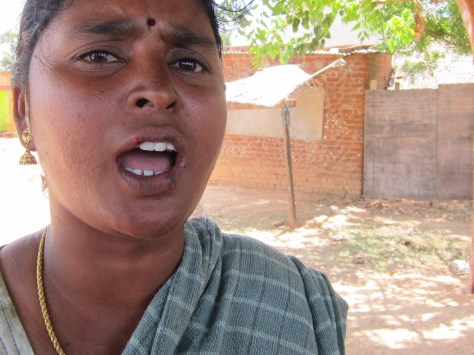
Anitha spits blood and wipes her lips as she talks to me. A few sentences later, a large blister on her lips begins to glisten with blood again, and she has to spit it out one more time. Hundreds of villagers at Idinthakarai have similar clusters of blisters on their lips. They say that they developed the sores as a reaction to the tear gas that was used during the clash that took place between police and protesters who were protesting the Kudankulam Nuclear Power Plant. This event occurred on tenth September. Nearly a week later, the sores continue to remain fresh and open, and a scab does not seem to be forming for any of those who were involved in the clash.

Anitha 


Continue reading Expired Explosives and Health of Kudankulam: Anoo Bhuyan

‘Big Ticket’ Reforms and Bigger Deceptions: Shankar Gopalakrishnan

Guest post by SHANKAR GOPALAKRISHNAN

When the country’s rulers have to tell barefaced lies to get their policies through, you know that there’s something wrong. Consider the recent “big-ticket reforms,” of which the two biggest (in terms of direct impact) have been the diesel price hike and the opening of the retail sector to FDI. The diesel hike, we’re told, was a “tough decision” necessary to “prune subsidies.” Except that diesel isn’t subsidised in this country. To repeat: there is no subsidy on diesel in India. As for FDI in retail, the Cabinet statement on the policy cites four justifications, accompanied by a “Studies show…” claim. Except that the data in the government’s sole study on the issue does not support three of these four justifications. As for their much touted “safeguards”, at least one has been said to be illegal by the Commerce Ministry itself, while the very same CCEA meeting diluted a similar safeguard for single brand retailers. Continue reading ‘Big Ticket’ Reforms and Bigger Deceptions: Shankar Gopalakrishnan

Letter to the Editor, Times of India: Narmada Bachao Andolan

This guest post by CHITTAROOPA PALIT is the text of a letter to the editor of the Times of India, which the paper has not published
Subject: Rebuttal to the story “Reality bites: Khandwa’s made-for-TV protest” published in Times of India.

Dear Sir,

We are shocked to read the story “Reality bites: Khandwa’s made-for-TV protest” in your esteemed newspaper, which has been published with prominence. The story is false and fabricated. The journalist did not meet any Mehtab Singh but she quoted him. The journalist did talk to my colleague and senior activist of NBA Mr. Alok Agarwal but chooses not to quote him. It may be noted that the OB van and a team of your own group Times Now was there at satyagrah site all the time covering live from 6th September but none of these issues were raised.

Continue reading Letter to the Editor, Times of India: Narmada Bachao Andolan

Copyrights versus The Right to Copy – A Normative Perspective: Rajshree Chandra

Guest post by RAJSHREE CHANDRA

For those not familiar with the recent spate of events at Delhi University; and for those who may have missed Lawrence Liang’s post, here’s a bird’s eye view: Impatient with an old gargantuan University’s obsolete ways, the authorities have attempted a make-over. As in all make overs, the old structure is retained but glossed over with cosmetic changes so as to appear ‘new’. So we have new hip courses, new syllabi content for old courses, new reading lists, new reading packages, new exam system, semesters and so on. Making all transitions possible of course, is a team of make-over artists. At one end of the set up are photocopiers like Rameshwari Photocopy Service located within the renowned Delhi School of Economics and Sociology; and at the other end, we the teachers. Reading material – by way of recommended articles, papers, chapters – was provided to the photocopiers by University faculty, who then made copies of them, segregated them year wise and instruction wise. The first page specified the semester for which the reading material was relevant, the ‘max marks’, the course objective and the syllabus all clearly outlined. Only after they were thus meticulously detailed were they spiral bound with the customary blue plastic cover and voila! Teachers and students alike had accessible reading and teaching material for all the new jazzed-up-courses. Emails circulated by departments instructed the college departments to use and recommend these dossiers; phone numbers of relevant photocopiers were given; and before long an entire chain of dissemination of this ‘new knowledge’ was established. It was all ‘official’. But more importantly, it was affordable, effective and terribly efficient. There was just one problem – it was in violation of the copyright law! The Rameshwari photocopiers were the new pirates!

Continue reading Copyrights versus The Right to Copy – A Normative Perspective: Rajshree Chandra

The Hidden Injuries of Race: A Response to Lawrence Liang: Rijul Kochhar

Guest post by RIJUL KOCHHAR

Turn on the television any given day now, and you will be greeted by the news-media in unison informing you about the psychosis of fear—“north east fear/scare” is a useful shorthand—that seems to have gripped some of our fellow citizens. The numerous characterizations, all of which are variations on a theme, are not only ill-informed, they are also wholly inadequate and directionless. What does it mean to say that north-easterners are in the grip of fear, running away herd-like to their corners of the home-world? The bovine image, though useful in the sense of visualizing the sheer numbers involved, doesn’t allow us to think beyond.

This piece is an attempt in that direction. The fear is real, it is palpable on the railway platforms and at airports of major cities, and it surely has had the potency to disrupt a large number of people in the steps and motions of their daily lives. Others, including on Kafila, have written about the contentious issue of borders and migrants, of numbers and mutable identities; The Hindu has featured a series of interesting articles under the Sunday Story section, delineating the central role of information-technology and communication—technology whose role itself has radically transmuted amidst the last few months of the troubles, where we have seen the emergence of the cellphone screen as the new, unchartered frontier of radical, affective simulacra. Fingers have been raised, especially by our ever-articulate military-intelligence-scholarly community, against the customary foreign hand, and many of their accusations, might, in the days ahead, speak their own truth.

Continue reading The Hidden Injuries of Race: A Response to Lawrence Liang: Rijul Kochhar

Yo, Yo Honey Singh and Other Implied Learnings: Aprajita Sarcar

Guest post by APRAJITA SARCAR

Kudiye ni tere brown rang ne, munde patt te ni saare mere town de…..Hun bach bach ke, tenu rab ne husn ditta rajj rajj ke/Main keha kaali teri Gucci, te Prada tera laal/ Kithe challo oh sohneyo, sajh dajh ke ke/ Tere wargi naar ni honi, mainu munde kehnde si /Hoge ni tere charche Star News to BBC /Ho brown brown skin wali, let me tell you one thing /Rab di saunh you so sexy! Continue reading Yo, Yo Honey Singh and Other Implied Learnings: Aprajita Sarcar

Satyashodhak: Brahminical Manoeuvre: Madhuri M. Dixit

Guest post by MADHURI M. DIXIT

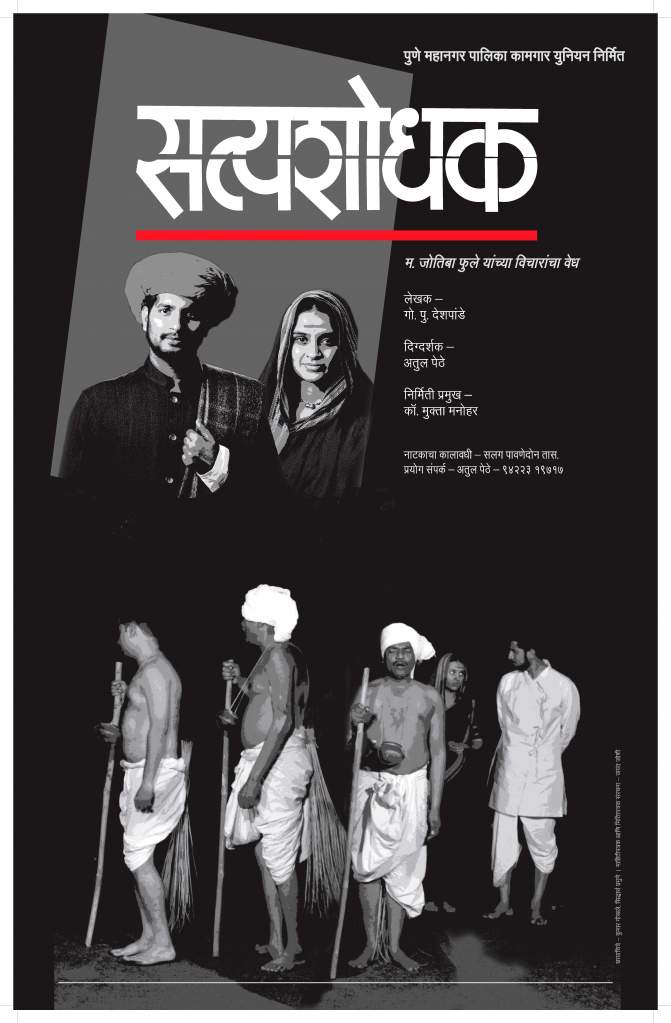
G. P. Deshpande’s play Satyshodhak is currently being performed in Maharashtra and Delhi and has received positive reviews in print and electronic media1 .It is praised for portraying Jotiba Phule’s life and work, its relevance for dalit emancipatory politics and also for the participation of the Pune Municipal Corporation’s workers as actors. There is a mood of celebration and a congratulatory back patting tone in the appraisal of a supposedly qualitatively different production. In addition to that, the writer has claimed that the production means a ‘successful and meaningful experiment of political education’ 2 of the workers/actors who are dalits. However, the flaunted success of the play and claims about its political import are belied by a performance that offers a very brahmanised Phule. It is very interesting to see that the author claims ‘a meaningful experiment’ of political education of the workers by offering them a pro-upper caste version of Phule. The very choice of producing a play about Phule in 2012 after a shelf life of twenty years 3, the writer’s articulated positions regarding it and the knowledge of Phule delivered through it, involve, I suggest, an upper caste cultural politics embodied in the brahman friendly figure of Phule.

Continue reading Satyashodhak: Brahminical Manoeuvre: Madhuri M. Dixit

Olympics, Art and the Orbit of Capital : Anirban Gupta Nigam

Guest post by ANIRBAN GUPTA NIGAM

The facts:

In 1992,  Prijedor – a mine in a place called Omarska in Bosnia – was transformed into a concentration camp by Bosnian Serb forces. The number of Bosnian and Croat people held in the camp varies between at least 3,334 and 5000-7000. Many of them – around 700-800 by some accounts, many thousands by others – were murdered.

A little over a decade later, in 2004, the world’s largest steel producing company, ArcelorMittal took control of 51% of the Ljubija mining complex, of which the mine of Omarska is a part. In the former concentration camp where thousands had been detained and many brutally killed, mining activity has now resumed. A year later – 2005 – ArcelorMittal promised it would financially back and oversee the construction of a memorial for the victims at Omarska. They never did. Not only that, according to some reports ArcelorMittal recently enclosed the space around the mine, denying people entrance and effectively privatising a place of great trauma and violence for exclusive reasons of commerce.

Meanwhile the company, through the artistic prowess of Anish Kapoor, spearheaded the construction of a massive public art monument meant to become one of the symbols of the forthcoming London Olympics. The Olympic Tower – also known as the ArcelorMittal Orbit – has, from its very beginning, been subject to both massive criticism and support. The back and forth over its status as genuinely “great art” or “fascistic gigantism” and a “waste of public money,” has centred on how people respond to the physical structure, as well as on the merits and demerits of having a large corporate house direct a public art initiative of this kind. On the 14th of April this year, Mladen Jelača, Director of ArcelorMittal in Prijedor, verified to Milica Tomic (from the Monument Group in Belgrade) and Eyal Weizman (professor in Goldsmiths, University of London) that iron from the same ore that was mined in Omarska had indeed been used in the construction of the ArcelorMittal Orbit.

Continue reading Olympics, Art and the Orbit of Capital : Anirban Gupta Nigam

Creating Happiness – Rijul Kochhar

Guest post by RIJUL KOCHHAR


It is a minute and a half long, and from the moment you see it, you will know that there is something sinister about it—a scenario of forced forgetfulness. It is displacement incarnate, and what is it doing, this aesthetic of obscenity? Is this retribution or charity, or retribution through charity, the developmental discourse of murderous sustainability through erasure? You will be puzzled and worried, harried and then it will make you sleep again in pious numbness, for isn’t the world—its deep blue sky and crystal fluid and cleansing sunlight, and bright flowery faces, its innocent time—just so beautiful! You will find that you cannot respond to it, physically, humanly, for it is not receptive to the organic. It cannot be mediated. It is a ghoul, perched to haunt and hypnotize us out of the memory of its past terrors. You remember, lenore, and wasn’t it to be nevermore? It is an electrical transmission and nothing more, or is it? It is a triumph of pre-postmodern, oily chic, so cloaked in ancient blood, that the blood has caked and turned black and fallen off, revealing the identical colour of the master’s heart, now you see it, now you don’t. The laceration has been hidden by the three-day apoptosis—the extra-cellular matrix, the forgetful memory’s collagen. But you will need to dig outward and inward from here, and very deep. It is there on my screen, this light of blood-lust, “Vedanta: Creating Happiness”, and every time a new or repeated tale from half way across the world is beamed, news every quarter of an hour, this monstrosity accompanies those facts like some leech feeding on reality. You remember Sontag, and isn’t she who had her way with those words: “Now there is a master scenario available to everyone. The color is black, the material is leather, the seduction is beauty, the justification is honesty, the aim is ecstasy, the fantasy is death.”

Continue reading Creating Happiness – Rijul Kochhar

Satyashodhak – A Performance

(A shorter version of this review appeared in Tehelka)

Writer: G P Deshpande

Director: Atul Pethe

Performed by Pune Safai Karmacharis Union

Image

It was apt that a landmark production of G P Deshpande’s 1992 play Satyashodhak on the life of the 19th century anti-caste crusader Jyotiba Phule was performed in a week that witnessed the killing of the head of the Ranbir Sena – a week in which we were reminded that the bitter legacy of caste haunts us as strongly as ever. It was unusual however, that the performance should be held at the recently-opened May Day café and bookstore in Delhi – a space dedicated to the different and more hopeful legacy of the international working class movement, and located close to the heart of a former industrial district in a city that practices careful amnesia about its working classes. It is entirely unusual further that the performers were both Dalit and members of the Pune Municipal Safai Karmacharis Union. While the ancient, poisoned streams of caste and class have often overlapped on the subcontinent, they have not, as we are aware, produced unified or even similar political responses.

Continue reading Satyashodhak – A Performance

Resisting the Second Childhood: Towards Universal Pension in India

Guest post by AKHIL KATYAL

Ashiya Begum, an elderly widow, had worked as a road construction labourer after her husband’s death. She recalls that when all the workers used to have lunch by the construction site, she tried to sleep under the bushes as there was no food and it was better than seeing others eat. When the pangs of hunger grew insistent, she would drink a lot of water and then tie her saree end tightly around her stomach and continue to work. At night if the children cried and she had nothing to feed them, she peeped out of her tent to neighbours’ utensils and used to beg a glass of ganji (water which is to be drained out of rice once it is cooked) from them. Everybody got 5-6 spoonfuls of ganji before sleeping. Sometimes in the evening, after the road construction work, she cooked in other people’s houses. They gave her four rotis that the entire family ate…‘Even if I tell you (what we eat to survive),’ she told the researcher, ‘will you ever be able to feel what we eat?’
–          from the ‘Study on Destitution and Hunger’, Centre for Equity Studies, Delhi

Old age mostly inspires the sentiment of the universal in us, the aesthetics of the general, so much so that when we speak of the old, we often let go of the specific and relish statements that tend to be as wide-ranging as they could be naïve: the old are wiser, we say, the age is just a number, our frames turn more literary, more contemplative, it is the dusk of life, we think, or sometimes being metaphorical, we consider to be old to be in a second childhood. The last one is Aristophanes, no less. Continue reading Resisting the Second Childhood: Towards Universal Pension in India

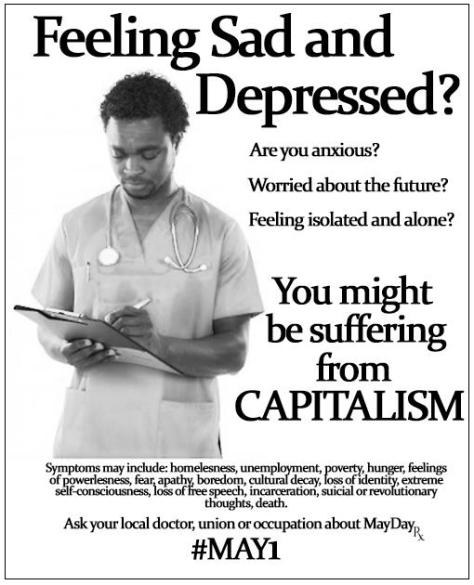
Happy May Day!

The Semiotics of Happiness

Guest post by ABHIJIT DUTTA

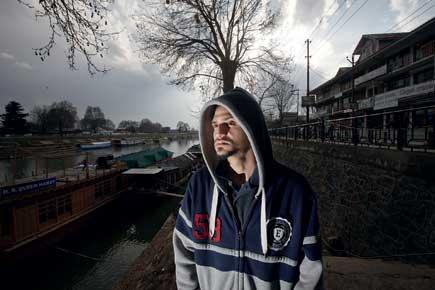
MC Kash - Photo by Ashish Sharma / Openthemagazine.com

It is not every day that you wake up to find your Twitter timeline flooding with the assertion that Kashmir – of all places – is happy. Dangerous? Of course. Beautiful? well, yes, the postcards are pretty enough. Angry? Sure, they look it. Radical? Oh god, yes. Happy?

If you ask Manu Joseph, author of Serious Men and editor of Open, the answer is yes. In this article, he talks about his interactions with “regular” people in the valley – the non elite, the non journalist, the non artist, the non writer – and is convinced that Kashmir is ready to move on. That it has already moved on. That Kashmir is happy. As proof, he offers these exhibits: (a) record high tourism numbers, (b) 2010 IAS topper Shah Faesal (who tells him “commonsense is finally winning”), (c) a meeting of a District Magistrate with elected leaders of a village (“not a word about politics”, says the DM to Mr. Joseph, “They want to talk about things that matter to them and their families”) and (d) the desire for city life (“we want KFC”).

Continue reading The Semiotics of Happiness

Press Release Against IT 2011 Rules

PRESS RELEASE

The notification of the Information Technology (Intermediaries Guidelines) Rules 2011 in April 2011 has resulted in the creation of a mechanism whereby intermediaries (such as Google, Facebook, Yahoo, etc) receive protection from legal liability in return for trading away the freedom of expression and privacy of users.

The Rules demand that intermediaries, on receiving a complaint that any content posted online is considered grossly harmful, harassing, blasphemous, defamatory, obscene, pornographic, paedophilic, libelous, invasive of another’s privacy, hateful, or racially, ethnically objectionable, disparaging, relating or encouraging money laundering or gambling, or otherwise unlawful in any manner, have to disable the content within 36 hours of receipt of complaint. The rules also require the intermediaries to provide the Government agencies information of users without any safeguards.
Continue reading Press Release Against IT 2011 Rules

Freedom in the Cage: 22 April, 2012

Press Invitation

FREEDOM IN THE CAGE:

We urge the Parliament TO SAY NO TO INTERNET CENSORSHIP

Jantar Mantar, 22nd April 2012, Sunday, 11AM to 5PM

Artists, musicians and Internet users will participate and talk. We are putting cages at Jantar Mantar with artists inside playing guitars and painting canvases. This symbolises that IT rules have caged our freedom which was granted by the constitution of free India. It is about our basic democratic right of free speech. It is about police not knocking on our doors for forwarding emails. It is about what you and I can put up on our blogs without worrying whether it hurts the rich and the powerful.
We support free speech, free knowledge and free software. Continue reading Freedom in the Cage: 22 April, 2012

Hyderabad Riots

Report of the Fact Finding Team

Civil Society Organisations of Hyderabad constituted a Fact Finding Team at a meeting held on 12th April to enquire into the riots and disturbances in Hyderabad between 8th to 12th April 2012.

The Team Comprised of Mr. Jeevan Kumar (HRF), Syed Bilal (HRF), Ms. Audhesh Rani, Mr. M.A. Hakeem, (ICAN), Mr. B. Ramakrishnam Raju (NAPM), Ms. Noor Jahan (COVA) and Dr. Mazher Hussain (COVA). The Fact Finding Team received local facilitation from Mr. Azeem Khan (Advocate), Mr. Vijay Kumar (AITUC), Mr. Yadgiri Reddy, Mr. Samad and Mr. Waheed Ansari.

The Team made field visits on 16 and 17 April 2012 and met the following:
1.  Members of the Hindu and Muslim communities in Madannapet, Kurmaguda and Saidabad
2. Mr. Sahadev Yadav, Local Corporator
3.  Mr. Iqbal Siddiqui- ACP Malakpet
4.  Mr. Amit Garg IPS, Additional Commissioner, Law & Order, Hyderabad City Police
5. Mr Madan Mohan Rao District Revenue Officer, Hyderabad.6.
Earlier, on 14th April a team of Interfaith Forum had visited all the 7 places of worship that were desecrated between 8th and 12th of April and had met the priests and community leaders of these areas.

Events

At about 6.30 am on 8th April the priests of Sri Abhaya Anjaneya Swami Devalayam located in a by lane in Kurmaguda noticed green colour (associated with Islam and Muslims) sprayed on the walls of the temple and  burnt leg pieces of a cow placed on the grill. The priests informed Mr.Sahadev Yadav, the local Corporator from the BJP party who in turn informed the police who reached the spot by about 7 am.

Continue reading Hyderabad Riots