
All posts by Sunalini Kumar

Is India’s HRD Ministry Barking Up The Wrong Tree?

Guest post by RAM KRISHNASWAMY

HRD Minister Kapil Sibal seems to be getting a lot of flak from so many quarters on Jan Lok Pal Bill, HRD Computer Tablet Aakash and now his backing of ISEET, one common national entrance exam for science and engineering. Now as HRD Minister he has inadvertently attracted the wrath of over 1,75,000 IIT alumni globally; as also faculty and students of all IITs who are opposed to his idea of killing IIT-JEE and replacing it with a common national exam called ISEET.

Yes, Kapil Sibal is the HRD Minister but he is a lawyer and a politician and is not a technologis. It appears that he is being advised by technologists who are misleading him and telling him what he wants to hear, as opposed to giving him solid advice in the interest of the nation.

Let us just look at IITs and JEE alone.

Let us see what truly is wrong with IITs & JEE and what recommendations the HRD Minister has received and from whom.

If we were to simplify the problem with JEE as it is administered in 2012 they can be listed as follows (not a comprehensive list):

Continue reading Is India’s HRD Ministry Barking Up The Wrong Tree?
Review: ‘Behind the Beautiful Forevers’ by Katherine Boo

Guest post by MITU SENGUPTA

In a remarkable book about slumdwellers in Mumbai, Katherine Boo brings to light an India of “profound and juxtaposed inequality” – a country where more than a decade of steady economic growth has delivered shamefully little to the poorest and most vulnerable.  But though indeed a thoroughgoing and perceptive indictment of post-liberalization India, the book fits into a troubling narrative about the roots of India’s poverty and squandered economic potential.

This is a beautifully written book.  Through tight but supple prose, Boo offers an unsettling account of life in Annawadi, a slum near Mumbai’s international airport.  In Boo’s words, this “single, unexceptional slum” sits beside a “sewage lake” so polluted that pigs and dogs resting in its shallows have “bellies stained in blue.” It is hidden by a wall that sports an advertisement for elegant floor tiles (“Beautiful Forevers” – and hence the title).  There are heartrending accounts of rat-filled garbage sheds, impoverished migrants forced to eat rats, a girl covered by worm-filled boils (from rat bites), and a “vibrant teenager,” who kills herself (by drinking rat poison) when she can no longer bear what life has to offer.

Continue reading Review: ‘Behind the Beautiful Forevers’ by Katherine Boo

The Many Uses of a U.P Election

I live in Noida, which is the child of an extra-legal union between Delhi and Uttar Pradesh. Noida is not-quite Delhi, not-quite U.P, not quite itself on most days. Living in a cusp has several advantages, however, the main one being that one can look either way, up at Delhi and right down over U.P’s scruffy head. I found myself doing both in the recently-concluded U.P election. Curiously it seemed, for Delhi people, U.P’s 2012 elections were flush with new meaning. For decades the favourite whipping boy of Delhi, U.P had overnight become its favourite gap-toothed angel. For Pratap Bhanu Mehta of the Delhi-based Centre for Policy Research, the U.P election was a historic battle between empowerment and patronage, the future and the past, performance and rhetoric, sincerity and cynicism, and (this is my favourite) ‘rootedness over disembodied charm’. Mehta believes that while voters ‘carefully assessed’ candidates through the ‘prism of local circumstances’, they were no longer prisoners of their identity. Most confounding is Mehta’s view of democracy, “In a democracy, where you are going should be more important than where you are coming from”. These U.P elections “redeemed that promise” according to Mehta, since they were “without a trace of community polarisation: no one felt on the edge or under siege, all could exercise options without being unduly burdened by the past.”

Continue reading The Many Uses of a U.P Election

Does democracy stop at the doorstep of the women’s hostel?

This appeal comes to us via MAYA JOHN

Friends,

Since January of 2012, residents of Delhi University’s largest postgraduate women’s hostel, University Hostel for Women (UHW) have been waging a battle against outright suppression of their democratic rights by, both, their hostel authorities and the University’s Proctorial Committee. Since the hostel’s Chairperson is also the Proctor of the University, the Proctorial Committee has been intervening in the matter, not as a neutral party, but in complete connivance with the hostel authorities. There are two issues which are central to the ongoing struggle of the women students, namely, the imposition of a union constitution by the authorities, and the existence of archaic and conservative rules in the hostel.

Continue reading Does democracy stop at the doorstep of the women’s hostel?

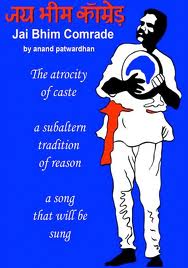
Jai Bhim, Comrade Patwardhan

How many murdered Dalits does it take to wake up a nation? Ten? A thousand? A hundred thousand? We’re still counting, as Anand Patwardhan shows in his path-breaking film Jai Bhim Comrade (2011). Not only are we counting, but we’re counting cynically, calculating, dissembling, worried that we may accidentally dole out more than ‘they’ deserve. So we calibrate our sympathy, our policies and our justice mechanisms just so. So that the upper caste killers of Bhaiyyalal Bhotmange’s family get life imprisonment for parading Priyanka Bhotmange naked before killing her, her brother and other members of the family in Khairlanji village in Maharashtra, but the court finds no evidence that this may be a crime of hatred – a ‘caste atrocity’ as it is termed in India. Patwardhan’s film documents the twisted tale of Khairlanji briefly before moving to a Maratha rally in Mumbai, where pumped-up youths, high on testosterone and the bloody miracle of their upper caste birth are dancing on the streets, brandishing cardboard swords and demanding job reservations (the film effectively demolishes the myth that caste consciousness and caste mobilisation are only practised by the so-called ‘lower castes’). Asked on camera about the Khairlanji murders, one Maratha manoos suspends his cheering to offer an explanation. That girl’s character was so loose, he says, that the entire village decided to teach her a lesson.


Continue reading Jai Bhim, Comrade Patwardhan

On the low morale of Gujarat Police: RB Sreekumar

This guest post by former Gujarat DGP RB SREEKUMAR is a letter to the Union Minister of Home Affairs.

Dear Shri P. Chidambaram,

I belonged to Gujarat cadre of Indian Police service (IPS)-1971 batch-and retired from service on 27.2.2007 in the rank of Director General of Police (DGP), Gujarat state.

2. As a senior citizen (age-65 years) staying in Gujarat since 1970s, I am constrained to write the following for your kind consideration and urgent remedial action.

3. The morale, self esteem and image of the Gujarat Police in general and of IPS officers giving leadership to police force in the state in particular, have been in steady decline since 2002 anti-minority genocide. The media, reputed human rights activists and national bodies like the National Human Rights Commission, the National Commission for Minorities and the National Commission for Women have thrown light on serious intentional acts of commission and omission by Gujarat government functionaries (except in cities like Surat, Bhavnagar and a few districts in South Gujarat and Saurashtra), that facilitated extensive and gruesome mass violence against minorities.

Continue reading On the low morale of Gujarat Police: RB Sreekumar

Le Grande Triptych Humanism: Brinda Bose and Prasanta Chakravarty

Guest post by BRINDA BOSE and PRASANTA CHAKRAVARTY

Haruki Murakami’s much-hyped IQ84 that released worldwide in translation a couple of months ago is (Our) Big Fat Japanese Novel, three volumes in one. Closer home, Amitav Ghosh is in the process of completing the definitive South Asian Maritime Novel in trilogy. Young, prize-winning, promising writers from around the world – New Zealand, Malaysia, Bangladesh – are pledged to regale us with long large narratives that will tell us everything we ever wanted to know about their cultures, societies, lives – in trilogies and quartets. Intriguing? Indeed. Coincidental? Perhaps not.

Even as new literary canons are continually in consolidation, interrogation and re-formation, Franco Moretti – acclaimed, revered, preeminent theorist of the Novel and World Literature (which enjoy an odd synecdochic relationship) – has systematically constructed a blueprint for ways to appreciate the worth of such a grand, if loose, canon as World Literature by a particular reading technique he calls ‘distance-reading’.

Continue reading Le Grande Triptych Humanism: Brinda Bose and Prasanta Chakravarty

Of Cloaking, Colouring and Varnishing: Prasanta Chakravarty

Guest post by PRASANTA CHAKRAVARTY

“Then leave Complaints: Fools only strive
To make a Great and honest Hive.
T’enjoy the World’s Conveniences,
Be famed in War, yet live in Ease
Without great Vices, is a vain
Eutopia seated in the Brain.”

Bernard Mandeville (The Grumbling Hive, 1705)

Salutary falsehoods for a promising end, anyone? Try telling this to the ever righteous Anna Hazare or to the followers of Vaclav Havel, whose campaign assurance to ‘live in truth’ in the year 1989 so moved his virtuous flock. There is a politics of virtue and then there is realpolitik – or so we are told. Or is virtue above politics and vice below? What the deuce marks the ambiguous space in between?! That is what has been relentlessly, and ruthlessly, scanned by two masterful recent additions to the canons of contemporary Western political philosophy: Martin Jay’s The Virtues of Mendacity: on Lying in Politics and David Runciman’s Political Hypocrisy: the Mask of Power, from Hobbes to Orwell and Beyond.

At one level, both scholars acknowledge and emphasize the dangers of the ‘ethical turn’ in political studies.

Continue reading Of Cloaking, Colouring and Varnishing: Prasanta Chakravarty

Why This Kavala-Worry Kavala-Worry Di?

As somebody recently said about the Mumbai flash mob video, if you haven’t seen it, you probably don’t have internet. I’m speaking of the recent ‘Tamil’ hit song of course, ‘starring’ Dhanush.

The one with the catchy tune and simple ‘lyrics’? See, this is what worries me, the fact that I have already used so many quotation marks – for ‘Tamil’, ‘starring’ and ‘lyrics’. Which is why I titled this piece “why this kavala-worry kavala-worry di”. “Kavala” means worry in Tamil (without quotes). So kavala-worry really means worry-worry, which should be nonsense, but it isn’t, given the massive ‘success’ (can’t keep away from the quote marks sorry) of the original ‘Kolaveri’ song, full of double-double words, because this is how we speak in soudh indiya. “Kolaveri”, for those suddenly-uncool nordh indiyans who don’t understand ‘Tamil’ or even plain old Tamil, means ‘murderous rage’ – kolla (murder) + verri (rage).

Continue reading Why This Kavala-Worry Kavala-Worry Di?

‘The Quality of Mercy’: Kindness and Compassion in Higher Education: Prasanta Chakravarty

Guest post by PRASANTA CHAKRAVARTY

There is a moral compass that every freshman must inculcate, says Harvard College Dean Thomas Dingman. To that end, Dean Dingman has asked incoming Harvard students to sign the ‘Class of 2015 Pledge,’ a solemn testament that reflects a set of distinctive values: “That message serves as a kind of moral compass for the education Harvard College imparts. In the classroom, in extracurricular endeavors, and in the Yard and Houses, students are expected to act with integrity, respect, and industry, and to sustain a community characterized by inclusiveness and civility.” The document goes on to hope that entryways and yards will be places where everyone can thrive and where the “exercise of kindness holds a place on a par with intellectual attainment…we want to have an environment in which people can flourish academically.”

Continue reading ‘The Quality of Mercy’: Kindness and Compassion in Higher Education: Prasanta Chakravarty

What caste do you think the Financial Times is?

See update below.

So… I get a phone call yesterday. It’s a reporter from the Financial Times who wants to know what I feel about the recent ban on the movie Aarakshan in certain states, and also what do I feel about caste-based reservations in general, whether caste is still relevant in the India of today, the theory that quotas just increase inequality etc.. I tell her I haven’t seen the movie, and if she still wants to know what I feel about caste-based reservations we could talk for a bit. She says she absolutely wants to know. So I say fine, and we have a 45-minute conversation. Allow me to reproduce a very simplified version of that conversation (in Q&A forrmat):

1. Q: Do you believe movies like Aarakshan can be provocative or controversial; as in, are certain groups justified in taking offence and asking for a ban? Continue reading What caste do you think the Financial Times is?

A Messiah for our Moderate Liberatti – Guest Post by Brinda Bose and Prasanta Chakravarty

The Indian liberal establishment has found a new hero in Kumar Sangakkara. For his now-famous Cowdrey lecture at the MCC on the ‘Spirit of Cricket’ is not just about remedying corruption and decay in cricket (and by extension, in modern sports), but also crucially a rumination on pluralism and integration in postcolonial societies like Sri Lanka. In his speech he had referred to the1983 July riots, the JVP-led insurgency, LTTE terrorism and the heavy price paid by the military to defeat the LTTE. The Sri Lankan Defence Secretary, Gotabhaya Rajapaksa, had a word of praise for Sangakkara for solidly backing the country’s successful war effort against the LTTE, at a time when a section of the international community is seeking accountability from the Sri Lankan military establishment for its questionable practices during the last few decades.

The speech has also stirred the reformer-liberals of New India, who are not only enthralled by Sangakkara’s refined, rhetorical eloquence but also by his civic, character-building arguments. Mukul Kesavan calls Sangakkara’s first-person-narrative at once a cricketer’s prescription and a citizen’s creed. V. Anantha Nageswaran finds in the speech the unfolding of a triad of competence, integrity and conscience, a ‘lesson’ for our political-reformers. Others rave about how his outstanding legal mind subtly seeks administrative transparency and good governance.

Continue reading A Messiah for our Moderate Liberatti – Guest Post by Brinda Bose and Prasanta Chakravarty

The Singur Act and the Deontological Reaction: Prasanta Chakravarty

Guest post by PRASANTA CHAKRAVARTY

The remarkable Singur Land Development and Rehabilitation Bill, passed in the West Bengal Assembly on June 14 became an Act on June 20. The Act scrapped the previous Left Front government’s deal with Tata Motors and has provisions to return land to unwilling farmers. Consequently, Singur land was taken over by the State government prompting Tata Motors to legally challenge the whole Act and a judicial battle has ensued between them and the newly elected State government. The State government may continue to return land in right earnest since there is no legal bar to that as of now. One would think that by many standards, this is a landmark bill that challenges and confronts policy consensus in issues of land transfer, models of enclosing and a concomitant notion of development that marks our nation at this point of time.

Reactions to this enactment have been thick and fast—alarmist and cautious to generous and triumphant. Continue reading The Singur Act and the Deontological Reaction: Prasanta Chakravarty

Is It Nineteen Eighty Four Already?

On 9 April 2011, 11 members of the English Department of Delhi University (almost the entire Department) resigned from various (non-statutory) work committees within the Department. They carried on all their other duties, including teaching, regardless. This mass resignation followed repeated requests from them to their Head of Department to call a meeting of the Department Council of the English Department. By resigning (only from the non-statutory committees), the members of the Department were hoping to bring largely symbolic and moral pressure to bear on the Head, to perform his duties!!

You know something is seriously wrong with a workplace when members of Department have to bring pressure to bear on a Head to perform his or her regular, statutory duties. You should really smell a rat when it’s not the minions and juniors but the bosses at the highest levels that are bending and twisting rules to their advantage; publicly ignoring long-standing statutes and conventions; inventing new ones almost overnight; and practising selective amnesia about procedures.

Continue reading Is It Nineteen Eighty Four Already?

Anna At Nehru Place?!: Aditya Sarkar

Guest post by ADITYA SARKAR

On the afternoon of 25 March, Nehru Place felt different. The rectangular maze of shops and offices wore its usual air of busy activity, but instead of being concentrated around a million acts of individualized consumption as it normally is, the energy humming through the place circulated around a public spectacle. Visitors, bystanders, and low-paid office and shop employees clustered in the central square, and on the balconies of the first floor, their gazes fixed on a street play taking place right outside the central Bajaj office. About twenty young men and women, all dressed in black, raised fists, shouted slogans, and mocked the usual suspects – MNCs, netas, and plutocrats, in the name of the aam aadmi. Shop after shop emptied out. Hundreds of people watched, many applauding loudly. The specific target of this public campaign, though, seemed opaque to most, as the publicity leaflets circulated rather more sluggishly than the sentiments evoked by the performers.

Continue reading Anna At Nehru Place?!: Aditya Sarkar

It’s Here, The Privatisation of Higher Education In India

I do not exaggerate. I am not being hasty. The writing is on the wall. What started as a glimmer in the eyes of the IIC-frequenting bureaucrat, the industrialist with profit-making dreams and the politician with an obscenely large government house in Lutyens’ Delhi is now a raging reality. Pick up any newspaper or magazine and check out the number of advertisements for private universities. Do a google search for the latest news reports on committees on higher education. If you have the time and patience, go through all the government documents on higher education in the past five years, almost neatly coinciding with the exit of Arjun Singh as Human Resources Minister and the entry of Kapil Sibal. Speaking of Mr. Sibal, if his cheerfully unapologetic blundering on the 2G scam is anything to go by, we should have an idea of the kind of subtle and layered approach he has in mind when he speaks of ‘reforming the education system.’

Continue reading It’s Here, The Privatisation of Higher Education In India

No Idiocy Day

Apparently today is ‘No TV Day’. According to whom? According to Hindustan Times. I’m not sure if this is happening around the country, but here in Mumbai, according to Hindustan Times this means that we have to switch off our televisions and get in touch with the city, with ourselves, with our partners, families, friends, whoever. To help us in this undoubtedly difficult task, Hindustan Times has been providing little tips all week on what to do on the 29th of Jan, culminating in a glossy supplement on the 28th called “No TV Day: Things To Do”.

Continue reading No Idiocy Day

The Republic of Exploitation

On this Republic Day, while armoured tanks muscle across Rajpath in New Delhi, little ossified museums of culture called tableaux charm the assembled pass-holding citizenry and the Prime Minister sits like a barely-sentient caricature of himself behind a bullet-proof screen, it may do well to think about the other republic that remains hidden within the bosom of Superpower India – the republic of unfree labour.

This is a world where the laws of the upside world are inverted – where the more you work, the less you are paid, the more your company profits, the poorer you end up and if you find yourself the victim of an injustice and god forbid complain about it, the police put your family in jail. It’s a great irony of our times that we believe the choice before us is between loving the Nation and loving the Corporation, not realising that most of the time its the same person wearing two grotesque masks.  All those who believe that the world begins with their newspapers and television sets and ends at their white picket fences (and all those who don’t), please take a minute to go through the excellent documentation of the war that is raging for workers in this country, put together by the Gurgaon Workers’ Solidarity Group, the Faridabad Mazdoor Sangathan and several other exemplary organisations.

GurgaonWorkersNews – Newsletter 35 (February 2011)

Continue reading The Republic of Exploitation

Daayen Ya Baayen

Tradition-modernity. Rural-urban. Hope-despair. Consumption-frugality. Experience-theory.

Doesn’t it sometimes seem like we may end up spending our entire lives pendulum-ing between these poles? Dipping into her Uttaranchal childhood, first-time director Bela Negi negotiates these heavy-duty extremes in the most delightfully humble way, only to emerge with an incandescent little gem of a film. Daayen ya Baayen is the story of an utterly inconsequential human being – a small blip on the grand radar of things, a man named Ramesh Majhila who returns from Mumbai to his village in the Uttaranchal hills. Continue reading Daayen Ya Baayen

Maya Bazaar

Its 6.30 am on a mid-May Sunday morning in Bombay, India’s favourite metropolis-on-the-sea. Like a sudden gift from a dying relative, an unseasonal chilled breeze is blowing in from the ragged beaches of the city. I put my sandals on and go downstairs from my flat to meet three friends; all of us having decided to do what Bombay dwellers do periodically – use a Sunday to make friends with the city again, to momentarily cease the war that rages, unbidden, every other day of the week. Continue reading Maya Bazaar

The Suicide of Sense

Mumbai has been in the grip of a wave of student suicides this past month. According to the Mumbai Mirror, as many as 25 suicides have taken place in the city in the new year, most of which have been by students. As expected, the media has tripped over itself reporting every sordid and tragic detail of the students’ personal lives, and public anxiety in Mumbai is climbing to the level of all-round hysteria. The general consensus is that there is too much pressure on young minds from schools and parents; the Maharashtra State government has reacted by issuing directives to all eight regional education boards in the state asking principals to arrange workshops to identify depressed students and urge them to seek psychiatric help. State education minister Balasaheb Thorat has promised a stress-free curriculum in school boards, and followed this up by a new rule that allows failure in one subject for an overall pass result in the SSC. A south Mumbai hospital has recruited a former depressive who has a history of three suicide attempts to counsel others against suicide. The Thane Mental Hospital has in the meanwhile gone one step ahead and created what they call a ‘20-minute anti-suicide psycho drama skit’ to be performed on the streets and in educational institutions. According to hospital superintendent Dr. Sanjay Kumavat, the skit will focus on the trauma that family members go through when a child commits suicide, and the ‘problems created by such a situation’ (Mumbai Mirror Jan 18th 2010) – this will hopefully prevent them from taking the proverbial ‘drastic step’.

Continue reading The Suicide of Sense