All posts by Gautam Bhan

Thinking through the application for “clarifications” of transgender rights

Newspapers have been reporting about an application for clarification filed, it appears, by the Ministry of Social Justice and Empowerment with the Supreme Court about the NALSA judgment on transgender rights. Here is the full text of that application, and here is a very useful and short summary of its content. The reflections below follow from that summary.

Any move that makes the inclusion of trans-men, non-hijra trans-women, and genderqueer/trans folks in the SC judgment explicit is welcome. Many had written to the Ministry of Social Justice and Empowerment seeking this, following the MSJE report and the judgment. The principle of self-determination of gender identity without psychological and medical examination or surgery is upheld and that remains critical.
Continue reading Thinking through the application for “clarifications” of transgender rights

Reading the Debate on the Planning Commission

I find it hard to think through the current debate on the Planning Commission (PC) outside a few things. The first is a clear centralisation of power at and within the PMO which I cannot help but be alarmed by. It’s all well and good when the decisions are those you agree with and all to easy to forget what centralisation does in the hands of, let’s please not forget so easily, a man whose IMHO has no H.

Its faults are easy to list but the PC (when it worked) did remain a space for thinking through a centre-state relationship and a development vision outside the government. It was a moment of articulation of intent with an (albeit diminishing) ability to put some weight behind it. I can’t quite bring myself to defend it because of what it refused to become in the more recent years, and the fights it refused to fight, but the need for such an autonomous voice remains. I don’t believe this new body will be anything other than a rubber stamp for a deeply authoritative PMO. In that, I am cautious of what will come. And by cautious, I mostly mean afraid.

Continue reading Reading the Debate on the Planning Commission

Airing the unheard from Polavaram: Mohammed Omais Shayan

Guest post by MOHAMMED OMAIS SHAYAN 

As the Nation is welcoming its 29th state, Telangana is upbeat with hope of starting a new chapter of progress. Amongst the jubilations in Telangana, voices of people affected by the Polavaram dam are being lost. “Dam’ned”, a film by Saraswati Kavula is an attempt to air the unheard voices. It’s a must watch for all concerned as the movie touches the links of people, land, livelihood and development. The film aims to bring ground realities through interviewing the people of the affected region, technical and environmental experts. Before getting into content of the film, a very brief introduction of the project.

Polavaram project is going to be the largest dam in terms of number of people being displaced. The dam will be constructed at Polavaram village in West Godavari district of Andhra Pradesh. The dam aims to irrigate 2910 km2 of area in Andhra Pradesh [1]. It will also provide drinking water to Vishakapatnam City and many villages besides water for industries in Vizag. The project aims to transfer 80 TMC water from Godavari to Krishna basin. The dam will submerge 300 villages of Andhra Pradesh, Chattisgarh and Orissa. This submergence area will cover 3,500 acres of biodiversity rich forest and also partially submerge the Papikundulum wildlife sanctuary [2]. The people living in these areas are predominantly ‘adivasis’ belonging to Koya and Konda Reddy tribes.

https://www.youtube.com/watch?v=7myuXBpdzGg

Continue reading Airing the unheard from Polavaram: Mohammed Omais Shayan

Notes of Dissent on the AAP Dharna

I have no issues with anyone using dharnas as a political strategy, whether or not they are the Chief Minister. The “inconvenience” and “dignity of office” arguments being made by some also hold little truck with me. I write here then to mark my dissent on three specific fronts against the recently concluded AAP dharna from a different vantage point. As with all thoughts on things emergent, they are offered in the making with all their attendant uncertainties.

Continue reading Notes of Dissent on the AAP Dharna

São Paulo: The City and its Protests: Teresa Caldeira

Guest post by TERESA CALDEIRA

In June 2013, a series of large demonstrations throughout Brazil have shaken up its main cities and political landscape.  They have also perplexed politicians and analysts alike, many of whom found themselves without solid references to interpret the novelty and oscillated between silence and old discourses.  It is always risky to interpret emerging processes. Minimally, we risk following secondary paths or, even worst, framing new events with the vocabulary made available by old interpretative models, exactly the ones that the new events are trying to displace. However, in order to reveal what is emerging it is necessary to risk, search for new hints, and follow signs already available.  Several references that can guide us to interpret the June events have been around for quite a while; others are new, but we can trace their lineage and contextualize them.

SP Batata 17 june
17th June, 2013

Continue reading São Paulo: The City and its Protests: Teresa Caldeira

In Search of a Liberal Education

The article below represents the full, expanded text of a piece that just appeared in EPW here. I am posting the full version here in its entirety both because I hope it will begin a distinct discussion that allows us to reflect on what can be done in the current moment within DU as well as to give voice to the expanded argument.

Some texts are wonderful to teach with. In one, Ravi Kanbur writes about the “nature of disagreement” about poverty reduction. He asks: “how can people with seemingly the same ends disagree so much about means? How can seemingly the same objective reality be interpreted so differently?”[1] As a teacher, his questions allow one to teach skills – reason, logic, argument and critique— as well as demonstrate an ethical imperative that should guide not just our intellectual lives but our everyday lives as citizens: how do we understand and engage with a dissenting perspective?

Kanbur’s question is an excellent example of the kind of critical and analytical skills a liberal education offers. Today, Delhi University [DU] is seeking to create a core curriculum – a Foundation of eleven required courses – that repeatedly refers to this idea of a liberal, core education as part of a new Four Year Undergraduate Programme [FYUP]. These eleven courses are required for all students in DU regardless of their degree subject. Further, should they take a two-year diploma option, they would represent the lion’s share of what some students will learn in their entire time at university. These courses have a clear aim: “multi-disciplinary” education that will “strengthen the educational base of the students in relation to the grand challenges facing India” and ensure that students “acquire both key knowledge and ability.” [2] Core to this restructuring effort is an emphasis on “skills and employability.” In a recent interview, Vice-Chancellor Dinesh Singh lays his cards out on the table: “Absolutely. That’s one of the games here. To get our students to be employable.” This is particularly important, he goes onto argue, for the students taking the two-year diploma: “In two years’ time, we also give them some knowledge-based skills, at least their employability goes up.”[3]

Continue reading In Search of a Liberal Education

Crimes of Exclusion: Siddharth Narrain

Guest post by Siddharth Narrain.

It is anger on the streets that brought back to the forefront the neglected issue of sexual violence, energized a government appointed Committee to put together clear and well reasoned recommendations on law reform, and forced the government to table the Criminal Law Amendment Bill (2013).  It is public pressure and years of struggle by the women’s movement that is reflected in the more progressive parts of the Bill, passed recently by both Houses of Parliament.  Unfortunately, despite unanimity from a large cross section of society, that the definition of rape cannot be restricted to an outdated understanding of rape as perpetrated by men on women, the version of the Criminal Law Amendment Bill that was finally passed by Parliament retains this language. The law, if passed in this form will be a betrayal of the rights of millions of transgender persons, intersex persons and sexual minorities not born women.

Continue reading Crimes of Exclusion: Siddharth Narrain

Seven Propositions and One Challenge from Ejipura

The recent eviction of over 1500 Economically Weaker Section (EWS) households from Ejipura in Bangalore (see here, here and here) to make way for a high-end mixed-use development (with some EWS housing for “original residents”) is just one a series of millennial evictions that have scarred the landscape of Indian cities and yet another instigated by an order of a High Court. Below are seven quick propositions on how to understand these evictions, how to respond in the immediate and near-term.

Continue reading Seven Propositions and One Challenge from Ejipura

Freedom in Three Acts: @Koinon3a

Guest post by @KOINON3A

New Friends Colony Park, 1996.

There’s a funny telepathy between people running or walking in opposite directions along a narrow jogging track. You both move to one side to avoid bumping into the other, only to find that the other person has moved in exactly the same direction you have. We exchanged half smiles at this long before we actually collided. As we approached each other, I smiled more widely as an acknowledgment of having managed to get it right and avoid each other.

His pockmarked face broke into a smile too. And in the moment he passed right by me, he reached out and grabbed my left breast hard and then moved on. Something I couldn’t have planned or thought about happened; I snapped like a brittle twig, swung around and went after him. His back was turned to me and he didn’t expect this. I hit him in the middle of his back with my fist, my keychain around my fingers giving him an additional gouge. He whirled around, surprised, the mouth now a quivering O, and went for my chest again.

Continue reading Freedom in Three Acts: @Koinon3a

A City’s Pride

This Sunday, Delhi walks in its fifth annual queer pride parade. Each year at this time the question arises again: why a pride parade? Transgender, lesbian, gay, bisexual, hijra, kothi, and intersex people still have too many answers to give. While a decision on the appeals against the 2009 Naz judgment still remains pending, stories of continuing violence on the bodies of those deemed different do not wait for the Supreme Court. Queer people continue to have no legal protections against discrimination in the workplace; to be forcibly dragged to psychologists; to be forced to lie, cheat and conceal their lives; to be victims of familial, domestic and public violence and to feel, in so many ways both in their own minds and in the eyes of many others, like lesser citizens.

What this past year has reminded us is that they are not alone. The fundamental pillars of what enables this violence – fear, prejudice, intolerance – seem to have dug themselves deeper into our cities just as the institutions and democratic safeguards meant to combat them seem to have floundered. The ranks of urban residents who have experienced that deeply queer moment of exclusion and otherness – whether or not it speaks the particular idiom of sexuality – have grown. This year, as people once again take to the streets, they must do so not just for themselves but for the cities they inhabit and, increasingly, must protect.

Continue reading A City’s Pride

Strangers in a Place They Call Home: Lawrence Liang

Publishing a post for Lawrence Liang who is unable to do so himself at the moment. This piece also appeared in the Hindu this morning. I flew in myself from Bangalore last night and scenes of departure, though not nearly similar to those at the train stations, were palpable at the airport as well. Let me add to Lawrence’s words below three more thoughts that are still forming in my head. The first is the weakness of the word of public institutions and officers in our cities and how little solace they seem to offer or reliability they seem to have, particularly for “minority” residents — (how that word seems to have lost all other meaning other than identifying targets). Panic is also evidence of the fragility of structures that are meant to protect difference rather than just tolerate it. As Lawrence says below, the empirics do not negate how real the fear itself is.

The second is the limits to ideas of “tolerance” in response to diversity versus a more affirmative and protective inclusion — what would it take for the space between rumour and panic to be wider, deeper and further so it is not so easy to bridge?  Here a range of global experiences on cities and their attempts to hold difference are well worth looking at — we are not the first and nor will we be the last to fight this battle which is, in a sense, as old as cities themselves. But, to take one example, would we tell a different story today if public services in Bangalore were framed in response to the diversity of the residents — where they were offered, in all the languages really spoken by residents including the hundreds and thousands of residents from the states of the Northeast? Would the word of the Law minister have more power then? Would panic hesitate? 

The third is a reminder of how Indian cities still belong to states. The supposed linguistic and ethnic organisation of our federal structure has scripted a different urban future for many of our cities — how can Lawrence’s desired anonymity and cosmopolitanism take root if Bangalore still belongs not to its residents but to the idea of Karnataka?  Onto Lawrence’s much more articulate thoughts.

Strangers in a Place They Call Home

Lawrence Liang

One of the underrated pleasures of living in a city is anonymity —guaranteed not by the fact that you look the same as everyone else but that no one really cares that you look different. And a truly cosmopolitan city is one in which everyone looks different. I have been fortunate that for the 30 or so years that I have lived in Bangalore I have not had to deal with the fact that I look different. Save for occasional reminders of my Chineseness, the city has given me enough space to be who I am — cinephile, bibliophile, foodie — without having to bother too much about questions of identity. It is therefore disconcerting to suddenly step out into public spaces self-conscious of my Mongoloid features. Paranoia is not a grand sensation and it manifests itself in the myriad minute gestures and encounters. It seems unbelievable that the experience of a city can change so rapidly because it is clear to me that the last few days in Bangalore have been precisely about that. A miasma of fear, doubt and anxiety has descended on the city. It is possible that much of this has been fuelled by rumours and hearsay; and while the rumours may be false the fear sadly isn’t.

Continue reading Strangers in a Place They Call Home: Lawrence Liang

The Right to Our Bodies

In a case where the “facts” are both complex and yet also the question at hand, let us start with one that should be undisputed: Pinki Pramanik says she is a woman. She has lived as one, competed as one, and identifies as one. She and no other person or institution – particularly the law or medical science – has the right to decide what her gender identity is regardless of her anatomy, her chromosomes or her hormones. As the investigations against her began, her claim to be a woman should have been accepted at face value regardless of whether narrow judgments of her appearance, manner, physicality or dress led some to believe otherwise.

To add to Nivedita’s post below and track what the Pinki Pramanik case continues to tell us, here is a link to the rest of the Times of India piece cited above that appeared on Monday. The argument I make in that piece has taken a new turn. The gender test results, as reported by the media currently, now say that Pinki is “male” because she has XY chromosome. Yet the report says at the same time that she has “female genital ducts and female external genitalia.” What indeed, then, are we to make of a “conclusive” report that finds Pink to be “male”? The terms and words of the test undo themselves and the underlying assumptions and pathways to the conclusion are far from apparent. If Pink is indeed intersex, then all of these results can stand without the conclusion the report draws of her being “male.” Worth reading are a Journal of American Medical Association article here on Gender Testing and the Olympics, Alice Dreger on sex and gender testing in sports here.

In a national daily this morning, there is a photograph of Pinki. She is taking cooking lessons with her mother in her village. The performance of her gender has begun as her sex is questioned. The only strategy open to her is to now constantly claim all that is uncontestably “woman”: a saree, a pallu over the head, in the kitchen, learning from her mother. Yet again the binaries and essentialisms of our gender identities are reproduced as Pinki tries to erase signs of the apparent “masculinity” of her appearance and behaviour that has driven much of the outrage against her thus far.

The (Auto)Rakshasa and the Citizen

A petition from an organization called Change India invaded my Facebook wall today right before – rather ironically, it turns out— my morning auto ride. The petition is filed under a category on the site called “petitions for economic justice.” When you open it, the image pasted below opens. A sharp fanged, dark skinned “auto-rakshasa” demands one-and-a-half fare. The commuter is “harassed.” The petition that accompanies this image urges the ACP of police to create “an efficient system” so that complaints made to report auto-drivers who overcharge or refuse to ply can be tracked. How, it asks, can “concerned Bangalorean citizens” expect “justice” if their complaints are not tracked?  We all must, it urges, “join the fight.”

Image

Let me first say quite clearly that I do not mean to undermine the intentions and frustrations of those who launched this campaign and, yes, when the meter goes on without asking, it eases a morning commute significantly. The question is: if this does not happen at times (and indeed it doesn’t) then why is this so and what does one do about it? There is a lot to be said about the economics of the issue itself and I welcome others reading who know more to write about it more extensively. But this piece is not about that. It is about the campaign itself and how we articulate political questions in our cities. It is fundamentally about the easy, unremarked way in which a working urban resident and citizen – who is also, after all, a “fellow Bangalorean” and concerned with “economic justice”– can be termed and portrayed a “rakshasa” as if it were a banal utterance.

Continue reading The (Auto)Rakshasa and the Citizen

Between Aid Conditionality and Identity Politics – The MSM-Transgender Divide and Normative Cartographies of Gender vs. Sexuality: Aniruddha Dutta

This guest post by ANIRUDDHA DUTTA continues a theme raised on Kafila by Rahul Rao

Late last year, the UK and US governments made announcements supporting the global propagation of LGBT (lesbian-gay-bisexual-transgender) rights as human rights, suggesting that the future disbursal of aid might be made conditional on how LGBT-friendly recipient countries are perceived to be. The potential imposition of ‘gay conditionality’ on aid has been rightly critiqued for imposing a US/European model of sexual progress on ‘developing’ countries, which may justify covert geopolitical agendas and fail to actually benefit marginalized groups. But whatever form such conditionalities may take in the future, a more implicit and routine form of aid conditionality has been already at work, relatively unnoticed, for several years now – the presumption of distinct and enumerable minorities corresponding to categories like homosexual or transgender as target groups for aid in socio-cultural contexts where gender/sexual variance may not be reducible to such clear-cut categories or identities. Increasingly, community-based organizations (CBOs) working to gain gender/sexual rights or freedoms need to define themselves in accordance with dominant frameworks of gender-sexual identity to get funding both from foreign donors and the Indian state, creating identity-based divisions among CBOs and presenting existential challenges to communities that do not exactly fit these categories.

Continue reading Between Aid Conditionality and Identity Politics – The MSM-Transgender Divide and Normative Cartographies of Gender vs. Sexuality: Aniruddha Dutta

On ‘gay conditionality’, imperial power and queer liberation: Rahul Rao

Guest post by RAHUL RAO

It’s not clear what (or whether) David Cameron was thinking when he suggested recently that British aid should be linked to respect for LGBT rights in recipient countries. Almost immediately, the statement evoked homophobic responses from political and religious leaders in Tanzania, Uganda, Ghana and elsewhere. Perhaps more importantly, African social justice activists (including many of the leading LGBTI activists on the continent) advanced a comprehensive critique of ‘gay conditionality’ in a letter criticising Cameron’s statement, signed by 53 organisations and 86 individuals. Warning that the refusal of aid on LGBT rights grounds could provoke a backlash against queers who would be scapegoated for reduced aid flows, the critics have pointed out the insidious ways in which such initiatives could drive a wedge between queers and a broader civil society in recipient countries, besides reinforcing perceptions of the westernness of homosexuality as well as the imperial dynamics already prevailing between donor and recipient countries.

Continue reading On ‘gay conditionality’, imperial power and queer liberation: Rahul Rao

Invitation to a Debate: Queer Politics and Aid Conditionalities

Breaking from usual practice, I am cross-posting a piece from Akshay Khanna writing as part of the Participation, Power and Social Change blog over at the Institute of Development Studies at the University of Sussex. Akshay is writing in response to this statement by UK Prime Minister David Cameron where, in a nutshell, he threatens cutting off aid to countries that still ban or make homosexuality illegal. Continue reading Invitation to a Debate: Queer Politics and Aid Conditionalities

Many Halves of a Split Screen

I’ve been struggling to write on the Hazare moment but in her piece here, Nivedita Menon has begun going where I wanted to so I shall just add to her conversation with a second set of experiences and questions. Forgive the fragments.

In a post earlier that was written after the first stirrings in Egypt, I had asked a set of questions about politics, protests and publics:

“Could reclaiming public space for conversations, debates and voices – regardless of what these voices want to say and whether “we” agree with “them” or not – become a single point agenda for a movement of our own? Could the idea of the public bring urban residents together – regardless of what we want to do once we’re in that space? Could public space be an answer that rallies people together – the more voices, the more noise, the more debates, the more antagonism that come, from any point of view, would that noise not represent a resistance to the single story being told about India today?

Could such spaces be created? Would anyone come? How can they be sustained? How can we use new forms of information flows and technologies in this process? What are the new sites and spaces of struggle open to us?”

I believe, in one sense, this moment has been brought to us. I had been speaking about “inequality” in that post as an ideal broad concept that brings people together. It isn’t what has happened here and that is not something to forget. It is “corruption” – narrowly defined, poorly understood but deeply felt. So be it. The Noise is here. Now what?

I was walking through hordes of people last week in Jantar Mantar, on India Gate. It was the first time I’ve been among publics in this city with city streets so alive and full of people and yet felt totally emotionally, politically and intellectually disconnected from them. It was an uncomfortable, strange feeling. After years of thinking about what it would take to get people onto the streets in anger, seeking change, how could the moment feel so empty? Is Nivedita right – are “we” missing something? Am I? How is one meant to engage?

Continue reading Many Halves of a Split Screen

The Values of Property

The recently announced Rajiv Awaas Yojana (RAY) has brought back an old ghost to debates on how to allow the urban poor a foothold into the city and the possibility of upward mobility. The central policy initiative of the Ministry of Housing and Urban Poverty Alleviation is the most significant contemporary attempt to address urban poverty through providing housing to the urban poor. The “slum-free city” is back. Now more than ever, then, it is time to ask: what is a “slum-free city”?

Continue reading The Values of Property

Mental Health Professionals Criticise Union Health Minister’s Statement on Homosexuality

PRESS STATEMENT: MENTAL HEALTH PROFESSIONALS CRITICISE UNION HEALTH MINISTER’S STATEMENT ON HOMOSEXUALITY

6 July 2011: We are a group of highly qualified mental health professionals who are practicing as psychiatrists, clinical psychologists and behavioural psychologists from across the country. We regret the statement made by Union Health Minister Ghulam Nabi Azad on Monday where he called homosexuality a “disease”, as being “unnatural”, and a having “come from western shores”. Scientific evidence shows that homosexuality is a natural variant of human sexuality and is not a mental disorder or disease. Homosexuality as a specific diagnostic category was removed from the World Health Organisation’s ICD-10 Classification of Mental and Behavioural Disorders published in 1992, and from the American Psychiatric Association’s DSM-IV Guidelines in 1973. Continue reading Mental Health Professionals Criticise Union Health Minister’s Statement on Homosexuality

What can Egypt and Tunisia teach us?

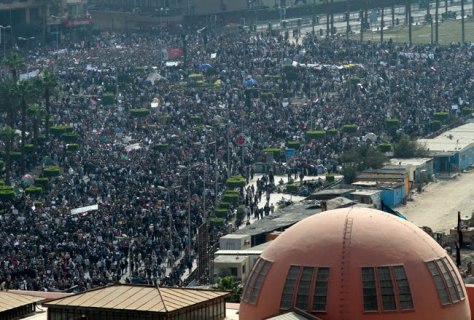
The protests in Tunisia and Egypt have won the first of what will have to be many victories. Mubarak and Ben Ali have fled and dictators have fallen to people’s uprisings – the street and the public square have, at least for the moment, reclaimed their voice from the boulevards and corridors of power. Globally, these have been reported and rightly hailed as victories over entrenched dictatorships. Yet the uprisings have much to teach those of us who live in “democracies” – we must not lose the opportunity to ask what Egypt and Tunisia can teach us, no matter where we are.

I’ve been trying to write something about this for a few days now – nothing quite settles at the end of the pen. So here’s a set of thoughts/questions/ruminations that I think we must take on – in rambles, and intended as a provocation to comments and hopefully follow up posts.

Continue reading What can Egypt and Tunisia teach us?

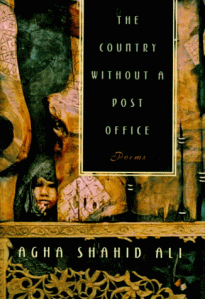
‘i swear…i have my hopes’: Agha Shahid Ali’s Delhi Years: Akhil Katyal

This is a guest post by AKHIL KATYAL

Born on 4th February, 1949, Agha Shahid Ali would have been 62 next month. The Kashmiri-American poet who spent the last half of his life in the States (he migrated to Pennsylvania in the mid 70s) died in the winter of 2001 due to brain tumour. The next year had begun with papers and journals in the States, and in Kashmir and India, remembering Shahid. ‘Your death in every paper,’ Shahid had written for his own idol the singer Begum Akhtar after she passed away in 1974, ‘boxed in the black and white / of photographs, obituaries.’ In his new absence, he similarly reappeared in the words of his friends as an insurmountably beautiful poet, a gregarious Brooklyner, a near perfect cook, an impossibly good teacher and a lasting friend. Apocrypha started building around him very soon after his death. One could say this was the final proof that Shahid’s name would abide – that stories began to be spun around him as soon as he was not around. The Pakistani novelist Kamila Shamsie, Shahid’s creative writing student at Hamilton College in New York and then at the University of Massachusetts in Amherst in the 90’s, and someone who always recounts his indelible influence on her writings (he coloured her drafts red), was one of the first to add to the stories that have multiplied since in this decade after Shahid’s death. Kamila’s friend, also a student of Shahid, had told her that some months after he was diagnosed with brain cancer, Shahid was riding the subway going to teach his class at NYU when he started to feel faint and began to black out. ‘For a moment,’ her friend told her, ‘he thought, “I’m dying,” and then he told himself, “No. First I’ll teach my class, then I’ll die.”’

Continue reading ‘i swear…i have my hopes’: Agha Shahid Ali’s Delhi Years: Akhil Katyal