Category Archives: Bad ideas

Should we ‘MAKE IN INDIA’ on the backs of our children?: Enakshi Ganguly

Guest Post  By ENAKSHI GANGULY

(A response to THE CHILD LABOUR (PROHIBITION AND REGULATION) AMENDMENT BILL, 2015) 

The Government of India is presenting before the country an amendment to the Child Labour (Prohibition & Regulation) Amendment Bill, 2012. This amendment had been first proposed by the UPA government in 2012.[2] The initial announcement that the law would now ban all forms of labour for children upto the age of 14 years and in hazardous occupations till the age in the 14-18 year age group was welcomed by activists. We felt that at last our plea of over two and a half decades to harmonise the child labour law with the right to education had been finally addressed.

Reading the final print of the law however raises a number of concerns. Frankly, apart from the distinction made in separating the children up to 14 years and 14 -18 years, in their treatment, and increase in penalties on employers, the law is not a huge progress between 1986 and 2015 or for that matter 1938, which was the first time a law child labour was enacted. This, despite the changes in socio-economic status as well as law and policy in the country in this period.

In fact, it is very much in keeping with the arguments offered by the government on social realities,  to continue with the reservation on Article 32 (dealing with child labour)  of the UN Convention on the Rights of the Child (which India ratified in 1992), with the it arguing “….that it is not practical immediately to prescribe minimum ages for admission to each and every area of employment in India – the Government of India undertakes to take measures to progressively implement the provisions of article 32, particularly paragraph 2 (a), in accordance with its national legislation and relevant international instruments to which it is a State Party”[3] Continue reading Should we ‘MAKE IN INDIA’ on the backs of our children?: Enakshi Ganguly

हिंदू भारत, मुस्लिम भारत

क्या भारत में दो संवेदना-क्षेत्र बन चुके हैं:हिंदू संवेदना क्षेत्र और मुस्लिम संवेदना-क्षेत्र? क्या यह नाटकीय वक्तव्य है,या ऐसी आशंका जिसे हकीकत बनते देर नहीं लगेगी और  जिसे भारत के राजनीतिक दल और बुद्धिजीवी भी स्वीकार नहीं करना चाहते.उनका कहना है कि भारत जैसे विशाल देश के क्षेत्रफल और जनसंख्या के लिहाज से अटाली,गाज़ियाबाद,शामली,मुज़फ्फरनगर,लखनऊ,जहानाबाद,नागौर,छीपागढ़,जैसी घटनाएं नगण्य हैं और इनसे पूरे देश के बारे में कोई भी निष्कर्ष नहीं निकाला जा सकता.लेकिन वे भूल रहे हैं कि टेलीविज़न और इंटरनेट के इस वक्त में कोई भी घटना,कितनी ही छोटी क्यों न हो,स्थानीय नहीं रह जाती.वह घटित की जाती है एक सीमित, स्थानीय स्तर पर लेकिन उसका लक्ष्य वह व्यापक जनसमूह है जो भौतिक रूप से बिखरा हुआ और उस घटना स्थल से दूर है, यहाँ तक कि अमरीका और ऑस्ट्रेलिया में. Continue reading हिंदू भारत, मुस्लिम भारत

Hindu Rashtra, village by village -Understanding Atali

Atali, the site of recent attacks on Muslims by their Hindi co-villagers, is a metaphor for India. Or,a mirror India should look into, to ‘re-cognize’ itself. To know that it is gradually turning into a majoritarian society. A society in which neighbors turn into strangers and yet keep feigning /pretending affinity and love for each other. A nation with a Hindu sensibility-zone and a Muslim sensibility zone.

The rites of passage are familiar. The majority has to be persuaded and convinced that it has to graduate from its present complacent position to a more respectable position of power, which was always its due but which it could not get because of the policies of ‘appeasement of the minorities’. After a long, sustained education, a ceremony, an event is organized in which majority has to participate as one person. It has to be a violent event in which blood would be shed. Had not Bhima drunk the blood of Kauravas? Or, Draupadi untied her hair with a vow that she would tie it only after washing it with the blood of Duhshasana? Continue reading Hindu Rashtra, village by village -Understanding Atali

बाक़ी चीज़ों की तरह इनका योग भी फ्रॉड है…

Dilip C Mandal's photo.
Dilip C Mandal के फेसबुक पोस्ट से साभार (तस्वीर और नीचे की टिप्पणी दोनों)

जो लोग कभी नहीं करते और फ़ोटो खिंचवाने के लिए नाटक करते हैं, वे सबसे आसान आसन- पद्मासन भी गलत करते हैं।

मोदी जी के पैरों की मुद्रा देखिए। सही पद्मासन में पीछे वाली लड़की बैठी है। देखिए, दोनों पैर ऊपर हैं। जो कभी नहीं करते हैं, वे नाटक के लिए भी नहीं कर सकते।

जब पद्मासन में बैठने को कहा गया है और सभी लोग वही कर रहे हैं, तो रेगुलर योग करने का दावा करने वाले को पद्मासन ही करना चाहिए। अर्ध नहीं पूर्ण।

56 इंच का सीना नहीं, 56 इंच का पेट है। रामसनेही को अब पूरा यकीन है कि सुनने में धोखा हुआ था।

बच्चों को इनसे शिक्षा नहीं लेनी चाहिए।

Appeal to Release Raif Badawi, a Saudi Blogger: Peoples Alliance for Democracy and Secularism

Guest Post by Peoples Alliance for Democracy and Secularism

To:

The Ambassador,
Embassy of Saudi Arabia at New Delhi,
2- Pachchimi Marg, VasantVihar,!
New Delhi-110057  Fax: 00911126144244

This is an appeal regarding Raif Badawi, a blogger and Saudi citizen, founder of the website ‘Free Saudi Liberals’. Mr Badawi has been under arrest since 2012 for insulting Islam and apostasy. He was sentenced to be punished with 10 years in prison along with 1000 lashes (50 lashes to be received on every Friday) and a fine of one million riyals. Though he was cleared of charges of apostasy in 2013, there are new reports that indicate he may be tried again under the same charge.

We are mindful that India and Saudi Arabia have long-standing friendly political and commercial relations and that large numbers of Indians live and work in your country. It is because of this that we feel constrained to convey to you our concerns. Raif Badawi is a public intellectual who communicated his thoughts to the public through a blog. We do not believe that any of its contents constituted a threat to the state. To the contrary, his advocacy for secularism and the separation of religion and state is a suggestion that would strengthen it.

Whether or not his ideas are pleasing to your government, the fact remains that as a member state of the United Nations, Saudi Arabia is presumed to be respectful of the freedom of speech that is provided for under Article 19 of Universal Declaration of Human Rights, 1948. This article states: ‘Everyone has the right to freedom of opinion and expression; this right includes freedom to hold opinions without interference and to seek, receive and impart information and ideas through any media and regardless of frontiers‘.

The sharing of information and ideas is a basic human practice and natural right that should be available to everyone regardless of their nationality or identity and (barring extremist incitement) should not be restricted by law. The state should protect and promote our rights instead of restricting them.

It has been reported that Raif Badawi received the first set of lashes on 9 January, after Friday prayers outside the Al-Juffali Mosque in Jeddah. The next round of punishment has been suspended on medical grounds to give his wounds time to heal prior to wounding him again. We consider this an example of barbaric cruelty, not befitting any member state of the UNO. Such practices are a travesty of justice and will bring you only disrepute.

We are Indian citizens who speak for human rights both within our own country and beyond. We are in solidarity with Raif Badawi and all those demanding freedom of speech in Saudi Arabia. We condemn the inhuman punishment being meted out to him as we condemn all measures that punish people for defending human rights and sharing their thoughts

We ask that Saudi Arabia:
•  Immediately suspend the punishment of Raif Badawi,
•  Release Raif Badawi and provide him security,
•  Take measures towards the provision of full freedom of expression in Saudi Arabia

Submitted by:

Ravi Nitesh, Peoples Alliance for Democracy and Secularism
, Dipak Dholakia
, Rajashri Dasgupta, 
Prithvi R Sharma, 
Rana P Behal, 
Shamsul Islam, 
Suman Keshari, 
Aseem Shrivastava, 
Viren Lobo
, Sabyasachi Bhattacharya, Kashif Ahmed Faraz, R.Sasankan, Journalist, Delhi , Rohit Sharma, Pilani, India
, Mandeep Singh from Revolutionary Youth Student Front
, Firoz Ahmad, Public School Teacher
, Chaman Lal, 
J.S.Bandukwala
, Devika Mittal (Mission Bhartiyam), 
Apoorvanand
, Sudha Vasan
, Dheeraj Gaba, 
Nawed Akhter, 
Dilip Simeon , Shabnam Hashmi, Rohini Hensman 
Ovais Sultan Khan, Ram Puniyani, Vinerjeet Kaur, Kiran Shaheen
, Battini Rao, Convener, Peoples Alliance for Democracy and Secularism (PADS)
, Javed Anand
, Harsh Kapoor
, Subash Mohapatra, Global Human Rights Communications, Bhubaneswar 
Sagar Rabari, Ahmedabad
, Nayanjyoti
, Shailendra Dhar, Journalist, Nihal Parashar
, Linus Ayangwoh 
Embe, Peter Marshall , Sudarshan Juyal
, Dhruv Singhal (Political Science student), 
Mohammad Imran, NRISAHI, Suresh Bhat
, Prof. S Ratnagar, Mumbai
, Ilma Iqbal
, Michael Karadjis
, Vasantharajan, Research Scholar , Rabin Chakraborty, 
Shruti Arora
, Hiren Gandhi, 
Anand Patwardhan, Dr. D. Gabriele, Mukul Mangalik, Neeraj Malik, academic, 
Suhas Borker
, Virginia Saldanha, Mumbai , Kasim Sait
, Waliullah Ahmed Laskar
, Kaveri Rajaraman, University of Hyderabad, 
Parth Sarthu
 Ram
, Mahesh Elkunchwar,  
Suman Kumar , Kamayani Bali Mahabal, 
Syed Ghazanfar Abbas, Jawad Mohammed
, Prof. Anil Sadgopal, Shiksha Adhikar Manch, Bhopal
Satya Pal, Secretary General – South Asian Fraternity 
Deepak Kabir / Veena Rana, Dastak, Lucknow 
Madhu Sarin
, Kavita Panjabi, Kolkata
, Xavier Dias Editor, Khan Kaneej aur ADHIKAR ,Jharkhand India , Muhammad Murad, from Pakistan, Sindh
, Sanjay Halder
, Gurpreet Singh, Ravi Tripathi, Francis Gonsalves
, Subhash Gatade, New Socialist Initiative, 
Shahid Siddiqui
, P.I. Jose, 
Ishwarbhai Prajapati, 
Deepak Kabir
, Fr. T.K.John , Professor 
Rohan Dandavate – TPI WORD, Daniel Varghese
, Sanjay T , Prasanth Menon
, Zakia Soman and Dr. Noorjehan SN from Bharatiya Muslim Mahila Andolan , Antony Aruloraj, New Delhi, India, 
Aarti Tikoo
, Ashish Biswas, Online Journalist, Dhaka, Bangladesh, 
Devaki Khanna, 
Alok Chadha
, Renu Singh, Samir Dholakia, Mushtaq Dar
, Narinder Singh Sandhu, 
P R Vaidya, Bombay
, Dr V Prasad
, Ameeque Jamei
, Padma Velaskar, Bhanu Bharti, Shuddhabrata Sengupta, Delhi
, M.Balanna, PADS, Andhra Pradesh
, Ajay Kumar, PADS Andhra Pradesh
, Roja Ramani Mahila Sravanti, Kurnool

Stop the Coercive Imposition of Yoga to Enforce Cultural Homogeneity – A Petition

Yoga petition

We write as concerned scholars, many of whom have long been indebted to yoga and pranayama for their therapeutic effects, about the many plans that are being made to declare June 21 as a successful start of International Yoga Day. While mindful of yoga as a most desirable option for health care, we are concerned by the central compulsion driving the directives issued by the present Government, namely  about entering the Guinness Book of Records through a show of numerical strength. We are even more alarmed about the government order addressed to university teachers and staff and school students to perform yoga on 21st June in public, and construe this as a compulsion that amounts to misuse of state authority.

Continue reading Stop the Coercive Imposition of Yoga to Enforce Cultural Homogeneity – A Petition

Suicide of a ‘Criminal’ or Murder of the Stigmatized? : Anuja Agrawal

This is a guest post by ANUJA AGRAWAL

Criminal sets self ablaze outside police station’, says a small news item in a local edition of a leading newspaper. The report suggests that a 22- year- old ‘criminal’ set himself ablaze outside a police station in Nanded district, Maharashtra, after some members of his family were arrested. It claims that the young man was a known ‘property offender’ with three cases against him and goes on to describe how the police had been assaulted by his family members when they had gone to investigate a case filed against him by a local trader.  Why a ‘hardened’ criminal should have committed suicide outside the police station would elude the readers if they pondered over the content of this news item. But by now most of us would have moved to the next ‘story’ Continue reading Suicide of a ‘Criminal’ or Murder of the Stigmatized? : Anuja Agrawal

अटाली और हम

(यह ब्योरा पिछले शनिवार को दिल्ली के हरियाणा भवन के सामने अटाली की मुस्लिम विरोधी हिंसा पर रोष जाहिर करने को किए गए प्रदर्शन के बाद लिखा गया था.तब से अब तक स्थिति में काफी बदलाव आया है.कल ही खबर आ गई थी कि मुसलमान गाँव लौट गए हैं.शर्तें अभी बहुत साफ़ नहीं हैं.कहा जा रहा है कि हमलावरों पर कार्रवाई भी होगी और मस्जिद भी बनेगी. एक खबर यह है कि मुसलमानों को आश्वस्त किया गया है कि मस्जिद की चहारदीवारी प्रशासन बनवाएगा.यह भी कि हालात बेहतर होने पर दोषियों को पकड़ा जाएगा.गाँव में हिंदुओं का एक तबका है जो इस हिंसा से दुखी और शर्मिंदा है.लेकिन नौजवानों को लेकर आशंका है.फिर भी यह मुज़फ्फरनगर से ‘बेहतर’ तो है ही.

सवाल कुछ हैं:

  • क्या जांच की जाएगी कि यह हिंसा कैसे हुई?क्या यह स्वतःस्फूर्त थी या इसके पीछे एक तैयारी थी?
  • क्या हरियाणा में,और जगहों की तरह ही, मुसलमानों के अत्यंत अल्पमत में होने के बावजूद मुस्लिम-विरोधी वातावरण का निर्माण किया जा रहा है?
  • अटाली में जो मुसलमान लौटे हैं, उनके नुकसान की भरपाई का पैमाना क्या होगा?
  • हमलावरों पर कार्रवाई होगी या लौटने दिए जाने और फिर गाँव में शांति से रहने के एवज़ में मुसलमानों को शिकायतें वापस लेनी होंगी या कमजोर करनी होंगी?
  • क्या आस-पास के विश्वविद्यालय, राजनीतिक और सामाजिक संगठन मुसलमानों के लौटने की इस प्रक्रिया के बाद समाज में  इस विषय पर विवेकपूर्ण संवाद की कोई पहल करेंगे?)

हम हरियाणा भवन के सामने हैं. एक ‘वाटर कैनन’ सामने खड़ी है.दिल्ली पुलिस के जवान लाठियों के साथ तैनात.महिला-पुलिस भी.मई की बेरहम धूप है जो जलती चादर की तरह हमें लपेटे हुए है.सामने किसी पुराने कार्यक्रम के फ्लेक्स-बैनर की दरी बना दी गई है.उस पर पचीस-तीस औरतें-मर्द सिकुड़कर एक दूसरे से सटे हुए बैठे हैं.एक छोटा बच्चा गोद में.ऐसे मौकों पर दीखनेवाले दिल्ली के पुराने पहचाने चेहरे.शबनम हाशमी देख रही हैं कि पानी का इंतजाम ठीक है कि नहीं.नासिरुद्दीन पीछे बैनर सीधा करवा रहे हैं.प्रेस-फोटोग्राफर जमा हो रहे हैं.दरी पर इकठ्ठा लोग धूप से बचने को चेहरा लपेट रहे हैं. एक ने कहा, “शुक्र है, नीम की छाँव है.” फिर सर उठाया, वृक्ष जैसे उसकी नाजानकारी पर सर हिला रहा था. “नहीं, नहीं, नीम नहीं है. कौन-सा पेड़ है?” कोई दिल्लीवाला बता नहीं पाता.सालों-साल छाया देने के बाद भी उसे न पहचानने पर पेड़ छाया समेट नहीं लेता. उदासीन इंसानों की इस जमात पर रहम का साया बनाए रखता है. फिर पेड़ से मुँह मोड़ हम घड़ी देखने लगते हैं. वृक्ष से अपरिचय से मनुष्यता की योग्यता में कमी तो नहीं आती, इसका आश्वासन हमें है. Continue reading अटाली और हम

Saffron Emergency on Campuses! Ban for those who critique and impunity for those who silence dissenting voices: Sucheta De

This is a guest post by Sucheta De

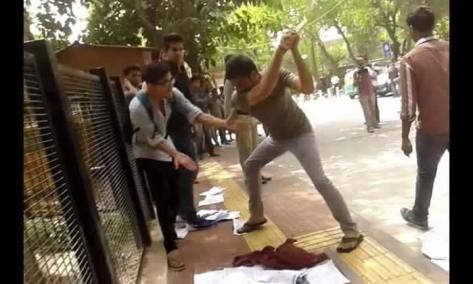
ABVP Beating up AISA activists at Delhi University May 2015

The task of higher education in any era besides imparting professional skills should also be to encourage critical consciousness among youth whereby they can critically perceive the surrounding situations and critically reflect on their actions and thoughts and thus contribute to the betterment of the society. Unfortunately, the onslaughts on affordable quality higher education that could inculcate such a consciousness just seem to increase with every passing day under the saffron regime. Today what we face in campuses across the country is a saffron emergency that is being ably executed through two key instruments- On one hand we have the obedient Vice Chancellors and Directors inside University offices who mutely nod their heads to each and every diktat of the MHRD and on the other hand there are the rod-wielding saffron activists on campus streets, ready to violently shut down any sound of protest. In the week that just got over, these twin instruments able demonstrated their functioning!!

Continue reading Saffron Emergency on Campuses! Ban for those who critique and impunity for those who silence dissenting voices: Sucheta De

Imperial Ejaculations – Reflections on “Ten Books that Shaped Empire”: Dilip Menon

Guest Post by Dilip M. Menon

Unlike Salman Rushdie, I did not grow up kissing books, I merely collected them. From provision stores, sidewalks, and from booksellers who were eccentric enough to try and survive by selling second hand books, in the small towns and yet-to-become cities of post independent India. The books came with a fine patina of dust that no amount of smacking against one’s thigh or the flat of one’s palm could get rid of. Kissing them was out of the question. In what was called the mofussil, or the provinces, the detritus of empire and the war that ended it gathered, as the collections of effects of the British who departed, as much as those who stayed on and died, gathered in the auction houses and bookstores.

It was on a summer afternoon in 1973 that I cycled down to the local provision store in Pune and saw beside the sacks of rice, wheat and spices, a pile of books, periodicals and rather lurid posters of European women with very long legs and few clothes on. I had always imagined Europe to be a cold place. In the pile were old Penguins; books by Enid Blyton, Anthony Buckeridge, Capt. WE Johns, Rider Haggard; periodicals like Boys Own Weekly, Gem, and Magnet; and of course the war comics (the staple reading of Allied troops posted in India and South East Asia), from which I learnt my German. At school, during the break, we were always running through the corridors shouting Schnell, Schnell and calling our Kamerads Schweinhunds. But on that summer day, I found two authors that I had not heard of: George Orwell and Frank Richards. The former had written a book about some fat pigs and the latter, one about a fat boy, and being rather plump myself, I was favourably disposed.

{AC8E3D54-0D18-423F-A888-DAE1A6C73C6C}Img400 Continue reading Imperial Ejaculations – Reflections on “Ten Books that Shaped Empire”: Dilip Menon

Telangana Politics: A Saga of Promises and Betrayals : Gaurav J Pathania

This is a Guest Post by GAURAV J PATHANIA

As the twenty-ninth Indian state, Telangana owes its formation to the half-a-century-long mass movement and countless sacrifices by its people. In the movement for separate statehood, thousands of university students lost their lives, families and careers.

After the initial upheaval in 1969, the movement peaked again in 2009, thanks to Osmania University students who spearheaded fresh activism, and rising to become the real heroes of the movement. Throughout these trying times, hundreds of students were arrested and jailed, yet the government could not break the spirit of the movement. And so, just before he took oath of office on June 2, 2014 as the first Chief Minister of the new Telangana state, K. Chandrashekar Rao (KCR), the head of the ruling party Telangana Rashtra Samiti (TRS), promised to rescind the police cases lodged against Telangana activists during the movement, as well as create one lakh jobs for the new state’s youth. Continue reading Telangana Politics: A Saga of Promises and Betrayals : Gaurav J Pathania

विवादास्पद के पक्ष में:आई आई टी मद्रास के निर्णय के बहाने कुछ विचार

आई आई टी मद्रास में आंबेडकर-पेरियार स्टडी सर्किल(एपीसीएस) की मान्यता रद्द करने के प्रशासन के निर्णय पर बहस हो रही है. मानव संसाधन विकास मंत्रालय ने इस समूह पर घृणा प्रचार का आरोप लगाती एक बेनामी शिकायत संस्थान को इस अनाम टिप्पणी के साथ भेजी कि यह दुर्भाग्यपूर्ण है कि आई.आई.टी.का ऐसा इस्तेमाल हो रहा है. प्रशासन ने आव देखा न ताव, एपीसीएस की मान्यता रद्द कर दी, हालाँकि बाद में उसने कहा कि यह एक अस्थायी कार्रवाई है और समूह का पक्ष सुनकर ही अंतिम निर्णय लिया जाएगा.वैसे यह किसी ने न पूछा कि एपीसीएस  की मान्यता रद्द करने का क्या मतलब!वह कोई आईआईटी की बनाई संस्था तो है नहीं, वहाँ के कुछ छात्रों का स्वैच्छिक संगठन है .उसका जीवन आई आई टी प्रशासन के प्रसाद पर निर्भर नहीं.प्रशासन संभवतः उसे कोइ कार्यक्रम करने के लिए संस्थान की कोई सुविधा इस्तेमाल नहीं करने देगा. उसके नाम में ही जो दो नाम लगे हैं, उनसे उसके राजनीतिक ही नहीं समरस समाज में विभेद पैदा करने का इरादा साफ़ है!  यह अलग बात है, जो टेलीग्राफ ने बताई कि केन्द्रीय सतर्कता आयोग का निर्देश है कि किसी भी बेनामी शिकायत का मंत्रालय या विभाग संज्ञान न लें. तो मंत्रालय का यह कदम ही नियमविरुद्ध था. दूसरे, मंत्रालय के पत्र पर बिना किसी स्थानीय जाँच की प्रक्रिया के आई आई टी, मद्रास का यह अति उत्साहपूर्ण अनुशासनात्मक कदम दरअसल रघुवीर सहाय की याद दिलाता है जिन्होंने ऐसा दिमाग खोज लाने को कहा था जो आदतन खुशामद न करता हो. Continue reading विवादास्पद के पक्ष में:आई आई टी मद्रास के निर्णय के बहाने कुछ विचार

Press Release: Ambedkar-Periyar study circle IIT Madras

These are two press releases from the Ambedkar-Periyar Study Circle – An initiative by IITM students. The first one was in protest against the ban on the APSC, and the second one dated 8 June 2015 – APSC Press Release 8.6.15 – explains the position of the students’ organisation after the ban was lifted. It argues that it is important that the controversy about the ban and the subsequent lifting of the ban not be allowed to obscure the fundamental reason for the ban which remains as urgent as ever – the drastically shrinking space for critique under the Modi government and Hindutva forces.

apsc ambedkar logo

PRESS RELEASE

Ambedkar – Periyar Study Circle was created as an independent student body on 14th April 2014, by a group of students from IITM to promote Ambedkar – Periyar thoughts and to initiate debates on socio-economic-political and cultural impacts which affects common mass within academic fraternity. The student of IITM has a dictum of using APSC as a platform for the above mentioned issues. As IITM has a long history of being a platform for right wing groups alone to propagate their own ideology and train young minds for their intellectual wings through Vivekananda Study Circle, RSS Shakha, Hare Rama Hare Krishna, Vande Matram, Dhurva etc… With this motto, in the past one year, we organized Hall meets, Movie Screening and pamphlet distribution among students and ignited debates on issues like: Agriculture under threat – Coal bed Methane project, GM Crops – Impact on Agriculture, Factory disputes Act 1947 (Amendment) and creating devastating effect on the labor conditions, Language Politics in India: past and present based on Sanskrit week celebrations, MHRD’s overt attempt to have separate vegetarian mess halls in IITs and IIMs and IITM administration’s move in replacing the name board of the faculties and laboratories with Sanskritized Hindi. We celebrated the birthdays of Bhagat Singh and Ambedkar and organized talks on ‘Understanding Bhagat Singh’ and Contemporary relevance of Dr. Ambedkar’. (For more information check our facebook page -Ambedkar periyar study circle IITmadras) Though the platform created a space for the students of IITM to discuss and debate on issues directly affecting the peasants, labours and the common mass, APSC continuously faced threats from rightwing groups inside IITM. Even the administration tried to curtail the activities of APSC, in June 2014, the DoS Dr.M.S.Sivakumar directed us to change name stating that the names ‘Ambedkar and Periyar’ are politically motivated and thus the study circle should be renamed with some apolitical titles without any personolity’s name.

Continue reading Press Release: Ambedkar-Periyar study circle IIT Madras

A Hindu View of Sanitation: Ardhendu Sen

Guest Post by ARDHENDU SEN

The Swachh Bharat Abhiyan has many components but the main thrust is on the building of new toilets, both public and private. Why is it that we have so few toilets so many decades after independence? Many would blame the policy paralysis of the UPA II government and there is no denying the truth in that charge. Many others would go back decades and ask if any government before the present one ever paid adequate attention to such important social problems. Looking back into our hoary past, we come across an important ancient cause of our present misfortune.

It is now a well-known fact that India had aircrafts and spacecrafts long before other nations could even conceive of flying. The western educated, liberal (meaning Nehruvian) sceptic has only to visit the official website of the Indian Science Congress to convince herself of this. We know about one of these crafts in some detail because the 1903 edition of an old paper by one Rishi Bhardwaj has survived. The paper describes a fairly large craft, sixty feet by sixty feet that could not only fly in air but was suitable for interplanetary travel. This huge flying machine like that must have carried hundreds of people.

It is logical to assume that these crafts were fitted with chemical toilets. An aeroplane may do without one for a while but a spacecraft cannot because there is no force of gravity to help us get rid of the stuff. Ask Sunita Williams and she would be happy to explain it to you.  Continue reading A Hindu View of Sanitation: Ardhendu Sen

The Arrest of G. N. Sai Baba – Insane, Inhuman: Nirmalangshu Mukherji

Guest post by NIRMALANGSHU MUKHERJI

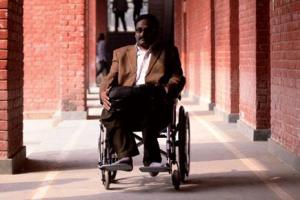
N. Sai Baba, an Assistant Professor of English in Ramlal Anand College of Delhi University was arrested by Maharashtra Police in opaque circumstances in May 2014. For the past year, there has been a small but sustained protest against Sai Baba’s arrest. Most recently, a day-long fast was held by some activists and university teachers in front of the Art’s Faculty in Delhi University. Despite impressive campaign in the social media by a group of dedicated individuals, just a few dozen well-known protestors showed up for the fast. The event was barely reported in the mainstream. In staying away from the event, the wider left-liberal fraternity in Delhi, and the rest of the country, has once again failed a vital democratic cause.

Sai Baba is one of those rare individuals in the current Indian academia—otherwise marked by its unconcealed opportunism and abject surrender to the establishment—who is at once a serious scholar, a dedicated and widely-popular teacher, and a death-defying political activist.

Sai Baba believes that Indian society must undergo an armed proletarian revolution along Maoist lines to usher in a new democratic republic as a step toward a classless egalitarian society. He has strengthened his beliefs with a deep study of Marxism-Leninism-Maoism and has advocated them in a variety of public forums. Continue reading The Arrest of G. N. Sai Baba – Insane, Inhuman: Nirmalangshu Mukherji

Nepal – An Earthquake Diary : Mallika Shakya

This is a guest post by MALLIKA SHAKYA

The earthquake in Nepal had been overdue for a while. At one level everyone knew that the 7.9 Richter scale jolt came from the continuing collision between the Indian and Himalayan plates. At another level, Nepalis internalized this seismic science by counterposing 2015 with personal memories of the 1934 earthquake which was the last big one in a seismic belt that shuddered every seventy or so years. Every family had stories about how some or other grand old person in the family perished under the rubble while someone else had a narrow escape, how a particular house needed to be rebuilt from scratch while another could be just mended in parts, or how one brave grand uncle mustered the courage to walk into the rubble to pull out a sack of rice so that the family could eat, so on and so forth Continue reading Nepal – An Earthquake Diary : Mallika Shakya

A Short Guide to Appropriate Behaviour in the Wake of A Judgement on Historically Respectable Personalities

[ This short guide is being released to the general public which is liable to fall into error and confusion in the wake of the recent Supreme Court judgement in Devidas Ramachandra Tuljapurkar vs. State of Maharashtra restricting freedom of speech and expression pertaining to what the Honourable Justices who have looked at this case call ‘historically respectable personalities’.]

1. Petition all history departments to start courses in historical respectability so that you know who is who and what is what.

2. Having carefully studied the history of respectability, separate out all historically respectable personalities. Genuflect.

3. Then, from those that remain, make a list of historically disrespectable personalities, starting with yourself.

4. Refer to a historically respectable dictionary of slang – for instance, ‘Cassell’s Dictionary of Slang’ by Jonathan Green, the works of William Shakespeare, or a set of curses of the historically respectable Muni Durvasa

5. Choose at least ten colorful insults, curses and terms of abuse, from the above. and construct a poem, written in the ‘voice’ of a historically disrespectable person.

6. Print in large characters, along with an image of a historically disrespectable personality.

7. Stand singly, or in groups, with the large character posters with the poems in the ‘voice’ of  historically disreputable personalities in meditative silence in front of the honorable Supreme Court of India, and in other public spaces, while considering the sagacious wisdom of our historically respectable judiciary.

8. Be ever grateful that you know now that you can always protect your constitutionally guaranteed and judicially protected freedom of speech by ventriloquizing to your hearts content in the abusive voice of a historically disrespectable personality.

9. And learn this formula by heart – “The dignity of historically respectable personalities cannot be protected without the self-flagellation and abuse of historically disrespectable personalities, which includes the majority of all populations, in all societies, in all times.”
10.  Never disobey a law, or a judgement. Only take obedience to its logical conclusion.

Position Paper on Higher Education: Academics for Creative Reform

“The manner in which the state is intervening in higher education is causing concern and even alarm in the academic community. Both the unlamented UPA—II regime and the current NDA government have been remarkably similar in their authoritarian impatience to introduce wholesale changes without adequate or careful preparation. This position paper is the collective product of roughly six months of discussion among teachers of several central universities in Delhi. It is an attempt to participate in the process of critical self evaluation of the university system as it is today. It is also our considered response to the many policy statements and directives issued by the MHRD and the UGC recently”

Please click on the link below for the complete position paper on proposed reforms in higher education, prepared by Delhi-based Academics for Creative Reform and released at a press conference today:

PositionPaper12May2015

Much Better to Run Over the Poor Than to Speak Up for Them

Yesterday, the 9th of May, one day after the court granted what must be the fastest bail and suspension of sentence in the history of India to India’s favourite Dabangg, a diminutive woman stood under the blazing Delhi sun and spoke of her husband who had been in jail for the past one year. In May 2014, lecturer in English at Ramlal Anand College, Delhi University, G. N Saibaba was returning home after evaluating answer scripts when he was abducted by unknown men, who later identified themselves as Maharashtra Police.

Professor Saibaba. Image Courtesy FRS Blog

Saibaba was not produced before a magistrate in Delhi but taken directly to Aheri, a small town in Maharashtra and then to Nagpur, to be put in solitary confinement in the famous anda cell of Nagpur jail. Let’s call this cell famous instead of the usual epithet “notorious” because all over the country, children are probably playing with each other right now saying to each other, “saale main tujhe anda cell mein daal doonga“, while their parents look on indulgently, congratulating themselves on the kid’s excellent G.K.

Continue reading Much Better to Run Over the Poor Than to Speak Up for Them

The Priya Vedi Suicide: Diwas Raja Kc and Alston D’Silva

This is a guest post by Diwas Raja Kc and Alston D’Silva

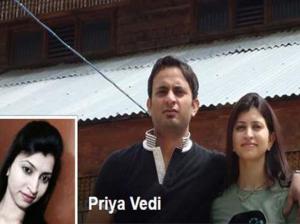
Image Courtesy: www.pardaphash.com
Image Courtesy: http://www.pardaphash.com

On the 18th of April this year, Dr. Priya Vedi of AIIMS tragically ended her life and left a Facebook note incriminating her husband—fellow doctor at AIIMS Dr. Kamal Vedi—for “torturing” her mentally, clearly implying that his homosexuality was the reason for her suicide. Her distress is apparent in the note as she recounts the lack of intimacy in her marriage and her discovery of the husband’s sexual activities as a gay man before and during the marriage. At the end she includes a plea to all gay men to not “marry to a girl to save yourself,” to not play with the emotions of a girl and her family. It should not be surprising that some condolent commentators have placed the blame specifically on Kamal Vedi’s alleged sexual orientation, even calling for legal action. Even within the LGBT community, the tendency has been to first put culpability on the man’s opportunistic participation in the institution of marriage. There is a sense that this incident ought to serve as a teaching moment for gay men, who are argued to require an ethical code, who need to fixate on the deliverance of their conscience, and whose rights—as Sandip Roy pointed out—”mean nothing without responsibility.” But despite Priya Vedi’s strongly felt sentiments, must we proceed as if the case of her fatal end is a logical and natural consequence of gay men’s irresponsible intrusions into the sanctum of marriage? After all, such intrusions are routine, and the ensuing heartbreaks are sometimes even known to be productive of powerful empathy between straight women and gay men.

Continue reading The Priya Vedi Suicide: Diwas Raja Kc and Alston D’Silva

Delhi Police Blames AAP for Gajendra Suicide – Remember Constable Tomar’s Death?

Reports have it that Delhi Police has blamed the AAP for the death of Gajendra Singh at its rally recently – not surprisingly, as we had noted in our previous post on the suicide. We had suggested in that post there seemed to have been prior instructions to the Police from the Central government, under which it functions, not to act. And the reports today about Delhi Police reporting to their higher ups only confirm our suspicions.

Here is what one of the reports has to say:

In a letter to the Home Ministry, the Delhi Police has claimed that the mob including Aam Aadmi Party (AAP) workers incited Gajendra Singh to commit suicide at a party rally in Delhi. The letter also claims that untrained volunteers climbed the tree which led to Gajendra falling off.

The report states that AAP volunteers and leaders were clapping and raising slogans which incited him to engage in more dangerous acts. It also adds on to say that though police requested AAP volunteers to stop provoking him through clapping and solganeering, neither the volunteers nor the leaders present on the state acceded to the request info.

Another report in a channel known for its BJP connections, says:

As per the Delhi Police report, AAP leaders were making provocative speeches, and the crowd present at the rally venue instigated and provoked Gajendra to commit suicide. The report also alleged that AAP did not heed to the police’s request to change the rally’s venue to Ram Lila Maidan.

Continue reading Delhi Police Blames AAP for Gajendra Suicide – Remember Constable Tomar’s Death?