Category Archives: Bad ideas

Life without YouTube: Haseeb Asif

Guest post by HASEEB ASIF

Graphic via Dawn
Graphic via Dawn

A young man wearing faded jeans and a t-shirt too unpleasantly tight around his middle, sits on his end in front of a laptop, weeping. The tears aren’t exactly the gushing springs of fresh grief, more the trickling of nostalgic streams. He misses his favourite website. Everything bookmarked in his browser that isn’t pornography is from that site. He contemplates an incalculable loss. Today, as many times before, he’s come home from a hard day of not doing anything at work, just wanting to lose himself in the magical world of user uploaded videos. Continue reading Life without YouTube: Haseeb Asif

जहाँ वे सेतु बनते हैं: मिहिर पंड्‌या

Guest post by MIHIR PANDYA

गणतंत्र दिवस की सुबह। अौर उस सत्र का शीर्षक था ‘विचारों का गणतंत्र’। अशिस नंदी पहले उदाहरण द्वारा विस्तार से समझाते हैं कि क्यों एक सवर्ण एलीट का भ्रष्टाचार हमारी बनायी ‘भ्रष्टाचार’ की मानक परिभाषाअों में फिट नहीं होता अौर क्यों सिर्फ दलित का भ्रष्टाचार ही ‘भ्रष्टाचार’ नज़र अाता है। इसलिए जब वे यह कहते हैं कि भ्रष्टाचारियों का बहुमत वंचित जातियों से अाता है तो वह यह कहते हुए वापिस पुरानी बात दोहराना ज़रूरी नहीं समझते कि यहाँ दोष उनका नहीं, ‘भ्रष्टाचार’ की उस भ्रामक परिभाषा का है जिसमें एलीट का भ्रष्टाचार फिट ही नहीं होता। इसे वह अंत में जवाब देने के लिए मिले दो मिनट के समय भी दोहराते हैं कि उनके उक्त कथन को दो मिनट पहले कही बात के संदर्भ में देखा जाए। जैसा नंदी ने बाद में भी कहा, अौर उनकी अध्ययन शैली से परिचित लोग यह जानते भी हैं, वे किसी भी वक़्त यह नहीं कह रहे थे कि भ्रष्टाचार की कोई जाति होती है, बल्कि वे भ्रष्टाचार को पहचानने अौर निर्धारित करने की जो प्रचलित समाजदृष्टि है, उसके पीछे छिपी जातिवादी मानसिकता को पहचानने की अोर इशारा कर रहे थे। यह तर्क प्रणाली समझने में थोड़ी जटिल हो सकती है, लेकिन इसकी कोई वजह मुझे फिर भी नज़र नहीं अाती कि ठहरकर, ज़रा सा समय देने पर भी यह बात समझ न अाए। Continue reading जहाँ वे सेतु बनते हैं: मिहिर पंड्‌या

On the arrest of Nilim Dutta

The Times of India reports that Nilim Dutta has been arrested by the police in Assam on charges of financial fraud and impersonation. The Indian Express reports:

“While there are now six cases registered against him in Guwahati, what we have gathered is that the Delhi Police had also registered a case against him last year,” Assam DGP J N Choudhury told The Indian Express. [Link]

Dutta announced his own arrest on Twitter some days ago, claiming the police had assaulted his family and him, and so on.

I first discovered Nilim Dutta on Twitter in July or August last year. Bodo groups in Kokrajhar and other BTAD area of Assam had killed Muslims and driven them out, many of whom still live in refugee camps there, too afraid to go home. Intellectual cover to this pogrom was being given not only by the mainstream media but also in social media by Hindutva fanatics, with the excuse that all Mulims in Assam are illegal Bangladeshi immigrants. Dutta had been tweeting against this claim, and published a rebuttal to one such claim by a Bodo IAS officer in the Indian Express.

I thus invited Dutta to write a long piece for Kafila, which was published here on 16 August. “The Myth of the Bangladeshi” became a very popular piece, initiating many discusssions and disagreements in Assam, Delhi and elsewhere. Hindutva fanatics who were unsettled by Dutta’s excellent piece in Kafila and similar pieces elsewhere, and his appearance in TV channels and so on. Now that Dutta is arrested on charges of financial fraud, these people are saying on Twitter and elsewhere that this nullifies Dutta’s claims about Muslims/’Bangladeshis’ in Assam. Continue reading On the arrest of Nilim Dutta

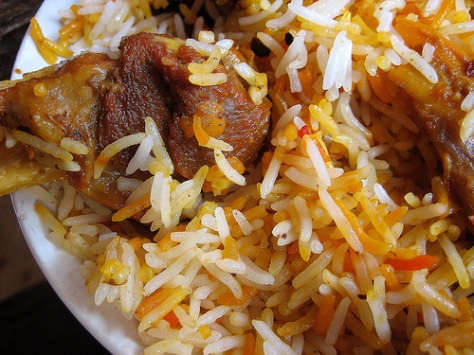
Ajmal Kasab, Tajinder Pal Singh Bagga, biryani and me

biryani-kafila

A large number of people have been asking me on Twitter over the last few days why I had signed a petition asking for Ajmal Kasab to be granted mercy and spared capital punishment. Kasab was hanged 21 November, why have all these people woken up to that petition now? That’s thanks to a belated but concerted online campaign initiated by the Tajinder Pal Singh Bagga-led Bhagat Singh Kranti Sena (BKSS), a rag-tag vigilante organisation which goes around threatening and committing violence against people it has political disagreements with. Continue reading Ajmal Kasab, Tajinder Pal Singh Bagga, biryani and me

State and the cult of ‘Delusional Desire’: Ashfaq Saraf

Guest post by ASHFAQ SARAF

In the summer of year 2010, Bangalore was peevishly hot. The month was April; its last days marking the end of a three month long training vocation Wipro technologies subjected us through. I had joined the Indian Corporate giant after having done my four years of bachelors at NIT Srinagar. We were a company of two Kashmiri friends—together in college and from there into this Job. Nothing was to remain of those months—like of all the days that come as routine and return the same—except for few friendships we sketched through— nothing more. Sometimes in a moment of recall I am reminded, however, of a couple of occasions when both of us were labeled rebellious for protesting against the strict dress code imposed on participants during the training period. It did not make much sense to me then—given the purpose the dress code was expected to serve—and it does not make sense to me now. It was a small act of rebellion: whose execution further revealed to me the nature and dexterity of shallow laws designed to mould populations into an abject form of controlled recipience. The act of rebellion—a promise to keep the notion of Justice viable—is the only instance one is inclined to think, in man’s life when he assumes the role of his own redemptory. Camus, the philosopher of absurdity, notably wrote that “Every act of rebellion expresses nostalgia for innocence and an appeal to the essence of being.” One has little recourse to not remember all the days when they have felt supremely undead.

Continue reading State and the cult of ‘Delusional Desire’: Ashfaq Saraf

Why the Govt’s Ordnance is Fraud & Mockery of the Justice Verma Committe Recommendations: Bekhauf Azaadi Campaign

Guest post by BEKHAUF AZAADI CAMPAIGN

The UPA Govt, in a Cabinet meeting held on 1 February, has introduced an ordinance that it claims will address the most urgent concerns on sexual violence. In fact, the Government has been completely reluctant to acknowledge and implement the Justice Verma Committee recommendations: the PM refused to accept it from Justuce Verma, the Ministry of Home Affairs removed it from their website, the Govt never adopted any transparent process of discussion to decide the way forward on implementing the recommendations, rather they said Justice Verma ‘exceeded his brief’. Now, they claim that their ordinance has ‘implemented’ the Justice Verma recommendations. Is this true?

The fact is that the Government’s ordinance is a mockery of the letter and spirit of the Justice Verma recommendations. Why? Let us take a closer look.

Continue reading Why the Govt’s Ordnance is Fraud & Mockery of the Justice Verma Committe Recommendations: Bekhauf Azaadi Campaign

Water Cannons, Tear Gas, Ordinance: How the State Responds to Protests Against Rape and the Justice Verma Committee

20130203-075541.jpg

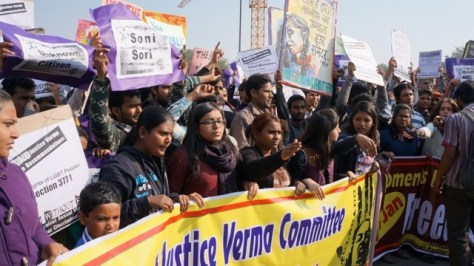
  • [ Protestors from the Bekhauf Azaadi/Freedom Without Fear Campaign Demanding Complete Implementation of the Justice Verma Committee Recommendations during the Freedom Parade to Reclaim the Republic on Republic Day, 26 January, 2012 in New Delhi. ]

So, first they come with water cannons and tear gas, and then they come with an ordnance.

Yesterday, the Union Cabinet decided to rush drafting an ordinance in response to the massive protests against rape and sexual violence that have been occurring ever since the 16th of December, 2012. According to preliminary reports, the ordnance, which will be signed into law by the President of India before Parliament even meets, flies in the face of the detailed and exhaustive list of recommendations made by the Justice Verma Committee (JVC) which had been hailed by the protesting young people and a large number of women’s organisations. In other words, the government feels no need to discuss the JVC in parliament. It feels no need to even give time and an opportunity for its recommendations to sink in, for there to be more thinking, more ideas, more awareness of the issues and questions at stake. No wonder, the government had so hastily pulled down the JVC report from its own websites after it had been released. Continue reading Water Cannons, Tear Gas, Ordinance: How the State Responds to Protests Against Rape and the Justice Verma Committee

Dear Pakistani friends, Put yourself in my shoes

I did not want to write this post.

There are enough Indian voices, from Times Now to Hindutva Online, who point fingers at Pakistan. Like M Ziauddin of the Express Tribune newspaper, I think that the two countries need more unpatriots – not people who ‘hate’ their own countries but who question their own nationalist narratives. People who ask: could we be wrong? Asking questions of yourself is difficult, and blaming the other is instant gratification of ego. Questioning yourself has long-term rewards in helping you make peace with yourself.

I am forced to write this piece because I continue to see well-meaning Pakistanis online continue to complain about the Bad Hospitality given by India to the Pakistani women’s cricket team in Cuttack in Orissa. The complainants online have included some of my Pakistani friends whom I know to be liberal, peace-loving and well-meaning, and who have clearly been influenced by some clever propaganda that is deliberately not showing them the full picture. Continue reading Dear Pakistani friends, Put yourself in my shoes

Of Complicity and Contamination in the Neoliberal Academy: Oishik Sircar

Guest post by OISHIK SIRCAR

Many years back as a naïve leftist graduate student in Toronto I discovered the meanings of complicity and contamination through a most ordinary event. As someone who believed that no artistic work should ever have restricted access because of copyright, I bought an online software programme that could break copy protected DVDs. I would get film DVDs from the university library and use the software to copy them onto my hard drive. In the one year that I spent there, I copied over 1000 films. Over the years I have distributed many of these films to my students and friends, and have made extensive use of them in my teaching and workshops.

By the time I was nearing the end of my stay in Toronto, I wanted to figure out whether the software would work in India – so that I can continue my copyright breaking enterprise. I was delighted to find out that it would, as long as I paid to extend the software’s use for another year. And at the time of making this payment, to my utter surprise, I saw that this software was copyrighted. The fact that a copyright breaking software could itself have a copyright was bizarrely enlightening. The software was a tool to rip through the oppressive regimes of copyright, and in doing so it also sought recognition from that very language of privatizing innovation. It got me thinking whether we could ever espouse and practice a politics that is not a constant negotiation between complicity and contamination. Whether a search for a politics of purity is both foolish and counterproductive? My naïveté has been gradually undone through events that I have observed and experienced since then. While I can treat this as a process of acquiring wisdom, it is nevertheless a disturbing wisdom to possess. It has also left a feeling of yearning for utopia in this world of cruel contradictions.

After returning from Toronto, I shook off my naïveté with such force that I ended up with a job at a university funded by one of India’s largest steel companies whose operations have wreaked havoc in the lives of adivasi populations in several parts of India. Continue reading Of Complicity and Contamination in the Neoliberal Academy: Oishik Sircar

Ashis Nandy’s Predicament and Ours

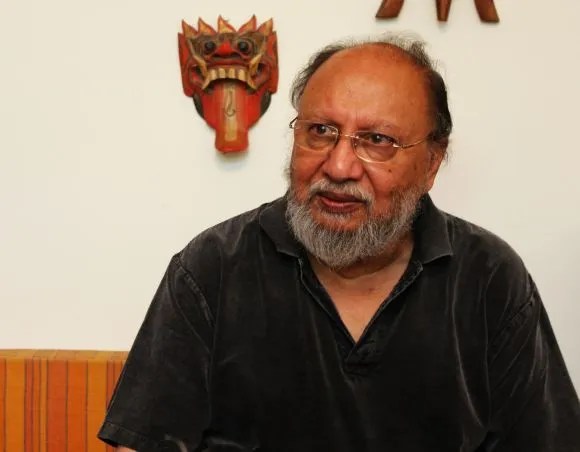
For the past few days I have been preoccupied in one part of my mind in dealing with two reasons for anguish. The first reason has to do with the profound sense of disappointment and anger with which I heard Prof. Ashis Nandy, a man I consider to be a great teacher, friend and in possession of one of the finest minds of our time, commit himself in public to a flippant and vulgar position when speaking of the relationship between caste and corruption at the Jaipur Literary Festival.

I was saddened because Prof. Nandy’s statements do a great disservice to the suppleness and ethical integrity of his thinking, and represent one of those sadly paradoxical situations where an intellectual can become their own worst adversary. I am unambiguously critical of the Nandy who chooses to be pompously opinionated and misinformed at a forum like the Jaipur Literary Festival or while riding the hot-air currents of television especially because I remain a partisan of the Nandy who can be (when he chooses to be) one of the most thoughtful and insightful witnesses to our time in his writing. Continue reading Ashis Nandy’s Predicament and Ours

Why the Parliament should reject the standing committee’s recommendations on the Food Security Bill: RTFC

This statement was put out by the RIGHT TO FOOD CAMPAIGN on 24 January

The much awaited recommendations of the Standing Committee on Food, Consumer Affairs and Public Distribution on the National Food Security Bill are a letdown to those who wrote to the Committee urging it to ensure justice to the people of India.  The Committee despite taking a year since December 2011 when the Bill was tabled in the Lok Sabha, has undermined the goal of food security for all the people of India through its recommendations given to the Parliament on 17 January, 2013. Instead of moving forward, the Committee’s recommendations are a leap backward by removing even existing entitlements. If the Committee’s recommendations are to be legislated, then it is the Campaign’s reasoned position that it rather not have a food security law rather than accept one which: Continue reading Why the Parliament should reject the standing committee’s recommendations on the Food Security Bill: RTFC

On Hindutva terrorism

This joint public statement, signed by 34 citizens whose names are given at the end, was put out on 25 January

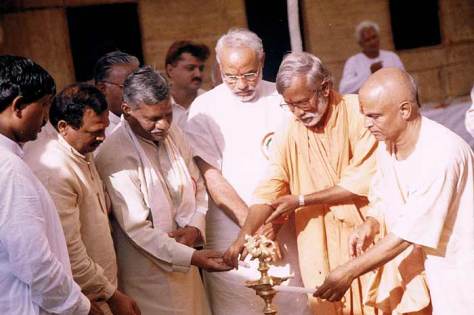
Swami Aseemanand (second from right): Terrorist?

While one may or may not agree with the terminology employed by the Home Minister in his recent speech at Jaipur, we feel that for long prejudice has ruled investigations, obscuring the role of organizations and their multiple affiliates in planning and executing of attacks and bombings in the country. The veneer of ‘nationalism’ — narrow, exclusionary and based on hatred for minorities as it is– cannot hide the violence that Sangh and its affiliates beget and peddle.  Continue reading On Hindutva terrorism

PUCL Rajasthan condemns FIR against Ashis Nandy

This release was put out by the Rajasthan unit of the PEOPLE’S UNION FOR CIVIL LIBERTIES on 26 January

PUCL condemns the FIR lodged under sec. 506 IPC, criminal intimidation and 3-1(10) of prevention of atrocities against SC,ST 1989 against Prof. Ashis Nandy for his statements in a discussion at the Jaipur Literature Festival 2013 and the protest demanding his arrest.

From the reports we have received, he was not exhorting hate and not being casteist and was only making an academic point which means that nobody is free from corruption.

Proceeding criminally against him and arresting him is restricting academic freedom and academic debate. Now that he has apologised and regretted  what he has said the matter should be closed.

Prem Krishan Sharma, President
Kavita Srivastav, General Secretary

See also: Most of the corrupt come from SC/ST, OBCs: Ashis Nandy
Below: Video report from CNN-IBN and ABP TV video of Nandy’s press conference Continue reading PUCL Rajasthan condemns FIR against Ashis Nandy

Who is afraid of Tipu Sultan?

Ravi said the state government is not ready to name the university after Tipu Sultan. If they are going to set up a non-religious university then the name should be non-controversial…. Like British, Tipu is also a foreigner for us and we will not accept his name.

CT Ravi, higher education minister, Karnataka, Jan 25, 2013, 16:38 IST , DNA)

The fast changing political developments in Karnataka has rather overshadowed the manner in which Tipu Sultan- who died fighting the Britishers at Srirangapatna (4 th May 1799) – is being denigrated by people owing allegiance to Sangh Parivar. The latest in series happens to be the higher education minister of Karnataka Mr C T Ravi, who claimed that for them ‘Tipu is also a foreigner’ like the British.

The immediate context of this Tipu bashing is the decision by the central ministry of minority affairs to set up ‘Tipu Sultan University’ at Srirangapatna. Continue reading Who is afraid of Tipu Sultan?

Many authors missing at Jaipur Lit Fest: Sajan Venniyoor

Guest post by SAJAN VENNIYOOR, our cultural correspondent

Threats from Hindu, Muslim and other cultural organizations may derail the Jaipur Literature Festival set to begin on Thursday, 24 January.

The BJP and RSS have threatened not to allow seven Pakistani authors to attend the event. “Looking at present Indo-Pak relations, it is unacceptable to allow Pakistani writers to be here as guests. We will make sure they are not allowed to enter Rajasthan. If they come, they will meet the fate of many others who have met similar fates,” said Suman Sharma, BJP state vice-president.

The Pakistani authors included in this blanket ban are British-Pakistani Nadeem Aslam, Canadian-Pakistanis MA Farooqi and Sharmeen Ubaid Chinoy and plain old garden variety Pakistanis Mohammed Hanif, Jamil Ahmad, Fahmida Riaz and Ameena Saiyid. Continue reading Many authors missing at Jaipur Lit Fest: Sajan Venniyoor

This Troll Has a Very Long Nose

Ironically, the random arrest of people for tweets or Facebook postings made some of us happy—happy that, at last, citizens have started showing concern about internet censorship. But lock-up gates had to clang at night on the faces of a few people before we realised that, in our pompous democracy, the might of the state is Ctrl-Alt-Deleting opinion with such serious zeal. The arrests have been made under Section 66A of the Information Technology (Amendment) Act, 2008, notified in October 2009. This section makes punishable with up to three years’ imprisonment anything that is perceived as “grossly offensive” but does not set out the parameters of how to decide on that—even if we were to believe that could at all be done. Questions about these arrests are deflected: the government blames the police, the police says a vague law is the problem, and those who file the complaints that lead to such arrests say that they are free to seek enforcement of an existing law.
Anyone can see that the section is not designed to nudge a case towards a conviction verdict. It is designed only to harass. Arrests, courtwork, bail. You are ground down, but the government spokesman is able to say, “The law is taking its own course.” The implication: “Aren’t you grateful you have obtained bail?” But the recent arrests have caused outrage. Taking up a PIL against the section, the Supreme Court had said in December that had it not been filed, it would have taken up the matter anyway. Despite this, the government defended the section in the Rajya Sabha, refusing to repeal it and merely adding guidelines that such arrests should be made by an officer of a higher rank—as if that would make it better.

Read more, here.

Pawns In, Patrons Still Out!

The Strange Trajectory of Investigations in Cases of Hindutva Terror

Many office bearers of RSS are also under scanner of the investigating agencies for their alleged involvement in the Samjhauta bomb blast. The NIA (National Investigating Agency) has already interrogated one amongst them. Many have been issued notices also…There are many workers of RSS from Malwanchal who are under scanner of the agency…According to informed sources a senior office bearer of the Kendriya Karyakarini (central executive) of RSS would also be questioned….Rakesh Dubey, a Vibhag Karyavah of RSS has confimed that he has received notice and is cooperating with the investigating agency.

..Seven suspected terrorists whose names find mention in the list prepared by NIA. They are Mehul alias Mafat Bhai, Bhavesh Patel, Suresh Nair, Mohan alias Ramesh Gohil, Jayantibhai Gohil aliast Ustad,. Sandeep Dange alias Parmanand, Ramji Kalasangra alias Ramchandra and Ashok alias Amit Hakla. (Bhaskar, 30 Dec 2012)

I

Mass movements or spontaneous outbursts of people on the streets to express their anger and anguish over the state of affairs in the country and outside have their own dynamic. While they are able to highlight/emphasise key concern(s) which inform their emergence, help us look at linkages with other issues and are able to raise many structural aspects which could have never received the attention earlier, it also happens that many other contemporary issues get relegated to the background. Continue reading Pawns In, Patrons Still Out!

In Multiples of Ten Ravanas

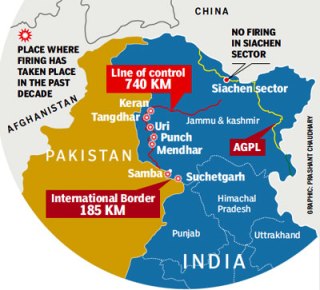
Some (more) thoughts on Indian and Pakistani soldiers beheading each other at the ceasefire line in Jammu & Kashmir

Hindustan Times Graphic
From the Hindustan Times

In the early hours of 10 January 2013, I published a post here that asked, “Was an Indian soldier decapitated at the Line of Control or not?” Soon thereafter, the family of Lance Naik Hemraj Singh of 13 Rajputana Rifles cremated his body and went on a hunger strike, demanding the government get the head. Several readers commented that now that it was clear a beheading did take place, I owe them an apology. I do not see why I owe them such an apology considering  I never said that an Indian soldier wasnot beheaded. I only pointed to the conflicting reports, the absence of official mention about whether or not a soldier was beheaded, a quoted a Reuters report that categorically said that according to the official spokesperson of the Northern Command, no soldier was beheaded, though the two soldiers’ bodies were mutilated. Despite such an official denial quoted in a trusted news source, I had written, “It is possible the anonymous sources are right, because this is not the first time both sides are blaming each other of showing disrespect to bodies of dead soldiers in violation of the Geneva convention.” Continue reading In Multiples of Ten Ravanas

Dear Barkha Dutt: The Buck Stops Where?

On the of latest edition, (telecast a few hours ago, on the evening of the 15th of January, 2013) of ‘The Buck Stops Here’, (a flagship news show on NDTV anchored by Barkha Dutt) – ‘India-Pakistan:Another Tipping Point‘, Admiral (Retd.) Ramdas, former chief of the Indian Navy said he knew that Indian forces have beheaded Pakistani soldiers in the past. Gen. (Retd.) V.P. Malik, former chief of the Indian Army contradicted him, and said this had never happened. Barkha Dutt was silent on this matter.

Below is a summary of some highlights of the discussion. Continue reading Dear Barkha Dutt: The Buck Stops Where?

Schools of Discrimination

Midday meal schemeThe village of Majure, in Chitradurga district, Karnataka, is once again in the news. It made the national headlines in 1998 when dalits in the village lodged a police complaint against members of the dominant Vokkaliga and Lingayat castes for an attack on their hamlet. As a consequence, several people were put behind bars.
This time round, however, no formal complaint was lodged. Not that things have improved (rather, one could say the situation is deteriorating) but, as the dalits put it, they want to live in “harmony” in the village. For around two months, they’ve been facing a social boycott. The immediate provocation would appear to be the appointment of Lakshmamma, a member of the Madiga community, as cook in the anganwadi. Upper-caste politicians from the village did not want a dalit woman to cook food and feed their children and they succeeded in getting her to resign from the post. Despite a dalit in the Shettar cabinet contacting them, there has been no response. Interestingly, there are three dalit officers — a deputy commissioner, a superintendent of police and a tehsildar — in the district. Continue reading Schools of Discrimination

An open letter to Madhu Purnima Kishwar: Zahir Janmohamed

Dear Madhu ji,

I was very excited when I learned you were coming to Ahmedabad and I was honoured that you expressed interest in possibly meeting with me.

I was sitting with a journalist friend when I read your Tweet about visiting Ahmedabad and he told me you are a “pioneering feminist who did ground breaking work.” He also told me that in 2005 you signed a very strong petition calling for Gujarat Chief Minister Narendra Modi’s dismissal because of Modi’s role in the 2002 Gujarat riots. He also added that you have been very vocal on behalf of Kashmiri Pandits. After I witnessed the Gujarat riots in 2002, I returned to the United States—where I was born and raised—and I gave lectures for six months about the violence I saw. In each lecture, an audience member would inevitably shout at me that I have ignored the plight of the Kashmiri Pandits. It is true. I know very little about Kashmir, and for that matter Kashmiri Pandits, and I would have enjoyed and benefited from listening to your views on the conflict there.

I understand from your Twitter feed that you have left Ahmedabad. I know your days in Ahmedabad were limited and I fully understand that you were not able to meet. Therefore in this letter I will try to convey some of the things I had hoped to tell you in person, in particular about your Tweets. Continue reading An open letter to Madhu Purnima Kishwar: Zahir Janmohamed