Category Archives: Bad ideas

Out of Development’s Waiting Room, Out of Democracy: The Continuing Agony of the DHRM

[with inputs from Baiju John]

Faced with the never-ending agony to which the members of the Dalit Human Rights Movement (DHRM) in Kerala seem to be subject to, it appears that that the more familiar ways of marginalizing of dalit people in Malayalee people do not work anymore. The past few days have seen horrendous attacks on these people near the town of Varkala in Thiruvanathapuram district. The DHRM has accused the Siva Sena and the BJP of violence, but it appears that both the authorities and the press are equally and irremediably deaf. Continue reading Out of Development’s Waiting Room, Out of Democracy: The Continuing Agony of the DHRM

Urgent Help Needed in Koodamkulam

As you all might be aware around 15000+ people are gathering everyday for more than 4 days from 3 south Tamil Nadu districts as part of an indefinite hunger strike to stop the Koodamkulam Nuclear Plant.

More than 100 people are on indefinite fast and some people’s health are turing bad as well. They are more or less in a isolated situation within the village of Idinthakari near Koodamakulam. There is a huge battalion of Police waiting outside the village venue. The police is trying to block the free passage of people into the village. The state administration and central administration has neglected the protest till now. The non-violent protest needs to be sustained, but people are losing their patience. The leaders who are very few in number though exhausted after 4 days of sleepless nights are trying their level best. Continue reading Urgent Help Needed in Koodamkulam

Lessons from Malegaon: JTSA

This is a statement put out by the JAMIA TEACHERS’ SOLIDARITY ASSOCIATION

Punish those guilty of misleading probes
Compensate the victims NOW!

13 September 2011: The NIA has finally put the official seal on what many activists, the families of the accused and the people of Malegaon had been saying for long: that the arrest of nine Muslim men for the 2008 Malegaon blast was a result of a communal witch-hunt, which passes for investigations into terror charges. As a consequence of the investigating agencies’ hubris and prejudice, nine innocent men had to spend five long years in jail, while their families suffered and they were stigmatized.  Continue reading Lessons from Malegaon: JTSA

On a Lit Note: Hilal Mir

Guest post by HILAL MIR

I woke up this morning in an utterly confused state of mind. During the night I dreamt about having the tour of the Harud Literary Festival. My first astonishment came while in a queue outside the venue. Like the French streaming Parisian streets in teary-eyed joy at the sight of American liberators after having secreted themselves in root cellars for months from the sniffing gaze of Nazi jackboots, I felt similar joy at observing Indian soldiers not hurling ritual abuses from vehicle rooftops while asserting the right to overtake from any side and any crevice on the busy Panthachowk intersection.

The venue, Delhi Public School, is stone’s throw away from the intersection and within the earshot of any moist abuse hurled from those ubiquitous army trucks. Kashmiris finally had a dry day. Continue reading On a Lit Note: Hilal Mir

The Sublime Object of Anti-Corruption: Sumandro

 Guest post by SUMANDRO

Recent discussion around the issue of corruption in Kafila has generated several references to and logical possibilities of understanding anti-corruption as an ideology, however, without finally drawing that conclusion. In this post I argue that the specific ideological functioning of this idea of anti-corruption is central for understanding the nature of the movement.

Partha Chatterjee writes: “The word [‘corruption’] creates an illusion – a fundamentally false image – of equivalence between two very different practices.” But for Chatterjee, this illusory character of ‘corruption’ is not comparable to the kind of illusion involved in the ‘mystical character of commodities.’ He argues: “But it is this illusion of equivalence that has been achieved, for the moment at least, by the rhetorical and performative adroitness of the Anna campaign and the spectacular bungling of the Congress leadership.” The multivalent illusion of ‘corruption,’ for Chatterjee, is shaped by the skilful performance from the activists’ side and lack of the same from that of the government. I would later argue that on the contrary, the skilful performance by the activists and the lack of the same from not only the government’s side but also that of different left positions are actually made possible by the essentially multivalent nature of the ideology of anti-corruption.

Continue reading The Sublime Object of Anti-Corruption: Sumandro

Harud Literary Festival: The Misrepresentation Continues

In a post on the Wall Street Journal’s India Realtime blog, journalist Tom Wright says at one point:

In the open letter, the signatories said it was impossible to have a literary festival in Kashmir [Link]

I asked him on Twitter as to where the open letter says that. He replied:

the opening graph says you can’t hold a literary festival in the context of kashmir [Link]

Given that he was being specific about the location of the “impossible to hold” claim in the open letter, I wondered for a moment if I was wrong. I checked the first two paragraphs of the open letter I had posted but found no such claim: Continue reading Harud Literary Festival: The Misrepresentation Continues

Haappy Onam, [Kallu] Shaappy Onam!

So Onam is in full-swing in Kerala.  I am writing this so that Kafila does not remain an ‘onamkeraamoola’, which in Malayalam literally means a place into which Onam does not enter — a place cut off from civilization, that is, populated by country bumpkins. Onam in Kerala now means many things to many people and I’m listing some of these below:

Continue reading Haappy Onam, [Kallu] Shaappy Onam!

Killing poetry and other possibilities of life

The news of the ‘postponement’ of Harud, a literary festival scheduled to be held in Kashmir in September, should be read with concern by those who believe in, and fight for, the right to express themselves freely. How the self-righteousness of some fighters for democracy actually forecloses any possibility of democracy can be seen from this incident.

In a statement last week, the organizers of Harud explained that they were forced to put off their festival as there was a concerted campaign by some people on the Internet, on  Facebook and some other sites attacking the festival. According to these critics, “We fear, therefore, that holding such a festival would, willy-nilly, dovetail with the state’s concerted attempt to portray that all is normal in Kashmir. Even as the reality on the ground is one of utter abnormality and a state of acute militarisation and suppression of dissent, rights and freedoms.” Continue reading Killing poetry and other possibilities of life

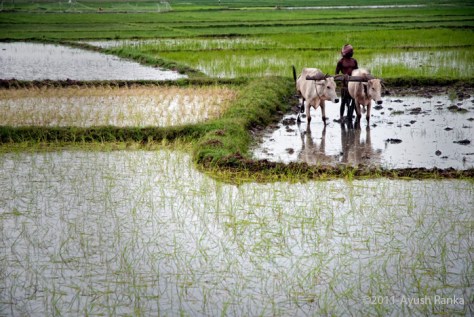
POSCO and the People: Ayush Ranka and Arati Choksi

This is a guest post by ARATI CHOKSI with photographs by AYUSH RANKA

01. Odisha is scarcely known to most people as the state of rich agriculture. It is more famous for it's floods and droughts which occur once in a while. However, the entire state, barring a few small regions, is rich with fertile soil and apart from betel leaves and cashew, food grains like rice, wheat, jowar and pulses are also grown

POSCO catapulted out of nowhere into the periphery of my imagination last year. On May 15, 2010, in a brutal show of aggression and violence, armed police battalions attacked unarmed protesters at Balitutha opposing a forceful takeover of their lands by the state for a POSCO steel plant. Members of police force set fire to shops, eateries and thatched homes, including the dharna site of people’s peaceful protest. Police fired upon unarmed protesters with rubber bullets. One person died, and hundreds were severely injured in this firing, many of these were women and the elderly. Continue reading POSCO and the People: Ayush Ranka and Arati Choksi

The Utopian Instinct – Aflatoon, Kiran Bedi and Nandan Nilekani: Taha Mehmood

Guest post by TAHA MEHMOOD

A pilgrimage to the cave

One day Cleinias, a Cretan invites Athenian and Megillos, a Spartan for a religious pilgrimage. Cleinias proposes to visit the cave of Zeus, just as Minos used to do. Minos was the legendary Cretan king. Every nine years Minos would walk along a path to the cave where he will hear revelations on the laws from Zeus. Perhaps the act of a man going to the cave to seek revelations from God was part of an ancient Cretian tradition. In the islandof Crete Minos played the role of a Lawgiver, in Athens– Zeus, while in Megillos’s state Sparta this role was played by Apollo.

Magnesia: The last idolum of Plato

This was the setting of the last dialog of Plato. He called it The Laws. In this dialog Plato tries to define the legal framework of an imaginary state named Magnesia. Throughout his life Plato was preoccupied with the question of how to name and define things. He believed one could even name abstract entities like numbers and define it as even or odd. In this dialog Plato makes an attempt to name various types of laws and define it.

Continue reading The Utopian Instinct – Aflatoon, Kiran Bedi and Nandan Nilekani: Taha Mehmood

Speed and Control at Manesar: Why is the Maruti-Suzuki Management Keeping Workers Out of Its Factory

Protest Meeting at Maruti-Suzuki Factory, Manesar, September 01, 2011

Manesar is an emerging industrial hub roughly fifty kilometers from Delhi. Factories rise along the co-ordinates of a neat grid, overshadowed by the rocky Aravallis. The world is made here – cars, bikes, semiconductors, automotive parts, electronics, telecommunications equipment. Manesar has a little bit of everything. Even a bomb data analysis centre and a brain research lab and a military school and a heritage hotel. On a Maruti Swift, speeding down National Highway 8 towards Jaipur, you could make it to Manesar from Delhi, through Gurgaon, in less than an hour. Maruti’s ads are all about speed and control. Speed and control will cruise you to Manesar.

Continue reading Speed and Control at Manesar: Why is the Maruti-Suzuki Management Keeping Workers Out of Its Factory

CPI(M)’s Rectification Campaign and a Bit of History: Sankar Ray

Guest post by SANKAR RAY

The Rectification campaign (RC) in CPI(M) is in practice a PR exercise, vying with top corporate communicators. Take the judgment of killings on 27 July 2000 at Suchpur under Nanoor PS of Birbhum district of West Bengal. Forty-four members and sympathisers, including district committee member Ramprasad Ghosh and zonal committee members Nityanarayan Chattopadhyay, Golam Saror, Golam Mustafa and Badiujjaman were convicted for involvement in the ghastly killings of 11 landless agricultural labourers. None of them has even been suspended, let alone expelling them from the party. Party biggies from the general secretary Prakash Karat to the WB state secretary and polit bureau member Biman Bose often say they have reverence towards the judiciary, although their perception that in a class-divided society, justice is to be ‘class justice’ is judicious. But why should proven criminals be on the party roll, when the mandarins of A K Gopalan Bhavan, party’s national headquarters, boastfully talk of a continuous RC. WB party leaders assured months before the last Assembly polls in WB that hundreds of ‘corrupt’ members be thrown out out of the party. All this is remains on paper.

Continue reading CPI(M)’s Rectification Campaign and a Bit of History: Sankar Ray

‘Muslim Quota’: Keep it Simple, Silly! – Khalid Anis Ansari

Guest post by KHALID ANIS ANSARI

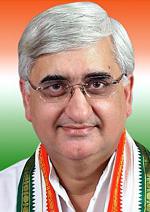
In an interview last month, Mr. Salman Khursheed was posed the query: ‘There are reports that you are considering Muslim reservations within the OBC quota?’ He responded affirmatively: ‘Absolutely. Sachar described them as SEBC, socially and educationally backward classes. This is a special segment within OBC.’

Nowhere in the Sachar report are Muslims categorized as SEBC (Socially and Educational Backward Classes). They are categorised merely as one of many SRCs (Socio-Religious Communities). Moreover, the Sachar Report has acknowledged caste-based stratification within Muslims and has suggested quite unequivocally: ‘Thus, one can discern three groups among Muslims: (1) those without any social disabilities, the ashrafs; (2) those equivalent to Hindu OBCs, the ajlafs, and (3) those equivalent to Hindu SCs, the arzals. Those who are referred to as Muslim OBCs combine (2) and (3) [p. 193 (emphasis added)]’.

So, according to the Sachar Report all Muslims cannot be conceived as a socially and educationally backward class (OBC) because the forward Muslims (ashrafs) are ‘without any social disabilities’. Well, one may ask if the minister who exhorted everyone to read the Sachar Report critically and not as gospel truth, has failed to practice what he himself preached. The honorable minister seems to have read the report incorrectly.

Strange are the ways politics affects one’s judgment! Continue reading ‘Muslim Quota’: Keep it Simple, Silly! – Khalid Anis Ansari

Hypocrisy in Any Season: Mridu Rai responds to Rahul Pandita on the Harud Literature Festival

Guest post by MRIDU RAI

Rahul Pandita has written a misleading piece—in the tone of high dudgeon and ethical outrage no less—in the ‘essays’ section of the 3 September 2011 issue of Open magazine titled “The Autumn of Hypocrisy”. I think it is a piece that, nevertheless, requires some examination mostly because it makes several assertions in ways that queer any possibility of debate around the important question of what a literary festival held in Kashmir today might mean. Whether or not it was the author’s intention to do so, its effect is also to discredit, off-hand, several literary and artistic voices whose greatest sin would appear to be to have disagreed with the kind of literary festival in Kashmir Rahul Pandita and his fellow organizers had in mind. Of course, it is also troubling to hear from Mr. Pandita on this question since he is both an aggrieved party, deprived of his right to express himself at the festival, and also, as the credit at the bottom of his piece elaborates, a former “member of the advisory committee for the Harud literary festival”. I wonder if this conflict of interest bothers anyone other than me. Continue reading Hypocrisy in Any Season: Mridu Rai responds to Rahul Pandita on the Harud Literature Festival

Reflections on a Genuflection to the Vox Populi by Subinay Inder Singh Bedi

The republic and the legislature look to the public for gauging the mood of the nation during the process of formulating laws that necessarily must tap into the prevailing moral sentiment and ethos of the day. Thus a law against child marriage might have been moot a half century ago, but a necessary devolution of current social perceptions. On such issues, public sentiment can guide, indeed force the hand of the legislature and judiciary to come down particularly heavily on one side of the fence. However, it is parochial of us to invoke the illegal and hare-brained claim that since democracy is popularly, rule of, for and by the people, a representative democracy is inherently bound to genuflect to populist opinion, a case in point being the recent debate over the Lokpal bill that at the time of writing was still raging and occupied prime placement amongst the media of the day.

Continue reading Reflections on a Genuflection to the Vox Populi by Subinay Inder Singh Bedi

Harud Literature Festival ‘postponed’

I think it is sad that the Harud Literature Festival has been “postponed“. Sadder still is that the organisers are blaming those who asked very valid questions. All they needed to do was answer those questions and allay those concerns. Their response, two days after the release of the open letter, did not address those concerns. They even refused to withdraw, leave alone apologise for, the offensive word “apolitical”, or explain how they planned to be “apolitical” while “celebrating” literature in the midst of unmarked graves, militarised bazars and lanes, draconian laws, imprisoned teenagers and the state’s refusal to dispense justice. Continue reading Harud Literature Festival ‘postponed’

Politics of Anna Hazare Anti-Corruption Movement by Sanjay Kumar

Guest post by SANJAY KUMAR

Sonia Gandhi Hinsak Hai
Rahul Gandhi Napunsak Hai
(Sonia Gandhi is violent, Rahul Gandhi is impotent)
(placard displayed by a young man on Barakhamba road crossing, during anti-corruption march on 21st August, Delhi)

Rahul Bhaiyya! Why don’t you get married so that Bhabhi can take care of Sonia Aunty, and you do not have to spend so much (black) money to get her treated outside the country? (placard carried by a three year old girl child)

Manuvadi Krantikari Morcha supports Anna Hazare
(a banner heading for a group of 20-30 middle aged men)

Bihari Nahin Ham Jaat hain
Ham Anna ke saath hain
(We are not Biharis we are Jaats, we are with Anna)
(shout of youth in open jeep in Darya Ganj, after the 21st Aug march)

Continue reading Politics of Anna Hazare Anti-Corruption Movement by Sanjay Kumar

In the Ruins of Political Society – A Response to Partha Chatterjee

Partha Chatterjee’s post, following on Shuddha’s Hazare Khwahishein… is something of an eye-opener for me. I will not enter into a debate with him on his reading of Shuddha’s post as Shuddha and I have had our long online and offline exchanges and I have learnt immensely from these exchanges, even if a core of disagreement persists. I do think, however, that Partha is mistaken in thinking that this is the first time the question of corruption has been discussed on Kafila or elsewhere but since I am not interested in discussing that question here, I will leave that matter aside. I think I have said pretty much what I wanted to say on the movement and the myriad issues related to it and so I am no more interested in going over that territory all over again. Interested readers can see the Kafila archives if they so wish.

What has been an eye-opener for me is the way a certain other Partha Chatterjee has emerged, as soon as his theories were brought face to face with the hurly-burly of politics. The imprint of this other Partha is clearly evident in every word and sentence of this post, but most clearly in the concluding sentence where he claims that the indepdent Left has ‘its populist moment in Nandigram’. This sentence encapuslates the gist of our disagreements. It was this assessment that led Partha to write the essay, ‘Democracy and Economic Transformation‘ where, in some elliptical fashion, his own discomfort with popular politics  found expression. That is when he extended the definition of ‘political society’ to say that it was the sphere of ‘management of ‘non-corporate capital’ (of course, by capital and government). That Partha links his discomfort over the Anna Hazare movement to his discomfort over Nandigram, is in my view, a sign of the fact that his idea of ‘political society’ lies in ruins, that it collapsed at the precise moment of its encounter with the popular.

Continue reading In the Ruins of Political Society – A Response to Partha Chatterjee

A fax about Anna: Dilip D’Souza

Guest post by DILIP D’SOUZA

Of course everyone has their own take on the movement that’s got us all talking. It raises passions, it polarizes, it shakes the powerful, on and on. I have immense admiration for what Anna Hazare has achieved: the outrage against corruption where we had indifference before, the outlet for such outrage, the renewed hope where we had cynicism before, the way his movement has shamed brazen politicians and forced an entire government to listen.

Yet the movement sometimes reminds me, of all things, of fax machines. Continue reading A fax about Anna: Dilip D’Souza

Hazare, Khwahishein Aisi: Desiring a new politics, after Anna Hazare and beyond corruption

Hazare, khwahishein aisi, ke har khwahish pe dam nikle
bahut nikle armaan, lekin, phir bhi kam nikle

Hazare, so many desires, that every desire takes our breath away
so many hopes, and yet so few

(with due apologies, for liberties taken, to Mirza Asadullah Khan Ghalib, sometime poet and native of Delhi)

On the ninth of april, this year,  I wrote a posting on Kafila titled – ‘At the Risk of Heresy : Why I am not Celebrating with Anna Hazare Tonight‘. A little more than four months later, I have to say I have not yet found reasons to celebrate. But I am not in mourning either. What follows is my attempt to think this through, in all its contradictory character. For once, I am not even trying to be consistent. If my argument occasionally faces two directions at once, it is probably because I feel the needs to be double faced in order to understand a double-faced moment. When all the talk is only of the need for honesty, one might want to stake a claim to being double-faced, if only for the sake of breaking the moral monotony.

Continue reading Hazare, Khwahishein Aisi: Desiring a new politics, after Anna Hazare and beyond corruption

Response to Gail Omvedt: Nirmalangshu Mukherjee

Guest post by NIRMALANGSHU MUKHERJEE

First of all I strongly object to the various insinuations posted in several comments. However, with due respect to a veteran activist, I think the older generation of left activists are by and large failing to come to terms with an unfamiliar form of protest in the IT-age. For them perhaps, Tahrir square looks full of promise at a distance from where all the finer dark spots get blurred; not so when it is happening in the neighbourhood.

The janlokpal campaign has three broad components: the core group with Anna in front, the bill itself, and the people. The Maoist campaign also has these components. There are serious problems with the first component in either campaign insofar as the condition of “democratic elections” are concerned. In the Maoist case, it is just an upper caste and largely upper class coterie of people thrust on the adivasis. The programme of proctracted war to establish “new democracy,” i.e., the second component, is also deeply flawed. Yet, the Maoist campaign is routinely advertised as a just campaign because it is supposed to be a people’s campaign driven by a people’s army. The current terminology is “bottom-up.” The reality of this proclamation is not the issue here, the structure of justification is. The Maoist campaign with its flawed first two components is justified because “people” have accepted and wanted them, contrary to fact as indicated. But the same commentators are terrified when the same structure is offered for the janlokpal bill. Or is it because Dandakaranya, likeTahrir Square, is safely remote while these “middle-class people” are dangerously close?

Continue reading Response to Gail Omvedt: Nirmalangshu Mukherjee