Category Archives: Bad ideas

Ghettoes of the Mind: Khalid Anis Ansari on ‘minority status’ for Jamia Milia Islamia

Guest post by KHALID ANIS ANSARI

Teri azaān mein nahin meri sahar ka payām. [Your call to prayer heralds not my dawn] – Allama Iqbal
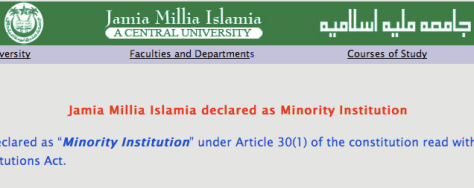
A grab from the university's website

The recent judgment of the National Commission for Minority Educational Institutions (NCMEI), favoring ‘minority status’ for Jamia Millia Islamia University, has generated vigorous debate. While it seems to me that most of the articulations have probably been reluctant in staging the immanent logics governing the entire controversy, I see this debate as offering yet another opening for democratic transformation within the Muslim community. While I will resist from taking a straightforward for/against position on the issue, it would be my endeavor to trace the discursive ruptures that instantiated the articulation around the ‘minority status’ for Jamia, and to indicate at the need to frame the Muslim ‘community’ now as a contested terrain with multiple sites of negotiations, cleavages and transformations.

Continue reading Ghettoes of the Mind: Khalid Anis Ansari on ‘minority status’ for Jamia Milia Islamia

India’s ‘Lawless Law’ that Keeps Dissidents ‘Out of Circulation’

Amnesty International has released a report calling on India to repeal the Jammu & Kashmir Public Safety Act. The report, called A ‘Lawless Law’: Detentions Under the Jammu and Kashmir Public Safety Act, can be downloaded here. Given below is the text of the Introduction and Summary of the report.

‘We have to keep some people out of circulation…’ – Samuel Verghese, (then) Financial Commissioner – Home, Jammu and Kashmir in a meeting with Amnesty International, Srinagar, 20 May 2010 Continue reading India’s ‘Lawless Law’ that Keeps Dissidents ‘Out of Circulation’

How is Savita Bhabhi a Threat to India’s National Security?

“Ask the Home Ministry, because this is a security issue.”
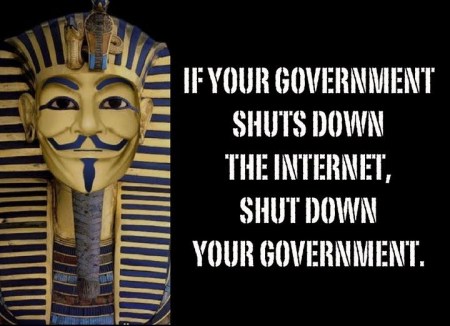
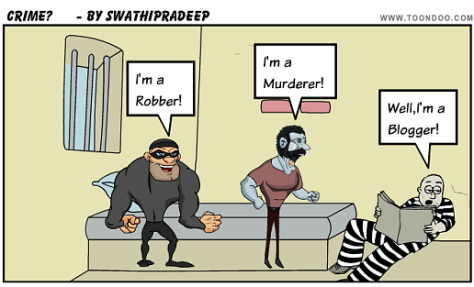
That is what India’s Minister for Communications and Information Technology said recently when asked about the lack of transparency in the blocking of websites in India.

Now, one of the websites blocked in India is Savita Bhabhi, as also several mirror websites of the same. Savita Bhabhi, as you doubtless know, was a soft-porn web comic. All I want to ask Kapil Sibal is: How is Savita Bhabhi a threat to India’s national security? Wait, I have another question: Continue reading How is Savita Bhabhi a Threat to India’s National Security?

The Day India Will Shut Down the Internet

Sounds alarmist? Perhaps. But under the IT Amnedment Act of 2008, the Government of India gave itself the power to do so. The Economic Times reports: Continue reading The Day India Will Shut Down the Internet

Here’s what India’s Communications and IT Minister thinks about online freedom

Kapil Sibal said the following at a conference on social media in Delhi recently:

We’ve seen the power of the medium in the last six months or so seeking to perform a transformational role, but in the absence of a balance… this is really the danger of sites like these. What happens in the process is that all kinds of opinion get both elicited and taken forward, without the necessary wherewithal, and there’s a great danger, because this, I believe, is a part of freedom of speech. Continue reading Here’s what India’s Communications and IT Minister thinks about online freedom

Stop gendering children: Urooj Zia

Image by Frank Baron / The Guardian

Guest post by UROOJ ZIA

A couple of months ago, I was given two books which I was asked to review. Published in India, both were compilations of abridged versions of popular children’s fairy tales and fables. One book, however, had a pink cover; the other was bound in blue. The former said clearly, on the cover, that it was meant for ‘little girls’, the latter was for ‘little boys’.

Having grown up surrounded by books, I wondered, when I saw these two copies, as to how one could tell which stories were meant for girls and which were meant for boys. As a child, I never saw the difference. Lo and behold, the tables of content in both books gave me my answer (and destroyed my peace of mind): the volume with the pink cover was full of stories about lost princesses and damsels in distress seeking saviours; the one with the blue cover had stories such as ‘the boy who cried wolf’. Continue reading Stop gendering children: Urooj Zia

A Brief Introduction to Indian Secularism

The Telegraph's "File picture of suspected illegal migrants detained by police"

I think that should be the title of a poem, but since I can’t write poetry, I want to bring to your attention in pithy prose the Congress party’s time-worn ‘soft Hindutva’ election strategy is back in Assam. Which means that while the Congress, BJP and others in Assam want to welcome Hindus from Bangladesh, the Muslims from there are as ever the “illegal” immigrants, the terrorists, the jehadis, the infiltrators.

They want citizenship for Bangladeshi Hindus and the Bangladeshi Muslims kicked out.

As per India’s non-existent refugee policy, Hindus from Pakistan and Sikhs from Afghanistan have been getting citizenship, but so many other persecuted peoples from all over the world come to India and find it very difficult to get by and soon seek resettlement in a developed country.

This, then, is how I want to introduce Indian secularism to you.

Thanks.

Thinking about ‘the Contemporary’: Between Interdisciplinarity and Indisciplinarity

[An earlier version of this note was presented as keynote lecture for the Arts Faculty Seminar on Interdisciplinary Research in Humanities, Benaras Hindu University, 9-10 September 2010]

It cannot be emphasized enough how critically important the theme of the Seminar is – especially for us in India today but more generally in the world at large. We need to think of the idea of interdisciplinarity in much more fundamental and radical ways today if we are to even begin to meet the intellectual challenges posed by ‘our contemporary’.

Before I proceed, let me also clarify that the term ‘indisciplinarity’ in the title of my talk, is not simply there for its shock-value. I believe that we are today at the threshold of a fundamentally new condition where there is a serious question mark over old knowledges and disciplines as they emerged in the course of the last few centuries. Continue reading Thinking about ‘the Contemporary’: Between Interdisciplinarity and Indisciplinarity

The ‘new’ Indian filmi woman: Arpita Das

Guest post by ARPITA DAS

In these times of celebrating ‘small’ films, ‘new’ unheard-of young directors, little India, and non-filmi characterizations, it seems to have become mandatory for critics to praise every film claiming to build its  narrative around a so-called non-mainstream idea.  If this were not so, two ‘small’, ‘different’ films which created a lot of hype recently, would not have gathered as much post-release steam.  I am talking about No One Killed Jessica and Manu weds Tanu.  Both have been promoted and described in reviews as bold films, with star heroines showing a no-holds-barred temperament and verbal acumen, and this being the central focal point of their ‘different-ness’, both have made that oft-repeated Bollywood claim, ‘pikchar hatke hai’. If the films are to be believed, this new Indian woman can be instantly recognized by one or more of the following traits: smoking nicotine or other substances, mouthing expletives both in Hindi and English with ease, being sexually promiscuous or even vaguely ambivalent, manipulating people close to them without giving a thought to causing hurt, and a sound lack of any sense of ethics in the professional sphere or personal turf.

Continue reading The ‘new’ Indian filmi woman: Arpita Das

Updated: Get Ready for India’s Blogger Control Act

Sanchar Bhawan, office of the Ministry of Communications and Information Technology in New Delhi

The Internet in India is regulated by the Information Technology Act (2000) to which amendments were passed in 2008 and in 2009 the IT (Amendment) Act 2008 was passed. The Ministry of IT has now gotten down to notifying additional rules for the Act. Amongst the set of rules is one specifically for cyber cafes, about which I’ll write another post, and there’s one on ‘due diligence on intermediaries’. Intermediaries in the context of internet means that if you post any comment on this blog, I am legally responsible for your comments too. Intermediary liability is a favourite tool of internet censorship by repressive regimes the world over.

To those familiar with Indian laws, this will appear to be routine stuff, the sort of laws that regulate newspapers, for instance, or freedom of expression in India in general. However, three main problems here: one, the over-emphasis on blogs and bloggers, indicating the government’s anxiety over controlling blogs; two, the vagueness and vast scope of the reasons for which the government can block websites; and three, the utterly regressive move of introducing ‘intermediary due-diligence’, a favourite tool of repressive regimes against bloggers.

It is interesting that while “Blogs” and “Blogger” are defined in the Definitions section of this rule, the words aren’t used in the rules per se. In other words, they had blogs in mind while making the rules. These rules, if notified, will basically be India’s Blogger Control Act.

Continue reading Updated: Get Ready for India’s Blogger Control Act

Updated: Crazy internet censorship time in India, again

Update: Please see bottom of the post for several updates.

*

“Shivam!” Nikhil Pahwa of Medianama called this morning. “It’s 2006 all over again. They’ve blocked Typepad.” I instantly knew what this meant. They’ve done this at least twice before, the fellas at CERT-IN. In 2003, 2006 and now 2011.

Typepad.com is a blogging service, much like Google Blogger (Blogspot.com) or WordPress.com that this site, Kafila.org runs on. Now. Airtel users who go to Typepad.com find this:

Users of most ISPs can see this, but government-owned MTNL has ironically not caught up :) Continue reading Updated: Crazy internet censorship time in India, again

You fill up my Census…

…quipped my brother Dilip in response to the following mail from my sister Pramada:
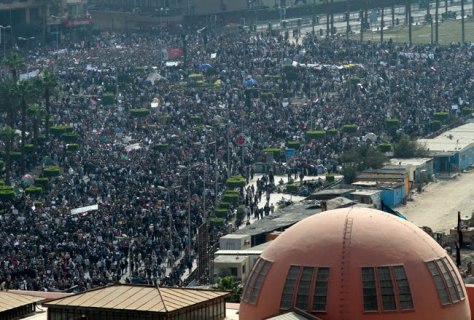
So the bell rings this afternoon. desperate clanging. i open the door and there is a man with forms in his hand and a general irritated demeanor. figured that this was the census man. he comes in and settles down. starts by wanting to know who the head of the household is. i say there is no one. he insists. i continue to say no one.

Census of India 2011 mascot

He proceeds to explain that if the parents live in the house, then they are the head of the household, if married then the husband is. I proceed to ask for definition and say that all three of us who live in the house are head of the household since we all earn and take decisions. he promises to erase what he has written since he was sure my mother was head of household.

He seemed to find my gender a bit dubious so questioned my mother if i was a boy or a girl and then repeatedly said “ladki” to me. having established that i indeed was a woman, he wanted to know date of birth, which was not difficult, but place of birth he found extremely challenging. he could not get his spellings right, or did not know districts or states in the country so tattamangalam in palghat district in kerala was as baffling as mysore in karnataka. calcutta was easy to deal with and he said calcutta was in calcutta!!! mother tongue caused him more angst because he had to write malayalam and again the spelling eluded him.

Continue reading You fill up my Census…

Sopore sisters, in death and life: Nawaz Gul Qanungo

Guest post by NAWAZ GUL QANUNGO

In the May of 2006, Praveen “Five Police Station” Swami wrote in Frontline: ““Long live Pakistan,” chanted the hundreds of young men who, armed with axes and crowbars, had gathered to demolish Sabina Hamid Bulla’s home in downtown Srinagar on May 5. “We want freedom!” … Last month, residents of Srinagar complained to the police about two 30-second pornographic video clips that had been circulating through mobile phones. A 16-year old girl was then detained, who said she had been recruited by a prostitution ring run by Bulla. In an unsigned statement to the police, the girl said Bulla, to whom she is related, supplied her with drugs and cash for having sex with two State Ministers, a Border Security Force officer, 10 policemen and several well-known businessmen. … As thing stand, though, the Central Bureau of Investigation – which was, notably, given charge of the case before the protests began – has an enormous mission before it. First, it will have to persuade the girl, who was married off in April with some financial assistance from Bulla, to make a formal statement before a magistrate. Then, corroboration will have to be found to back the charges she has made – no small task, given the influence of the men who now face charges of rape.” [Frontline, May 20 – June 2, 2006.]  Continue reading Sopore sisters, in death and life: Nawaz Gul Qanungo

The myth of India’s Hajj subsidy: Muhammad Farooq

Guest post by MUHAMMAD FAROOQ

Recently the Supreme Court of India upheld the constitutional validity of extending subsidy on air fare to the Hajj Pilgrims. This year Rs.280 Crores were reportedly spent by the Government of India to subsidise the air fare of one lakh pilgrims. This amounts to a subsidy of Rs.28000/- per pilgrim. The subsidy provided to the pilgrims has understandably generated a lot of debate within political and social circles in India. While the right wing political parties, when not in power, consider it as an unnecessary appeasement of Indian Muslims, the governments formed by any party have always seen it as a necessary expenditure to help Muslims perform their religious obligation of Hajj.

Since I have also performed my Hajj this year, I decided to do some quick calculations to check the veracity of the tall claims made by the GoI and the Hajj Committee regarding the subsidy amount (see box). The results were quite shocking. I checked with one of the service providers —‘makemytrip.com’— and it showed up the Saudi Airline’s fare of a little over Rs.26000/- for a return Delhi-Jeddah ticket with a gap of around forty days. It was amazing to find that the total airfare of Rs.26,000 for a hajj pilgrimage is even lower than the subsidy amount  of Rs.28,000 thousand which is allegedly paid by GoI to airlines to subsidise the “high cost” of the air tickets. Continue reading The myth of India’s Hajj subsidy: Muhammad Farooq

Are Ikhwanis back in Kashmir?

A report by Pradeep Thakur in the Times of India today has stunned a lot of people in Kashmir. The report says that the Ministry of Home Affairs and the Indian Army are reviving Ikhwan units in Kashmir to quell the anti-India movement. Some Kashmiris living in Kashmir feared the era of Ikhwani terror and blackmail will be back. The stunning bit is how openly the effort of the MHA and the Indian Army is being acknowledged in creating a renegade political pro-India militia force in today’s political environment in Kashmir. What is not surprising is that this is happening at all, because it has happened before. At worst, this seemed like a stupid move to publicise an overt political operation of the sort Kashmir has seen no dearth of.

The story, titled, “Two pro-India parties floated in J&K with Army, MHA help” by Pradeep Thakur reads: Continue reading Are Ikhwanis back in Kashmir?

The Answer My Friend, is Blowin’ in the Wind…

Even as the western and Indian media go ecstatic over the new democratic upsurges in the Arab world, something else has begun to happen. The Tunisian ‘virus’ that spread rapidly via Egypt, is now finding newer and equally hospital bodies elsewhere – that is to say, bodies made vulnerable by the years of plunder by corporate capital. Now, what precisely, is the connection between corporate capital and the Arab ‘jasmine revolutions’? On the face of it, nothing. However, as the state legislature in Wisconsin sat considering a bill to severely curb state workers’ rights of collective bargaining a few days ago, thousands of state employees descended on the building, virtually occupying it.

And as protests against Republican Governor Scott Walker’s assault on collective bargaining rights entered the fifth day, the support for the movement has begun to expand. Demonstrators were joined by union supporters from Illinois, Pennsylvania and New Jersey, as well as national union leaders and civil rights advocate the Rev. Jesse Jackson.

An interesting article by Dan La Botz, “A New American Workers’ Movement Has Begun“, underlines the connections of the ongoing struggle in Wisconsin with the Arab virus!

Continue reading The Answer My Friend, is Blowin’ in the Wind…

Teaching Harmony, Practicing Disharmony

This was presented as a paper at a symposium on Peace Education organised as part of National Conference on Indian Psychology, on 6 February 2011 at the India International Centre.

This piece seeks to underscore the cleavages that exist in our society, explore the foundations upon which the edifice of intolerance has risen and to look at the tools, like education for peace and harmony, with which we try to dismantle this citadel of intolerance.

Peace education, you would agree, cannot be confined merely to teaching the message of Love and brotherhood, our text books have been teaching this message for as long as I remember and my memories of our text books go back, at least to my senior school days in the mid sixties, almost 45 years ago.

If telling students in their classes that we should all love each other because we are all Indians and that we are all equal was enough then we would not have many of the problems that we are confronting today. Continue reading Teaching Harmony, Practicing Disharmony

On the fuzziness of Personal Identity: UIDAI and the national identity card of India: Taha Mehmood

Guest post by TAHA MEHMOOD

I – The spread of Identity cards in Southasia:

An identity card virus seems to be spreading across south-Asia. The pathogen emerged long ago in 1971, when Pakistan established a paper based personal identity system. !971 was also the year when Pakistan was engaged with India in a military conflict which led to the creation of Bangladesh. In 1972, a year later, the Department of Registrations of Persons located at Colombo, Sri Lanka, was entrusted with the responsibility of issuing a national identity to citizens who were over sixteen years of age. In 1972 the name of the island was changed from Ceylon to Sri Lanka and Tamil Tiger leader Velupillai Prabhakaran formed the Tamil New Tigers (TNT), which later became LTTE or Liberation Tigers of Tamil Eelam. The state of Sri Lanka was at war with LTTE for the next three decades. Nothing new happened on the national identity card front for the next two decades. Continue reading On the fuzziness of Personal Identity: UIDAI and the national identity card of India: Taha Mehmood

Why does the RSS dread the terror tag?

1.
Ram Madhav, the bespectacled ex-spokesperson of RSS is not known for his sense of humour.

It is a different matter that some of the media people just could not control their smiles when sometime back (second week of Feb 2011) in a press conference in the capital he enlightened the journos about l’affaire Aseemanand and the broader phenomenon of Hindutva terror.

Giving a completely new and almost unforeseen twist to the Aseemanand episode he said that he (i.e. Aseemanand) had in fact left the RSS in 2006. Of course, as a good spokesperson – although he has become an ex- he had the usual disclaimers in the beginning: RSS does not believe in violence and is a cultural organisation… One does not know whether much on the lines of the School Leaving Certificate, with which lesser mortals like us are more familiar with, Ram Madhav distributed photocopies of ‘Sangh Leaving Certificate’ of Aseemanand or anything similar to give authenticity to his claims or not. Continue reading Why does the RSS dread the terror tag?

JNU and the ‘sex scandal’: Aprajita Sarcar

This is a guest post by APRAJITA SARCAR

As a former JNU student, it is a pity that I have to write this post in order to draw attention to a crisis that needs urgent attention: the inability to talk about intimacy.  I say intimacy, as against sex, as against scandal, as against molestation, as against the “professionally shot” footage that made it to the front pages of newspapers.

Jawaharlal Nehru University (JNU) has a crisis to face that has been imminent for a while, and it comes from the inability to talk intimately, about intimacies. Because intimacies are distinct from rhetoric. Continue reading JNU and the ‘sex scandal’: Aprajita Sarcar

What can Egypt and Tunisia teach us?

The protests in Tunisia and Egypt have won the first of what will have to be many victories. Mubarak and Ben Ali have fled and dictators have fallen to people’s uprisings – the street and the public square have, at least for the moment, reclaimed their voice from the boulevards and corridors of power. Globally, these have been reported and rightly hailed as victories over entrenched dictatorships. Yet the uprisings have much to teach those of us who live in “democracies” – we must not lose the opportunity to ask what Egypt and Tunisia can teach us, no matter where we are.

I’ve been trying to write something about this for a few days now – nothing quite settles at the end of the pen. So here’s a set of thoughts/questions/ruminations that I think we must take on – in rambles, and intended as a provocation to comments and hopefully follow up posts.

Continue reading What can Egypt and Tunisia teach us?