I am taking the liberty of sharing here this brilliant cartoon by R PRASAD of Mail Today
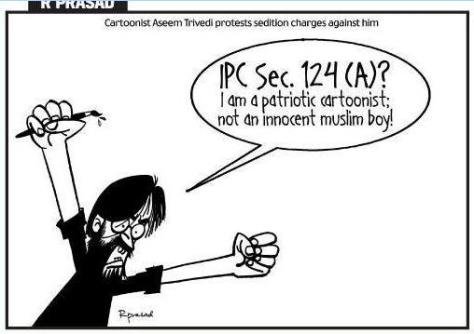

I am taking the liberty of sharing here this brilliant cartoon by R PRASAD of Mail Today
A Statement issued by the Chennai Solidarity Group
Background
For more than a year the people of Idinthakarai village, along with fellow citizens from nearby villages have been protesting the setting up of a nuclear power plant at Koodankulam in Southern Tamil Nadu. The protests have been peaceful and have included people from different strata of society. Women have been in the forefront of the struggle, and over the last year even children have learned about the perils of nuclear power plants and the need to look for alternative energy sources.
In spite of this being a peaceful citizens’ protest, the state has chosen to treat it as dangerous – and arrested hundreds of people, intimidated many others and have more than once treated Idinthakarai village and its environs as if it were ‘enemy’ territory. Sedition charges have been slapped against the protesters, along with other criminal charges. The legality of these measures has since been subject to questioning. A high level Public Hearing, presided over by Former Chief Justice A B Shah has in fact called attention to the manner in which the law has been misused in this instance, and in fact abused to harass and prevent ordinary citizens from exercising their right to protest, and defend their constitutionally guaranteed right to life and livelihood. Continue reading On the Violence Unleashed against Protesting Citizens in Koodankulam: Chennai Solidarity Group
Which of these three images brings dishonour to India?
This one?
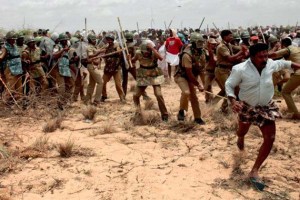
The full coercive force of the state slams down on villagers who have been so far peacefully protesting the location of a nuclear power plant in Kudankulam, Tamil Nadu.
Charges of sedition have been laid on hundreds of protesters in Kudankulam.
The women of Kudankulam wrote recently in a moving message to their fellow citizens:
When we carried the dead body of democracy and burnt it in the outskirts of our village on Aug 15th, 2012, little did we realize that so soon we would witness the real death of democracy. As this last nail is being tightened on our lives, we realize how insignificant has been our voice. But this has only strengthened our vow to be together.
(Read the latest update from Kudankulam below)
Continue reading Zero tolerance for democracy – Kudankulam, Omkareshwar, Aseem Trivedi
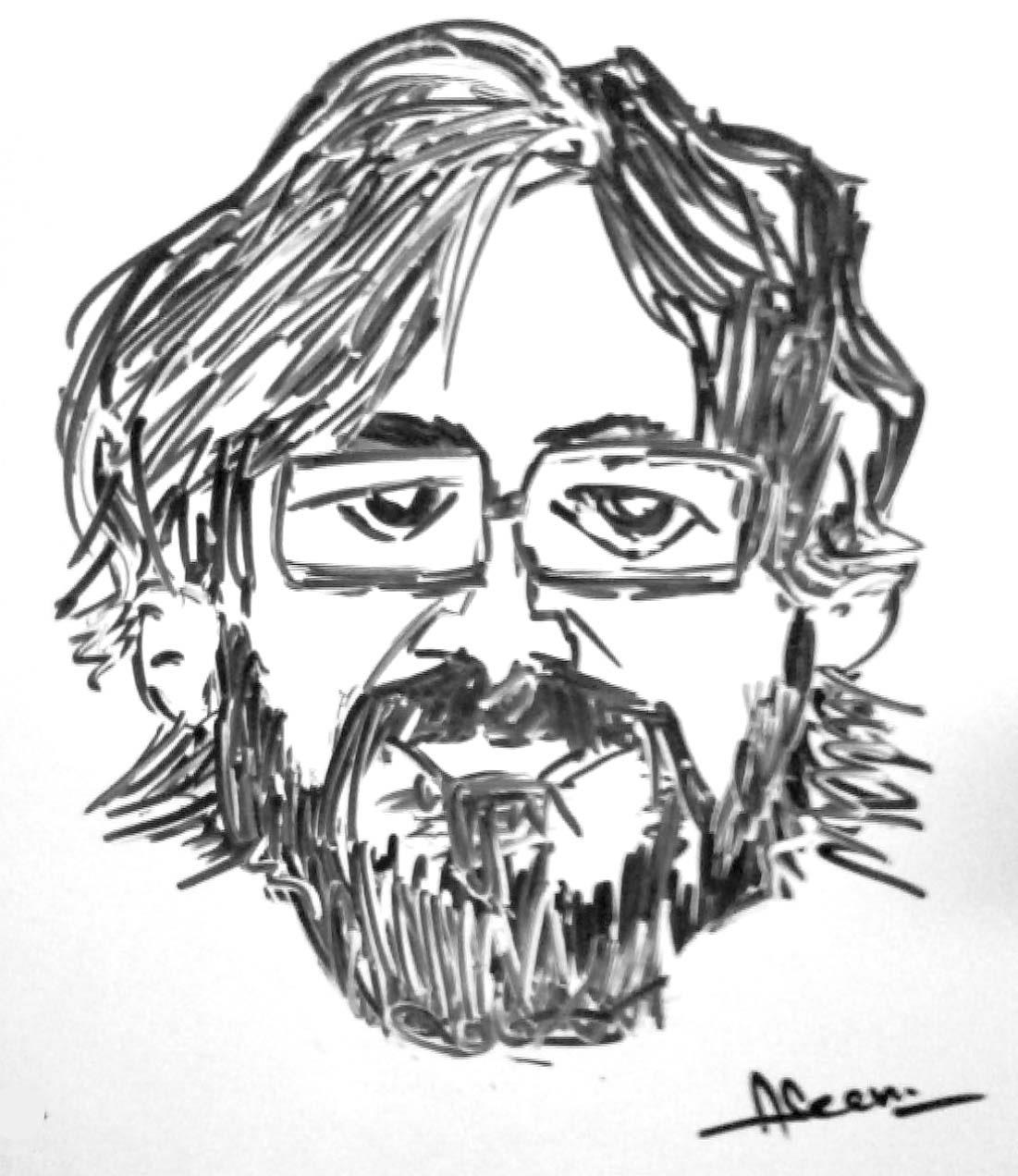
This is the text of a statement issued by ASEEM TRIVEDI from inside a jail in Mumbai. Trivedi has been remanded to judicial custody till 24 September for displaying and publishing cartoons that are allegedly seditious, insult national honour and, under the IT Act, are “grossly offensive” and of “menacing character”. An English translation of his letter is followed by the Hindi original.
Friends,
I am a true citizen of this country, not someone who has committed sedition.
If speaking the truth is sedition, then I am indeed guilty of sedition. If raising one’s voice against injustice is sedition, then I am guilty of sedition. If patriotism and the definition of patriotism have changed, then you could say I am guilty of sedition. If Gandhi, Bhagat Singh and Azad were guilty of sedition, so am I.
Even a small child of this country can understand my motive. I oppose the insulting of the people and the Constitution of India. I have been opposing the insulting of the people and the Constitution of India through my cartoons. Continue reading If speaking the truth is sedition then I am guilty of sedition: Aseem Trivedi writes from jail
- Section 124(A) of IPC criminalizes the ‘disaffection’ towards the government by words, either spoken or written, or by signs or by visible representations
- This 1860 draconian colonial law was created to stifle dissent during colonial rule.
- Tilak, Gandhi, Maulana Azad and Annie Besant were convicted under this law
- Today, the law is used to suppress legitimate criticisms of the government
- Journalists, Human rights activists, political dissenters, public intellectuals, and even farmers and tribals are targetted by this law
- The law goes against the inalienable fundamental right to expression enshrined in our Constitution
- The law goes against the very nature of democratic process which relies on active consent and dissent/opposition
- The law goes against the Universal Declaration of Human Rights, which guarantees freedom of speech and expression
- All major world democracies have either repealed this law or discontinued prosecutions
- The existence of sedition laws in India’s statute books and the resulting criminalization of ‘disaffection’ towards the state is unacceptable in a democratic society.
To sign the petition, go to RepealSeditionLaw.in
See also:
While the new visa pact between India and Pakistan is a landmark achievement, it still leaves a lot to be desired to make easier travel possible for the citizens of the two countries. Some suggestions are given in the Aman ki Asha petition, which you may want to sign here. While the full text of the pact does not seem to be online at this time, the most detailed story about the pact has been put out by the ASSOCIATED PRESS OF PAKISTAN, reproduced below. It is not clear when the new regulations come into force.
ISLAMABAD: Pakistan and India on Saturday signed new liberalised visa regime giving more concessions and simplifying the procedure to grant visa with a view to promote people-to-people contacts and enhance trade and business activities between two neighbours. Continue reading The Peaceniks prevail over the Realists: India and Pakistan sign new visa pact
The Naroda Patiya massacre in Ahemdabad on 28 February 2002 killed 97 Muslims. It is the massacre infamous for the gory stories of a pregnant woman disemboweled and raped, a 20 day child killed, and so on. If this massacre is not fit to be considered “rarest of the rare,” what is?
It is ironical that the court found the kingpin of the massacre to be a woman, Dr Maya Kodnani, a practicing gynaecologist, a former Minister of State for Women and Child Welfare in the Narendra Modi government! The court came down particularly hard on her, commenting that as a legislator, a representative of the people she had done the opposite of what she was expected to: she helped kill people rather than save them. “She led the mob and incited them to violence. She abetted and supported the violent mob,” the court observed.
However, special court judge Jyotsna Yagnik chose not to sentence the accused to death when he announced the sentencing on 1 September. Her court found 32 people guilty, of whom one is absconding. 7 will spend 31 years in jail, 22 will spend 24 years, Maya Kodnani 28 years and former Gujarat state Bajrang Dal president Babu Bajrangi is to live the rest of his life in jail. Continue reading Naroda Patiya judgement rekindles the death penalty debate in India
Guest post by ANITHA. S
As I sit here in my home village of Idinthikara watching the hot sun light up the waves rolling onto the shores, I think of the news that has hit the world today about the Koodankulam Nuclear Power Plant. All of you must have seen the news that Madras High Court has given the go-ahead for the KKNPP.
When we carried the dead body of democracy and burnt it in the outskirts of our village on Aug15th, 2012, little did we realize that so soon we would witness the real death of democracy. As this last nail is being tightened on our lives, we realize how insignificant has been our voice. But this has only strengthened our vow to be together. Continue reading Are We Not Alive: Women’s Voices from Kudankulam
Guest post by MISHI CHOUDHARY
The recent curbs on social networking websites in India demonstrate the unpredictability of the legal environment, both for businesses and the citizens. Whether its the Government of India’s (GoI) insistence on getting access to corporate emails and text messages sent via BlackBerry devices, or changing stances on “pre-screening” user generated content, the authorities seem to be doing a tap dance around legal issues. The implementation of rules seems surreptitious as they are bent conveniently in the name of “security”. Continue reading Quietly censors the nanny state: Mishi Choudhary
Guest post by SAJAN VENNIYOOR
Now that government agencies in India — some half a dozen of them working with the exceptional coordination we have come to expect from government agencies — have blocked Facebook accounts, Twitter feeds and YouTube videos supposedly originating in Pakistan, perhaps we could contemplate other trans-border electronic transgressions committed by our neighbours.
In August 2011, The Times of India reported that Punjab border farmers still tune into Pak FM radio stations. According to villagers on the fringes of Ferozepur, the limited range of India’s “national radio” broadcasts and the absence of any local FM station have made radio services from Pakistan the most popular source of entertainment in border areas.
About the same time last year, the Indian government had become alarmed by the popularity of Nepal’s FM radio channels in Bihar along the Indo-Nepal border. According to various sources, some half a dozen Nepal FM radio stations are broadcasting programmes – “anti-India advertisements and vulgar songs”, according to one outraged newspaper report – into Bihar, especially Madhepura, Supaul, Madhubani, Kishanganj, Araria, Sheohar, Saharsa, Muzaffarpur, and East and West Champaran districts. Continue reading Borderline madness: Sajan Venniyoor
Guest post by PRANESH PRAKASH
There are a total of 309 specific items (those being URLs, Twitter accounts, img tags, blog posts, blogs, and a handful of websites) that have been blocked. This number is meaningless at one level, given that it doesn’t differentiate between the blocking of an entire website (with dozens or hundreds of web pages) from the blocking of a single webpage. However, given that very few websites have been blocked at the domain-level, that number is still reasonably useful. Continue reading An Analysis of the Latest Round of Internet Censorship in India (Communalism and Rioting Edition): Pranesh Prakash
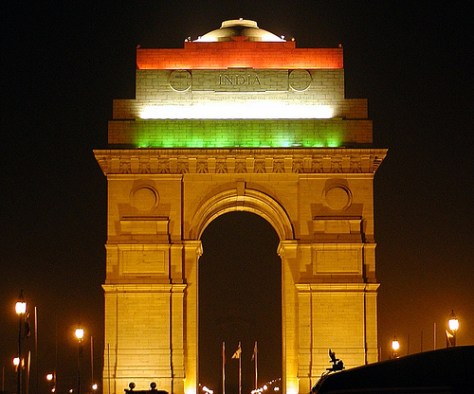
August 15 marked the 65 anniversary of India’s Independence from foreign rule and colonialism. September 21 will mark the 155 anniversary of the recapture of Delhi by the British and the end of the first valiant rebellion against foreign rule.
Between May 11, 1857 and May 21, 1857, Delhi was free of the British. The rebel soldiers had chosen Bahadur Shah Zafar as their leader and since the Red Fort was where he lived, the Lal Qila came to be seen as the centre of the First War of Independence. Delhi was seen as the heart of India and Lal Qila was the heart of Delhi and that is why once the British recaptured Delhi they wasted no time in arresting Bahadur Shah Zafar and quickly moving into the fort. Continue reading India Gate vs. India
The press release below has been jointly issued by a number of eminent citizens and civil society members in Kashmir. Full list of signatories at the end.
Srinagar, 18 August 2012: Civil society groups of Kashmir express their serious concern over the recent Supreme Court directions to the J&K government for undertaking civil engineering works leading to construction of roads and other infrastructure in the environmentally fragile Himalayan habitat around the Amarnath cave shrine in the valley of Kashmir. This move comes even as the committee formed by the Hon’ble court for recommending ways and means to promote safe journey of pilgrims to the cave shrine is yet to submit its report.
At a joint meeting of various civil society groups held on 16 August at Srinagar, the following resolution was adopted: Continue reading Kashmir civil society express concern over Amarnath construction plans
This press statement comes from the JAMMU AND KASHMIR COALITION OF CIVIL SOCIETY
Srinagar, 15 August 2012: It is despicable that the police officers responsible for serious human rights violations are receiving awards despite the crimes they have perpetrated. Today’s awards to some of the Jammu and Kashmir Police officers are an act of celebrating tyranny and victimization.
Superintendent of Police, Altaf Ahmad Khan is one of the officers who has been awarded with the President’s Police Medal for Gallantry. Altaf Ahmad Khan is notoriously known for perpetrating human rights violations in the areas where he has served. Continue reading Celebrating Tyranny and Victimisation in Kashmir: JKCCS
The International Alliance for Defence of Human Rights in India (IADHRI) is based in the US and has participated in the campaigns for the release of Dr. Binayak Sen, Kopa Kunjam and now more recently Soni Sori and Lingaram Kodopi.
On August 5th, The Indian Express published a disturbing, supposedly investigative story on Soni Sori, implying both that she was guilty of the charge of being a Maoist as well as casting doubt on the activists in India and outside who support her, and who are mainly responsible for bringing into the open the fact that she was and continues to be tortured in prison.
The IADHRI has written this response to the story, rebutting it point by point.
 This week I reviewed War and Peace in Jangal Mahal, edited by Biswajit Roy, for The Hindu. Kafila readers will be familiar with at least two of the essays in the compilation – by Nivedita Menon and Aditya Nigam and will remember our hectic debates on the subject.
The collected letters of correspondence between the Communist Party of India (Maoist) and the Indian state is an archive of corpses: policemen and guerrillas, commanders and comrades, police informers and Maoist sympathisers. The body count racked up by each serves as a signalling mechanism for the other.
Except for the police and Maoist commanders, the dead usually don’t get to choose sides; their identities are written in reverse, a teleological narration that details seemingly insignificant decisions that end in death.
In June this year, the CRPF, state police and CoBRA battalion killed 19 men, women and children in an anti-Maoist operation, claiming those killed were hardened Maoists. When newspapers reported that villagers said they were conducting a public meeting when they were surrounded by police and shot, the police pointed to six troopers injured in the encounter and asked why villagers were holding a meeting in the middle of the night.
The Maoists have an explanation for their violence as well. “The notion of just principle in a normal situation is different from that [in] a war-like situation,” wrote Maoist commander Kishenji in a letter to the Bengali daily, Dainik Statesman , in which he explained his party’s policy of killing police informers, “During war, freedom of thought, consciousness, initiative and innovation is much limited in scope.”
Guest Post by RICHARD TOPPO
Almost a century ago, Katherine Mayo published a book titled ‘Mother India’ that criticized the Indian way of living, and Rudyard Kipling spoke of the ‘White Man’s Burden’. These writings reflected the colonial perspective that what colonizers did was in the best interest of the colonized people. Consequently, most well-meaning citizens of colonial powers were alienated from the horrible plight of the colonized. Purpose well served – unopposed exploitation.
Years later, independent India seems to walk the same line. The tribal communities in central areas of Jharkhand, Orissa and Chhattisgarh have faced rampant exploitation, displacement and dispossession from their resources at the hands of the state. However, the government has successfully produced an illusionary perception of ‘development’ that has alienated the middle classes of India from the miseries of tribals. As a result, the government in alliance with corporate interests ruthlessly exploits the tribal population, almost unchallenged by other sections of society. Continue reading Fallacious perceptions of development – a tribal view from Jharkhand: Richard Toppo
This public statement comes via Manisha Sethi; see full list of signatories at the end.
Twenty-seven year old Qateel Siddiqi, arrested in November 2011 by the Special Cell for his alleged Indian Mujahideen links, has been killed in Yerwada Central jail in Pune today. The murder has ostensibly been carried out fellow inmates for unknown reasons. Qateel had been shifted to Yerwada only a few days ago after the Maharashtra ATS had taken his custody for a test identification parade.
Qateel’s killing raises several important questions:
– Siddiqi was kept in high security anda jail and not in the common barracks. How then did the attack take place?
– Could the attack have taken place without the complicity, even if passive, of the Yerwada jail authorities?
– Given the claim of the investigating agencies that Qateel was the key to unraveling the IM network, what happens now to those investigations?
– The fact that Siddiqi was to be moved out of the Yerwada Jail and was eliminated just before that smacks of a conspiracy. Continue reading Qateel Siddiqi killed in Judicial Custody – Who is Responsible?
Dear Government of India,
We are Anonymous. It has come to our attention that you have blocked filesharing websites in India. We also know you are in the process of making a Great Indian Firewall, to censor the internet in India. Anonymous believes, however, that pursuing this direction is a sad mistake on your behalf. Not only does it reveal the fact that you do not seem to understand the present-day political and technological reality, we also take this as a serious declaration of war from yourself, the Indian government, to us, Anonymous, the people. Continue reading Open Letter from Anonymous to the Government of India
 KAFILA - COLLECTIVE EXPLORATIONS SINCE 2006