Category Archives: Culture

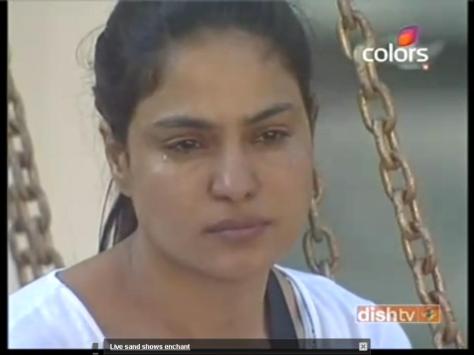
Who’s afraid of Veena Malik?

News broke of Veena Malik’s “nude” – more accurately, implied nude – photographs in FHM India magazine when the image of the magazine’s cover went viral on Twitter, even before the magazine was on newsstands. The media in India and all over the world reported “outrage” in Pakistan, in keeping with the international image of Pakistan as a country taken over by Islamists who would wreak havoc over a Pakistani woman posing without clothes for an Indian magazine with ISI tattooed on her arm.

FHM India itself magazine emphasised Malik’s nationality, calling her a “Pakistani WMD” and discussing burqas with her, even mentionining the word burqa on the cover, to reinforce the stereotype of a hot Pakistani model defying a country riven with Islamic extremism.

But in reality, there hasn’t been as much backlash in Pakistan as the world outside would expect or believe. Says Islamabad-based journalist Shiraz Hassan, “I am surprised that except a few news channels and papers nobody has been bothering about Veena Malik, as though they don’t care what she did. Haven’t seen anything from hardliners also.” Continue reading Who’s afraid of Veena Malik?

Bangla rocks: Jyoti Rahman

Guest post by JYOTI RAHMAN

Lagaan was a groundbreaking film, but a Bollywood film nonetheless. My favorite song-dance sequence is the one where the villagers, well Gauri and Bhuvan and friends, celebrate Krishna’s birthday. In the song, the girl complains that Radha is anxious about Krishna’s philandering ways and the boy replies that Radha should be understanding because there’s no one else in Krishna’s heart but Radha.

When the meaning of the song is explained to her, Elizabeth asks Gauri: Is Radha Krishna’s wife?

Oh no, Krishna’s wife is Rukmini! 

Of course Radha-Krishna are anything but married. Imagine the shock the Victorian girl would have felt upon realizing that the villagers were celebrating an extra-marital affair with such fanfare.

It is not just that Bollywood village in the high noon of Raj. Gita Govinda and other songs celebrating Radha-Krishna are sung in every modern Indian language. And not just in India. Songs on the theme were thriving in an unexpected place, in an unexpected time. Among Bangladeshi youth, in the early years of this century, when the country seemed to increasingly Islamicising. Partly influenced by the music coming out of the diaspora in Londonistan, songs like this one, celebrating the union of Radha-Krishna in the Nikunja Temple became massive hits.

Over the fold, let me note a few examples of Bangla rock – and let’s not be pedantic here, I’ll use rock as a shorthand for western-influenced urban music, including pop, reggae, hip hop and other genres.

Continue reading Bangla rocks: Jyoti Rahman

Shahid in Srinagar: Arif Ayaz Parrey

Guest post by ARIF AYAZ PARREY

Photo by Muhabit-ul-Haq / TheKashmirWalla.com

I must go back briefly to a place I have loved
to tell you those you will efface I have loved [i]

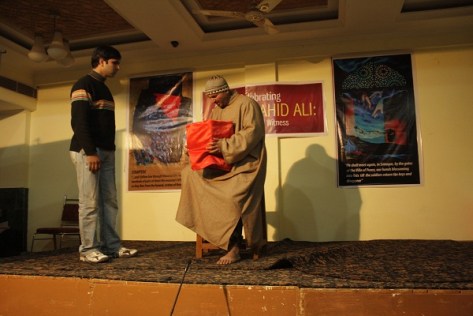
Exactly ten years after he left us, Aga Shahid Ali returned to his Kashmir. A couple of days earlier, many parts of the valley were blessed with the season’s first snowfall, signalling an end to Harud, the autumn season in Kashmir, and ushering in Wande, the winter. The sky over Srinagar was overcast too, as it has been for the past few days, maybe because this year Moharram has been particularly demanding, with mourners not being allowed to mourn because “the processions might be used by separatists to whip up anti-India sentiments”. The reason for the ban is announced from the same bureaucratic offices which, during the summer, employ the entire state machinery to ensure that people from the plains can climb up the mountains into a cave where Amarnath wants to spend some private time with Parvati so that he can explain to her the mysteries of immortality (Which must include, one would like to presume, the secrets of the longevity of a fragile mountain ecology.) Some like to define this variance in state policy and practice as “secularism”. The connection between the tyranny of Karbala and the present-day Kashmir is firmly established, once again. Continue reading Shahid in Srinagar: Arif Ayaz Parrey

High theory, Low ‘Kolaveri Di’: Why I am a Fan of this Flop Song: AS Ajith Kumar

Guest post by AS AJITH KUMAR

YouTube’s search results for the `Kolaveri di ’ song are amazing. It is hard to pick the `original’ from the plethora of `kolaveri di ’ songs -the `reply cover version’, kids version by Naveen Nigam, the damn version, and many more. I was very excited to find this possibility-a song has initiated a dialogue, and that too a musical engagement. This I think are the new possibilities that the new media has brought into the field of music. Here  is not the two- way process that we are familiar with, between the music and the listener, but a number of activities in multiple tracks.

The ‘listener’ is more visible  now, and has more powers. He/she shares, likes, comments, makes his/her own videos and broadcasts them by herself/himself. I am not trying to jump into a sort of technological determinism, but approaching the shifts in the music field – in the making, listening, broadcasting and sharing of music. I would say that it is within this context that we have to reflect on the popularity of the `kolaveri di ’ song.

Continue reading High theory, Low ‘Kolaveri Di’: Why I am a Fan of this Flop Song: AS Ajith Kumar

हिन्दी फ़िल्म अध्ययन: ‘माधुरी’ का राष्ट्रीय राजमार्ग

(ये लेख स्रोत-चिंतन जैसा है, जिसे पीयूष दईया के कहने पर मैंने लोकमत समाचार, दीवाली विशेषांक, 2011 के लिए लिखा था। अपनी आलोचनात्मक टिप्पणियों से नवाज़ेंगे तो अच्छा लगेगा।)

This slideshow requires JavaScript.


बहुतेरे लोगों को याद होगा कि टाइम्स ऑफ़ इंडिया समूह की फ़िल्म पत्रिका माधुरी हिन्दी में निकलने वाली अपने क़िस्म की अनूठी लोकप्रिय पत्रिका थी, जिसने इतना लंबा और स्वस्थ जीवन जिया। पिछली सदी के सातवें दशक के मध्य में अरविंद कुमार के संपादन में सुचित्रा नाम से बंबई से शुरू हुई इस पत्रिका के कई नामकरण हुए, वक़्त के साथ संपादक भी बदले, तेवरकलेवर, रूपरंग, साजसज्जा, मियाद व सामग्री बदली तो लेखकपाठक भी बदले, और जब नवें दशक में इसका छपना बंद हुआ तो एक पूरा युग बदल चुका था। [1] इसका मुकम्मल सफ़रनामा लिखने के लिए तो एक भरीपूरी किताब की दरकार होगी, लिहाजा इस लेख में मैं सिर्फ़ अरविंद कुमार जी के संपादन में निकली माधुरी तक महदूद रहकर चंद मोटीमोटी बातें ही कह पाऊँगा। यूँ भी उसके अपने इतिहास में यही दौर सबसे रचनात्मक और संपन्न साबित होता है। Continue reading हिन्दी फ़िल्म अध्ययन: ‘माधुरी’ का राष्ट्रीय राजमार्ग

Why This Kavala-Worry Kavala-Worry Di?

As somebody recently said about the Mumbai flash mob video, if you haven’t seen it, you probably don’t have internet. I’m speaking of the recent ‘Tamil’ hit song of course, ‘starring’ Dhanush.

The one with the catchy tune and simple ‘lyrics’? See, this is what worries me, the fact that I have already used so many quotation marks – for ‘Tamil’, ‘starring’ and ‘lyrics’. Which is why I titled this piece “why this kavala-worry kavala-worry di”. “Kavala” means worry in Tamil (without quotes). So kavala-worry really means worry-worry, which should be nonsense, but it isn’t, given the massive ‘success’ (can’t keep away from the quote marks sorry) of the original ‘Kolaveri’ song, full of double-double words, because this is how we speak in soudh indiya. “Kolaveri”, for those suddenly-uncool nordh indiyans who don’t understand ‘Tamil’ or even plain old Tamil, means ‘murderous rage’ – kolla (murder) + verri (rage).

Continue reading Why This Kavala-Worry Kavala-Worry Di?

Everything you wanted to know about Suhel Seth but didn’t know who to ask

Suhel Seth, adman, actor, lobbyist, news TV pundit and god knows what else (the Facebook page for his book describes him as that know-all of our age, “marketing guru”), has published a self-help book that Mihir Sharma set out to review for The Caravan magazine. It is not Mr Sharma’s fault that this review became a profile of Seth, because he found that in the garb of a self-help book Seth had written an autobiography!

Mr Sharma notes:

Seth says his most important rule is: “Don’t make clients out of friends. But make friends out of clients.” Yet Suhel is friends with “almost everyone there is to know in the country”, or so the book’s jacket informs us. This may finally provide the explanation for why Get to the Top exists: he’s made friends at such a phenomenal rate that he must be running out of clients. [Must read – the full review.] Continue reading Everything you wanted to know about Suhel Seth but didn’t know who to ask

Andre Schiffrin in conversation with S Anand

‘Most publishing conglomerates are owned by people very far to the right’ said André Schiffrin to S Anand of Navayana, his Indian publisher, during this conversation, of which a short version appeared in The Hindu Sunday Magazine on 20 November 2011.

Legendary publisher André Schiffrin warns us that we are witnessing ‘a rebirth of the old colonialist methods of export and import’.  Schiffrin founded the The New Press in 1991 after being forced to quit Pantheon (a division of Random House), where he could no longer work with the new CEO, Alberto Vitale, who would ask Schiffrin who Carlos Ginzburg was and why books could not have a sell-by date like cheese and milk do. Schiffrin, who has published Jean-Paul Sartre, Michel Foucault, Noam Chomsky, Günter Grass, Art Spiegelman, Matt Groening, Margurite Duras and Gunnar Myrdal among others, was in India earlier in November for the launch of the Indian edition of his memoir The Business of Words, a combined edition of The Business of Books (2001) and Words & Money (2010). Continue reading Andre Schiffrin in conversation with S Anand

तिलिस्म-ए-होशरुबा, उर्फ़ पूंजी की अनकही कहानी

[यह लेख हाल में प्रभात खबर के दीपावली विशेषांक में छप चूका है  और मेरी हालिया किताब डिजायर नेम्ड डेवेलपमेंट के कुछ अंशों पर आधारित है.]

एक ज़माना था जब इंसान जिंदा रहने के लिए पैदावार किया करता था. बहुत पुरानी बात नहीं है – यही कोई सौ डेढ़ सौ बरस पहले का किस्सा है. आज जब हम जिंदा रहने के लिए नहीं बल्कि ‘जीडीपी’ या ‘सेंसेक्स’ जैसे कुछ अदृश्य देवताओं का पेट भरने के लिए पैदावार करते हैं, तब यह बात हमारी याद्दाश्त से तकरीबन गायब हो चुकी मालूम होती है की ये देवता दरअसल बहुत नए हैं. ‘जीडीपी’ की उम्र बमुश्किल अस्सी साल होगी, और ‘सेंसेक्स’ तो हमारे यहाँ १९७९ में ही वजूद में आया है. याद रखने काबिल बात है की इन दोनों का लोगों के वास्तविक जीवन से कोई रिश्ता नहीं है और यह बिलकुल मुमकिन है कि लोगों के जीवन-स्तर में लगातार गिरावट के साथ साथ आंकड़ों में हमें दोनों में अच्छी खासी बढोतरी दिखाई दे. मसलन, यह संभव है कि आप जंग के वक़्त लगातार जीडीपी में इज़ाफा देखें जब वास्तव में लोगों कि ज़िंदगियाँ बद से बदतर होती जा रही हों.

Continue reading तिलिस्म-ए-होशरुबा, उर्फ़ पूंजी की अनकही कहानी

In Search of Ram and Kabir

You may have seen this documentary film before. If you have, you will, I’m sure, want to see it again. It is not about Ram or Kabir. It is about you and me.

Had Anhad is a documentary film, part of the Kabir Project, released in 2008.

A film by Shabnam Virmani
Language: Hindi & Urdu with English Subtitles
Duration: 103 min

Kabir was a 15th century mystic poet of north India who defied the boundaries between Hindu and Muslim. He had a Muslim name and upbringing, but his poetry repeatedly invokes the widely revered Hindu name for God – Ram. Who is Kabir’s Ram? This film journeys through song and poem into the politics of religion, and finds a myriad answers on both sides of the hostile border between India and Pakistan.

Watch it on Culture Unplugged.

Sexting no more: Pakistan’s hilarious list of 1,795 expletives to be banned on SMS

Whoever made the English and Urdu lists deserves an award, though I did find some Pakistanis who knew expletives that were not on the lists.

Thanks to this helpful compendium many Pakistanis are finding their expletive vocabulary enhanced. @UroojZia asked what “BUMBLEFUCK” and “LADYBOOG” meant. @Zakoota said the lists should be required reading in schools to give children the vocabulary to describe politicians and cricketers. With the amount of phrases that include the word “BUTT”, @KhaLeak wondered if Aijaz Butt was banned as well. [My story for FirstPost.com]

A Curious Silence and an Un-Crossed Line: In the Wake of A Disbanded Exhibition

A news item from some weeks ago, which has gone curiously unremarked and un-commented upon has made me think about the limits that the freedom of expression debate and the discourse on secularism in India unwittingly or knowingly does not seem to be able to cross, despite repeated provocation.

We all know that when the Hindu right comes to town –  declaring that this or that text should not be taught in the university, or this or that painting should not be seen, or this or that film should not be shown – the secular left-liberal intelligentsia in India automatically gets outraged, signs petitions, holds press conferences and generally vents it righteous anger. I know this because I do all these things, along with all my friends. I sign the online petitions, attend the demonstrations, express my anger and do some (or all) of that which needs to be done, that should be done. We should never give an inch to the hoodlums of Hindutva.

However, when it comes to responding to the equally aggressive, reactionary and utterly arbitrary actions of sections of the Muslim clergy and other self appointed leaders on the ‘Muslim Right’ a strange inertia seems to take hold of the best and boldest foot-soldiers of secularism in India.

Continue reading A Curious Silence and an Un-Crossed Line: In the Wake of A Disbanded Exhibition

A Rickshaw Ride in Kolkata: Waled Aadnan

Guest post by WALED AADNAN

“Amar naam Chatterjee!” My name is Chatterjee! sounds like a proclamation from a fiery leader of the masses at a public rally, but it came from a rickshaw wallah plying his trade in the dusty bylanes of North Calcutta and addressed to no one in particular.

As I sat on his rickshaw, the frail old man launched into an indignant tirade against the ruling political party, whom he branded as a group of turncoats, insisting vehemently and repeatedly to nothing but the evening breeze that he had always been a Congressman.

Yes, he defended, petrol prices have been rising, but surely the bosses in Delhi would admit to that! What is the point of protesting about that in an insignificant meeting of rickshaw wallahs’ union? His tone of uncompromising understanding of world affairs drew me to listen to him, rather than plug in my earphones and switch off the world. Continue reading A Rickshaw Ride in Kolkata: Waled Aadnan

Bhupen Hazarika – The Sub-nationalist Imagination of a Universalist: Bikram Bora

Guest post by BIKRAM BORA

The unprecedented number of mourners crowding the otherwise sleepy streets of Guwahati at night following the demise of the maestro, proves testimony to his genius. In his life, there was no dearth of followers, some logical, some blind; while in his death, grief engulfs both the sections. What could be the reasons for Hazarika’s powerful grip over people’s emotions? It can’t be just his musical dexterity; it’s more the aura surrounding him, emanating from his multi-dimensional persona and life-span.

Continue reading Bhupen Hazarika – The Sub-nationalist Imagination of a Universalist: Bikram Bora

Taking the Jajabor’s Journey Forward – The troubled legacy of Bhupen Hazarika: Mayur Chetia and Nayanjyoti

Guest post by MAYUR CHETIA and NAYANJYOTI

Mourning people from across Assam assemble in miles and miles of roads leading up to Bhupen Hazarika’s funeral. He’s a restless jajabor/wanderer no more. Paeans after paeans are being sung now after the ‘great cultural hero’, the ‘greatest Assamese’, the believer in ‘the power of the nation’ (the ‘nation’ being Akhand Bharat or Brihottor Axom, depending on whichever variety of nationalists sing). Bhupenda is dead.  Assam is in despair.

Continue reading Taking the Jajabor’s Journey Forward – The troubled legacy of Bhupen Hazarika: Mayur Chetia and Nayanjyoti

Esther’s Story – Battling the Land Mafia in Hardwar: Sumantra Maitra

Guest post by SUMANTRA MAITRA

When you are in journalism, something that slowly builds up in you is your immunity to suprise. You can feel fear, sadness, hopelessness, impatience, and even joy, though the last emotion is increasingly becoming a rare thing in this field. But whatever you feel, one thing is for sure, that you generally don’t get surprised. So when I initially heard about a lone Canadian woman of advanced age and energetic spirits, who had come to India at the age of 19 in the 1960s, fighting the land mafia in Hardwar, without any help from anyone, I was intrigued, but NOT surprised.

I decided to chase the story.

Continue reading Esther’s Story – Battling the Land Mafia in Hardwar: Sumantra Maitra

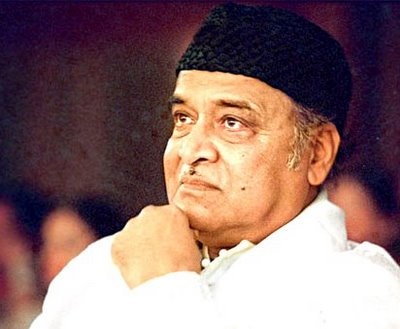
Bistirno Parore: A tribute to Bhupen Hazarika

Bhupen Hazarika was cremated this morning in Guwahati, at a ceremony on the banks of the Brahmaputra that was attended by an estimated 100,000 people present to pay their tribute to the legendary singer.

His politics did go  somewhat awry in his last years,  but I don’t want to think about that right now.  Here is Bhupen Hazarika, with the original Assamese of the song many of us have heard him sing in Hindi, Ganga behti ho kyon.  While studying at Columbia University, New York, Hazarika met Paul Robeson, whose song Ol’ Man River moved him so much that he rendered it into his mother tongue Assamese as bistirno parore.   In  Ol’ Man River, Robeson had adapted to the context of slavery, an American folk song of the Mississipi region. It is believed that this song in turn was an American version of a popular Russian song, Song of the Volga Boatmen. Hear the song in Robeson’s voice here.

25 Years of Delhi’s Lotus Temple

On a hot Sunday morning, tourists wait 30 minutes in a queue to get inside the House of Worship of the Bahá’í in Kalkaji, better known by its unofficial name, the Lotus temple. Once inside, they spend less than 30 seconds. The tourists, who include burqa-clad women and sadhus in saffron, don’t seem to be in need of a multi-faith prayer hall. The multi-faith prayer service, held thrice a day, is also sparsely attended. People are apparently disappointed there’s only a large hall inside that beautiful white Lotus building, and they can’t even take photos of this hall.   Continue reading 25 Years of Delhi’s Lotus Temple

‘The Quality of Mercy’: Kindness and Compassion in Higher Education: Prasanta Chakravarty

Guest post by PRASANTA CHAKRAVARTY

There is a moral compass that every freshman must inculcate, says Harvard College Dean Thomas Dingman. To that end, Dean Dingman has asked incoming Harvard students to sign the ‘Class of 2015 Pledge,’ a solemn testament that reflects a set of distinctive values: “That message serves as a kind of moral compass for the education Harvard College imparts. In the classroom, in extracurricular endeavors, and in the Yard and Houses, students are expected to act with integrity, respect, and industry, and to sustain a community characterized by inclusiveness and civility.” The document goes on to hope that entryways and yards will be places where everyone can thrive and where the “exercise of kindness holds a place on a par with intellectual attainment…we want to have an environment in which people can flourish academically.”

Continue reading ‘The Quality of Mercy’: Kindness and Compassion in Higher Education: Prasanta Chakravarty

Guardian Angelic Moral Police

[co-authored with Bobby Kunhu]


Of all the different kinds of moral police that inhabit the land of Kerala, the species that should be feared most must probably be the ‘Guardian Angelic Moral Police'(GAMP). The GAMP is just as potent as the Goonda-Activist Moral Police (G-AMP) but in striking contrast to the latter, the former thrives on the surface precisely on values dear to the Malayalee middle-class – the sanction of law, paternal concern, state protectionism of women as the ‘weaker sex’. This makes it much harder for victims of moral policing to fight off their intrusions all of which are couched in the language of benevolent concern. We just got a taste of that from the Hon. Justice V R Krishna Iyer with his controversial Women’s Code Bill, but since so much of his language is such antiquated hyperbole, it was impossible to take any of it seriously. However, it appears that the judiciary in Kerala has more sophisticated GAMP, and  recent orders passed by the bench consisting of Justices R Basant and M C Hari Rani of the Kerala High Court seem to leave no reason for scepticism. Continue reading Guardian Angelic Moral Police

Through the screen, not so darkly: Raza Rumi

Guest post by RAZA RUMI

Pakistanis love Bollywood. There is no question about that. Amidst the love-hate perceptions, Indian cinema has for decades fed public imagination. Before the 1965 war that took place when Ayub Khan, Pakistan’s first military ruler, was in power,  Indian films were released in Pakistan regularly. They competed with the local cinema. The healthy contest enriched filmmaking and gave choice to Pakistani cinema-goers. The war and competing imaginary nationalism halted this process and for decades, Indian films stayed away from cinemas until another military ruler, Parvez Musharraf, allowed limited releases. Such is the power of Bollywood and its commercial viability that for the past few years, Bollywood flicks have revived cinema in Pakistan. Continue reading Through the screen, not so darkly: Raza Rumi