Category Archives: Culture

हि‍न्दी के वर्जित प्रदेश में…

[यह लेख कुछ अरसा पहले वाक् पत्रिका के लिए लिखा गया था – पुराने दोस्त सुधीश पचौरी के इसरार पर। जब यह लेख लिख रहा था तब से अब तक हालात कुछ बदल चुके हैं। इसे लिखते वक़्त तक भी मुझे यह गुमान था कि शायद एक रोज़ मैं हिन्दी के क़िलानुमा परिसर में घुस पाने क़ामयाब हो पाउंगा। हज़ार पहरों में घिरे इस क़िले में एक रोज़ ज़रूर दाखिल होने का मौक़ा मिलेगा। मगर इधर कुछ समय से ऐसा लगने लगा है कि यह क़त्तई मुमकिन नहीं है। हिन्दी के पहरेदार ऐसा कभी न होने देंगे। लिहाज़ा अब इस क़िले में घुसने की कोशिश छोड़ कर हिन्दुस्तानी के खुले और बे-पहरा मैदान में, खुली हवा में टहलना चाहता हूँ। कह देना चाहता हूँ पहरेदारों से कि मैं आप के मुल्क का बाशिंदा नहीं हूँ। मैं एक लावारिस मगर आज़ाद ज़ुबान में पला बढ़ा और वही मेरी ज़मीन है। अलविदा। – आदित्य निगम]
एक ज़माना हुआ हिन्दी से जूझते हुए। यह दीगर बात है कि हिन्दीवालों को इसकी ख़बर तक नहीं। हो भी क्यों? आप बेचते ही क्या हैं?
Continue reading हि‍न्दी के वर्जित प्रदेश में…

Durga Puja as a Homecoming Metaphor – Prasanta Chakravarty

(This is a guest post. It was also published in Hindustan Times, October 2, 2008)

Tagore’s short tale Kabuliwallah concludes right in the middle of autumn—saratkaal. Mini’s marriage takes place during the puja holidays, and Rahman’s own Parbati awaits her father’s return in her distant mountain home. Even as Mini prepares to initiate her journey to her in-laws, Rahman, having been released from his own figurative abode-of-the-in-laws, the jail, seeks home afresh in his “… mountains, the glens, and the forests of his distant home, with his cottage in its setting, and the free and independent life of far-away wilds.” Uma’s arche story is reinvented by Tagore and a secret bond is established between two fathers. But such weaving of the puranic akhyan as a homecoming narrative is realized, or used to be realized shall we say, at a different order where home is also a matter of participating in a certain generous spirit during the pujas. The essence of Kabuliwallah lies in basking in such an aura of human generosity. So, the fundamental question to me is whether such a spirit can be glimpsed during the pujas even today without being overly sentimental about it.

Continue reading Durga Puja as a Homecoming Metaphor – Prasanta Chakravarty

Phool Walon Ki Sair

Akbar Shah Saani (the second) ruled over a rapidly disintegrating empire between 1806 to 1837. It was during his time that the East India Company dispensed with even the fig leaf of ruling in the name of the Mughal Monarch and removed his name from the Persian texts that appeared on the coins struck by the company in the areas under their control.

Bahadur Shah Zafar who succeeded him was not Akbar Shah Saani’s choice as his successor, Akbar Shah was, in fact, under great pressure by one of his queens, Mumtaz Begum to declare her son Mirza Jahangir as the successor. Akbar Shah would have probably accepted this demand but Mirza Jahangir had fallen foul of the British and they will have none of this.

The Phool Walon Ki Sair or Sair-e-gul-Faroshan that is celebrated with much fanfare and official patronage had its beginning in a fracas between Mirza Jahangir and Sir Archibald Seton, the then British resident at Delhi. According to contemporary records of the event, Mirza Jahangir was extremely resentful of the manner in which the British threw their weight around the Red Fort and violated all customs and traditions. He was a strong man, moved around with a band of his followers and kept getting into arguments with the Goras. Continue reading Phool Walon Ki Sair

Mother Kerala

Mother Kerala
Mother Kerala

Continue reading Mother Kerala

Do gods and saints weep?

The star of fortune has risen for Malayali women, not in this world but in the next. Catholics in Kerala celebrated the canonization of Sr. Alphonsa, a young nun from Kudamaloor in Kottayam district, who passed away after a life of intense bodily suffering and prayer in 1946, as a ray of hope in hard times. Becoming a nun and leading a life of asceticism were never easy choices. That too, for a eligible, beautiful young woman in early 20th century Kerala, born in a small village, whose guardians were determined to see her respectably married. Given to excruciatingly difficult forms of prayer even as a child, Alphonsa resisted her maternal aunt’s plans dramatically by trying to disfigure herself. She jumped into a smouldering ash-pit; badly burned, she climbed out. The family was so taken aback that they gave in to her desire to become a nun. Continue reading Do gods and saints weep?

Converting lions to elephants

As the most hideous kinds of violence are unleashed on Christians in Orissa and Karnataka by proud Hindu terrorists, one issue that the liberal Hindu mind-set stumbles over is that of conversions. Of course, violence is bad, it bleats, nothing justifies killings, but mass conversions, you know…

Conversions. Images of Muslim hordes waving their fierce banners, sweeping across the North Indian plains; images of sly Christian missionaries swindling innocent tribals and dalits with food and education and social status, into accepting an alien god. The liberal Hindu, who would never dream of converting anybody to Hinduism, shrinks at these images.

Aditya has drawn our attention to Ambedkar’s clear-eyed insight into why Hinduism is not a proselytizing religion. Can you convert a non-Hindu into a Brahmin? Nope.

Continue reading Converting lions to elephants

Saluting a Lone Survivor: Manash Bhattacharjee

[This guest post by MANASH BHATTACHARJEE is a tribute to writer Alexander Solzhenitsyn. – AN]

Solzhenitsyn writes,
the paper is burning, his writing goes on,
a cruel dawn on a plain of bones.

– Octavio Paz

Alexander Solzhenitsyn (1918-2008) will write no more. He died of heart failure on Monday, the 4th of August, in his home near Moscow. On this occasion, one remembers his 1970 Nobel Prize speech, where Solzhenitsyn had described his terrifying and lonely escape from death and oblivion with poignant candour: Continue reading Saluting a Lone Survivor: Manash Bhattacharjee

सुपरहीरो की उदासी का सबब – अभय कुमार दुबे

[अभय कुमार दुबे का यह लेख नवभारत टाइम्‍स मे छपा था। यहाँ इसे दीवान लिस्‍ट के सौजन्‍य से पेश किया जा रहा है। उनका यह आलेख अमरीकी पॉपुलर कलचर के कई किरदारो की यकायक गायब होती ‘प्रासंगिकता’ पर नज़र डालता है। इस दिलचस्‍प लेख का एक पहलू वह है जो शीतयुद्धोत्तर अमरीका की बदली हुई राजनीतिक हैसियत के साथ पॉपुलर मानसिकता का एक गहरा रिश्‍ता देखता है। पढ़ते हुए अनायास स्‍लावोज ज़िज़ेक का एक लेख याद आ गया जिसमें वे उस अमरीकी फ़ंतासी (या दुस्‍वप्‍न?) की बात करते हैं जिसमें एक आम अमरीकी हमेशा किन्‍हीं एलियन्‍स या डायनोसॉरों द्वारा आक्रांत होने के रोमांचक ख़ौफ़ में जीता है, और जो 11 सितम्‍बर 2001 को अचानक चरितार्थ होती है। शायद किस्‍सा बैटमैन आदि पर ख़त्‍म नहीं होता।]

फैंटम, जादूगर मैंड्रेक  और फ्लैश गॉर्डन के कारनामों की खुराक पर बचपन गुजारने वाले भारतवासियों की पीढ़ी को मालूम होना चाहिए कि कॉमिक्स के पन्नों से हमारी-आपकी जिंदगी में झांकने वाले सुपर  हीरो किरदारों की दुनिया अचानक बदल गई है। अमानवीय ताकतों से लैस जो चरित्र दुनिया को भीषण किस्म के खलनायकों से बचाने का दम भरते थे, आज अपनी ही उपयोगिता के प्रति संदिग्ध हो गए हैं।

जो लोग फैंटेसी की दुनिया से बाहर नहीं निकलना चाहते उन्हें यह देख कर अफसोस हो सकता है कि  उनका ‘फ्रेंडली नेबर’ स्पाइडरमैन पिछले दिनों रिटायर होते-होते रह गया। अब गौथम सिटी का रक्षक बैटमैन भी बुराई से लड़ने का अपना फर्ज निभाने में खुद को नाकाफी महसूस करने लगा है। इस बात का एहसास पिछले दिनों हमारे देश में सुपरहिट हुई हॉलिवुड की कुछ फिल्मों को देख कर हुआ है।

Continue reading सुपरहीरो की उदासी का सबब – अभय कुमार दुबे

A Tangential Addition to the Great Auto Debate

I want to go off on a bit of a tangent here. Just to open a different discussion in the spirit of thinking, and muddling along together. It seems to me that one of the axis on which the debate has turned is on the question of desire and its representation. Who is the desiring subject, towards whom is this desire directed, who represents this desire in what way, what are the slippages therein, who has the right to speak about whom.

I was wondering if we can approach this from a slightly different angle by taking this question of desire beyond the individual subject (variously defined). And in fact nameless did gesture to this in one of her responses where she raised the question of the appropriation of what she termed subaltern practices by elite intellectuals where certain practices and forms, in this case autos, are made to stand in for certain values – in this case progressive, ‘left” etc – which says more about the locations of the intellectuals and their insensitivity to their own class-caste positions, in a move which is patronizing at best and exploitative at worst. I think inherent in this critique is the shadow of a kind of objectification of a certain experience, so that a symbol becomes alienated from the actual life practices in which it is located to circulate as some empty signifier, to be appropriately filled as per requirement.

Continue reading A Tangential Addition to the Great Auto Debate

Reflections on the Great Unexpected Auto Debate

Little did I think when I put up this image, that it would lead to such a rich set of comments on class, caste and gender.

The picture had been circulating on the web, in blogs and email lists for some time, and without comment, as a funny, jokey kind of thing. Autos and trucks (in Delhi anyway,) are renowned, as Aman pointed out in his comment, for pithy, witty, quirky, dolorous, amorous etc. comments on life. Briefly glimpsed, their ability to linger in our minds is a reflection of their literary quality.

When this one was sent to me, the reason I posted it on kafila was initially light-hearted too, since we consider autos to be our mascots, as representing kafila’s philosophy and relationship to the city in some way – small, cheeky, full of “attitude”, winding nimbly through the mass of traffic, a resistant challenge to the idea of a shiny, “world-city-like-paris-and-singapore” that our various governments want to turn all our cities into, by neatly removing the poor, the workers, the slums etc.

Continue reading Reflections on the Great Unexpected Auto Debate

Textbooks and Intolerance, Communal and Secular

Once again, religious sentiments have been hurt. This time in the God’s own Country, Kerala . And the culprit is a small portion of a lesson from the social science textbook for class vii, part i. It has been alleged by groups claiming to represent Muslims and Christians that this particular lesson preaches atheism. It sticks because the government which is getting the textbooks published is led by Marxists and there is a perception that Marxists have a pathological hatred for religion. Kerala has been witness to a bitter controversy on the faith only recently in which the church and the CPM were at loggerheads. So, there is a background to the new battle over a small lesson in a class seven textbook. But first let us try to look at the facts.

Continue reading Textbooks and Intolerance, Communal and Secular

When you’re OUT, you’re IN

Since Gay is in, currently, for the Indian media, Sonali Gulati, film-maker, out lesbian and gay rights activist, knows what it is to be hotly pursued for sound-bites. She has posted on youtube a recorded conversation with a reporter from IBN 7 pressing her for her take on a “lesbian” issue. Her quiet , insistent questioning reduces him to confused gibberish, but more importantly, makes the point that “lesbians” are no more and no less newsworthy than straight people – At one point she asks him, “Agar yeh ek heterosexual couple ke saath ho jaata, tab aap kis se comment lete?”

(If this had happened with a heterosexual couple, then to whom would you have gone for comments?)

Meaning of course, that any and every heterosexual would not be considered “expert” enough to comment on any and every heterosexual issue. The bemused reporter starts all over again with his insane drivel – he simply does not get it. Can she really be giving up an opportunity to appear on television? Naaah.

But go on – listen to Sonali.

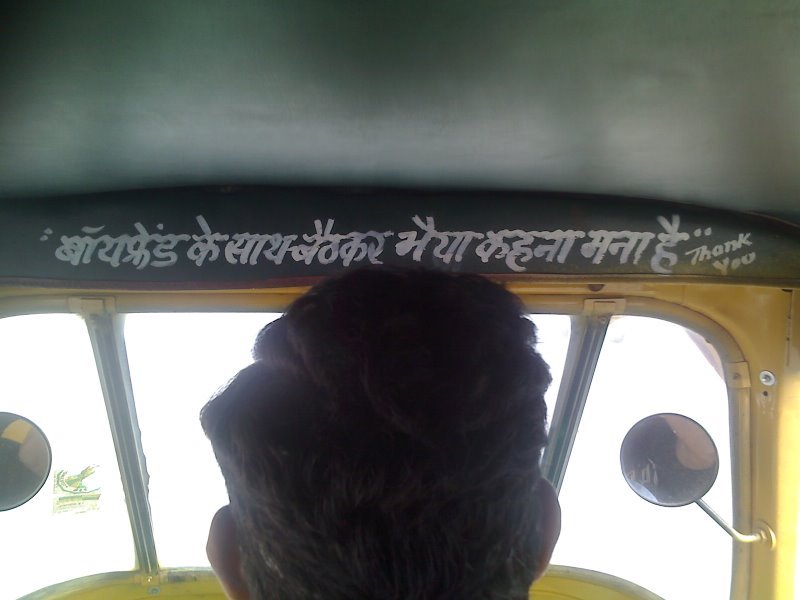
Moral police in OUR autos!

“It is forbidden to sit with your boyfriend and claim he is your brother”

My sister sent me this one…

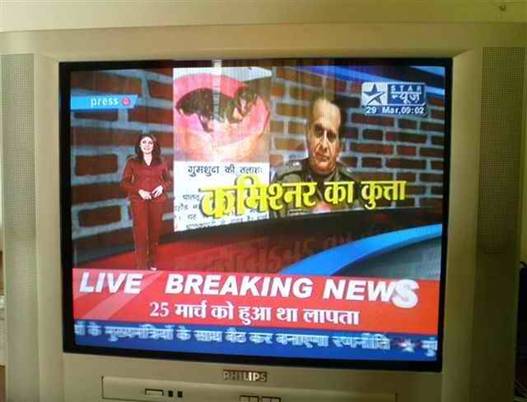
Broken news

Got these from a friend. Enjoy.


Lost on 25 March, the Delhi police commissioner’s dog was soon found, giving star news an opportunity to ‘break news’ and do a special show replacing a news bulletin. Below: they continued flashing the news and calling it ‘breaking’ even when other news forced itself on to the screen.

Continue reading Broken news

Mother

Have you ever guzzled
the last drop of alcohol
and raped your mother?

This is what we do
when we read
the morning news
about a woman’s rape
and sip our tea
leisurely.

© 2006 Dan Husain

Taslima Nasreen and the Spirit of Islam

It is said that after he announced his Prophethood Hazrat Mohammed suffered severe persecution in Mecca. The vitriol and calumny extended from the verbal to the physical. There was one woman who would always throw filth on him whenever he passed by her house. He would unfailingly take the same route everyday and she would equally invariably throw filth on him. He never protested. One day as he passed her house, she was missing. He inquired after her and learning that she was sick he went up to her room, and finding her bed-ridden, tended to her. I grew up listening to a lot of stories from my grandmother about the Prophet Mohammed. Told in an anecdotal form, the stories largely avoided his image as a conqueror and concentrated instead on his personality, specially his grace under hardship. I narrate this story especially to remind my compatriots about what they might do when faced with hostility, or criticism.

I write this particularly in the context of Taslima Nasrin, whose vise expires this week and she still does not know whether it will be extended or not. Taslima Nasrin must be given an opportunity to stay on in India, and must be provided that opportunity not as a grace or favor but because she is, as a South Asian, as a fellow human, fully entitled to it. My appeal rests not merely on a liberal idea of freedom of expression, or on making this a litmus test for India’s pluralism. India’s pluralism, where it exists in practice, is not dependent on appeals or testimonials from intellectuals. Our pluralism does not, and has not, precluded violent confrontations between different social groups. However, we also have countervailing traditions of coming to a working adjustment with each other, which, as an aside, partly explains why the word ‘adjust’ is so popular in all Indian languages.

Continue reading Taslima Nasreen and the Spirit of Islam

A Circus, Some Laughter, A Film Festival

I would be very reluctant to call the recently – concluded Twelfth International Film Festival of Kerala (7-14 December) a ‘circus’, but well. When the CPM in Kerala wears Caesar-like accoutrements, one may have to call it just that! At the press conference organized a few days before the festival – actually the day on which Buddhadev admitted to his ‘mistake’ — M A Baby, CPM intellectual and Minister, Cultural Affairs, Government of Kerala spoke at length about how Lenin and other worthies of the Soviet Union had endorsed cinema as a medium to ‘educate and entertain’ the masses. However when he announced the name of the opening film after many such lofty words, ripples of laughter filled the hall.

hana makhmalbaf with baby

The opening film was Hana Makhmalbaf’s ‘Buddha Collapsed out of Shame’! Of course, the CPM intellectuals could not laugh; nor could they snap at back-benchers who asked whether it wasn’t ‘Buddhadev Collapsed out of Shame’. Thus it was clear, that despite the circuses, the spectre of the people continues to haunt the CPM, to borrow Partho Sarathi Ray’s words.

Continue reading A Circus, Some Laughter, A Film Festival

Charu Gupta on Om Shanti Om and Saawariya

Like many other lovers of Bollywood cinema, I too was caught up since October this year in the countdown to the battle of all battles, with the release of Om Shanti Om (OSO) and Saawariya on 9 November 2007. Reams have been written, debated and analysed on the two films in newspapers, television networks, and everyday discussions. They have been depicted as films catering to very different sensibilities, and representing vastly diverse forms. The verdict seems to have declared both as average films, though OSO seems to be faring better than Saawariya at the box office. I enjoyed the first half of OSO particularly and thought Saawariya as a film with great form, but not much content. 

However, as a fan of Bollywood popular cinema, what struck me most was one striking similarity between the two films. I thought both the films offered great visual pleasure and feast for the female spectators, where the spectacular and stylish nude male bodies and images of both Ranbir Raj Kapoor and Shahrukh Khan, though very different from each other, were the prime objects of desire and erotic spectacle. Both OSO and Saawariya have urban heroes, whose bodies are produced and carved, rooted in providing a voyeuristic visual treat especially to most straight women and gay men. The identity of both the heroes in these films in centrally tied to the consumption of their nude bodies by the viewer. The films in some senses signify the coming of age of a new genre of Bollywood cinema, where it is not so much the female body but the male body which circulates and is on display, offering a sexualised imaginative anatomy. They also signify that the language of discourse of Hindi films has undergone a dramatic post modernist change in its conception of desire, where most of it is conducted not through the soul but through the body. There is no central heart, but a decentring of emotions at play here. In the recent past too, nude male bodies of Hrithik Roshan and Salman Khan have been offered to the viewer. It perhaps is also a reflection of the fact that more and more women are crowding the cinema halls and form at times the major chunk of spectatorship, and they are a vital part of the cinematic experience. 

Continue reading Charu Gupta on Om Shanti Om and Saawariya

Beaten — By a Woman!

[Below is a chapter from my translation of N P Muhammed’s wonderful retelling of folk tales about Malabar’s best-loved folk hero and one of the earliest songsters of the Mappillapattu song tradition of Malabar, Kunhaayan Musaliar. The book, Kunhaayante Kusritikal (Kunhaayan’s Capers), which won the Kerala Sahitya Akademi’s award for the best children’s writing in 1973, is almost forgotten now. In the stories of the Mappila Muslim community of north Kerala, Kunhaayan figures as the quintessential humble-born person who grows in stature through his wit and quick thinking, rising to eminence in royal courts of late 17th- early 18th century Malabar. In these times in which the Mappila traditions of Malabar are clearly under threat, I thought that it was necessary to reclaim this figure for our children and ourselves – and translating NP’s sensitive rendering of the tales, which reverberates with the folk wisdom of the Mappilas of Malabar, seemed the best way to do it. The best thing about Kunhaayan, who impresses all of Malabar, is that he is no saint. Thus he does get puffed up a bit with all the glory, and has to be brought down a peg or two – it is his young wife who fells him, finally. This chapter is about how she does it!]

There was time when she used to brim with joy, proud to be introduced as ‘Kunhaayan’s wife’.

Not anymore.

Tears welled up in Aisakutty’s eyes.

Continue reading Beaten — By a Woman!

Aswatthamma Lives – Radha R.

[We are pleased to present this guest piece by Radha R, a poet and artist, who reflects on violence and other matters.]

1985 :
We were standing at the Bakery junction just behind the campus where the better -off amongst the designer students came alone or in select groups to gorge on buns at teatime… Freshly baked and still warm and soft, the baker slit them open swiftly and expertly with an extra sharp long thin knife roughly slapping in a whole 50 grams of yellow butter that dripped down the sides …
Post the curfew there was no one now standing at the junction .In this somewhat upmarket quarter there was little outward sign of that nightmare of violence…

“Do you know how they do it?” He whispered “With knives…”
He made a quick gesture of measurement with his hands… “This long…”
“The pillion rider behind the scooterist slashes open the sides of bystanders on the road who often do not realize as they run as to how badly wounded they are… Till it is too late… The sharp edge of the knife blade is lined with calmpose, you see…To numb”

Continue reading Aswatthamma Lives – Radha R.

6th of December 1992 on 6th of December 2007

What were you doing on December 6, 1992?

We remember with a great sadness that winter’s day on which the unthinkable came to pass…

Continue reading 6th of December 1992 on 6th of December 2007