Given below is the text of a letter written by research scholars and student volunteers to the Prime Minister of India. Given below the letter is a table listing the findings of the survey that the letter speaks about.
Civil society, including human rights groups, in Bengal are now divided on Mamata Banerjee government’s ‘open and hidden’ conditions regarding the release of political prisoners who have been jailed during the Left front rule as well as talks with Maoists and Maoist-backed Peoples Committee against Police Atrocities in Bengal’s tribal hinterland, known as Junglemahal.
Mamata and her ministers have rejected the demands for unconditional release of all political prisoners, immediate withdrawal of joint forces from Junglemahal and public announcement on non-enforcement of the draconian central law, the Unlawful Activities Prevention Act. Maoists and PCPA have accused Mamata of eating up her pre-poll words on those demands. A large section in the human rights movement including the intellectuals and activists who actively joined the Mamata-led campaign for regime-change now supported these demands. But some of their fellow travellers have differed on political and legal grounds.
The differences revealed contradictions between the pre-poll and post-poll positions of Mamata as well as chinks in the armour of human rights groups on the attitude to the new government, Maoists and PCPA. Tension among all the stakeholders in the process— Mamata, Maoists, human rights groups and individuals— was well-known within the concerned circles for quite some time. But none of the stakeholders dwelt on it in public before the assembly polls when they had made common cause against the CPM, particularly, the atrocities by CPM-joint forces combine.
I would like to dwell on post-poll dilemmas and fissures in the pro-Paribartan civil society in Bengal later. But this piece is primarily aimed at reporting the increasing manifestations of the hitherto latent tension.
The recently announced Rajiv Awaas Yojana (RAY) has brought back an old ghost to debates on how to allow the urban poor a foothold into the city and the possibility of upward mobility. The central policy initiative of the Ministry of Housing and Urban Poverty Alleviation is the most significant contemporary attempt to address urban poverty through providing housing to the urban poor. The “slum-free city” is back. Now more than ever, then, it is time to ask: what is a “slum-free city”?
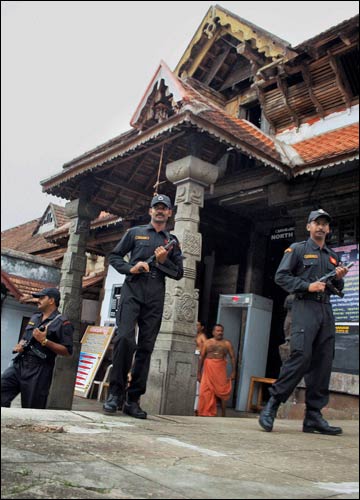
Our fair but humble town of Thiruvananthapuram has been in a tizzy since it was discovered that our benign presiding deity, Lord Sree Padmanabha, had been resting on a huge treasure-trove, so fantastic that no one has been able to stop talking of it since then. This seems to have changed drastically the way we have perceived our past — or rather, the historical amnesia which we have been suffering from has been drastically accelerated. In the decades after independence, very few people, except the upper caste retainers of the Travancore royal family and the accolytes of the regime, thought that rajabharanam was a good thing. There were stories about the days immediately following the accession of Travancore to India, of how people gathered outside the Padmanabhaswamy temple, and when the Travancore Maharajah, Chithira Tirunal Balarama Varma arrived there for his daily visit, reminded him of their equality with him as citizens of India, addressing him personally and intimately … ‘Hey, Balaa’! That seems to have gone for a toss and we are back to His Golden Majesty, Ponnutampuran, though such a tampuran has no place in our political system. Continue reading Can Kingly Mortals Donate to the Gods?→
Giving a historical background of why the Sree Ananta Padmanabha Swamy temple in Thiruvananthapuram came to have these riches, Malavika Velayanikal writes in DNA:
True, the bags of gold coins, diamonds, precious stones, 18-feet-long gold necklaces, jewellery weighing many kilograms, and solid-gold statues of gods and goddesses landed in the vault via the king. But in reality, the temple treasury was nourished by the sweat and blood of the masses as well.
One of the main sources of the royal income was taxes. They were incredibly high for the lower castes, with marriages, childbirth and even death being taxed. Country boats, ploughs, carts, umbrellas, headscarves, why, even a moustache, were taxed. Mothers were allowed to breastfeed their newborns only after they paid the ‘mulakaram’ (breast-tax) to the local lord, who would then grant permission. [Must read]
But you won’t hear this said too often because, as Appu Esthose Suresh reports in Mint:
“If the government makes any move, then the believers will protest and BJP will support the people,” he (a temple staff member) was quoted as saying by news agency PTI.
It is precisely the fear of antagonizing a section of the Hindus that is forcing the state government to be cautious.
“This government does not have the courage to go against Hindu sentiments,” said P.R.P. Bhaskar, a political observer. “It will move in a direction which will accommodate the royal palace.”
“The Left Front gained Hindu votes for two reasons. Firstly, its traditional vote base consists of Hindus and a perception that Christian and Muslim votes are moving towards the Congress and its allies had led to a consolidation of Hindu votes. This might help the government change that perception a bit,” he added. [Link]
Hindu appeasement. That’s what will come in the way of a just, fair, pro-people decision about what should be done wit the temple wealth.
Years ago, after the fall of the Berlin wall and the collapse of communism, a faux philosopher announced the end of history. What he meant was the permanent victory of capitalism and its correlate, liberal democracy. Unfortunately history has an unkind habit of rolling right along, throwing a sucker punch at intervals – remember Gordon (No Boom and Bust) Brown? The triumph of laissez faire capitalism has been celebrated since the ’80s (when the term Reaganomics was coined for redistributive policies that blithely transferred wealth to the rich). Until the crash of 2008-09 set the cat amongst the pigeons; and sent the semi-converted scurrying back to Keynes – and Marx (especially in Germany where the sales of his books suddenly soared). However after a state bailout of unprecedented proportions, that had the satisfactory effect of restoring the position of the wealthy, especially the bankers and financial whiz kids who had caused the crash, the dust settled down. In the industrialized west, discontent seethes beneath the surface, but the dictum that the experts – the bankers, the CEOs, the policymakers (who swap roles seamlessly) – are right still holds. The majority must accept a decline in their standard of living and the prospects, such as they were, of job security so that growth can continue and the minority prosper even more opulently. This, of course, has long been the received wisdom in India, where, ever since the ’80s, full consensus was reached on the fact that the middle-class is the only class that matters – the rest can go hang. Continue reading Counting the Cost: Industrialism, Capitalism, Socialism→
This evening, I was sitting in a coffee shop and writing about the sociology of information, how information is mired in relationships and how trust, suspicion and social relations develop in the course of circulation and exchange of information. As I was beginning to disentangle the complex web of legitimacy and regulations surrounding information, a friend called to inform that some activists and citizens had been arrested for protesting against the tree felling and road widening at Sankey Road in the northern part of Bangalore. In the last few days, the conflict regarding road widening and tree felling at Sankey Road got strong coverage in the media because citizens began gathering around the trees and the roads to prevent authorities from felling the trees. Despite this, the authorities went about felling the trees for widening the roads. The activists and protestors were clearly becoming a nuisance for the government officials and institutions who have not been able to execute the works. Hence, today, at some point, some of our activist friends were arrested on the false charges that they had assaulted public officials in their conduct of ‘government’ duty. The charges were filed under section 343 or 353 CrPC which also implied that the arrest was non-bailable. Over the course of the evening, news went about on FaceBook and Twitter about these arrests, and people from in and around Sankey Road were called to silently protest at the Aiyyappa Temple where the trees were being felled for enabling the road widening. The arrested activists and citizens were released from jail and all the charges against them were ‘dropped’ at about 6 PM. The court also granted a stay order on the tree felling around the same time, with further hearings and orders to arrive on Monday. Continue reading Cities and Infrastructure – The Road Widening Saga in Bangalore→
Over at the excellent India Site, Rahul Pandita asks a thought-provoking question:
As a Brahmin, does it make me less sensitive to the plight of the poor or the marginalised? Why is it such a big deal that I can wear my Janeu, recite my Hanuman Chalisa, and yet go to Bant Singh’s house in Bhurj Jabbar, thirstily gulp down a few glasses of water, and tell his story? Where is the contradiction? [‘A Brahmin Heart’]
And the ever-sharp Kufr has the best answers there can be to that question:
when rahul pandita says he’s a brahmin, he’s making a claim on a lot of indian history. when bant singh rebels against his present, he is also rejecting pandita’s history, his claim on privilege. if pandita doesn’t see that, he shouldn’t have undertaken the trip to bant singh’s home. [why bant singh can’t go to rahul pandita]
The remarkable Singur Land Development and Rehabilitation Bill, passed in the West Bengal Assembly on June 14 became an Act on June 20. The Act scrapped the previous Left Front government’s deal with Tata Motors and has provisions to return land to unwilling farmers. Consequently, Singur land was taken over by the State government prompting Tata Motors to legally challenge the whole Act and a judicial battle has ensued between them and the newly elected State government. The State government may continue to return land in right earnest since there is no legal bar to that as of now. One would think that by many standards, this is a landmark bill that challenges and confronts policy consensus in issues of land transfer, models of enclosing and a concomitant notion of development that marks our nation at this point of time.
In the morning today The Independent‘s Asia correspondent, Andrew Buncombe, blogged his disagreement with Arundhati Roy’s statement that foreign journalists in India have been asked not to report bad news. As a foreign journalist in Delhi he had faced no such censorship from his editors or the government here.
So the unanimous verdict is that Coke Studio India (first aired on the Friday that went by) is no match for Coke Studio Pakistan [Wikipedia]. For some it’s been like an India-Pakistan match – I’ve seen Indian congratulate Pakistanis on Twitter for the ‘Coke Studio victory’ and others ask Indian musicians and singers to listen to Pakistani singers and hang themselves. For most, this was not surprising – Coke Studio Pakistan has showcased some of the best music you’ve heard in recent times and it raised the bar too high for Coke Studio India. There’s also the problem of Bollywoodisation of music in India, of dumbing down, producing music aimed at the marriage market and livening up the moods of those stuck in traffic. A celebrity culture has taken the passion out of music in India – it does not seem to come from deep within. New popular music in India leaves you with the kind of feeling that a mall does. Loud and empty.
On 2nd May 2011, the front page of the Times of India (TOI) beamed and screamed: “Don’t pay a bribe, file an RTI application – Equally Effective in Ensuring Service”. Two doctoral candidates at Yale University’s political science department had conducted field experiments in the bastis in Delhi in the year 2007 regarding poor people’s experiences in making applications for ration cards. The researchers – Leonid V Peisakhin and Paul Pinto – found that persons who paid bribes had their ration cards processed faster. However, those who filed an RTI request to know about the status of their ration card application, were “almost as successful”, the TOI report claimed. (The details of the study and the outcomes can be accessed through Peisakhin and Pinto’s paper “Is transparency an effective anti-corruption strategy? Evidence from a field experiment in India.” The paper was published in 2010 in Regulation and Governance Journal, volume 4, pp 261-280.) The researchers had also put people in two other control groups – one which neither paid a bribe nor followed-up and a second group which had filed their applications along with a letter of recommendation from the local NGO. Both these groups were not as successful as the former two groups in obtaining their ration cards. The researchers’ analyses veered towards two conclusions: first, that the RTI Act serves the poor who are usually denied/deprived of information. Secondly, reforms/laws which give more ‘voice’ to citizens and allow them to scrutinize the functioning of officials and elected representatives are more effective in ensuring transparency and gaining access to public services. Continue reading Of Fakes, Duplicates and Originals – the Tale of Ration Cards and the Trail of Transparency in Governance→
Like the French, Mona, a 30-year old sex worker in Delhi, is intrigued and amazed over the hullabaloo around the DSK sexual assault case. From her one-room shed, she has been keenly following television channels for the latest on the scandal. She asked me if I had any updates, adding: “That man may be in jail for 25 years! Really? Unbelievable. For us, being assaulted at work is a regular part of it. I tolerate some of it and ignore the rest. But you see… I cannot complain if I am harassed. A sex worker is a doll in the hands of her customer. No one will play with the doll if she complains!”
While Mona’s fatalism may have helped her cope, the risks at work are especially dire for non-brothel sex workers. Some have nearly been killed.
M. F. Husain at the Serpentine Gallery during the Installation of 'Indian HIghway', December 2008
Like possibly several other children growing up in the kind of lower-middle class metropolitan households that attempted to reconcile their aspirations towards culture with their frugal habits in the 1970s and1980s in Delhi, my first introduction to the art of our time was the framed print of a Husain painting. We had no television. And my parents had no gods. The only icons in our modest house were two framed pictures – an inexpensive N.S. Bendre, (Lalit Kala Akademi) print of a few women at a well and the reproduction of a Husain painting, possibly detached lovingly and carefully from an Air India calendar, possibly featuring the kind of goddess image that incensed the zealots who made it impossible for M. F. Husain to live out his final years in India. Continue reading Alvida, Maqbool Fida: M.F. Husain, Free at Last→
[Following the publication of the previous post – the statement on the future of the Left, we have received some important comments that seek to take the debate forward, alongside those predictable, invective laden rants that we know only too well by now. We need to keep the debate on the future of the Left in India going, irrespective of these comments that seek to derail any meaningful discussion. We must continue to assert that ‘the Left’ far exceeds the decadent and decrepit lot that now goes by the name of Left parties in this country. This post is a slightly modified and longer version of an article that appeared in Bengali yesterday in Ekdin.]
In a recent newspaper article, former Left Front finance minister Ashok Mitra, observed: “The Left Front, led by the Communist Party of India (Marxist), has not merely lost the poll in West Bengal, it has been made mincemeat of.” He was underlining the obvious, catastrophic significance of the results – at least from the Left Front’s perspective. The signs are there for everybody to see, especially when all important leaders of the LF government have faced resounding defeat and the overall vote share of the LF has declined by almost 9 percent since the last assembly election. Mitra’s reference is important as much was being made of the fact that he signed in support of the LF in the course of the election campaign.
But such was the state of drunkenness in power, that only a Biman Bose could say, when virtually everyone knew what was coming, that the LF would still gain a comfortable majority and those who were predicting their decline would have to “swallow their own spit.” More incredibly, even after the elections, indeed after the results came in, both Bose and Prakash Karat in Delhi focused on the fact that their votes had increased by 11 lakh votes in absolute terms. Of course, the minor detail they mentioned in passing was that the TMC alliance had increased its votes much more. The even more minor point that there had been as many as 4.8 million more votes polled this time as compared to 2009 was, of course, beside the point.
“But it is unlikely that such a review exercise will to lead to the kind of “reformed” Left that its critics are rooting for — a Left tamed by its defeat into accepting the set of economic policies that, in the name of growth, intensify and create new inequalities; a Left subdued… The relentless pressure being put on the Left today is precisely to give up its class approach, to adapt itself to neo-liberal realities represented by the set of policies popularly referred to by workers as LPG — liberalization, privatization, globalization”
The op-ed piece by Brinda Karat is a brave effort at self defense after almost 5 days of uncomfortable silence following one of the most humiliating defeats in the history of the left movement in India. The article, defensively titled ‘The Left will endure’, is revealing in a number of ways. One that the CPI (M) has nothing much left to say, and two, that most of what it says is an expression of many of the beliefs that the Left Front continues to hold, or at least professes to hold – even with all evidence against the same – in review of its performance in West Bengal.
But, before an analysis, it is necessary to point out that Karat’s use of the term ‘The left’ is also a little problematic as it cannot be said with certainty that all people or parties associated with the color red are willing to call the CPI(M) brand of politics their own, and, definitely, not all of them are necessarily in position at the moment to feel the need to say that ‘ the left will endure’.
What the article attempts is to argue:
That the defeat of the Left Front in Bengal was somehow a defeat because of the values that the Left Front professes to hold – equal and sustainable growth, labor rights, class approach to issues, and its refusal to accept foreign capital, etc.
That the critics have written the Left Front off, and are attempting to browbeat them into neo-liberal submission.
That the Left Front record in Bengal has been most applaudable in terms of its commitment to people, secularism, growth, and maintaining a thriving democratic culture in Bengal inspite of the lack of a strong opposition.
Most of the above are only ‘theoretically’ true, and meet reality only at a tangent.
For many who quite rightly guessed that the Lokpal Bill drafted by the Government would be a non-starter, the alternative merited automatic support. However, little was known about the contents of the two Bills, except that the alternative being proposed by ‘India Against Corruption’ had the prefix of being a “peoples” Lokpal. The consequences are too important to leave to the expertise of the drafting committee. The people must comprehend, and play their part in ensuring that there will be an Act that will empower them to fight corruption- not make them surrender their hopes to yet another anti-corruption organization. How people-centric is the Jan Lokpal Bill (JLP)?
While the JLP is going through rapid revisions – 12 so far – the basic framework and some principles have remained constant. Broadly the Bill can be divided into four sections: the mandate and scope of the Lokpal; composition and selection of the Lokpal; powers of the Lokpal; and functioning of the Lokpal. The composition and selection of the Lokpal is substantively one of the least contentious sections – concerned largely with procedural matters and subjective preferences, rather than ideological or legal viewpoints. A discussion of the other three sections follows.
ममता की संघर्ष गाथा जीत का जश्न बन कर कोलकाता की जिस राइटर्स बिल्डिंग में प्रवेश कर रही है, उसके गलियारों में कुछ वक्त के लिए ही सही, सन्नाटा-सा तैर गया होगा। यादें उभर आई होंगी। चौंतीस साल का साथ पत्थरों तक के लिए कम नहीं होता। वे मूक दीवारें एक इतिहास की गवाह हैं। एक अपराजेय-से लगते लंबे दौर की; जिसने चुनावों के सात समंदर पार किए; अभेद्य लाल दुर्ग के तिलिस्म को खड़ा किया। अब लोकतंत्र में सबसे लंबे शासन का एक अंतर्राष्ट्रीय कीर्तिमान विदा हो गया। विदाई इतनी करुण और क्रूर कि पिछले मुख्यमंत्री विधानसभा की ड्योढ़ी तक नहीं पहुंच पाए। तैंतीस में से पच्चीस मंत्री विधानसभा से बेदखल हो गए। माकपा बंगाल विधानसभा में कांग्रेस से भी छोटी पार्टी हो गई।
2008 से एक के बाद एक पंचायत, संसद, नगरपालिका चुनाव हारने के कारण इस नतीजे में आश्चर्य की कोई बात नहीं बची थी। सड़क चलते राहगीर तक को पता था क्या होने वाला है। मगर व्यापक वाम से जुड़े बुद्धिजीवियों और पार्टी के भीतर के ही बौद्धिकों तक के आलोचनात्मक विश्लेषण माकपा की आंखें नहीं खोल सके। वाम मोर्चे को बंगाल में अपनी अपरिहार्यता के तर्क पर इतना यकीन था कि उसने अपने लिए आश्चर्य और धक्के का सृजन कर लिया। उसके लिए यह ‘अभूतपूर्व उलटफेर’ हो गया। आलोचकों को मुंहतोड़ जवाब देने की फितरत माकपा को आखिरकार जिस आश्चर्यलोक और रंजो-गम के गढ़हे में ले गई, उससे सावधान रहने की चेतावनी देते हजारों लेख अखबारों, पत्रिकाओं, ब्लॉगों में कदम-कदम पर बिछे थे।
Enquiry Committee Report on HPV Vaccine Projects – Of Undeniable Violations and Unidentifiable Violators
Sarojini N and Anjali Shenoi
Sama – Resource Group for Women and Health
This is in continuation with our previous post (17 May 2010) on the Human Papilloma Virus (HPV) vaccine ‘Demonstration Projects’ conducted by an American NGO PATH, in collaboration with the Indian Council of Medical Research (ICMR) and the two state governments of Andhra Pradesh and Gujarat. These projects have raised several pressing questions related to the ethics of biomedical research in India and the deflection of public health priorities in a context where the influence of the pharmaceutical industry is increasing.
Following strong opposition by civil society groups and a member of parliament, these ‘projects’ were temporarily suspended by the Ministry of Health and Family Welfare (MoHFW). At the same time, the Ministry also appointed a Committee to enquire into the “Alleged irregularities in the conduct of studies using HPV vaccine” with a time frame of three months to submit its report.
A year later, the report submitted by the Committee has identified several deficiencies in the planning and implementation of the project such as ambiguity in the nature and purpose, implementation of the projects, “the need for continued pharmacovigillance of the HPV vaccine” etc.
[This was a note titled ‘We Still Need Feminism’ which I wrote on March 31 on my Facebook page; I thought it relevant to re-post it here as it appears that an ‘honour killing’, of a sort — an ‘honour suicide’ — may have actually surfaced in Kerala. More on that in the next post]
In JNU, last week, some of us were noticing how there seemed to be a notable increase in the numbers of students, both women and men, from the Hindi heartland. It is interesting, said one of my friends, that the deterritorialised university spaces in Delhi can no longer back off from directly confronting the tensions through which these societies now live through. “Look at that girl,” she said, pointing to a sprightly young woman, a bright student who I’d briefly met earlier,”she comes from a family that’d kill her if she married out of her gotra. And she is involved with a young man who’d not even of her region. We must fear the worst and prepare to confront evil.” For a brief moment, in my fright, I thought, well, at least we don’t have honour killings in Kerala. Honour kidnappings, yes, but I haven’t heard of too many honour killings. Maybe honour killings are still on their way here (like dowry deaths were, in the 1980s, when I was growing up into a young woman). We have some time to rally against them. Continue reading Young Women in Kerala : Between Empowerment and Death? — Part I→
Kahan le Chale ho... (image courtesy Small Strokes)
Ham wahaan hain jahaan se hamko bhee kuchch hamaaree khabar naheen aatee
Roughly translated literally, this famous couplet of Ghalib’s would mean: “We are at that place from where we do not get any news about ourselves”. A somewhat surreal place to be in! It is not just that you are holed in, a place where you are cut off from the world and no longer get any news of the outside – say Plato’s Cave. This descent is into a Cave from where you get no news about yourself! You are in a state of incommunicability with your own self. Clearly, a Self that is deeply at odds with itself.
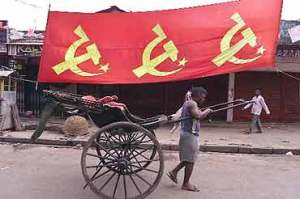
This is clearly the place where the Bengal communists have descended. Else, who could not have seen the avalanche coming? Even when they lost the 2009 parliamentary elections, they thought that they lost because those sitting in Delhi’s AK Gopalan Bhawan chased the chimera of the Third Front (and they have been repeating this till yesterday, everyone from Buddhadeb to Gautam Deb)! Of course that was a chimera but to delude yourselves that your defeat had nothing to do with your own doings, that ‘the people’ oh love you soo – that is only possible when you have descended into that surreal space. The interesting thing is that apart from the self deluding communists of the CPM brand, even the ordinary person on the street knew what was coming. Continue reading We Are Where We Know Not What Befalls Us… in Bengal!→

 Over at the excellent India Site, Rahul Pandita asks a thought-provoking question:
 And the ever-sharp Kufr has the best answers there can be to that question: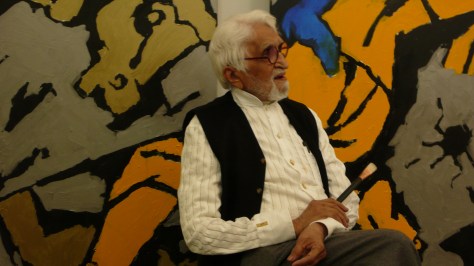
 KAFILA - COLLECTIVE EXPLORATIONS SINCE 2006