Category Archives: Debates

Time And The Revolutionary Imagination

“If the socialist revolution in the ‘twenty Latin Americas’ cannot be unified, then neither can its timing. The national fragmentation of the Latin American revolution is matched by the way its political calendar is fragmented into quite unconnected rhythms and upheavals. In each country the process has its own time clock: whether armed or not, the class struggle will always be at a different moment in Caracas and Buenos Aires, and again different in Guatemala city. Vanguards can see far and wide: it is this that makes them the vanguard…Vanguards decide on their present action in view of the ‘far-off socialist ideals’ with which, by theoretical anticipation, they become contemporary. But it is pointless for them to set their watch to Caracas time in Buenos Aires (or Hanoi time in San Francisco for that matter). The people who make history are living by the time not of a continental, or world, revolution, but of the material living conditions of the area, the town or the country, which their horizon is bounded by. ” Regis Debray[i]

“In the Austro-Hungarian monarchy there are examples of all the economic forms to be found in Europe, including Turkey…What exists in the International as a chronological development – the socialism of artisans, journeymen, workers in manufacture, factory workers, and agricultural workers, which undergoes alterations, with the political, social or the intellectual aspect of the movement predominating at any given moment – takes place contemporaneously in Austria.” Otto Bauer.[ii]

‘Staging’ a Revolt

A little over forty years ago, in May 1967, the extraordinary event called ‘Naxalbari’ took place in a northern Bengal village (whose it name it bears), ante-dating the May 1968 upsurge in Europe by a full year. A peasants armed struggle to begin with, Naxalbari represented a utopian burst of revolutionary energy as rebels from within the CPI(M) challenged the cautious pragmatism of the party leadership that has, ironically, increasingly come to mark radical political practice since then. Formally, the main plank of the movement was its complete rejection of all parliamentary politics and a call for armed seizure of power. Located within the global conjuncture of the rise of Left-wing radicalism of the 1960s, the revolt was formally inspired by Maoism and the ongoing Cultural Revolution in China.

Continue reading Time And The Revolutionary Imagination

‘Kalbela’, Naxalbari and Radical Political Cinema

Gautam Ghose’s Kalbela is a film set against the background of the Naxalite movement. Based on a 1980s novel by Samaresh Majumdar, the film sets itself up, quite self-consciously, within a certain tradition of films, namely radical political Bengali cinema of the 1970s and 1980s. It thus establishes an intertextuality and a certain connection with them.

The casting sequences take us through a rapid tour of some of the more emblematic moments of that cinema and that time:

  • The shot from Mrinal Sen’s Calcutta 71 of the young man on the run jumping off a wall, running through the lanes, pursued by the police and finally shot in an open field. You can almost hear Akashvani’s signature tune as it begins its news bulletin to announce the discovery of yet another anonymous dead body in those troubled times.

You are barely through with it and in quick succession you see two, now somewhat iconic, scenes representing the 1970s angry young Bengal:

  • Ranjit Mallik in the final sequence of Interview, flinging a stone to break open the showcase of a shop. He would denude the mannequin and remove the suit it is wearing, and take it for his interview the next day. It is a stylized ‘trial’ of this character for the offence of disrobing the mannequin that becomes the opening sequence of Sen’s ‘Chorus’.
  • The other sequence is also equally iconic: Dhritiman Chatterjee ‘turning the tables’, literally, as it were, on his interviewers. This is a sequence from Ray’s Pratidwandi. Satyajit Ray, who has all too often been accused of ‘evading politics’, however captures, in this sequence, an important mood of rebellion that marked the 1970s.

Continue reading ‘Kalbela’, Naxalbari and Radical Political Cinema

Shahid Amin on Memory, Media and the Historian’s Practice

[We bring you this piece by well known historian of the Subaltern Studies group, on the media’s hyperactivity on the ‘disclosures’ made by Lady Pamela Mountbatten, as he reflects on the historian’s responsibility. This article was first published in Daily News and Analysis.]

Publishing hype and a contentious presidential election have fortuitously brought two very dissimilar lady residents of the Viceregal House to media attention in the last week. On the same day when we read the details about Pratibha Patil’s victory, an interview was televised with the youngest daughter of Lady and Lord Mountbatten, the last Viceroy and Vicereine of Raisina Hill. Transcripts of the interview, occasioned by the publication of India Remembered: A Personal Account, co-authored by Lady Pamela Hicks, nee
Mountbatten and her daughter, have been carried in several newspapers.

Media-persons have been burning their phone lines trying to get sound bytes from historians about whether or not, ‘in actual fact’, the Edwina-Nehru intense, platonic relationship allowed the Last Viceroy to influence slyly our remarkable first PM. For there were moments, as the author recalls in the interview, when Panditji and the Lady were allowed by the Earl and his daughters to be left alone, “sitting on a sofa in the study or something”.

Continue reading Shahid Amin on Memory, Media and the Historian’s Practice

Slavery Exists in the UK Today: Report

Urban Britain is heading for Victorian levels of inequality
“The chasm between rich and poor seen in London today resembles the Manchester that Engels described in the 1840s” – so run the headlines of an interesting story in The Guardian by Tristram Hunt. Hunt, who is working on a new biography of Engels, finds interesting parallels of contemporary London, its social segregation and inequality with the London described by Engels in his Conditions of the Working Class in England: The poverty and and exploitation side by side with the sharp increase in middle class power on the one hand and its concentration in the hands of the filthy rich – 1 percent of the population controlling 24 percent of the national wealth. So much for the ‘trickle down’ effect. Hunt’s story itself is based on a report released last Tuesday (17 July). Some Glimpses of the report:

As the UK marks the 200th anniversary of legislation for the abolition of the slave trade, a new report shows how modern forms of slavery occur in the UK. Written by leading experts in the field, this report is the first comprehensive review of evidence about the extent of slavery in the UK today.

Contemporary slavery in the UK, produced by a joint research team from the University of Hull and Anti-Slavery International for the Joseph Rowntree Foundation (JRF), examines the nature of modern slavery and the conditions under which it occurs. It also contains detailed accounts of the circumstances being faced by those enslaved….

Slavery in contemporary Britain cannot be seen in isolation. Most of those working as slaves in the UK have come from elsewhere, often legally. This makes slavery an international issue. Many relationships of enslavement trap people by withdrawing their passports or ID documents, making escape unlikely. Evidence shows that those who protest about the appalling working conditions may be beaten, abused, raped, deported or even killed.

Peasant Capitalism and The Industrialization ‘Debate’

A recent report in the Indian Express makes for an interesting reading in the context of the debate on industrialization unleashed by the ‘Nandigram effect’. This is a somewhat novel story: In the village of Avasari Khurd, about 40 kilometres off Pune, about 1500 farmers passed a unanimous resolution seeking a SEZ (Special Economic Zone) status for their village. The resolution, approved by the gram sabha has been sent for further action to both the state and central governments. The peasant/farmers of the village have formed a company by the name of ‘Avasari Khurd Industrial Development Pvt Ltd’, using 3, 500 acres of land, while the remaining will be used for agribusiness and residential purposes. All the 1500 farmers will be shareholders of the company and each of them will contribute Rs 1 lakh as initial investment. The idea of course, is that rather than let the government acquire land from them or they be forced into some highly unequal bargain with corporate sharks like Reliance, the farmers themselves become shareholders of their land and take their destiny in their own hands.

However, because the initiative for this effort has come from the Mahratta Chamber of Commerce, Industries and Agriculture, the vision of this plan goes in a corporate capitalist direction, with land being earmarked for the automobile, the electronic, infotech and pharmaceutical sector. One can however, easily imagine such initiative being taken in such a way that these could become the basis of an interesting new type of common ownership, something akin to an agro-industrial cooperative, which could focus on industries less ecologically destructive than some planned here (e.g. automobiles). But for such a thing to happen, radicals and Leftists of various hues need to intervene in the flow of life that is being transformed every day, every minute, rather than merely issue shrill rhetorical speeches against some far off enemy – safely away in the United States or some such place.

Continue reading Peasant Capitalism and The Industrialization ‘Debate’

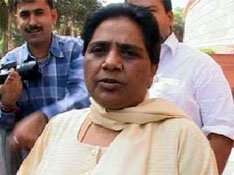
The meaning of Maywati for the Dalit movement

Mayawati and the Meaning of her Victory

By CHITTIBABU PADAVALA

Anand Teltumbde is an eminent Dalit theoretician who is respected and influential. He is among the few intellectuals who is also self-critical; someone who does not necessarily believe in ‘closing ranks’. Compared to Dalit intellectuals who think criticizing Dalit politics and social movements will always necessarily be used for anti-Dalit politics, and that Dalit politics could do without self-critical exercises, he is perhaps an exception in coming up with trenchant criticisms of Dalit politics, movements and perspectives from time to time. Most times, both well-meaning, pro- but non-Dalit intellectuals and Dalit intellectuals think it is dangerous to even air legitimate criticism of anything Dalit. Thus Teltumbde is also a lonely Dalit intellectual. His position is unenviable. Almost everything Dalits do or think is either unfairly dismissed and criticized or not given sufficient credit by the media and the dominant progressive-liberal left. Intellectuals like Chandrabhan Prasad or Kancha Ilaiah focus exclusively on exposing the hypocrisy of so-called progressive intellectuals and highlighting the admirable features of Dalit life and politics. Reading Teltumbde is complementary and sometimes corrective to the work of both Ilaiah and Chandra Bhan Prasad. What is missing in the latters’ intellectual practice is that they don’t entertain any sustained self-critical perspective of Dalit politics and movements and lines of thought.

However, having read Teltumbde’s recent attack on Mayawati—circulated on e-mail, posted on ZEST-Caste, and copied below—I feel the need to critically engage with his ideas, which in this case are far from acceptable. Continue reading The meaning of Maywati for the Dalit movement

Why Hindol Sengupta needn’t fear Mayawati

hindol-senguptamayawati

Baba Hindol and Behen Maya

Please read this very important post on the CNN IBN website’s otherwise dull blog section. It has been written by Hindol Sengupta who covers fashion and suchlike for them. His point is that he can’t relate to Mayawati, and finds it ironic that the “backbone of the knowledge, entreneurial [sic] economy” should be a “non-vote bank”. He says that his class of people, his ‘type’ – People Like Us, to use a cliche – “rejoice every time Manmohan Singh takes stage” but alas, even he couldn’t win a Lok Sabha election from South Delhi.

The reason why I think it is an important post is that unlike most other PLUs, Sengupta makes no claim to ‘objectivity’. When Youth for Equality / United Students / other ‘anti-reservationists’ oppose reservations, and speak about Dalits/OBCs, they claim to be doing so with a claim to ‘objectivity’, that is, they do not admit that the viewpoint(s) they are putting forward are of a certain section of society that is influential in shaping public opinion despite being in a minority.

Sengupta admits not only his discomfiture with a democratically elected Mayawati but also that his discomfiture stems from his background, from who he is. He describes himself and his ilk as “middle-class, educated, metro-bred, Christian-education raised, young.” That would abbreviate into MEMCRY, but let’s just use the word ‘yuppie’.

It is quite extraordinary and laudatory for a yuppie to admit his distance from the political rise of the ‘low-class, neo-literate, village-bred, government school-raised, middle aged’. Such an admission is a rarity, and it is exactly what the ‘anti-anti-reservationists’ want the ‘anti-reservationists’ to admit. Continue reading Why Hindol Sengupta needn’t fear Mayawati

Art, Creativity and the Flow of Life – Radha R

[Radha R is an alumnus 1990 B.(Fine) Painting, Faculty of Fine Arts , MSU, Baroda. In the piece below, she reflects on important issues of art and life in the wake of the recent happenings in Baroda. AN]

When I last left the Faculty of Fine Arts in Baroda where I was a painting student between 1985 and 1990 my heart was already heavy with the image of the saffron neo -Hindutva flag fluttering over what was to be my last Navrathri Garbha in a long time to come…

Post Godhra , I once stayed awake in a train that passed by Baroda station at 2a.m just to see how it felt to see once more the platforms upon which I had spent many a day sketching …There was a gloom to the light, an eeriness in the pools of shadows that were insomniac people squatting there perhaps holding in zones of impenetrably dark memories …Beneath the clock, those huddled up and sleeping resembled the dead…

In the same trip just a couple of months since the killings I walked restlessly through the crowds in the Old City around the Ahmedabad railway station … The roads were crowded …the markets were crowded…people of communities that were the murdering and the murdered thronged the centres where goods were exchanged with a briskness that bewildered the imagination …

In the midst of all this, where was history?

…Tucked out of sight under which fold of skin?

Where were the wounds that hemorrhaged their ways into our hearts?

Who was the expert plastic surgeon? Who wielded the Airbrush of erasure to such frightening perfection?

The skin before the TV was after all always correctly fair, almost, blemishless and perfect …save for a small blue vein that dammed up and spilt over the edges within which it was sought to be held and that stubbornly showed itself up from within the layers of the skin… History now calls it the Narmada Bachao Andolan…

… I have never ever felt like going back to a landscape where the scars of personal trauma now mingled inextricably with the suppurating welts of collective suffering…

FOR THE STUDENTS OF FACULTY OF FINE ARTS AND THEIR ACTING DEAN-

Continue reading Art, Creativity and the Flow of Life – Radha R

A Modest Proposal to End All Controversies on Freedom of Expression in India

(apologies for cross posting on Commons Law and Reader List)

As we know well by now from the freedom loving sentiments (that are expressed loudly and frequently) by all sections of the guardians of social order in India, (that is Bharat, that is Hindustan), the real reason why certain insignificant documentary independent and student films, contemporary art exhibitions in university campuses and performances are banned, and their heinous perpetrators arrested has to do with the general populations right to sleep undisturbed each night and not to see anything other than cricket matches, news about cricket matches, election analyses, kaun banega crorepati, Abhishek Bacchan’s wedding, and yoga on TV.

Why should anyone in their right mind want to see, read, listen to or even think about anything else?

Consider the folly that some students in Kottayam have recently contemplated, making a film on of all things ‘Homosexuality’ .

Or, of the students in the Fine Arts Department of M.S.University in Baroda who went ahead and organized an exhibition of student work that contained offensive erotic imagery.

Both of these moves have been met with swift and timely responses. The offending students in Kerala have been expelled by the Christian educational institutition where they were enrolled, and the offending art student in Vadodara, one Chandramohanm has been arrested by the local police at the urging of Hindutva minded citizens.

There are only two things we need to learn from incidents of this nature. The first is as follows –

Actually, all that people need to do is to insist that only the self appointed guardians of public morality (of all stripes and shades) have the right to appear in any broadcast, exhibition, film or other forms of mediated communication. We need every channel to broadcast morally cleansed reality TV all the time. How else will this nation boldly venture where none other has gone before – into that heaven of bliss and freedom known as ennui for the billions.

Continue reading A Modest Proposal to End All Controversies on Freedom of Expression in India

Brinda Karat: The Paranoia of a Totalitarian Mind

While West Bengal chief minister Buddhadeb Bhattacharya adopted a misleadingly deceptive tone, apparently taking all the blame for the unfortunate events that took place in Nandigram (at the 29 March SFI-DYFI rally in Kolkata), the party’s lie-machine continues to overtime on its disinformation campaign. Bhattacharya’s plea for an end to violence and killings, virtually beseeching the ‘Opposition’ to stop killing Leftist (read CPM supporters), is meant to have a specific effect – that of making it appear as though it is really they who are the aggrieved party. It is a belated strategic move, aimed at the more gullible and the wider world outside, to convey the impression that they are at the receiving end. Suddenly all the belligerence seems to have disappeared and this reasonable man appears with folded hands to beg for the return of ‘normalcy’. But this is misleading because, at another level of discourse, this new pose is accompanied by continuous, ever new production of lies and insinuations, by other members and wings/ arms of his party.

The full article was first posted in sacredmediacow.

Sacrifice of Truth in Nandigram

The ‘logic’ of the CPIM and the (West Bengal) State police under its control for launching an all-out attack on the villagers of Nandigram who had totally cut themselves off from the State to counter its anticipated move to dispossess and displace them is extremely clear. The State cannot tolerate the refusal of the people to be ruled by it. That is precisely why it makes use of its sovereign power to demonstrate and establish its supremacy or hegemony. In this particular regard, the State presumably governed by Leftist ideology has acted no different – not at all. The main reason for worry here is that the CPIM has completely forgotten that it is not a wing of the State the way the police or any other administrative department is. One may, however, retort that hardly anywhere in the world wherever the Communist party has come to power has bothered to keep a distance between itself and the State. Rather it looks upon the State as an instrument for its own expansion.

Continue reading Sacrifice of Truth in Nandigram

Comprador Intellectuals on the War-Path

[comprador: 1. An intermediary; a go-between. 2. A native-born agent in China and certain other Asian countries formerly employed by a foreign business to serve as a collaborator or intermediary in commercial transactions. Source: American Heritage Dictionary. A word once popularized in the writings of Mao Tsetung, this meant simply a foreign agent. We could more profitably deploy it here to describe those who have abdicated their position as critical intellectuals to the demands of power. ]

A friend who teaches in Kolkata University was once accosted by a group of SFI [acronym of the CPM’s student-wing] activists asking for ‘donations’. You have of course to be familiar with the political culture of West Bengal – first under the Congress regime and then ably carried on under the CPM – in order to understand what ‘donation’ or ‘chaanda’ means. Ordinary mortals tremble when CPM supporters come to ask for chaanda, be it for the Durga Puja or for students’ elections. This brave man happened to tell them that he would not give donations to the SFI or CPM as he disagreed with their politics. As the students were leaving the room, one of them returned to tell him, “Sir, Amaar naam Ratna Sarkar. Kichhu dorkaar hole bolben.” [Sir, my name is Ratna Sarkar (name changed for obvious reasons). Please let me know if you need something]. The very mention of the name was supposed to reveal in a flash to this foolhardy teacher, who at 50 years plus, continues to remain a ‘senior lecturer’, that she was the daughter of one of the most powerful state CPM leaders. A daily occurrence in West Bengal. A silent terror inscribed in daily life.

This friend needs also to be mentioned here today because he has had a fairly compelling thesis for sometime now. Civil society in Bengal, he suggests, has been decimated ever since the CPM/LF came to power. In the pre-Left Front days, he argues, it was the Leftist intelligentsia that constituted the critical voice, interrogating the excesses of power. Not any more. What can such an intelligentsia be called but comprador, who have ‘sold their conscience’ to the party line – to resort to a mild polemical Leninism. But alas, such intellectuals are not merely the Sunil Gangopadhyays in Bengal who have fallen in line not because of party commitment but maybe some other calculations; after all they have to live in CPM ruled West Bengal for quite some more time to come. Such are also the seventeen intellectuals who have issued the statement in defense of the West Bengal government.

Continue reading Comprador Intellectuals on the War-Path

SAARC: Need for a Paradigm Shift

As the 14th SAARC (South Asian Association for Regional Cooperation) Summit draws nearer, and the host, the Indian Government, begins to step up its preparations, it seems a good time to raise certain issues and questions, designed to draw lessons for the next stage of regional institution building. Where are we? What issues, practices and policy changes can be proposed to improve the quality of regional policy making and implementation? What can civil society organisations and citizens do to contribute effectively to this process? How can SAARC be made more open and transparent to South Asian citizens? What are some of the best practices that have contributed to an effective intra-state coordination, consultation with non-state actors and public accountability? The vision of SAARC today should be that of a South Asia that is integrated, prosperous and peaceful; a South Asia driven by its own citizens; an anti-colonial, democratic and dynamic force in the global arena; and human and peoples’ rights the cornerstone of its political programmes.

Wars and killings in the name of nations; violence, often on a massive scale; boundaries and borders creating major elements of conflicts between the nation states; trans-border crime, narco-terrorism, illegal and informal transactions; illegal migration and large-scale refugee infiltration; trade and transit barriers and trade imbalances — we can find all this and much more in serious proportions in these times of SAARC. However, they are not the core of our assessment, as nobody had believed that these issues could be resolved in two decades or so. The core is that even though some significant spaces have been opened up for greater and more sustained regional cooperation and some beginning has been made, the overall mood is not optimistic, and the prospects of a people-driven SAARC remain largely unfulfilled. Lack of vision, initiative and will, inadequate institutional capacity, and inappropriate policies and procedures have totally negated any thought and practice that SAARC should build a partnership between governments and all segments of civil society, to strengthen solidarity and cohesion among our people in South Asia. There is hardly any civil society participation in its policy development processes, and it is taken as a closed, non-transparent, non-serious affair in the region.

Continue reading SAARC: Need for a Paradigm Shift

Monobina Gupta on Nandigram and the CPM Whitewash

[As reports started coming in on Wednesday of wanton killings of the local population by a combination of the state’s police forces and that dreaded being called ‘cadre’ in today’s West Bengal, the CPM lie-machine in New Delhi swung into action. Monobina Gupta, a senior journalist who has been covering the Left for almost two decades now, reports on both the press conference and the incidents that brought it forth. Our further information is that two days ago the chief minister Buddhadeb Bhattacharya had called a meeting in Writers’ Building to plan out the offensive. As the report below shows, the Bengali daily, Bartaman had already predicted today’s action almost to the detail – obviously based on information that the CPM finds uncomfortable. We have also been informed that the call went out from the state CPM leadership of “Occupy and Liberate” Nandigram shortly before the cadres swung into action along with the police force. Thirty years of unbroken rule has made the state leadership belief that they can get away with anything. This time they may have miscalculated. It is also worth bearing in mind that faced with feisty women leaders like Medha Patkar and Mamata Banerjee the most disgusting colours of the CPM leadership are coming out. So if Biman Basu had gone on record saying that Mamata is behaving like a spoilt little girl (in Singur), then his comrade-in-arms Benoy Konar had done far better. He announced that women from his party’s women’s wing would “display their buttocks if Medha visited Nandigram”. We will soon be publishing Medha’s recent report after her return from Nandigram where she was actually greeted by a demonstration of buttocks – of about a hundred and fifty little Benoy Konars. Only, the women – even from his party seem to have politely refused. Some hope here – even though the top leadership of the Mahila Samity has been completely silent. Is comrade Brinda Karat listening? – AN]

For the CPM central leadership in Delhi defending police actions in Singur and Nandigram has now become a routine matter. It is left usually to Sitaram Yechury – second in command in the CPM politburo (and Rajya Sabha member) to address the media in Parliament and whitewash the whole incident.

Today was just one more of such press conferences. The CPM politburo member condemned the killings at the same time made it clear that the police had no choice other than to do what they did. “The kiilings are unfortunate. But we condemn such activities that took place even after
the West Bengal state government assured that no land will be acquired without the consent of the people.”

Continue reading Monobina Gupta on Nandigram and the CPM Whitewash

Humane slaughter?

By a coincidence that is entirely explainable, the Arabic word Baqar, meaning cow or ox, gets fudged into the word Bakra, originating from the Sanskrit varkar.

Thus in India, Baqr Id, the festival commemorating Abraham’s sacrifice, quite often becomes Bakr Id. As I noticed this time round, even as Bakri Id, it makes absolute sense of course, since it is goats that are the primary object of sacrificial affection, and mutton is the prized meat anyway.

Through another onomatopoeic twist, in the purabiya region Baqr Id is also known as Barki Id — the big Id. People would sometimes enquire whether this is the big Id or the small Id or whether it is the sewain Id or the meat Id. For youngsters, though the fixating charm of watching animal slaughter is leavened by the disappointing fact that as far as Idee (or tyohari) — the money gift that is customarily doled out to them by seniors — is concerned, they come off much the worse on Baqr Id. Continue reading Humane slaughter?

Textbook Fascism of the Hindu Kind?

Textbooks are back in news. This time it is the turn of the Social Sciences book for Class x students prepared by the Rajasthan Madhyamik Shiksha Board, Ajmer. One needs to remember that this book results from the decision of the Rajasthan government to reject the new National Curriculum Framework for School Education 2005 evolved by the National Council of Educational Research and Training (NCERT). All BJP-ruled states had declared that they would prepare their own textbooks as the books prepared by the NCERT were biased according to them. It would be interesting to see, therefore as to how they fight out the bias of the NCERT books in the books prepared by their own objective teams.

This is how the Rajasthan social sciences experts do it. The first chapter of the book seeks to introduce the students to the basics of the Indian Culture: Our culture is known as Arya sanskriti, Bharatiya sanskriti and Hindu sanskriti. Lest there be any confusion in the minds of the readers, the book explains it further: in fact these three nomenclatures are synonyms.

Continue reading Textbook Fascism of the Hindu Kind?

‘Scientific’ Land Grab and the Lie-Machine

Even as the CPM general secretary Prakash Karat made his astonishing statement regarding the need for a ‘scientific’ land grab policy, his party’s totalitarian lie machine has moved into action to suppress the fact that it might be facing its Waterloo – or may we say, its Stalingrad? The lie manufacturing machine is working overtime to make it appear as though the struggle in Nandigram over the imminent acquisition of 14, 500 acres of land for a new SEZ is the outcome of mere ‘rumour mongering’ by ‘outsiders’ (The Hindu 9 January 2007). It is as though there were really no plans to that effect (though none of the leaders has yet denied this so far).

One of the sinister players here is the shadowy West Bengal CPM secretary and Left Front Chairman (sic), Biman Basu. Basu went on record saying that (a) a large number of ‘outsiders’ have been entering Nandigram [and this presumably is by itself a crime, in Basu’s language] and that the police should thus ‘investigate’ it. (b) these outsiders were “responsible for stoking fears among local villagers that they were on the verge of losing their land.” To give it a more sinister ring, Basu said: “ These people are still moving about in the Nandigram area [as though they are criminals who should have been put behind bars] and held periodic meetings at a four-storied building where social activist Medha Patkar addressed a meeting on December 3.”

Continue reading ‘Scientific’ Land Grab and the Lie-Machine

In search of the Dalit journalist redux

“Sensation prevailed after four persons of a family were murdered over illicit relations at Khairlanji village…” read the blatantly false lead of the article of a Nagpur based paper a few days after the Khairlanji atrocity. “School, colleges and shops shut down in Nagpur on Friday during a day-long bandh,” read another. As the national media slowly took cognizance of the Khairlanji atrocity, weeks after an entire family was humiliated, raped and killed, the tenor and limits of media discourse on Dalits became apparent once more.

While expressing shock and disbelief at the sheer brutality of the incident, media pundits bemoaned the damage to public property (in this case, the Deccan Queen), the losses to the exchequer, and the savagery of the Dalit “other”. “Citizen activism takes on the textures and shades of citizens, after all,” noted a well-meaning reporter in leading weekly, before concluding that “Upper middle class India lit candles, whether at India Gate or on news websites; young Dalit India torched trains.” The simplistic and stereotypical media coverage of the month-long Dalit protests has re-ignited a debate that first gained prominence in 1996. Continue reading In search of the Dalit journalist redux

Medha Patkar on Singur and the Subversion of Truth

[A few days ago, CPM leader Brinda Karat wrote a piece entitled “The Truth of Singur” – a somewhat sanitized version of which was published in The Hindu. In the uncensored version circulating on email, she claimed quite unabashedly, that while her party stood with the peasants, workers and sharecroppers of Singur, Ms Roy (the reference here to the demonstration at the CPM office should not be missed) “is in the companyof Ms Mamata Banerjee, George Fernandes and Rajnath Singh and a 19-party alliance led by them (Krishi Jami Raksha Committee – KJRC) and has supported their campaign of anti-communist calumny.” The problem of course is that “anti-communist calumny” here is only a displaced effect of the struggle against the Tatas and in other contexts, Reliance and others – in short, corporate robbery of peasants’ land. If the communists have decided to stand with the corporations in West Bengal then it should be the CPM’s problem – not Ms Roy’s or Ms Patkar’s (about whose “political acumen” too, Brinda K is contemptuous). Parenthetically, we might refer to the extremely sexist, patriarchal and patronizing statement of her politburo colleague Biman Bose who reportedly said that “Mamata is behaving like an adamant little girl”. And presumably criticizing that would be indulging in “anti-communist calumny” as well, Ms Karat? Meanwhile, why forget that Buddhadeb Bhattacharya also made “communist” statements like saying that Medha Patkar is an outsider who just keeps going to different places creating trouble. Would you have been able to form a single union anywhere in a single place without “outsiders” ? This is the language used by the real anti-communists – to attack political activists by calling them “outsiders” is precisely anti-communist calumny. It just happens to be used by communists in this case! Apart from the matter of Singur, the fact is that Ms Brinda K’s piece confines itself to  the issue of compensation – a whole host of other issues that arise here are left unanswered. How can she or Biman babu for that matter, answer them? Medha’s response to the West Bengal government’s report raises, once again, all the issues that we need to keep in mind. – AN]

SINGUR: Looking Back, Looking Forward

Medha Patkar

Today when the world celebrates the 58th anniversary of the UN Charter of Human Rights as the International Human Rights Day, the people of Singur or Narmada or Raigad (Maharashtra), Dadri-Bajada (UP) cannot. They cannot be out of struggle for survival, for dignity, for life even for a moment to be able to breathe freedom and enjoy rights not just as citizens but as human beings.

The struggle of people of Singur continues at various fronts, ranging from the fasting group of women and men in Singur area itself to the one in Kolkata, from the everyday small and large actions by the representatives of various people’s organisations to the solidarity fora of the academics. It has gone beyond the heated Metropolis to the various districts of North & South Bengal since the voice raised from Singur is echoed in other places, why battlegrounds, and has
also effected other mass movements against similar onslaught of the corporatised State as in Midnapur district (against 2 SEZs & 1 Nuclear power plant). The prolonged violation of human rights and postponement of free, fair and informed dialogue on Singur is startling. A dialogue with a large alliance and network of people’s organisations, beyond electoral political allies or opponents of the West Bengal Government, could have been possible by now but for the over confident attitude and arrogance expressed by the West Bengal Government. The lack of initiative coming from anyone of the Left Front allies towards taking a serious cognizance and an urgent resolution through a decisive dialogue is certainly shocking.

Continue reading Medha Patkar on Singur and the Subversion of Truth

God and Faith In The Life of Indians

What is common between golfer Jyoti Randhawa and actress Khushboo ? In fact, looking at their distinct fields, it would certainly be difficult to discern any thread of commonality. But if one would have come across the latest survey published in a leading newspaper one would already have got an answer. According to this survey, both of them do not believe in ‘any higher power’. For Jyoti ‘the only power I believe in is willpower- the power within you’, for Khushboo ‘my power is within me. I live for people whom I love and who love me’.
Interestingly people like Jyoti or Khushboo cannot be considered as lone rangers in this society which is becoming rather more religious with time. (A trend which is definitely at variance with what is happening in the West) Sixty six respondents out of a group of thousand plus clearly stated that they are non-believers.

Of course, the commonality shared by these two stalwarts of their own fields vis-a-vis their understanding about ‘higher power’ , is not the only interesting fact which readily emerges from the survey done by the Times of India people with TNS, a leading market research agency to know ‘how Indians view God and their faith’.(10 city TOI-TNS poll ( TOI, 26 th Nov 2006) )
More...
To be very frank , the recent survey done across ten cities – Delhi, Mumbai, Kolkata, Chennai, Bangalore, Hyderabad, Ahmedabad, Patna, Lucknow and Nagpur- with 1,007 respondents, which was restricted to people falling in socio-economic categories A,B and C, present a mixed set of conclusions. Continue reading God and Faith In The Life of Indians

Beyond the Tyranny of Blueprints: WSF as Experimental Form

Published earlier in Social Action, Vol 54, April-June 2004

Shortly after the World Social Forum (Mumbai 2004) I came across an article by Cecilie Surasky, an American Jew, posted on a discussion list by a friend from Amsterdam. The article was startlingly entitled “Anti-Semitism at the World Social Forum?” and naturally invited one to read it immediately. It transpired that the author was the Communications Director of an organization called “Jewish Voice for Peace” that works for a peaceful and democratic resolution of the Palestinian problem and is therefore, also anti-Zionist. She was writing from within the specific context of a well-known but disturbing trend in Jewish politics, particularly in the US. A glimpse of this troubling context is provided by the fact that important voices among Jews, the Simon Wiesenthal Center (SWC) in particular (which has been known for its important work in hunting down Nazi criminals worldwide), has been portraying the World Social Forum (WSF) “as one of the centers of the ‘new anti-Semitism'”.

Surasky further reports that “these charges have been picked up by various journalists as evidence of a dangerous new trend on the left.” The SWC had described the atmosphere at the third WSF in Brazil the previous year as “anti-Jewish”, according to her. She therefore landed up at Mumbai to check out first hand: “I have come to the WSF to be loudly and visibly Jewish…and to see for myself this purported new tidal wave of hatred of Jews from the rest of the global left.” The actual event of course, turned out to be something entirely different and if anything, Surasky ended up making some of the most moving friendships with many Arabs. Her account of these friendships in the article is quite touching in itself. What was most amazing for her, however, was that on return she found that the SWC had published an article on the WSF in the Jerusalem Post, entitled “Networking to Destroy Israel”. It further claimed that the WSF Mumbai event had been hijacked by “anti-American, anti-Israel forces”. As Surasky puts it, it became clear that many of these propagandist accounts made practically no distinction between anti-Semitism and anti-Zionism or in fact, any criticism of Israel.

The important thing about the WSF however, was that it provided a space to some one like Cecilie Surasky, a “come out” Jew, as she puts it, to meet, exchange notes and make friends with people from the Arab world. So did it to the innumerable others who have so far only known about the ‘Other’ through representations by propaganda machines like the Simon Wiesenthal Center and their Arab counterparts – or through the US media. This is of course, one small episode in the big event called the WSF. But the WSF is actually made up of literally thousands of such episodes. It was an occasion where the displaced Tibetans – supporters of the Dalai Lama – could move about prominently, distributing their literature, making friends and allies from different parts of the world. It was an occasion where the Dalit groups of India could make their voice heard before a vast gathering of people who were all fighting for their own liberation from oppressions of different kinds.

Continue reading Beyond the Tyranny of Blueprints: WSF as Experimental Form