Category Archives: Ecology/Environment

Fast Track to Troubling Times: The Ghadar Alliance

1400132554-1045_1

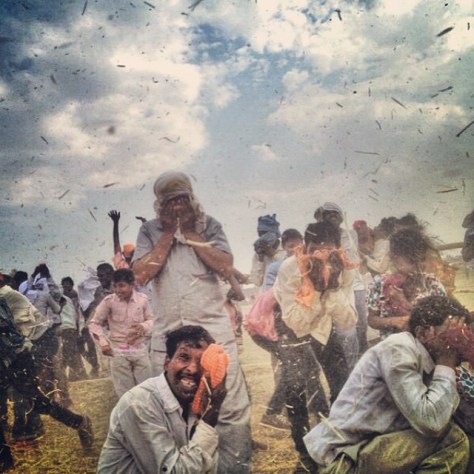
A promise fulfilled? File photo from scroll.in of what was left in the wake of Modi’s helicopter on the election campaign trail (Image by Ravi Mishra)

The first 100 days of the Modi government points to emergent disaster, says this report by The Ghadar Alliance, a US-based educational/watchdog coalition created by concerned citizens in the wake of the BJP victory. The report points to the Economy, Religious Extremism and Human Rights as areas of biggest concern, and is released on the eve of Modi’s visit to the USA as Prime Minister of India.

The entire report can be downloaded at Fast Track to Troubling Times.

In a press release, The Ghadar Alliance said:

The report is the first independent ‘people’s’ report to be published since Modi came into office, and identifies the economy, religious extremism and human rights as grave areas of concern. Continue reading Fast Track to Troubling Times: The Ghadar Alliance

Long Years Ago We Made a Tryst, with…Mathematics

I thought it wasn’t that complicated. When you make a new nation, make sure everybody gets a place. A roughly equal place. When you undertake any development in that new nation, make sure the benefits equal the costs. These are easy equations, easy maths. Maa-tha-maa-tics, my school maths teacher would say portentously, full of meaning and threatening.

This summer, quietly, safe from the media’s attention, 17 more metres were added to the biggest dam of the Sardar Sarovar Project, a dam that was already 400-plus metres high. Being ‘weak at maths’, I hesitate to calculate the catchment area of this big big dam, only one of many big dams in the web of waterworks created by the Sardar Sarovar project. I am getting goosebumps writing these words – the Sardar Sarovar project. As I did way back in school, as a fifteen-year old with a mind like an occupation zone for textbooks. Nehru’s photo radiates in waves out from that mind, that iconic Bhakra Nangal photo with him pointing to something in the far distance. The blazing sun, the deep shadows, the monumental respectability of it all…now the photo is fused with a different, equally iconic image – that of Sunil Dutt’s youthful strides across a dam site in Hum Hindustani. Continue reading Long Years Ago We Made a Tryst, with…Mathematics

A Short Memoir On the Arabisation of Islam in India: Shireen Azam

This is a guest post by SHIREEN AZAM

A Pakistani writer Mina Malik Hasan recently wrote about the Arabisation of Islam in Pakistan, (The Sheepification of Bakistan), a movement of sorts which is transforming Islam in the Indian subcontinent by the day, even though it is remarkably dispersed and often subtle. The Arabisation of Islam seeks to “correct” Islam as Muslims in the subcontinent have understood, practiced and lived it, and instead replace it with an Islam which is uniform, seemingly universal and which need not have any affiliation with our cultural and local identities and beliefs. Having been a participant observer of this change in India, I wish to supplement Mallik’s experience in Pakistan with my own, in the form of a short memoir of the nearing extinction of the urdu phrase “Khuda Hafiz”, a customary way to bid goodbye, with the phrase “Allah Hafiz”. While both the phrases literally mean ‘May god keep you safe’, the reason for the shift was likely because of a lack of clarity in the particular god being invoked term by the term ‘Khuda’, since Khuda has Persian roots. If anything, “Khuda” speaks of Muslims’ age-old assimilation in the Indian subcontinent, something that ‘Arabisation’ of Islam would conveniently want to ignore, and is sadly becoming successful in. Continue reading A Short Memoir On the Arabisation of Islam in India: Shireen Azam

Narmada waters for Coca Cola – really, how much more development can we take?

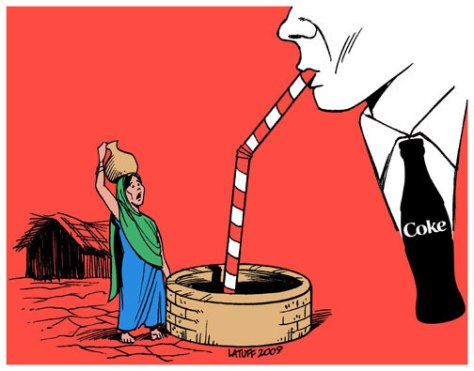
cokeindiaFarmers who have for three decades non-violently protested the brutal ousting from their lands for the dam project on the Narmada river have been castigated for being anti-development. The dam would bring water to the thirsty, to the parched agricultural lands around it, we were told. Continue reading Narmada waters for Coca Cola – really, how much more development can we take?

Sailaab Nama – An Insider’s View of the Flood in Kashmir from the Outside: Gowhar Fazili

Guest Post by Gowhar Fazili

The floods in Kashmir can provide an outsider a momentary glimpse into the reality of Kashmir behind the corporate media propaganda smokescreen that is fumbling at the moment and like Truman Show (1998) exposing bits of the backstage. At the moment there are three key actors in Kashmir. There are the floods, the state and the people. Each one is on its own. One limb of the state—the state government was the first to crumble before the approaching waters.   The other limb—the mammoth military apparatus that has already inundated Kashmir since several decades, took two days to wake up to the crisis and when it finally did, its priority was to fish out the rich Indian tourists and the people close to the establishment out of the state. In the initial days, local people had to risk their own lives to get their marooned relatives to safety. Some hired local boats, some swam or waded through water, some made makeshift rafts out of anything that floats, including water tanks, car tubes, foam sheets, inflated baby bathtubs, so on and so forth to save their dear ones. The rest either drowned or kept moving up the floors of their houses as the waters kept rising until they reached their attics.

Continue reading Sailaab Nama – An Insider’s View of the Flood in Kashmir from the Outside: Gowhar Fazili

Chhering – A Guiding Star

This article has appeared in the June issue of Terrascape

Travelling with a knowledgeable guide makes a trip worth it. And if the guide is someone like Chhering, you’ll cherish the trip all your life.

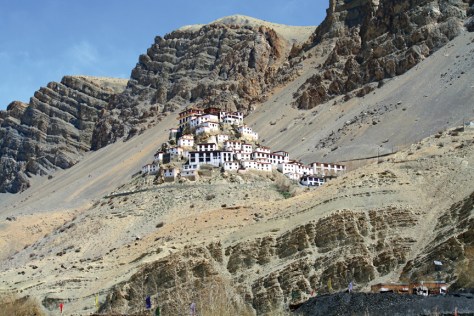
Kee Monastery, Spiti

Broadly speaking there are two kinds of human beings, the inquisitive and the conformist. It is the inquisitive kinds who try new things; experiment, ask questions, make most discoveries, travel to unchartered territories and constantly venture into terrain, geographic and cephalic, where angels fear to tread. The conformist does none of the above. They travel only the well-trodden path, visit places where the food, the hotel, the weather, in fact nothing whatsoever has the potential of throwing up a surprise.

The world cannot exist without either. The inquisitive opens up the world, both physically and in terms of ideas, while the conformist fashions new territories – geographical and cerebral – habitable and familiar for others and prepares the ground for the next generation of the inquisitive to venture beyond what has by then become familiar.

It is a fact that I am not one of those who can be included among the ‘inquisitive’, not in the sense in which I use the term here. It is equally true that I do not want to belong to the category that I have chosen to describe as the ‘conformist’. Why I do not want to be placed in the second category will be revealed once you go through this episode placed below. Your perusal of the same would perhaps justify my reluctance to be counted among the second category. Continue reading Chhering – A Guiding Star

An Endless Budget Session, Even Before it Begins: Shambhu Ghatak

Guest post by SHAMBHU GHATAK

“You can fool some people some times but you can’t fool all the people all the time”

So goes one of the famous lines of Bob Marley’s song that draws upon statement by Lincoln. Perhaps the same can be said about the new BJP government because it seems that this time there will be nothing new left to be presented during the upcoming Union Budget. Most of the things to be presented by the Finance Minister have gradually been placed even before the actual budget could see the light of the day (on 10 July). In fact, the entire stretch since the Government took power can be termed as a long, extended budget session – a session in slow motion.

Just think about the policy decisions announced or showcased by the new Government so far—allowing 100% foreign direct investment (FDI) in defence sector (to boost technology transfer and employment growth, so to speak); reforming environmental clearance (to avoid discrepancies, end red-tapism and ensure transparency) by making the process online; raising import duties on sugar by more than double and extension of existing sugar export subsidy of Rs 3,300 per tonne (to help the sugar mills) till September besides raising the mandatory level for blending cane-based ethanol in petrol from 5% to 10%; allowing hike in price of non-subsidized cooking gas (LPG) by Rs 16.50 per cylinder (which is partly attributed to the crisis situation in Iraq); and raising train fares by 14.2% & freight rates by 6.5% in the month of June prior to the just-presented Rail Budget, among other things. Continue reading An Endless Budget Session, Even Before it Begins: Shambhu Ghatak

The pasts in our present

This piece has appeared in the May issue of Terrascape

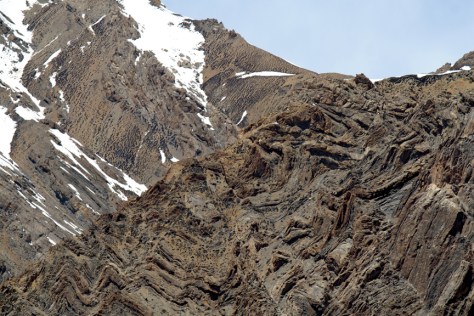
A quest for those mountains where a true seeker of truth can find solace and solitude – and a lesson in geology

I had grown up being told, as were most children who grew up in the times when I did, about great spiritual seekers, sanyasis, sufis and such like who had chosen to seek truth and to give up everything that tied them to the mundane concerns and attachments of this world. The stories of all these seekers of truth invariably ended with many of them finding what they sought in the mountains.

The mountains they visited were not the mundane, run-of-the-mill mountains, that ordinary mortals like us visit. They went in search of mountains that gave meaning to words like desolate, forsaken, remote, impassive, distant and words that created similar impressions. It was mountains such as these that the gods had chosen as their abodes, it were these that invited the seeker of truth within their folds. The seekers immersed themselves completely in the contemplation of the unknown and the unknowable, and emerged years later wiser and all-knowing.

As I and other children of my age grew up, we were drawn away from the spiritual and into the thick of the knowledge of the ‘this worldly’. We studied the secular sciences and gradually came to acquire a totally different understanding of  the mountains.

Spiti3

Continue reading The pasts in our present

Eta Kolkata (This is Kolkata): Kaveri Gill

Guest post by KAVERI GILL

Today comes the surreal news that anyone painting their house or apartment white or sky blue in Kolkata can claim a waiver on property tax for a full year, a horror conjuring up a city that looks like a crumpled weave of Mother Teresa’s saree. Now, towns of Regency England and the Cornwall coast have uniform building and color restrictions to maintain historical continuity, but this idea is more in the perverse vein of babus suggesting that the burning ghats at Varanasi be “white-washed” for “freshness”.

The Chief Minister's radio and music in public places scheme
The Chief Minister’s radio and music in public places scheme

Thankfully, another Humphrey shot that idea down, yet the decimation of the architectural integrity of the façade of these famous ghats continues apace, with sealed air-conditioned buildings overlooking the burning bodies at Manikaran. Bengal’s Chief Minister has been known to remark that the colours “promote happiness” and accordingly, the Trinamool Congress (TMC) Mayor has incentivised citizens to embrace the “theme colours of the city”[1]. Coming on the heels of a general election, where the TMC won 34 seats out of 42, up from 19 in 2009, and compared to only 2 each for the Communist Party of India (Marxist) and the Bharatiya Janata Party (with 18% of the vote share, not to mention an almost win in the city), even discounting for dirty tricks appropriated by their cadres from the Left of old, the scorn must be tempered by what this result says about the contemporary citizen of this state and city. Continue reading Eta Kolkata (This is Kolkata): Kaveri Gill

When Are Foreign Funds Okay? A Guide for the Perplexed

The Intelligence Bureau has, as we know prepared a document, updating it from the time of the UPA regime (which had reportedly started the dossier) indicating large scale foreign funding for subversive anti-development activities. Such as claiming that you have a greater right to your own lands and to your livelihood than monstrous profit-making private companies. Or raising ecological arguments that might stand in the way of the profits to be made by private corporations and the corrupt state elite, from mining, big dams, multi-lane highways and so on.

The IB report, signed by IB joint director Safi A Rizvi — alleges that the “areas of action” of the foreign-funded NGOs include anti-nuclear, anti-coal and anti-Genetically Modified Organisms protests. Apart from stalling mega industrial projects including those floated by POSCO and Vedanta, these NGOs have also been working to the detriment of mining, dam and oil drilling projects in north-eastern India, it adds. 

Imagine – working against the interests of POSCO and Vedanta! Is there no end to the depraved anti-nationalism of these NGOs!

These folks must have made millions of dollars
narmada

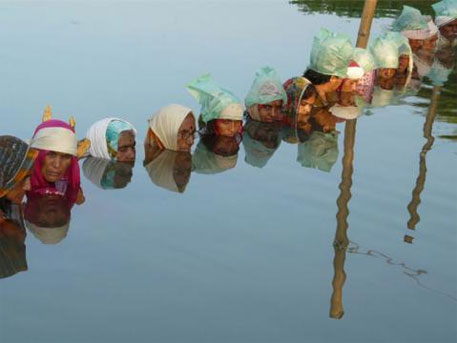
In 2012, people affected by the Omkareshwar and Indira Sagar dams protested the raising of dam storage levels by staying in neck-deep water for over a fortnight (Photo: Narmada Bachao Andolan). 

The average observer of Indian politics – being like me, not as sharp as the IB – might be a little befuddled by this apparently anachronistic allergy of two successive governments and its intelligence gathering organization, towards foreign funding, in an era in which the slightest slowing down of the pace of handing over the nation’s resources to multi-national corporations,  is termed as “policy paralysis”, and attacked as detrimental to the health of the mythical “Sensex”. Older readers might remember that the  inspiring slogan of the legendary Jaspal Bhatti’s Feel Good party was Sensex ooncha rahe hamara.

This post is just to help you figure out then, when it is Okay to applaud foreign funding and when it is not – because otherwise you might post something on your FaceBook page that attacks foreign funding when it is actually Okay – and then how stupid and anti-national you’ll look.   Continue reading When Are Foreign Funds Okay? A Guide for the Perplexed

Airing the unheard from Polavaram: Mohammed Omais Shayan

Guest post by MOHAMMED OMAIS SHAYAN 

As the Nation is welcoming its 29th state, Telangana is upbeat with hope of starting a new chapter of progress. Amongst the jubilations in Telangana, voices of people affected by the Polavaram dam are being lost. “Dam’ned”, a film by Saraswati Kavula is an attempt to air the unheard voices. It’s a must watch for all concerned as the movie touches the links of people, land, livelihood and development. The film aims to bring ground realities through interviewing the people of the affected region, technical and environmental experts. Before getting into content of the film, a very brief introduction of the project.

Polavaram project is going to be the largest dam in terms of number of people being displaced. The dam will be constructed at Polavaram village in West Godavari district of Andhra Pradesh. The dam aims to irrigate 2910 km2 of area in Andhra Pradesh [1]. It will also provide drinking water to Vishakapatnam City and many villages besides water for industries in Vizag. The project aims to transfer 80 TMC water from Godavari to Krishna basin. The dam will submerge 300 villages of Andhra Pradesh, Chattisgarh and Orissa. This submergence area will cover 3,500 acres of biodiversity rich forest and also partially submerge the Papikundulum wildlife sanctuary [2]. The people living in these areas are predominantly ‘adivasis’ belonging to Koya and Konda Reddy tribes.

Continue reading Airing the unheard from Polavaram: Mohammed Omais Shayan

Bittersweet Gujarat: Reena Patel

This is a guest post by REENA PATEL

I looked around the room and my gaze was met with the kohl lined eyes and stares of bewilderment and distrust. My heart pounded as I listened to three Muslim women describe their latest attempt to find their father and brother after they disappeared in the riots. They were speaking to Rahidbhai* from a local NGO who was accompanying me into the Ahmedabad relief colonies for the first time. Why was I so scared? Why was my heart pounding? The eldest woman of the home disrupted my thoughts, she asked me for my name. I looked around and looked at Rahidbhai, who looked back uneasily. “Mera naam Reena hai.” I said, almost choking on the words, knowing what the next question would be. “Aap ka surname kya hai?” The room grew thick with silence. “Patel.”

As far back as I could remember, I was taught to regard Muslims differently from the rest of the general population. My parents, both from Surat, Gujarat moved and met in the United States in their twenties. They both lived in England and spent time in Gujarat, and had families that were deeply involved in the Gujarati community. My brother and I were born in Long Beach California. I went to Gujarati school on Sundays, went to every function, picnic, and cultural show put on by the Leuva Patidar Samaj in Southern California. Many of my family members were apart of the organization. In fact, my great grandfather Vallabhai Patel was one of the first Patels to land upon the shores of the United States, now estimated at a population of over 140,000. We went to religious camps that were meant to teach us about Hindu ideology, handed out saffron prayer books and modeled how to become ideal Hindu men and women for our communities.

Continue reading Bittersweet Gujarat: Reena Patel

Notes on Velaveping Kerala : Inside a Brand-New Paradigm and Outside

Insiders: Velaveping Idukki

All I can say about the Supreme Court verdict striking down Kerala’s position on the Mullaperiyar Dam issue is that we are due for another round of the Hysterics vs. Imperialists media game. The managers of the Hysterics team, our local Malayali politicians, do have the advantage that their experience in fear-mongering has gone up considerably with the controversies over the Gadgil and Kasturirangan reports regarding ecological conservation of the Western Ghats. The Imperialists team out there in Tamil Nadu is also now more experienced, after their successful suppression of their own people’s fears for their lives at Koodankulam. So we are set for an interesting match!

However,please don’t underestimate us. The truth is that you north Indians (or others) never really got us — what we are today you will be –well — ten years later. There are of course simple souls, many ordinary folk in Idukki, who are scared for the land and their lives. But in any society, there are bound to be backward people who are always under old delusions? The sophisticated among us may be marginally scared of the dam break but our fear is not really that the land will disappear. Actually our issue is that the dam-break will make that happen too quickly. Please note that we intend to do it little by little, so that full economic advantage can be obtained! Ah, what is the use of letting everything get washed into the Arabian Sea? Our plan was simple and you will admit that no one can maximise advantage better than us. You have to realize that Kerala’s topography is too unfriendly towards profit-making ventures and we need to do something about it. Consider the following steps: Continue reading Notes on Velaveping Kerala : Inside a Brand-New Paradigm and Outside

The Carnage in Kokrajhar: Saba Sharma

Guest post by SABA SHARMA

Since the evening of the 1st of May, it has been reported that at least 23 people have been killed in Kokrajhar and Baksa districts in Assam, administered under the Bodoland Territorial Council. All the victims were from the Muslim community, and were allegedly shot by the militant Bodo group, the National Democratic Front of Bodoland (Songbijit), named after its ruthless leader Songbijit, from the Karbi Anglong area in Assam. Indefinite curfew has been imposed here and in neighbouring districts as well, as rumours of other killings and beatings filter in, impossible to separate from facts in the atmosphere of panic that currently prevails.

Polling ended in the Kokrajhar constituency in Assam on the 24th of April, ending a temporary sense of calm and normalcy. Ethnic violence between Bodos and Bengali Muslims took place in July 2012, majorly affecting Kokrajhar, Chirang and Dhubri district. Nearly 5 lakh people were displaced from their homes, and most did not return until January 2013, staying in relief camps, too afraid to return. Once the camps were formally shut down and people returned to their homes, normalcy was still a distant reality. An economic boycott imposed by Bodo leaders on the Bengali Muslim community meant that agricultural labour, a primary occupation for Bengali Muslims, was all but non-existent. In the last year, this economic boycott has slowly been relaxed in some areas, while in other areas, it prevails as strongly as ever. In most areas, markets were among the first spaces to become mixed again, an almost neutral zone where people began to interact with one another again. But in other markets, like Koila Moila bazaar in Chirang, Muslims are still ‘banned’. Continue reading The Carnage in Kokrajhar: Saba Sharma

Unbroken History of Broken Promises – Adivasis and Election Manifestos: Kamal Nayan Choubey

Guest Post by KAMAL NAYAN CHOUBEY

Election manifestos of political parties have a distinct and vital role in the parliamentary elections. Parties present their policies on crucial issues of the country and their programmes to address the problems of the country. These elections, however, have seen minimal discussions on the contents of the manifestos of different parties because perhaps these elections are less policy centric and more individual centric. That is why the principal opposition party in the Parliament, BJP had not released its manifesto till the first day of polling. Election manifestos of all parties explain their policy and programme for the each and every section of society. It would be useful to consider that what kind of policies and programmes are promised for adivasis in the manifestos of prominent political parties. This is also necessary because these people have paid the price of the ‘development’ based on the extraction of natural resources and the use of corporate capital for this purpose. (Here I want to clarify that I will not focus on the issue of adivasis of North East India, because their problems are very different from the adivasis of the rest of India and one cannot do full justice by analyzing them as one unit).

In last twenty years this expropriation of resources has increased in the forest areas of the country. In each tribal dominated state, State Governments have signed hundreds of Memoranda of Understanding (MoUs) with many national, international and multinational companies. These are the areas where Maoists have strong influence as the ‘biggest internal security threat’ of the country. So, it is important to ask what the policies of various political parties for adivasis are and is there any continuation in their policies and their actual performance as the ruling party in the Centre or in the States? Can adivasis expect, on the basis of these policies and programmes, that next government would follow more sensitive approach towards their problems? Continue reading Unbroken History of Broken Promises – Adivasis and Election Manifestos: Kamal Nayan Choubey

चायवाला: गौहर रज़ा

Guest post – a poem by GAUHAR RAZA

चायवाला

बहुत फ़र्क़ है यह चायवाला
उन से
जो अपनी ज़िंदगी
दूसरों को चाय पिलाते गुज़ार देते हैं
बहुत फ़र्क़ है यह चायवाला
रामदीन, मैकल या ज्ञानी जी से
जो भूखे पेट रहते हैं दिन भर
और टूटे छप्पर, या पेड़ की जड़ के सहारे
चाय के एक प्याले से किसी के माथे की
थकन मिटाते हैं
फ़ैक्टरी के गेट के बाहर,
उस नौजवान का ग़म दूर करते हैं
जिसे अभी अभी नौकरी से निकाला गया है
या किसी राहगीर को सही रास्ता बताते हैं
बहुत फ़र्क़ है यह चाएवाला
उन से जो
देर गए, रात को अपने घर लौटते हैं
चंद सिक्के समेटे, उन गुंडों की गालियों के साथ,
जो रोज़ ज़बरदस्ती चाए पीते हैं,
और बदले में धमकियाँ देते हैं Continue reading चायवाला: गौहर रज़ा

Adivasi-yagna, The Great Sacrifice – Tribal Communities for ‘Greater’ Hyderabad? R Uma Maheshwari

This is a guest post by R UMA MAHESHWARI

The Andhra Pradesh ministers are fighting like the hooligans they show in Telugu films (one is reminded, in particular, of an old Telugu film aptly named Assembly Rowdy). The fight is all over, and about, investments in Hyderabad and elsewhere. As it is about money. The Parliament fight is with pepper sprays and knives. Back there, on the ground, in tribal villages in AP (yet to be declared as either Seemandhra or Telangana), absolutely unarmed Koyas, Kondareddis, and a few other tribal communities are opposing the construction of the Polavaram dam. And have been marking their protests with dharnas, rasta rooks and burning of effigies of leaders of all political parties. The former have some plum real estate and business interests to protect; the latter have their everything to fight for – homes, land and histories. Not for a while, in the entire debate and fighting over the state of either unification or creation of Telangana have any of these picketers in the Parliament have sought the opinions of the tribal people whose land is today a battleground for investment. One has no qualms of using the peculiar Sanskritic terminology, in the Vedic sense of sacrificial rituals, conducted by the wealthy and upper castes for their benefits, in the name of the ‘common good’. A Former Chief Minister of the state of Andhra Pradesh, YSR, too, used the same Sanskritic term (in spite of his being a Christian) for the irrigation projects (or contractor businesses) he initiated (86 nos.) under jalayagam.  Today the sacrificial ritual continues, and it is a human sacrifice, of more than three hundred thousand tribal people (as it is the sacrifice of animals and birds and every visible or invisible organism), in return for the illusory real-estate-driven world called ‘Greater’ Hyderabad; what if it is going to be a “joint capital for ten years” (and who has seen what the world will look like after ten years, any way? Or what shape it will assume? But these are matters of philosophy and metaphysics, I guess, talking of who knows where we will be, what will be…). Continue reading Adivasi-yagna, The Great Sacrifice – Tribal Communities for ‘Greater’ Hyderabad? R Uma Maheshwari

Ruins of the Living: the Rohingya Refugees: Akshita Nagpal

This is a guest post by Akshita Nagpal

A tree with deep roots, if uprooted and planted in alien soil, might live but often sans its vigour. The same can be said for refugees. A couple of weeks ago, along with a bunch of my classmates, I visited the refugee camp of Burmese Rohingya Muslims at Kalindi Kunj in the vicinity of our university campus. The visit was part of an initiative to help them with old winter clothing after hearing about the unliveable conditions of the camp.

IMG_3912

The Rohingyas, an ethnic group hailing from Myanmar (Burma), chiefly from its Rakhine (Arakan) State, happen to be one of the most oppressed people in the Asian sub-continent.

Continue reading Ruins of the Living: the Rohingya Refugees: Akshita Nagpal

Climate, Culture, Cosmopolitanism – Notes from Shillong: Nabanipa Bhattacharjee

Guest post by NABANIPA BHATTACHARJEE

Surrounded by lush green hills, Shillong, the capital city of Meghalaya is widely known for its salubrious climate and natural beauty. As one of oldest hill stations of the sub-continent, Shillong was chosen – after the failure of the British administrators and soldiers to continue operating out of Cherrapunjee – to house the headquarters of the colonial government including the Sylhet Light Infantry in 1864. Following the creation of Assam as a Chief Commissioner’s province (carved out of the Bengal Presidency) in 1874, Shillong, a small town then, was declared its capital. Shillong scored over others in that part of the empire, among others, due to two important factors. First, its climate and second, the town being best suited to serve the colonial administrative, commercial and strategic interests.

As a result of the reorganised political geography of the region substantial number of European, Assamese and Bengali officers and clerks of the colonial bureaucracy lived and settled in Shillong. And so did a large number of tea planters of Assamese and European origins, Nepali staff of the colonial army, Marwari entrepreneurs and, so forth. Indeed, the quaint hill town, which was essentially populated by the Khasi tribe, acquired by the turn of the twentieth century a vibrant, cosmopolitan character which stood substantively (and perhaps best) reflected in the organisation of its cultural space. Shillong’s spirit of cosmopolitanism, as its socio-cultural history shows, was deeply embedded in the ideology of the recognition (and not mere political management) of cultural difference. Continue reading Climate, Culture, Cosmopolitanism – Notes from Shillong: Nabanipa Bhattacharjee

Who will chop the Tree of Hubris?

devika

This is a photograph which appeared in the ‘Nagaram’ pullout on city affairs of the Mathrubhumi newspaper (Trivandrum edition,8 January 2014, p. III). The caption to the original photograph reads: ‘A man in Adivasi woman’s dress during the Secretariat March conducted by the Highrange Samrakshana Samithi and other farmer organizations’. The Highrange samrakshana Samity led by the Syro-Malabar Catholic Church, as is well-known, has monopolized the identity of ‘farmer’ in the hill districts and has been leading the protest against the implementation of the Gadgil Report and the Kasturirangan Report. Their rhetoric of helplessness in the face of state onslaught often leaves us blind to their history of ruthless exploitation and near-enslavement of adivasi people in these areas.No, they have never been helpless, and they never will be — the most powerful sections of civil and political societies in Kerala are on their side, as always. What else explains their hubris so well-reflected in this photograph? Continue reading Who will chop the Tree of Hubris?

March to Implement the Gadgil Committee Report in Kerala: An Appeal and Some Dilemmas

Tomorrow, Thiruvananthapuram will witness a protest march to the Kerala Legislative Assembly  by those who feel that the recommendations of the report of the Western Ghats Ecology Experts Panel (WGEEP 2011), popularly known as the Gadgil Committee Report, submitted to the Union Ministry of Environment and Forests (MoEF) in August 2011, and published recently following an order from the Central Information Commission, must be implemented. Kerala is one the states affected deeply by the recommendations of the report. Please join the march from the Secretariat Gate in Thiruvananthapuram at 11 AM. Continue reading March to Implement the Gadgil Committee Report in Kerala: An Appeal and Some Dilemmas