Category Archives: Frontiers

David Barsamian’s Deportation: Statement of Protest

STATEMENT OF PROTEST

We write to protest the denial of entry to David Barsamian by Immigration Authorities at the New Delhi airport in the early hours of September 23, 2011, and we write to draw attention to the growing arbitrariness of the Indian Government in dealing with dissent of any kind.

David Barsamian is a veteran broadcaster, and founder and director of Alternative Radio, a weekly one-hour public affairs program offered free to all public radio stations in the US, Canada, Europe and beyond. For more than 25 years Alternative Radio has provided information, analyses and views that are frequently ignored in other media. Structured around intensive interviews conducted by David Barsamian, these programs are carried by over 125 radio stations and heard by millions of listeners. He is the author of numerous books with Edward Said, Eqbal Ahmad, Howard Zinn, Noam Chomsky, Arundhati Roy and Tariq Ali.

Continue reading David Barsamian’s Deportation: Statement of Protest

An extraordinary general strike for Telangana: A Suneetha, Vasudha Nagaraj and Others

Guest post by A. SUNEETHA, VASUDHA NAGARAJ, R. SRIVATSAN, GOGU SHYAMALA, SARATH DAVALA and R.V. RAMANA MURTHY

[This post was sent to us on the 23rd of September, when the strike, still on-going, entered its tenth day.  On the date of posting this, the strike had entered its sixteenth day].

Sakala Janula Samme (extraordinary general strike) in the ten districts of Telangana has entered its tenth day today. Miners in the Singareni Collieries, private college teachers and students, road transport employees unions, school teachers, university staff, lawyers in the lower and high courts, the electricity employees union—in short almost all employees (who usually refuse to see beyond their immediate benefits) and contract workers (who under normal circumstances cannot afford to lose wages) needed by the state to “govern” its people—have gone on strike.

Telengana general strike
Telengana general strike, photo courtesy: msn news

Government in this region, already seriously impaired and facing severe challenges from the movement since 2009 has come to a standstill. In an extraordinary “do or die” battle for the formation of a separate Telangana state, the various joint action committees promise to continue this strike till a separate Telangana state is formed.

Continue reading An extraordinary general strike for Telangana: A Suneetha, Vasudha Nagaraj and Others

‘This obfuscation amounts to complicity’ – APDP response to Omar Abdullah’s speech on unmarked and mass graves

This release comes from the ASSOCIATION OF PARENTS OF DISAPPEARED PERSONS
The Bund Amira Kadal, Srinagar – 190001, Jammu and Kashmir

Press Release:
28th September 2011

Yesterday’s (27th September 2011) statement made by Chief Minister Omar Abdullah on unmarked graves and mass graves is hurtful and amounts to trivializing a serious issue of enforced disappearances and unmarked graves. Association of Parents of Disappeared Persons (APDP) believes that Omar Abdullah’s statement created an impression of him being an advocate of the culpable armed forces personnel as opposed to the representative of the people of Jammu and Kashmir.

Omar Abdullah has said, “The families would have to help us, indicating in which graveyard they suspect their member could be buried so that we will do the needful.” This is a shameless assertion. How would families know where their loved ones are buried? If the family members of the disappeared had any clue, as to where their family members are buried, then they would have already sought the permission for the exhumations from the District Magistrates. Continue reading ‘This obfuscation amounts to complicity’ – APDP response to Omar Abdullah’s speech on unmarked and mass graves

An open letter from Amnesty International to members of the Jammu and Kashmir Legislative Assembly

This is a public statement by AMNESTY INTERNATIONAL

AI Index: ASA 20/046/2011 26 September 2011

As the session of the Jammu and Kashmir legislative assembly opens in Srinagar, Amnesty International is writing to all members of the legislative assembly (MLAs) to raise human rights concerns in the house and ensure that such issues are not ignored during the session.

Although there appears to be a consistent decrease in the overall numbers of members of armed groups operating in Jammu and Kashmir (J&K), human right violations continue to remain a significant and widespread concern in the state.

Amnesty International calls on all MLAs to raise human rights issues during the assembly session and call upon the state government to take immediate action required to remedy the situation. In particular, Amnesty International asks you to raise the specific issues below. While not an exhaustive list of human rights concerns in the state, discussion on these would indicate the commitment to human rights of the state legislative assembly and be an important step towards improving the human rights of all residents of Jammu and Kashmir.

Continue reading An open letter from Amnesty International to members of the Jammu and Kashmir Legislative Assembly

India deports radio broadcaster David Barsamian upon arrival at Delhi airport

Update: The Press Trust of India confirms the Kashmir angle. See more updates at the end of this post.

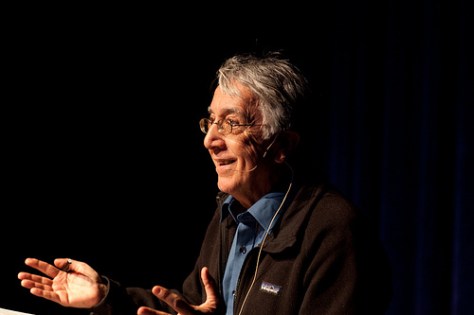
David Barsamian

David Barsamian, founder director of Alternative Radio, and independent radio legend, was deported on arrival from New Delhi airport in the early hours of Sept 23. Details are awaited since David is probably still on the plane back. But between his arrival sometime after midnight, and his being “put back” on a flight at 3am, David was able to only make a quick call to his ‘home’ here in Delhi, to the family of his longtime sitar guru, Debu Chaudhuri. Continue reading India deports radio broadcaster David Barsamian upon arrival at Delhi airport

Growing up with PTV in Poonch: Saqib Mumtaz

Guest post by SAQIB MUMTAZ

Away from the revolution of direct to home (DTH) and cable TV networks, the nineties were the time of one channel, when Doordarshan was synonymous with Television for most Indians, especially in rural areas. There was not much on television for a kid growing up except the occasional cartoon clips and Shaktimaan. I was fond of Meena and her parrot Mithu. They were loveable unthreatening characters. The duo imparted important lessons on a variety of social issues. Movies were a strict no-no and the news was other things adults were interested in. Every evening my grandfather would tune in to the Hindi news which was followed by another news broadcast in English. Even as a kid I could sense the repetition but never the reason of watching the same news twice.

In my memory of those days, it’s not Doordarshan that I associate myself with. Luckily for many of us near the border there was PTV.

Continue reading Growing up with PTV in Poonch: Saqib Mumtaz

Prominent Indian journalist beaten up by Jammu and Kashmir Police

Is the Jammu and Kashmir Police a private, leaderless, unaccountable militia force that can go about beating up anyone they like in the name of saving Kashmir for India?

Well known Indian author and journalist David Devadas, a fellow with the Nehru Memorial Museum and Library in Delhi and author of a book on Kashmir, was beaten up by personnel of the Jammu and Kashmir Police in Srinagar on September 5. Sheela Bhatt reports on Rediff.com:

In a letter written to Jammu and Kashmir Chief Minister Omar Abdullah, Devadas said that on September 5, when he was crossing the Rambagh bridge in his car in evening in heavy traffic, he heard a loud bang at the back of his car. His car was hit by another car. Continue reading Prominent Indian journalist beaten up by Jammu and Kashmir Police

On a Lit Note: Hilal Mir

Guest post by HILAL MIR

I woke up this morning in an utterly confused state of mind. During the night I dreamt about having the tour of the Harud Literary Festival. My first astonishment came while in a queue outside the venue. Like the French streaming Parisian streets in teary-eyed joy at the sight of American liberators after having secreted themselves in root cellars for months from the sniffing gaze of Nazi jackboots, I felt similar joy at observing Indian soldiers not hurling ritual abuses from vehicle rooftops while asserting the right to overtake from any side and any crevice on the busy Panthachowk intersection.

The venue, Delhi Public School, is stone’s throw away from the intersection and within the earshot of any moist abuse hurled from those ubiquitous army trucks. Kashmiris finally had a dry day. Continue reading On a Lit Note: Hilal Mir

Harud Literary Festival: The Misrepresentation Continues

In a post on the Wall Street Journal’s India Realtime blog, journalist Tom Wright says at one point:

In the open letter, the signatories said it was impossible to have a literary festival in Kashmir [Link]

I asked him on Twitter as to where the open letter says that. He replied:

the opening graph says you can’t hold a literary festival in the context of kashmir [Link]

Given that he was being specific about the location of the “impossible to hold” claim in the open letter, I wondered for a moment if I was wrong. I checked the first two paragraphs of the open letter I had posted but found no such claim: Continue reading Harud Literary Festival: The Misrepresentation Continues

Killing poetry and other possibilities of life

The news of the ‘postponement’ of Harud, a literary festival scheduled to be held in Kashmir in September, should be read with concern by those who believe in, and fight for, the right to express themselves freely. How the self-righteousness of some fighters for democracy actually forecloses any possibility of democracy can be seen from this incident.

In a statement last week, the organizers of Harud explained that they were forced to put off their festival as there was a concerted campaign by some people on the Internet, on  Facebook and some other sites attacking the festival. According to these critics, “We fear, therefore, that holding such a festival would, willy-nilly, dovetail with the state’s concerted attempt to portray that all is normal in Kashmir. Even as the reality on the ground is one of utter abnormality and a state of acute militarisation and suppression of dissent, rights and freedoms.” Continue reading Killing poetry and other possibilities of life

The Utopian Instinct – Aflatoon, Kiran Bedi and Nandan Nilekani: Taha Mehmood

Guest post by TAHA MEHMOOD

A pilgrimage to the cave

One day Cleinias, a Cretan invites Athenian and Megillos, a Spartan for a religious pilgrimage. Cleinias proposes to visit the cave of Zeus, just as Minos used to do. Minos was the legendary Cretan king. Every nine years Minos would walk along a path to the cave where he will hear revelations on the laws from Zeus. Perhaps the act of a man going to the cave to seek revelations from God was part of an ancient Cretian tradition. In the islandof Crete Minos played the role of a Lawgiver, in Athens– Zeus, while in Megillos’s state Sparta this role was played by Apollo.

Magnesia: The last idolum of Plato

This was the setting of the last dialog of Plato. He called it The Laws. In this dialog Plato tries to define the legal framework of an imaginary state named Magnesia. Throughout his life Plato was preoccupied with the question of how to name and define things. He believed one could even name abstract entities like numbers and define it as even or odd. In this dialog Plato makes an attempt to name various types of laws and define it.

Continue reading The Utopian Instinct – Aflatoon, Kiran Bedi and Nandan Nilekani: Taha Mehmood

Bring Dr Chishty home – alive

An elderly, bed-ridden man sentenced to life imprisonment in an ‘enemy’ country for a murder he didn’t commit awaits the signature on his clemency petition. By Beena Sarwar and Shivam Vij

Human rights activists in India are renewing their efforts for the release of the elderly Pakistani prisoner Dr Khalil Chishty lodged in Ajmer prison hospital, whose mercy petition awaits just one signature from the Rajasthan Governor Shivraj Patil. The mercy petition had earlier been approved by the state government and had reached Patil in June this year. At that point, it was expected that Dr Chishty, 78, a renowned virologist bed-ridden with various illnesses in jail, would soon be released.

Instead, Governor Patil raised a set of questions for the state government to answer. The Rajasthan government has answered all the queries, but has not submitted the file to the Governor again – perhaps because, according to sources, the Governor has already indicated that he will not sign the petition. Continue reading Bring Dr Chishty home – alive

No One Killed Meena Khalkho?: Akhil Katyal

Guest post by AKHIL KATYAL

Now that the Anna Hazare Show is over, will the Indian media go back to looking at India as also existing outside Delhi? On 6 July 2011, Meena Khalkho, a sixteen year old tribal girl from Karcha village in the state of Chhattisgarh was raped and murdered by the local police and it barely made a dent on our news universe. A search for her name on most television news websites returns nothing. The police in Chattisgarh immediately hit upon a strategy that has now long been in circulation. They subsume Meena’s horrible rape and murder within what goes these days as a laudable mission, one that manages to neutralize all rage against police atrocities, by claiming Meena to be a Naxal and by claiming her to be fatally wounded in an encounter that night against a larger party of Naxallite cadres.

Continue reading No One Killed Meena Khalkho?: Akhil Katyal

On the Harud Literary Festival, setting the record straight

It is sad that a literature festival that was to be held in Srinagar later this month has been indefinitely postponed. What is even sadder is that while announcing its postponement on HarudLitFest.org, the organisers of the Harud Literature Festival (the same team that puts up the acclaimed Jaipur Literature Festival) have sought to blame those who signed an “open letter” expressing a set of concerns about the festival. The statement reads, “A few people who began the movement to boycott the festival have no qualms in speaking on and about Kashmir across international forums, but have refused to allow other voices, including writers, poets and theatre people from the Valley and across India to enjoy the right to express themselves at the Harud festival.”

As one of the over two hundred signatories of the open letter posted on Kafila.org, I am dismayed at the deliberate and disingenuous misrepresentation of the open letter as a “movement to boycott” What does such deliberate misrepresentation of dissent by the organisers of a literature festival say about them, their honesty and intent?

Two news reports appeared on 28 July 2011. One, by Agence France-Presse, quoted organiser Namita Gokhale as saying, “it will be an apolitical dialogue concerning literature”. The other report, by Randeep Singh Nandal in The Times of India, datelined Srinagar, did not quote anyone, and claimed: “There is speculation that Salman Rushdie might drop by…”

The term “apolitical” offended Kashmiris, who were seen objecting to it widely on Facebook and Twitter. Some of these were also aghast with the idea of Salman Rushdie, who they consider a blasphemer against Islam, sitting on a stage in Srinagar. Even though some of those named in these and subsequent news reports had told the festival organisers even before the news was in the papers that they would not be able to attend, their names were falsely put out in the media. They were thus forced to publicly state they would not attend a lit-fest termed “apolitical”.

Kashmir is a place where people live under the shadow of the gun, their political grievances against the Indian state silenced with draconian laws, criminalisation of dissent and heavy militarisation. You can get two years in jail without charge for a Facebook status update, a pamphlet, a mass gathering, a call for strike. Around the time the Harud controversy was gaining momentum, the Jammu and Kashmir Police beat up over several hours a photojournalist, allegedly because they didn’t like his work on the Al-Jazeera website.

Now, a group of people from the Indian capital decide to go to the place described above, to hold a literary festival, and announce that the festival would be “apolitical”. Were Kashmiri writers and journalists, including some acclaimed ones, wrong in feeling offended?

On 12 August 2011, Namita Gokhale was quoted as saying in the London-based newspaper The Guardian (no relation to this publication), “There was perhaps some misinterpretation of my use of the word ‘apolitical’.” She chose not to withdraw the word. If by apolitical she meant non-partisan, the choice of venues, Delhi Public School’s Srinagar franchise and the Kashmir University, was not seen as non-partisan in Srinagar. If your intent is to be neutral in a conflict zone, surely, you must attempt to be seen to be neutral?

he open letter, signed initially by fourteen people, including me, was published on 25 August. It said, “Our concerns are also heightened by reports that the festival is sought to be denoted as being an ‘apolitical’ event, that, yet, people will be free to speak what they want and that no one has the right to deny Kashmiris a chance to listen to writers. Beyond the absurdity of asserting that art and literature has nothing to do with politics, our issue is precisely that people are not allowed to speak their minds in Kashmir.” The open letter did not use the word boycott, did not urge anyone to not attend it, did not ask for it to be cancelled. It did say, “We would firmly support the idea of a literary/artistic festival in Kashmir if we were convinced that its organising was wholly free from state interference and designs, and was not meant to give legitimacy to a brutal, repressive regime.”

Two days later, their response on Kafila.org said, “We wish to categorically state that the Harud literature festival is not government sponsored.” It did not withdraw the word ‘apolitical’. An expanded version of this 27 July release, sent to the media, mentioned false rumours spread by a Facebook group about Rushdie coming to attend. Why did it put the blame of the Rushdie rumour on Kashmiris and not on The Times of India, and on themselves for choosing to not deny the rumour for a whole month?

Then, suddenly, on 29 August they announced indefinite postponement of the festival, in a dishonest release that blamed the signatories of the open letter for being against free speech! It also cited security threats emanating from that Facebook page with nearly 5,000 ordinary Kashmiris supporting the boycott call on account of Rushdie’s rumoured attendance.

Given that so many Kashmiris have expressed reservations about the festival’s intent, including many Kashmiri writers and journalists, even young, aspiring, as yet-unpublished ones, it is surprising that we are hearing patronising comments about how Kashmiris have been ‘denied an opportunity’. It is high time Kashmiris started their own literary festival, something they have tried to do before but were not allowed to by the state government. They should do it in Delhi or Jaipur, giving Indian writers an opportunity to learn what it means to be political.

(First published in The Sunday Guardian, Delhi, and The Friday Times, Lahore.)

From Kafila archives:


Hypocrisy in Any Season: Mridu Rai responds to Rahul Pandita on the Harud Literature Festival

Guest post by MRIDU RAI

Rahul Pandita has written a misleading piece—in the tone of high dudgeon and ethical outrage no less—in the ‘essays’ section of the 3 September 2011 issue of Open magazine titled “The Autumn of Hypocrisy”. I think it is a piece that, nevertheless, requires some examination mostly because it makes several assertions in ways that queer any possibility of debate around the important question of what a literary festival held in Kashmir today might mean. Whether or not it was the author’s intention to do so, its effect is also to discredit, off-hand, several literary and artistic voices whose greatest sin would appear to be to have disagreed with the kind of literary festival in Kashmir Rahul Pandita and his fellow organizers had in mind. Of course, it is also troubling to hear from Mr. Pandita on this question since he is both an aggrieved party, deprived of his right to express himself at the festival, and also, as the credit at the bottom of his piece elaborates, a former “member of the advisory committee for the Harud literary festival”. I wonder if this conflict of interest bothers anyone other than me. Continue reading Hypocrisy in Any Season: Mridu Rai responds to Rahul Pandita on the Harud Literature Festival

Harud Literature Festival ‘postponed’

I think it is sad that the Harud Literature Festival has been “postponed“. Sadder still is that the organisers are blaming those who asked very valid questions. All they needed to do was answer those questions and allay those concerns. Their response, two days after the release of the open letter, did not address those concerns. They even refused to withdraw, leave alone apologise for, the offensive word “apolitical”, or explain how they planned to be “apolitical” while “celebrating” literature in the midst of unmarked graves, militarised bazars and lanes, draconian laws, imprisoned teenagers and the state’s refusal to dispense justice. Continue reading Harud Literature Festival ‘postponed’

A Response to SHRC’s Report on Unknown and Unmarked Graves of Kashmir: IPTK

This press statement comes from the INTERNATIONAL PEOPLE’S TRIBUNAL ON
HUMAN RIGHTS AND JUSTICE IN INDIAN-ADMINISTERED KASHMIR (IPTK) 
together with the ASSOCIATION OF PARENTS OF DISAPPEARED PERSONS

29 August 2011: We welcome the report of the State Human Rights Commission of Jammu and Kashmir (SHRC) on unmarked graves in north Indian-administered Kashmir (dated July 2011 and recently released; download 3.2 MB .pdf here), taking suo moto cognizance of the matter, and appreciate the courage and labour that this work signifies.

The SHRC’s report acknowledges and corroborates the research documented in the report, BURIED EVIDENCE, released by the International People’s Tribunal on Human Rights and Justice (IPTK) in December 2009. The SHRC investigated unmarked graves in Bandipora, Baramulla, Kupwara, and Handwara districts across 38 graveyards and verified 2156 unidentified bodies in unidentified graves.

Based on investigative research conducted between November 2006-November 2009, BURIED EVIDENCE had documented 2700 unknown, unmarked, and mass graves, containing 2943+ bodies, across 55 villages (in 62 sites within these villages) in Bandipora, Baramulla, and Kupwara districts of Kashmir. Of these, 2373 were unidentified and unnamed graves.   Continue reading A Response to SHRC’s Report on Unknown and Unmarked Graves of Kashmir: IPTK

A Response from the Harud Literature Festival

In response to the open letter expressing a set of concerns about the forthcoming Harud Literature Festival, the festival organisers have responded:

We wish to categorically state that the Harud literature festival is not government sponsored. It has been conceived with the intent of creating a platform for free and open debate, discussion and dialogue through contemporary narratives, literary fiction and poetry.

The festival seeks to showcase writing in urdu, kashmiri, dogri and english from the region and other Indian writers. We seek support for the spirit of the festival which is plural, inclusive and supports freedom of speech and expression. [Link]

An open letter on the ‘Harud’ literary festival

Srinagar-based photojournalist Showkat Shafi is seen in this photograph being assaulted by the Jammu and Kashmir Police on 19 August 2011. He was carrying out his professional duties, as is clear from the camera in his hand that the police is trying to snatch away. He and his Mexican photographer colleague were detained at the police station and beaten up, allowed to go and be hospitalised only five hours later. The police said they mistook them for stone-pelters. Photo credit: Faisal Khan

*
Given below is an open letter signed by fourteen of us. Should you want to add your name to it, please do so in the comments section of this post. I shall update the names of the signatories on the post itself. Please clearly indicate that you want your name added, and write your full name and profession.

Continue reading An open letter on the ‘Harud’ literary festival

The Banality of Bengal: Jyoti Rahman on the Tribulations of the Bangladeshi Hindus

Guest post by JYOTI RAHMAN

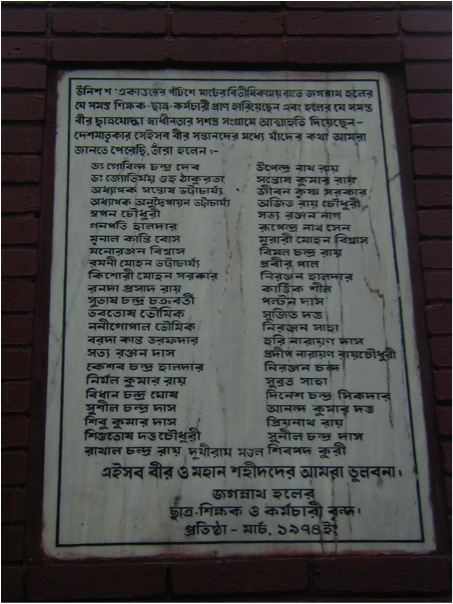
List of names of Hindu students and professors massacred at Jagannath Hall on night of 25th March, 1971 by the Pakistani Army. Click to enlarge. Photo credit: Udayan Chattopadhyay.

Nirad C Chaudhuri and Jatin Sarker were both born in Hindu families in the Mymensingh district of eastern Bengal, now Bangladesh. Chaudhuri, about four decades older than Sarkar, wrote his autobiography before India held its first election, and ceased to be an unknown Indian. Sarker also wrote his life story. Unlike Chaudhuri, Sarker’s was in Bangla, published in Bangladesh, never translated in English, and not available in India or beyond. He remains unknown. Which is a pity, because if you want to know what has happened to the land where both these men were born, Sarker is a far, far better guide than Chaudhuri.

Sarker, of course, stopped being an Indian on 14 August 1947, when Mymensingh became part of East Pakistan — the eastern wing of Jinnah’s moth-nibbled land of the pure. His family didn’t move to India. They were not atypical. Many Hindu families remained in East Pakistan. Perhaps it was the presence of Gandhi. Perhaps it was the fantastical belief that Subhas Chandra Bose would return in 1957 — a century after the Great Uprising, two centuries after the Battle of Plassey — to reunite Mother Bengal.   Continue reading The Banality of Bengal: Jyoti Rahman on the Tribulations of the Bangladeshi Hindus

When the State Celebrates the People’s Independence but the People Don’t: Twelve Questions for the Press Trust of India

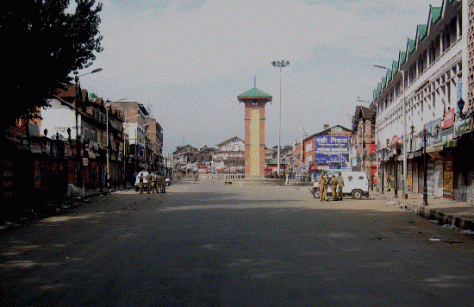
Srinagar's Lal Chowk on 15 August 2011. Photo credit: Zahoor Zargar / KashmirDispatch.com

To:

The Editor,
The Press Trust of India,
New Delhi.

Dear Editor:

This is regarding your news report, “I-Day Celebrated Peacefully in Kashmir Valley“.

While the news report tells us how the celebrations were held by the chief minister in Srinagar and the deputy chief minister in Jammu, and what arrangements were made for the celebrations to take place, there’s one line in that report that tells us:

Meanwhile, normal life was was affected in Kashmir Valley due to a shutdown called by both factions of Hurriyat Conference and tight security restrictions for the Independence Day.

I have a few questions for you.

Continue reading When the State Celebrates the People’s Independence but the People Don’t: Twelve Questions for the Press Trust of India