Category Archives: Frontiers

The Collapse of Hegemony: Kumar Rana

[This is a guest post by KUMAR RANA. Kumar Rana is an activist and works with Pratichi]

At last, after 32 years, history repeated itself in West Bengal. It’s the history of routing of a prolonged political hegemony established by the CPIM led Left Front that replaced in 1977 another prolonged reign of the Congress.  The Left Front is now reduced to 15 seats from its 2004 tally of 35. The Trinamool Congress led by Mamata Banerjee, who severed her ties with the NDA to form an alliance with the Congress has swept through the elections to multiply her parties tally by 19 – she was the sole representative of her party in 2004. She made two alliances – one with the Congress that has managed to restore its position by winning six seats, and the other with SUCI, which too has won the seat allotted to it. The BJP has also secured a seat mainly through its bargain with the Gorkha Janmukti Parishad that has been fighting for a separate state of Gorkhaland. In other words, the opposition parties have now secured 27 out of 42 seats – more than two third – in the state.

Not that the change was fully unanticipated. There have been indications in the pre-poll surveys and other discourses that the Left Front was going to loose – but only to some extent (18-19 seats). None, including the opposition parties, did expect such a result. This writer too estimated the opposition seats to be 23-24, and could not imagine that the phrase – era jak (let they be dumped) – could have so routing effect on the ruling front.. Indeed, it’s the people who build up their own phrases, and this time it was “era jak”.
Continue reading The Collapse of Hegemony: Kumar Rana
‘Either we finish what we started, or get finished’

The most dangerous and worrying feature in the last two weeks is the resurgence of visceral anti-Maoist politics.

The line between the liberals and right wing has suddenly blurred and they are united in their hatred of the former rebels. The Kathmandu middle class, a part of which gave the benefit of doubt to the Maoists in the polls, had to cough up concessions under Baburam Bhattarai’s fiscal regime. With the recent video revelations, they have veered away even further. The urban lower middle class suffered during eight months of misgovernance with price rise, and collapse of services and is hoping the next government may provide some relief.

The army establishment has reasserted itself and is actively hatching plans to undermine Maoists. Most of the press, with ownership and editorial staff affiliated to ‘mainstream’ parties’, is toeing the NC-UML line. And erstwhile sympathisers in the Indian establishment are now sick of what they see as Maoist duplicity – the recent rediscovery of the ‘nationalist’ rhetoric has put them off further. Continue reading ‘Either we finish what we started, or get finished’

The resignation aftermath

This entire crisis complicates politics for the simple reason that no side feels that it has lost. Don’t mistake this for a win-win situation. It is a situation where all sides are smug, their ambitions are stoked, and they are even more unwilling to make any concessions.

This has actually been a problem right since the 12 point deal. The king got dumped. But besides that, no actor has had to relent on their fundamental interests and give concessions.

The army, after a temporary cooling-off period, was rehabilitated and its privileges were protected. For GP Koirala, April 2006 was a moment to take over the state apparatus and keep the seat warm for his daughter, while protecting the interests of the NC class base. The Maoists saw the entire process, and the polls, as a tactical victory on way to state control.

In the last fortnight, this tenuous situation has only got more retrenched. The NA’s political role and links and divisions within may have got totally exposed. But the top brass feels they have won a huge victory and will be even less amenable to civilian control. The Maoists may not have succeeded in throwing out Katawal, but they feel they have won a moral victory by resigning and are complacent that the political stalemate cannot be resolved without them. UML and MJF think this is their chance to lead the government. And NC is already thrilled at the money that will come with the ministries. Continue reading The resignation aftermath

What next in Nepal?

Prime Minister Pushpa Kamal Dahal ‘Prachanda’s resignation on Monday afternoon once again reveals how the Unified Communist Party of Nepal (Maoist) is different from any other ‘mainstream’ party that inhabits the Nepali political landscape. Most observers, including this writer, fail in assessing the Maoists correctly because we end up using the same categories, attribute the same motivations, and expect similar tactics from them as from other political actors.

The PM’s resignation came after a two week long political thriller leading up to the executive’s decision to dismiss Army chief General Katawal and appoint General Kul Bahadur Khadka in his place. Continue reading What next in Nepal?

Lalgarh, Media and the Maoists: Monobina Gupta

Guest Post by MONOBINA GUPTA

[As this report is filed, reports have come in that the CPI-M has finally managed to enter Lalgarh and hold its first public meeting since 2 November 2008, when the police first arrested seven young students from Lalgarh, sparking off a revolt. No machine guns were fired, no mines were blasted – even though we are supposed to believe that the area is a ‘liberated area’ of the Maoists. See our earlier report, written soon after the revolt began. Even as we post this, more reports – mostly from West Bengal government and police sources, are being suddenly being published of ‘unrest’ spreading to ‘more Maoist areas’, and an atmosphere is sought to be created for an eventual justification of government and party sponsored violence.]

Assembly in Lalgarh - Armed Maoists? Photo, courtesy sanhati.com
Assembly in Lalgarh – Armed Maoists? Photo: courtesy sanhati.com

For five months now Lalgarh has been practicing a unique form of democratic politics. To the ruling CPI-M in West Bengal and the big media however, it has been nothing but a Maoist-sponsored agitation with portents of Maoist style violence. Except Bengal media, national print and television, have by and large kept Lalgarh out of their ambit of coverage. If at all news has trickled in, it has come tagged with ‘Maoists’ and ‘violence’; as if tribals in this forgotten part of Medinipur, the past five months, have been stocking up arms and laying ambushes to wage a war against the state.

A front-page article in the Times of India (TOI) today (April 22, 2009) sticks to this format describing Lalgarh as “Nandigram II, a liberated zone” where an explosive situation is building up with elections scheduled for April 30 and the Pulishi Santrash Birodhi Janashadharaner Committee (People’s Committee against Police Atrocities) refusing to allow the police to enter Lalgarh. “The police can’t enter here. Nor are other government officials welcome. This has been the situation for the last six months.”

Continue reading Lalgarh, Media and the Maoists: Monobina Gupta

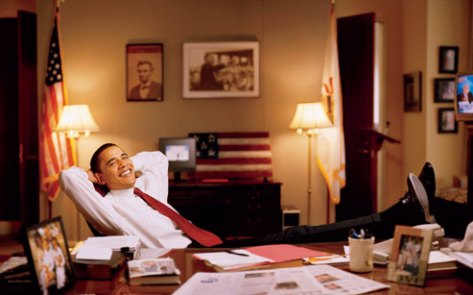
Obama and the End of Other Dreams?

poar01_obama0803

This guest post comes to us from NISSIM MANNATHUKKAREN

And I have seen the promised land. I may not get there with you. But I want you to know tonight, that we, as a people, will get to the promised land.

Martin Luther King, Jr.

Continue reading Obama and the End of Other Dreams?

Closed minds

The Constituent Assembly’s ‘Committee to protect and preserve National Interests’ has suggested that a passport regime be introduced at the Nepal-India border. Committee Chair Amik Sherchan has said this is necessary to ‘protect waning Nepali nationalism’ and ‘to treat both China and India equally’. Sherchan claimed that ‘majority of the Nepali people share this view’, an assertion hard to believe.

The clamour to end the open border relationship comes from three different quarters of the Kathmandu (and yes this is confined to the capital) political spectrum. The first is the nationalists who borrow the Westphalian notion of absolutely sovereign nation states. In this version, the Nepali state has never been totally independent because it has not controlled the movement of people across its boundaries. The act of walking across unchallenged is seen as an attack on state authority. Continue reading Closed minds

That day in 2003

Look who’s blogging at GVO. Salam Pax.

Tens of Thousands Protest G20 Summit

‘They hoped for ten thousand, but in the end more than three times that number turned out on London’s streets today for the biggest mass demonstration since the beginning of the economic crisis’, writes a report in the Guardian.
London march, courtesy Associated Press

According to another report: Tens of thousands of people marched across central London Saturday to demand jobs, economic justice and environmental accountability, kicking off six days of protest and action planned in the run-up to the G20 summit next week.

More than 150 groups threw their backing behind the “Put People First” march. Police said around 35,000 attended the demonstration, but there were large gaps in the line of protesters snaking its way across the city toward Speaker’s Corner in Hyde Park.

Read the full report here.

What is significant about the protests this time round, is that ordinary people are not ready any more to be the sacrifiical lambs while the big corporations are bailed out. ‘Capitalists, you are the crisis’ and ‘We won’t pay for their crisis’ are in fact some of the important and key slogans of the current round of protests.

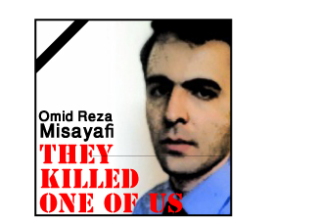
Omid Reza Misayafi

omid

Omid Reza Misayafi was a blogger.

That is not why he has lost his life in prison.

It’s because of what he wrote.

‘Lahoris woke up and joined their son’

What a moment it is, what a moment it must be. Ordinary people on the streets of Lahore on Sunday, countless thousands of them, have forced the Pakistani government to re-instate the deposed Chief Justice of the Supreme Court. What a moment of hope in a country the rest of the world believes is about to ‘implode’. What a resurrection of yourself, Mian Sa’ab, who will now remember how unpopular you were when Mush had ousted you!

Here’s an extremely illuminating account of what happened in Lahore, an anonymous account circulating on some mailing lists. This is apart from some excellent citizen reportage on Twitter by Pakistanis.

The Army, the Presidency, the Americans and the Prime Minister, were all ready to throw peanuts at Nawaz Sharif. The assessment was that 500 will reach constitution avenue (read Salman Taseer). In Pindi, we had halwa puri at a friends house today. A PPP friend who knew my passion for the CJ, at 11-00 am said, looking at me, “Yar Imran, there is a bigger long march in my house than in Lahore.” A PML N friend told me from Lahore, “Punjabis dont get out in the face of danda. The long march will fail.” Continue reading ‘Lahoris woke up and joined their son’

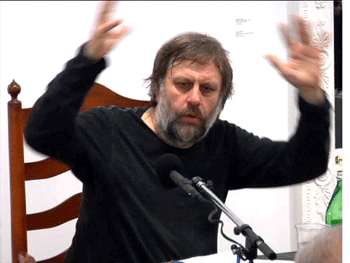
Re-booting Communism Or Slavoj Zizek and the End of Philosophy – I

Zizek - the postmodern Lenin?

Today, 13 March, a whole galaxy of philosophers and theorists got together for a three-day conference “On The Idea of Communism” under the auspices of the Birkbeck Institute for the Humanities, London University. The Conference opened to a jam-packed hall where all tickets had sold out (no jokes, this was a ticketed show where the likes of Alain Badiou, Slavoj Zizek, Jean Luc-Nancy, Toni Negri, Jacques Ranciere, Terry Eagleton and many many others are to perform on the ‘idea of communism’). The huge Logan hall with a capacity of about 800-900 was so packed that the organizers had made arrangements for video streaming in another neighbouring hall – and that too was half full! Very encouraging in these bleak days.

The conference began in the afternoon with brief opening remarks by Alain Badiou and Slavoj Zizek. Badiou made his general point (see below) about the continuing relevance of the ‘communist hypothesis’. Staid and philosopherly. Continue reading Re-booting Communism Or Slavoj Zizek and the End of Philosophy – I

Israel(i Man) seduces India(n Woman)

Here’s how a state-owned Israeli defence firm tries to get business from India’s Defence Ministry:

The Danger Room blog said the text implied that the “Indian military is somehow like a helpless woman who needs to feel safe and sheltered.”

Rafael dismissed the criticism of its film and said that it made movies with a local theme for every international defense expo. A movie, one company source said, made for a defense expo in Brazil focused on soccer and weapons. Another movie, for a US audience, focused on football.

“We try to make the movies about the place where the defense expo is located,” the company source said, adding that in previous years Rafael had won prizes for its pavilions and marketing techniques. [The Jerusalem Post]

A Fragile Peace in Nepal

In the six months that Maoist chairman Pushpa Kamal Dahal ‘Prachanda’ has been Prime Minister, he has realised that running a state is more complex than waging a war.

Since mid-August when he took charge, the PM has had to deal with multiple challenges – an intense ideological debate within his party; a deadlock in the peace process; breakdown of consensus with the G P Koirala led Nepali Congress (NC); acrimony between the defence ministry and Nepal Army (NA); opposition from sections of civil society suspicious of Maoist commitment to democratic norms; rampant lawlessness in the eastern Tarai and ethnic assertion in eastern hills; the collapse of basic services with 16 hour power cuts; and the impact of the global meltdown with remittances dipping. Continue reading A Fragile Peace in Nepal

Chavez Expels Israel’s Ambassador, Becomes New Palestinian Hero

Via Liberation News Service

Venezuelan leader accuses Israel of being ‘murder arm’ of US, says solution to Gaza crisis is in Obama’s hand.
Report by Anna Pelegri of Middle East Online – BETHLEHEM, 12 January 2009

Demonstrators in Yemen
Portraits of Chavez carried by demonstrators in Yemen

“Venezuelan flags and portraits of President Hugo Chavez have been flying high during protests in the West Bank against Israel’s assault on the Gaza Strip”, says the report.

The report continues:

The Venezuelan president’s decision on January 6 to expel Israel’ ambassador from Caracas — the only country apart from Mauritania to take such a step — has made the left-wing South American leader a hero to Palestinians.

Hamas has welcomed Chavez’s “courageous decision,” while Hassan Nasrallah, head of Lebanon’s Hezbollah group, urged Arab states to follow the Venezuelan president’s example.

ग़ाज़ा, इस्राइल और इस्राइल बनने की मंशा

प्रणव मुखर्जी से किसी पत्रकार ने पूछा कि क्या भारत पाकिस्तान में वैसी ही कार्रवाई करेगा जैसी इस्राइल गाज़ा में कर रहा है. शुक्र है कि हमारे विदेश मंत्री ने  यह कहना ज़रूरी समझा कि इस्राइल की तरह भारत ने किसी और की ज़मीन पर कब्जा नहीं कर रखा है. इस सादे से तथ्य को कहना आजकल गनीमत है क्योंकि हमारे आदर्श बनते जा रहे अमरीका में फिलीस्तीनीयों को ही इस रूप में पेश किया जा रहा है मानो वे ही शांति से रहने वाले इस्राइलियों को चैन से नहीं रहने दे रहे. तो क्या यह मान लिया जाय कि हमारी याददाश्त भी ‘गजनी’ की तरह सिर्फ पंद्रह मिनट की रह गई है? क्या हम यह भूल गए है कि गाज़ा के उस पतली सी पट्टी में जो पिछले साठ  साल से पीसे जा रहे हैं वे एक ज़िओनवादी राज्य इस्राइल की स्थापना के लिए उनकी अपनी ज़मीन से उखाड कर फेंक दिए गए लोग हैं?

ग़ाज़ा पर इस्राइली बामबारी, सा�ार बीबीसी
ग़ाज़ा पर इस्राइली बामबारी, साभार बीबीसी

अगर हम साठ साल की बात को याद नहीं रखना चाह्ते तो क्या हम यह भी भूल गए हैं कि  अभी दो ही साल बीते हैं कि फिलीस्तीन की जनता ने हमास को चुनाव में बहुमत दिया था! क्या हमें यह भी याद दिलाना होगा कि हमास की चुनावी जीत को इस्राइल, अमरीका , युरोप और उनके पिट्ठू फतह ने मान्यता देने से इंकार कर दिया था?

एपी
बमबारी का एक और नज़ारा, तस्वीर: एपी

हमास एक आतंकवादी संगठन नहीं है, जैसा अमरीका और इस्राइल चाह्ते हैं कि उसे माना जाए, वह फिलीस्तीनी जनता का वैध प्रतिनिधि है. क्या चुनाव में उसकी जीत को मानने से इनकार  वैसा ही नहीं जैसा मुजीबुर्रहमान की जीत को मानने से तब की पकिस्तानी हुकूमत का इंकार ? उसका नतीजा था  पाकिस्तान का  विभाजन और बांग्लादेश के रूप में एक नए राष्ट्र का जन्म. यहां अंतर सिर्फ यह है कि हमास ने गाज़ा पट्टी पर संघर्ष के बाद नियंत्रण कर लिया. तब से इस्राइल के कहने पर अमरीका समेत पूरे विश्व ने हमास का बहिष्कार कर रखा है. क्या हम इसकी कल्पना कर सकते हैं कि भारत में भारतीय जनता पार्टी के चुनाव में जीतने के बाद उसकी राजनीति से असहमति रखने के कारण उसे मान्यता न दी जाए?

Continue reading ग़ाज़ा, इस्राइल और इस्राइल बनने की मंशा

Army wanted Abdullah, who’s surprised?

Ashish Sinha in Mail Today:

Any political decision on Kashmir — especially when the ball is in the Congress’s court — cannot afford to ignore the sentiments of lakhs of troops stationed here because, at least for now, they appear to be a more permanent fixture than any party, even the National Conference (NC). [Full text]

I told you so…

And Siddharth Varadarajan asks the right question:

But if these motives propelled the ISI to either mount or at best turn a blind eye to the Mumbai plot, why did the same agency — which essentially manages Rawalpindi’s links with militant groups active in Jammu and Kashmir — not seek to disrupt the assembly elections? [Here]

Protests in Israel against Gaza Attacks

We are all aware of the terrible toll of unarmed civilian casualties caused by the IDF (Israeli Defence Forces) air strike on Gaza a few days ago. It demonstrates yet again the willingness of those who currently hold power in Israeli to sabotage the chances of a lasting and durable peace with the Palestinian people. There is no other way to describe these air strikes other than as acts of gross state terrorism. Bombing unarmed civilians from the skies, including children is not a solution or an answer to terrorism. It is terrorism.

Of course, Hamas, (which controls the West Bank, and whose origins lie in the cultivation by Israel of an ‘Islamist Opposition’ within the Palestinian ranks in the eighties and earlier ) with its own obduracy has contributed to the ‘blowback’ that holds the peace process in Israel-Palestine hostage to a never ending cycle of competitive retribution.

Continue reading Protests in Israel against Gaza Attacks

Oranges in Kashmir

Guest post by K

In the summer of 2008, something impossible happened. To a number of Indians, Kashmir was no longer an atoot ung, an inseparable part of the Indian body politic. That image of Kashmir treacherously manufactured by the Indian state through lies, deceit and the media, was wearing down.

The atoot ung no longer seemed atoot to many voices in India and against all odds the people of Kashmir were changing many hearts and minds in India. The loss of soldiers does not worry India as much as the change in its public opinion on Kashmir. This had to be undone, and undone fast before it spread its tentacles. The evil image of Kashmiris had to emphasized and the  non-violent protests discredited. What better than an election to do the task?

So the results will be out tomorrow, but do they matter? Continue reading Oranges in Kashmir

A cruel joke called elections in Kashmir

The Indian media has been expressing surprise about the high voter turnouts in the Kashmir elections. The expression of surprise sounds genuine. I am not sure how genuine it is. Is patriotism coming in the way of truth? How can we not see what a Wall Street Journal reporter can?

In the village of Samboora, residents said that Indian Army troops went from house to house on Saturday morning, rounding up families and taking them to a polling station. As a reporter drove into the village Saturday afternoon, an army vehicle with several soldiers stopped by the walled compound of Ghulam Mohammad, pulling the 59-year-old retiree onto the road. Seeing a foreign reporter, the soldiers jumped into their vehicle and quickly drove off. “They asked me why I’m not voting, and I said that’s because I don’t like any of the candidates,” Mr. Mohammad said moments later. “They said, if I don’t vote, I’ll be sorry later.” [Must Read]

And wasn’t this predicted anyway? Didn’t we tell you about Gentle Persuasion? Oh, and they already know who the CM is going to be.

Looking Kabul, talking Rawalpindi?

Strategically speaking, that is. It is important to think this question through.

For one, there’s hardly anybody disputing that the Lashkar-e-Tayebba was behind the attack. Pakistan wants evidence, but doesn’t deny the LeT could be it. 

Parvez Hoodbhoy says in an interview:

LeT, one of the largest militant groups in Pakistan, was established over 15 years ago. It was supported by the Pakistani military and the ISI because it focussed upon fighting Indian rule in Muslim Kashmir. Today it is one of the very few extremist groups left that do not attack the military and the ISI; Continue reading Looking Kabul, talking Rawalpindi?