
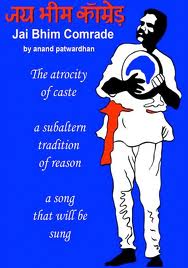
 How many murdered Dalits does it take to wake up a nation? Ten? A thousand? A hundred thousand? We’re still counting, as Anand Patwardhan shows in his path-breaking film Jai Bhim Comrade (2011). Not only are we counting, but we’re counting cynically, calculating, dissembling, worried that we may accidentally dole out more than ‘they’ deserve. So we calibrate our sympathy, our policies and our justice mechanisms just so. So that the upper caste killers of Bhaiyyalal Bhotmange’s family get life imprisonment for parading Priyanka Bhotmange naked before killing her, her brother and other members of the family in Khairlanji village in Maharashtra, but the court finds no evidence that this may be a crime of hatred – a ‘caste atrocity’ as it is termed in India. Patwardhan’s film documents the twisted tale of Khairlanji briefly before moving to a Maratha rally in Mumbai, where pumped-up youths, high on testosterone and the bloody miracle of their upper caste birth are dancing on the streets, brandishing cardboard swords and demanding job reservations (the film effectively demolishes the myth that caste consciousness and caste mobilisation are only practised by the so-called ‘lower castes’). Asked on camera about the Khairlanji murders, one Maratha manoos suspends his cheering to offer an explanation. That girl’s character was so loose, he says, that the entire village decided to teach her a lesson.
Category Archives: Identities
On the low morale of Gujarat Police: RB Sreekumar
This guest post by former Gujarat DGP RB SREEKUMAR is a letter to the Union Minister of Home Affairs.
Dear Shri P. Chidambaram,
I belonged to Gujarat cadre of Indian Police service (IPS)-1971 batch-and retired from service on 27.2.2007 in the rank of Director General of Police (DGP), Gujarat state.
2. As a senior citizen (age-65 years) staying in Gujarat since 1970s, I am constrained to write the following for your kind consideration and urgent remedial action.
3. The morale, self esteem and image of the Gujarat Police in general and of IPS officers giving leadership to police force in the state in particular, have been in steady decline since 2002 anti-minority genocide. The media, reputed human rights activists and national bodies like the National Human Rights Commission, the National Commission for Minorities and the National Commission for Women have thrown light on serious intentional acts of commission and omission by Gujarat government functionaries (except in cities like Surat, Bhavnagar and a few districts in South Gujarat and Saurashtra), that facilitated extensive and gruesome mass violence against minorities.
Continue reading On the low morale of Gujarat Police: RB Sreekumar
The Final Countdown in Nepal
Five years after a peace accord marked the end of a decade long civil war, Nepal’s political transformation has entered its final phase.
On May 27, 2012, the term of the Constituent Assembly — extended four times beyond its original two-year term — will expire. And this time, politicians will not find it easy to give the CA another lease of life due to a judicial stricture. The Supreme Court (SC) has declared that the current extension is final, and if the constitution is not promulgated, there should be another election or referendum. There is also rising popular pressure to wrap up the prolonged transition, which has been accompanied by abysmal service delivery.
That gives the political forces less than three months to wrap up the peace process and write a constitution. Together, this will shape the nature of Nepal’s political institutions and security apparatus. Continue reading The Final Countdown in Nepal
Sepia Mutiny (2004-2012)

The great Indian American blog Sepia Mutiny is shutting shop.
I also truly feel that the mission of Sepia Mutiny is complete, especially for what I envisioned SM would be all about (other bloggers can share their view). Back in 2004 there was very little brown representation in the media and very little “voice” representing us. There was not a single loud speaker for the South Asian American community. Now there is quite a bit more and brown is everywhere. There seems much less need for a “Mutiny” given our strides. We were even invited to blog at the 2008 Democratic National Convention which was hard to imagine in 2004. That is not to say we are anywhere near where we’d like to be, but a Mutiny should naturally give way to a more organized movement of some kind. I believe SM did its job in sowing the seeds for that next chapter, whatever forms it now takes. Continue reading Sepia Mutiny (2004-2012)
Thinking through UP election results with numbers: Rahul Verma
Guest post by RAHUL VERMA
Here’s a closer analysis of Uttar Pradesh 2012 election results
In an article the Times of India says the Samajwadi Party’s victory in Uttar Pradesh seems to be an even more impressive sweep than the BSP’s 2007 showing, but it’s actually a less comprehensive domination. According to the same article, the SP did not do well in western UP and Bundelkhand. They do not provide any reason for this.
My analysis of the election results data shows that average number of candidates per assembly constituency and average number of candidates per one lakh electorate in west UP and Bundelkhand, was slightly lower than other regions of the state. In west UP and Bundelkhand, the average number of candidates per one lakh electorate was approximately 8.5 and average number of candidates per assembly constituency was approximately 16. Whereas in other parts of the state average number of candidates per one lakh electors was approximately 9.5 and average number of candidates per assembly constituency was 17. This means that in other regions of the state votes were more divided and thus the SP got an edge in terms of winning seats. In the first-past-the-post (FPTP) system with multi-cornered contests, even such small gaps lead to big swings in terms of seats a party can win. Continue reading Thinking through UP election results with numbers: Rahul Verma
We, the People of Gujarat: Urvish Kothari
This guest post by URVISH KOTHARI was originally written in Gujarati and has been translated by VISTASP HODIWALA
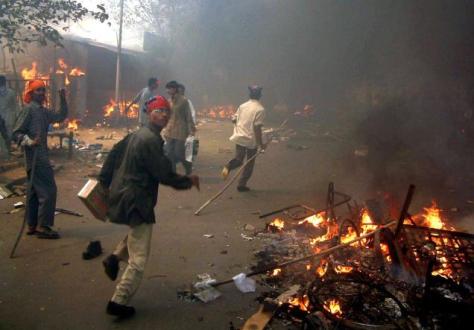
Some facts are so simple and self-evident that they elude you completely at the time they happen. Digesting them takes time – 2, 3,7, maybe even 10 years. By that time, the passion and the anger has abated a bit and there is a sense of composure that pervades our beings.
Like the fact about the communal violence that gripped the State of Gujarat in 2002.
Of course, a mere mention of this is enough to get the chief minister’s fanboys roll up their sleeves, even as their opponents ready themselves to launch a counter onslaught. But with the passage of ten long years, the first question should not be about whether the Chief Minister was complicit in the crime or not. No, it cannot be.
Why Geneva and not Matara, Jaffna or Batti?: Kusal Perera
Guest post by KUSAL PERERA

Thousands of Tamils from across Europe protested in front of UN headquarters in Geneva Monday demanding the creation of an international tribunal to try “war crimes” committed in Sri Lanka…. [AFP report, 6 March 2012]
The battle is raging. It will go on till about the 23rd of March, 2012. In Geneva. The battle is against the Rajapaksa regime in Sri Lanka and not against Sri Lanka itself. It’s a battle over “war crimes and accountability” during the Sri Lankan war, in particular its final stages. Delhi’s vacillating position of “not right to interfere on a country basis” as regards the US Resolution to the United Nations Human Rights Council’s Session 19, is being challenged firmly in Chennai by the two major political parties in Tamil Nadu, the DMK and the AIDMK firm. Beijing and Moscow are clear about the issue. They will vote against the US Resolution, and also muster up support amongst other countries to vote with them. If they could collect 24 votes in total, they will have had their say and the Sri Lankan regime will not have to worry about Geneva anymore. Continue reading Why Geneva and not Matara, Jaffna or Batti?: Kusal Perera
Ambedkar – A poem by Ravikumar
Guest post by RAVIKUMAR
 Under the scorching Sun
in the shadow of a tamarind tree
there assembled a small crowd
children, women and men
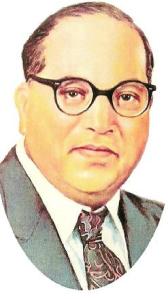
words about Ambedkar,
Dalit rights and Women’s rights
breezed over
sweating faces
When we sow
Some seeds fall in bushes
Some on rocks
Some on dry land
Some in ponds
Some on wet land
Who knows–
who is the wet land
(Ravikumar is a well-known activist and theoretician of the Dalit movement in Tamil Nadu. A former legislator in the Tamil Nadu legislature, he is general secretary of Viduthalai Ciruthaikal Katchi.)
Previously by Ravikumar in Kafila:
A Hundred Years of Manto
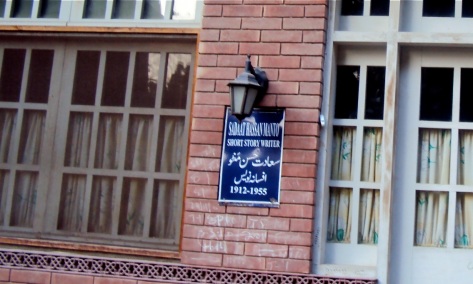
“Here lies buried Saadat Hasan Manto in whose bosom are enshrined all the secrets and art of short story writing. Buried under mounds of earth, even now he is contemplating whether he is a greater short story writer or God.”
May 2012 will mark the hundredth birth anniversary of the man who wrote that epitaph for himself, Saadat Hasan Manto (1912-1955). One cannot help but compare Manto’s centennial to Faiz Ahmed Faiz’s last year, preparations for which had begun much in advance. There seems to be an odd silence about Manto. Continue reading A Hundred Years of Manto
75 Years of Bhonsala Military School: Militarising Minds, Hindutvaising the Nation
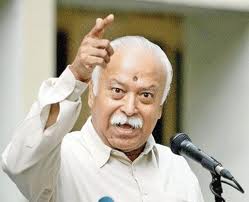
..to bring about military regeneration of the Hindus and to fit Hindu youths for undertaking the entire responsibility for the defence of their motherland.
to educate them in the ‘Sanatan Dharma’, and to train them “in the science and art of personal and national defence”
– From the aims of ‘Central Hindu Military Education Society,’ NMML, Munje Papers, subject files, n 24, 1932-36)
This training is meant for qualifying and fitting our boys for the game of killing masses of men with the ambition of winning victory with the best possible causalities (sic) of dead and wounded while causing the utmost possible to the adversary.
– Preface to the scheme of the Central Hindu Military Society and Its Military School’NMML, Munje Papers, subject files, n 25, 1935
Nashik: Expressing concern over the dominance of ‘rich and powerful people’ in politics, besides the soaring inflation rate, Rashtriya Swayamsewak Sangh (RSS) chief Mohan Bhagwat said that India’s situation was better during the British rule…Speaking at a function organized by Bhonsala Military School (BMS) to celebrate its platinum jubilee year in Nashik on Monday, Bhagwat …laid stress on the need for imparting military education to students, citing rising threat to the nation.
– ‘India was better off under British rule: Mohan Bhagwat’, Times of India, Feb 22, 2012
Continue reading 75 Years of Bhonsala Military School: Militarising Minds, Hindutvaising the Nation
Why Mayawati’s defeat is the BSP’s victory

Even before the results came out, the Mayawati cabinet passed a resolution to dissolve the assembly. Never before has an incumbent shown such confidence about losing. Mayawati’s body language during the campaign was proof of the same lack of confidence. Mayawati was going to lose, the Samajwadi Party was in the air. And yet, Mayawati must be relieved right now. She knows that this defeat of hers is, ironically, a victory of the Bahujan Samaj Party and what it stands for. Here’s how.
Why Rahul Gandhi’s Congress flopped in Uttar Pradesh

In 2008 if you had said the Congress could revive in Uttar Pradesh you would have been laughed at. No party structure or caste base, you would have been told. In 2009, Rahul Gandhi earned perhaps the first laurel of his political career by proving critics wrong. He beat conventional wisdom by saying no to allying with the Samajwadi Party and the Congress won just 22 of 406 seats. Since then, Congress revival in UP has been taken for granted in many corners. Some pundits were predicting as many as 100 seats for the Congress this election. This speculation had a good basis: Rahul Gandhi always left crowds happy. And he flew on a helicopter addressing as many as 4 rallies a day. If you spoke to the people who attended his rallies, you’d be surprised by the amount of goodwill he created for himself. The rise in vote share despite the poor seat performance is proof for the rising appreciation of the Congress’ efforts to regain relevance in state politics. But then, what went wrong? Continue reading Why Rahul Gandhi’s Congress flopped in Uttar Pradesh
The Unique Identity of a Standing Committee – The UID in Parliament: Taha Mehmood
This long guest post by TAHA MEHMOOD, who has been independently researching surveillence, biometrics and identification techonologies for a long time dissects the discussion and discourse around the Unique Identification Database scheme of the Government of India
- The Discreet Charm of UID
The January 2012 issue of The Economist, a magazine published from London, has an article on India’s national ID card scheme, titled, The Magic Number. The article focuses on how UID is progressing. The brave hero of the story is of course Nandan Nilekani and villain is ‘India’s stubborn home minister, P. Chidambaram,’ who ‘is now blocking a cabinet decision to extend the UID’s mandate, which is needed for the roll-out to continue’. According to the unnamed author of the article, ‘Indian politics hinge on patronage—the doling out of opportunities to rob one’s countrymen. UID would make this harder. That is why it faces such fierce opposition, and why it could transform India.’ This article appeared in The Economist days after the report of Standing Committee of Finance was released. What went on in the deliberations of this standing committee?
Continue reading The Unique Identity of a Standing Committee – The UID in Parliament: Taha Mehmood
Seeing UP from Phulpur
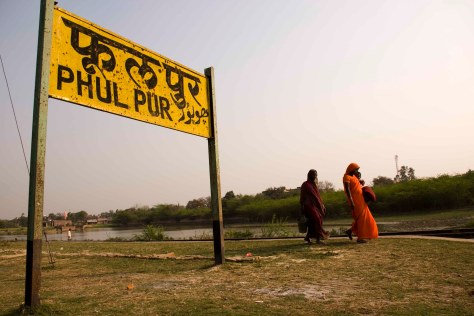
In which I go to Phulpur, once famous as Nehru’s seat, and do walk-the-talk with village-level workers of the four main political parties in Uttar Pradesh. Here. Continue reading Seeing UP from Phulpur
Three Stories of Resilience from Gujarat: Ayesha Khan
Guest post by AYESHA KHAN, Baroda-based journalist

To mine the detritus of the Gujarat pogrom for positive stories may seem like sacrilege. But when memories are dredged up to mark a decade of the horrors of 2002, a little blasphemy could help balance the account books.
Mostly what we recount of Gujarat 2002 is deaths. Yet, more than the murder and mayhem, the pogrom stood out for an unprecedented scale of sexual violence that Muslim women were subjected to. George Fernandese in his capacity as the Union defence minister had explained to the Parliament after a quick tour of Gujarat that women raped or molested during riots was not surprising or exceptional. I will not go here into the polemics of why violating women’s sexuality is considered a means of dishonouring a community,
There’s an untold story about how the community handled sexual violence. If the dominant community legitimised rape driven by its insecurities and politics that stemmed from history and identity issues, it was perhaps for the first time that the persecuted community reacted to rape in a progressive way.
Rape is double-edged sword, first leading to physical violation and second to social ostracisation in most societies. Which is common to mask the identity of rape victims for fear of social stigma. Strangely, during the 2002 riots, Muslim women, some of them burqa clad and most of them from tightly-knit rural communities never betrayed the kind of shame or guilt that rape victims are expected to show. What was their fault? Why should the victim feel shame and guilt? And so it was that many of them did not cloak their identities, and instead chose to come out publicly to demand justice. Continue reading Three Stories of Resilience from Gujarat: Ayesha Khan
The Gulberg Memorial
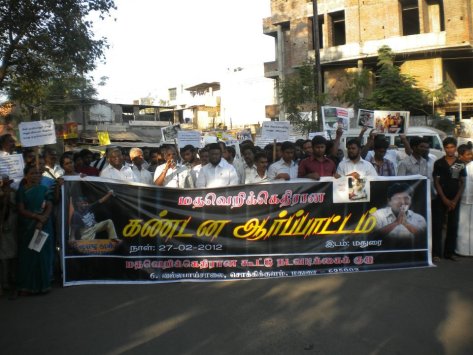
The photograph above is that of a small protest by People’s Watch yesterday, in Madurai, for justice and reparations in Gujarat. Such demonstrations were held across India. Nothing irks the Narendra Modi Fan Brigade than remembering. Move on, they say, move on, forget it. It happened. The struggle of man against power, said Milan Kundera, is the struggle of memory against forgetting.
The short film below, about making a memorial at Gulberg Society in Ahemdabad, was put out by the Teesta Setalvad-led Sabrang Trust in 2008. Yesterday, tenth anniversary of the day Gujarat began to burn for a few weeks in 2002, Sabrang Trust held a meeting at what is now the Gulberge Memorial. Given below the film is the text read out by Justice Hosbet Suresh read out at the Memorial meeting, which was webcast live by Sabrang Trust.
A decade on, Gujarat justice incomplete: Human Rights Watch
This release was put out on 24 February 2012 by HUMAN RIGHTS WATCH
(New York) – Authorities in India’s Gujarat state are subverting justice, protecting perpetrators, and intimidating those promoting accountability 10 years after the anti-Muslim riots that killed nearly 2,000 people, Human Rights Watch said today. The state government has resisted Supreme Court orders to prosecute those responsible for the carnage and has failed to provide most survivors with compensation.
The violence in Gujarat started on February 27, 2002, when a train carrying Hindu pilgrims was attacked by a Muslim mob and caught fire, killing 59 people. In a retaliatory spree by Hindu mobs, hundreds of Muslims were slaughtered, tens of thousands were displaced, and countless Muslim homes were destroyed. Continue reading A decade on, Gujarat justice incomplete: Human Rights Watch
Caste Discrimination in Cyclone Thane in Tamil Nadu and Pondicherry: NDW-NCDHR
A preliminary report of an investigation into caste discrinimation with regard to Cyclone Thane by National Dalit Watch–National Campaign for Dalit Rights conducted on 18, 19 January 2012
Cyclone Thane
Cyclonic Storm Thane was the strongest tropical cyclone of 2011 within the North Indian Ocean. Thane initially developed as a tropical disturbance within the monsoon trough to the west of Indonesia. Over the next couple of days the disturbance gradually developed further while moving towards the northwest, and was declared a Depression during December 25, before being declared Cyclonic Storm Thane during the next day. As it was named, Thane started to turn towards the west under the influence of a subtropical ridge of high pressure before its development slowed down during December 27, as a strong outflow and marginally favourable sea surface temperatures fought with persistent vertical wind shear. After its development had slowed down during December 27, Thane became a Very Severe Cyclonic Storm during December 28, before as it approached the Indian states of Tamil Nadu and Andhra Pradesh, it weakened slightly. Thane then made landfall early on December 30, on the north Tamil Nadu coast between Cuddalore and Pondicherry and rapidly weakened into a depression.
Cuddalore and Vilipuram Districts in Tamil Nadu and Pondicherry were the worst affected due to Cyclone Thane. All roads in these three districts are line by wreckage of fallen trees including large tracts of Casuarina plantations completely wiped out. The only trees that seem to have withstood the fury of the cyclone seems to be the Borassus flabellifer or the Palmyra Palm. According to government estimates at least 39 people have been killed by this cyclone in Tamil Nadu and 7 in Pondicherry. Apart from the loss of life, the Cyclone left huge destruction in terms of livelihood, particularly agricultural livelihood and ripped apart the green cover in these already arid districts.
Continue reading Caste Discrimination in Cyclone Thane in Tamil Nadu and Pondicherry: NDW-NCDHR
Rethinking Urdu Nationalism in Pakistan: Raza Rumi
 Guest post by RAZA RUMI
Urdu has been a controversial language in Pakistan despite its official and holy status. The Bengalis rejected it way back in the 1940s when Jinnah, advised by a bureaucracy, with imperial moorings declared in that it would be the official language. Subsequently, Sindhis, Baloch and Pashtuns have also resisted the one-size-fits-all Urdu formula. Yet, Urdu has emerged as the functional lingua franca that connects Pakistan’s federating units, and its conflation with Islam and Muslim ‘nationhood’ remains the paramount narrative in Pakistan.
It takes arduous scholarship and infinite courage to author a book like From Hindi to Urdu: A Social and Political History (Oxford University Press, 2011). Dr Tariq Rahman, ironically, has worked as the Director of the National Institute of Pakistan Studies at the Quaid-i-Azam University and therefore his challenge to the mythical dimensions of ‘Pakistan Studies’ comes from within and not as an outsider. Sixty-four years after the creation of Pakistan, we have not arrived at any conclusion about our ‘national’ or cultural identity. Dr Rahman’s book if anything shatters the myths that we have built around Urdu; and therefore presents a valid alternative to Goebbelsian tone of our official history. Continue reading Rethinking Urdu Nationalism in Pakistan: Raza Rumi
मायावती जी के मुख्यमंत्रित्व काल का एक संक्षिप्त विवरण: राम कुमार
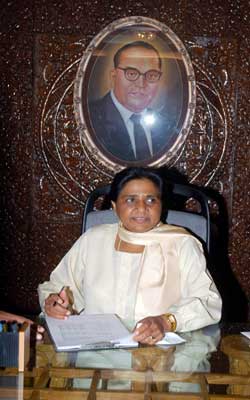 This guest post by RAM KUMAR is a review of five years of Mayawati’s administration in Uttar Pradesh. An English translation has appeared in Fountain Ink magazine, here.
मुख्यमंत्री मायावती जी को 2007 में मिला स्पष्ट जनादेश महज मुलायम सिंह यादव के खिलाफ एन्टी-इनकमवंसी फैक्टर ही नहीं था, बलिक अराजकता और गुंडागर्दी के खिलाफ भी जनादेश था। सरकार का खुले रूप से एन्टी-दलित चरित्र और प्रदेश के अन्दर सरकार के एन्टी ब्राहम्ण टोन के चलते प्रदेश में मुलायम सिंह की सरकार के खिलाफ दलित अति पिछड़े हो गये थे। मुलायम सिंह के कल्याण सिंह प्रेम की वजह से माइनारिटी (अल्पसंख्यक) भी मुलायम से नाराज हो गए। बहन जी ने सर्वजन समाज का नारा देकर विक्षुब्द तबकों को समेटा। सभी को समेटने में रणनीति के तहत अपना नारा बदल “हाथी नहीं गणेष है ब्रम्हा, विष्णु, महेष है” का नारा लगाया। सर्वजन फार्मूला और मुलायम के खिलाफ गुस्सा बहन जी को पूर्ण बहुमत से सत्ता में लेकर के आया।
बहन जी एक सशक्त शासनकर्ता के रूप में जानी जाती थीं। इस बार भी बहन जी सत्ता में आयींऔर सत्ता में आते ही तुरन्त उन्होनें घोषणा की कि अराजकता और गुडागर्दी नहीं चलेगी, कानून का राज्य चलेगा। इसको सिद्ध करने के लिये उन्होंने सबसे पहले जो राजनेता अपने साथ बहुत सारे शस्त्रधारियों को लेकर चलते थे, उन पर प्रतिबंध लगाया और एलान किया कि कोई भी नेता सार्वजनिक स्थल पर तीन हथियार से ज्यादा में दिखे तो उनके खिलाफ कार्यवाही की जायेगी। यही नहीं अपनी पार्टी के एम. पी. रमाकान्त यादव जो आजमगढ़ से हैं, एक गरीब मुसिलम के मकान पर जमीन कबजाने के चक्कर में जबरदस्ती बुलडोजर चलवाया इसकी खबर जब बहन जी को लगी उन्होंने रमाकान्त यादव को अपने मुख्यमंत्री आवास पर मिलने के लिये बुलाया और वहीं से उनको गिरफ्तार करवाया। यह संदेश देने की कोशिशकी कि सत्ताधारी दल के हों या विपक्षी पाटी के हों, कानून सबके लिये समान है। अपनी ही सरकार के खाधमंत्री और विधायक आनन्द सेन को एक महिला के अपहरण केस में बर्खास्त कर जेल भिजवाया और अभी तक 26 प्रभावशाली नेता एवं मंत्रियों को पार्टी के बाहर का रास्ता दिखा चुकी हैं। पिछली सरकार में हुयी 17,868 पुलिस जवानों की भर्ती में हुयी धांधली के चलते भर्ती प्रक्रिया को निरस्त किया और 25 आई .पी.एस. अधिकारियों को भी सस्पेन्ड किया।
Continue reading मायावती जी के मुख्यमंत्रित्व काल का एक संक्षिप्त विवरण: राम कुमार
An Election in Sarvajan Samaj
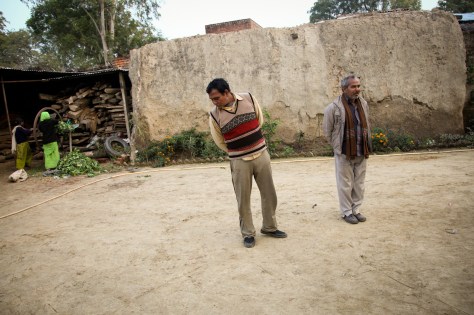
This photograph was taken by Salman Usmani in Ganguali village in Unnao near Lucknow, in early January. On the left is Prabhat Pandey and on the right, Ram Khilawan. Pandey is a Brahmin and Khilawan a Dalit. They’re the BSP’s men in this village, responsible for urging Brahmins and Dalits to vote for the BSP candidate, also a Brahmin. The photo was taken when I asked them to pose together. This is all the ‘brotherhood’ they could show before the camera.
Here’s my story on UP elections, seen through the prism of Brahmins and Dalits. Continue reading An Election in Sarvajan Samaj
 KAFILA - COLLECTIVE EXPLORATIONS SINCE 2006