
A few weeks ago, I mentioned on Kafila a certain gentleman who delivered a memorable address in Government Women’s College, Thiruvananthapuram, which contained sage advice on how to bring under control the unruly bodies of ungovernable women. After that I have been receiving unsigned letters from his admirers who feel that their innocent hero has been most unfairly criticized. Like the grumpy ground-lubber types who are either incapable of ascending or simply unable to climb coconut trees and do not appreciate the free services rendered by the chivalrous heroes high above, I have erred in judgment, they claim. Continue reading Class Feminism vs. Classy Feminism … Or, Everybody Loves the Governable Woman!
Category Archives: Images
Photographs of Calcutta by Che Guevara, 1959
These three photographs were taken by CHE GUEVARA in Calcutta (now Kolkata) in 1959. The photos are taken from the book Self Portrait by Che Guevara, published by the Centre for Che Studies, Havana, in collaboration with Ocean Books, Australia. They were obtained by Jansatta editor Om Thanvi from the Centre for Che Studies in 2007, and come to us courtesy Thanvi.
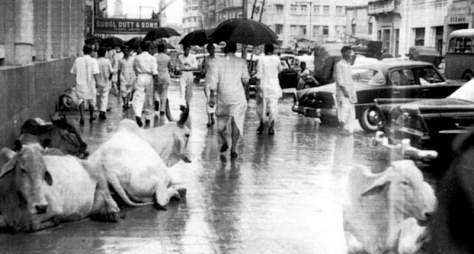
Continue reading Photographs of Calcutta by Che Guevara, 1959
Elements of Bomb (Blast) Making – Understanding Dilsukhnagar: Biju Mathew

This is a guest post by BIJU MATHEW: The story is always the same, isn’t it? A perfectly ordinary day becomes extraordinary. A day when the daily tribulations of thousands of workers and small merchants is instantly transformed into tragedy. 15 dead, 5 still critical and over 100 others injured– some of them maimed for life – thinking of what recovery might mean. Ravinder, a farm hand from a Nalgonda village has lost a leg. His wife, Lakshmi might still yet lose her foot. Their 1 year old is missing. And they were in Dilsukhnagar for a hospital visit because the 1 year old has a congenital heart condition. There is no justice to be had here. Continue reading Elements of Bomb (Blast) Making – Understanding Dilsukhnagar: Biju Mathew
Kai Po Che and the reduction of 2002: Zahir Janmohamed
Guest post by ZAHIR JANMOHAMED
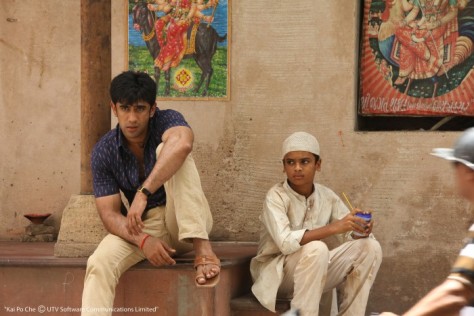
When I started conducting research in Gujarat two years ago, I kept being asked the same question among middle class youth in Ahmedabad: “Have you read Chetan Bhagat?” When I asked what other books they have read, I often heard, “Actually I only read Chetan Bhagat.”
So I started to read Bhagat because I wanted to relate to many of the young people I was interviewing. But it was not an easy task.
I understand the frustration with Bhagat’s writing. Unlike other young adult authors like JK Rowling or Suzanne Collins, Bhagat’s books rarely reward a second reading (and yes I have tried). Continue reading Kai Po Che and the reduction of 2002: Zahir Janmohamed
The sickening political opportunism of Chetan Bhagat
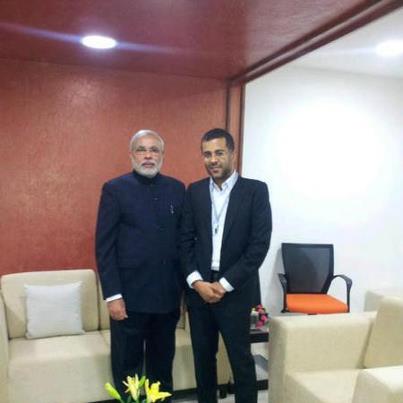
Snigdha Poonam watches Kai Po Che, whose script was written by Chetan Bhagat, based on his book The Three Mistakes of My Life:
In the film adaptation, Mr. Bhagat has also added what seems like justification for some Hindus to turn violent, like the death by burning of both of the parents of one of the three protagonists in the Sabarmati Express; in the novel, it was his nephew. We all know the level of vengeance with which Bollywood heroes respond to the targeting of their mothers: “Teri maa mari hai kya (Is it your mother who has died?),” the bereaved son explodes at a sensible friend trying to stop him from losing control of himself.
In his book, Mr. Bhagat clearly showed the 2002 riots as a state-sanctioned exercise (“Whatever it takes to quench the hurt feelings,” says a “senior Hindu Party leader”). But he excised that from the film completely. [Read]
That image above is via DeshGujarat.com, where an article quotes Bhagat as saying in a TV debate:
“It has been discussed much that Modi ji has done well in Gujarat, but what I believe is that he is a very good politician. A politician has to change with public mood. When communal issue mood was there in the country, that was Modi version 1, when he elected for the first time. And when he won the election for second time, he won it on development agenda.”
Clearly, Mr Chetan Bhagat is also a good politician.
What Afzal Deserves: Chandan Gomes
Guest post by CHANDAN GOMES
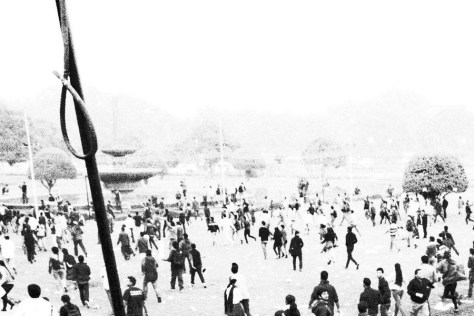
Ever since the news of Afzal Guru’s execution broke out on the 9th, I have witnessed my personal space descend into a state of chaos. I woke up that morning to a number of emails/facebook messages by friends requesting me to join them at Jantar Mantar to protest against Guru’s execution. Many called that particular protest farcical, some even going to the extent of labelling these young men and women as traitors. Battle lines were drawn and a country stood divided. The more I thought about the execution, the more it saddened me. I could see myself and people like me (the ordinary citizens of this great nation) as pawns in a game of ugly power play, waiting to be sacrificed at the altar of ‘opportune moment’. Continue reading What Afzal Deserves: Chandan Gomes
Life without YouTube: Haseeb Asif
Guest post by HASEEB ASIF

A young man wearing faded jeans and a t-shirt too unpleasantly tight around his middle, sits on his end in front of a laptop, weeping. The tears aren’t exactly the gushing springs of fresh grief, more the trickling of nostalgic streams. He misses his favourite website. Everything bookmarked in his browser that isn’t pornography is from that site. He contemplates an incalculable loss. Today, as many times before, he’s come home from a hard day of not doing anything at work, just wanting to lose himself in the magical world of user uploaded videos. Continue reading Life without YouTube: Haseeb Asif
A rare victory for freedom of speech and expression in India
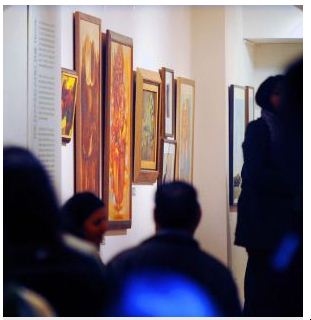
In a country where freedom of speech and expression is under assault every day, where scholars and cartoonists increasingly have to regularly face the law to defend their statements and works of art, where the government gives in to anyone and everyone demanding censorship, where the government conduct stealth censorship of online speech, finally comes a rare piece of good news.
For once the police is not asking to shut down an exhibition citing ‘law and order’ issues to appease protestors, but instead giving protection to the exhibition.
The Times of India reports: Continue reading A rare victory for freedom of speech and expression in India
Delhi Gang Rape – Understanding the Structure of Violence: Esha Shah
Guest post by ESHA SHAH
The social, political and legal debates that have followed the gruesome incident of gang rape in Delhi on 16 December – including the debates on the recently published report of Justice Verma Commission widely hailed for its revolutionary character – have not sufficiently engaged with the structure of violence perpetrated in the act of brutality. In forging the solidarity against the suffering, there is a popular tendency to externalise the act of barbarity causing this suffering as demonic and hence out of this world. For instance, one of the posters in the protests that followed the incident read “your suffering is my suffering” – in the same poster it was demanded that those who caused this suffering were narpishach and should be hanged. The pain of the victim is shared collective pain, but the brutality of the act is certainly not the shared collective responsibility. In the preliminary remarks below I want to argue that we need to revise the nature of power asserted in the act of brutality, and in doing so we need to not only convert the demonic caricatures as flesh and blood human beings produced by this world but also to embed their acts into deep-rooted structures of violence in our society.
Continue reading Delhi Gang Rape – Understanding the Structure of Violence: Esha Shah
Breaking the Collective – Notes from Jantar Mantar & Koodankulam: Vivek Vellanki
Guest Post by Vivek Vellanki
The death of the young girl brought incommensurable grief for the ‘Indian’ people. A national angst ensued with divergent voices seeking divergent ends: justice, death penalty, fast track courts, end to patriarchy, chemical castration, and a long list that cannot be spelt out here. There was a glimmer of hope that the discursiveness would ensue a quintessentially democratic process of debate, discussion, and deliberation amongst the people. The Indian state with its long-standing reputation wouldn’t allow for that to happen. It had to continue on its pet peeve of Breaking the Collective! The people’s movement in Koodankulam, the anti-corruption movement, the movement for seperate Telangana are some of the many instances that remind us of this pet avocation of the Indian state being pursued in recent times, almost, vocationally. However cynical it may sound, amidst the entire candle lighting and sloganeering, we failed to realise that the protest in Delhi was happening on the terrain that the government decided, in a manner that it wished for it to play out, and was party to the people it wanted to see there. I wish to argue that the closing down of the metro stations has a relation to the nature of the protests at Jantar Mantar. Furthermore it concurs with the tactics of chocking people’s movements logistically and stifling the collective by pathologizing the everyday life of masses. The tragedy of this lies in the fact that such actions of the state have become so recurrent that they have entered our common sense and they present themselves as normal and logical responses. Albeit they have been rationalized by invoking a specious reference to law, order, and safety, there is a need to unpack such a rationalization. My attempt is to extract these actions from that location of common sense and present them for public scrutiny. Through this essay, I would like to draw the connections between the democratic protests happening in locations across the country and state action in dealing with them. In doing so, I hope to bring to notice how the Indian state uses its machinery to purge protests of their democratic tenor and eventually, at least, attempts to break the collective. Continue reading Breaking the Collective – Notes from Jantar Mantar & Koodankulam: Vivek Vellanki
The Country With A ‘Balancing Office’: Suvaid Yaseen
Guest Post by Suvaid Yaseen
Of late there has been a rising trend of Kashmiris – professionals, artists, writers, musicians et al presenting their works on Kashmir on a much wider level than before. The larger impression that comes out of it all is that the narrative has been taken up by the people for themselves. A welcome contrast to outsiders flying in and telling us what we want, how we think, and what is actually good for us.
So, every time a Kashmiri artist is presenting his/her work on Kashmir, the expectations among Kashmiris tend to go up. People start feeling that finally their narrative, of how they saw the things, what they went through, would be told to the world, bereft of the lenses of security paradigm through which Kashmir has been usually viewed – a strategic territory, with not-so-strategic, dispensable people.
This can be fortunate as well as unfortunate. On one hand there is a ready audience to appreciate and applaud your work. On the other hand there are expectations to ‘perform’. For the artists themselves, there are additional pressures of ‘balancing’ and having a ‘non-biased’ view from the other side.
Continue reading The Country With A ‘Balancing Office’: Suvaid Yaseen
Come Frolic with Me in the Streets of Delhi: Amrapali Basumatary
Guest post by AMRAPALI ‘TARA’ BASUMATARY
Another Report on the Gathering of the Night of 31st of December 2012/Ist January 2013 against Patriarchy in Delhi
It was 31st December 2012, city-Delhi, the same Delhi which has gained the infamy of being the Rape-Capital of a country called India, a nation whose ‘dignity’ has been maligned by the increasing cases of sexual assault on women. Around three hours before the clock struck the decisive moment of New Year, many of us gathered at the PVR Anupam complex in Saket to “take back the night”, back from the shackles of misogyny, sexual assault, patriarchy and above all from the banal and real fear of being subjected to crimes meted out by multifarious forms of male-supremacy and power. It was a night when ‘dented and painted’ females as well as males were showing that ‘denting and painting’ are not reasons that ‘invite’ rape or sexual assault and those ‘hormone driven gazes’. Continue reading Come Frolic with Me in the Streets of Delhi: Amrapali Basumatary
The Bitter Truth Regarding Delhi Police’s Womens’ Help-Line: Kavita
Guest post by KAVITA, an activist with the Stree Mukti League
Translated from Hindi by Shuddhabrata Sengupta
It would be natural to expect that in the wake of the barbaric Delhi gang-rape of December 16 and subsequent popular upsurge of anger the police and the state machinery would betray a modicum of sensitivity and alertness. The reality is just the opposite of what you expect. We have heard this from many women in the past few days, and a few evenings ago, came face to face with this sad fact ourselves.
For the last few days, we (activists of the Stree Mukti League) have been going to different places in Delhi to hold meetings, demonstrations and to distribute leaflets against sexual violence. The leaflet has a contact phone number for the Stree Mukti League. Since the evening of the 1st of January this year a perverted male individual has been continuously ringing that number, abusing us, threatening us, using obscene and unprintable language. He even said ‘I know all you girls, and you cannot escape me. What I will do to you will terrify people…’, and several other things which cannot be repeated. Continue reading The Bitter Truth Regarding Delhi Police’s Womens’ Help-Line: Kavita
Naye Saal Mein Azaadi – Freedom from Fear in the New Year
[ Click to play above Youtube video of young women and men, led by Com.Lokesh (‘Lucky’) of Stree Mukti Sangathan (Women’s Liberation Organization) articulate their desires on the ‘Take Back the Night’ night walk and street party from Anupam PVR Complex to the road outside Select City Walk in Saket, New Delhi on the night of the last night of 2012 and into the early hours of 2013. ]
Delhi took back the night as we moved into the new year. Took it back from fear, from patriarchy, from misogyny and a stupid state. They said it loud and clear. This is what I remember, roughly in this order. Continue reading Naye Saal Mein Azaadi – Freedom from Fear in the New Year
What Do Men Have To Do With It?: Rahul Roy
Guest post by RAHUL ROY
I have been sitting quietly trying to finish my new film and had promised myself that I would not get side tracked and concentrate on the task at hand. But enough is enough. I am shocked and disappointed at the way men high jacked a protest that could have been and probably still is the most significant pouring out of women who may never have thought in their wildest dreams that they would be facing water cannons and cops giving them a chase with iron tipped sticks. I am sure it is a coming of age moment for many young women of the city of Delhi.
I am aware that there has been a fair bit of cynicism about middle class women running up and down Raisina Hill and whether it adds up to anything. It damn well does. The next time they see adivasis being chased down by the police in Chattisgarh or in Orissa a penny will drop. It already is, today there is an article by a 19 year old student form Lady Sri Ram College narrating her brush with Delhi Police at the Parlaiment Street Police station and quite significantly she adds that if they are capable of behaving the way they did with a group of ‘well connected’ college students in Delhi then what must be happening in the more remote areas of non metropolitan India. Continue reading What Do Men Have To Do With It?: Rahul Roy
Justice for Women Now: Protest in New Delhi
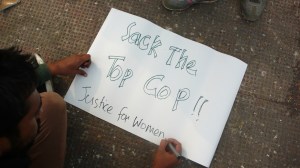
On a day when the Prime Minister put his foot in his mouth by saying that ‘footlose migrants’ were responsible for heinous crimes like rape. On a day when the S.O.P – ‘son of a president / sign of a pervert’ – Abhijit Mukherjee said that the protestors were ‘dented and painted’ women, on a day when yet another gang rape was reported in Delhi, and a young woman ended her life in Patiala because the police harassed her in Patiala following her complaint of rape – hundreds of young women and men, and many not so young and women and men, gathered under the single banner of ‘Justice for Women Now’ at noon in New Delhi, at the Nizamuddin ‘Sabz Burj’ with an intention to march to India Gate. They were stopped at the intersection of Zakir Husain Marg and Subramania Bharati Marg by several cordons of police. The police were arrayed across two intersections, several layers deep. The gathering was unarmed, peaceful, angry, joyous and disciplined. They were faced by a sullen array of police, armed with sticks and tear gas. The police did not let the gathering move towards India Gate, and the peacable, orderly gathering sat on the street for around two hours. There were several television and media crews.The primary demands articulated by the demonstration included ‘fast track’ processes for the 100,000 pending rape and sexual assault cases, the resignation of the police commissioner of Delhi, the drafting of gender sensitive and non-sexist laws, a call for a special session of parliament and a time bound commitment towards a massive expansion of safe public transport for women in metros. Continue reading Justice for Women Now: Protest in New Delhi
Bakht Arif, from Pakistan, sings Zinda Lash for Patronizing Indian Politicians (No, Don’t Listen to Honey Singh)
UPDATED : December 28, 2012
Don’t be a zombie. Never be a Zinda Lash.
No. Don’t Listen to Honey Singh talking about what he wants to do to the bodies of young women.
No. Don’t listen to Sushma Swaraj of the BJP talking about what she thinks is the zinda lash when she talks about the body of a young woman. Continue reading Bakht Arif, from Pakistan, sings Zinda Lash for Patronizing Indian Politicians (No, Don’t Listen to Honey Singh)
Shabbo Kumari patrols the border
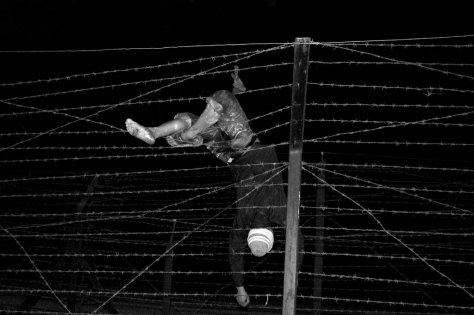
The Lens blog at NYTimes.com has a photo essay by Poulomi Basu about women guards of the Indian Border Security Force.
Most of the recruits were from impoverished rural areas. If she could observe them not only in training but with their families as well, she would be able to tell the story of their transformation from villagers into soldiers.
The most haunting image Basu has is the one above.
One of the most riveting photographs shows a dead man hanging upside down, his legs caught in the high barbed wire fence that India has constructed to demarcate the border. Guards had shot the man as he and others tried to enter Pakistan near Attari, in Punjab State, Ms. Basu said. Continue reading Shabbo Kumari patrols the border
Stuck Between Gandhi and Cultural Crap: Papilio Buddha Reveals Much
Sometimes a minor cut on the surface of the skin will do to reveal the rot beneath. This is precisely what the film Papilio Buddha, made by the New York-based Malayalee film-maker Jayan Cherian, which draws broadly upon contemporary caste politics in Kerala, has achieved for us. In fact, its achievement on this count is simply amazing. At a single stroke, it has brought to light several stinking sores above which Malayalees, especially many Malayalee intellectuals who occasionally don the garb of public intellectuals, strut. Continue reading Stuck Between Gandhi and Cultural Crap: Papilio Buddha Reveals Much
The Unsolved Mysteries of the Universe

What came first? Murgi or man?
The murgi is looking at the camera slyly, or so the camera thinks. Why did the man not bat an eyelid? Surely he could not have missed that a camera-phone came out of a pocket, was tilted horizontally, focused on him and on the murgi on his knee, proceeding to click? The camera was impressed at the discovery of this man and his murgi; they were not posing.
Why is the main wearing a red shirt with maroon pyjamas? Why not a maroon shirt with red pyjamas? Did he place the hen on his knee? If all he wanted to do was to ponder over the unsolved mysteries of the universe why would he want to be disturbed by his murgi? Given the terrain, just how much manoeuvrability does the murgi have? Could the murgi be helping the man meditate? Is the murgi a hypnotic tool?Is the murgi disoriented to be looking at the ground beneath from a precarious vantage point?
Is the murgi soon going to be food? Biryani or qorma?
The camera did not want to ask questions lest the man’s meditation be disturbed. The questions remain.
Letter to the Editor, Times of India: Narmada Bachao Andolan
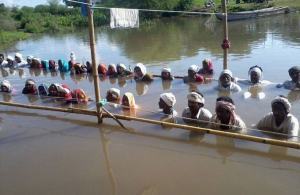 This guest post by CHITTAROOPA PALIT is the text of a letter to the editor of the Times of India, which the paper has not published
Subject: Rebuttal to the story “Reality bites: Khandwa’s made-for-TV protest” published in Times of India.
Dear Sir,
We are shocked to read the story “Reality bites: Khandwa’s made-for-TV protest” in your esteemed newspaper, which has been published with prominence. The story is false and fabricated. The journalist did not meet any Mehtab Singh but she quoted him. The journalist did talk to my colleague and senior activist of NBA Mr. Alok Agarwal but chooses not to quote him. It may be noted that the OB van and a team of your own group Times Now was there at satyagrah site all the time covering live from 6th September but none of these issues were raised.
Continue reading Letter to the Editor, Times of India: Narmada Bachao Andolan
 KAFILA - COLLECTIVE EXPLORATIONS SINCE 2006