Category Archives: Images

Seeking the Apadhasanchaarini/ The Malayalee Flâneuse

So, the moral police has struck again. The papers in Kerala have been full of news about how a young IT sector employee, Thasni Banu, was confronted by a group of goons while she was being dropped to work at night by a male friend, insulted, slapped several times, and warned that they will not allow Kerala to “become Bangalore”. She did not take it mildly and complained to the police, who rolled their eyes, hummed, and hawed, and as to be expected, went slower than usual. One of the goons who was apprehended was let off. The papers have indeed taken the issue very seriously — and so have the state government, which suspended the policeman who handled the affair shoddily. Continue reading Seeking the Apadhasanchaarini/ The Malayalee Flâneuse

“Report the news. It is not news that there are poor people in India.”

In the morning today The Independent‘s Asia correspondent, Andrew Buncombe, blogged his disagreement with Arundhati Roy’s statement that foreign journalists in India have been asked not to report bad news. As a foreign journalist in Delhi he had faced no such censorship from his editors or the government here.

Buncombe made his case strongly: Continue reading “Report the news. It is not news that there are poor people in India.”

Corruption, the New Caste: Thomas Crowley

Guest post by THOMAS CROWLEY

In the mainstream coverage of the Ramdev hullabaloo, there has been, unsurprisingly, little substantive discussion about corruption itself: its fundamental causes; its widespread effects; the viability of different plans to combat it. Who would want a dry, intellectual discussion of the root causes of corruption when we can stare uneasily at pictures of Baba Ramdev holding a sword and wait with bated breath for his holy army to congregate?

But let’s – for the moment – take seriously Ramdev’s proposal that the death sentence be meted out to India’s corrupt. If the press is to be believed – especially the foreign press – this may just mean killing every Indian. For, implicit in many media reports is the assertion that corruption is part of the Indian psyche, an essential component of what it means to be Indian. In this sense, corruption serves the same conceptual role as caste: it essentializes an ever-changing historical phenomenon, freezing it in time and obscuring its economic and political roots. Much as the British taught Indians and foreigners alike to understand India predominantly in terms of caste, modern commentators are encouraging both desis and firangis to conceptualize India as the land of unending corruption. (Of course corruption has not replaced caste as a mode of understanding India; the fascination with caste still runs deep.)

Continue reading Corruption, the New Caste: Thomas Crowley

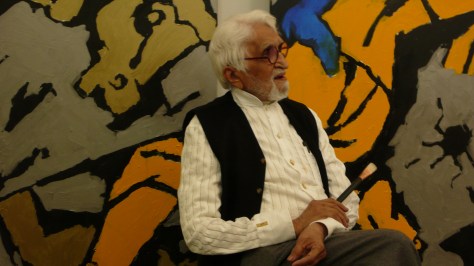
Alvida, Maqbool Fida: M.F. Husain, Free at Last

M. F. Husain at the Serpentine Gallery during the Installation of 'Indian HIghway', December 2008

Like possibly several other children growing up in the kind of lower-middle class metropolitan households that attempted to reconcile their aspirations towards culture with their frugal habits in the 1970s and1980s in Delhi, my first introduction to the art of our time was the framed print of a Husain painting. We had no television. And my parents had no gods. The only icons in our modest house were two framed pictures – an inexpensive N.S. Bendre, (Lalit Kala Akademi) print of a few women at a well and the reproduction of a Husain painting, possibly detached lovingly and carefully from an Air India calendar, possibly featuring the kind of goddess image that incensed the zealots who made it impossible for M. F. Husain to live out his final years in India. Continue reading Alvida, Maqbool Fida: M.F. Husain, Free at Last

लोकतंत्र की आत्मसमीक्षा का क्षण

अण्णा हजारे के ‘नेतृत्व’ मे शुरू हुए भ्रष्टाचार विरोधी आन्दोलन का पहला चरण सफलतापूर्वक समाप्त हो गया है. अनेक लोगों को सरकार को हिला देने का सुख और संतोष इस आंदोलन ने दिया है. हजारे ने खुद यह कहा कि एक बार तो भगत सिंह ने अंग्रेजों को भगाया था, इस बार ‘काले’ अंग्रेजों को भगा दिया गया है. इसे दूसरी आज़ादी की लड़ाई भी कहा जा रहा है. इसके पहले एक और ‘दूसरी आज़ादी’ की लड़ाई लड़ी गई थी लेकिन शायद वह असली नहीं रही होगी तभी तो इसे तीसरी नहीं दूसरी आज़ादी की जंग कहा जा रहा है. यह सोचने का विषय है कि इस देश में हर प्रकार के संघर्ष को अपना औचित्य सिद्ध करने के लिए क्यों खुद को स्वतंत्रता संग्राम के रूप में प्रचारित करना पड़ता  है. कहा जा सकता है कि यह तो भाषा का रूपकात्मक प्रयोग है, इसे आगे खींचने की ज़रूरत नहीं. इस रूपक को गढ़ने  को मजबूर दिमाग जिस ग्रंथि से जूझता है , वह शायद यह है कि हममें से अधिकतर को यह रंज और गम है कि हम 1947 के पहले पैदा नहीं हो सके थे और इस देश को आज़ाद कराने में हमारा कोई हिस्सा नहीं.दूसरे, उस आन्दोलन के अंतिम क्षण के शत्रु रक्त से रंजित न होने के कारण नवीन राष्ट्रीय शिशु के जन्म की वास्तविक अनुभूति से हम वंचित रह गए. इसके कारण हम सबको एक स्तर पर अपना राष्ट्रीय अस्तित्व ही अप्रामाणिक प्रतीत होता है.   हर पीढ़ी को इस कुंठा से मुक्ति के लिए कभी न कभी एक स्वतंत्रता संग्राम की आवश्यकता पड़ती  है. गोरे अंग्रेजों और काले अंग्रेजों को ‘भगाने’ के जिस  विकृत सुख लाभ की आकांक्षा इस तरह के वक्तव्यों में झलक पड़ती है, उसके पीछे छिपी हिंसा को पहचानना भी आसान नहीं होता. क्या यह इसलिए करना होता है कि ऐसे आन्दोलन एक ‘राष्ट्रीय’ कल्पना को उत्तेजित करना चाहते हैं और इस लिए राष्ट्रीय संदर्भों के सहारे अपनी वैधता हासिल करते हैं? जंतर मंतर के अनशन मंच की पृष्ठभूमि में भारत के मानचित्र को आवृत्त किए हुए, बल्कि उसकी सीमा से बाहर राष्ट्रीय ध्वज को लहराते हुए  गौर वर्णा भारत माता की छवि के विह्वल  आह्वान को जो अनसुना करे क्या उसे दुखियारी माता का पुत्र कहलाने का अधिकार रह जाएगा?  क्या उसके उद्धार के लिए, महिषासुर का दलन करने के लिए पुन: अपने अस्त्र-शस्त्र को शाणित न किया जाएगा? Continue reading लोकतंत्र की आत्मसमीक्षा का क्षण

Journalism of the People: You Feel Like You Gettin’ Real Noose!

And Director General of the al-Jazeera network explains why al-Jazeera could see the Arab revolution coming when the WEstern media could not: Continue reading Journalism of the People: You Feel Like You Gettin’ Real Noose!

Tahrir at Midan Tahrir

This slideshow requires JavaScript.

These six photos come to Kafila from an art collective in Cairo. Photographs by artist HR and other members. They do not want their identities revealed for their safety. Note how that gas canister says Made in USA!

Also see this video doing the rounds, perhaps its not the only effort that brought about the 25 January uprising in Egypt but may still be an important one.

Previously on Kafila: A Phone Call From Alexandria

Chitrasutram: Post-modern Cinema?

Months ago, while watching what was in effect a docu-hagiography about a prominent literary icon in Malayalam and wondering about its structure, I was enlightened by a little voice that piped up from a few rows behind. “Nyoosh” (news), it said. On screen, the literary icon appeared and began to talk. A few minutes later, the little voice trilled again, “Parshyam” (commercial). And lo! The icon dissolved, followed by what looked exactly like a commercial, a sequence of visual tricks, visual hallelujah to the wisdom of the revered sage. The little voice thus revealed to me that the structural rhythm of the docu-hagiography was effective precisely through its prayer-like repetitiveness; it also alerted me to the fact that it was extraordinarily similar that to the visual strategy of television (Truth-dream-Truth-dream…), which again is perhaps vital to its sway over viewers. Continue reading Chitrasutram: Post-modern Cinema?

More photos from the Free Binayak Sen rally, Delhi, 30 January 2011

This slideshow requires JavaScript.

Photographs by Koyel Lahiri, Antara Rai Chowdhury, Anil Tharayath, Joe Athialy and Amrita.

Some photographs post here, earlier.

Trysts at Midnight: Calcutta, Now: Prasanta Chakravarty

This is a guest post by PRASANTA CHAKRAVARTY

[The Bangla film Sthaniya Sambaad (Spring in the Colony, 2009) was recently released. The film, by way of mapping the diurnal workings of a refugee colony in contemporary Calcutta, asks important questions about the changing cityscape, of the new, emerging world of land grabbers and fly-by-night investors and of the bemused young and old who are outside of this world and yet are sucked within its machinations. This is a conversation about education, humanities and the nature of artistry in the age of modularization—between MOINAK BISWAS, one of the directors of the film (with Arjun Gourisaria) & Reader, Film Studies, Jadavpur University, Calcutta and PRASANTA CHAKRAVARTY, Associate Professor of English, University of Delhi.]

Prasanta: Your film got a commercial release finally, which is wonderful. Among the initial reactions, in reviews, internet discussions and so forth, one notices a lot of interest in the polyvalent nature of your craft. I would like to take one particular strand of the film and probe a little: that is, its quite sharp critique of the phenomenon of vocationalization of education. This is a constant and niggling thread, right? Now, one fundamental argument for modular training, especially in humanities and social sciences, at this point, is a democratic one: that it will provide competence to a large number of the unemployed, ensure jobs and help in national growth. Continue reading Trysts at Midnight: Calcutta, Now: Prasanta Chakravarty

Will the Insecure Male at the News Desk Please Stand Up?

K.K. Shahina, of the Tehelka, some feel, may be a terrorist. No prizes for guessing who. After all, Shahina has been working, despite pressures of all sorts, to unravel the impossible web of lies that the police, the media, and political parties have been weaving around the figure of Abdul Nasar Madani, who was arrested again as an accused in the 2008 Bangalore blast case and denied bail. Madani, as is well-known, had already suffered enormous injustice at the hands of the Indian state but to the chagrin of the Hindutva ‘nationalists’, he re-entered the political arena. Whether one agrees with him on Islam or other matters, or about his choice of alliances, is a different matter. Choosing to demand space in the political public, he exercised his right as a citizen, and thereby indicated a preliminary implicit willingness to place his views before a critical public. Continue reading Will the Insecure Male at the News Desk Please Stand Up?

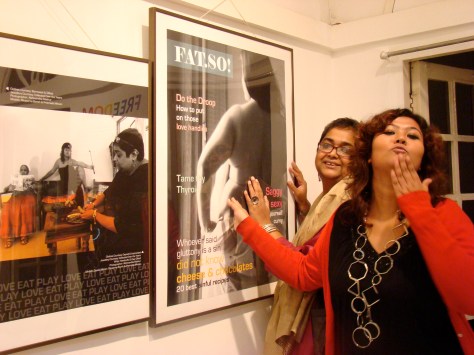
Don’t miss the Nigah Queer Fest in Delhi

Artists: Neelima and Abhinandita

Models: (to put my nepotistic interests up-front) – my sister Pramada, my mother Devaki and friend Rituparna

This is just one panel of a visual arts exhibition at Max Mueller Bhavan, Delhi, and there are films and performances too. It’s on from 26th November to 5th December, 2010.

Check out the programme at http://www.thequeerfest.com/

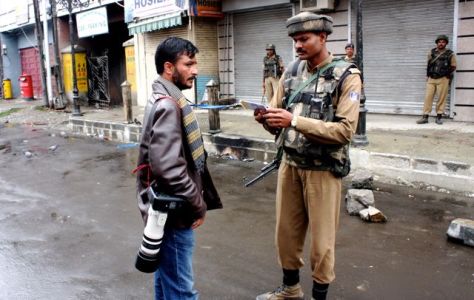
Report #3: Shooting the Messenger in Kashmir

This is the third of a series of fact-finding reports on the recent violence in Kashmir. The fact-finding has been conducted independently by a team of BELA BHATIA,VRINDA GROVER, SUKUMAR MURALIDHARAN and RAVI HEMADRI. For an introduction to this series, see here.

Daily movements for news gatherers has become an ordeal with few security personnel willing to recognise their legitimate role

Continue reading Report #3: Shooting the Messenger in Kashmir

The Return of Daya: Prasanta Chakravarty

Guest post by PRASANTA CHAKRAVARTY

A close friend of mine—a fine political scientist with nuanced literary sensibilities, once suggested that he is inherently suspicious of carefreeness and gaiety in relationships, friendships and in public exchanges. One must take time, let matters marinate (‘jaarano’ he proposed in Bangla) and not be prematurely upbeat and exuberant while forging bonds and taking actions. The deficient modes of resting and concealment are important preconditions in order to take on varieties of political manipulation, social one-upmanship and literary cleverness that besets our time.

Continue reading The Return of Daya: Prasanta Chakravarty

GQ Boy’s platinum pain

Guest post by HILAL MIR


There are various divisions of pain the different classes of people feel in Jammu and Kashmir. Like those bank credit cards which classify customers according to precious metals—Platinum, Gold, Silver—pain is a class thing. For example, when PDP veteran Muzaffar Hussain Baig, after making a long convoluted speech in the Jammu and Kashmir Assembly, said Omar Abdullah’s name figured in the list of the people who used their authority to sexually exploit girls, the junior Abdullah was transformed into a character from a Greek tragedy.

Continue reading GQ Boy’s platinum pain

Kashmir, September 2010. The Reichstag Fire (dispersed) Redux ?

(Apologies for cross posting on the Reader List)

As if by magic, those who had hidden themselves for the past few months in Kashmir are leading mobs and setting schools and public buildings on fire. And many more people have died tragic and unnecessary deaths. This time, unlike in the past, the blame must be squarely shared between those who fired the bullets, and some of those who led the incendiary crowds. Perhaps Kashmir has just entered a new and darker phase, brandishing a burning torch. This situation, in order not to be irreversible, needs the urgent and sane attention of Kashmiris themselves, and of all those who wish Kashmir and its people well.

We could do well by way of beginning by turning our attention to a surprising detail hidden within the reports of the recent events of arson. National Conference apparatchiks, who did not even dare appear in public till recently for fear of being attacked for their role in sustaining the occupation of Kashmir by India’s armed might, are now allegedly seen openly goading mobs of zealots to burn down a school in the name of the defence of religion. If this is true, the what we are witnessing is the realization by them of a wonderful opportunity to wear new costumes and speak new lines in the unfolding theatre of the moment.

Continue reading Kashmir, September 2010. The Reichstag Fire (dispersed) Redux ?

Kashmir’s Abu Gharaib?

Two days ago, I noticed a video posted by somebody on my facebook page. It was yet another video from Kashmir. It was tagged ‘brothers please watch, sisters please do not watch’. In later incarnations of the video, posted repeatedly on Facebook sites, Youtube channels and on blogs. it was tagged ‘Indian Security Forces Kashmiri Youth to Walk Naked on Road’ or ‘Kashmir – India’s Abu Gharib (sic)’.

The video was available on Youtube on the night of 8th/9th September, 2010, before being taken down.

Notwithstanding the misspelling of Abu Gharaib in these tags, there was something compellingly accurate in the designation. What I saw, and what i have seen unfold subsequently as a response by the Indian state to the circulation of this video, makes Abu Gharaib look like child’s play. Welcome to the virtual, viral, televisual reality of the nightmare of Kashmir.

For the past several weeks, I have been watching, and forwarding, several videos uploaded on to Youtube and facebook from Kashmir. Every video that I have seen contains evidence of the brutality of the Indian state’s footprint on the Kashmir valley, and of the steadfast yet resilient courage of its people, and of the innovative use they have been making of the internet to bear witness to their oppression.

See for instance – Innocent Man being Beaten in Kashmir.

I have seen paramilitary and police personnel open fire on unarmed or stone pelting crowds, mercilessly beat up young people and children, attack doctors, patients and nurses in hospitals, smash windows of homes, steal chickens and livestock and hurl the most vulgar invectives at ordinary people. I have watched the armed might of the Indian state retreat in the face of the moral courage of the opposition it encounters on the streets of Kashmir. It doesn’t take much to find these videos. Run a search with ‘Kashmir, Stone Pelting. indian Occupation’ on Youtube. Of follow the links and uploads on the growing cluster of Facebook pages from and about Kashmir. Continue reading Kashmir’s Abu Gharaib?

Creative Destructions

Part of a Series. See here.

In January of this year, I had taken a friend to Mumbai. One of the places we went to was Lower Parel – I wanted to show him what I could of the Mills. You could still see the Mills then, if not in the same form. The same compounds now housed small galleries and boutiques. There were advertisements for a ‘mills culture tour’, sold as something in between a bar hop and an art gallery cruise. I knew big clubs had opened here, as had malls. Phoenix Mills was Mumbai’s version of Delhi’s DLF Emporio – all the major global brands were there. Even here, however, I remember laughing and pointing out to him that some of Bombay’s stubborn egalitarianism remained. Armani was next to Addidas. Rohit Bal next to a paper store. Unlike in Delhi where no non-hyper-elite brand could get near DLF Emporio, in Bombay, even Armani couldn’t buy space away from Adiddas.

Continue reading Creative Destructions

Have I Joined the Popular Front?

In the past few weeks, I have been asked over and over again, not always in jest, if I had joined the Popular Front. I am not surprised. The police investigation around the violence against the college teacher at Muvattupuzha has broken all previous records in not only the violation of human and civil rights, but also in the silence of Kerala’s enlightened intellectuals. If I recall right, only Nandigram evoked such a dense and deliberate silence from them. No wonder, anyone who speaks up against the manner in which the police is being armed and authorized against ‘bad muslims’ is immediately dubbed a supporter of the Popular Front. But I am intrigued by this simple question, by which the entire history of that person’s engagement with discussions around religion and the state is erased. Continue reading Have I Joined the Popular Front?

‘Mother I will make you cry today’

Dr. SYEDA HAMEED has sent us this poem

‘Mother I will make you cry today’

(On June 30th 2010, Asif Rather age nine ran out of his home in Baramulla in Kashmir to look for his older brother. As he left, he told his mother ‘I am going to make you cry today’. Minutes later he fell victim to shooting by the forces. At the time he was 150 meters from his house. – The Indian Express)

He stood at the sunlit door
A nine-year old with tousled hair
Asif Rather, student of class four,
Baramulla, 55 kms from Srinagar

‘Where is Touqeer?’
He sought his older brother.
‘Nowhere! You come back now
Here’s tea and last night’s bread
My baby, let me comb your hair’

Outside, the sounds Allah o Akbar
Chanting at once, one thousand strong Continue reading ‘Mother I will make you cry today’

And Now, Fears of ‘Intellectual Jihad’!

Hameed Chennamangalur’s recent article in the Mathrubhoomi Weekly (16 May) in Malayalam seems to have set alight a new round of fears about the ‘hidden agenda’ of Muslim extremism . Over the past weeks many friends, mostly left-liberals, have been urging me to take heed of the warning issued by Chennamangalur, a well-known, long-time critic of Muslim identity politics.

The article that has sparked off such worries takes a line that is quite familiar: it accuses the Jamaat-e-Islami in Kerala of pursuing their ‘hidden agenda’ of establishing the dominance of radical Islam through secular means. Chennamangalur argues that the Jamaat has ‘penetrated’ the space of radical activism through its all-male youth organizations such as the Solidarity Youth Movement, and through setting the terms of radical activist debate through its popular weekly magazine, the Madhyamam. Its recent efforts at discussing such ideas as Muslim feminism, and Muslim feminist thinkers such as Amina Wadood and Fatima Mernissi can only be regarded as cover-ups for a strategy through which it seeks to displace the more liberal and plural Muslim League — something he finds worrying in the present context in which the Jamaat is making a bid to enter local governance through contesting the forthcoming panchayat elections in Kerala. He laments that the radical intellectuals in Kerala are becoming mere pawns of this strategy; they do not see, for instance, that despite all the support that the Madhyamam offers dalit intellectuals, it remains biased heavily towards upper-caste Muslims, unlike the Communist Party in Kerala, which, he claims, offered upward mobility and political presence to dalit leaders in its fold. Continue reading And Now, Fears of ‘Intellectual Jihad’!