Category Archives: Language

This, that and other cartoons: Prabhat Kumar

Guest post by PRABHAT KUMAR
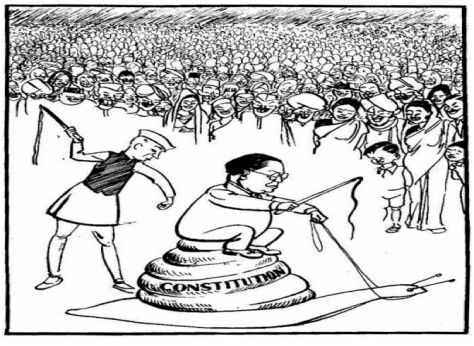
I wish to intervene in the ruckus over usage of Shankar’s cartoon in the NCERT’s political science text book. At the outset I want to clarify my personal impression (although inconsequential!) of the book and the cartoon therein. I feel the textbook in general is pedagogically superior to the previous ones for it does not infantilise young students as lacking critical ability. I also believe, as Aditya Nigam has rightly pointed out, it has accorded Ambedkar the status of a leading political and intellectual figure so far ignored. The cartoon in particular, both in the context of the narrative of the textbook as well as of its production in 1949, is not attacking Ambedkar the crusader of Dalits’ rights.

Continue reading This, that and other cartoons: Prabhat Kumar
“Ideal Journalists” and a Woman’s Right to Dignity: Aswathy Senan

Guest post by ASWATHY SENAN

[The astoundingly misogynist representation of Aswathy Senan’s appointment as the Liaison Officer in Calicut University by the Deshabhimani newspaper was discussed earlier on Kafila in a guest post by APARNA ESWARAN]

Just as issues of gender and ethical journalism have been raised with regard to the Deshabhimani report on 30.04.2012 by C. Prajosh Kumar, a legal and ethical concern bothers any interested reader, who is beginning to feel involved. The reporter while correcting himself as a response to my letter stated it thus: “For a post that was advertised on 21-12-11, a bio-data was sent more than a month back, and a recommendation by VC was made on it: it is this irregularity in the procedure that the report tried to bring forth. And thus, the reporter has done the duty of an ideal journalist.” Continue reading “Ideal Journalists” and a Woman’s Right to Dignity: Aswathy Senan

Facts and Fiction – Creative Journalism and Real Consequences: Aparna Eswaran

Guest post by APARNA ESWARAN

Increasingly, a section of young unmarried Malayali women are choosing to leave the comforts and shackles of their homes in Kerala, to live independently in alien cities in an unapologetic pursuit of their particular dreams. The patriarchal society of Kerala negotiates this category of women with a strange ambivalence, and the Malayalam media tackles her in two convenient ways.  Continue reading Facts and Fiction – Creative Journalism and Real Consequences: Aparna Eswaran

‘Your problem was that you weren’t satisfied with mentioning one haram thing per story’

You may have read it by now but in case you haven’t, the best article on Manto’s birth centennial came from Mohammad Hanif:

Your problem, Manto sir was that you weren’t satisfied with mentioning one haram thing per story. We do realise that in the world of short stories sometimes you have to describe bad things, things that our religion and our culture don’t approve of but couldn’t you have exercised a bit of moderation? As if having a prostitute as your main character wasn’t enough, you had to make her drink alcohol, and as if her drinking wasn’t bad enough you had to make her go to sleep with a flea-ridden dog. And I am not even mentioning the uncalled for description of her blouse where she stuffs her haram-earned money. Why did you have to do all that when you could have written about banana peels? [Read]

How Not To Educate A Poor Child

An Open Letter


To

The Editor In Chief

The Hindustan Times

We were attracted by the announcement made by the Hindustan Times that it intends to spend 5 Paisa earned from the sale of each copy on educating the children of India. It did not however tell us how it intends to spend this money. That is important since education of a child is not a sum of random acts. Schooling is a holistic experience composed of several components identified and selected through a Curricular Design which seeks to attain the education goals which a society sets for itself from time to time. Continue reading How Not To Educate A Poor Child

NWMI Condemns The Violent Abuse Of Meena Kandasamy

[We at Kafila are absolutely horrified at the abuse directed at poet and activist Meena Kandasamy for expressing her views on twitter regarding the beef-eating festival at Osmania University. That supposedly ‘neutral’ educational institutions replicate upper-caste Hindu dietary taboos, is no surprise, nor that the ABVP reacted with its customary violence to that questions upper caste privilege. What is shocking is the attitude of the Vice Chancellor and the sexist, misogynist, violent speech directed at her on the web. It is telling that those who take such umbrage at the eating of cows, think nothing of advocating the public rape of women. Below is a statement issued by the The Network of Women in Media condemning the hate speech directed at her. We stand in solidarity with Meena Kandasamy.]

The Network of Women in Media, India (NWMI), strongly condemns the violent and sexist abuse unleashed on poet, writer, activist and translator Meena Kandasamy, presumably in response to her posts on Twitter about the beef-eating festival at Osmania University, Hyderabad, on 15 April 2012 and the ensuing clashes between groups of students. Continue reading NWMI Condemns The Violent Abuse Of Meena Kandasamy

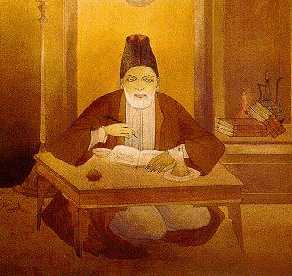
My name is Mirza Asadullah Beg Khan ‘Ghalib’ and I am not a terrorist!

Image from http://www.the-south-asian.com

Update: If you’re on Twitter please help make #Ghalib trend @ Twitter India – Tweet his sher’s!

That is what it has come down to. DNA reports that according to Maharashtra police, a Ghalib couplet on a piece of paper is proof the Students Islamic Movement of India is into the business of mass violence:

Of the several affidavits — filed in court asking for the ban on the group to continue — accessed by DNA, one by inspector Shivajirao Tambare of Vijapur Naka, Solapur, cites a Ghalib verse — as part of evidence — to show how dangerous SIMI (Students Islamic Movement of India) is.

Mauje khoon ser se guzer hi kiyon na jay, Aastane yaar se uth jaein kaya! A loosely translated Marathi version in the affidavit concludes that these lines speak of bloodshed and animosity. Continue reading My name is Mirza Asadullah Beg Khan ‘Ghalib’ and I am not a terrorist!

Review: ‘Behind the Beautiful Forevers’ by Katherine Boo

Guest post by MITU SENGUPTA

In a remarkable book about slumdwellers in Mumbai, Katherine Boo brings to light an India of “profound and juxtaposed inequality” – a country where more than a decade of steady economic growth has delivered shamefully little to the poorest and most vulnerable.  But though indeed a thoroughgoing and perceptive indictment of post-liberalization India, the book fits into a troubling narrative about the roots of India’s poverty and squandered economic potential.

This is a beautifully written book.  Through tight but supple prose, Boo offers an unsettling account of life in Annawadi, a slum near Mumbai’s international airport.  In Boo’s words, this “single, unexceptional slum” sits beside a “sewage lake” so polluted that pigs and dogs resting in its shallows have “bellies stained in blue.” It is hidden by a wall that sports an advertisement for elegant floor tiles (“Beautiful Forevers” – and hence the title).  There are heartrending accounts of rat-filled garbage sheds, impoverished migrants forced to eat rats, a girl covered by worm-filled boils (from rat bites), and a “vibrant teenager,” who kills herself (by drinking rat poison) when she can no longer bear what life has to offer.

Continue reading Review: ‘Behind the Beautiful Forevers’ by Katherine Boo

Does democracy stop at the doorstep of the women’s hostel?

This appeal comes to us via MAYA JOHN

Friends,

Since January of 2012, residents of Delhi University’s largest postgraduate women’s hostel, University Hostel for Women (UHW) have been waging a battle against outright suppression of their democratic rights by, both, their hostel authorities and the University’s Proctorial Committee. Since the hostel’s Chairperson is also the Proctor of the University, the Proctorial Committee has been intervening in the matter, not as a neutral party, but in complete connivance with the hostel authorities. There are two issues which are central to the ongoing struggle of the women students, namely, the imposition of a union constitution by the authorities, and the existence of archaic and conservative rules in the hostel.

Continue reading Does democracy stop at the doorstep of the women’s hostel?

Let’s not count the poor (seriously)

As someone recently commented on a Kafila post, we live in a post-fact world where there are no facts. Everyone believes what they want to. So depending on your  ideology, poverty in India has reduced or increased. But such is the debate on poverty that the definition of poverty itself is subject to debate. How poor do you have to be, so that the government will say you are poor? This poverty debate has been on around the same lines for about ten years now, with the economic left arguing that India isn’t shining, and the economic centre-right arguing that millions of people have been lifted out of poverty by India’s super-successful economic growth. The debate will go on forever, there will be no certainty in numbers, and perhaps there shouldn’t be – perhaps counting the poor cheapens the issue of poverty. Counting the poor leads us to ask, what about the only -slightly-better-than-the-poor? Counting the poor leads us to compare poverty numbers and give us relief. Ah, only 30% Indian poor now, as opposed to 50% in such and such decade, nice! Great job India! No, this is not what the poor deserve, whether they are 30% or 50%. Perhaps we should stop counting the poor. Continue reading Let’s not count the poor (seriously)

A Hundred Years of Manto

31, Laxmi Mansions, Hall Road, Lahore

“Here lies buried Saadat Hasan Manto in whose bosom are enshrined all the secrets and art of short story writing. Buried under mounds of earth, even now he is contemplating whether he is a greater short story writer or God.”

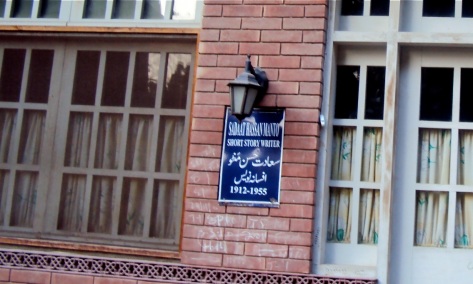
May 2012 will mark the hundredth birth anniversary of the man who wrote that epitaph for himself, Saadat Hasan Manto (1912-1955). One cannot help but compare Manto’s centennial to Faiz Ahmed Faiz’s last year, preparations for which had begun much in advance. There seems to be an odd silence about Manto. Continue reading A Hundred Years of Manto

Rethinking Urdu Nationalism in Pakistan: Raza Rumi

Guest post by RAZA RUMI

Urdu has been a controversial language in Pakistan despite its official and holy status. The Bengalis rejected it way back in the 1940s when Jinnah, advised by a bureaucracy, with imperial moorings declared in that it would be the official language. Subsequently, Sindhis, Baloch and Pashtuns have also resisted the one-size-fits-all Urdu formula. Yet, Urdu has emerged as the functional lingua franca that connects Pakistan’s federating units, and its conflation with Islam and Muslim ‘nationhood’ remains the paramount narrative in Pakistan.

It takes arduous scholarship and infinite courage to author a book like From Hindi to Urdu: A Social and Political History (Oxford University Press, 2011). Dr Tariq Rahman, ironically, has worked as the Director of the National Institute of Pakistan Studies at the Quaid-i-Azam University and therefore his challenge to the mythical dimensions of ‘Pakistan Studies’ comes from within and not as an outsider. Sixty-four years after the creation of Pakistan, we have not arrived at any conclusion about our ‘national’ or cultural identity. Dr Rahman’s book if anything shatters the myths that we have built around Urdu; and therefore presents a valid alternative to Goebbelsian tone of our official history. Continue reading Rethinking Urdu Nationalism in Pakistan: Raza Rumi

Aapka poora naam kya hai?

The cast in this short film: Sharma- Rajesh, Mishra- Nishant, Choudhury- Roshan, Dalit- Dinamani
Camera- Babita, Script and Direction- Dinamani (dina_bhim@yahoo.co.in). Special thanks to Anoop for making the office available for the shoot.

उत्तर प्रदेश चुनाव 2012 और पसमांदा मुस्लिम समाज

This is the text of a pamphlet released by the PASMANDA INTELLECTUALS FORUM, Lucknow. It comes to us via Khalid Anis Ansari

पसमांदा समाज की मुख्य माँगें

हमने उत्तर प्रदेश विधान सभा चुनाव, 2012 के मद्देनज़र पसमांदा (दलित और पिछड़े) मुसलमानों   की पांच बड़ी मांगें तय की हैं. आइए, आगे बढ़ने से पहले हम इन मांगों पर नज़र डालें:

  1. पसमांदा मुसलमानों की उत्तर प्रदेश में 15% आबादी है. इस कारण सारी पार्टियां उनकी आबादी  के हिसाब से टिकट दें;
  2. सवर्ण (अशराफ) मुसलमानों को सर्वोच्च न्यायालय के मंडल (इंदिरा साहनी) फैसले (1992) के तहत आरक्षण की  परिधि से बाहर रखा जाये क्योंकि वह संविधान केअनुच्छेद 16 (4) और 15 (4) के तहत ‘सामाजिक और शैक्षिक’ तौर पर पिछड़े तबके नहीं माने जा सकते हैं;
  3. केन्द्र और उत्तर प्रदेश की ओबीसी लिस्ट को बिहार फार्मूले के तहत पिछड़ा वर्ग और अति-पिछड़ा वर्ग में विभाजित किया जाये और सारे पिछड़े मुसलमानों को सामानांतर रूप से पिछड़ी हिंदू जातियों के साथ अति-पिछड़ा श्रेणी में विधिवत शामिल किया जाये;
  4. दलित मुसलमानों / ईसाइयों को 1950 के राष्ट्रपति आदेश (पैरा 3) को रद्द कर के एससी लिस्ट में शामिल किया जाये;
  5. भूमंडलीकरण और नवउदारवादी आर्थिक नीतियों के चलते पसमांदा समाज के कारीगर/दस्तकार/मजदूर तबकों और लघु-उद्योग की बर्बादी को रोका जाए और उनको फिर से पटरी पर लाने वास्ते उचित नीतियां बनाई जाएँ.

Continue reading उत्तर प्रदेश चुनाव 2012 और पसमांदा मुस्लिम समाज

The process is the bloody punishment

Sec. 153A of the Indian Penal Code – that favored child of the religious right- provides for punishment of upto three years imprisonment for the promotion by words (spoken or written) of disharmony, feelings of enmity, hatred or ill will between religious communities. The punishment laid down in this section has to one of the most redundant penal sanctions in the law since in this case the process is the bloody punishment.

There is a similar redundancy in Sec. 295A of the IPC which provides that “Whoever, with deliberate and malicious intention of outraging the religious feelings of any class of citizens of India, by words, either spoken or written, or by signs or by visible representations or otherwise] insults or attempts to insult the religion or the religious beliefs of that class, shall be punished with imprisonment of either description for a term which may extend to three years, or with fine, or with both.

Continue reading The process is the bloody punishment

SAHMAT invites Salman Rushdie to Delhi

This release comes from SAHMAT, the Safdar Hashmi Memorial Trust, Delhi

We have watched with dismay the unnecessary controversy which erupted over the presence of Salman Rushdie at the Jaipur Literary Festival. We strongly disapprove of the threats – real or perceived – issued against the participation of Rushdie. The state has once again succumbed to retrogressive forces using works of creative expression for their own narrow, partisan and divisive political agendas. SAHMAT has stood by Rushdie in the past, when we defied an unofficial ban on The Moor’s Last Sigh by readings on the street in Delhi in 1995. Rushdie has been a frequent visitor to India in the last few years with no problems being raised. Indeed, he visited us at SAHMAT and was serenaded by chance by some of the greatest singers of the Rajasthani Manganiyar tradition.

SAHMAT is issuing an open invitation to Salman Rushdie to come to Delhi to deliver a lecture or participate in a discussion on literature at any time of his choosing. We will host him under any circumstances along with an exhibition of the works of the late MF Husain, driven into forced exile by the similar retreat by the state in it’s cowardly unwillingness to stand up against communal politics.

SAHMAT
New Delhi

Le Grande Triptych Humanism: Brinda Bose and Prasanta Chakravarty

Guest post by BRINDA BOSE and PRASANTA CHAKRAVARTY

Haruki Murakami’s much-hyped IQ84 that released worldwide in translation a couple of months ago is (Our) Big Fat Japanese Novel, three volumes in one. Closer home, Amitav Ghosh is in the process of completing the definitive South Asian Maritime Novel in trilogy. Young, prize-winning, promising writers from around the world – New Zealand, Malaysia, Bangladesh – are pledged to regale us with long large narratives that will tell us everything we ever wanted to know about their cultures, societies, lives – in trilogies and quartets. Intriguing? Indeed. Coincidental? Perhaps not.

Even as new literary canons are continually in consolidation, interrogation and re-formation, Franco Moretti – acclaimed, revered, preeminent theorist of the Novel and World Literature (which enjoy an odd synecdochic relationship) – has systematically constructed a blueprint for ways to appreciate the worth of such a grand, if loose, canon as World Literature by a particular reading technique he calls ‘distance-reading’.

Continue reading Le Grande Triptych Humanism: Brinda Bose and Prasanta Chakravarty

Satanic Versus Moronic: How Salman Rushdie Lost the UP Election

Oh, It’s silly season again. (Has it ever not been silly season? Silly me for making a silly rhetorical opening to this post). Anyway folks, aam aur khas janta, baba log and bibi log, it’s time, once monotonously again, for quarantines and piety, for bans and shoe-throwing contests, for frothing at the mouth and froth on the telly. Its Rushdie-Nasreen-Husain Time, again! Ta-Raa! And like a ‘sanjog’ made by a pretend-god in a made up marquee heaven, the stars of ‘Rushdie Time’ are crossed with the suddenly brightly shining stars of what would have otherwise been a lackluster, effigy-tarpaulined, mid-winter provincial election. Ta-Rant-Ta-Raa! Not even a Saleem Sinai or a Gibreel Farishta, let alone a jeeta-jagtaa Salman Rushdie in his weirdest magic-realist moment could have imagined himself mixed up in a plot as diabolical as this one. If this was a court case we could call it Satanic versus Moronic.  Whatever it is, there is no denying that it is a P2C2E – a ‘Process Too Complicated To Explain’. But explain we must. Process we can. Pyaar kiya to darna kya?

Continue reading Satanic Versus Moronic: How Salman Rushdie Lost the UP Election

Of Cloaking, Colouring and Varnishing: Prasanta Chakravarty

Guest post by PRASANTA CHAKRAVARTY

“Then leave Complaints: Fools only strive
To make a Great and honest Hive.
T’enjoy the World’s Conveniences,
Be famed in War, yet live in Ease
Without great Vices, is a vain
Eutopia seated in the Brain.”

Bernard Mandeville (The Grumbling Hive, 1705)

Salutary falsehoods for a promising end, anyone? Try telling this to the ever righteous Anna Hazare or to the followers of Vaclav Havel, whose campaign assurance to ‘live in truth’ in the year 1989 so moved his virtuous flock. There is a politics of virtue and then there is realpolitik – or so we are told. Or is virtue above politics and vice below? What the deuce marks the ambiguous space in between?! That is what has been relentlessly, and ruthlessly, scanned by two masterful recent additions to the canons of contemporary Western political philosophy: Martin Jay’s The Virtues of Mendacity: on Lying in Politics and David Runciman’s Political Hypocrisy: the Mask of Power, from Hobbes to Orwell and Beyond.

At one level, both scholars acknowledge and emphasize the dangers of the ‘ethical turn’ in political studies.

Continue reading Of Cloaking, Colouring and Varnishing: Prasanta Chakravarty

हिन्दी फ़िल्म अध्ययन: ‘माधुरी’ का राष्ट्रीय राजमार्ग

(ये लेख स्रोत-चिंतन जैसा है, जिसे पीयूष दईया के कहने पर मैंने लोकमत समाचार, दीवाली विशेषांक, 2011 के लिए लिखा था। अपनी आलोचनात्मक टिप्पणियों से नवाज़ेंगे तो अच्छा लगेगा।)

This slideshow requires JavaScript.


बहुतेरे लोगों को याद होगा कि टाइम्स ऑफ़ इंडिया समूह की फ़िल्म पत्रिका माधुरी हिन्दी में निकलने वाली अपने क़िस्म की अनूठी लोकप्रिय पत्रिका थी, जिसने इतना लंबा और स्वस्थ जीवन जिया। पिछली सदी के सातवें दशक के मध्य में अरविंद कुमार के संपादन में सुचित्रा नाम से बंबई से शुरू हुई इस पत्रिका के कई नामकरण हुए, वक़्त के साथ संपादक भी बदले, तेवरकलेवर, रूपरंग, साजसज्जा, मियाद व सामग्री बदली तो लेखकपाठक भी बदले, और जब नवें दशक में इसका छपना बंद हुआ तो एक पूरा युग बदल चुका था। [1] इसका मुकम्मल सफ़रनामा लिखने के लिए तो एक भरीपूरी किताब की दरकार होगी, लिहाजा इस लेख में मैं सिर्फ़ अरविंद कुमार जी के संपादन में निकली माधुरी तक महदूद रहकर चंद मोटीमोटी बातें ही कह पाऊँगा। यूँ भी उसके अपने इतिहास में यही दौर सबसे रचनात्मक और संपन्न साबित होता है। Continue reading हिन्दी फ़िल्म अध्ययन: ‘माधुरी’ का राष्ट्रीय राजमार्ग

Hindi and Urdu: Sa’adat Hasan Manto

This is MUHAMMAD UMAR MEMON‘s translation of an article by SA’ADAT HASAN MANTO. The translation first appeared in The Annual of Urdu Studies.

The Hindi-Urdu dispute has been raging for some time now. Maulvi Abdul Haq Sahib, Dr Tara Singh and Mahatma Gandhi know what there is to know about this dispute. For me, though, it has so far remained incomprehensible. Try as hard as I might, I just haven’t been able to understand. Why are Hindus wasting their time supporting Hindi, and why are Muslims so beside themselves over their preservation of Urdu? A language is not made, it makes itself. And no amount of human effort can ever kill a language. When I tried to write something about this current hot issue, I ended up with the following long conversation:

Munshi Narain Parshad:  Iqbal Sahib, are you going to drink this soda water?

Mirza Muhammad Iqbal: Yes, I am.

Munshi: Why dont you drink lemon?

Iqbal: No particular reason. I just like soda water. At our house, everyone likes to drink it.

Munshi: In other words, you hate lemon. Continue reading Hindi and Urdu: Sa’adat Hasan Manto