Category Archives: Left watch

The Commissar in his Labyrinth

Prakash Karat, Gen Sec, CPI(M), photo courtesy The Hindu

Look carefully at this grey, arrogant and humourless face: The face of the Commissar, who on 22 July went into Lenin-in-October 1917 mode, predicting an uprising in the country if the Indo-US Nuclear Deal was pushed through. However much one might have sympathized with the man and his party on this issue, there was something strange and inexplicable in the game he started playing at that point. At least publicly, that seemed to have been the beginning. For those who have known him and his ways from closer quarters, know him to be an utterly vindictive man with a blood-curdinlingly cold and calculating mind. Ruthless inside the party, he was now playing out this same game outside. His stance on Somnath Chatterjee (and let there be no mistake, it was entirely his), leading to the latter’s expulsion, was just an instance of his style. This time he made a serious error. Continue reading The Commissar in his Labyrinth

जारी है ‘जनपक्षीय हिंसा’ का तान्डव

खबर मिली है कि छत्तीसगढ़ में माओवादी हमले में ग्यारह से ज़्यादा पुलिस के जवान मारे गए हैं. इस महीने ऐसी हत्याओं की संख्या पचास से अधिक हो गयी है. इसके साथ ही बंगाल के चुनाव में हिंसा के समाचार किसी भी दूसरे राज्य से अधिक मिले हैं. बंगाल की हिंसा में  संसदीय राजनीति में भाग लेने वाले एक मार्क्सवादी दल के सदस्य शामिल हैं.संसदीय राजनीति को  भटकाव बताने वाले और उसे रणनीतिक रूप से इस्तेमाल करने वाले, दोनों तरह के मार्क्सवादी या माओवादी दलों को हिंसा के अपने इस्तेमाल के जायज़ होने में कोई  शक नहीं है.दोहराव का खतरा उठाते हुए नंदीग्राम और सिंगुर में सीपीएम की हिंसा के पक्ष में उसके बुद्धिजीवियों के तर्कों को याद कर लेना  उचित होगा.इन तर्कों में एक तर्क रक्षात्मक हिंसा का था. इस बार चुनाव में अपने पक्ष में न होने के लिए सीपीएम ने नंदीग्राम में हत्याएं कीं और तृणमूल कांग्रेस के कार्यकर्ताओं ने सीपीएम के समर्थकों को  मारा.बंगाल के पिछले एक साल के अखबार को उठा कर देख लें, हिंसा उस समाज के स्वभाव को परिभाषित करती जान पड़ती है.
Continue reading जारी है ‘जनपक्षीय हिंसा’ का तान्डव

Lalgarh, Media and the Maoists: Monobina Gupta

Guest Post by MONOBINA GUPTA

[As this report is filed, reports have come in that the CPI-M has finally managed to enter Lalgarh and hold its first public meeting since 2 November 2008, when the police first arrested seven young students from Lalgarh, sparking off a revolt. No machine guns were fired, no mines were blasted – even though we are supposed to believe that the area is a ‘liberated area’ of the Maoists. See our earlier report, written soon after the revolt began. Even as we post this, more reports – mostly from West Bengal government and police sources, are being suddenly being published of ‘unrest’ spreading to ‘more Maoist areas’, and an atmosphere is sought to be created for an eventual justification of government and party sponsored violence.]

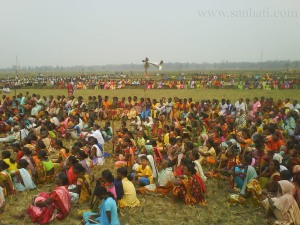
Assembly in Lalgarh - Armed Maoists? Photo, courtesy sanhati.com
Assembly in Lalgarh – Armed Maoists? Photo: courtesy sanhati.com

For five months now Lalgarh has been practicing a unique form of democratic politics. To the ruling CPI-M in West Bengal and the big media however, it has been nothing but a Maoist-sponsored agitation with portents of Maoist style violence. Except Bengal media, national print and television, have by and large kept Lalgarh out of their ambit of coverage. If at all news has trickled in, it has come tagged with ‘Maoists’ and ‘violence’; as if tribals in this forgotten part of Medinipur, the past five months, have been stocking up arms and laying ambushes to wage a war against the state.

A front-page article in the Times of India (TOI) today (April 22, 2009) sticks to this format describing Lalgarh as “Nandigram II, a liberated zone” where an explosive situation is building up with elections scheduled for April 30 and the Pulishi Santrash Birodhi Janashadharaner Committee (People’s Committee against Police Atrocities) refusing to allow the police to enter Lalgarh. “The police can’t enter here. Nor are other government officials welcome. This has been the situation for the last six months.”

Continue reading Lalgarh, Media and the Maoists: Monobina Gupta

The Tragedy of Politics in Sri Lanka

I am posting below an article that I wrote with Cenan Pirani.  The shorter version of this article is in Combat Law. The longer version below delves into the history of left politics in Sri Lanka and attempts at a political solution.  Another article by me reflecting some of these concerns and raising questions of solidarity titled ‘The Challenges of Solidarity’ was published in Red Pepper.

The Tragedy of Politics in Sri Lanka

By AHILAN KADIRGAMAR and CENAN PIRANI

In the last few months, the Sri Lankan security forces have managed to ruthlessly push the LTTE into a 40 square km strip of land in the North of the island, and along with the LTTE leadership and its cadres, a sizable civilian population, anywhere from seventy thousand to one hundred and fifty thousand, have also been cordoned off in this area.  As the security forces continue their offensives purporting to rid Sri Lanka of the LTTE, they also claim the lives of these civilians daily. Continue reading The Tragedy of Politics in Sri Lanka

Evangelist Zizek and the End of Philosophy – II

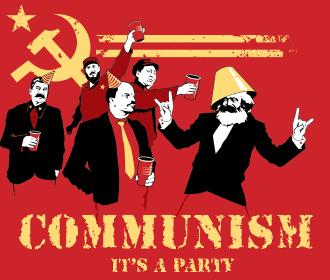
Idea of communism? Courtesy Oscar's global blog
Idea of communism? Courtesy Oscar’s global blog

Today was the third and final day of the ‘Idea of Communism’ conference and it was the truly most bizarre experience – bizarre philosophical experience, I should say – of my life. Let me start backwards today.

The preacher from Ljubliana was in full form and he closed his own hour-long (or was it 55 minutes) presentation ‘To Begin from the Beginning, Over and Over Again’ with the following: “If the rumour that Gilles Deleuze was writing a book on Marx before he died, is true then this should be seen as a sign that after having spent a life time away from the Church he wanted to come back to its fold…We welcome all those anti-communist Leftists who have spent their lifetimes attacking us to come and join us.” Continue reading Evangelist Zizek and the End of Philosophy – II

Re-booting Communism Or Slavoj Zizek and the End of Philosophy – I

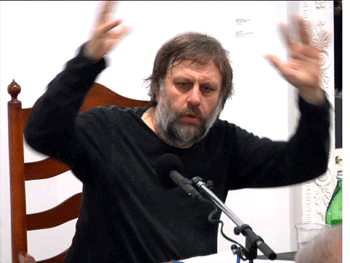
Zizek - the postmodern Lenin?

Today, 13 March, a whole galaxy of philosophers and theorists got together for a three-day conference “On The Idea of Communism” under the auspices of the Birkbeck Institute for the Humanities, London University. The Conference opened to a jam-packed hall where all tickets had sold out (no jokes, this was a ticketed show where the likes of Alain Badiou, Slavoj Zizek, Jean Luc-Nancy, Toni Negri, Jacques Ranciere, Terry Eagleton and many many others are to perform on the ‘idea of communism’). The huge Logan hall with a capacity of about 800-900 was so packed that the organizers had made arrangements for video streaming in another neighbouring hall – and that too was half full! Very encouraging in these bleak days.

The conference began in the afternoon with brief opening remarks by Alain Badiou and Slavoj Zizek. Badiou made his general point (see below) about the continuing relevance of the ‘communist hypothesis’. Staid and philosopherly. Continue reading Re-booting Communism Or Slavoj Zizek and the End of Philosophy – I

Save the left from left scholars

I have just returned from an atrocious talk delivered by a famous Nepal expert, David Seddon, who claims to belong to the ‘old British Marxist tradition of Eric Hobsbawm and E P Thompson’.

So this Mr Seddon is well known in Nepal for a book he wrote three decades back – Nepal in Crisis. More recently, he got along with a local activist to edit a book on the People’s War.

Now, Seddon sahib comes here. He tells a Nepali audience how he is worried about the rising violence and the ‘law and order’ problem. He links the violence with identity – “people feel they have a legitimate basis to pick arms and throw stones because they belong to a caste and ethnic group.” He tells the audience, many of whom have struggled for long to bring some change in the exclusionary Nepali state structure, that ‘identity politics is profoundly undemocratic and federalism is not necessary.” And here is the clincher, “When your constituent assembly members adopted a federal democratic republic, I am sure they were thinking only about the republic part. No one really thought about the federal part.” Continue reading Save the left from left scholars

A Fragile Peace in Nepal

In the six months that Maoist chairman Pushpa Kamal Dahal ‘Prachanda’ has been Prime Minister, he has realised that running a state is more complex than waging a war.

Since mid-August when he took charge, the PM has had to deal with multiple challenges – an intense ideological debate within his party; a deadlock in the peace process; breakdown of consensus with the G P Koirala led Nepali Congress (NC); acrimony between the defence ministry and Nepal Army (NA); opposition from sections of civil society suspicious of Maoist commitment to democratic norms; rampant lawlessness in the eastern Tarai and ethnic assertion in eastern hills; the collapse of basic services with 16 hour power cuts; and the impact of the global meltdown with remittances dipping. Continue reading A Fragile Peace in Nepal

Healthy Debate

Our disclaimer page reads:

1. Personal attacks are not okay! Passionate, even angry critiques are great, but you want to hold off on the invective. This is an online forum, not a prize contest on the bad words we are sure everyone knows.

2. We want Kafila to be a forum in which we can explore complex ideas together. Polarised for/against debates or WWF-type slanging matches help nobody.

3. All of us who write here have an investment in the issues posed in Kafila. So for us these exchanges are not merely academic or for point-scoring.

In line with that, a public service message about trolls, as much for ourselves as anyone else!

please_do_not_feed_the_troll

From here.

A Hundred Years to Valentine’s Day

The Manglore-style of violence against women is clearly not the style of the politically powerful guardians of sexual morality in Kerala. But maybe the style is more or less redundant over here: there are very few pub-going local (or local-looking) women over here. How convenient for us women of Kerala that we Malayalees live in social arrangements that insist on sexual segregation in public spaces and institutions.

This is of course related to the particular history of gender and spatiality that unfolded between the mid-19th and 20th centuries in Kerala.Spatial categories have always underwritten caste and gender exclusion in Malayalee society. Take for instance, the derogatory term chanthapennungal (‘market women’) that refers to women who get their way through loud and vociferous argument – who work for their livelihood in market-space and reject feminine modesty. The chanthapennu is the very antithesis of taravattil pirannaval (‘she who was born in an aristocratic homestead’). Thus the woman whose daily life and labours involves traversing spaces outside the domestic and the familial is forever poised at the brink — she is who may, at any instant, collapse into being chantappennu.In traditional Malayalee society, family spaces were named by caste and constructed through caste practices and gender norms. For instance, the Brahmin home was referred to as Illam or Mana; the Nair homestead as Taravadu or Idam.In other words, a generalized notion of domestic space housing the family was absent.  Indeed, the observance of spatial regulations was often taken to be crucial in shaping feminine moral qualities found characteristic of the aristocracy — and hardly vice-versa.

Continue reading A Hundred Years to Valentine’s Day

Interview with Jacques Ranciere

Interview with Jacques Rancière
Conducted by Lawrence Liang
Lodi Gardens, Delhi, 5th February 2009

Jacques Rancière (born Algiers, 1940) is Emeritus Professor, Philosophy, at the University of Paris (St. Denis). He came to prominence when he co-authored Reading Capital (1968), with Louis Althusser, the Marxist philosopher. He subsequently broke away from Althusser and wrote The Nights of Labour, a work that examined the philosophical and poetical writings of workers in 19th century France. Through an examination of the lives of these worker autodidacts, Rancière introduced a new way of thinking about the idea of the worker, and of the injunction that divides between those entitled to a life in thought and those born to do manual labour.

He went on to write The Philosopher and His Poor which looks at the figure of the poor artisan from classical philosophy down to Marx and Sartre. In The Ignorant Schoolmaster, inspired by the experiences of a radical early 19th century teacher, Joseph Jacotot, Rancière sought to rethink the idea of pedagogy away from the idea of moving form the unknown to the known and from those who possess knowledge to those who don’t, to look at how all forms of ignorance are also conditions of knowledge.

He was in Delhi recently, on the occasion of the release of the Hindi language edition of The Nights of Labour.

Continue reading Interview with Jacques Ranciere

Jayampathy Wickramaratne on Political Solution in Sri Lanka

I am posting a longer version of an interview with Jayampathy Wickramaratne.  The February 2009 issue of Himal Southasian, a special issue on Sri Lanka, has a shorter version of this interview.  At a time when there is much concern about the ongoing humanitarian catastrophe there have also been increasing voices calling for a political solution.  On the history of displacement and humanitarian concerns with the twenty-fire year war in Sri Lanka, I recommend Rajan Hoole’s article in Himal.  This interview with Jayampathy Wickramaratne might engage those interested in past attempts at a political solution as well as the problems with the 13th Amendment (which came out of the Indo-Lanka Accord of 1987 and is currently being talked about both in Sri Lanka and India).

Ahilan Kadirgamar talked to Jayampathy Wickramaratne, who is President’s Counsel, a constitutional lawyer, a former senior advisor for the Ministry of Constitutional Affairs, and a member of the team that drafted the 2000 Constitution Bill.  Wickramartane was a member of the panel of experts to assist the All Party Representative Committee and signatory to the “Majority Report” (December 2006) that proposed extensive restructuring of the state, with extensive devolution and power sharing at the centre.   Wickramaratne is a politburo member of the Lanka Sama Samaja Party. Continue reading Jayampathy Wickramaratne on Political Solution in Sri Lanka

Beyond violence and non-violence – K Balagopal

Via Jamal Kidwai

[We are posting this piece by K Balagopal, hoping to continue our reflections on violence and non-violence in political movements. – AN]

The public arena is witness to dispirited discussion of the ineffectiveness of people’s movements, which are at the most able to slow down things, and nothing more. The discussion often turns around violence and non-violence, not as moral alternatives but as strategic options. Those who are sick of sitting on dharna after dharna to no effect are looking with some envy at violent options,
while many who have come out of armed groups find the Narmada Bachao Andolan (NBA) fascinating.

It is good that there is some openness in the matter now, for dogmatic attitudes have done considerable harm. To say that one should not be dogmatic about violence may be morally a little unsettling but it is a defensible position even without adopting a relativistic attitude towards the preciousness of life or a casual attitude towards one’s moral responsibility for injury caused in the course of a struggle. More of that in the right context. But the
discussion will unavoidably be based on assessments  of the effectiveness of the alternatives, and a distant view is likely to colour the reality with hopes and assumptions, even illusions. A realistic assessment of what each strategy has been able to achieve would better inform the debate.

The plain and stark fact is that while all strategies have been effective in curbing some injustice, none has succeeded in forcing the government to take back a single major policy in any sphere. And none has been able to reverse the trends inherent in the structures of society and economy. Yet no serious political movement or social struggle we know of is only for softening oppression or improving relief. The general understanding is that governance of the country – and may be the systemic infrastructure of society – is fundamentally wrong and needs remedying, maybe overturning. Do we know of any
effective strategy for that? I am not talking of political strategies,
but strategies of struggle that will successfully put pressure upon the State and the polity to stop them in their tracks. The struggle may be built around class or caste or any other social combination. It may in the end seek reform or the upturning of the polity. It may operate mainly or in part within the polity or keep out of it altogether. Whichever it is, the common problem is this: the experience of this country is that governments do not stop doing some thing merely because it has been demonstrated to be bad. Or even contrary to constitutional directives and goals. They stop only if going along is made difficult to the point of near impossibility. No democratic dispensation should be thus, but Indian democracy is thus. Short of that, you demonstrate the truth of your critique till you are blue in the face or shout till you are hoarse in the throat, it is all the same.

Continue reading Beyond violence and non-violence – K Balagopal

Speech and silencing on the Right and Left

Lasantha Wickrematunge, the courageous editor of Sunday Leader, a weekly newspaper from Sri Lanka, was recently assasinated by the Sri Lankan state. Relentless in exposing corruption and human rights abuses, he was fully aware of the price he would have to pay. In a stunning editorial that he appears to have written for publication in the event of precisely such an eventuality, and which was published after his death, he directly accuses the government of killing him:

“It is well known that I was on two occasions brutally assaulted, while on another my house was sprayed with machine-gun fire. Despite the government’s sanctimonious assurances, there was never a serious police inquiry into the perpetrators of these attacks, and the attackers were never apprehended. In all these cases, I have reason to believe the attacks were inspired by the government. When finally I am killed, it will be the government that kills me.”

His words of farewell are defiant:

“If you remember nothing else, remember this: The Leader is there for you, be you Sinhalese, Tamil, Muslim, low-caste, homosexual, dissident or disabled. Its staff will fight on, unbowed and unafraid, with the courage to which you have become accustomed. Do not take that commitment for granted. Let there be no doubt that whatever sacrifices we journalists make, they are not made for our own glory or enrichment: they are made for you. Whether you deserve their sacrifice is another matter. As for me, God knows I tried.”

Meanwhile, in Nepal, the premises of Himal media were attacked by people identified as Maoist activists. Today the ‘bourgeois’ media, tomorrow – dissenting Left voices…?

In Cold Blood: Abuses by Armed Groups

India, Pakistan, Sri Lanka, Nepal, Bangladesh, Afghanistan, Iraq, Saudi Arabia, Israel and the Occupied Territories, Indonesia, Egypt, Jordan, USA, UK, Spain, the Russian Federation, to name a few, are a testimony to the cruel attacks on civilians and other human rights abuses in the recent past by non-state armed groups, including terrorist groups. They are showing utter disdain for the lives of civilians and others, continuing a pattern of serious crimes and crimes against humanity. They fail to abide by even the most basic standards of humanitarian law. The attacks and other abuses by armed groups are so frequent and the security situation so grave, that it is impossible to calculate with any confidence the true toll upon the civilian population, let alone the long term consequences that so many people inevitably suffer.

Continue reading In Cold Blood: Abuses by Armed Groups

Reflections on Revolutionary Violence

In the last one year, I have often found myself going back to a conversation I had had with a Maoist ideologue. As it happened, it was he who started interrogating me about my stand on violence. ‘So, you have become a Gandhian?’ he demanded. I must confess I was a bit taken aback, not quite able to figure out the context of this poser. ‘What do you mean by Gandhian’, I kind of mumbled. Pat came his reply: ‘Well you have been making some noises lately about Maoist violence, haven’t you?’ Suddenly it all became clear. Through this ridicule, he was trying to appeal to that part of me that still remained marxist – presumably now buried in some remote past – and to resurrect it against my ostensible ‘non-marxist’, ‘liberal’ present (for which ‘Gandhian’ was some kind of a short hand code). I found myself at a loss of words. Does a criticism of the mindless and nihilistic violence of the Maoists make one a Gandhian? Is there no space left between these two polar positions? The conversation did not go very far that day but has kept coming back to me ever since.

Continue reading Reflections on Revolutionary Violence

The Millennium that Never Came


by Mike Keefe - The Denver Post
by Mike Keefe – The Denver Post


One day the story of the decade gone by will be unpacked by others. This was a decade that was bizarre and terrifying – cluttered with event-scenes: massacres, spectacles, war, endless staged media events, and a mysterious violence with shadow perpetrators whose names changed every day in police stories – a million changing acronyms of ‘terror’ groups.

Continue reading The Millennium that Never Came

Buddhadeb Bhattacharjee will be grateful to the Maoists – Monobina Gupta

[Guest post by MONOBINA GUPTA. As things begin to change on the ground in West Bengal, the irresponsible attempts by both the Maoists and the Trinamool Congress, to take over and ‘represent’ the popular discontent, in order to legitimize their own brand/s of politics, can only benefit the CPI-M. The alternative to the CPI-M, it might appear, are the Maoists – a sure put off , even for large sections supporting the Singur and Nandigram struggles. AN]

A deadly ambush executed by Maoists earlier this month has given the badgered West Bengal chief minister a god-sent opportunity to deflect attention from the burgeoning resistance in Nandigram-Singur to the more chilling phenomenon of ‘red terror.’

The story runs somewhat like this …

Continue reading Buddhadeb Bhattacharjee will be grateful to the Maoists – Monobina Gupta

Welcome to Kerala’s Haven of Ease and Vice — Chengara

Make no mistake — this is not my assessment. I’ve just borrowed it from our Chief Minister, the redoubtable V.S. Achuthananadan, the foremost of (official) revolutionaries in Kerala, whose memories of struggle stretch back right up to the workers’ uprising of the 1940s in south Kerala, the Punnapra-Vayalar, celebrated in communist myth and legend.  In September this year it appeared as if the CPM was ready to negotiate with the protestors, but nothing has really moved. The latter have hung firm in their resolve, it requires a rather strange imagination to read that as evidence for ‘peace and prosperity’ at Chengara. The Congress has now emerged, after much slumber, with support for the struggle, and V.M. Sudheeran, one of the most popular and respected leaders of the Congress, has sharply condemned the CM’s statement (below).

Continue reading Welcome to Kerala’s Haven of Ease and Vice — Chengara

Some images do not disturb

CBI-employed manhole workers in Noida

guest post by S. ANAND

There are times when our critical antennae do not perk up. We do not wish to decode certain signs because we are all implicated in them. Following the 14 September blasts in Delhi, suddenly the media found a new value in ragpickers, street vendors, auto drivers and others who live on the fringes of the city and are generally looked down upon by people who inhabit apartments, blogs, cars (and autos, I must add).

Suddenly, by 15 September, ragpicker Krishna was canonized as a ‘hero’ by the media, the police and the state (the Delhi government claims credit for saving some lives with its ‘eyes and ears’ policy). Yet, Times of India prefaced its report about Krishna thus: Continue reading Some images do not disturb

Maoist disruption of the non-violent Human Shields movement in Chhattisgarh

[We are posting below a statement issued by some of us on the Maoist threats and intimidation in Chhattisgarh and its most recent manifestation in relation to the human shields programme of the Vanvasi Chetna Ashram. It is a distressing but undeniable fact that, by and large, the civil liberties and democratic rights movement has fought shy of condemning Maoist violence. This is a matter of deep concern as the absolutely undefensible, nihilistic violence perpetrated by the Maoists violates all tenets of the great revolutions of the twentieth century that they themselves swear by. Despite their subsequent degeneration (after coming to power), neither the Chinese revolution nor the Vietnamese (the Russian, of course happened without a single shot being fired) made a cult of violence. Never, in any case, did they use violence against defenseless civilians. In fact, revolutionaries have been known to court defeat and annihilation, rather than kill ordinary people – whenever they were presented with the choice between the two. The perverse cult that targets ordinary, unarmed civilians simply in order to have its way can only be seen as, to say the least, a kind of Left-wing Fascism. – AN]

We, the undersigned, are distressed to learn that a peaceful movement in the conflict-ridden Dantewada district, Chhattisgarh to help villagers return to their land has been disrupted by the Communist Party of India (Maoist). The villagers had been displaced earlier by the state-sponsored Salwa Judum campaign that began in 2005 and has resulted in horrific violence against ordinary villagers in the area. Continue reading Maoist disruption of the non-violent Human Shields movement in Chhattisgarh