Category Archives: Movements

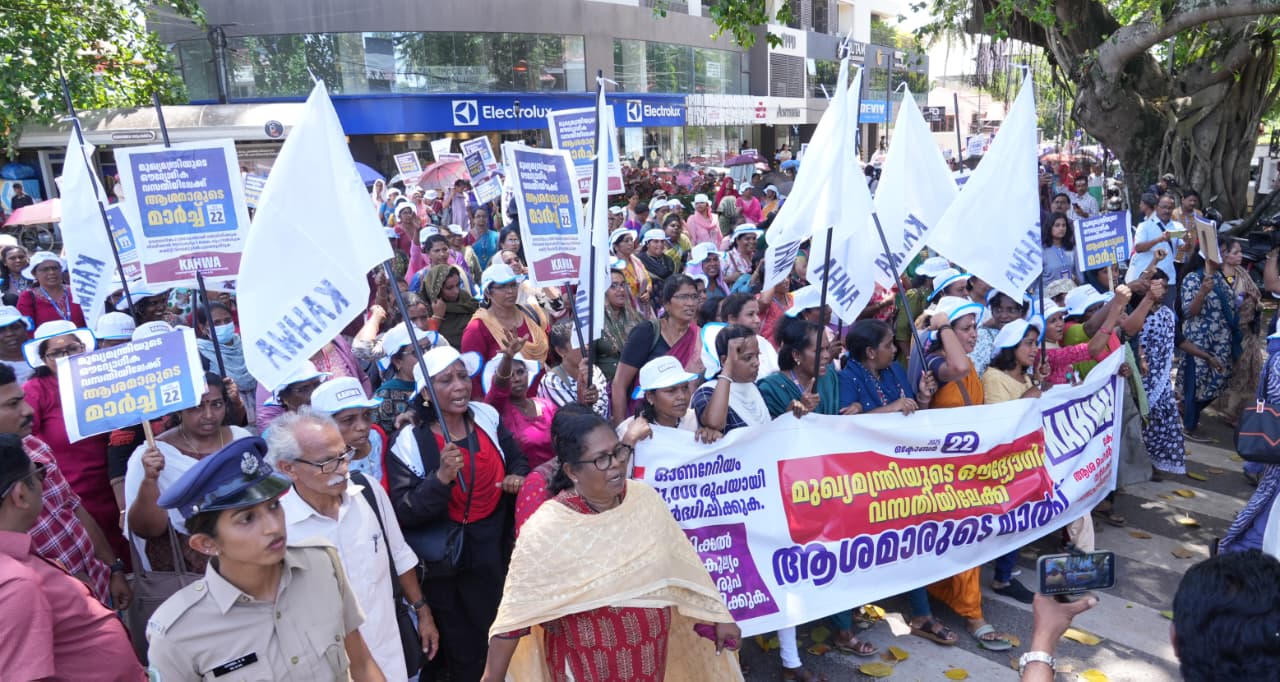
Do not Steal Our Voices, Mr Vijayan! The ASHA Workers’ March to the Chief Minister’s Residence

Dear Mr Vijayan

Yesterday, the protesting ASHA workers marched to your residence in the pouring rain, seeking to rouse you from your utterly inexcusable stupor. Yes, over the past eight months, you tried to first crush the strike, and then to kill it by ignoring it. Who does not know that the worst form of violence is indifference?

Photo credits : Shradha S, Harsh, Ashna Thambi, Santhosh Nilakkal.

Continue reading Do not Steal Our Voices, Mr Vijayan! The ASHA Workers’ March to the Chief Minister’s Residence

Finally, an Answer to Why Kerala’s CPM-led Government is Determined to Break the ASHA Workers’ Strike

Finally, I am able to understand why the government of Kerala, led by a leading communist party, the CPM, is so doggedly against the demands of Kerala’s internationally-celebrated ground-level women health workers — the ASHA workers — who have been on strike since February 2025.

Continue reading Finally, an Answer to Why Kerala’s CPM-led Government is Determined to Break the ASHA Workers’ Strike

Sleeping With the Enemy? Postcolonialism, Misread and Misjudged: Shamayita Sen

Guest post by SHAMAYITA SEN

[This post is the first of a series in Kafila, titled Decolonial Imaginations.

The terms ‘decolonization’ or ‘decolonial’ have become quite critical now, given that the impulse of justice lies at the core of these concepts. Neither postcolonial nor decolonial perspectives are compatible with right-wing ideologies but the fact that Hindutva ideologues in India and the rightwing globally are now trying to appropriate that language makes it seem to some that the very idea of the postcolonial or decolonial is suspect. We believe that this demonizing of decolonial theory from a position defensive of the European Enlightenment needs to be unpacked in the interests of a mutually productive debate. Kafila will be publishing a series of interventions on what the idea of the decolonial imagination involves, locating decolonial theory as speaking from the margins, drawing attention to identities which the orthodox Left subsumed under ‘class’ and which the rightwing in India seeks to assimilate into Brahminism. Additionally the orthodox left’s rejection of spiritual beliefs and inability to engage with them is also a factor that may have produced the space for right wing appropriations of a field marked “religion”. 

We hope that these interventions will clear the ground for productive conversations on the left rather than polarised and accusatory claims.]

This article comes as a response born from a deep sense of intellectual anguish and frustration. It is a rebuttal to a YouTube video titled The Left’s Accidental Gift to Hindu Nationalism posted by one of India’s leading independent news portals, The Wire on 14th August 2025. The video attempts to summarize Meera Nanda’s critique of Postcolonial Left as elaborated in her latest treatise, Postcolonial Theory and the Making of Hindu Nationalism: The Wages of Unreason (2025). While I have read the newly published work, including the excerpt published in The Wire which have been shared widely in popular social media platforms, this piece restricts itself to the Video which comprehensively outlines Nanda’s arguments. An extensive engagement with the critique that Nanda mounts is reserved for some other time.

Continue reading Sleeping With the Enemy? Postcolonialism, Misread and Misjudged: Shamayita Sen

Democracy For The Few ?

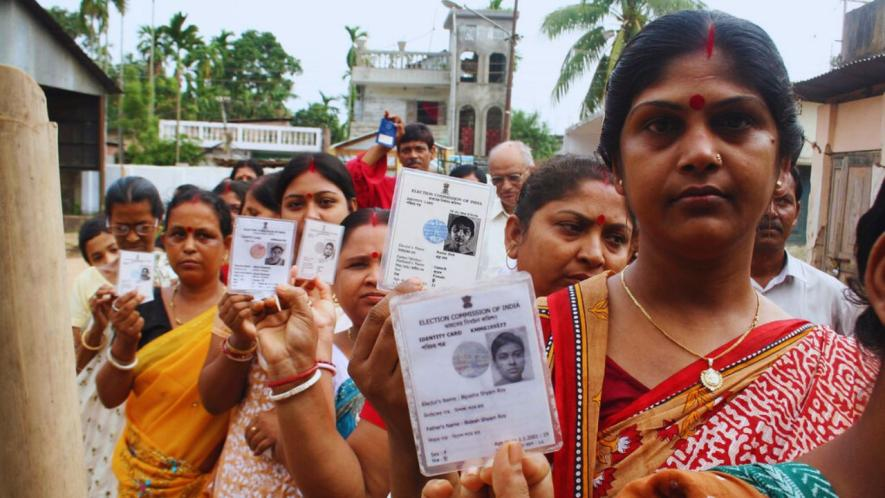
Is Bihar being turned into a test case of disenfranchising people?

Representational Image. Image Courtesy: Flickr

India pledged to usher in a democracy with universal adult franchise.

It was the late 1940s, when India, a newly independent nation, whose less than 10% population was then literate, embarked on this unique experiment, unheard of in those times.

The architects of Independence rejected all the Western prescriptions that openly said that .’.. India had no democratic future‘ (Winston Churchill) or ”monarchial arrangement best suited the Asian people‘ (British Prime Minister Clement Attlee to Nehru, 1949), and (to quote a student of history) ‘met the imperial argument on direct terms, firmly believing in the possibility of creating democratic citizens through democratic politics.’ (India’s Founding Moment: The Constitution of a Most Surprising Democracy by Madhav Khosla)

What is worth emphasising is that all those great leaders who shaped a forward-looking Constitution were on the same page when it came to granting the right to vote. For example, B.R Ambedkar, who was chairman of the Drafting Committee of the Constitution, firmly believed that ‘To limit the franchise, was to misunderstand the meaning of democracy ... ‘

None of them dithered over this provision despite knowing well that even the Western countries had not fully adopted universal adult franchise. Remember, Switzerland granted the right to vote to women only in 1971.

Much water has flown down the Ganges, the Jhelum, the Brahmaputra, the Godavari or the Kaveri.

A good 75 years after the adoption of the Constitution (1950), today we are faced with a challenge that at first looks unbelievable, the present ruling dispensation seems to have embarked on a journey in an exactly reverse direction. [Read the full article here : https://www.newsclick.in/democracy-few]

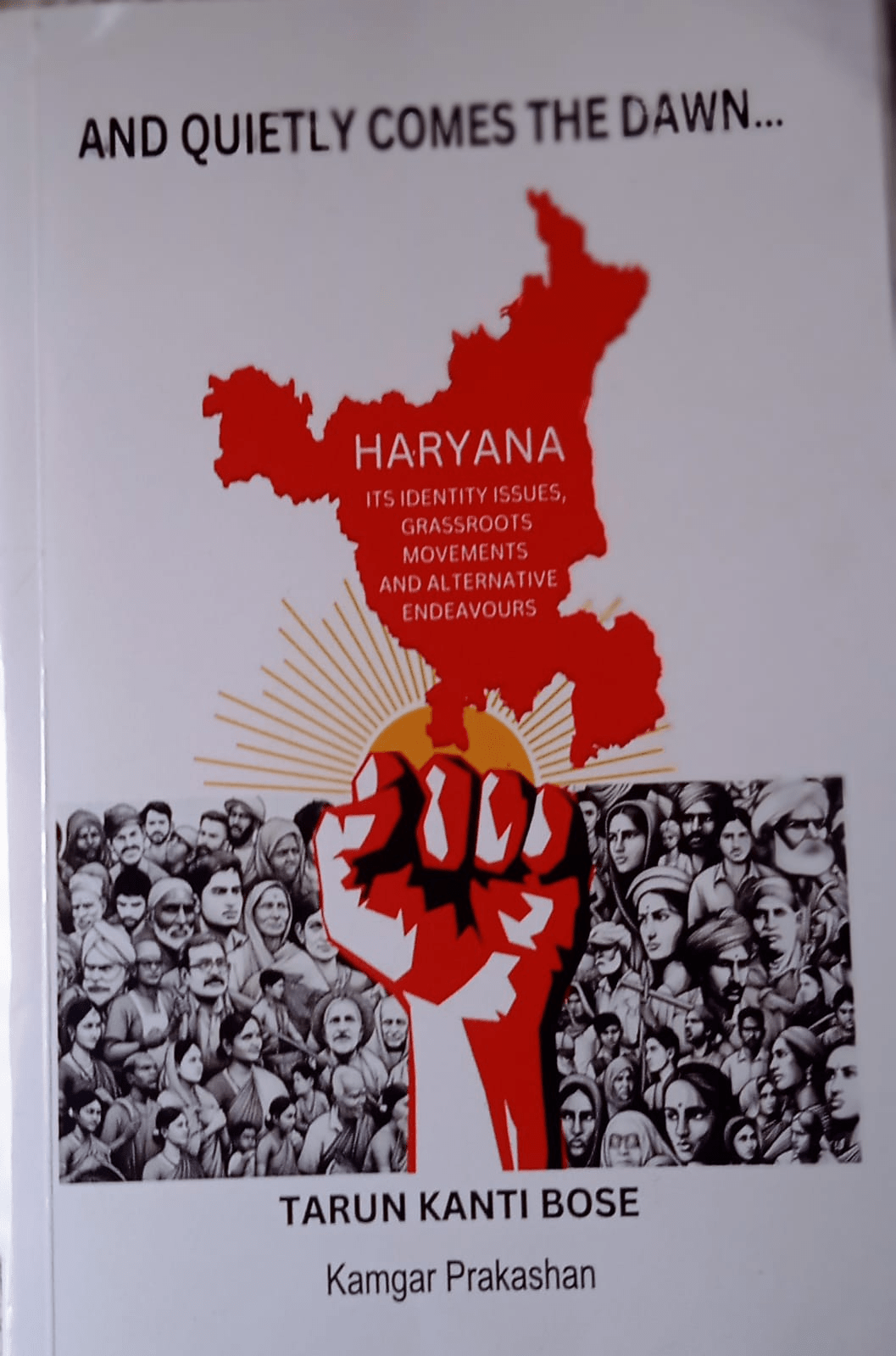
Review : ’And Quietly Comes the Dawn’

The ‘Other Haryana’ Which Rarely Gets Discussed

BOOK REVIEW

And Quietly Comes the Dawn:
Haryana —Its Identity Issues, Grassroots Movements and Alternative Endeavours
by Tarun Kanti Bose

Kamgar Prakashan | https://kamgarprakashan.com

What image does one conjure up when Haryana finds mention anywhere !
It is the image of the millenium city Gurgaon – with offices of leading MNCs or neighbouring Nuh – the Muslim majority district with one of the lowest literacy rates in India or the dominant Jat peasantry, the growing gender imbalance in the society which even gets reflected in the phenomenon of purchasing of brides from Bihar or other areas, etc

Various cases of dalit oppression add another gloomy layer to the not so bright picture.

Rarely does one find voices of the ’other Haryana’ getting reflected in the public discourse.

….Writer, journalist, left activist Tarun Kanti Bose’s new book, ’ And Quietly Flows the Dawn : Haryana— Its Identity Issues, Grassroots Movements and Alternative Endeavours breaks a new ground in this dominant discourse and brings before us many such unheard voices.

( Read the full review here : https://www.mainstreamweekly.net/article15848.html )

Marxist Coordination Committee and Lal Nishan Party Merge with CPI(ML) Liberation: Dipankar Bhattacharya

[In two very significant developments in the non-mainstream Left, the Marxist Coordination Committee (MCC) of the Dhanbad-Jharkhand region and the Lal Nishan Party (LNP) of Maharashtra merged with the CPI(ML) Liberation. While the merger with the took place in September 2024, the one with the LNP happened on 31 May 2025. What is really significant about these two developments is that both the MCC and the LNP, in different ways moved away from orthodox thinking from the beginning. It is not surprising then that they decided to merge with the CPI(ML) Liberation, which in my reckoning, has made some very significant departures from orthodoxy on a range of issues concerning the Indian social and political scene (as also on matters such as democracy and climate change). It is no wonder then that while the MCC, founded by the legendary AK Roy, had developed strong ties of the trade unions in the colliery with the larger adivasi Jharkhandi society, the LNP in its time, distinguished itself by standing by and campaigning for Ambedkar in the early 1950s.

Here we reproduce two pieces by CPI(ML) General Secretary DIPANKAR BHATTACHARYA published in their journal Liberation. The pieces separately discuss the two mergers. – AN]

Lal Nishan Party’s Unification with CPI(ML): Towards a Stronger Communist Movement to Defeat the Fascist Offensive

To defeat the growing fascist offensive, India today urgently needs a stronger presence and role of the Left. The merger of the Lal Nishan Party of Maharashtra with the Communist Party of India (Marxist-Leninist), announced at a unity conference in Shrirampur on 31 May, marks an encouraging step in this direction. This unification brings together two great legacies of India’s communist movement in a state which has historically been the cradle of the quest for social equality. Maharashtra also happens to be the ideological fountainhead of Indian fascism and every advance of the communist movement in Maharashtra today has great value. The unification of LNP and CPI(ML) therefore evokes a lot of hope in the centenary year of India’s organised communist movement.

Continue reading Marxist Coordination Committee and Lal Nishan Party Merge with CPI(ML) Liberation: Dipankar Bhattacharya

The Denigration of Women Workers Fuels State Neglect: Complaint Against the CITU (Kerala) to the WFTU

Attention:
General Secretary, WFTU secretariat@wftucentral.org
Women’s Committee women@wftucentral.org
Asia Pacific Regional Office wftuasiapacific@gmail.com; c.srikumaraidef@gmail.com


Subject:
Complaint against CITU and AITUC (Kerala, India) for their sexist remarks and non-cooperation with
KAHWA women workers in violation of WFTU Constitution


Reference (WFTU Constitution):

Continue reading The Denigration of Women Workers Fuels State Neglect: Complaint Against the CITU (Kerala) to the WFTU

Kerala Must Lead the Way : Kameshwari Jandhyala writes to the Kerala CM on the ASHA Workers’ Struggle

To

Shri Pinarayi Vijayan

Honourable Chief Minister

State of Kerala

Sir

Subj: Kerala Asha workers struggle for justice

I am writing to appeal to your sense of justice and support for workers’ rights especially with regard to the Kerala Asha workers struggle for timely payments, commensurate incentives and remuneration on par with other development workers.

The participation, unstinting labour and commitment of women has been central to several development initiatives in the country, including Kerala. The sad and ironic part is that these women workers are labelled as volunteers and their labour not given its due recognition, respect and remuneration commensurate with the ever-expanding portfolio of responsibilities they shoulder. To remind ourselves, during the Covid pandemic Asha workers across the country bravely, and at considerable personal risk, reached out support to their communities.

Many of us look to Kerala to take the lead to determine and protect the rights of all workers even those labelled as “volunteer workers”. And I am sure Sir, your government is all too aware that “volunteer” is a misnomer, as Ashas are doing full time work.

Once again, I appeal to you and your government to take a positive  to meet the demands of the Asha workers.

Kameshwari Jandhyala

Hyderabad, Telangana

Reflections on the Kafila Journey – Looking Back at a Tumultuous Experience

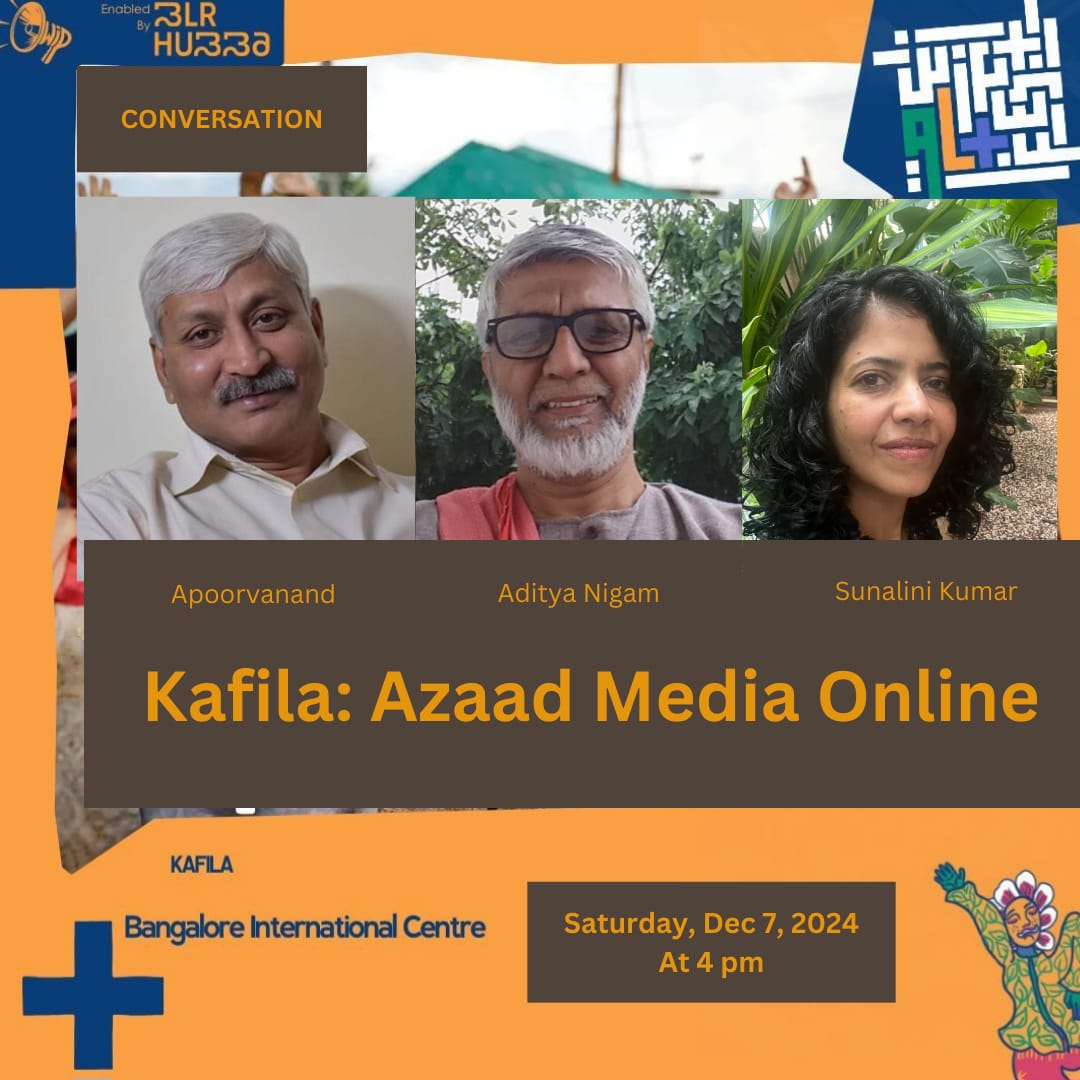
An expanded version of the presentation   at the panel on Kafila held as part of the W.I.P alt.FEST held in Bangalore and Delhi in  December 2024. While the first post in this series by Subhash Gatade is linked below in the text, the third by J. Devika can be read here.

Kafila was formally launched on 6 November 2006 at a session of the India Social Forum in Delhi, though its first post had gone up a couple of weeks earlier, on 19 October. However, there is a prehistory to the actual formal formation of Kafila which goes back to two earlier movements that had brought many of us together.

As rightly mentioned by Subhash Gatade in his reflections, the first of these was the movement against the relocation of polluting/ hazardous industries starting from late 1996. It was this movement that, perhaps for the first time in India brought the issue of workers’ rights into the discourse on urban pollution and environment. It took the discussions on urban planning, linking air and water pollution, zoning, transport policy and questions of workers’ occupational health, outside the charmed circles of urban planners. Initiated by the Indian Federation of Trade Unions, the formation of the Delhi Janwadi Adhikar Manch was the platform that had enabled this by bringing all of us together.

Continue reading Reflections on the Kafila Journey – Looking Back at a Tumultuous Experience

Concerns arising from the suicide of Atul Subhash – A feminist response: Naveddu Nilladiddare, Karnataka

Statement by Naveddu Nilladiddare, Karnataka, a state wide network of organisations and individuals concerned with issues related to women and all human rights

The tragic suicides of Atul Subhash and police constable, Tippanna Alagur in Karnataka have once again given rise to volatile debates on the ‘misuse’ of the laws related to gender violence specifically the (erstwhile) IPC 498 A and the Dowry Prohibition Act. It has provoked a PIL in the Supreme Court that seeks reform of these laws to “prevent harassment of Innocent husbands.”  It has also given space for irrational and dangerous fears being unleashed by men’s rights organisations and a sensational media about “greedy and exploitative” women who are a threat to the institution of the family with their rapacious demands for maintenance and alimony. Even the Home Minister of Karnataka has legitimised these fears stating that the suicide has “opened up a debate about men’s rights” in the country.  These statements and debates betray an ignorance of the processes of law in addition to a denial of violent patriarchy that continues to impact on the lives and deaths of women and men. 

Continue reading Concerns arising from the suicide of Atul Subhash – A feminist response: Naveddu Nilladiddare, Karnataka

Stop Arbitrary Detentions and Intimidation, Save Ecology & Uphold Democratic Rights in J&K and entire Himalayan Region: Statement by 250 organizations and individuals

Following is a statement issued by 250 organizations and individuals, including the National Alliance of People’s Movements (NAPM) against arrests and intimidation of activists raising concerns regarding the ecological impact of so-called “developmental” projects. The statement was issued on 13 November 2024

Stop Arbitrary Detentions and Intimidation of Social & Environmental Activists in Jammu & Kashmir

Save Ecology & Uphold Democratic Rights in J&K and entire Himalayan Region

National Alliance of People’s Movements (NAPM), along with other people’s organizations and concerned citizens from across India strongly condemns the arbitrary detention of social and environmental activists in Jammu & Kashmir under the Public Safety Act (PSA). Those detained under the provisions of J&K Public Safety Act, 1978, include Mohammad Abdullah Gujjar (resident of Sigdi Bhata), Noor Din (resident of Kakerwagan), Ghulam Nabi Choppan (resident of Trungi – Dachhan), Mohammad Jaffer Sheikh (resident of Nattas, Dool) and Mohammad Ramzan (resident of Dangduroo – Dachhan), trade union leaders from Kishtwar district.

Continue reading Stop Arbitrary Detentions and Intimidation, Save Ecology & Uphold Democratic Rights in J&K and entire Himalayan Region: Statement by 250 organizations and individuals

Urgent Letter to the DGP, Chhattisgarh Regarding Unlawful Detentions and Extra-Judicial Killings in Bijapur District : NAJAR

Following is a letter from the NATIONAL ALLIANCE FOR JUSTICE ACCOUNTABILITY AND RIGHTS regarding recent unlawful detentions and extra-judicial killings in Bijapur.

Urgent Letter to the DGP, Chhattisgarh Regarding Unlawful Detentions and Extra-Judicial Killings in Bijapur District 

13th Nov, 2024

To,

Director General of Police, Govt. of Chhattisgarh,  Raipur, Chhattisgarh 

Sub: Unlawful Detentions and Extra-Judicial Killings in Bijapur District – Seeking Immediate Release of all detenus and impartial inquiry – Reg

Sir,

We the undersigned, as members of a national collective of lawyers, law students, law professors, and other legal professionals, called National Alliance for Justice, Accountability and Rights (NAJAR) write to express serious concern regarding recent actions by security forces in Bijapur District, Chhattisgarh, on 8th Nov, 2024. The mass detention of individuals, including prominent activists, as well as reported killings, raises grave concerns about due process, excessive use of force, and adherence to legal standards.

Continue reading Urgent Letter to the DGP, Chhattisgarh Regarding Unlawful Detentions and Extra-Judicial Killings in Bijapur District : NAJAR

The New Janus of Sri Lanka: Revolution at the Gate? Maya John

Guest post by MAYA JOHN

[Maya John has been part of the Left Movement for the past two decades and this piece is in response to ongoing dialogues with Sri Lankan comrades.]

Anura Kumara Dissanayake, photo courtesy AP News

The recent presidential election has installed Anura Kumara Dissanayake (“AKD”) from the Janatha Vimukthi Peramuna (JVP)-led National People’s Power (NPP) alliance as the new president of Sri Lanka. This victory is seen as a result of rising popular hostility towards mainstream parties and rogue dynasts. Consequently, we find that AKD garnered an overwhelming share of the votes from those same electoral constituencies which had earlier voted in bulk for the corrupt Rajapaksas. Prior to this presidential election, the frustrated Sri Lankan masses, plagued by growing economic and political crises, generated the powerful people’s movement – the janatha aragalaya – that ushered in a huge legitimacy crisis for the ruling elites.

Continue reading The New Janus of Sri Lanka: Revolution at the Gate? Maya John

Vikalp Sangam – A Decade of Exploration on Alternatives in India: Ashish Kothari

Guest post by ASHISH KOTHARI

Abstract [1]

The multiple crises humanity confronts require fundamental shifts in how we relate to the Earth and to each other. This entails tackling the roots of these crises head-on, including the structures and relations of patriarchy, racism, colonialism, capitalism, statism, and anthropocentrism. This in turn needs to be done within the context of visions of the ideal society we want. This essay presents a process in India, Vikalp Sangam (Alternatives Confluences), that has attempted for a decade to document, visibilise, network, and create collaborations amongst movements and groups involved in alternative approaches for justice, equity, ecological sustainability. It describes the process and its various components, the challenges and opportunities of bringing very diverse groups from different cultural contexts together, the potential of a bottom-up and participatory visioning process, and the excitement of attempting to bridge conventional traditional-modern, practitioner-intellectual, urban-rural, and other divides.

Keywords: Democracy; Visioning; Alternatives; Environment; Civil society

Introduction: The Making of Vikalp Sangam  

A decade is not a short span of time – and yet, it is too short. These are the contrasting thoughts I have as I contemplate a process that I have been part of since its initiation, as I and my colleagues enter into a phase of reviewing whether it is on course to meeting the objectives it began with. This is Vikalp Sangam, or Alternatives Confluence, a national platform established in India in 2014.

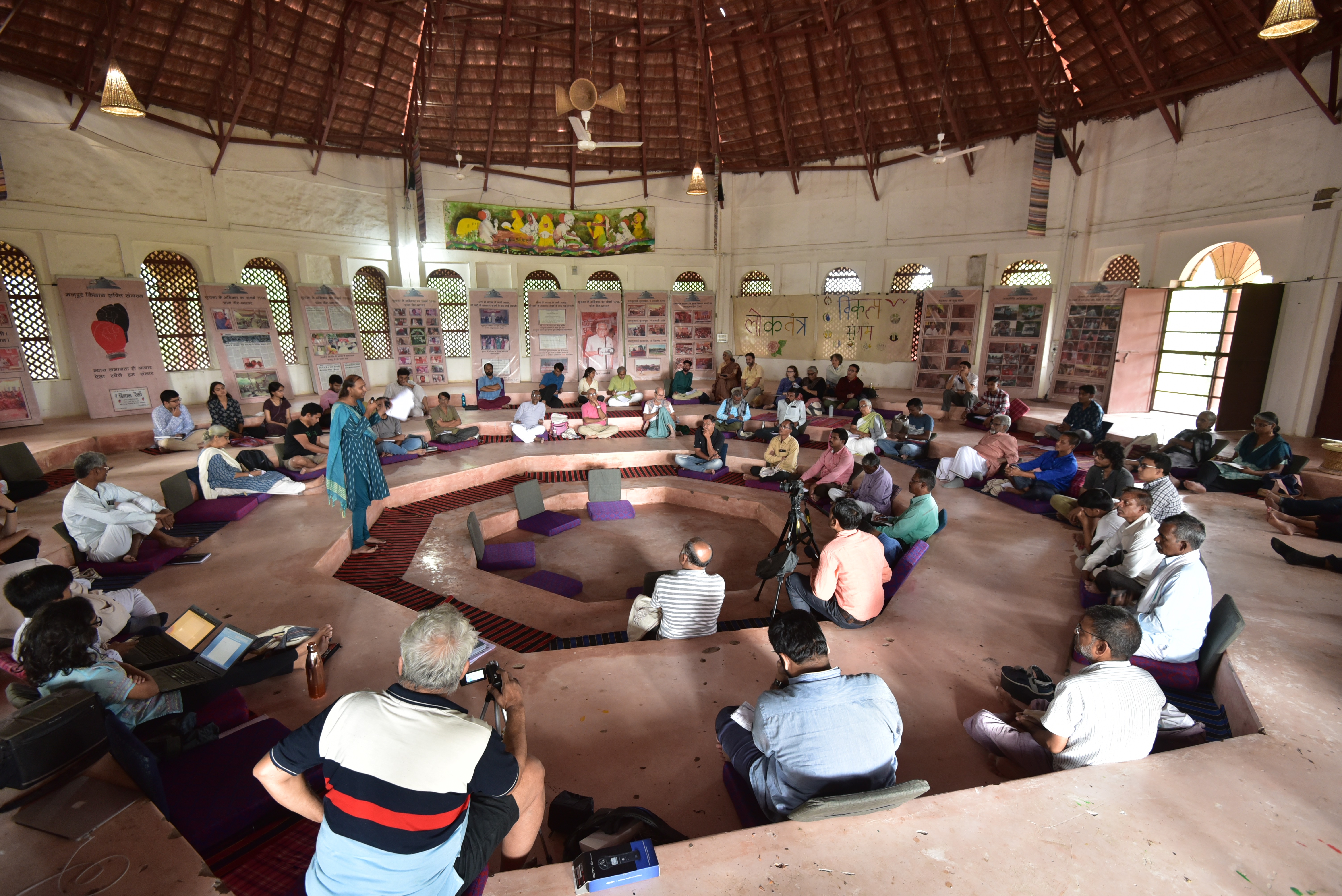
Democracy Vikalp Sangam, School for Democracy, Rajasthan, October 2019
Continue reading Vikalp Sangam – A Decade of Exploration on Alternatives in India: Ashish Kothari

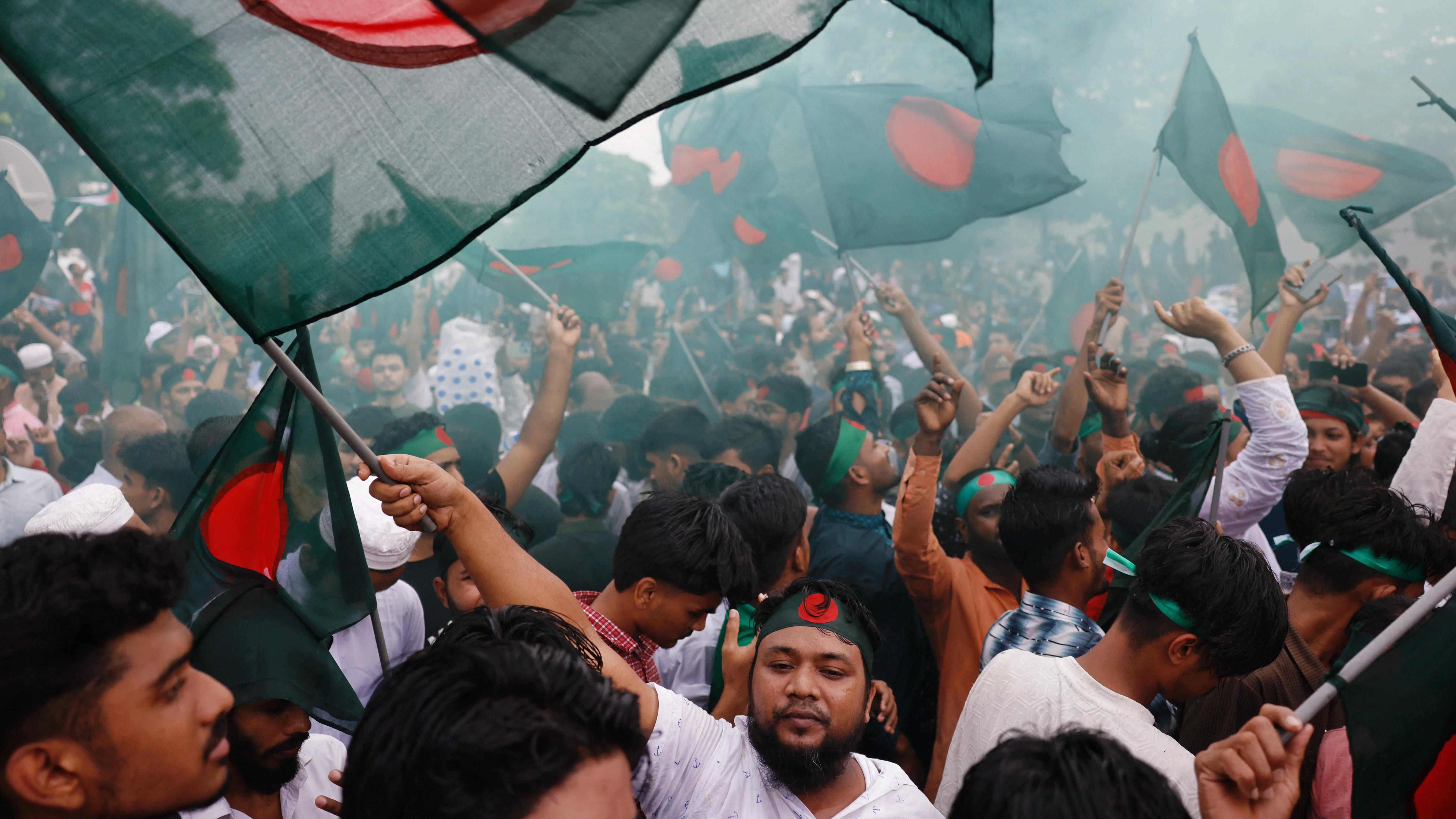
Twenty Days that Shook the World – Bangladesh Uprising II : Shahed Suvo

Guest post by SHAHED SUVO

This is the second part of the two-part article by Shahed Suvo, published earlier in Bangla in Ekak Matra on 10 August 2024. The first part appeared yesterday and can be accessed here. This part deals with the last days of the Sheikh Hasina regime and the transition that immediately followed. It has been translated for Kafila by ARUN SINHA.

Responding to the call of the anti-discrimination student movement, student-citizens gathered at Shaheed Minar on August 3. Young people continued to gather at Shaheed Minar with separate protest processions.  At this time, elderly citizens were also seen participating in the protest march with them. At around 5:30 PM in the afternoon, the coordinator of the organization leading the quota reform movement Md. Nahid Islam announced a one-point demand in a speech to the students-people gathered at Shaheed Minar – Prime Minister Sheikh Hasina and her cabinet must resign.

Asif Mahmud, another coordinator of the movement, announced the outline program of the non-cooperation movement.

Continue reading Twenty Days that Shook the World – Bangladesh Uprising II : Shahed Suvo

‘Motherland that is Dearer than Heaven’ – Bangladesh Uprising I: Shahed Suvo

Guest post by SHAHED SUVO

As a lot of motivated propaganda continues to be dished out about the uprising in Bangladesh, with weird and utterly nonsensical stories of it being ‘engineered’ by ‘the CIA’ at one end, and ‘the Islamists’ at the other, we reproduce here this article that gives a virtually blow by blow account of the developments. Published earlier in Bangla in Ekak Matra on 9 August 2024, Twenty Days that Shook the World in two parts, it has been translated for Kafila by ARUN SINHA. This is the first part. Part II can be read here.

Bangladesh protest before 5 August, image courtesy Ekak Matra

The students’ community revolution in July 2024 will be etched as one very important and characteristic event in the annals of history of deconstruction of state in Bangladesh.  After declaration of Pakistan as a state, the first voices of protest were raised against Jinnah’s policy of declaring Urdu as the state language. That was Bhasa Andolan (Language Movement) in 1952, then came the movement on 1962 education commission, the mass uprising in 1969 culminating in the glorious Liberation War in 1971. The student community always participated in bringing these momentous changes walking hand in hand with the people in Bangladesh. Whenever people lost their way and paths in independent Bangladesh, it is the movement of the students that showed the road ahead. Therefore, for the people of Bangladesh the student community has always been the symbol of truth and justice.

Continue reading ‘Motherland that is Dearer than Heaven’ – Bangladesh Uprising I: Shahed Suvo

Women’s Rights Now! Citizens Speak Out Against Brutal Cases of Sexual Violence Across India

[More than 900 organizations and individuals speak out against brutal rape and cultures of impunity from Kolkata and Manipur to Uttar Pradesh, Gujarat and other parts of the country. Published below is their statement issued on 26 August 2024.]

WOMEN RIGHTS NOW!

CITIZENS SPEAK OUT AGAINST BRUTAL CASES OF SEXUAL VIOLENCE FROM KOLKATA TO MANIPUR, GUJARAT, UTTARAKHAND, BIHAR, UTTAR PRADESH…

DEMAND URGENT, INDEPENDENT AND UNBIASED INVESTIGATIONS AND INSTITUTIONAL ACCOUNTABILITY!

NO MORE SHIELDING OF PERPETRATORS AND THEIR PROTECTORS

JUSTICE TO VICTIMS AND THEIR FAMILIES!

Continue reading Women’s Rights Now! Citizens Speak Out Against Brutal Cases of Sexual Violence Across India

STATEMENT BY INDIAN CITIZENS AGAINST BRUTAL STATE VIOLENCE AND IN SOLIDARITY WITH THE STRUGGLE IN BANGLADESH

[Even as the massive Long March in Dhaka’s Shahbagh is going on, reportedly with lakhs and lakhs of people demanding Sheikh Hasina’s resignation, rumours of her having already resigned are coming in. The statement is of course in support of Bangladesh’s struggle for democracy and against the brutal repression unleashed by her Awami League regime.]

We, the undersigned citizens of India, writers, artists, intellectuals and activists, express our deep concern over the recent developments in Bangladesh. As fellow South Asians, we share a common destiny and the destruction of democracy in any part of it is obviously a matter of concern for all of us. The current government that has unleashed massive violence on its own citizens has brazenly hijacked the elections three consecutive times in the last ten years.

The world has been watching in horror the violent crackdown on protesting students and youth in Bangladesh since mid-July. On 15th July, a peaceful protest by students of Dhaka University demanding reform in the quota system was violently attacked by a group of goons said to be from the student wing of the ruling party. The crackdown followed statements by the Awami League general secretary and an important minister that the Chhatra League would teach a lesson to the students, whom the prime minister, Sheikh Hasina had earlier labelled ‘razakars’ – a term used for the collaborators with the Pakistan army during the 1971 Liberation Struggle. Expectedly, the Bangladesh Police, rather than acting against the attackers, started a full-scale crackdown on protesters all across the country from the next day. On 16th July, the police killed Abu Saeed, a student of Begum Rokeya University, as he stood with open arms, without any weapon, in front of the approaching police forces who aimed their guns at the protesters. The murder of Abu Saeed, who posed no threat to the approaching police forces, manifests how the intention behind the crackdown on protesters was not to maintain law and order but to forcefully silence voices of dissent arising from all across Bangladesh.

Continue reading STATEMENT BY INDIAN CITIZENS AGAINST BRUTAL STATE VIOLENCE AND IN SOLIDARITY WITH THE STRUGGLE IN BANGLADESH

The Movement in Bangladesh is for a Radical Reform of the State – Interview with Sarwar Tusher

Interview with SARWAR TUSHER, writer and activist in Dhaka. Sarwar is one of the leading critical intellectuals associated with the important journal of political thought in Bangladesh, Rashtrochinta Journal and is also member of its editorial panel. In this detailed interview Sarwar explains not just the movement but also the larger politics of Bangladesh. The interview was taken by Aditya Nigam over email.

Turbulent July, Photo courtesy Rahat Karim

[After a round of massive repression and killings, the details of which the reader will find below, the movement is now back with renewed strength. This time it is not just the students and youth demanding an end to quotas but rather huge popular movement that is demanding nothing less than resignation of the Sheikh Hasina government and radical reform of the state. The conception behind this demand for “radical reform of the state” has been spelt out by Sarwar Tusher in detail below and the reader can see how it has grown in conjunction with mass movements of the past. Critical political thinking in tandem with the experience of mass movements has now led to the demand also of a new Constituent Assembly and the drafting of a fresh Constitution. It is also significant that “July” is no longer the name of a month but the name of the struggle itself as it reappears with greater vigour. I should add one more point here, which as to do with some misgivings in India about the quota and reservation question. Though Sarwar deals with it at greater length in different part of the interview, my own sense on reading his responses as well as following the discussions over the past one month, is that the situation is more akin to what might have been (and still is) in countries of state-socialism where the communist party certification was crucial in getting jobs and rising in the bureaucracy and other state institutions. The party certified whether you were “revolutionary” (muktijoddha) or “counter-revolutionary” (razakar) and it is not difficult to see why those regimes became so seriously unpopular (to put it mildly) in their own countries. AN]

Continue reading The Movement in Bangladesh is for a Radical Reform of the State – Interview with Sarwar Tusher

The End is Nigh – Bangladesh Report from Ground Zero: Shahidul Alam

This is a guest post by the well known Bangladesh photographer, SHAHIDUL ALAM. The article was earlier published in NEW AGE BANGLADESH and sent to us by SIMONE RUDOLPHI. The photographs are courtesy DRIK. Shahidul’s article actually answers many question that have been on Indian readers’ minds, including, not the least, the question of “quotas.” Interested readers may also find this article by academic Naveeda Khan useful, written as it is from within Dhaka, though she herself is based in the USA.

It would be a mistake to see this as simply a demand for more jobs. The quota movement, justified as it is, is simply the tip of the iceberg. A rampant government running roughshod over its people for so very long has led to extreme discontent. The quota issue has merely lit the fuse to this tinderbox. As citizens counted the dead and the injured, the prime minister fiddled, advising attendees at an aquaculture and sea food conference on tourism prospects in Cox’s Bazaar.

The original quota had been designed, shortly after independence in 1972 to be an interim arrangement to acknowledge the contribution of freedom fighters who constituted less than 0.25% of the population. Since a government known to be incredibly corrupt is responsible for creating the list of freedom fighters, over 50 years later the 120 fold allocation through a 30% quota has become an easy back door for party cadres to much sought after government employment. Confirmation came through senior Awami Leaguers saying, ‘just get through the initial screening and we’ll get you through in the viva’ and more tellingly, ‘government jobs will only go to party people.’

Continue reading The End is Nigh – Bangladesh Report from Ground Zero: Shahidul Alam

In Defense of the Bangladeshi Students’ Uprising


One of the innumerable anti-quota protests across Bangladesh, image courtesy Pressenza – International Press Agency

This post is dedicated to the innumerable young students of Bangladesh who have lost their lives in the last few days of struggle. This wasn’t supposed to be our first post on the Bangladesh students’ struggle because our friend Sarwar Tusher, one among the group of dynamic young critical intellectuals associated with the journal Rashtrochinta, was supposed to write a first hand analytical account. Meanwhile, from Thursday night (18 July) the Sheikh Hasina government enforced a total internet shutdown as the Army moved in to quell the protests. Tanks had already been seen moving in some streets and the protesters were expecting an exponential increase in state violence. Another Tienanmen Square seemed to be in the offing.

Continue reading In Defense of the Bangladeshi Students’ Uprising