The Utopian Instinct – Aflatoon, Kiran Bedi and Nandan Nilekani: Taha Mehmood

Guest post by TAHA MEHMOOD

A pilgrimage to the cave

One day Cleinias, a Cretan invites Athenian and Megillos, a Spartan for a religious pilgrimage. Cleinias proposes to visit the cave of Zeus, just as Minos used to do. Minos was the legendary Cretan king. Every nine years Minos would walk along a path to the cave where he will hear revelations on the laws from Zeus. Perhaps the act of a man going to the cave to seek revelations from God was part of an ancient Cretian tradition. In the islandof Crete Minos played the role of a Lawgiver, in Athens– Zeus, while in Megillos’s state Sparta this role was played by Apollo.

Magnesia: The last idolum of Plato

This was the setting of the last dialog of Plato. He called it The Laws. In this dialog Plato tries to define the legal framework of an imaginary state named Magnesia. Throughout his life Plato was preoccupied with the question of how to name and define things. He believed one could even name abstract entities like numbers and define it as even or odd. In this dialog Plato makes an attempt to name various types of laws and define it.

Continue reading The Utopian Instinct – Aflatoon, Kiran Bedi and Nandan Nilekani: Taha Mehmood

Bring Dr Chishty home – alive

An elderly, bed-ridden man sentenced to life imprisonment in an ‘enemy’ country for a murder he didn’t commit awaits the signature on his clemency petition. By Beena Sarwar and Shivam Vij

Human rights activists in India are renewing their efforts for the release of the elderly Pakistani prisoner Dr Khalil Chishty lodged in Ajmer prison hospital, whose mercy petition awaits just one signature from the Rajasthan Governor Shivraj Patil. The mercy petition had earlier been approved by the state government and had reached Patil in June this year. At that point, it was expected that Dr Chishty, 78, a renowned virologist bed-ridden with various illnesses in jail, would soon be released.

Instead, Governor Patil raised a set of questions for the state government to answer. The Rajasthan government has answered all the queries, but has not submitted the file to the Governor again – perhaps because, according to sources, the Governor has already indicated that he will not sign the petition. Continue reading Bring Dr Chishty home – alive

Let us break the ‘silence’on Telengana movement: Sridhar Modugu

Guest post by SRIDHAR MODUGU

It is no exaggeration to say today that Telangana is burning. Nor will we be far off the mark if we suspect that a paralyzing fear has encased its ‘intellectuals”. Everyone is lost in providing testimonies to prove themselves to be pro-Telangana and everybody is a self-accomplished activist.  In fact, the intellectuals have lost themselves as spectators. They have become immune to understand what is happening before them.

The demand for statehood for Telangana is undoubtedly a democratic and judicious demand. It has been held back since 1950s and suppressed time and again.  No doubt Mr. Kalvakuntla Chandra Sekhar Rao (KCR), the President of Telangana Rastra Samithi (TRS) did maintain the public talk with occasional tactical moves and has been considered an icon of “Telangana vaadam” as last ten years of Telangana politics are referred to.  Since 2009 November the movement could attract large mass of diversified sections of people from all walks of life and engage the attention of the people with hopes of achieving the state any day thanks to the enthusiastic role play of the media and political parties – in power or opposition. It is indeed noteworthy that since November 2009 the movement has been able to attract a large number of diverse sections of people from all walks of life in thousands. They have mobilized voluntarily and have conducted meetings in the most democratic way. That there has been considerable restraint among the people who have been dishonored, alienated and humiliated under the Andhra Pradesh rulers is without dispute. These people have mobilized democratically despite the war-like surveillance and suppression of both the para-military and the state police force.  Historical injustice – political, economic and cultural of the people of this region is well highlighted.

Continue reading Let us break the ‘silence’on Telengana movement: Sridhar Modugu

In the Courtyard of the Beloved

*

In the Courtyard of the Beloved is a visual and aural portrait of Nizamuddin Auliya Dargah, a Sufi shrine in New Delhi, India. Made from over 18,000 still images and ambient sounds recorded on-site, rapid-fire bursts of kaleidoscopic imagery assemble into fractured collages.

Each day, hundreds of pilgrims travel by airplane, train, car, rickshaw and foot to reach this shrine, which honors a 12th century Sufi mystic who believed in drawing close to God through renunciation of the world and service to humanity. Beginning with imagery from these journeys, the film then enters the physical space of the shrine; a unique nexus of marketplace, social space and spiritual haven, where devotees come to offer their prayers and find a moment of reflection away from the din of Delhi traffic. As the sun sets behind the dome, musicians begin the qawwali, a style of Sufi devotional music that ranges from contemplative religious elegy to raucous crescendo.

Executive Producer Samina Quraeshi
Original tabla score by Suphala
Audio post-production by Paul Bercovitch
Produced by Sadia Shepard
Photographed and edited by Andreas Burgess

[via]

Speed and Control at Manesar: Why is the Maruti-Suzuki Management Keeping Workers Out of Its Factory

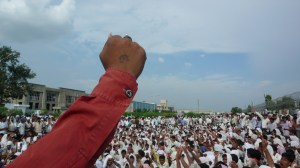
Protest Meeting at Maruti-Suzuki Factory, Manesar, September 01, 2011

Manesar is an emerging industrial hub roughly fifty kilometers from Delhi. Factories rise along the co-ordinates of a neat grid, overshadowed by the rocky Aravallis. The world is made here – cars, bikes, semiconductors, automotive parts, electronics, telecommunications equipment. Manesar has a little bit of everything. Even a bomb data analysis centre and a brain research lab and a military school and a heritage hotel. On a Maruti Swift, speeding down National Highway 8 towards Jaipur, you could make it to Manesar from Delhi, through Gurgaon, in less than an hour. Maruti’s ads are all about speed and control. Speed and control will cruise you to Manesar.

Continue reading Speed and Control at Manesar: Why is the Maruti-Suzuki Management Keeping Workers Out of Its Factory

CPI(M)’s Rectification Campaign and a Bit of History: Sankar Ray

Guest post by SANKAR RAY

The Rectification campaign (RC) in CPI(M) is in practice a PR exercise, vying with top corporate communicators. Take the judgment of killings on 27 July 2000 at Suchpur under Nanoor PS of Birbhum district of West Bengal. Forty-four members and sympathisers, including district committee member Ramprasad Ghosh and zonal committee members Nityanarayan Chattopadhyay, Golam Saror, Golam Mustafa and Badiujjaman were convicted for involvement in the ghastly killings of 11 landless agricultural labourers. None of them has even been suspended, let alone expelling them from the party. Party biggies from the general secretary Prakash Karat to the WB state secretary and polit bureau member Biman Bose often say they have reverence towards the judiciary, although their perception that in a class-divided society, justice is to be ‘class justice’ is judicious. But why should proven criminals be on the party roll, when the mandarins of A K Gopalan Bhavan, party’s national headquarters, boastfully talk of a continuous RC. WB party leaders assured months before the last Assembly polls in WB that hundreds of ‘corrupt’ members be thrown out out of the party. All this is remains on paper.

Continue reading CPI(M)’s Rectification Campaign and a Bit of History: Sankar Ray

No One Killed Meena Khalkho?: Akhil Katyal

Guest post by AKHIL KATYAL

Now that the Anna Hazare Show is over, will the Indian media go back to looking at India as also existing outside Delhi? On 6 July 2011, Meena Khalkho, a sixteen year old tribal girl from Karcha village in the state of Chhattisgarh was raped and murdered by the local police and it barely made a dent on our news universe. A search for her name on most television news websites returns nothing. The police in Chattisgarh immediately hit upon a strategy that has now long been in circulation. They subsume Meena’s horrible rape and murder within what goes these days as a laudable mission, one that manages to neutralize all rage against police atrocities, by claiming Meena to be a Naxal and by claiming her to be fatally wounded in an encounter that night against a larger party of Naxallite cadres.

Continue reading No One Killed Meena Khalkho?: Akhil Katyal

On the Harud Literary Festival, setting the record straight

It is sad that a literature festival that was to be held in Srinagar later this month has been indefinitely postponed. What is even sadder is that while announcing its postponement on HarudLitFest.org, the organisers of the Harud Literature Festival (the same team that puts up the acclaimed Jaipur Literature Festival) have sought to blame those who signed an “open letter” expressing a set of concerns about the festival. The statement reads, “A few people who began the movement to boycott the festival have no qualms in speaking on and about Kashmir across international forums, but have refused to allow other voices, including writers, poets and theatre people from the Valley and across India to enjoy the right to express themselves at the Harud festival.”

As one of the over two hundred signatories of the open letter posted on Kafila.org, I am dismayed at the deliberate and disingenuous misrepresentation of the open letter as a “movement to boycott” What does such deliberate misrepresentation of dissent by the organisers of a literature festival say about them, their honesty and intent?

Two news reports appeared on 28 July 2011. One, by Agence France-Presse, quoted organiser Namita Gokhale as saying, “it will be an apolitical dialogue concerning literature”. The other report, by Randeep Singh Nandal in The Times of India, datelined Srinagar, did not quote anyone, and claimed: “There is speculation that Salman Rushdie might drop by…”

The term “apolitical” offended Kashmiris, who were seen objecting to it widely on Facebook and Twitter. Some of these were also aghast with the idea of Salman Rushdie, who they consider a blasphemer against Islam, sitting on a stage in Srinagar. Even though some of those named in these and subsequent news reports had told the festival organisers even before the news was in the papers that they would not be able to attend, their names were falsely put out in the media. They were thus forced to publicly state they would not attend a lit-fest termed “apolitical”.

Kashmir is a place where people live under the shadow of the gun, their political grievances against the Indian state silenced with draconian laws, criminalisation of dissent and heavy militarisation. You can get two years in jail without charge for a Facebook status update, a pamphlet, a mass gathering, a call for strike. Around the time the Harud controversy was gaining momentum, the Jammu and Kashmir Police beat up over several hours a photojournalist, allegedly because they didn’t like his work on the Al-Jazeera website.

Now, a group of people from the Indian capital decide to go to the place described above, to hold a literary festival, and announce that the festival would be “apolitical”. Were Kashmiri writers and journalists, including some acclaimed ones, wrong in feeling offended?

On 12 August 2011, Namita Gokhale was quoted as saying in the London-based newspaper The Guardian (no relation to this publication), “There was perhaps some misinterpretation of my use of the word ‘apolitical’.” She chose not to withdraw the word. If by apolitical she meant non-partisan, the choice of venues, Delhi Public School’s Srinagar franchise and the Kashmir University, was not seen as non-partisan in Srinagar. If your intent is to be neutral in a conflict zone, surely, you must attempt to be seen to be neutral?

he open letter, signed initially by fourteen people, including me, was published on 25 August. It said, “Our concerns are also heightened by reports that the festival is sought to be denoted as being an ‘apolitical’ event, that, yet, people will be free to speak what they want and that no one has the right to deny Kashmiris a chance to listen to writers. Beyond the absurdity of asserting that art and literature has nothing to do with politics, our issue is precisely that people are not allowed to speak their minds in Kashmir.” The open letter did not use the word boycott, did not urge anyone to not attend it, did not ask for it to be cancelled. It did say, “We would firmly support the idea of a literary/artistic festival in Kashmir if we were convinced that its organising was wholly free from state interference and designs, and was not meant to give legitimacy to a brutal, repressive regime.”

Two days later, their response on Kafila.org said, “We wish to categorically state that the Harud literature festival is not government sponsored.” It did not withdraw the word ‘apolitical’. An expanded version of this 27 July release, sent to the media, mentioned false rumours spread by a Facebook group about Rushdie coming to attend. Why did it put the blame of the Rushdie rumour on Kashmiris and not on The Times of India, and on themselves for choosing to not deny the rumour for a whole month?

Then, suddenly, on 29 August they announced indefinite postponement of the festival, in a dishonest release that blamed the signatories of the open letter for being against free speech! It also cited security threats emanating from that Facebook page with nearly 5,000 ordinary Kashmiris supporting the boycott call on account of Rushdie’s rumoured attendance.

Given that so many Kashmiris have expressed reservations about the festival’s intent, including many Kashmiri writers and journalists, even young, aspiring, as yet-unpublished ones, it is surprising that we are hearing patronising comments about how Kashmiris have been ‘denied an opportunity’. It is high time Kashmiris started their own literary festival, something they have tried to do before but were not allowed to by the state government. They should do it in Delhi or Jaipur, giving Indian writers an opportunity to learn what it means to be political.

(First published in The Sunday Guardian, Delhi, and The Friday Times, Lahore.)

From Kafila archives:


Of Seven Cities and New Delhi

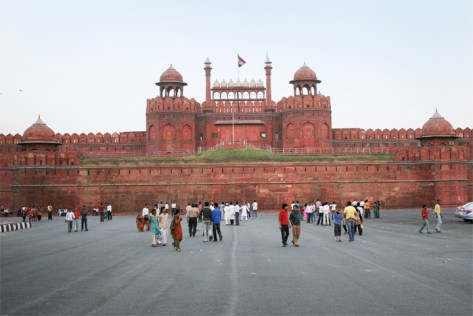
Historically, Delhi was a place that all its conquerors made their home, but for the British it was a city that only glorified the power of Imperialism. Photos: Sohail Hashmi/Himanshu Joshi

Red Fort

Continue reading Of Seven Cities and New Delhi

Maruti Struggle Continues Despite Repression: Statement

The following is a statement issued by the MARUTI SUZUKI EMPLOYEES UNION (MSEU) on 1 September 2011
The management of Maruti Suzuki Industries Limited, Manesar plant (Plot 1, Phase 3A) has terminated 11 and suspended 38 workers on 29th and 30th August 2011, on completely fabricated charges of go-slow in production and that workers have been ‘undisciplined’. It is doing this as a continuation of harassing workers for our struggle for the right of Union formation and other legitimate rights from June 4th to 16th. It is using brute police force to intimidate us, and is also continuing to pay and use bouncers and lumpen force to continuously threaten us. The management is also spreading a rumour that the production has resumed yesterday 31 August through a handful of contract workers, some supervisors, engineers and robots. This disinformation campaign has also been splashed across the media.

Continue reading Maruti Struggle Continues Despite Repression: Statement

‘Muslim Quota’: Keep it Simple, Silly! – Khalid Anis Ansari

Guest post by KHALID ANIS ANSARI

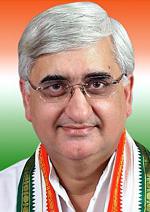
In an interview last month, Mr. Salman Khursheed was posed the query: ‘There are reports that you are considering Muslim reservations within the OBC quota?’ He responded affirmatively: ‘Absolutely. Sachar described them as SEBC, socially and educationally backward classes. This is a special segment within OBC.’

Nowhere in the Sachar report are Muslims categorized as SEBC (Socially and Educational Backward Classes). They are categorised merely as one of many SRCs (Socio-Religious Communities). Moreover, the Sachar Report has acknowledged caste-based stratification within Muslims and has suggested quite unequivocally: ‘Thus, one can discern three groups among Muslims: (1) those without any social disabilities, the ashrafs; (2) those equivalent to Hindu OBCs, the ajlafs, and (3) those equivalent to Hindu SCs, the arzals. Those who are referred to as Muslim OBCs combine (2) and (3) [p. 193 (emphasis added)]’.

So, according to the Sachar Report all Muslims cannot be conceived as a socially and educationally backward class (OBC) because the forward Muslims (ashrafs) are ‘without any social disabilities’. Well, one may ask if the minister who exhorted everyone to read the Sachar Report critically and not as gospel truth, has failed to practice what he himself preached. The honorable minister seems to have read the report incorrectly.

Strange are the ways politics affects one’s judgment! Continue reading ‘Muslim Quota’: Keep it Simple, Silly! – Khalid Anis Ansari

Hypocrisy in Any Season: Mridu Rai responds to Rahul Pandita on the Harud Literature Festival

Guest post by MRIDU RAI

Rahul Pandita has written a misleading piece—in the tone of high dudgeon and ethical outrage no less—in the ‘essays’ section of the 3 September 2011 issue of Open magazine titled “The Autumn of Hypocrisy”. I think it is a piece that, nevertheless, requires some examination mostly because it makes several assertions in ways that queer any possibility of debate around the important question of what a literary festival held in Kashmir today might mean. Whether or not it was the author’s intention to do so, its effect is also to discredit, off-hand, several literary and artistic voices whose greatest sin would appear to be to have disagreed with the kind of literary festival in Kashmir Rahul Pandita and his fellow organizers had in mind. Of course, it is also troubling to hear from Mr. Pandita on this question since he is both an aggrieved party, deprived of his right to express himself at the festival, and also, as the credit at the bottom of his piece elaborates, a former “member of the advisory committee for the Harud literary festival”. I wonder if this conflict of interest bothers anyone other than me. Continue reading Hypocrisy in Any Season: Mridu Rai responds to Rahul Pandita on the Harud Literature Festival

Reflections on a Genuflection to the Vox Populi by Subinay Inder Singh Bedi

The republic and the legislature look to the public for gauging the mood of the nation during the process of formulating laws that necessarily must tap into the prevailing moral sentiment and ethos of the day. Thus a law against child marriage might have been moot a half century ago, but a necessary devolution of current social perceptions. On such issues, public sentiment can guide, indeed force the hand of the legislature and judiciary to come down particularly heavily on one side of the fence. However, it is parochial of us to invoke the illegal and hare-brained claim that since democracy is popularly, rule of, for and by the people, a representative democracy is inherently bound to genuflect to populist opinion, a case in point being the recent debate over the Lokpal bill that at the time of writing was still raging and occupied prime placement amongst the media of the day.

Continue reading Reflections on a Genuflection to the Vox Populi by Subinay Inder Singh Bedi

On Populism – A response to Partha and Aditya: Gyan Prakash

Guest post by GYAN PRAKASH

In following the discussion on the Anna Hazare phenomenon, I have found the references to populism very interesting.  In response to Partha, Aditya reminds us that populism should not be dismissed as non-political or anti-political. Partha clarified that he does not regard Anna Hazare’s populism as anti-political but as anti party-politics and anti government.  Team Anna narrowly defines politics as the domain of party politics and the government, which it then identifies with corruption. Om Puri’s rant and Kiran Bedi’s vaudeville performance expressed this sentiment.  Politics means netas, who are corrupt.  References to 2G, CWG, Kalmadi, and various land scams refer to politics in this sense.  Such a definition of politics allows the claim that the gathering at Ramlila was non-political or beyond politics.  Anna as a saintly Gandhian figure who does not seek office, and the status of Kiran Bedi and Kejriwal as civil society members, contributed to the representation that the mobilization of the “people” transcended politics.

Continue reading On Populism – A response to Partha and Aditya: Gyan Prakash

Populism and the Anna Hazare Event: Swagato Sarkar

Guest post by SWAGATO SARKAR

I have been trying to make sense of the Anna Hazare event. I agree that it was historical, but was it a tragedy, or a farce? The swift exchange between Partha Chatterjee (PC) and Aditya Nigam (AN) and their reference to Ernesto Laclau and ‘populism’ have given me a familiar frame to enter into the debate around the event. Here, I will concentrate on the question of populism and its normative status. However, unlike PC and AN, I have got nothing to offer to ‘the Left’ (Independent or Dependent), because I am not a leftist, rather one who likes sitting on the fence on a nice arm-chair and this piece will perhaps bear an imprint of that position. Also, apologies are due to the readers of Kafila as I have not read, just browsed through, the two pieces written by Shuddhabrata Sengupta, which have been wildly popular – if Facebook is an indicator – and have been referred to by both PC and AN. Therefore, I might be repeating what Sengupta has already said.

Continue reading Populism and the Anna Hazare Event: Swagato Sarkar

Harud Literature Festival ‘postponed’

I think it is sad that the Harud Literature Festival has been “postponed“. Sadder still is that the organisers are blaming those who asked very valid questions. All they needed to do was answer those questions and allay those concerns. Their response, two days after the release of the open letter, did not address those concerns. They even refused to withdraw, leave alone apologise for, the offensive word “apolitical”, or explain how they planned to be “apolitical” while “celebrating” literature in the midst of unmarked graves, militarised bazars and lanes, draconian laws, imprisoned teenagers and the state’s refusal to dispense justice. Continue reading Harud Literature Festival ‘postponed’

Politics of Anna Hazare Anti-Corruption Movement by Sanjay Kumar

Guest post by SANJAY KUMAR

Sonia Gandhi Hinsak Hai
Rahul Gandhi Napunsak Hai
(Sonia Gandhi is violent, Rahul Gandhi is impotent)
(placard displayed by a young man on Barakhamba road crossing, during anti-corruption march on 21st August, Delhi)

Rahul Bhaiyya! Why don’t you get married so that Bhabhi can take care of Sonia Aunty, and you do not have to spend so much (black) money to get her treated outside the country? (placard carried by a three year old girl child)

Manuvadi Krantikari Morcha supports Anna Hazare
(a banner heading for a group of 20-30 middle aged men)

Bihari Nahin Ham Jaat hain
Ham Anna ke saath hain
(We are not Biharis we are Jaats, we are with Anna)
(shout of youth in open jeep in Darya Ganj, after the 21st Aug march)

Continue reading Politics of Anna Hazare Anti-Corruption Movement by Sanjay Kumar

Your government is removing your YouTube videos and you don’t even know about it

After reporting Google Transparency Tools’ latest revelations about how much India asks Google to delete content and pass government agencies private user data, Firstpost writes, “To put all this in its proper perspective, Indians still enjoy robust Internet freedom – and occasionally even an excess of freedoms…” And then it goes on to compare internet freedom with China, assuring all is well with the world.

There is no such thing as excess freedom. There is a way to deal with the “scurrilous postings and videos” the article talks about. It’s called the law.

I write an article in a newspaper that is seen as “scurrilous”. The offending party will go to court. The court will decide if it is scurrilous enough to violate the law of the land (be it defamation, libel, or whatever) and summon me. I get a chance to defend myself. Continue reading Your government is removing your YouTube videos and you don’t even know about it

Ten lessons of the fortnight that was: Jay Mazoomdar

Guest post by JAY MAZOOMDAAR

The 13-day blockbuster— peddled as the second freedom struggle, panned as irresponsible blackmailing, and a lot in between — is over. Anna Hazare accepted honeyed coconut water from two little girls, introduced to the crowd as a dalit and a Muslim, and went on to recuperate in one of India’s most expensive hospitals, one branded after Hindu spiritual literature at that.

News TV is still fighting the vacuum by flogging the debate – so much so that seasoned correspondents are chasing a rather dismissive Dr Naresh Trehan to unravel the mystery of Anna’s endurance. Biker gangs have gone into a sulk and roads at India Gate are looking safer for traffic and women (which is not saying much in Delhi). What is more, India has started taking note that too many Indians have meanwhile drowned in floods. Continue reading Ten lessons of the fortnight that was: Jay Mazoomdar

Our Corruption, Our Selves: Arjun Appadurai

This is a guest post by ARJUN APPADURAI

Partha Chatterjee and Shuddhabrata Sengupta rightly argue that “corruption” is indeed a new Indian label for “the lives of others”. The East German Stasi also surely saw their vigilance as directed against the politics of “the enemies of the people”, except that in their case the state and the party were seen to contain all the good people, with the bad people choosing to remain in the unmobilized parts of civil society. Hence the pro-Hazare gatherings certainly have some of the disturbing echoes of mass rallies under Hitler and Stalin with the working and middle-classes adoring a mediocre and Chaplinesque figure who promises a new wave of moral cleansing. Continue reading Our Corruption, Our Selves: Arjun Appadurai

A Response to SHRC’s Report on Unknown and Unmarked Graves of Kashmir: IPTK

This press statement comes from the INTERNATIONAL PEOPLE’S TRIBUNAL ON
HUMAN RIGHTS AND JUSTICE IN INDIAN-ADMINISTERED KASHMIR (IPTK) 
together with the ASSOCIATION OF PARENTS OF DISAPPEARED PERSONS

29 August 2011: We welcome the report of the State Human Rights Commission of Jammu and Kashmir (SHRC) on unmarked graves in north Indian-administered Kashmir (dated July 2011 and recently released; download 3.2 MB .pdf here), taking suo moto cognizance of the matter, and appreciate the courage and labour that this work signifies.

The SHRC’s report acknowledges and corroborates the research documented in the report, BURIED EVIDENCE, released by the International People’s Tribunal on Human Rights and Justice (IPTK) in December 2009. The SHRC investigated unmarked graves in Bandipora, Baramulla, Kupwara, and Handwara districts across 38 graveyards and verified 2156 unidentified bodies in unidentified graves.

Based on investigative research conducted between November 2006-November 2009, BURIED EVIDENCE had documented 2700 unknown, unmarked, and mass graves, containing 2943+ bodies, across 55 villages (in 62 sites within these villages) in Bandipora, Baramulla, and Kupwara districts of Kashmir. Of these, 2373 were unidentified and unnamed graves.   Continue reading A Response to SHRC’s Report on Unknown and Unmarked Graves of Kashmir: IPTK

DISSENT, DEBATE, CREATE