Tag Archives: Pakistan

Rethinking Urdu Nationalism in Pakistan: Raza Rumi

Guest post by RAZA RUMI

Urdu has been a controversial language in Pakistan despite its official and holy status. The Bengalis rejected it way back in the 1940s when Jinnah, advised by a bureaucracy, with imperial moorings declared in that it would be the official language. Subsequently, Sindhis, Baloch and Pashtuns have also resisted the one-size-fits-all Urdu formula. Yet, Urdu has emerged as the functional lingua franca that connects Pakistan’s federating units, and its conflation with Islam and Muslim ‘nationhood’ remains the paramount narrative in Pakistan.

It takes arduous scholarship and infinite courage to author a book like From Hindi to Urdu: A Social and Political History (Oxford University Press, 2011). Dr Tariq Rahman, ironically, has worked as the Director of the National Institute of Pakistan Studies at the Quaid-i-Azam University and therefore his challenge to the mythical dimensions of ‘Pakistan Studies’ comes from within and not as an outsider. Sixty-four years after the creation of Pakistan, we have not arrived at any conclusion about our ‘national’ or cultural identity. Dr Rahman’s book if anything shatters the myths that we have built around Urdu; and therefore presents a valid alternative to Goebbelsian tone of our official history. Continue reading Rethinking Urdu Nationalism in Pakistan: Raza Rumi

When the Wandering Falcon came to Delhi: Pragya Tiwari

Guest post by PRAGYA TIWARI

Nilanjana Roy moderating the prize ceremony; Jamil Ahmad in the background via Skype. Photo courtesy: The Shakti Bhatt Foundation

There is this world among the many worlds of Delhi, the world of book events. You show up for a reading followed by a conversation between the author and some other prominent member of the fraternity. Afterwards you drink wine and exchange news with everyone you know there. And you know everyone there. The scale of some of these events would make you think books actually sell. But the greater riddle for those of us who show up is this: Why do we show up? To see friends, to socialise and occasionally to celebrate books, or perhaps the very existence of books irrespective of quality; to register our support for words and stories bound by charming jackets; to toast these objects of desire in a simulated bubble where they shine on undeterred. Debatable as their meaning might be, for most part these events are mere rituals. On the 21st of December, however, for a brief moment I was made to see that they could be more than that. The man who made that apparent was not even physically present in the room. Continue reading When the Wandering Falcon came to Delhi: Pragya Tiwari

The Year of the Coup D’état: Fawzia Naqvi

Guest post by FAWZIA NAQVI

Imran Khan was not the first one to be obsessed with both cricket and politics. Saira and I beat him to it 20 years ago. We spent 50% of our time swooning over him and the other 50% worshipping Mr. Bhutto. 20 years later I believe it was I who got over Imran Khan and Saira who got over Mr. Bhutto. Although I must confess, it was Imran who adorned every inch of wall and closet space in my dressing room, the “shrine” as my brother labelled it. And it was Imran’s picture which popped out of the inside cover of my high school notebook. During moments of boredom and droning lectures I would stare at his picture for an hour straight and muse and sigh over the fact that one could see his house from the balcony of our school and perhaps today might be the day when he would come to pick up his sister from our school. The God, the Adonis, Imran was it for both of us.

I don’t know how Saira became an Imran groupie. I do recall well how I did. I was taken to my first ever live cricket match in 1976. My brother’s best friend pointed toward the field from high up in the spectator stands to what looked to me like white dots, and told me with much seriousness in his voice, “there over there is the most handsome man you’ll ever see…” and then he made his most remarkable claim, “he’s so handsome you’ll forget about Izzy!” Continue reading The Year of the Coup D’état: Fawzia Naqvi

Pakistan ki Tareef: Haseeb Asif

This guest post by HASEEB ASIF is in Urdu, in Roman script

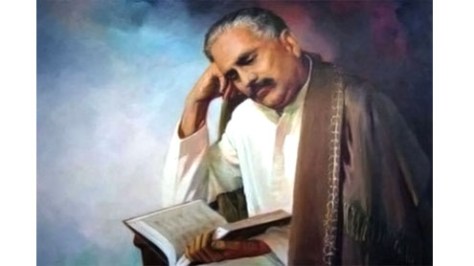
Allama Iqbal (1877-1938)

Islami Jamhooriya Pakistan ki tareekh Hindustan se bohut purani hai. Balkay Islam se bhi purani hai. Jab aathveen sadi mein Muhammad Bin Qasim Islam phelane bar-e-sagheer tashreef laye tau ye jaan ker sharminda huwe ke yahan tau pehle hi Islami riyasat maujood hai.

Yahan kufr ka janam tau huwa Jalaaludin Akbar ke daur mein, jo Islam ku jhutla ker apna mazhab banane ko chal diya; shayid Allah-ho-Akbar ke lughwi maani le gya tha.

Baharhal, in kafiron ne butparasti aur mehkashi jaisay gheir munaasib kaam shuro kerdiye aur apne aap ko Hindu bulaane lage. Sharaab ki aamad se Pakistan ke Musalmanon ki woh taaqat na rahi jo tareekh ke tasalsul se honi chahiye thi. Iski vaja ye nahin thi ke Muslaman sharaab peene lag paray the, balkay ye kay unki saari quwat-e-nafs sharab ko naa peene mein waqf hojati thi, hukmarani ke liye bachta hi kya tha.

Is ke bawajood Musalmanon ne mazeed do sau saal Pakistan per raaj kiya, phir kuch dinon ke liye angrezon ki hakoomat agayi (hamari tafteesh ke mutabiq yehi koi chalees hazaar din honge).

San 1900 tak Pakistan ke Musalmanon ki haalat nasaaz hochuki thi. Is dauran aik ahem shakhsiat hamari khidmat mein hazir huwi, jis ka naam Allama Iqbal tha. Continue reading Pakistan ki Tareef: Haseeb Asif

Who’s afraid of Veena Malik?

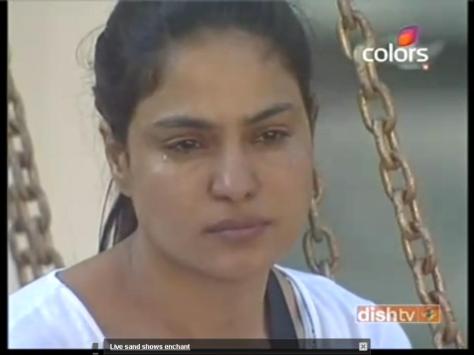
News broke of Veena Malik’s “nude” – more accurately, implied nude – photographs in FHM India magazine when the image of the magazine’s cover went viral on Twitter, even before the magazine was on newsstands. The media in India and all over the world reported “outrage” in Pakistan, in keeping with the international image of Pakistan as a country taken over by Islamists who would wreak havoc over a Pakistani woman posing without clothes for an Indian magazine with ISI tattooed on her arm.

FHM India itself magazine emphasised Malik’s nationality, calling her a “Pakistani WMD” and discussing burqas with her, even mentionining the word burqa on the cover, to reinforce the stereotype of a hot Pakistani model defying a country riven with Islamic extremism.

But in reality, there hasn’t been as much backlash in Pakistan as the world outside would expect or believe. Says Islamabad-based journalist Shiraz Hassan, “I am surprised that except a few news channels and papers nobody has been bothering about Veena Malik, as though they don’t care what she did. Haven’t seen anything from hardliners also.” Continue reading Who’s afraid of Veena Malik?

Three Years After 26/11: Raza Rumi

Guest post by RAZA RUMI

As a Pakistani it is difficult for me to talk about the ghastly attacks on Mumbai three years ago and the response of its vibrant citizens. This is not simply due to the nationality of Ajmal Kasab, the lone terrorist captured after the 26/11 Mumbai terror attacks. What happened in Mumbai was a sad reminder of how easy it has become for a handful of militants to wreak havoc, to hold an entire city hostage and undermine humanity. A vast majority of Pakistanis felt the pain and condemned the Mumbai attacks; targeting innocent civilians is heinous and unacceptable.

The Mumbai attacks changed the atmosphere created by President Asif Ali Zardari’s unprecedented offers of peace and cooperation. A few weeks before the carnage in Mumbai, Mr Zardari made historic remarks in a conclave organised by an Indian newspaper, which represented a consensus within Pakistan’s political class: “I do not feel threatened by India and India should not feel threatened from us… today we have a Parliament which is already pre-agreed upon a friendly relationship with India. In spite of our disputes, we have a great future together.” Mr Zardari also declared that Pakistan will not be the first country to use its nuclear weapons, thus altering a carefully constructed Pakistani nuclear doctrine of first-use. Continue reading Three Years After 26/11: Raza Rumi

Pakistan 2012 – We Must Learn from History: Raza Rumi

Guest post by RAZA RUMI

Iskander Mirza, Pakistan’s President between 1956 and ’58, is remarked to have said that democracy was ‘unsuited’ to the genius of the Pakistani people. Decades later, similar questions about democratic form of governance are being raised in Pakistan. Take any TV show, read the multitude of op-eds, or more worryingly, check what the youth have to say on Facebook or Twitter. The parameters of debate remain the same.

The urban Pakistani’s disdain for the ‘illiterate’, ‘rural’ politicians and their ability to rule the country is a long-running theme. More importantly, the duality of civil-military rule has generated a peculiar discourse: the weak and corrupt ‘civilians’ compromise national security as opposed to authoritarian regimes which guard ‘ideological’ and geographical borders of the country. Continue reading Pakistan 2012 – We Must Learn from History: Raza Rumi

Sexting no more: Pakistan’s hilarious list of 1,795 expletives to be banned on SMS

Whoever made the English and Urdu lists deserves an award, though I did find some Pakistanis who knew expletives that were not on the lists.

Thanks to this helpful compendium many Pakistanis are finding their expletive vocabulary enhanced. @UroojZia asked what “BUMBLEFUCK” and “LADYBOOG” meant. @Zakoota said the lists should be required reading in schools to give children the vocabulary to describe politicians and cricketers. With the amount of phrases that include the word “BUTT”, @KhaLeak wondered if Aijaz Butt was banned as well. [My story for FirstPost.com]

Govt must do more to protect minorities: Human Rights Commission of Pakistan

This press release was put out by the HUMAN RIGHTS COMMISSION OF PAKISTAN, Lahore, on 9 November 2011

The brazen murder of three brothers from the Hindu community in Shikarpur district on Eid day demonstrates that the perpetrators believe they can get away with murder simply because the victims are non-Muslim, the Human Rights Commission of Pakistan (HRCP) has said.

In a statement issued on Wednesday the Commission said: “HRCP is shocked at the brazen murder of the three Hindu citizens in Shikarpur and shares the sense of outrage of the Hindu community, not least because of the utter failure of the police to prevent the killings or arrest the killers even though threats of violence had been brought to their notice. Continue reading Govt must do more to protect minorities: Human Rights Commission of Pakistan

A temple in Peshawar reopens for the first time since 1947: Shabbir Imam

Guest post by SHABBIR IMAM from Peshawar, Pakistan. Video and photos by Shabbir Imam

[youtube:http://www.youtube.com/watch?v=qnZJClQNI_c%5D

During Sikh rule in Peshawar, the Gor Khatri area of Peshawar was declared Governor House, so the Gorakh Nath temple here was abondened and Hindu families shifted to a close by residential compound called Christian Colony. Then during the British Raj, the government provided residential quarters to a Hindu family to look after the temple. Continue reading A temple in Peshawar reopens for the first time since 1947: Shabbir Imam

What ails Pakistan?

Op-eds. Yes.

Bad things only happen so that columnists may write Op-eds about them. Before the advent of newspapers there were no terrorists, no sectarian divide, nothing was on the brink, nobody was at a crossroads; the insidious Op-ed writers have invented all these things to scare us under our beds, like parents who tell their children ghost stories because they don’t want them wandering around in the dark lest they flip the light switch at an inappropriate time. [Read the full post by Haseeb Asif]

From Kafila archives:

Giving democracy in Pakistan a chance: Raza Rumi

Guest post by RAZA RUMI

Endless predictions about the fall of the PPP-led coalition government in Pakistan have been made by pundits since the very day it came to power. The recent hullabaloo about this has been in the context of the forthcoming Senate Elections, due in March 2012, which ceteris paribus will ensure a simple majority to the PPP and its allies in the upper house. Given that the Senate is an equaliser in federalist politics, this would mean that legitimate representatives of smaller provinces would be permanent stakeholders in the system beyond this government. Continue reading Giving democracy in Pakistan a chance: Raza Rumi

Navratri in Karachi

The report above is by Zanobia Ilyas, who writes: Continue reading Navratri in Karachi

Dengue outbreak in Lahore. Humour follows

Dengue patients in a Lahore hospital

Wars, insurgencies, floods, an economy in the doldrums, and now dengue. If Pakistan is not a “failed state,” some credit must go to the Pakistani sense of humour.

There’s been terrible out break of Dengue fever in Lahore. 39 have died and the toll keeps rising – it was 36 when I began collecting the material for this post. Sohaib Gulbadan tweets: “My Hizb-ut-Tahrir friend is sharing articles suggesting dengue outbreak in Lahore is a CIA strategy. Acha.”

Perhaps it is in response to that sort of stuff that Haseeb Asif writes this hilarious blog post:

Continue reading Dengue outbreak in Lahore. Humour follows

The North-South Question in Punjab: Umair Javed

click to enlarge

‘Sayeen, ham nay toh kabhee 5,000 banday kaa jaloos bhi nahee nikaala. Siyaasat kay liyay aik laash kya, aik zakham bhi nahee hay hamaray paas toh. Aur aaj lag aisay raha hay kay hamaari dheemi dheemi baaton ko sun kar yay Punjab kay tukray karnay lagain hain’  (Sayeen, we’ve never taken out a rally with 5,000 people. Forget martyrs, we don’t even have a bruise to flaunt for political mileage. And today, it seems they’ve heard our whispers and taken them to heart. Today, they’re talking about splitting Punjab.)

While talking to a few last month, I realized that most independent Seraiki activists privately acknowledge that the issue of a new province, or at the very least, a wholesale recognition of Seraiki grievances, was a cause that could only be made actionable when the People’s Party thought it to be worthwhile – and 9 times out of ten, a cause’s worth for a national level party is determined by its weight in the electoral matrix.  Continue reading The North-South Question in Punjab: Umair Javed

In Defence of Asif Ali Zardari: Abdullah Zaidi

Guest post by ABDULLAH ZAIDI

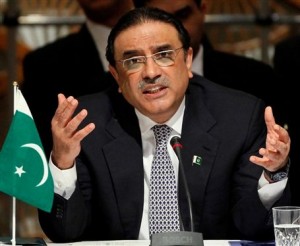
What comes to your mind with the mention of Asif Ali Zardari? “A cunning, vile, and corrupt man,” said my 19 year old cousin. This was a good summation of what the urban middle-class thinks of him. The more I hear people talking about him the more I am convinced of the power of propaganda. “Give the dog a bad name and hang him,” Zardai once said about himself. That is what is at work here.

Despite what has been said about him, Zardari did have a political background. His father Hakim Ali Zardari entered politics well before Partition and was a member of the Khaksaar Tehreek in 1931. He was first elected to the National Assembly in 1970s. All this talk of Zardari as a political orphan who hogged the Bhutto dynasty upon marriage with Benazir, is a non-starter. In Benazir’s husband, the Bhutto family wanted someone who would remain loyal to her. That is exactly what they got in him. For Zardari, family would always come first. This was the case at the time of Benazir’s death, when he kept the family together. Benazir would often tell close aides that despite his failings, Zardari always remained loyal to the family. Continue reading In Defence of Asif Ali Zardari: Abdullah Zaidi

And you thought the Valley was unsafe to visit?

click to enlarge

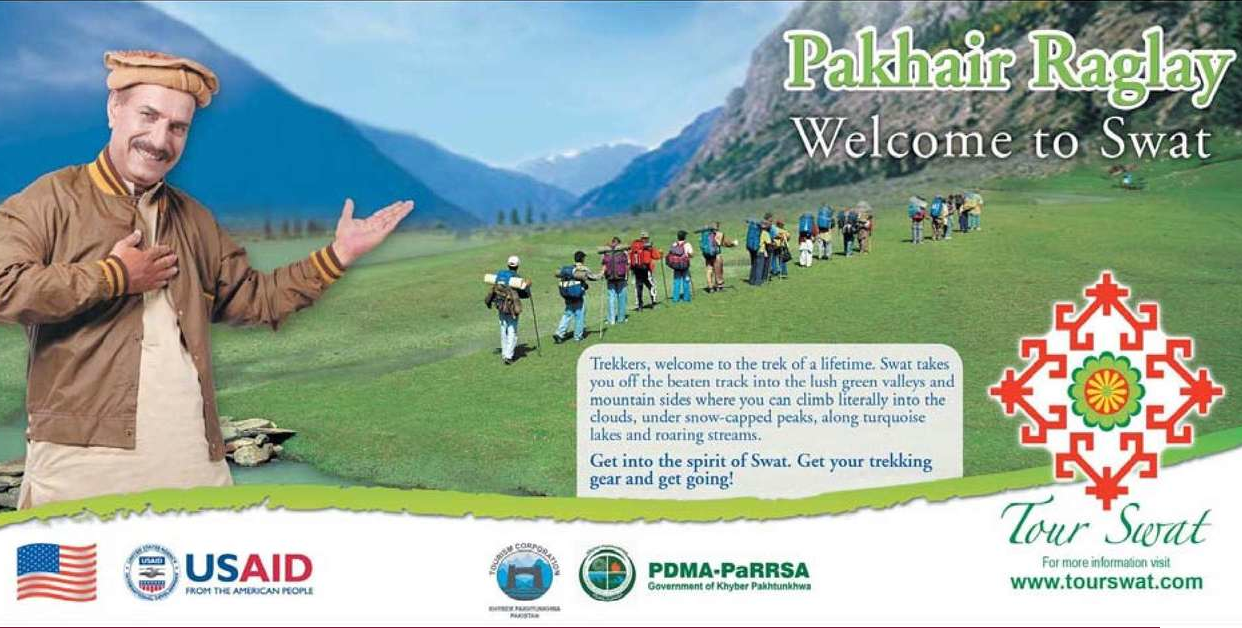
That is an advertisement published on the front-page of the Pakistani newspaper Dawn this morning. Two days ago, the paper wrote in an editorial: Continue reading And you thought the Valley was unsafe to visit?

Militant Rationalities: Ali Usman Qasmi

This is a guest post by ALI USMAN QASMI

Stark indifference of various religious organizations and scholars over suicide bombings and the recurrent target killing in Pakistan during the last few years is appalling. Woefully the mainstream print and electronic media deems it enough to issue the obligatory bland statements signifying absolutely nothing in condemnation of killings of innocent civilians. The act of terrorism in itself is relentlessly condoned, although the lost lives of civilians evoke some reaction which too is quite guarded to say the least. Even while expressing sympathy over the death of civilians,  the ‘atrocities’ of the Western powers in general and USA in particular are invariably referred to as the catalyst resulting in all the mess that the Pakistani people find themselves in, at the moment. Thus, unequivocal condemnation of those responsible for all the mayhem in the country is conspicuously missing, which amounts to a tacit approval of these terrorist acts. Far more tormenting than the devil may care attitude of religious parties and their leadership, is the role played by writers of the right wing persuasion, particularly in the Urdu media. While the mass appeal of the religious parties is considerably thin, nevertheless, right-wing ideology is widely shared and adhered to. Continue reading Militant Rationalities: Ali Usman Qasmi

A Tribute to Moin Akhtar (1950-2011)

For many of us in India he was Amitabh Bachhan and Dilip Kumar combined in one, although he did no action. His action consisted of something else altogether. He could play any character in the world, sometimes animals too. His impersonations of Dilip Kumar were sometimes better than the thespian’s own act. He could speak well, emote well, mimic brilliantly, parody, caricature, satirize and imitate almost anything and anybody. He could do all of this without appearing crude in the slightest way. His understated demeanour, his timing and his ability to retain a straight face through the most ridiculous of situations was more than a gift, through it he brought class to whatever he did. He has often been described as a comedian but if he was a comedian then he redefined the art of comedy and created a genre which could be performed only by himself. He was a one man entertainment industry and unlike film starts from this side of the border he needed nothing other than himself. He was his own writer, performer, director, presenter. Here was a fusion of an artist and his material that is rarely seen in the performance arenas in the subcontinent. Continue reading A Tribute to Moin Akhtar (1950-2011)

The dirty ‘S’ word in Pakistan: Urooj Zia

Guest post by UROOJ ZIA

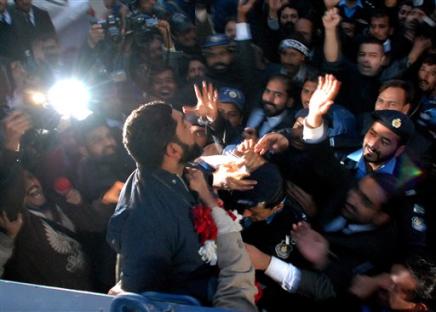
Images aired earlier this month where lawyers and other citizens in Pakistan were seen garlanding and felicitating the murderer of Punjab Governor Salmaan Taseer might have made those involved look tasteless and crude, but their acts were far from shocking. All his faults aside, Taseer had stood up for a Christian woman who had been accused of blasphemy and sentenced to death by a district and sessions (lower) court. He was killed because he had referred to the blasphemy statutes as ‘black laws’ which are abused at will, and had called for reform. As such, Taseer was killed because he had stood up, albeit in a roundabout way, for secularism and basic humanity.  Continue reading The dirty ‘S’ word in Pakistan: Urooj Zia

Blasphemy, Bigotry

From Kafila archives:

If blasphemy is an attempt to speak truth to power, bigotry is the reverse: an attempt by power to instrumentalize truth. [Mahmood Mamdani]

See also: Citizens for Democracy