Defying Manu, Bowing to Mammon

On The Silent Emergence of Dalit Capitalism

It was 14 th April 2012, when dalits in different parts of the country (as well as abroad) were celebrating 121 st birth anniversary of Babasaheb Dr Bhimrao Ambedkar, the legendary son of the oppressed. Thousands of  people had congregated at statue of Dr Ambedkar situated near Parliament itself as they have been doing on every such occasion. It was a festive type of atmosphere where one could find book stalls on the way – where one could browse through books on different topics all geared to bring about a social transformation in India – cultural performances by small groups going on uninterruptedly, volunteers had put stalls to provide water to all the visitors.

And Delhi was no exception. One could witness similar gatherings in different parts of the country where people gather on their own to celebrate the life of Dr Ambedkar. Close watchers of such gatherings – where state patronage is not the deciding factor – would emphasise why this phenomenon need to be closely understood and comprehended by sociologists of our times that even fifty six years after his demise there has not been a let up in his popularity. In fact, he happens to be one of those rare leaders of the first half of 20 th century whose birth anniversary as well as death anniversary is still celebrated as people’s festival.

On this day at a place not very far from the ongoing celebrations in Delhi a different type of meeting was being held which was attended by a motley combination of dalit activists, dalit enterpreneurs as well as few top bureaucrats. It was an occasion to float DICCI Venture Capital Fund, (DVCF) a For-Profit company whose aim was to support India’s Dalit entrepreneurs. In fact, 121 smartly dressed Dalit entrepreneurs cut a 121-kg birthday cake in honour of B R Ambedkar, and announced the launching of the (VC) fund. Continue reading Defying Manu, Bowing to Mammon
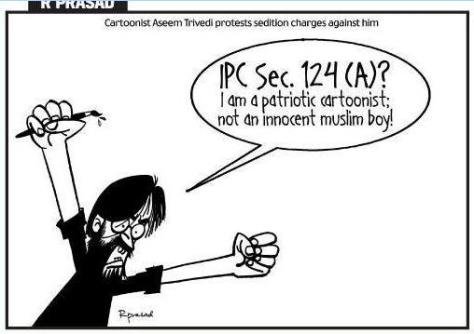
Sedition? Who, me?

I am taking the liberty of sharing here this brilliant cartoon by R PRASAD of Mail Today

We Are All Seditious Now

On the Violence Unleashed against Protesting Citizens in Koodankulam: Chennai Solidarity Group

A Statement issued by the Chennai Solidarity Group

Background

For more than a year the people of Idinthakarai village, along with fellow citizens from nearby villages have been protesting the setting up of a nuclear power plant at Koodankulam in Southern Tamil Nadu. The protests have been peaceful and have included people from different strata of society. Women have been in the forefront of the struggle, and over the last year even children have learned about the perils of nuclear power plants and the need to look for alternative energy sources.

In spite of this being a peaceful citizens’ protest, the state has chosen to treat it as dangerous – and arrested hundreds of people, intimidated many others and have more than once treated Idinthakarai village and its environs as if it were ‘enemy’ territory. Sedition charges have been slapped against the protesters, along with other criminal charges. The legality of these measures has since been subject to questioning. A high level Public Hearing, presided over by Former Chief Justice A B Shah has in fact called attention to the manner in which the law has been misused in this instance, and in fact abused to harass and prevent ordinary citizens from exercising their right to protest, and defend their constitutionally guaranteed right to life and livelihood. Continue reading On the Violence Unleashed against Protesting Citizens in Koodankulam: Chennai Solidarity Group

Zero tolerance for democracy – Kudankulam, Omkareshwar, Aseem Trivedi

Which of these three images brings dishonour to India?

This one?

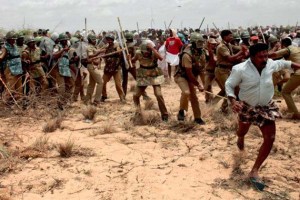
The full coercive force of the state slams down on villagers who have been so far peacefully protesting the location of a nuclear power plant in Kudankulam, Tamil Nadu.

Charges of sedition have been laid on hundreds of protesters in Kudankulam.

The women of Kudankulam wrote recently in a moving message to their fellow citizens:

When we carried the dead body of democracy and burnt it in the outskirts of our village on Aug 15th, 2012, little did we realize that so soon we would witness the real death of democracy. As this last nail is being tightened on our lives, we realize how insignificant has been our voice. But this has only strengthened our vow to be together.

(Read the latest update from Kudankulam below)

Continue reading Zero tolerance for democracy – Kudankulam, Omkareshwar, Aseem Trivedi

If speaking the truth is sedition then I am guilty of sedition: Aseem Trivedi writes from jail

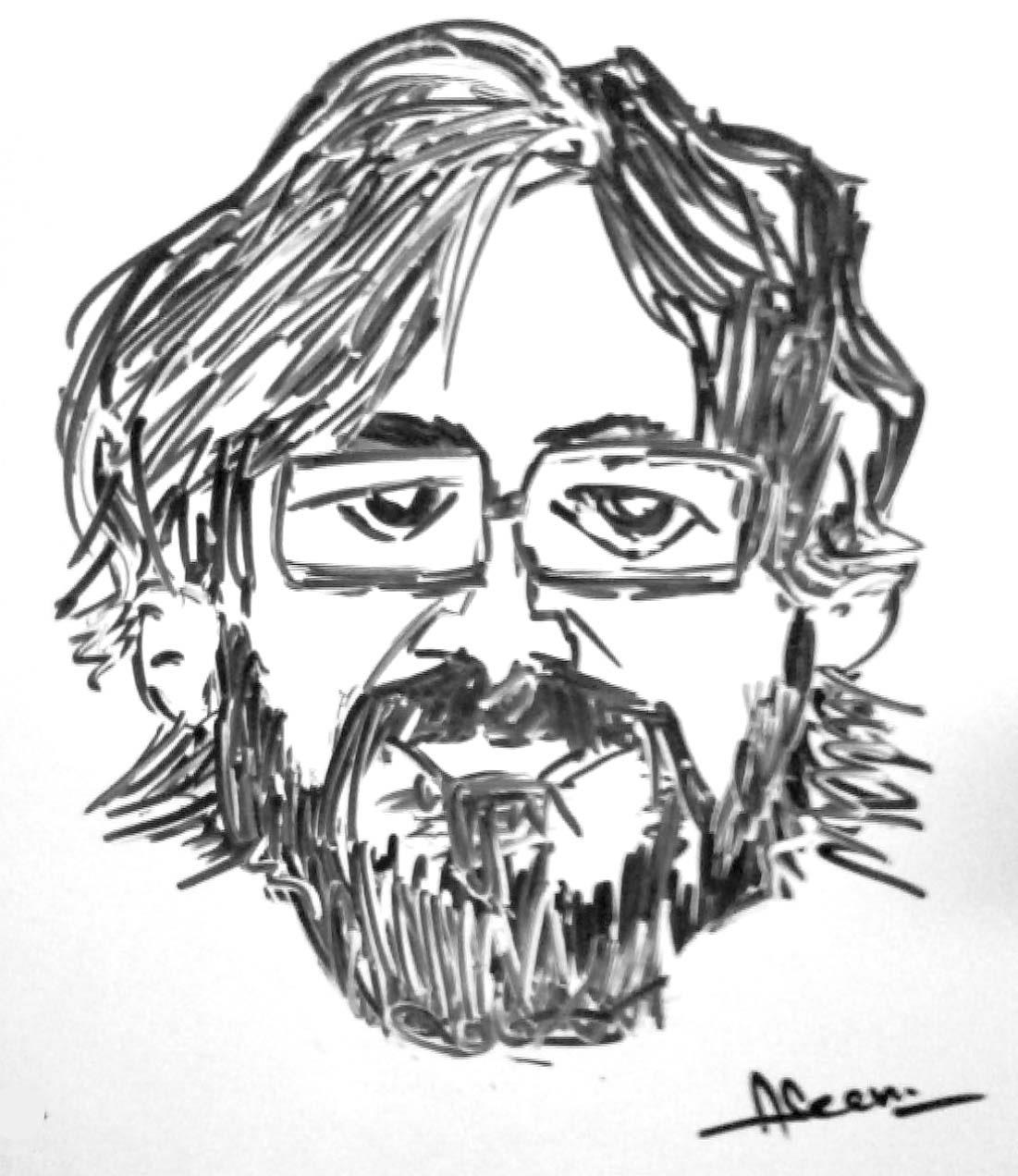
Aseem Trivedi: self-portrait

This is the text of a statement issued by ASEEM TRIVEDI from inside a jail in Mumbai. Trivedi has been remanded to judicial custody till 24 September for displaying and publishing cartoons that are allegedly seditious, insult national honour and, under the IT Act, are “grossly offensive” and of “menacing character”. An English translation of his letter is followed by the Hindi original.

Friends,

I am a true citizen of this country, not someone who has committed sedition.

If speaking the truth is sedition, then I am indeed guilty of sedition. If raising one’s voice against injustice is sedition, then I am guilty of sedition. If patriotism and the definition of patriotism have changed, then you could say I am guilty of sedition. If Gandhi, Bhagat Singh and Azad were guilty of sedition, so am I.

Even a small child of this country can understand my motive. I oppose the insulting of the people and the Constitution of India. I have been opposing the insulting of the people and the Constitution of India through my cartoons. Continue reading If speaking the truth is sedition then I am guilty of sedition: Aseem Trivedi writes from jail

Shadow Libraries

This is an article that I have written for e-flux which speaks to some of the debates that have taken place in Kafila on the photocopying case at DU. Most of the debates have been framed thus far by  legal questions and  questions of cost and access. While  ideas of cost and access are  useful for pragmatic arguments they fail to capture the delirious thrill  which marks most of our encounters with books (whether purchased, photocopied or  downloaded). In one of the comments to my earlier post Jeebesh Bagchi suggested that we should invoke the idea of shadow libraries and also the fact that our arguments should not be scared of dancing so here goes.

The original article can be found here

Shadow Libraries

Over the last few monsoons I lived with the dread that the rain would eventually find its ways through my leaky terrace roof and destroy my books. Last August my fears came true when I woke up in the middle of the night to see my room flooded and water leaking from the roof and through the walls. Much of the night was spent rescuing the books and shifting them to a dry room. While timing and speed were essential to the task at hand they were also the key hazards navigating a slippery floor with books perched till one’s neck. At the end of the rescue mission, I sat alone, exhausted amongst a mountain of books assessing the damage that had been done, but also having found books I had forgotten or had not seen in years; books which I had thought had been permanently borrowed by others or misplaced found their way back as I set many aside in a kind of ritual of renewed commitment. Continue reading Shadow Libraries

Ten Reasons Why You Should Sign the Petition at RepealSeditionLaw.in

  1. Section 124(A) of IPC criminalizes the ‘disaffection’ towards the government by words, either spoken or written, or by signs or by visible representations
  2. This 1860 draconian colonial law was created to stifle dissent during colonial rule.
  3. Tilak, Gandhi, Maulana Azad and Annie Besant were convicted under this law
  4. Today, the law is used to suppress legitimate criticisms of the government
  5. Journalists, Human rights activists, political dissenters, public intellectuals, and even farmers and tribals are targetted by this law
  6. The law goes against the inalienable fundamental right to expression enshrined in our Constitution
  7. The law goes against the very nature of democratic process which relies on active consent and dissent/opposition
  8. The law goes against the Universal Declaration of Human Rights, which guarantees freedom of speech and expression
  9. All major world democracies have either repealed this law or discontinued prosecutions
  10. The existence of sedition laws in India’s statute books and the resulting criminalization of ‘disaffection’ towards the state is unacceptable in a democratic society.

To sign the petition, go to RepealSeditionLaw.in

See also:

The Peaceniks prevail over the Realists: India and Pakistan sign new visa pact

While the new visa pact between India and Pakistan is a landmark achievement, it still leaves a lot to be desired to make easier travel possible for the citizens of the two countries. Some suggestions are given in the Aman ki Asha petition, which you may want to sign here. While the full text of the pact does not seem to be online at this time, the most detailed story about the pact has been put out by the ASSOCIATED PRESS OF PAKISTAN, reproduced below. It is not clear when the new regulations come into force.

ISLAMABAD: Pakistan and India on Saturday signed new liberalised visa regime giving more concessions and simplifying the procedure to grant visa with a view to promote people-to-people contacts and enhance trade and business activities between two neighbours.     Continue reading The Peaceniks prevail over the Realists: India and Pakistan sign new visa pact

Muslim youths launch peace forum in Assam

This press release was put out by MY-FACTS, Guwahati, on 3 September 2012

As a response and being aggrieved over the communalisation of the recent violence and mass displacement in BTAD (Bodoland Territorial Autonomous Districts) area and in order to analyse the situation, on 2 September, 2012 about 60 highly educated, secular and liberal Muslim youths from all over Assam assembled at the Bhagabhati Prashad Baruah Bhaban, Guwahati, Assam, to brainstorm about a peaceful solution for the present scenario of hatred and violence prevailing in Assam that is spreading all over the country. The meeting was convened under the aegis of a newly formed platform named MY-FACTS (Muslim Youths: Forum Against Communalism, Terrorism and Sedition). Continue reading Muslim youths launch peace forum in Assam

Protesting the Forced Repatriation of Visiting Sports persons and Others from Sri Lanka

Previously posted on dbsjeyaraj.com

We the undersigned are aghast and anguished by the recent decision of the government of Tamil Nadu, acting on the Chief Minister’s orders, to send back two sports teams from Sri Lanka that were in Chennai to play matches against local school teams.

Two days after the Chief Minister issued her orders, members of a Tamil nationalist group, Naam Tamizhar Iyakkam protested against a group of pilgrims from Sri Lanka visiting a church near Thanjavur.

There have been similar protests in the past against visiting teams – by members of the Periyar Dravidar Kazhagam. Continue reading Protesting the Forced Repatriation of Visiting Sports persons and Others from Sri Lanka

A Visa for Mahiwaal: Maheep Singh

Guest post by MAHEEP SINGH

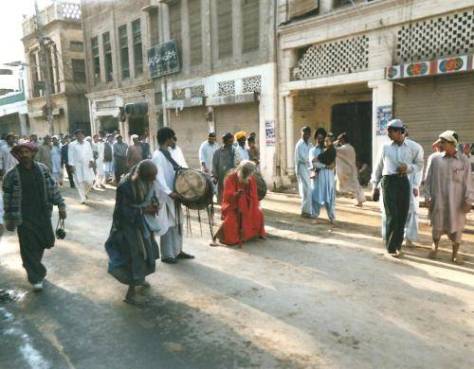
Sufi dervishes join a Sikh Nagar Kirtan parade at the Nankana Saheb shrine near Lahore. Photo credit: S Khalsa

As a child I gave my mother a tough time with all sorts of questions about the world; she would often not have answers. I would ask, for instance, why we couldn’t just go to Nankana Saheb as and when we wanted. Nankana Saheb is the birthplace of Guru Nanak, founder of the Sikh faith. It is in Pakistan, on the outskirts of Lahore.

Sikhism must be the only religion in the world whose official prayers include a plea for visa relaxation. Believe it or not, millions of Sikhs all over the world do that as part of their daily prayer, the Ardas, in which we pray to almighty to grant us free access (“khulle darshan deedaar”) to the birth place of Guru Nanak and other places in present-day Pakistan, considered holy by Sikhs. Continue reading A Visa for Mahiwaal: Maheep Singh

Naroda Patiya judgement rekindles the death penalty debate in India

The Naroda Patiya massacre in Ahemdabad on 28 February 2002 killed 97 Muslims. It is the massacre infamous for the gory stories of a pregnant woman disemboweled and raped, a 20 day child killed, and so on. If this massacre is not fit to be considered “rarest of the rare,” what is?

It is ironical that the court found the kingpin of the massacre to be a woman, Dr Maya Kodnani, a practicing gynaecologist, a former Minister of State for Women and Child Welfare in the Narendra Modi government! The court came down particularly hard on her, commenting that as a legislator, a representative of the people she had done the opposite of what she was expected to: she helped kill people rather than save them. “She led the mob and incited them to violence. She abetted and supported the violent mob,” the court observed.

However, special court judge Jyotsna Yagnik chose not to sentence the accused to death when he announced the sentencing on 1 September. Her court found 32 people guilty, of whom one is absconding. 7 will spend 31 years in jail, 22 will spend 24 years, Maya Kodnani 28 years and former Gujarat state Bajrang Dal president Babu Bajrangi is to live the rest of his life in jail. Continue reading Naroda Patiya judgement rekindles the death penalty debate in India

Don’t let him drink water because then he’ll also want to go to the bathroom

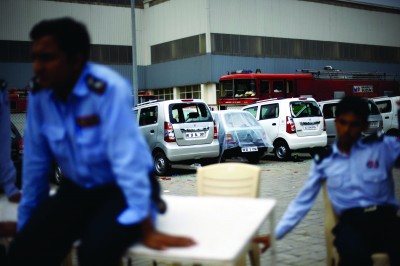
Photo credit: Ishan Tankha

My name is… let that be. Maruti Suzuki is out to get me, not because I did anything but because they want to put virtually every worker in jail, even those who belonged to the third shift and were not even present when violence took place in the Manesar factory on 18 July. I was present there and will tell you what happened, but to understand it you will have to let me begin from the beginning. Read more…

When the pseudo-sentiments of the pseudo-religious are pseudo-hurt

In neighbouring Pakistan, an Islamic cleric recently accused a young Christian girl, Rimsha Masih, of blasphemy, a charge punishable by life imprisonment. He said she had burnt some pages that contained verses from the Quran. The 14 year old girl hails from a poor family and suffers from Down’s Syndrome. An eyewitness to the event showed courage and told a magistrate the truth: it was the Muslim cleric who had put those burnt pages in Rimsha’s bag. The cleric has been arrested and is set, in turn, to be charged with blasphemy.

I have been thinking about the incident. Insulting somebody’s religion is bad. It may cause offence. Often it is intended to cause offence. If somebody insults Islam, by doing things like burning pages containing verses from the Quran, it is bound to outrage a Muslim. Continue reading When the pseudo-sentiments of the pseudo-religious are pseudo-hurt

Petition to Chief Justice of India – Remove Justice Bhaktavatsala of Karnataka High Court

On August 9, during the hearing of a matrimonial dispute, Karnataka High Court Judge K Bhaktavatsala told a young woman lawyer that she was unfit to argue the matter since she was unmarried. “Family matters should be argued only by married people, not spinsters. You should only watch. Bachelors and spinsters watching family court proceedings will start thinking if there is any need to marry at all. Marriage is not like a public transport system. You better get married and you will get very good experience to argue such cases,” he advised her.

Last week, hearing a case between a separated couple, in which the woman accused her husband of regularly beating her, the judge told the woman, “Women suffer in all marriages. You are married with two children, and know what it means to suffer as a woman. Yesterday, there was a techie couple who reconciled for the sake of their child. Your husband is doing good business, he will take care of you. Why are you still talking about his beatings?”

Justice Bhaktavatsala has shown grave disrespect towards the Indian Constitution, which he is sworn to protect, and which guarantees equal rights to all citizens, men and women. As such, he has revealed himself to be utterly unfit for his high office of responsibility.

Sign the petition asking the Chief Justice of India, Hon’ble Mr. Justice S.H. Kapadia, to remove Justice K Bhaktavatsala from his post for these appalling statements.

Cast Away Caste – Breaking New Ground …

‘Turn in any direction you like, caste is the monster that crosses your path. You cannot have political reform, you cannot have economic reforms unless you kill the monster.’

Annihilation of Caste, Ambedkar

‘If Lenin was born in India , he would not have even  let the idea of revolution come to his mind before he had completely  buried casteism and untouchability’

– Ambedkar

1.

The Indian left today presents a very contradictory picture. As opposed to many left formations/movements in different parts of the world which witnessed decline/3reverses after the Soviet collapse, it has been able to sustain itself and at places even expand itself. Yes, the movement is far from united, there are ruptures and divisions at various levels, which at times even prove deadly, but if one is able to look at the cumulative impact of what is known as left and contrast it with many other countries, situation does not appear that bleak.

It’s sustenance and continuation amongst heavy odds, does not mean that it is not beset with challenges. The challenge of outlining its emancipatory vision of social transformation for 21 st century, devising innovative strategies of mobilisation and rejuvenating itself organisationally still remains. It also needs to reboot itself to address few important issues which are of key importance for any radical restructuring of Indian society and state. Undoubtedly, its failure on this count has cost it heavily. Question of dalit emancipation or the whole struggle for annihilation of caste forms one such core issues which demand serious attention. Continue reading Cast Away Caste – Breaking New Ground …

Saving our heritage

The National Commission for Minorities (NCM) received a letter from the Jamiat-ul Ulama-e-Hind. The letter wanted 31 protected mosques to be opened for prayers. “Although the commission was not very keen that heritage monuments should be opened for prayers, it decided to suggest a joint survey for ascertaining the condition of these mosques.” Officials from the NCM, the Archaeological Survey of India (ASI) and the Wakf Board will carry out the joint inspection according to the suggestion made by the commission in its letter sent to the Ministry of Culture towards the end of July.

This reference made by the NCM needs to be looked at a little carefully, because the issue is not likely to remain restricted to these 31 mosques nor will it remain confined to Delhi. The reference impinges on questions of law and will eventually inform our attitude to the wider question of heritage protection. Continue reading Saving our heritage

India and Pakistan: Let people meet

This online petition has been put out by AMAN KI ASHA

The people of Pakistan and India, people of Indian and Pakistani origin around the world, and friends of India and Pakistan, are fed up of the visa restrictions that prevent them from visiting families in the other country. There isn’t even a tourist visa protocol between these two biggest neighbours of South Asia. People in the region want the right to travel and to trade, to walk along coastlines and roads that represent their collective past, to seek and spread harmony across a subcontinent not divided by politics and propaganda. In this modern age of interdependence, it is a tragedy that the citizens of India and Pakistan are left peering over a border made indomitable and intimidating. There is little space for the hand of friendship to be extended across this border. This must change.

The governments of India and Pakistan must:  Continue reading India and Pakistan: Let people meet