Expired Explosives and Health of Kudankulam: Anoo Bhuyan

Guest post by ANOO BHUYAN

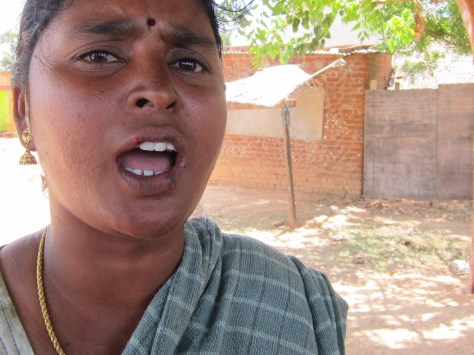
Anitha spits blood and wipes her lips as she talks to me. A few sentences later, a large blister on her lips begins to glisten with blood again, and she has to spit it out one more time. Hundreds of villagers at Idinthakarai have similar clusters of blisters on their lips. They say that they developed the sores as a reaction to the tear gas that was used during the clash that took place between police and protesters who were protesting the Kudankulam Nuclear Power Plant. This event occurred on tenth September. Nearly a week later, the sores continue to remain fresh and open, and a scab does not seem to be forming for any of those who were involved in the clash.

Anitha 


Continue reading Expired Explosives and Health of Kudankulam: Anoo Bhuyan

GPS and receipts will not stop Delhi’s auto-wallahs from overcharging: Simon Harding

Guest post by SIMON HARDING

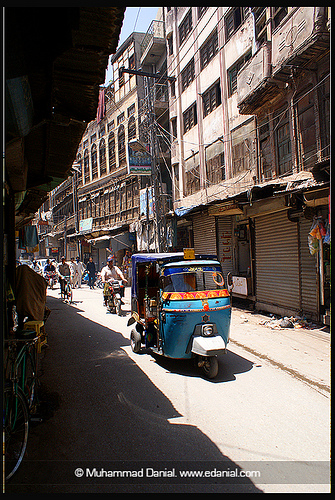
Last week, the Delhi High Court gave the go-ahead for the compulsory installation of GPS systems and printers in the capital’s auto-rickshaws by dismissing petitions against the policy from auto unions (download judgement .pdf here). The GPS kits are supposed to allow the Transport Department to track the movement of Delhi’s autos. The printer will provide the passenger with a fare-receipt, which will show the distance travelled and the amount paid. The policy will eliminate over-charging and will provide “secure and transparent travel” to the capital, claims The Hindu.

Sadly, the installation of GPS systems will do little to address the problem of over-charging. On the contrary, it may actually exacerbate it. Continue reading GPS and receipts will not stop Delhi’s auto-wallahs from overcharging: Simon Harding

Evidence, Consensus and Policy: Kaveri Gill on the curious case of changes proposed in India’s public health policy

Guest post by KAVERI GILL

The world of development is as prone to fashions as any other. In recent times, ‘evidence-based policy’ has become the new gold standard, following hot on the heels of participation and ownership of policy processes and outcomes by academics, activists and civil society groups. This applies within nation states, especially of the global South. India today epitomises such objective and bottom-up democratic largesse in favour of the ‘aam admi’- for largesse it is, make no mistake – with a near constant refrain of the avowed aim of ‘inclusive growth’. And yet, does it really?

Or is politically correct discourse and seemingly open decision-making processes in the social sector sphere merely dangerous fig leaves for seismic and opaque shifts in policy, which have very little to do with evidence and even less to do with broad-based consensus? Rather, they are an outcome of fixed ex-ante views – which may be termed as a distinct partiality to the Chicago School of Economics – about the path to a fictitious endpoint of a mainstream development paradigm, which itself is faith-based. It is not justified by theory or a heterodox reading of the empirical experiences of presently developed countries, let alone latecomer developing nations which are, for various exogenous and endogenous reasons, likely to have different trajectories altogether. I refer here to the hackneyed line about faster growth being pursued as a necessary, if not sufficient, condition for eventual trickle down, no matter that the ‘dur khaima’ of an equitable society is never arrived at! Continue reading Evidence, Consensus and Policy: Kaveri Gill on the curious case of changes proposed in India’s public health policy

हिंदी का संकट: कुलदीप कुमार

जनसत्ता के 23 सितम्बर, 2012 के अंक में प्रकाशित कुलदीप कुमार के स्तंभ “निनाद” को हम थोड़े संशोधन के साथ छाप रहे हैं.

दक्षिण अफ्रीका के जोहान्स्बर्ग शहर में विश्व हिन्दी सम्मेलन हो रहा है। पहला सम्मेलन 1975 में नागपुर में हुआ था जिसमें जवाहरलाल नेहरू विश्वविद्यालय की ओर से एक प्रतिनिधिमंडल शामिल हुआ था। मैं उन दिनों विश्वविद्यालय की साहित्य सभा का सचिव था और पंकज सिंह उसके अध्यक्ष थे। कवि मनमोहन भी प्रतिनिधिमंडल में शामिल थे। तब तक इमरजेंसी नहीं लगी थी। अगर मेरी स्मृति धोखा नहीं दे रही तो वह जनवरी का महीना था। देश में जेपी आंदोलन ज़ोरों पर था और प्रधानमंत्री इन्दिरा गांधी ख़ासी अलोकप्रिय हो चुकी थीं। हम इस सम्मेलन को तमाशा समझते थे और उसका विरोध करने ही नागपुर पहुंचे थे। दिल्ली से ही एक बयान साइक्लोस्टाइल कराके ले गए थे। जैसे ही इन्दिरा गांधी ने अपना उदघाटन भाषण देना शुरू किया, हम सबने उठकर विरोध में नारे लगाने शुरू कर दिये और उपस्थित प्रतिनिधियों के बीच विरोध-वक्तव्य की प्रतियाँ बांटने लगे। सुबह-सुबह कुछ प्रतिनिधियों के कमरों में दरवाजे के नीचे से हम अपने बयान की प्रतियाँ खिसका आए थे। जैसा कि होना था, बाद में हमें पुलिस ने धर लिया। Continue reading हिंदी का संकट: कुलदीप कुमार

A statement against the arrest of Punjabi publishers and editors for publishing the poetry of Babu Rajab Ali

Names of signatories given at the end; for more details on the campaign, see Whitewashing History

The arrest of two Punjabi publishers and two editors for reprinting old books of poet Babu Rajab Ali which allegedly contained some then used caste names, under the Prevention of Atrocities Against Scheduled Castes and Scheduled Tribes Act, is a totally thoughtless, callous and ruthless action taken by the Punjab government.

We understand that Mr. Amit Mittar of Tarak Bharti Prakashan and Mr. Ashok Garg of Sangam and editors Mr. Jagjeet Singh Sahoke from Moga and Mr. Swatantar from Samana, were arrested by the police on September 15 at the behest of the Punjab government. This is absolutely against academic freedom. Continue reading A statement against the arrest of Punjabi publishers and editors for publishing the poetry of Babu Rajab Ali

Memory: An Act of Forgetting

“Where Memory Resides”: Bridgette Guerzon Mills

Memory: An Act of Forgetting

Right now, just like that
I let a memory of you
Slip through my sleeve
And drop, plop, on the floor.
It had sniveled
Sniveled long
Long up my sleeve!

Really? How did you do it? 

Nothing!
Continue reading Memory: An Act of Forgetting

Stuck Between Gandhi and Cultural Crap: Papilio Buddha Reveals Much

Sometimes a minor cut on the surface of the skin will do to reveal the rot beneath. This is precisely what the film Papilio Buddha, made by the New York-based Malayalee film-maker Jayan Cherian, which draws broadly upon contemporary caste politics in Kerala, has achieved for us. In fact, its achievement on this count is simply amazing. At a single stroke, it has brought to light several stinking sores above which Malayalees, especially many Malayalee intellectuals who  occasionally don the garb of public intellectuals, strut. Continue reading Stuck Between Gandhi and Cultural Crap: Papilio Buddha Reveals Much

The Unsolved Mysteries of the Universe

What came first? Murgi or man?

The murgi is looking at the camera slyly, or so the camera thinks. Why did the man not bat an eyelid? Surely he could not have missed that a camera-phone came out of a pocket, was tilted horizontally, focused on him and on the murgi on his knee, proceeding to click? The camera was impressed at the discovery of this man and his murgi; they were not posing.

Why is the main wearing a red shirt with maroon pyjamas? Why not a maroon shirt with red pyjamas? Did he place the hen on his knee? If all he wanted to do was to ponder over the unsolved mysteries of the universe why would he want to be disturbed by his murgi? Given the terrain, just how much manoeuvrability does the murgi have? Could the murgi be helping the man meditate? Is the murgi a hypnotic tool?Is the murgi disoriented to be looking at the ground beneath from a precarious vantage point?

Is the murgi soon going to be food? Biryani or qorma?

The camera did not want to ask questions lest the man’s meditation be disturbed. The questions remain.

Our search for Charasi Kababs: Saba Dewan

Guest post by SABA DEWAN

Qissa Khwani bazaar, Peshawar

I was last in Pakistan in 2006 during Ramzan. Rahul had some work in Islamabad, Peshawar and Lahore and I had used that as an excuse to visit my mother’s place of birth. While I had visited my mother’s beloved Lahore a few times earlier this was to be my first trip to Islamabad and Peshawar.

To cut a long story short, on our first evening in Peshawar, post iftaar, we found ourselves in the fabled Qissa Khwani bazaar, the Bazaar of Story tellers. It was here that in 1930 British troops had fired upon an anti-colonial demonstration of non violent, unarmed nationalist Khudai Khidmatgars leaving more than 400 amongst them dead. History has come a long way since then marking contemporary Peshawar as one of the more violence prone cities of Pakistan. Continue reading Our search for Charasi Kababs: Saba Dewan

JTSA responds to Delhi Police’s comments on their report “Framed, Damned, Acquitted”

This guest post by the JAMIA TEACHERS’ SOLIDARITY ASSOCIATION is a response to the Delhi Police’s comments on their report, “Framed, Damned, Acquitted”

Did you think that the Special Cell or the Delhi Police would introspect on its ways after the publication of Framed, Damned, Acquitted? How wrong you were. It is now attempting desperately to defend the indefensible by hiding behind a maze of statistics, ignoring the real questions that the report has raised: namely the brazen and systematic violation of all established legal norms and due process. Continue reading JTSA responds to Delhi Police’s comments on their report “Framed, Damned, Acquitted”

Academic Publishers – An Insider’s perspective: Anonymous Contributor

I am posting an email I received this morning by someone who works at a leading multinational academic publishing house and hence wants to remain anonymous which raises very important points relevant to the ongoing debate about copyright, photocopying and the practices within academic publishing. (Thanks to anonymous contributor for this)

Also for more detailed discussions please see the following posts at spicyip by Amlan Mohanty (1, 2,) Shamnad Basheer (1, 2) and Prashant Reddy 1

Hello Lawrence,

In his Op-Ed in today’s Hindu, Sudhanva Deshpande referred to your work, and soon, I stumbled upon your articles at Kafila and the general discussion on the blogosphere. As someone who worked for a few years in a leading multinational academic publishing company, I thought I might — if this doesn’t sound too pretentious — offer some more ammunition to you. What I have to say may not be immediately relevant to the DU case, but I hope you’ll have the time to read. Continue reading Academic Publishers – An Insider’s perspective: Anonymous Contributor

Framed, Damned, Acquitted: Dossiers of a ‘Very’ Special Cell

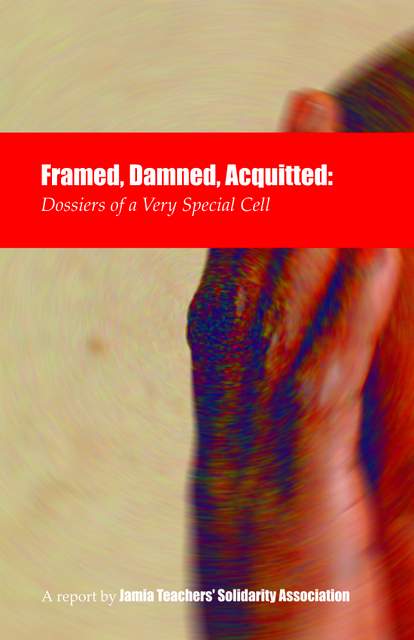
Given below is the report Framed, Damned, Acquitted: Dossiers of a ‘Very’ Special Cell, released yesterday in Delhi by the JAMIA TEACHERS’ SOLIDARITY ASSOCIATION.

When human rights activists, or families of those arrested on charges of terrorism, allege foul play on part of the investigating agencies, the usual response is this: Surely, there must have been some involvement, or else why would the police arrest him, and not me? Continue reading Framed, Damned, Acquitted: Dossiers of a ‘Very’ Special Cell

The Unreality of Wasseypur: Javed Iqbal

Guest post by JAVED IQBAL

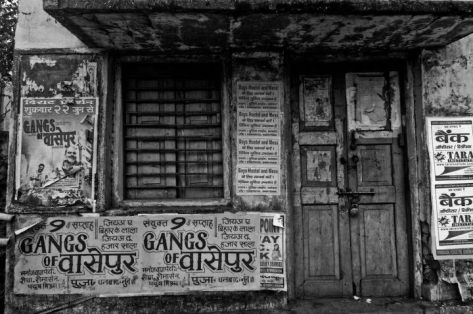
Posters for ‘Gangs of Wasseypur’ in Dhanbad. All photographs by Javed Iqbal.

‘The ending of the film was shown properly,’ speak unanimous voices, the well-known folklore of Wasseypur, Dhanbad, ‘Gangster Shafiq Khan was really gunned down at the Topchachi petrol pump like it was shown in the first part of the film.’

‘That’s how it’s done in Dhanbad.’ Continue reading The Unreality of Wasseypur: Javed Iqbal

‘Big Ticket’ Reforms and Bigger Deceptions: Shankar Gopalakrishnan

Guest post by SHANKAR GOPALAKRISHNAN

When the country’s rulers have to tell barefaced lies to get their policies through, you know that there’s something wrong. Consider the recent “big-ticket reforms,” of which the two biggest (in terms of direct impact) have been the diesel price hike and the opening of the retail sector to FDI. The diesel hike, we’re told, was a “tough decision” necessary to “prune subsidies.” Except that diesel isn’t subsidised in this country. To repeat: there is no subsidy on diesel in India. As for FDI in retail, the Cabinet statement on the policy cites four justifications, accompanied by a “Studies show…” claim. Except that the data in the government’s sole study on the issue does not support three of these four justifications. As for their much touted “safeguards”, at least one has been said to be illegal by the Commerce Ministry itself, while the very same CCEA meeting diluted a similar safeguard for single brand retailers. Continue reading ‘Big Ticket’ Reforms and Bigger Deceptions: Shankar Gopalakrishnan

Joga’s disappearance: Amandeep Sandhu

Rupa Publications; pp 252; Rs 275

This guest post by AMANDEEP SANDHI is an extract from his new book, Roll of Honour, a novelset in the backdrop of the Indian Army’s Operation Blue Star in 1984

During the last summer vacation (from my military school), when I was at home in Patiala, the soldiers had taken away my friend Joga. The government had already censored the newspapers, but the airwaves sneaked in the news of what was happening elsewhere in Punjab. In our living room, Nanaji’s white beard had trembled when we listened to Mark Tully from the British Broadcasting Corporation on our Murphy radio:

The battle of the Golden Temple in Amritsar is being fought hard and constantly. At the height of the battle, there were three hours of hand-to-hand fighting. Weapons allegedly recovered from the separatist Sikh militants were displayed to the world. The fatalities are not… Unofficial estimates go into thousands… Continue reading Joga’s disappearance: Amandeep Sandhu

Letter to the Editor, Times of India: Narmada Bachao Andolan

This guest post by CHITTAROOPA PALIT is the text of a letter to the editor of the Times of India, which the paper has not published
Subject: Rebuttal to the story “Reality bites: Khandwa’s made-for-TV protest” published in Times of India.

Dear Sir,

We are shocked to read the story “Reality bites: Khandwa’s made-for-TV protest” in your esteemed newspaper, which has been published with prominence. The story is false and fabricated. The journalist did not meet any Mehtab Singh but she quoted him. The journalist did talk to my colleague and senior activist of NBA Mr. Alok Agarwal but chooses not to quote him. It may be noted that the OB van and a team of your own group Times Now was there at satyagrah site all the time covering live from 6th September but none of these issues were raised.

Continue reading Letter to the Editor, Times of India: Narmada Bachao Andolan

अपुन का मंटो: पाकदिल, सियाहक़लम, अपूर्व, अप्रतिम, अखंड


मंटो ने रचनात्मक अभिव्यक्ति के लिए कला की कोई भी दिशा चुनी हो, हंगामा किसी न किसी तरह अवश्य हुआ।
– बलराज मेनरा व शरद दत्त


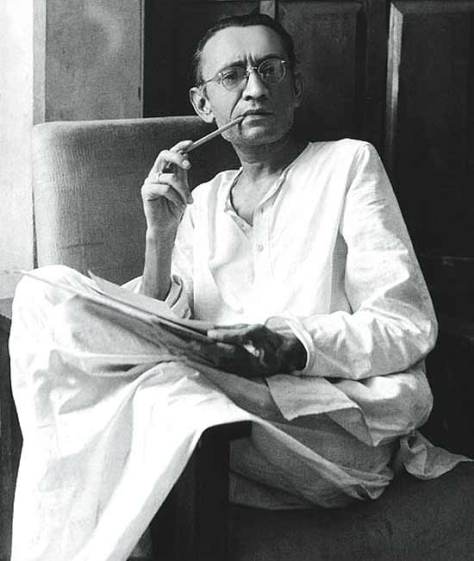
कोई सत्तावन साल पहले महज़ बयालीस की उम्र में तक़सीम-ए-हिन्द और शराबनोशी के मिले-जुले असर से अकालकालकवलित मंटो आज सौ का होने पर भी उतना ही हरदिलअज़ीज़ है, जितना हैरतअंगेज़, उतना ही लुत्फ़अंदोज़ है, जितना तीरेनीमेकश। शा यद आज भी उतना ही मानीख़ेज़। बल्कि यूँ मालूम होता है कि वक़्त के साथ उसके अनपढ़ आलोचकों की तादाद कम होती गई है और पिछले दो-तीन दशकों में मुख़्तलिफ़ विधाओं में पसरे उसके लघु-कथाओं व बड़े अफ़सानों, मज़ामीन, रेडियो नाटकों, मंज़रनामों, ख़तों, फ़िल्मी संस्मरणों और अनुवादों के बारीकतरीन पाठों का सिलसिला थमने की जगह ज़ोर पकड़ने लगा है। और पाठ-पुनर्पाठ की ये धारा सिर्फ़ उर्दू या हिन्दी में ही नहीं, बल्कि अंग्रेज़ी में भी मुसलसल बह निकली है। जिसके बूते दक्षिण एशिया का यह अप्रतिम कहानीकार अब समस्त दुनिया की एक नायाब धरोहर बन गया है। यह वाजिब भी है क्योंकि मंटो के अदब व फ़लसफ़े में पश्चिम व पूर्व का अद्भुत संगम हुआ। मोपासाँ, चेखव व गोर्की वग़ैरह से उसने अगर तुला हुआ, मुख़्तसर अंदाज़े-बयान सीखा तो एशियाई माहिरों से रस बरसाने वाली दास्तानगोई का चमत्कार, और तफ़्सीलात का इज़हार।

Continue reading अपुन का मंटो: पाकदिल, सियाहक़लम, अपूर्व, अप्रतिम, अखंड

The abandoned mandirs of Rawalpindi: Shiraz Hassan

Guest post by SHIRAZ HASSAN

The entry to a temple in Gunjmandi. All photos by Shiraz Hasan

In the early 19th century, the British made Rawalpindi the central seat of military power as they aimed towards Afghanistan. This was in line with their strategic approach towards the Russian Empire in order to enjoy and retain complete control over central Asia. Known as the Great Game, the conflict continues today in another form. Continue reading The abandoned mandirs of Rawalpindi: Shiraz Hassan

Aseem Trivedi and the guardians of good taste

There’s a time for everything. When a cartoonist is being arrested for his cartoons, for cartoons that caused no harm, incited no violence, killed no people, then do you discuss his art or his incarceration? Continue reading Aseem Trivedi and the guardians of good taste

Will there be justice in the Bhaderwah triple murder case?

This press release was put out by the JAMMU KASHMIR COALITION OF CIVIL SOCIETY on 13 September

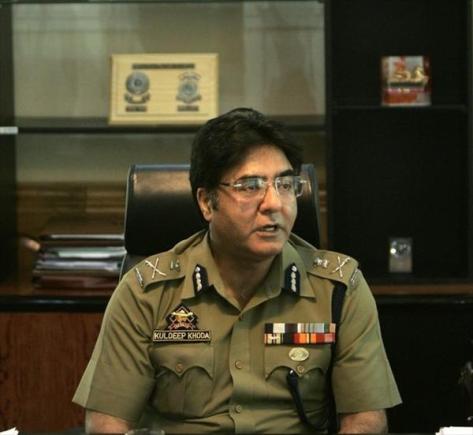
Kuldeep Khoda, former Director General of Police, Jammu and Kashmir
On 12 September 2012, a little less than five months after the son of one of the victims of the infamous Bhaderwah triple murder case filed a complaint before the State Human Rights Commission [SHRC]. The SHRC dismissed the case implicating Kuldeep Khoda, ex-Director General of Police, Jammu and Kashmir [retired from service on 31 May 2012]. No notice was given to the complainant or his advocate to appear for the hearing. On 13 August 2012, the advocate for the complainant had sought an opportunity to advance further arguments on 22 August 2012. While this request was granted, no hearing was held on 22 August 2012. Instead of providing notice for the subsequent hearing on 12 September 2012, the SHRC chose to dismiss the case. Continue reading Will there be justice in the Bhaderwah triple murder case?

I am a Hindu and I am not a terrorist

I am a Hindu and I am not a terrorist. Don’t get me wrong. Not all Hindus are terrorists and not all terrorists are Hindus. Heck, all Hindus don’t even subscribe to the political ideology called Hindutva. No, I am not saying all Hindutvawaadis are terrorists or that all terrorists are Hindutvawaadis. Let’s get this straight: terror has no religion. Continue reading I am a Hindu and I am not a terrorist