Though the US has seemingly bounced back from the 2008 financial crisis, southern European countries like Portugal and Greece are currently dealing with debt situations that were once only characteristic of the “developing world”. In order to stabilize their economies after the 2008 crisis these European countries took on a series of IMF and European Central Bank loans in which rates of interest were higher than the countries’ rates of GDP growth, thus stagnating their economies for the foreseeable future.
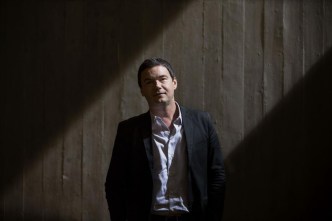
This situation that currently befalls these countries’ economies was explained by Thomas Piketty in a recent interview he gave for the major Portuguese newspaper, PÚBLICO. Piketty, who has become a prominent public intellectual due to the popularity of his recent work, “Capital in the 21st Century”, was in Portugal this week in order to discuss the economic future of the country with some of its political figures. Besides outlining the problem, he discusses possible courses of action for the countries to release themselves from perpetual debt and austerity. These ideas ironically enough come out of the paths once carved by those now economically dominant countries in the Euro Zone, specifically France and Germany. Continue reading Piketty and the Economic Crisis in the Euro Zone: Cenan Pirani→
Reports have it that Delhi Police has blamed the AAP for the death of Gajendra Singh at its rally recently – not surprisingly, as we had noted in our previous post on the suicide. We had suggested in that post there seemed to have been prior instructions to the Police from the Central government, under which it functions, not to act. And the reports today about Delhi Police reporting to their higher ups only confirm our suspicions.
Here is what one of the reports has to say:
In a letter to the Home Ministry, the Delhi Police has claimed that the mob including Aam Aadmi Party (AAP) workers incited Gajendra Singh to commit suicide at a party rally in Delhi. The letter also claims that untrained volunteers climbed the tree which led to Gajendra falling off.
The report states that AAP volunteers and leaders were clapping and raising slogans which incited him to engage in more dangerous acts. It also adds on to say that though police requested AAP volunteers to stop provoking him through clapping and solganeering, neither the volunteers nor the leaders present on the state acceded to the request info.
Another report in a channel known for its BJP connections, says:
As per the Delhi Police report, AAP leaders were making provocative speeches, and the crowd present at the rally venue instigated and provoked Gajendra to commit suicide. The report also alleged that AAP did not heed to the police’s request to change the rally’s venue to Ram Lila Maidan.
Lost on the high seas? Image courtesy CPI(M) 21st Congress site
Far from transparently and decisively resolving the issues which plague the Party and the Left movement in India, the twenty first Congress of the CPI(M) has yielded a schizophrenic outcome. The purported ‘political line’ adopted by the Party Congress and the ‘unanimous’ choice of the new general secretary are quite contradictory, which will only perpetuate the ideological-political incoherence that has gripped the CPI(M) and may further contribute to its organizational disarray.
When the central committee of the CPI(M) met in October 2014 to discuss a medium term ‘review of the political tactical line’ (PTL) in the light of the electoral reverses suffered by the Party, a politbureau (PB) member had moved a dissent note on the document presented by the PB. That note had argued against the very need to review the PTL and had instead held faulty implementation of the political line driven by ‘subjectivism’ of the leadership mainly responsible for the setbacks suffered by the CPI(M), alongside persistent organizational deficiencies. The elevation of the dissident voice within the outgoing politbureau as the new general secretary of the party raises the question whether the ‘review of the political tactical line’ and ‘political resolution’ adopted in the Congress have the support of the majority within the party? Or will the ‘political line’ adopted in the Party Congress give way over time to political opportunism in the name of ‘flexible tactics’, with the CPI(M) joining hands with the discredited, anti-people Congress in the name of fighting the communal, big corporate-backed, reactionary Modi regime? Continue reading CPI(M)’s 21st Congress – A Schizophrenic Outcome: Prasenjit Bose→
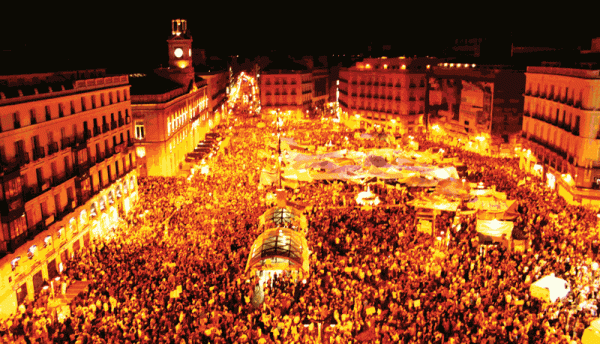
[Against the background of Spain’s recent criminalizing of public protests and the first ever hologram demonstration (see Kafila post by Geeta Seshu) against it, this article revisits the major eruption in 2011, that eventually laid the ground for the emergence of a new political force in Spanish politics]
15M, image courtesy El Tecolote
Spain, seems to be a country that is still shaping itself. Somewhat like a nation that wants to come to terms with its past, unlike many other countries that have gone through a traumatic history and have finally emerged through the political passions – admittedly misdirected – of their distant past. Spain seems like it is yet to come to terms with a civil war that forged its legacy in millions of Spanish minds and the future generations of the country. The fascist forces that staged a coup, and consequently, went on to purge about 150,000 of its citizens in summary executions, far surpassed some of the worst dictatorships that the world has witnessed, including that of Pinochet’s in Chile and of Videla’s in Argentina.
The 15th National Para-Athelitic Championship held in Ghaziabad in March 2015 was my first national-level athletic competition that I was participating in. I did not know much about the world of sports, the associated pressures for sportsmen, politics at different levels and most importantly the amount of compromises that the participants had been making in all these years.
Our team left for Ghaziabad and even before we reached we were a little surprised. The condition of roads leading to the stadium was so terrible that we were confused if we were reaching the right place. After we reached, we realized there was worse to come. Working on issues of accessibility in my campus for making our campus barrier free for persons with disabilities, there was an expectation from the organizers that this would be a model of the way a sports competition should be organized in terms of infrastructure, procedures and attitudes. But it was a far cry from it. What screamed at each step was complete insensitivity towards persons with disabilities. Continue reading Lessons learnt from the misdeeds of Paralympic Committee of India – Continuing to speak up: Pragya Deora→
Trust Markandeya Katju to rush in where angels fear to tread – casually disparaging the legacy of E.V.Ramaswamy Naicker or ‘Periyar’, founder of the Dravidian movement and arguably one of the greatest social reformers in modern India.
According to former Justice Katju, in a recent post on his Facebook page, “Periyar ( E.V. Ramaswamy) was objectively a British agent, who preached caste hatred, particularly against Brahmins”
It is perhaps a fitting tribute to the revolutionary character of Periyar that, four decades after his death, he is still reviled by upper-caste Hindus of India,of both the Establishment and ‘anti-Establishment’ variety. And Markandeya Katju is not the only ‘secular, progressive’ intellectual in this country to have such contempt for or very little knowledge of Periyar and his work. Continue reading Periyar – Brahminism’s Nightmare: Satya Sagar→
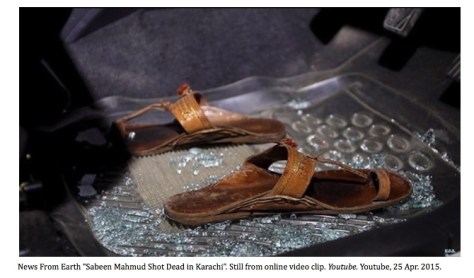
[ This is a post from two friends in Pakistan responding to the tragic assasination of Sabeen Mahmud, activist and director of ‘The Second Floor’ (T2F) – a space that hosted many wonderful conversations and brave events. Sabeen was killed as she was going home after an event dedicated to a public discussion of disappearances and human rights violation in Balochistan.]
A normally quiet and desolate gali is packed with camera crews and hundreds of attendees for the funeral of Sabeen Mahmud. While there is a steady trickle of mourners entering and exiting the premises of the vibrant community space Sabeen created, the crowd waiting in the gali outside seems to be arrested by a mixture of disbelief, anger and grief.
Similar emotions paralyze us as we write about Sabeen in the past tense. It is difficult to believe she is gone, infuriating to think about the way she went, and, perhaps, the hardest to accept the beginning of her absence.
While watching her interview with PBS NewsHour last month, one is struck by how her cavalier attitude to fear and security, reverberates eerily in the wake of her murder.
“I grew up playing cricket on the streets” she said, “I just feel when the time comes, the time will come”.
Please sign this petition to the Prime Minister drafted by LAILA TYABJI of Dastkar Delhi, appealing against the proposed repeal of The Handloom Reservation Act, which protects both an ancient body of knowledge and skill, as well as the livelihoods of hundreds of thousands of handloom weavers.
Handlooms are India’s unique heritage and the livelihood of lakhs of skilled handloom weavers.
A move is on to repeal The Handloom Reservation Act, which since 1985 has been protecting traditional Handloom weaves, especially saris, from being copied by their machine-made and powerloom competitors. It was a small but important protection for Handloom weavers, who otherwise struggle to survive. Their yarn, their designs and their markets are under attack.
Now the influential powerloom lobby has agitated successfully that this Act be withdrawn. To say that because we have powerlooms, we don’t need handlooms does not make sense. The handloom can create thousands of distinctive regional weaves and designs that no powerloom can replicate, and a tactile wonderful drape that is also irreplaceable by mechanised means. Globally too, more and more ecologically sensitive international buyers look to India as a source for the hand made.
Each weave has a cultural tradition and a story, each linking us to our social and cultural roots. If we remove the protection and incentives for handloom weavers to continue weaving their traditional products and saris, we would suddenly be bereft of both our past and our future.
Handloom lovers, it’s time to raise your voice!Join us in lobbying against the repeal of The Handloom Reservation Act.
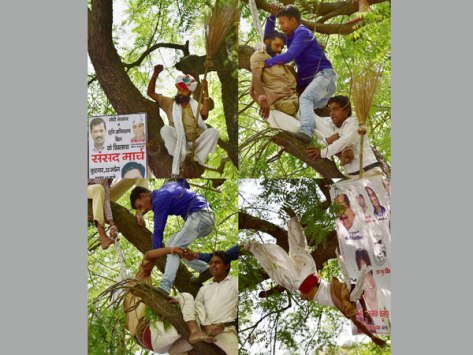
The tragic death of a farmer from Rajasthan occurs at a rally organized by the Aam Aadmi Party on 22 April 2015. The farmer, Gajendra Singh, hangs himself from a tree in full public view of the demonstrators, the media, the police. The electronic media had till then been barely covering the event, generally holding forth instead, in studio ‘debates’ among the opponents of AAP. Once this happened, the media spin doctors swung into action, and as Rajdeep Sardesai tweeted later, they seemed to work on an already decided script. Sardesai’s tweet said that there were clear instructions from the BJP to the media to focus only on the hung/ dying (or dead) man, and forget the rally. It seems, on a closer look, that the the second part of the instructions had perhaps already been given in advance – not to cover the rally and if at all, to attack it in sponsored studio debates. And of course, the BJP, which is the architect of the new Land Acquisition Ordinance, is an interested party in this game.
It is not entirely irrelevant to the overall politics of the media-BJP spin doctoring of ‘reports’ that the AAP government in Delhi was perhaps the first in the country to announce what is without doubt the highest compensation to farmers suffering crop losses – Rs 50, 000/- per hectare for all farmers who have suffered damage. Nor is it entirely irrelevant that the Delhi government had lent full support to the anti-land acquisition struggles and Kejriwal had himself joined in the rally held by Anna Hazare and had now taken up the land issue in all seriousness.
Thus it happens that between the BJP and the big media propaganda machine, which has on at least two previous occasions completely blacked out AAP, the stage was set. Also at work in the media-AAP relationship over a longer term now, is the role of Mukesh Ambani’s media empire, given that on a range of issues AAP has directly challenged the latter. As an aside, let me add that a very senior journalist told a friend at the height of the Delhi election campaign, that in CNN-IBN/ IBN7, clear instructions had been issued to the staff not to give more than 20 seconds exposure to Arvind Kejriwal under any circumstances. If AAP swept the Delhi elections despite that, it must say something about the limits of the media game, at least as far as the majority of the population is concerned.
Gajendra Singh being brought down. Image courtesy Oneindia.com
This time round, there was another constituency that was waiting to move into action – the Delhi elite, especially the radical elite whose hatred of Kejriwal is simply visceral, but which had been just about tempered by the presence in his team of People Like Themselves, darlings of the media. The latter had, to use an old Maoist expression, ‘wormed its way into the party’ and was intent on fighting an ‘ethical battle for inner party democracy’ against the ‘fascist Kejriwal’, a battle in which they were fully backed by the Ambani dominated media.
[Note:Recent events in South Africa – from raging student movements across university campuses to xenophobic violence in the streets of Durban – seem to echo so many struggles both inside and outside the university “here.” This is the second post from South Africa that seeks to listen and travel across. The first, by Richard Pithouse, is here.]
Guest post by DILIP MENON
Susa lo-mtunzi gawena. Hayikona shukumisa lo saka Move your shadow. Don’t rattle the bag
JD Bold, Fanagalo Phrase Book, Grammar and Dictionary, the Lingua Franca of Southern Africa, 10th Edition, 1977
In the bad old days in South Africa, whites spoke English or Afrikaans, the languages of command. When they did engage with those that did not speak English, there was Fanagalo, a pidgin based on Zulu peppered with English and some Afrikaans. Fanagalo was developed in the mines and allowed directives, if not conversation. The struggle against apartheid produced its freedoms, its heroes and heroines and new dreams of equality. As Richard Pithouse in his article shows, twenty years down the line the sheen has worn. Unemployment, xenophobia, violence, crime and a seemingly entrenched inequality dog our dreams. We live with the constant premonition of becoming an ordinary country, a nation like any other. Continue reading Rattling the bag – Language Knowledge and the transformation of the university in South Africa and India: Dilip Menon→
Guest post by JAMMU AND KASHMIR COALITION OF CIVIL SOCIETY
Jammu and Kashmir Coalition of Civil Society recently released a report called ‘Occupational Hazard: The Jammu Kashmir Floods of September 2014. The full report is available at jkcss.net. The following is a short executive summary.
The Jammu and Kashmir floods of September 2014, occurred in the most densely militarized occupied territory in the world, located in one of its most ecologically fragile– the Western Himalayan region—called the ‘third pole’ for its enormous glacial reserves of fresh water. Warfare, armed conflict and prolonged occupations are widely considered among the most environmentally destructive activities known to mankind. Yet the role of the massive military deployment, and the militarised governance structures of Jammu and Kashmir has not received much attention in this analysis. The military occupation of J and K has included the expropriation, and weaponization of huge areas of land, the building of large scale permanent military installations, and the creation of militarised infrastructure in the ecologically fragile Himalayas, which have contributed directly to the region’s disaster vulnerability. The occupation of civic amenities, public buildings and community spaces has also had a direct impact on emergency preparedness, evacuation and humanitarian response. Using official documents, news reportage, case studies, and oral narratives, the report explores the causes and impacts of the flooding, and local community responses, in terms of survival, rescues and relief. It also presents an analysis of the dominant media framing of the disaster, and the local resistance to media narratives of the militarised humanitarianism of the Indian occupying forces. This report thus raises questions of accountability, governance, media representation, political participation and democracy in the backdrop of a militarised occupation, at the disputed borders of a security state.Continue reading Occupational Hazard- Militarisation and Disaster Vulnerability in Jammu and Kashmir: J&K Coalition of Civil Society→
Sarcasm in the moment of death? For this you need to be evil. For, the first human reaction to death is silence. Even in the case of a normal death. It suddenly reminds us of our own mortality. Impermanence of our existence. When death is not normal, when it is an accident, a suicide or a murder, it shocks us. Or, it should. A life cut short unnaturally creates a void in us. A sense of unfulfillment. And our gaze turns inwards. We tend to become reflective. Words do not come easily to you. On most of the occasions they sound false, even obscene. Therefore, we console the grieving not though words but by touching them. It is not easy to make sense of death, in whichever form it strikes us. Continue reading An inability to grieve→
The move by the central government to freeze Greenpeace India’s bank accounts and block sources of funds, is a blatant violation of the constitutional rights to freedom of expression and association. It also seems to be an attempt to warn civil society that dissent regarding development policies and priorities will not be tolerated, even when these are proving to be ecologically unsustainable and socially unjust. These are dangerous signs for the future of democracy in India.
Specific allegations of legal violation contained in the Ministry of Home Affairs’ notice are aspects Greenpeace India needs to respond to. However, the notice also charges the organization with adversely affecting “public interest” and the “economic interest of the State”. These charges give the impression that Greenpeace India is indulging in anti-national activities, using foreign funds. However, dissenting from the government’s development policies, helping communities who are going to be displaced by these policies to mobilise themselves, and generating public opinion for the protection of the environment can by no stretch of imagination be considered anti-national, or against public interest. Quite the contrary, any reasonable policy of sustainable development (which the government claims to adhere to) will itself put into question quite a few of the mining, power, and other projects currently being promoted. ”
Civil society organisations in India have a long and credible history of standing up for social justice, ecological sustainability, and the rights of the poor. When certain government policies threaten these causes, civil society has a justified ground to resist, and help affected communities fight for their rights. This is in fact part of the fundamental duties enjoined upon citizens by the Constitution of India.
When I think about the state of free speech in the land of my birth, my memories take me back to 1970-71 when I was a higher secondary student in Dhaka, a time of upheaval when East Pakistan was making its way towards independent Bangladesh. Officially we were still under martial law, Ayub’s decade-long dictatorship deposed in favor of Yahya’s rule that came with the promise of elections. Political parties could organize, detainees were set free, the press could publish with fewer restrictions, and people began to launch new magazines and newspapers.
Every stripe of opinion found expression in print. Pushing aside the go-slow conservatism of existing newspapers, new ones emerged. Bengali nationalism, socialism, communism of various hues – all found expression in print. The main Islamist party’s paper acquired a modern press. Books were not that widespread, but you could easily get your hands on Russell and English socialists, and Marx, Engels, Lenin, or Mao. I remember engaging in a mix of agnostic, atheist, socialist, and liberal discussions.
There is something in that sort of ‘spring’ that beckons the young to amplify their voice. Two friends and I wanted to publish a magazine. We came up with a name – The Rebel – and of course, a logo. We split the writing among us. I can’t remember much other than we were inclined towards independence for East Bengal. Our perspective was no doubt seditious but we couched our language with a bit of caution. Did we even know that British-era laws required that publications be registered? In that climate, we felt the state wasn’t looking all that carefully.
बाईस अप्रैल,2015 का दिन भारतीय संसदीय जनतांत्रिक राजनीति की पराजय के एक दिन के रूप में याद रखा जाएगा. और इसकी वजह यह है कि एक किसान उस वक्त ‘खुदकुशी’ कर लेता है जब उसी के सवाल पर एक जनतांत्रिक प्रतिरोध सभा हो रही होती है.वह उस सभा से ताकत नहीं महसूस करता, वहां इकट्ठा समुदाय को अपनी बिरादरी नहीं मान पाता, खुद को इस भीड़ के बीच इतना अकेला पाता है कि मंच से किसानों के हक में दिए जा रहे भाषणों और नारों से उसे यह आश्वासन नहीं मिलता कि उनमें उसकी आवाज़ शामिल है.अपनी आवाज़ उसे अकेले ही उठानी है. और अदाकारी पर टिके इस जनतंत्र में वह तभी सुनी जा सकती है जब खुद नाटक बन जाए.
गजेन्द्र सिंह ने यही किया.भारतीय किसान के अकेलेपन को और कैसे जाहिर किया जा सकता था? इसे लेकर हम निश्चित नहीं कि यह खुदकुशी ही थी. कतई मुमकिन है कि यह दुर्घटना हो.कि गजेन्द्र सिंह का पाँव फिसल गया और उसके गले पर फन्दा कस गया. कि उसने जंतर मंतर पर एक पीपली लाइव का प्रभाव लाने की कोशिश की जिसका त्रासद अंत हुआ. Continue reading जनतंत्र में जन का अकेलापन→
The recent hologram protest projected on the street before Spain’s Parliament is an innovative attempt to subvert the country’s ‘citizen security’ provisions that criminalises public protest.
The video of the hologram protest is riveting and surreal, as ghostly figures of women and men march shouting slogans amidst night-time traffic. The figures are clearly distinguishable, the faces discernible. This isn’t computer-aided animation. It’s the real thing.
Or as close to real as a virtual thing can be.
The website ‘hologramasporlalibertad’ (Holograms for Freedom) provides for the subscriber to record her own message and, with a click, a hologram is created. An online petition explains that the ‘citizen security laws’, which obtained final assent in Spain in March, will ‘repress the freedom of peaceful assembly’.
Indifference is primarily born out of the failure and the fatigue of empathy. Empathy requires both a leap of imagination—to imaginehow the other feels—and solidarities of feeling—to feel the sufferingand humiliation of the other as though they were one’s own. In otherwords, empathy has both a cognitive and affective element: it engagesboth the mind and the heart. Empathy tends to flow more naturallywhen the suffering person is someone I can relate to and understand,someone whom I feel is similar to me in some essential, relatable way,because I can then better imagine what the other person is feeling.
Empathy breaks down when I can persuade myself that the ‘other’ is, in some ways, not like me, not fully human in the way Iand the people of my family, my community, my caste, my gender,my race and, indeed, my sexual preferences are. I can do so when Irefuse to see or acknowledge that people who are of a differentgender, caste, class, religion, sexuality or culture from me are essentiallyhuman in the same way as I am, when I am in the sway of normativeframeworks and politics which cultivate difference and fosterindifference. Continue reading Building Solidarities: Harsh Mander→
One rainy Mumbai day, sitting in an Udipi restaurant, chai cup in hand, I told a dear friend I would soon leave for Australia.
“I’ll never leave India and be a second class citizen in another country”, my friend said. My chai turned colder and a crinkly skin formed on its surface.
Seventeen years later, I realise that in perceiving a hierarchy of citizens in Australia, my friend was right, but in a manner that he did not intend…
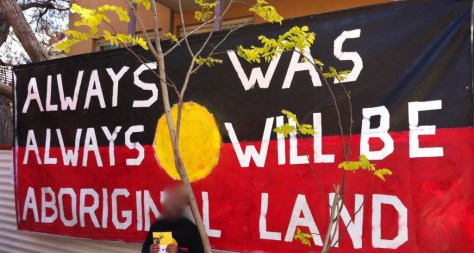
…[T]here were certain fundamental truths that I did not grasp before I got here: Indigenous people i.e. Aboriginal people and Torres Strait Islanders, are the First Peoples of this land and the waters that surround it; they formed the First Nations of this continent; this always was and always will be Aboriginal land.
We are not the perpetrators, the ones who wielded the guns in the forgotten wars between invading white settlers and Indigenous Peoples. We are not the victims. However, as mainly economic migrants from South Asia (I acknowledge the many South Asian refugees from the conflict zones of Afghanistan and Sri Lanka), we are not absolved of complicity.
We are beneficiaries of the genocide of Aboriginal people, the dispossession of their land, the loss of their homes, their families, their cultural values, their tongues, their songs. It is such soil that we step on when we first step into Australia, soaked not just with the promise of a ‘first world lifestyle’, but squelchy with the memory of massacre.
Media Studies Group demands that TRAI place Consultation document in Indian languages and extend deadline for feedback on Net Neutrality.
New Delhi: April 20, 2015: Media Studies Group, a Delhi based think tank on communication studies, held a marathon meeting on Sunday on internet neutrality in the light of TRAI’s consultation paper on over-the-top (OTT) services. The meeting discussed various technical, legal and social aspects emerging out of Airtel’s Plan Zero and the internet.org venture of Facebook.
There was complete unanimity that the issue of net neutrality is complex in nature and that the masses need to be educated in simple and non-technical language so that a fair opinion can be generated on the functioning of the internet as the present move, if successful, will pose a serious challenge to the principle of equality and democratic character of the internet.
The meeting took a critical view of Telecom Regulatory Authority of India (TRAI) for its failure to present the consultation document in Indian languages. To have chosen to make the document available only in English is a move which has the potential of altering the fair access to internet by large numbers of users of Hindi and other regional languages. Media Studies Group also felt that the deadline of April 24 is unreasonable and should be extended.
It has been decided that a representation will be given to TRAI to demand presentation of the consultation document in Indian languages in easy to understand language and to set a new reasonable deadline for feedback . Media Studies Group has also decided to give a detailed representation to TRAI on the issue of Net Neutrality with a holistic view seeking protection of fundamental principles and rights enshrined in the Constitution of India.
Our panel was a queer one in all the wonderful senses of that word. At trainings with lower court judges on sexual violence laws in the Saket District Courts in Delhi, the five of us would find ourselves next to each other every few months. On a dais surrounded by that distinctly sarkari flower arrangement, first sat Suzette, a survivor of a brutal rape in a moving car in Park Street in Kolkata. Then in line: a survivor of an acid attack; a representative of a sex workers union; a well known hijra activist and I, speaking as a gay man. We were usually on the third day, right after lunch, when we would face nearly a hundred slightly sleepy judges from the region. They had been updated on new sexual violence laws, gone through a case exercise on how to apply them, been given a CD, a folder, the requisite handouts. The boxes were ticked. Technically, they were up to date. Ours was a different job: to animate, if such a thing is possible, a sense of empathy in the judges, to shift even slightly the way they thought of the rainbow of dubious morality that we represented.
[Note: Recent events in South Africa – from raging student movements across university campuses to xenophobic violence in the streets of Durban – seem to echo so many struggles both inside and outside the university “here.” This is the first of hopefully several posts from South Africa, that seek to listen and travel across.]
Guest Post by RICHARD PITHOUSE
South Africa was supposed to be different. We attained our freedom, such as these things are, after everyone else but Palestine. It was late in the day but the afternoon sun was glorious and the best people, people who had passed through the long passage of struggle, told us that we would be able to avoid the mistakes made everywhere else.
There was a mass movement that, whatever its limits, had won tremendous popular support and carried some noble ideals through its travails. Its leaders cast long shadows. Our Constitution, we were always told, was as good as they get. Liberalism, apparently vindicated by history, had its evident limits but there was, it was said, lots of room for deft manoeuvre within those constraints. We were assured that there was room for everyone at what Aimé Césaire had called the ‘rendezvous of victory’.
For a long time the presence of all kinds of features of the past in the present was widely understood as something that would be resolved in time. Land would be redistributed, schools would flourish, houses would be built, there would be jobs – the kind of jobs that reward hard work – and universities would emerge, bright and bold, from their cocoons spun by settler culture. Time, it was generally believed, was on the side of justice and the eventual redemption of the suffering, striving and struggles of the past.

 Guest post by CENAN PIRANI


 KAFILA - COLLECTIVE EXPLORATIONS SINCE 2006