All posts by Aarti Sethi

I am an M.Phil student at the School of Arts and Aesthetics, JNU, New Delhi. This blog is meant to be a space for conversation with friends on my ongoing work on cinema and the city. And since all of you know me there not much else to say ;)

A Short Memoir On the Arabisation of Islam in India: Shireen Azam

This is a guest post by SHIREEN AZAM

A Pakistani writer Mina Malik Hasan recently wrote about the Arabisation of Islam in Pakistan, (The Sheepification of Bakistan), a movement of sorts which is transforming Islam in the Indian subcontinent by the day, even though it is remarkably dispersed and often subtle. The Arabisation of Islam seeks to “correct” Islam as Muslims in the subcontinent have understood, practiced and lived it, and instead replace it with an Islam which is uniform, seemingly universal and which need not have any affiliation with our cultural and local identities and beliefs. Having been a participant observer of this change in India, I wish to supplement Mallik’s experience in Pakistan with my own, in the form of a short memoir of the nearing extinction of the urdu phrase “Khuda Hafiz”, a customary way to bid goodbye, with the phrase “Allah Hafiz”. While both the phrases literally mean ‘May god keep you safe’, the reason for the shift was likely because of a lack of clarity in the particular god being invoked term by the term ‘Khuda’, since Khuda has Persian roots. If anything, “Khuda” speaks of Muslims’ age-old assimilation in the Indian subcontinent, something that ‘Arabisation’ of Islam would conveniently want to ignore, and is sadly becoming successful in. Continue reading A Short Memoir On the Arabisation of Islam in India: Shireen Azam

Strength Of A Woman? Surabhi Shukla and Anubha Singh

Guest post by SURABHI SHUKLA and ANUBHA SINGH

The Sports Authority of India recently excluded Dutee Chand from the Commonwealth Games on the basis that her androgen level exceeds the ‘normal’ range thus enhancing her performance and giving her a competitive advantage over other women athletes. This test seeks to eliminate any ‘unfair’ advantage which some women may draw from tested ‘elevated’ androgen levels and is invoked only when women perform excellently in non-traditional competitive sporting arena. Failing to accommodate the role of environmental factors and variations in ‘female’ bodies, such tests are deep rooted in the ideas of gender stereotyping and discrimination and question women’s abilities to perform beyond traditional gender defined roles. Understanding international standards and the constitutional guarantee of fundamental rights in tandem, the unconstitutionality of these tests and the various rights violations visited upon the athlete Dutee Chand begin to surface. Instead of focusing on this incident as a conspiracy or a political scheme, it is time that the matter is seen as violation of rights of Dutee Chand both on the grounds of the test failing to meet international standards and on its patent unconstitutionality.


“I am completely shattered over the development. I am an athlete and wanted to bring glory to my country. All my efforts have gone astray,”

Dutee Chand as reported to the Daily Excelisor, 19th July, 2014 Continue reading Strength Of A Woman? Surabhi Shukla and Anubha Singh

When David Became Goliath: Lee-Alison Sibley

Guest post by LEE-ALISON SIBLEY

Back in the 1960s when Hollywood was making a number of movies based on biblical stories, they came out with Orson Welles as King Saul in “David and Goliath.” I was a little kid when I saw this movie, but I remember identifying with little David who yes, played beautifully on his harp, and used his slingshot with divine accuracy. I also remember the monster Goliath – he was huge and ugly and represented the Philistines, our enemies.  I cheered in my head and my heart for David to defeat the monster and he did, so that I could feel the good guys won and God was indeed on our side, the side of the Israelites.

Like any idealistic Jew, though not religious, I went to Israel to work on a kibbutz in the summer of 1971.  I was in the south, near Eilat and the border with Jordan.  Young and naïve, I was friendly with everyone I met — the Sabras of Israel, the Christians in Bethlehem, and Arabs in Gaza. In Gaza?  Yes, I was there with a British fellow from the kibbutz who was picking up some cane furniture he had ordered.  I wasn’t supposed to be there, of course, and when an Israeli army jeep spotted me, my friend was in big trouble.  “Get her out of here immediately!” was the order he shouted.  I guess it had something to do with my appearance and that there were no other women on the street at that time.  Like I said, I was friendly with everyone – my parents did not raise me to hate, they raised me to love.  The Israelis tried to make me feel guilty for not staying in Israel, but I kept saying, “I’m an American, my home is the U.S.A.”  Still, I certainly supported Israel and every person I met there had lost someone, a family member or a friend in a war and I felt very sad for them and angry that they lived with the constant threat of attack. Continue reading When David Became Goliath: Lee-Alison Sibley

Who is guiding Modi’s economic thinking and what is their background?: Aditya Velivelli

Guest post by ADITYA VELIVELLI

The Modi government’s actions over WTO are a case of much ado about nothing. They have pointedly created a false perception over a non-issue so as to appear pro-poor. Modi said “Do we choose feeding our poor or getting good press world-wide?” Turn this statement around and one gets to see the truth of the matter. The real attempt here is “How to masquerade as pro-poor and get good press in India by using WTO?”

This demonstration of concern for the poor helps Modi’s government in implementing ultra-neoliberal economic policies in the coming months. To understand the game-plan one should only look at the people guiding Modi’s economic thinking. Continue reading Who is guiding Modi’s economic thinking and what is their background?: Aditya Velivelli

Last Night in Gaza: Mads Gilbert

This correspondence has been received from Mads Gilbert

Dearest friends

The last night was extreme. The “ground invasion” of Gaza resulted in scores and carloads with maimed, torn apart, bleeding, shivering, dying – all sorts of injured Palestinians, all ages, all civilians, all innocent.

The heroes in the ambulances and in all of Gaza’s hospitals are working 12-24hrs shifts, grey from fatigue and inhuman workloads (without payment all in Shifa for the last 4 months), they care, triage, try to understand the incomprehensible chaos of bodies, sizes, limbs, walking, not walking, breathing, not breathing, bleeding, not bleeding humans. HUMANS! Now, once more treated like animals by “the most moral army in the world” (sic!).

My respect for the wounded is endless, in their contained determination in the midst of pain, agony and shock; my admiration for the staff and volunteers is endless, my closeness to the Palestinian “sumud” gives me strength, although in glimpses I just want to scream, hold someone tight, cry, smell the skin and hair of the warm child, covered in blood, protect ourselves in an endless embrace – but we cannot afford that, nor can they. Continue reading Last Night in Gaza: Mads Gilbert

The End of The Light

This correspondence has been received from Haitham Saqqa  

I have stopped feeling whether it is day or night. Time has no meaning. I have stolen moments to sleep in order to relax my psychologically and physically body which is overwhelmed with the abundance of news. But I wake up soon because there is an airstrike.

We have neglected the house because we are all huddled in one room. And I see every moment the fear in the eyes of my sisters especially Dema the youngest. She does not leave the bosom of my mother, and I can’t talk to her about the end of this onslaught of dirt which we all hope for because at this moment the F16 attacks and I will be a liar. I’ve lost my dear friend and his brothers who were at his cafeteria on the beach. An F16 assassinated them. We used to go for football training together. They are still looking for my friends body.

I am unable to think of what is good. Everything in my mind is about the end. I cannot think about the future at this moment. All that I can think about it how to exploit the moments that I presently live in. I can’t look towards the future and nothing is clear or guaranteed. My dream is focused on what I can do in the moment, because I simply can’t dream the weekend or even the end of this day.   I wait only the end…

[Haitham Saqqa works with Medical Aid for Palestine. He lives in Khan Younis, in the Gaza Strip].  

#youhadonejob: Or, A Quick Legal Primer for Publishers. Or, What (Not) to Do When Dinanath (and other busybodies) Strike

This post is co-authored by Aarti Sethi and Shuddhabrata Sengupta

Dinanath Batra is at it again. Not content with having bullied Penguin and Aleph into withdrawing Wendy Doniger’s “The Hindus: An Alternative History”, and “On Hinduism”, respectively, he has now trained his guns on Orient Blackswan. And, in what seems to be emerging as a frighteningly predictable pattern, Orient Blackswan has succumbed to Dinanath Batra’s “legal suits”, not just by agreeing to consider the withdrawal of  a book that had attracted Batra’s attention, but also by withdrawing another book, on sexual violence during communal riots in Gujarat, as a ‘preventive measure’ regardless of the fact that it had not even been targeted by Batra and his organization. Clearly these are interesting times for publishing in India.

There is no need to rehash arguments on the importance of free speech and the circulation of books and words and texts. These have been extensively discussed here on Kafila, and everywhere else. At this stage it might be useful to simply clarify some pressing “legal” matters as there seems to be a bewildering confusion rife amongst publishers as to what exactly a legal notice is. Thus, to begin:

What a Legal Notice Is:

A Legal Notice is a grouse sent by registered post and has the same legal standing. Namely, none whatsoever. Any crank with half an hour, a typewriter and money for postage can send a legal notice to anyone about anything. You do not even have to get a lawyer to draft it. You just need a few minutes on the internet where pre-drafted forms are available for free. Or, just for fun, try drafting one yourself. Since it has no legal validity anyway, be creative! Continue reading #youhadonejob: Or, A Quick Legal Primer for Publishers. Or, What (Not) to Do When Dinanath (and other busybodies) Strike

How The AAP Won Punjab: Harjeshwar Pal Singh

 This is a guest post by HARJESHWAR PAL SINGH

Amidst the unprecedented Tsunami of Modi which swept away opposition in most of the country, one result stood out as truly exceptional. AAM AADMI PARTY’s (AAP) stunning debut in Punjab. The virtually unheard of party in Punjab even 5 months before won 4 Parliamentary seats out of 13 and secured 25% of the popular vote announcing itself to be an equal of the ruling SAD/BJP combine and the opposition Congress. Two of its candidates Bhagwant Maan (Sangrur) and Prof Sadhu Singh (Faidkot ) won with a stunning margin of over 2 lakhs and 1.7 lakhs respectively. This popular groundswell of support which was ignored by most political analysts, conventional media and political parties had begun to take visible form through buzz on the street, social media and in common discourse by the election day.

What explains this massive upsurge by a fledgling political outfit lacking money, muscle, men and a local organization to humble two of the most well equipped political machines -SAD/BJP and Congress? Continue reading How The AAP Won Punjab: Harjeshwar Pal Singh

Save the AP State Archives: Coalition of Concerned Citizens and Academics

This petition is being circulated by a coalition of concerned citizens, local and international academics and scholars

The historical collections at two major archives in Hyderabad, the Andhra Pradesh Government Oriental Manuscripts Library (APGOML) and the Andhra Pradesh State Archives and Research Institute (APSARI), are under threat in the bifurcation of Telangana and residuary Andhra Pradesh. The institutions’ collections are slated for division between the two new states. These collections have long suffered from neglect, and now face the likelihood of irreparable damage from arbitrary division, handling, and transfer.

Local and international scholars and activists have organized a petition to preserve these historical documents. Our primary concern is for the integrity of the collections and we seek to avoid entanglement in the Telangana/Andhra debates. The petition is aimed, in part, at demonstrating that there is a concerned audience of international scholars and interested parties who care about and use these collections. This wider expression of concern will help support the efforts of local citizens who plan to submit the petition to the Governor before the end of the month.

Please take a moment to add your voice:

http://www.ipetitions.com/petition/protect-the-andhra-pradesh-state-archives-and Continue reading Save the AP State Archives: Coalition of Concerned Citizens and Academics

India’s 16th Lok Sabha General Elections and Persons with Disabilities: Avinash Shahi

This is a guest post by Avinash Shahi

When the challenges and daily difficulties of approximately 70 million persons with disabilities in public life are not highlighted in political rallies and in the TV studios, it raises a serious question about an elite political class’s commitment to empower persons with disabilities. Do they consider persons with disabilities as India’s citizens to be taken seriously? Politicians of major political parties are crisscrossing India’s vast geographical terrain to address voters. But neither Narender Modi nor Rahul Gandhi have ever bothered to utter a single word about their plan for voters who are persons with disabilities in their campaigns. Continue reading India’s 16th Lok Sabha General Elections and Persons with Disabilities: Avinash Shahi

A Wave is a Dangerous Thing: R. Umamaheshwari

This is a guest post by R. Umamaheshwari

A wave, as in, something that engulfs, leaving you to suffocate and die, is a dangerous thing. It smothers to the point of numbness, listlessness, leaving the subject of that smothering out of synch with even a basic natural harmony of simple breathing. So, if at all, as the mainstream TV media brands are shouting at us to believe (all brands are included in this, with little difference in terms of projection of images or blaring of sounds couched in very urbane elite language of ‘dialogue’ that essentially means shouting down or politely stating the bias towards that so-called ‘wave’) that the idea of Modi is a ‘wave’, and if it indeed is a ‘wave’, then it is indeed dangerous. If the current spate of interviews with Modi are analysed, what I see is a man with the craftiness of a character playing with and teasing and flirting with the media, and making them hear just two words (to the exclusion of all else) – “good governance” and “development” (not necessarily value-less, non-problematic, opaque terms by themselves). He sits there pontificating to the journalists interviewing him about these two terms as if they existed in a vacuum; he is perpetually in a teaching mode to the journalist in question who is either listening in awe or seems to beam in a strange elite, urbane, civility and sometimes veneration and respectability even as he or she asks him questions on the Muslim massacres of Gujarat, almost empathising with him even as he plays ‘victim’ with such panache. This Modi cannot be a cruel perpetrator of crimes against humanity, it seems, from the image constructed through advertising and clever make-up and PR (obviously by industry that truly wants him to win for a never-before free-market loot that is expected from him as a token of appreciation post-elections, if at all he wins, which at the moment, is a mere idea, or a prediction based on the construct of the ‘wave’). Continue reading A Wave is a Dangerous Thing: R. Umamaheshwari

Adivasi-yagna, The Great Sacrifice – Tribal Communities for ‘Greater’ Hyderabad? R Uma Maheshwari

This is a guest post by R UMA MAHESHWARI

The Andhra Pradesh ministers are fighting like the hooligans they show in Telugu films (one is reminded, in particular, of an old Telugu film aptly named Assembly Rowdy). The fight is all over, and about, investments in Hyderabad and elsewhere. As it is about money. The Parliament fight is with pepper sprays and knives. Back there, on the ground, in tribal villages in AP (yet to be declared as either Seemandhra or Telangana), absolutely unarmed Koyas, Kondareddis, and a few other tribal communities are opposing the construction of the Polavaram dam. And have been marking their protests with dharnas, rasta rooks and burning of effigies of leaders of all political parties. The former have some plum real estate and business interests to protect; the latter have their everything to fight for – homes, land and histories. Not for a while, in the entire debate and fighting over the state of either unification or creation of Telangana have any of these picketers in the Parliament have sought the opinions of the tribal people whose land is today a battleground for investment. One has no qualms of using the peculiar Sanskritic terminology, in the Vedic sense of sacrificial rituals, conducted by the wealthy and upper castes for their benefits, in the name of the ‘common good’. A Former Chief Minister of the state of Andhra Pradesh, YSR, too, used the same Sanskritic term (in spite of his being a Christian) for the irrigation projects (or contractor businesses) he initiated (86 nos.) under jalayagam.  Today the sacrificial ritual continues, and it is a human sacrifice, of more than three hundred thousand tribal people (as it is the sacrifice of animals and birds and every visible or invisible organism), in return for the illusory real-estate-driven world called ‘Greater’ Hyderabad; what if it is going to be a “joint capital for ten years” (and who has seen what the world will look like after ten years, any way? Or what shape it will assume? But these are matters of philosophy and metaphysics, I guess, talking of who knows where we will be, what will be…). Continue reading Adivasi-yagna, The Great Sacrifice – Tribal Communities for ‘Greater’ Hyderabad? R Uma Maheshwari

The Tangled “Tonalities” of Mr. Tejpal

By now the details are well known: a young journalist describes a harrowing encounter with Tarun Tejpal, owner and editor of Tehelka, in an elevator during Tehelka’s Think fest in Goa. The description of the incident alleges gross sexual misconduct and bodily violation of an aggravated nature.  Her description does not make for easy reading: it clearly demonstrates the incredibly vulnerable position in which young women are placed when confronted with the sexual misdemeanors of powerful men in positions of managerial authority. Indeed Mr. Tejpal says as much, that to cooperate with him is the best way for her to keep her job. She writes to Ms. Shoma Chaudhury the managing editor describing the incident and asks that she be tendered an official apology, and that Tehelka’s senior management constitute an enquiry and anti-sexual harassment committee as per the Vishaka guidelines. Instead what she is offered is a pathos-laden tale of fall and redemption: directed by and starring Mr. Tejpal, producer Ms. Shoma Chaudhury. There has been near continuous discussion across the web and the news and it can get difficult to keep track of all the various versions being produced on an hourly basis by Tehelka’s bullshit factories. So at this stage it might be useful to simply collate and compare various accounts. Continue reading The Tangled “Tonalities” of Mr. Tejpal

A Burden of Proof: A Response to “White Woman’s Burden” by Ameya Naik

This is a guest post by AMEYA NAIK

[On the 26th of August 2013, Newslaundry carried a piece by Rajyasree Sen titled “White Woman’s Burden“. This post is offered as a rebuttal of the views expressed in the essay.]

Dear Rajyasree,

Michaela Cross, aka RoseChasm’s CNN blog piece about her experience of India is, as you say, currently unavoidable on the internet. It does seem to be provoking a dialogue on women and safety in India – at least in social media circles. If the result is that Indian girls and women acknowledge and share their own negative experiences, perhaps thereby to make some Indian men re-examine their perceptions and behaviour, it would still be a step forward.

Unfortunately, some responses represent two steps backwards instead. Your writing (“White Woman’s Burden”, 26 Aug, 2013) is one such; it made me profoundly uncomfortable. The gist of your argument appears to be this: Michaela was not suitably prepared, and she *SHOULD* have known better. Indeed, given her account of her actions and experiences, and the trauma she has experienced therein, it is surprising (to you) how unprepared she was.

Did I just read a young, educated Indian woman entrepreneur – from the hospitality industry, no less – say that an exchange student left traumatised after experiencing molestation (and worse) because she was unprepared? I describe myself as a cynic, but surely this is a new low!

What, pray tell, would suggest she was sufficiently prepared? That she came here, had the experiences she did, and considered them “par for the course” in India? Or that she came here aware of (what you call) the skewed psycho-sexual dynamic between Indian men and women in all its rich and diverse forms, behaved in the most conservative and appropriate fashion – only dancing in “safe places”, avoiding public transport entirely, staying only with trusted hosts or in one of Goa’s five star hotels – and left having experienced only milder forms of violation, like the persistent gaze (which she would know to expect)?

This assertion of yours does have one unexpected benefit – it lets us ignore the fair skin debate. If complexion plays no role, she should still be at least as careful as any Indian woman. If complexion does play a role, she should be even more careful! As silver linings go, though, this is pewter on a thundercloud.

How, pray tell, would the students or the University prepare for their visit to the land of the skewed psycho-sexual dynamic? With little docu-dramas of all the kinds of harassment you can expect, and how to be safe at all times? Would you not seed the most pernicious mistrust in your potential visitors? In fact, why would any of them come at all? Surely the University would simply cancel the trip!

And, while you seem to suggest that this is precisely what the “easily traumatised” should do, we would be the first to protest. Already we cry ourselves hoarse over travel advisories saying India is unsafe for women. That, apparently, is an insult to our national pride. And that seems to be the source of this article: “how dare this unprepared white girl write about India this way?” Only Indian writers can suggest that India has a skewed psycho-sexual dynamic, right? (An interesting dynamic which, of course, makes some – but not all – lechers or potential rapists. And on current evidence, I shudder to ask you who these corrupted ones are, and why only they succumb to this taint.) Because Indian women are prepared for such behaviour, and they know – even when they face it abroad – that it is only an aberration.

Too many responses, too many comments, seem to be in this vein. Why this parochial-with-my-fingers-crossed-so-as-not-to-offend-gendered-perspectives reply at all? My thesis is that it is because Michaela’s account makes us ask a few uncomfortable questions. Such as, how many aberrations to make a norm? How much preparation is enough?

Answering those questions is not a White Woman’s Burden – the onus to answer to them lies on us. Discrediting the person who asked them as “easily traumatised” – and really, as someone who says she has lived through incidents enough of her own, how dare you! – is a thoroughly inadequate reply.

[Ameya Naik is currently in a graduate programme in Boston. A psychologist and lawyer by qualification, he worked in New Delhi across 2012-13.]

Ilavarasan: At a deadly new junction of caste and electoral politics: Rajan Kurai Krishnan

ilavarasan_divya-350_070513040519This is a guest post by RAJAN KURAI KRISHNAN
The gruesome death/alleged murder of Ilavarasan, a Dalit youth, at the outskirts of Dharmapurai on the afternoon of 4th July has come as a shock to all those who have heard of his case. Murders, ironically called honour killings, and socially abetted suicides as outcomes of inter-caste marriages are of course as common as catching cold in most parts of India. However, what has made Ilavarasan’s case something that could penetrate the armour of the middle class everyday plated with trained nonchalance to extract a possible expletive under their breath is the fact that his case has been in the limelight for more than eight months now.

It was a few weeks after his marriage with Divya, a girl belonging to the caste of Vanniars, a Most Backward Caste in the official description of Tamil Nadu Government,  in October 2012, Divya’s father was found dead allegedly having committed suicide due to the “dishonour” caused by his daughter’s marriage. Making the suicide an excuse, the Vanniyars organized riots in which three Dalit hamlets, about 250 houses, were destroyed. The scale of violent destruction caught the national attention and so did the love story behind the riots. The young couple earned a media profile while trying to live in peace beyond the reach of the raging Vanniyar caste men. It was fated that was not to be. The Vanniar caste leaders used Divya’s mother to temporarily separate Divya from Ilavarasan by using the well known tactics of emotional blackmail. They then broke the communication link between Ilavarasan and Divya. When Ilavarasan saw Divya in the court on the first of July, Divya told the court that she would live with Ilavarasan after convincing her mother. Divya’s lawyer, however, managed to make her tell the press that she is separated from Ilavarasan forever. Ilavarasan, on the other hand, told India Today, that he was highly hopeful of re-uniting with Divya. After two days, he was found dead near a railway track in broad daylight. Given this history, the news had some potential to shock people. Continue reading Ilavarasan: At a deadly new junction of caste and electoral politics: Rajan Kurai Krishnan

Reading Violence in the Garo Hills : Rafiul Alom Rahman

This is a guest post by RAFIUL ALOM RAHMAN

The recent mob fury over the rumour of rape of a mentally challenged Garo girl and the consequent outburst of terror on migrant workers in Tura shouldn’t be read as a simple story of Garo men’s concern for women. If it was so, not so many labourers outside Tura would have been killed in cold blood by Garo miscreants. The claim that tribal society is free from the clutch of sexism, and that it is tribal women who face sexual abuse in the hands of non-tribals does not cut ice anymore. Continue reading Reading Violence in the Garo Hills : Rafiul Alom Rahman

Huge Rally of Narmada Dam Oustees in Bhopal: Jeevan Adhikar Satyagraha and Upwaas begins with Demand for Rehabilitation and Resettlement

This is a press release by the NARMADA BACHAO ANDOLAN

28th June 2013

Rally 2

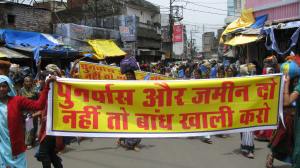
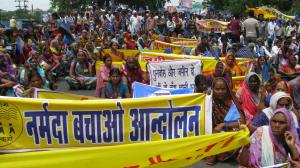
Thousands of oustees affected by the Indira Sagar, Omkareshwar, Maheshwar, Upper Beda and Man dam demonstrated in capital city Bhopal today and began their Satyagrah. Despite continuous rain in the entire Narmada valley, over 8000 men and women displaced persons have reached Bhopal to camp here for the next 5 days. The affected people demand that all the oustees of these dams should be rehabilitated and resettled with land and all other entitlements, and the injustice being wreaked on them for decades be stopped. Shri Alok Agarwal, senior activist of the Narmada Bacahao Andolan along with 4 men and women oustees have started their fast for 5 days in this “Narmada Jeevan Adhikar Satyagraha and Upwaas”.

Gyapan

Continue reading Huge Rally of Narmada Dam Oustees in Bhopal: Jeevan Adhikar Satyagraha and Upwaas begins with Demand for Rehabilitation and Resettlement

Hydro Power Projects and Northeast India: Ecology and Equity at Stake

This is a guest post by RICHARD KAMEI

Recently a two-day North East People’s Convention on water and dams was held at Bethesda Youth Welfare Centre, Dimapur (on 17th May-18th May 2013) which brought together a group of 26 organisations from North East India under the banner of the North East Dialogue Forum. This forum called for a focus into the objectives raised in this two day convention, by writing to leaders of India, China and Bangladesh over the imminent adverse impact of the issue of water, impacts of constructing big dams and mining in various regions of North-East India. The outcome of this two-day North East People’s Convention on water and dams, is the joint appeal known as ‘Dimapur Declaration’.  At the time of this declaration, prime address was made to the Prime Minister of Bangladesh, Sheikh Hasina; the Premier of China, Li Keqiang and Prime Minister of India, Dr Manmohan Singh. The main objectives of Dimapur Declaration are:  to protect the inherent rights of local people over their water, land, forest and other resources based on customary and international laws as guaranteed by the Universal Declaration of Human Rights and UN Declaration on the Rights of the Indigenous People 2007 etc., and their self-determined development of their water bodies in the region. The recommendations of the World Commission on Dams, 2000 have also been given a special mention in terms of its implementation in all decision making processes on dam constructions over Brahmaputra (Tsangpo) River. “The Thatte-Reddy Expert Committee said the present hydropower work on Subansiri contravenes the basic premise of the Brahmaputra Board Act with regard to flood control, irrigation and other benefits. The report agreed that the present planning of the project ignored the flood control aspect. Therefore, the committee agreed that the very purpose of the project and purpose of the Brahmaputra Board Act is defeated and the mandate of the board diluted by this action,” opined Akhil Gogoi, Krishak Mukti Sangram Samiti ( KMSS). Continue reading Hydro Power Projects and Northeast India: Ecology and Equity at Stake

The Greater Common Omelette

This is a guest post by NITYANAND JAYARAMAN

Governments like victims. Distressed people make for thankful recipients of public largesse. Within a week of Uttarakhand’s watery disaster of June 16 and 17, the Tamil Nadu Chief Minister announced a Rs. 5 crore relief in solidarity with the “Government and people of Uttarakhand.”

This generous gesture stands in stark contrast with the way the Chief Minister is dealing with people in her own state who are concerned about their increased vulnerability to natural disasters. Around the time that she handed out her cheque to Uttarakhand, 19 fishermen from Sulerikattukuppam, a hamlet about 40 km south of Chennai, begged their way to bail after spending a month in prison. They were arrested for demanding relocation and rehabilitation; the celebrated 100 million litres per day Nemmeli seawater desalination plant constructed by Chennai Metrowater had triggered severe sea erosion and brought the sea dangerously close to their homes. The highly toxic brine rejects were polluting their seas. Continue reading The Greater Common Omelette

Academic Excellence and St. Stephen’s College: A response by Thane Richard

This is a guest post by THANE RICHARD

I recently read an article in Kafila – more like an angry, reflective rant – written by some students from St. Stephen’s College in Delhi.  To quickly summarize, the piece criticized the draconian views of the Principal of St. Stephen’s College regarding curfews on women’s dormitories and his stymying of his students’ democratic ideals of discussion, protest, and open criticism.  More broadly, though, the article’s writers seemed to be speaking about the larger stagnant institution of Indian higher education, overseen by a class of rigid administrators represented by this sexist and bigoted Principal, as described by the students.  The students’ frustration was palpable in the text and their story felt to me like a perfect example of what happens when an unstoppable force meets an immovable object.  Except Indian students are not an unstoppable force.  Not even close. Continue reading Academic Excellence and St. Stephen’s College: A response by Thane Richard

No Time for Grieving – Or Why We Should Talk Some More About Kai Po Che: Debashree Mukherjee

Guest post by DEBASHREE MUKHERJEE

Okay, so the popular consensus is that Kai Po Che is a good film. Everyone agrees that it’s well shot and edited, the relatively unknown heroes are excellent, and the narrative is taut and emotionally resonant. It is competent and follows all the right cues worthy of a buddy movie about growing up and testing loyalties. But the film is hardly an event. It has been seized upon as a significant cinematic landmark for its depiction of the Gujarat pogrom of 2002. It might be worth our while to get some perspective here.

Today I will look at some other questions about our collective liberal attitude to this film, and what it indicates about our memory of select incidents of mass violence in this country. The main question to ponder is whether there is something dangerous about a historically-contextualized cultural product that can be coopted by a range of political perspectives? Is there something objectionable about a film (and the emotions it generates) which is deliberately toothless in the face of power? Over the last few weeks we have witnessed a range of informed cultural commentators  protest that critics of the film are making much to-do about what is in fact the first “realistic” and engaging Bollywood depiction of the Gujarat massacre. This post rejects that opinion and appeals for responsible film criticism and an alert, active mode of spectatorship.

Continue reading No Time for Grieving – Or Why We Should Talk Some More About Kai Po Che: Debashree Mukherjee