All posts by subhash gatade

‘Police Can’t Arrest Togadia’

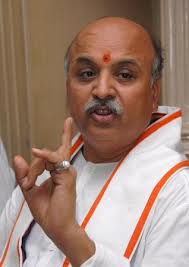
ImageThe police might have registered a case against Vishwa Hindu Parishad leader Praveen Togadia for his provocative speech in Bhokar town on January 22 but it’s nowhere close to arresting him. Mail Today had reported on Thursday that while the police had filed an FIR against Togadia for his speech, they will not arrest him until the state government gives a go ahead.

On Friday, Home Minister R. R. Patil said “It is the prerogative of the concerned investigation officer whether to arrest him or not. As government we don’t interfere in such matters.” Police officials from Nanded said they would be able to arrest Togadia only after the state allows it as it was a “political decision”

(Police can’t arrest Togadia, Mail Today, 9 th Feb 2013)


I.

Mr Praveen Togadia, the international secretary general of VHP (Vishwa Hindu Parishad) is sitting pretty. It has been more than a week that a FIR has been filed against him for his alleged hatespeech in Bhokar town but since then there has been no progress. Continue reading ‘Police Can’t Arrest Togadia’

Who is afraid of Tipu Sultan?

Ravi said the state government is not ready to name the university after Tipu Sultan. If they are going to set up a non-religious university then the name should be non-controversial…. Like British, Tipu is also a foreigner for us and we will not accept his name.

CT Ravi, higher education minister, Karnataka, Jan 25, 2013, 16:38 IST , DNA)

The fast changing political developments in Karnataka has rather overshadowed the manner in which Tipu Sultan- who died fighting the Britishers at Srirangapatna (4 th May 1799) – is being denigrated by people owing allegiance to Sangh Parivar. The latest in series happens to be the higher education minister of Karnataka Mr C T Ravi, who claimed that for them ‘Tipu is also a foreigner’ like the British.

The immediate context of this Tipu bashing is the decision by the central ministry of minority affairs to set up ‘Tipu Sultan University’ at Srirangapatna. Continue reading Who is afraid of Tipu Sultan?

‘भारतीय विचारधारा’: मिथक से यथार्थ की ओर

[An edited version of this review of Perry Anderson’s ‘Indian Ideology‘ (Three Essays Collective, October 2012) appeared in January edition of Samayantar]

the-indian-ideologyअपनी किताब‘ द जर्मन आइडिओलोजी’ (रचनाकाल 1845-46) मार्क्स एवं एंगेल्स इतिहास की अपने भौतिकवादी व्याख्या का निरूपण करते है। किताब की शुरूआत 19 वीं सदी के शुरूआत में जर्मनी के दार्शनिक जगत पर हावी हेगेल की आदर्शवादी परम्परा एवं उसके प्रस्तोताओं की तीखी आलोचना से होती है जिसमें यह दोनों युवा इन्कलाबी चेतना एवं अमूर्त विचारों पर फोकस करनेवाले और सामाजिक यथार्थ के उससे निःसृत होने की उनकी समझदारी पर जोरदार हमला बोलते हैं। इस ऐतिहासिक रचना से नामसादृश्य रखनेवाली पेरी एण्डरसन (थ्री एसेज़, 2012) की किताब ‘द इण्डियन आइडिओलोजी’ का फ़लक भले ही दर्शन नहीं है, मगर अपने वक्त़ के अग्रणी विचारकों द्वारा भारतीय राज्य एवं समाज की विवेचना की आलोचना के मामले में वह उतनी ही निर्मम दिखती है।

आज की तारीख में भारतीय राज्य एक स्थिर राजनीतिक जनतंत्र, एक सद्भावपूर्ण क्षेत्रीय एकता और एक सुसंगत धार्मिक पक्षपातविहीनता के मूल्यों को स्थापित करने का दावा करता है। उपनिवेशवादी गुलामी से लगभग एक ही समय मुक्त तीसरी दुनिया के तमाम अन्य मुल्कों की तुलना में – जहाँ अधिनायकवादी ताकतों ने लोकतांत्रिक प्रक्रियाओं एवं संस्थाओं को मज़बूत नहीं होने नहीं दिया है – विगत साठ साल से अधिक समय से यहां जारी संसदीय जनतंत्र के प्रयोग को लेकर वह आत्ममुग्ध भी दिखता है। इतना ही नहीं अक्सर यह भी देखने में आता है कि भारतीय समाज की विभिन्न गैरबराबरियों, जाति-जेण्डर-नस्ल आदि पर आधारित तमाम सोपानक्रमों के विभिन्न आलोचक भी भारतीय राज्य की  इस आत्मप्रस्तुति/आत्मप्रशंसा से सहमत हुए दिखते हैं। मगर यह बेचैन करने वाला सवाल नहीं पूछा जाता कि भारतीय राज्य के तमाम दावों एवं वास्तविक हकीकत के बीच कितना तारतम्य है ? अगर दावों एवं हकीकत के बीच अन्तराल दिखता है तो उसे हम परिस्थिति की नियति कह सकते हैं या उसकी जड़ें शासकों के आचरण में ढूंढ सकते हैं। Continue reading ‘भारतीय विचारधारा’: मिथक से यथार्थ की ओर

Pawns In, Patrons Still Out!

The Strange Trajectory of Investigations in Cases of Hindutva Terror

Many office bearers of RSS are also under scanner of the investigating agencies for their alleged involvement in the Samjhauta bomb blast. The NIA (National Investigating Agency) has already interrogated one amongst them. Many have been issued notices also…There are many workers of RSS from Malwanchal who are under scanner of the agency…According to informed sources a senior office bearer of the Kendriya Karyakarini (central executive) of RSS would also be questioned….Rakesh Dubey, a Vibhag Karyavah of RSS has confimed that he has received notice and is cooperating with the investigating agency.

..Seven suspected terrorists whose names find mention in the list prepared by NIA. They are Mehul alias Mafat Bhai, Bhavesh Patel, Suresh Nair, Mohan alias Ramesh Gohil, Jayantibhai Gohil aliast Ustad,. Sandeep Dange alias Parmanand, Ramji Kalasangra alias Ramchandra and Ashok alias Amit Hakla. (Bhaskar, 30 Dec 2012)

I

Mass movements or spontaneous outbursts of people on the streets to express their anger and anguish over the state of affairs in the country and outside have their own dynamic. While they are able to highlight/emphasise key concern(s) which inform their emergence, help us look at linkages with other issues and are able to raise many structural aspects which could have never received the attention earlier, it also happens that many other contemporary issues get relegated to the background. Continue reading Pawns In, Patrons Still Out!

Schools of Discrimination

Midday meal schemeThe village of Majure, in Chitradurga district, Karnataka, is once again in the news. It made the national headlines in 1998 when dalits in the village lodged a police complaint against members of the dominant Vokkaliga and Lingayat castes for an attack on their hamlet. As a consequence, several people were put behind bars.
This time round, however, no formal complaint was lodged. Not that things have improved (rather, one could say the situation is deteriorating) but, as the dalits put it, they want to live in “harmony” in the village. For around two months, they’ve been facing a social boycott. The immediate provocation would appear to be the appointment of Lakshmamma, a member of the Madiga community, as cook in the anganwadi. Upper-caste politicians from the village did not want a dalit woman to cook food and feed their children and they succeeded in getting her to resign from the post. Despite a dalit in the Shettar cabinet contacting them, there has been no response. Interestingly, there are three dalit officers — a deputy commissioner, a superintendent of police and a tehsildar — in the district. Continue reading Schools of Discrimination

Run with Gender, Hunt with Class: Prachee Sinha

Guest post by PRACHEE SINHA

The curious Ways of Indian Democracy,from India Gate to the Slum Habitat

It has taken a horrific tragedy and a precious young life to stir the conscience of a nation. Or so one would like to believe! Reality may not still cater to our wishes. Our grand old civilization is also a culture of billion brutalities on its women and countless other victims. One can only hope that it changes for the better, even if a little, after what it has witnessed through the last fifteen days of the last year. Greater probability, however, is for such hopes to be belied yet again. It may take a lot more to lift the weight of an age-old way of life. After all, one would not have expected that rapes and molestations would be reported from across the country, and even from Delhi itself, right in the middle of anger, sorrow and protests that seemed to engulf the country. One would expect that the rapists and the criminals would lie low for a while till the situation returns to normal. Least of all would have one expected that women would be harassed, and one or two would even be molested, during those very protests that were taking place at the India Gate and Jantar Mantar. Continue reading Run with Gender, Hunt with Class: Prachee Sinha

अकोट में साम्‍प्रदायिक हिंसा: एक पूर्व नियोजित साजिश

Guest post by Sharad Jaiswal, Amir Ajani and others

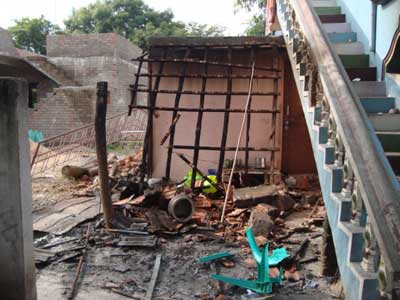
DSC0036223 नवम्‍बर, वर्धा से गये एक जांचदल, जिसमें महात्‍मा गांधी अंतरराष्‍ट्रीय हिंदी विश्‍वविद्यालय के अध्‍यापक, छात्र, वर्धा के सामाजिक कार्यकर्ता और पत्रकार सम्मिलित थे, ने अकोट (जिला अकोला) का दौरा किया। पिछले 23 अक्‍टूबर को अकोट ताल्‍लुका में साम्‍प्रदायिक हिंसा की घटना हुई थी जिसमें 4 लोग मारे गये थे एवं कई लोग घायल हुए थे। मुस्लिम समुदाय के 22 घरों को आग के हवाले कर दिया गया था और लगभग 25 दुकानों को जलाया गया था। मरने वालों में सभी निम्‍नमध्‍यवर्गीय पृष्‍ठभूमि से थे।

साम्‍प्रदायिक हिंसा की पृष्‍ठभूमि :

साम्‍प्रदायिक हिंसा की पृष्‍ठभूमि 19 अक्‍टूबर को तैयार की जाती है। पूरे अकोट ताल्‍लुके में 65 मंडल देवी के लगाये गये थे। प्रत्‍येक मंडल का संबंध किसी न किसी जातीय समाज से रहता है। मसलन माली समाज, कुनबी समाज, धोबी समाज आदि। धोबी और भोई समाज के एक मंडल, जिसके कर्ताधर्ता बजरंग दल, शिवसेना, विश्‍व हिंदू परिषद के लोग थे, के पास से निकलते हुए एक मुस्लिम बच्‍चे ने गलती से वहाँ पर थूक दिया। उसके साथ उसका हमउम्र दोस्‍त भी था। उसका थूक देवी की प्रतिमा को छुआ तक नहीं लेकिन पर्दे पर उसके कुछ छींटे जरूर पड़े। उस बच्‍चे को मंडल के लोगों ने पकड़ लिया और उसकी पिटाई करने के बाद वहीं पर बैठा लिया। इतनी देर में जब कुछ शोर-शराबा हुआ तो लोगों की भीड़ वहाँ पर एकत्र हुई और मामले को समझने के लिए शोएब नाम का व्‍यक्ति भी वहाँ पर पहुँचा और उसने कुछ हस्‍तक्षेप भी किया और मंडल के लोगों को समझाने की भी कोशिश की। उसने बच्‍चे की उम्र का भी हवाला दिया। बच्‍चे की उम्र 7-8 साल की थी। मंडल के लोगों की तरफ से यह भी कहा गया कि आज ये देवी की प्रतिमा पर थूक रहे हैं कल हमारे मुँह पर थूकेंगे। बहरहाल शोएब ने किसी तरह से मामले को शांत कराया और बच्‍चे को मंडल के लोगों से मुक्‍त कराया। इस घटना की चर्चा लगभग आधे घण्‍टे के बाद आस-पास के इलाके में फैल चुकी थी। एजाज नामक टेलर जिसकी घटना स्‍थल से कुछ दूर पर ही दुकान थी मंडल के लोगों के पास आया और उसने जानना चाहा कि मामला क्‍या है और उसके बाद वह भी लौटकर अपनी दुकान पर वापस आ गया। Continue reading अकोट में साम्‍प्रदायिक हिंसा: एक पूर्व नियोजित साजिश

The Ashes of Dharampuri

Image

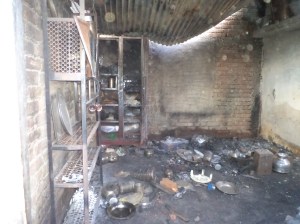
Rajamma, a resident of Natham, looks at her burnt house with vacant eyes. The more she looks at it, the harder the tears fall. Every part of her house — each brick painstakingly collected — is a small fountain of memories for her, reminding her of the backbreaking work done by her late husband at the local landlord’s house.

Now, all that is in the past. Continue reading The Ashes of Dharampuri

The Bodoland (Assam) Violence and the Politics of Explanation by Bonojit Hussain

EVEN though tensions were apparently simmering for many months prior to the outbreak of the violence in the month of July 2012 in the Bodoland Territorial Autonomous Districts (BTAD) area, but the immediate trigger was the killing of two Muslim youths, who were shot dead by unidentified gunmen on 6 July. The needle of suspicion pointed to the former cadres of the disbanded Bodo Liberation Tigers (BLT). In retaliation, four former cadres of Bodo Liberation Tigers were hacked to death by a mob in the Muslim dominated village of Joypur near Kokrajhar town. What unfolded after that was the worst humanitarian crisis to have hit Assam in decades. Continue reading The Bodoland (Assam) Violence and the Politics of Explanation by Bonojit Hussain

Shield of Barbarism by Nagarjun

Nagarjun was an avant-garde poet of Resistance in Hindi. His poem, in Tarun Bhartiya‘s translation along with the original, can be read as an obituary 42 years after it was written.

Bal Thackeray ! Bal Thackeray!

At his fascist gods’

Beck and call Thackeray

O be careful, here he comes Bal Thackeray

All agreeing, how shall we crawl Thackeray

Hide, don’t you dare look away

In smart Shiv Sena Uniform – making music hall Thackeray Continue reading Shield of Barbarism by Nagarjun

विशालतम लोकतंत्र का संकीर्णतम इतिहास: धीरेश सैनी

(रामचंद्र गुहा की पुस्तक ‘इण्डिया आफ़्टर गांधी’ के हिंदी अनुवादों की धीरेश सैनी द्वारा की गई समीक्षा, समयांतर के अक्टूबर 2012 अंक में प्रकाशित)

रामचंद्र गुहा की बहुप्रचारित किताब `इंडिया आफ्टर गांधीः द हिस्ट्री ऑफ दी वर्ल्ड्स लार्जेस्ट डेमोक्रेसी` का हिंदी अनुवाद पेंगुइन बुक्स ने दो खंडों (`भारतः गांधी के बाद` और `भारतः नेहरू के बाद`) में प्रकाशित किया है। बकौल गुहा, उनका `संपूर्ण कैरियर `इंडिया आफ्टर गांधी` लिखने की एक वृहत (और तकलीफदेह) तैयारी रही है।` यह बात दीगर है कि उन्होंने इस तकलीफदेह तैयारी को बतौर `दुनिया के विशालतम लोकतंत्र का इतिहास` प्रस्तुत करते हुए `ऐतिहासिक किस्सागोई का पुराना तरीका अख्तियार` किया है। किताब के कवर पर इस बात का जिक्र है कि यह `एक `व्यापक शोध के बाद किए गए लेखन का नतीजा है जिसे रामचंद्र गुहा ने अपनी मखमली भाषा में रोचक तरीके से लिखा है।` सुशांत झा द्वारा किया गया अनुवाद भी किस्सागोई और भाषा की रोचकता को बरकरार रखता है। जाहिर है कि इतिहास की किताब का महत्व उसकी किस्सागोई की मखमली भाषा की रोचकता से ज्यादा उसमें कहे गए तथ्यों और उनके विश्लेषण और कहने से छोड़ दिए गए जरूरी तथ्यों पर ही निर्भर करता है। 1947 से छह दशकों के सफर को विभिन्न भागों और अध्यायों के जरिये तय करने वाली इस किताब का हर अध्याय उथलपुथल, हिंसा और दूसरे झंझावतों के बीच `एकीकृत भारत` के अस्तित्व को लेकर निरंतर आशंकाओं (प्रायः पश्चिमी जगत की) का उल्लेख करता है और उसका समापन प्रायः इस `खुशी` के साथ होता है कि देखो दुनिया वालो, यह फिर भी `साबुत` खड़ा है। Continue reading विशालतम लोकतंत्र का संकीर्णतम इतिहास: धीरेश सैनी

Dronacharyas All

Caste Discrimination in Higher Education


For Bhalchandra Mungekar, ex-vice chancellor of Bombay University and ex-member of the Planning Commission, the exercise of looking into allegations of caste discrimination faced by scheduled caste students at Vardhman Medical College, Delhi, has been extremely disturbing. As the single-member committee appointed by the National Scheduled Caste Commission, it was important that he examine every aspect of the case and ensure that the guilty were brought to book.

Dr Mungekar discovered to his dismay that not only were the 35 scheduled caste students failed repeatedly in one particular subject – physiology – but the authorities had not even bothered to meet them to look into their complaints. He had to resort to RTI to seek information and approach the high court to ensure their rights as equal students. As his report puts it, the faculty of the said department ‘resorted to caste-based discrimination and neglected the duties assigned to them, not by omission but by commission’. Even other administrative people, including the head of the institution, had not seen fit to intervene. Not only did the students lose years because of this apathy, shockingly, the same authorities were guilty of showing leniency towards general category students. While they had no qualms about barring scheduled caste students from taking their examinations due to lack of attendance, four students from the general category, who were detained for inadequate attendance, were allowed to take the examination.

Dr Mungekar, who has finally submitted his report, has put forward wide-ranging recommendations. Apart from asking the authorities to pay compensation of Rs 10 lakh to students Manish and others who had moved court — underlining the fact that ‘the mental trauma that they were/are made to undergo is not measurable in terms of money’ — he has demanded that legal action under the Scheduled Caste and Scheduled Tribe (Prevention of Atrocities) Act, 1989 be taken against former Principal V K Sharma and his then colleagues Professor Shoma Das, head of the physiology department, Principal Jayshree Bhattacharjee and Raj Kapoor, professor of physiology, and a liaison officer. Continue reading Dronacharyas All

Defying Manu, Bowing to Mammon

On The Silent Emergence of Dalit Capitalism

It was 14 th April 2012, when dalits in different parts of the country (as well as abroad) were celebrating 121 st birth anniversary of Babasaheb Dr Bhimrao Ambedkar, the legendary son of the oppressed. Thousands of  people had congregated at statue of Dr Ambedkar situated near Parliament itself as they have been doing on every such occasion. It was a festive type of atmosphere where one could find book stalls on the way – where one could browse through books on different topics all geared to bring about a social transformation in India – cultural performances by small groups going on uninterruptedly, volunteers had put stalls to provide water to all the visitors.

And Delhi was no exception. One could witness similar gatherings in different parts of the country where people gather on their own to celebrate the life of Dr Ambedkar. Close watchers of such gatherings – where state patronage is not the deciding factor – would emphasise why this phenomenon need to be closely understood and comprehended by sociologists of our times that even fifty six years after his demise there has not been a let up in his popularity. In fact, he happens to be one of those rare leaders of the first half of 20 th century whose birth anniversary as well as death anniversary is still celebrated as people’s festival.

On this day at a place not very far from the ongoing celebrations in Delhi a different type of meeting was being held which was attended by a motley combination of dalit activists, dalit enterpreneurs as well as few top bureaucrats. It was an occasion to float DICCI Venture Capital Fund, (DVCF) a For-Profit company whose aim was to support India’s Dalit entrepreneurs. In fact, 121 smartly dressed Dalit entrepreneurs cut a 121-kg birthday cake in honour of B R Ambedkar, and announced the launching of the (VC) fund. Continue reading Defying Manu, Bowing to Mammon

Cast Away Caste – Breaking New Ground …

‘Turn in any direction you like, caste is the monster that crosses your path. You cannot have political reform, you cannot have economic reforms unless you kill the monster.’

Annihilation of Caste, Ambedkar

‘If Lenin was born in India , he would not have even  let the idea of revolution come to his mind before he had completely  buried casteism and untouchability’

– Ambedkar

1.

The Indian left today presents a very contradictory picture. As opposed to many left formations/movements in different parts of the world which witnessed decline/3reverses after the Soviet collapse, it has been able to sustain itself and at places even expand itself. Yes, the movement is far from united, there are ruptures and divisions at various levels, which at times even prove deadly, but if one is able to look at the cumulative impact of what is known as left and contrast it with many other countries, situation does not appear that bleak.

It’s sustenance and continuation amongst heavy odds, does not mean that it is not beset with challenges. The challenge of outlining its emancipatory vision of social transformation for 21 st century, devising innovative strategies of mobilisation and rejuvenating itself organisationally still remains. It also needs to reboot itself to address few important issues which are of key importance for any radical restructuring of Indian society and state. Undoubtedly, its failure on this count has cost it heavily. Question of dalit emancipation or the whole struggle for annihilation of caste forms one such core issues which demand serious attention. Continue reading Cast Away Caste – Breaking New Ground …

Mutant Modernities, Socialist Futures: Ravi Sinha

Guest post by  Ravi Sinha

Modernity and socialism can be daunting subjects. Both have had a long history and both have impacted on humanity in ways few other ideas, systems or forms of life have. In a famous incident, perhaps not entirely apocryphal, Chou En Lai, when asked about the impact of the French Revolution on the western civilization by Richard Nixon, is supposed to have answered, “It is too soon to tell.”[1] It seems to me that Chou’s riposte would hold well, and with a far greater force, if the same question were to be asked a few hundred years from now about the impact of modernity or of socialism on the entire human civilization.

One asks for trouble on other counts too when proposing to deal with these topics. They have both been explored and debated endlessly and both remain enormously controversial. In the domain of ideas and theories, they generate intense, sometimes fierce, intellectual passion. In the domain of real life, they give rise to monumental conflicts and struggles even as their influences continue to seep imperceptibly into ever deeper layers of societies and forms of life through pathways that are hard to track. One must have a good reason for raking up, as many might say, a subject where ashes of time find it difficult in any case to settle on an exasperatingly burning fire. Those too, who would like to continue stoking the fire of historical and emancipatory transformations promised by these words, would need a good reason for re-entering the subject. Whether I have one or not should best be left to be judged at the end of the hour, but one must hope to add something useful and meaningful to the debate. Continue reading Mutant Modernities, Socialist Futures: Ravi Sinha

‘Patriotic’ Criminal, ‘Nationalist’ Terrorists

Why Crimes of Lt Col Purohit Are Being Sanitised ? 

Written in different times and under a different context, one discovers that George Orwell’s classic novel 1984, which lampoons authoritarian regimes, is finding strange resonance in today’s India. Readers may be reminded that the Ministry of truth also called ‘minitrue’ – one of the four ministries in Oceania -the fantasy land in the novel, whose job is ‘to engage in any necessary falsification of historical events’ has few slogans written on its wall. It unashamedly declares ‘War Is Peace’, ‘Freedom is Slavery’, ‘Ignorance is Strength’.

As far as my knowledge goes there are no such slogans written on the walls of MHA – ministry of home affairs – here in Delhi whose job is supposed to put a tab on the internal situation of the country, but it appears that it is increasingly moving on similar lines where untruth is packaged and presented as ‘truth’. It is not for nothing that it is finding itself increasingly mired in one controversy after the other. No sooner that it found itself at odds with reality about the illegal abduction of an engineer from Saudi Arabia came the news that it had put its seal of approval on a fake encounter of poor tribals in faraway Chhatisgarh where many other cabinet members of the ruling dispensation had termed it a ‘cold blooded murder of innocents’. But nowhere does its ineptitude seems more blatant if one considers the way it deals with cases of stigmatisation of minorities especially Muslims or for that matter handling cases of what is known as Hindutva terror. Continue reading ‘Patriotic’ Criminal, ‘Nationalist’ Terrorists

Once There Was Hindutva Terror ..?

Bomb blasts have taken place near the Delhi High Court, in Bombay, Bangalore etc. Within a few hours of such bomb blasts many T V channels started showing news item that Indian Mujahidin or Jaish-e-Mohammed or Harkatul-jihad-e-islam have sent e-mails or SMS claiming responsibility. The names of such alleged organizations will always be Muslim names. Now an e-mail can be sent by any mischievous person, but by showing this on TV channels and next day in the newspapers the tendency is to brand all Muslims in the country as terrorists and bomb throwers…Should the media, wittingly or unwittingly, become part of this policy of divide and rule?

(Justice (retired) Markandey Katju, Chairman of the Press Council of India, October 10, 2011 at a get-together with mediapersons)

1.
Introduction

What is common between the murder of the leader of a private army of landlords at the hands of his own gang members in faraway Bihar over distribution of booty, the felicitation of a terrorist lodged in jail as ‘living martyr’ (zinda Shaheed) in Punjab or the anointment of a hatemonger as the poster boy of the main opposition party ? Formally speaking there are no connections but if one tries to dig further few subterranean linkages become clear. Whether one agrees or not they exhibit the growing legitimacy of authoritarian, fanatic, exclucivist politics in this part of the subcontinent . Continue reading Once There Was Hindutva Terror ..?

Dalits in Hindurashtra – Time for another sadbhavna fast Modiji!

…27 of the 30 complaints that were addressed to the commission spoke of indifference of police officials towards dalits.These issues were raised immediately after NHRC chairman KG Balakrishnan praised status of scheduled castes (SC) in Gujarat. He said the state’s schemes for development of the marginalised are working well and penetration of education among scheduled caste and scheduled tribes has reached 70%.Almost all dalits and their leaders present in the audience were not in agreement with this statement. [DNA]

 I

Justice Balakrishnan, retired Chief Justice of the Supreme Court of India, and at present Chairman of the National Human Rights Commission (NHRC), – who has remained in news since his retirement altogether for wrong reasons – provided further ammunition to his critics with his recent visit to Gujarat. The manner in which he lauded the state government for its ‘innovative schemes for the upliftment of dalits’ and claims that ‘..[f]uture of the SC community seems to be fairly good in Gujarat as compared to many other states’ is being seen as an attempt to clean chit and whitewash acts of ommission and commission.of a government which is still mired in the controversies surrounding the carnage in 2002

The said two day visit (14-15 th March) was part of the plan envisaged by the Commission to hold “open hearing” sessions on issues related to dalit atrocities in different parts of the country. According to media inputs, this was one of the important recommendattion by the K.B. Saxena committee which had done a painstaking job and brought out a report on dalit atrocities in the country few years back.for the commission itself. Not some time ago the commission had held its first such hearing in the state of Orissa.

Continue reading Dalits in Hindurashtra – Time for another sadbhavna fast Modiji!

75 Years of Bhonsala Military School: Militarising Minds, Hindutvaising the Nation

Image

..to bring about military regeneration of the Hindus and to fit Hindu youths for undertaking the entire responsibility for the defence of their motherland.

to educate them in the ‘Sanatan Dharma’, and to train them “in the science and art of personal and national defence”

– From the aims of ‘Central Hindu Military Education Society,’ NMML, Munje Papers, subject files, n 24, 1932-36)

This training is meant for qualifying and fitting our boys for the game of killing masses of men with the ambition of winning victory with the best possible causalities (sic) of dead and wounded while causing the utmost possible to the adversary.

– Preface to the scheme of the Central Hindu Military Society and Its Military School’NMML, Munje Papers, subject files, n 25, 1935

Nashik: Expressing concern over the dominance of ‘rich and powerful people’ in politics, besides the soaring inflation rate, Rashtriya Swayamsewak Sangh (RSS) chief Mohan Bhagwat said that India’s situation was better during the British rule…Speaking at a function organized by Bhonsala Military School (BMS) to celebrate its platinum jubilee year in Nashik on Monday, Bhagwat …laid stress on the need for imparting military education to students, citing rising threat to the nation.

– ‘India was better off under British rule: Mohan Bhagwat’, Times of India, Feb 22, 2012

Continue reading 75 Years of Bhonsala Military School: Militarising Minds, Hindutvaising the Nation

Three Formidable Barriers to the Advance of Democracy: Ravi Sinha

This guest post by RAVI SINHA is the text of the key note address to the Pakistan-India People’s Forum for Peace and Democracy in Allahabad on 30 December 2011

I must begin by expressing my gratitude to the organizers of this Convention and to this Forum for the opportunity and the honor you have given me by letting me address this impressive assembly. Also, I must congratulate you for choosing a theme that articulates, perhaps, the central challenge confronting all peoples and all nations of the world and more so for the peoples and the nations on the subcontinent. We are all witness to and victims of the times characterized by monstrous brutalities of war and deep scars of deprivations, inequities and oppressions. We live under a world order wherein those who brought, for example, untold tragedy and destruction to Iraq will never be brought to justice because they are the global hegemons. They will not be questioned about the hundreds of thousands of dead and maimed Iraqi men, women and children; they will not be questioned about the thousands of dead and decapitated American soldiers; they will not be questioned about the trillions of dollars spent on the war and further trillions destroyed by the war; and they will not be questioned about the kind of Iraq they are leaving behind.

Continue reading Three Formidable Barriers to the Advance of Democracy: Ravi Sinha

New friends of ISKCON? On the Gita controversy

The Parliament which has remained rather dysfunctional for different reasons all the year witnessed a strange bonhomie few days back. It was difficult to believe that they are the same representatives of people who could not see eye to eye on various issues of concern and were always keen to score their point over their political adversaries. Led by the likes of Laloo Prasad Yadav – interspersed with slogans of ‘Jai Krishna’ –  the government’s alleged silence on the developments in a faraway court in Russia was called into question.

Interestingly, BJP the party which happens to be the chief opposition party, found itself playing second fiddle to the troika of Laloo, Mulayam and Sharad Yadav on this matter. The issue related to proceedings in a court in Tomsk which supposedly had found portions of ‘Gita’ objectionable and ‘extremist’ and was contemplating to ban it.

Continue reading New friends of ISKCON? On the Gita controversy