All posts by Nivedita Menon

Tabloid Law – Framing Sexual Violence: Pratiksha Baxi

Guest Post by PRATIKSHA BAXI

When an ongoing rape trial becomes a controversial ‘story’, much rests on journalistic practice: how the story is plotted, the metaphors used, and the visuals that accompany the text. Writing about sexual violence is challenging if one wants to resist voyeurism, yet sell a ‘story’. It means resisting reproducing ‘tabloid’ pictures of law.

Given that there is very little literacy about the newly amended rape law, it is not apparent to many why forms of sexual violence, other than forcible penile penetration of the vagina, should be called rape. Nor is it acceptable to many people that a man be sentenced for ten years (or more) for rape when it is not accompanied by annihilating physical violence.

Is it then incumbent on journalists to indicate that the 2013 amendments to the rape law create new meanings of rape, some which are not accepted as rape in society? Indeed, what role do journalists have in interrogating the social and collective toleration of sexual violence?  Continue reading Tabloid Law – Framing Sexual Violence: Pratiksha Baxi

If a Woman is Raped in the Middle of a Forest and No Camera Sees it Was She Actually Raped? Fulana Detail

This is a guest post by FULANA DETAIL

When I was 19 years old I developed persistent headaches. My mother took me to the eye doctor to get my eyes checked. The doctor lived in our neighborhood. He was our family’s eye surgeon, he’d operated on both my grandfathers’ cataract, he was (and presumably continues to be) a well-respected doctor.

After the routine eye tests were done, the doctor noted I had slight myopia and that it, “appeared there was a weakness in the eye muscle that may be indicative of a general weakness.” I was anemic and underweight and he recommended a general physical examination. My mother said, “No problem, we’ll go to our GP”. “Why bother?”, he responded, “after all eye doctors are doctors first and receive the same medical training as everyone else”. Rather than bother with a separate visit he would be happy to do it himself, it would only take a few minutes. It sounded odd, but well he was the doctor. My mother knew him, and who were we to question the doctor? Why didn’t my mother step out, he suggested. I would be more comfortable that way. My mother looked at me: was I ok with that? I didn’t see why not, so she walked out.

He closed the door, I sat on the bed. He walked up to me, stood behind my right shoulder, began pressing my neck, unhooked my bra, felt my breasts, moved his hands down my stomach, pushed his hand into my underwear and began pushing his fingers into me. At this point I pushed him away, jumped off the bed and walked out. I didn’t go back in and my mother concluded the consultation. I said nothing to my mother at that point. She dropped me off at college. I felt strange and upset through the day, but I didn’t speak of this to anyone. In the evening I met my then boyfriend told him some of what had happened, but not the details. That evening, or perhaps it was the next day, I told my mother a version of what had happened but again, not in any detail. She asked if I wanted to lodge an official complaint. I didn’t. So my mother went back and confronted him. At which he flat denied anything untoward had occurred. If I were a victim, it was of a grievous misunderstanding. He had two daughters, he was terribly sorry if I had misunderstood, but really it was not his intention. He was only conducting a medical examination. I was not a child. I was a 19 year old, college educated woman. And I had let an eye doctor do something for which the new law prescribes a seven year jail sentence.  Continue reading If a Woman is Raped in the Middle of a Forest and No Camera Sees it Was She Actually Raped? Fulana Detail

What do Tejpal supporters choose to see? Team FeministsIndia

[FROM THE BLOG FEMINISTSINDIA]

Tarun Tejpal, who was the editor of Tehelka magazine, is alleged to have sexually assaulted his junior journalist in a lift in a Goa Hotel. The past few days have seen subtle and direct statements that seek support for Tejpal based on the CCTV footage of the survivor and Tejpal outside the lift. While senior journalists Manu Joseph and Seema Mustafa wrote articles dissecting the incident in favour of the accused, well known film maker Anurag Kashyap accused the survivor of not telling the truth – they all were basing their opinions on the CCTV footage they saw. The campaign coincides with a bail application made to the Supreme Court.

Feminists Vrinda Grover and Kavita Krishnan analyse flaws in the arguments made in support of Tarun Tejpal in media and social networks by those who have illegally watched sub judicial CCTV footage.

Read the rest here.

Letter to Press Council re Tehelka case from Network of Women in Media

Dear Justice Katju,

The Network of Women in Media, India is deeply concerned about what appears to be a renewed media campaign that threatens the course of justice in the sexual assault and rape case involving the former editor of Tehelka, Tarun Tejpal.

In this connection we would like to call the attention of the PCI to two recent articles on the subject in two publications, The Citizen and Outlook. The article in the former, headlined “Alleged victim’s testimony in the Tarun Tejpal case at variance with CCTV footage” which originally appeared under the byline of senior journalist Seema Mustafa, was later credited, on 31 March evening, to ‘Citizen Bureau’. [This piece has by now been removed altogether]. The article in the latter, headlined “What the elevator saw” is by senior journalist Manu Joseph.

While ostensibly seeking to set the record straight, both articles are clearly biased in favour of the accused and seem to be a deliberate attempt to adversely influence public opinion against the complainant. Indeed, these articles appear to follow the familiar Standard Operating Procedure to silence women in cases of sexual violence, and bolster the impunity of perpetrators. Continue reading Letter to Press Council re Tehelka case from Network of Women in Media

Cricket and Communal Identities in South Asia: Raoof Mir

Guest post by RAOOF MIR

In the Hindi movie Bheja Fry (2007), there is an archetypal abominably portrayed Muslim Character, Asif Merchant, the caricatured Indian Muslim who supports the Pakistan cricket team over the Indian cricket team. Asif Merchant is shown as a comical, hideous, perfidious character with loyalties to Pakistan despite living in India – taunted with Yahan ke khaate ho, aur wahan ke Gaate Ho (You eat here but sing their praises). It is a well established fact that Muslims in India have from time to time been subjected to periodic tests of loyalty.  There is a rich history of sectarian violence between Hindus and Muslim in independent India, in which it is mostly Muslims who have suffered. However, these tensions are exacerbated whenever there is a cricket match between India and Pakistan. Continue reading Cricket and Communal Identities in South Asia: Raoof Mir

Fundamentalism, Liberalism and Muslims – Review of Hasan Suroor’s ‘India’s Muslim Spring’: Abhay Kumar

ABHAY KUMAR reviews Hasan Suroor’s India’s Muslim Spring: Why is Nobody Talking about It?, Rupa Publications, New Delhi, 2014.

Hasan Suroor is a London-based veteran journalist. He began his career with The Statesman and later he worked as The Hindu’s UK correspondent for over a decade. He continues to write in newspapers on important issues such as Muslim identity, secularism, communalism and Islam. He was brought up and educated in Delhi after his family left Lucknow for the national capital post-Partition. Their new destination, at least in the beginning, did not receive its guests warmly as his parents’ identity as Muslim worked as a hurdle for them to rent a flat in New Delhi. Eventually they had to seek refuge in the Muslim-majority Ballimaran of the Walled City where his mother worked as a Communist Party activist. Suroor, who is regarded as one of the “progressive” and “liberal” voices among Muslims, has recently been in news for an interesting thesis which he offers in his new book, India’s Muslim Spring: Why is Nobody Talking about It?

He argues that for the first time since Independence a “seismic” and “tectonic” shift has taken place in Indian Muslim community with an emergence of “liberal spring” among new generations Muslims, who were born after the late 1970s. For Suroor, the elder generations of Muslim were “fundamentalist” and “emotional”, “intolerant” of freedom of speech, prioritized “cultural” and “identity” issues over substantive ones, had “contempt” for women and blamed others for the plight of Muslim community while the young Muslims are just the opposite of their elders; they, are  “tolerant”, “pragmatic”, “moderates”, “secular”, “cosmopolitan”, “optimistic” and “confident” and “forward-looking” as well as “nationalistic”. In short, he creates a binary between fundamentalist old Muslims versus liberal young Muslims. Continue reading Fundamentalism, Liberalism and Muslims – Review of Hasan Suroor’s ‘India’s Muslim Spring’: Abhay Kumar

Disability Rights And Parental Activism – Can They Co-Exist? Shubhangi Vaidya

Guest Post by SHUBHANGI VAIDYA 

Parents are valuable allies in the Disability Rights Movement thanks to their intimate engagement with persons with disability. To view them as representatives of a ‘disabling’ society does them a grave injustice. However, the heated debates over the new Rights for Persons with Disabilities Bill introduced in the Rajya Sabha  have seen a confrontation of stances between two groups along these lines.

The first group consists of vocal self-advocates who point out a number of weaknesses and contradictions in the Bill from a Rights perspective, citing the provisions of the United Nations Convention on the Rights of Persons with Disability ratified by India in 2007.

The other group is a loose coalition of ‘cross-disability’ activists including lobbying for a speedy passage of the Bill, with crucial amendments, in what is the last session  of this Parliament and of the government of the day, which just happens to be UPA.

It is important to note that this Bill has not just dropped down from the heavens; it is the end result of years of protracted consultations, contestations, confrontation by stake-holders across the sector. I do not propose here to go into the pros and cons of its provisions; rather, I wish to highlight a rather disturbing trend that I discern in the frenetic exchanges between some self-advocates in the sector and parent activists on the social media.  Continue reading Disability Rights And Parental Activism – Can They Co-Exist? Shubhangi Vaidya

The Buttocks of Naked Women and Further Meditations on Sacred Art: Sajan Venniyoor

Guest Post by  SAJAN VENNIYOOR

“There is no Hindu canon,” declares Wendy Doniger in The Hindus. “The Vedas did not constitute a closed canon, and there was no central temporal or religious authority to enforce a canon had there been one.”

This is a curious argument in defence of heterodoxy. Canons don’t spring fully formed like Athena from the head of Zeus, or drop from the lips of a passing Archangel. Someone has only to do the hard work, and it’s never too late to make a nice hard canon.

As Doniger says, Hinduism as we know it today “is composed of local as well as pan-Indian traditions, oral as well as written traditions, vernacular as well as Sanskrit traditions, and nontextual as well as textual sources.” That’s good news – plenty of material there to choose a canon from.

Back in the 16th century, the Church found itself up the creek without a canon. Plagued by fifteen hundred years of heresies and heterodoxies, disagreements over the sacraments and the scriptures, not to mention a perfect storm of lusty, busty images in Renaissance religious art, the Catholic Church sat in ecumenical council between 1545 and 1563 and decided, once and for all, what was IN and what was OUT.

Index of Prohibited Books (1)

Index of Prohibited Books 

It took the Church just over 1500 years – from the crucifixion of its founder to the Council of Trent – to decide which of its written books and unwritten traditions were truly sacred and which were profane (and which were to be banned).  Continue reading The Buttocks of Naked Women and Further Meditations on Sacred Art: Sajan Venniyoor

The Embarrassed Modern Hindu (Upper Caste Man)

Perhaps the clearest statement on what exactly it is in Wendy Doniger’s work that bothers some people – and who these people are – is outlined in Jakob De Roover’s empathetic account of the imagined ‘Hindu boy with intellectual inclinations’ born in the 1950’s.  This boy grows up going to the temple, hearing stories about Bhima’s strength, Krishna’s appetite, Durvasa’s temper. If you were this boy,

Perhaps you rejoice when Rama rescues Sita, feel afraid when Kali fights demons, or cry when Drona demands Ekalavya’s thumb as gurudakshina.

The boy goes to school and learns about caste discrimination in Hinduism (that he had to go to school to learn about caste discrimination establishes his own caste position very clearly).  This makes

You feel bad about your “backward religion” and ashamed about “the massive injustice of caste.”

But

You sense that it misrepresents you and your traditions—it distorts your practices, your people, and your experience…Everywhere you turn, people just reproduce the same story about Hinduism and caste as the worst thing that ever happened to humanity: politicians, activists, teachers, professors, newspapers, television shows… Continue reading The Embarrassed Modern Hindu (Upper Caste Man)

Can there be a ‘socially responsible’ tea? Ashwini Sukhtankar and Peter Rosenblum

Guest post by ASHWINI SUKHTANKAR AND PETER ROSENBLUM

Almost four years ago, we first traveled to Rungamuttee, a tea estate in the Dooars, so far north that it nuzzles the Bhutan border. The region has recently fallen prey to the craze of “tea tourism,” and the estates jostle for space with eco-green-homestay lodges that lure middle class families with the opportunity to play at a mythic British sahib-memsahib life, sitting on verandahs sipping tea while gazing out over vast reaches of picturesque monoculture, with rows of squat green bushes as far as the eye can see.

We were not unmoved by the beauty and the weight of history, but we were there to talk to workers and to understand what plantation life meant for them in the 21st century.

At Rungamuttee, we sat perched in red plastic chairs, almost brushing knees with a sinewy old man, also in a red plastic chair in the tiny “labour quarters” that he shared with his children and grandchildren.

The old man at Rungamuttee in his red chair

The old man at Rungamuttee in his red chair

He leaned forward and unfurled the frayed scroll in his hand. It was his “depot challan,” the document that he had been given when he showed up at the labour depot in Ranchi in 1955, and it told him that he had been assigned a job as a tea labourer in Jalpaiguri District, more than three days’ journey away. Continue reading Can there be a ‘socially responsible’ tea? Ashwini Sukhtankar and Peter Rosenblum

Terrorized By The Past: Janaki Nair

Kafila normally does not carry guest posts that have appeared elsewhere, but I think JANAKI NAIR’s article from The Telegraph needs to be read widely – a scholarly, lively, feminist take on sexuality in Hindu traditions.

It is our good fortune that our knowledge of Hinduism does not come from the authorized versions that Dina Nath Batra and his Shiksha Bachao Andolan wish to propagate. Neither does our collective imagination remain reined in by his fantasies about the Indian past. This large and luxuriantly complex society, even when all else has been brutally taken from its wretched millions, has its imagination intact. And, we fervently hope, for some time to come. Therein lies the challenge to our desperately needed “historical temper”.

As an 18-year-old, I had read the sexually frank passages of the Rig Veda with wonder and amazement. In a small village called Sanehalli, Karnataka, where the performing arts have been vigorously patronized by Swami Panditaradhya, I recently watched, along with the people from surrounding villages, the Kathakali performance at the annual theatre festival, in which Shakuntala incrementally raised the decibel level and shouted “Anarya!” at Dushyanta, violating all norms of womanly behaviour and appropriate performance voice. There was thunderous appreciative clapping at the end. I have filed past, with lots of ardent devotees of Krishna, the brilliant murals at the Cochin Palace at Mattancherry, where Krishna does not waste a single digital extremity of his eight hands and two feet in pleasing his gopis (his two flute playing hands excepted). Ditto the Guruvayur Temple, whose sexually explicit murals are now, alas, being modestly covered in (NRI-sponsored) gold plate. The erotic sculptures at the Nellaiappar Temple at Tirunelveli, the great Chalukyan temples at Aihole Pattadakkal and Badami, all visited daily by hundreds of chattering and irreverent school children, continue to stand as testimony to what our illustrious forebears were also preoccupied with. One could go onad nauseum, about the little and great traditions of Indian mythology which are not only sexually explicit but bloodstained to boot. It is Wendy Doniger’s triumph that she brings us these complexities in just one book. Continue reading Terrorized By The Past: Janaki Nair

Feminist Reflections on the Tragic Suicide of Khurshid Anwar

THIS ARTICLE HAS BEEN COLLECTIVELY WRITTEN BY THE PEOPLE WHOSE NAMES APPEAR AT THE END

In the aftermath of the suicide of Khurshid Anwar, friend and comrade to many of us, on December, 18th 2013, there has been a concerted attack by some democratic and secular people on ‘feminists’ who supposedly drove him to take this extreme step. The charge is that feminists did not support him when an accusation of rape was made against him by a young woman, and exacerbated the situation by their irresponsible handling of the issue.

As feminists, we feel it necessary at this trying time to recognize that this pitched battle is after all, taking place amongst allies in a bigger struggle for democracy and secularism, and to think seriously about how we can move ahead. Rather than being a definitive statement of any kind, this collectively written piece is an attempt to think through a very messy situation. Continue reading Feminist Reflections on the Tragic Suicide of Khurshid Anwar

Legal notice to Penguin Books India for violation of rights of readers

Advocate LAWRENCE LIANG  has served this legal notice to Penguin Books, India, on behalf of Shuddhabrata Sengupta and Aarti Sethi. 

Under instructions from, for and on behalf of my clients Sh. Shuddhabrata Sengupta and Ms. Aarti Sethi, both residing at New Delhi, I serve upon you this legal notice for the following reasons and purposes:

  1. My client, Mr. Sengupta, is an artist and writer based in New Delhi with a longstanding interest in the comparative history of religions. Ms. Sethi is an anthropologist with a deep interest in Hindu philosophy. Both Mr. Sengupta and Ms. Sethi are avid bibliophiles, ardent supporters of freedom of speech and expression and have in the past been admirers of Penguin Books.
  2. My clients were delighted when YOU NOTICEE published Wendy Doniger’s  “The Hindus: An Alternative History” and as people who have closely followed the scholarly contributions of the said author they regard this book to be a significant contribution to the study of Hinduism. They consider Ms. Doniger’s translations of Indian classical texts and her work on various facets of Hinduism from morality in the Mahabarata to the erotic history of Hinduism as an inspiration for their own intellectual pursuits.
  3.  It has come to the notice of my clients that YOU NOTICEE have withdrawn publication of the book “The Hindus: An Alternative history” pursuant to an agreement entered between YOU NOTICEE and Shri. Dinanath Batra; O.P.Gupta, Sharvan Kumar and a few other busybody etcetera’s on the 4th of February 2014. YOU NOTICEE have further agreed not to sell, publish or distribute the book and also to pulp all unsold copies of the book. Continue reading Legal notice to Penguin Books India for violation of rights of readers

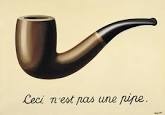
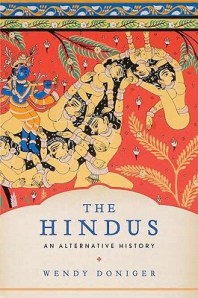
This is not Wendy Doniger’s The Hindus – An Alternative History

download

“This is not a pipe” (Rene Magritte)

5263037

This is not Wendy Doniger’s The Hindus. An Alternative History

None of the following are, either. They are links from which you can download the entire text:

Epub version
pdf version 


 WENDY DONIGER: Finally, I am glad that, in the age of the Internet, it is no longer possible to suppress a book. The Hindus is available on Kindle; and if legal means of publication fail, the Internet has other ways of keeping books in circulation.

People in India will always be able to read books of all sorts, including some that may offend some Hindus.

And no, this is not a penguin, a notoriously brave bird!
chicken

Kumar Vishwas – a Work in Progress in the Times of YouTube : Akhil Katyal

Guest Post by AKHIL KATYAL

kv

On the internet you can never really begin from scratch, that is to say, you can never really begin from a desired point in space and time, erasing all the befores.

One of the most difficult conversations about the form of the internet is that descriptive metaphors that work for some other mediums do not work for it. Things do not, for instance, easily die on the internet or age gracefully. In a manner of speaking, shelves do not gather dust here. A 2004 video takes no longer to load than a 2014 video; it is not stored behind or below it. The desire to order space and time online runs against the grain of this form, in the sense that, knowledge is not arranged as sequence on the internet, it is arranged as infinite sets of adjacencies. 

These sets of adjacencies are attempted to be given shape by algorithms that make you reach where you want to reach. But despite them, the non-sequential nature of knowledge on the internet is evident from the fact that any keyword search would always allow you to look for that keyword in a variety of ways – each way an attempted but always incomplete ordering, whether by significance, language, region, time, domain, web page location, level of adult content, reading difficulty, file types or license types. However, these algorithms never fully master the adjacencies that they seek to make legible to us. And adjacencies – of different videos, articles, photographs, memes – do not make for calm political stories, they make for political drama. Continue reading Kumar Vishwas – a Work in Progress in the Times of YouTube : Akhil Katyal

Love Outside the Gurdwaras: Pukhraj Singh

Guest Post by PUKHRAJ SINGH

Picture 1

Balmiki temple in Dhotian  village, Tarn Taran

The latent passions of this land are steeped in love and longing. If one sees Punjab solely from the perspective of its oral traditions, local continuities and folklore, then the picture which emerges is in complete contrast to the drubbed, kitschy monochrome making its way to the mainstream. It is the unquestionable faith and conviction of its peoples, which have often subverted the rigid precepts of religion and nationalism, to create identity markers that are more organically rooted in the mythos and geography.

By innately focusing on the unseen and the unsaid, there will be an emotional realization of a certain kind of inexplicable absence, and the purity of absence, overwhelming its verdant backdrop. The dirt-tracks crisscrossing the rural outliers are pockmarked with the signage of a time bygone, managing to exist somewhere between the interstices of memory and history. Continue reading Love Outside the Gurdwaras: Pukhraj Singh

Theatres Of Rape: Srimati Basu

Guest Post by SRIMATI BASU

The Birbhum rape has thrown up images of the ‘kangaroo court,’ evoking the savagery of tribal subjects — but rather than feeling complacent at the exception and difference of this location, we might concentrate on the common modes of gendered control achieved by the rapes.

Jyoti Singh’s rape and murder in a Delhi bus in December 2012 seemed to evoke a sense of horror at the ultimate in human depravity. But in the time since, no week seems to go by without yet another gruesome gang rape, almost a one-upping of sadist violence across these uncoordinated episodes. Gang rapes have come to appear as the spectacular trendy crime of the moment. They underline the lethal consequences of women’s daily cultural transgressions: going to school, going to a night show movie, going to work, having a drink, being in politics. Even though we know they are miniscule in the corpus of sexual violence, which overwhelmingly happens in private and domestic spaces and among people who know each other, they have irritatingly given the impression that public spaces have become more unsafe, and further strengthened restrictions by families and communities on women’s mobility and choices.

As if the New Year’s report that a Kolkata schoolgirl was burned alive after being gang raped twice (the burning and second rape allegedly being retaliations to her police complaint) was not ghastly enough, this week we are talking about another woman in West Bengal (Birbhum), gang raped by diktat of the village council, on a public platform erected for optimal viewing. Continue reading Theatres Of Rape: Srimati Basu

Efforts to save the endangered oral traditions of Rajasthan: Vishesh Kothari

Guest Post by VISHESH KOTHARI

574802_10151322516287197_1967840932_nMedieval feudal social systems and attitudes in Rajasthan persisted until very recently. This, and perhaps a host of other reasons, allowed several aspects of culture to remain preserved here for much longer than in other parts of our country. While Rajasthan has become well known for its architectural heritage, it is the intangible heritage of this state that is in need of the most urgent intervention to protect it from being lost – from the oral lore to the epic ballads, everything is threatened by the onslaught of modernity.

Komalji Kothari and Vijaydanji Detha embarked on such a project many years ago and achieved great success – however an even greater amount remains to be done. For more than a decade now, the Jaipur Virasat Foundation has been continuing and enhancing this project to protect, preserve and promote the oral musical traditions of this state. Continue reading Efforts to save the endangered oral traditions of Rajasthan: Vishesh Kothari

Why sue a ‘skin’ colour? Chirayu Jain

A law student from Bangalore has filed a complaint against Hindustan Pencils at a consumer court, accusing the company of racism for producing a skin tone crayon that is not the skin tone of most people in India.

That law student CHIRAYU JAIN explains here here why he took up this issue.

DSC_0938It was May 2012, I was at Bangalore Airport, where they had a promotion going on – giving out free crayons and colouring sheets, inviting travellers to ‘revisit their childhood’.  I  jumped at the invitation and so I did revisit my childhood that day. Continue reading Why sue a ‘skin’ colour? Chirayu Jain

Gandhi’s Dystopia – More Mobile Phones Than Toilets: Apurv Mishra

Guest Post by APURV MISHRA 

Sanitation is more important than independence”, said Gandhi, the godfather of our freedom fighters, in 1925. Unlike Nehru, who believed that sovereignty and self-rule were a prerequisite for social change, Gandhi insisted that true Swaraj could only be achieved when political independence was accompanied by a parallel program of social reform. As we go through the perfunctory national routine of remembering Gandhi on his death anniversary every year, it is a good time to take stock and reflect on the irreconcilable gap between Gandhian values and our societal priorities. I am not talking about the ambitious Gandhian ideas of village republics, Nai Talim, strict vegetarianism, zealous celibacy or his suggestion of disbanding the Congress, but simple principles like cleanliness and sanitation.

Out of the 1.1 billion people around the world who openly defecate everyday, 626 million belong to India. Indonesia is second with 63 million. Our step-sibling China has just 14 million who defecate in the open, despite having a larger population. In fact, India has more than twice the number of the next 18 countries combined. Just think over these numbers for a minute.

This is not just a hygiene issue; open defecation is the single largest threat to the long term well-being of our country. Continue reading Gandhi’s Dystopia – More Mobile Phones Than Toilets: Apurv Mishra

Protesting the Indian Republic at Kangla Fort, Manipur

A-police-personnel-tries-toREPEAL ARMED FORCES SPECIAL POWERS ACT

The Sangai Express (Imphal) reported that women from different corners of Manipur staged a demonstration on January 25, 2014 in front of the Western Kangla Gate to denounce Prime Minister Dr Manmohan Singh’s failure to keep his promise to replace Armed Forces Special Powers Act with a humane legislation.

Displaying placards and festoons inscribed ‘Remove AFSPA,’ ‘Save Sharmila,’ the demonstrators also raised slogans demanding the resignation of Prime Minister Manmohan Singh. Pandemonium erupted at the site when police personnel tried to seize the festoons from the agitating women.

Later, RK Radhyasana Devi, one of the protestors speaking to media persons, highlighted that the Prime Minister Dr Manmohan Singh, while handing over the historic Kangla Fort to the people on November 20, 2004, had assured the people of the State that AFSPA would be replaced with a more humane Act .

She pointed out that the promise Dr Manmohan Singh made a decade back has not been translated into action till now.

Strongly demanding that the AFSPA, 1958 should be repealed, Radhyasana further asserted that the movement of Meira Paibi organisations would go on until the Act is scrapped from the State.

In 2004, at the same historic Kangal Fort, Manipuri women had staged a militant nude protest to denounce AFSPA in the aftermath of the extra-judicial killing of Thangjam Manorama Devi by Assam Rifles troopers.

And meanwhile, Irom Sharmila, in the 14th year of her fast against AFSPA, continues to be held in isolation by the Indian state, a prisoner of conscience.