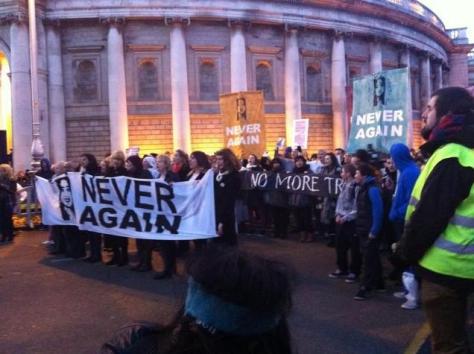
About 10,000 people marched through Dublin today, many of them mothers and daughters walking side by side, holding pictures of Savita Halappanavar who died of blood poisoning in an Irish hospital after being denied an abortion. In a symbolic move, they gathered at the Garden of Remembrance dedicated to the memory of Irish freedom fighters, and walked to the parliament building with banners saying, “Never Again”, “No More Tragedies” and “Abortion Rights Now”.
As the campaign for safe and legal abortion rights for women picks up steam worldwide, Indian feminists join Irish feminists in solidarity.
Dear Elected representatives of the Irish Parliament,
We, the undersigned, are deeply shocked at the callous treatment meted out to Savita Halappanavar who was refused a medical abortion in a hospital in Galway even though it was clear that her baby was miscarrying and had no chance of survival. We hope that the impact and serious consequences of your vote against the Medical Termination (Termination of Pregnancy in Case of Risk to Life of Pregnant Woman) Bill 2012 have fully registered with you now.
We call upon you to show leadership and bring in legislation urgently that is in tune with the Irish Supreme Court ruling that stipulates that when a pregnant woman’s life is in danger, including from the risk of suicide, she has the right to an abortion in Ireland. We ask that you not be governed by any sentiments and opinions beyond the human right to life of Irish women. You are no doubt fully aware that women’s rights have been internationally recognized as human rights. We believe it is wrong and unjustifiable for religion to interfere with women’s ability to live full, free lives and have control of their bodies, in any part of the world.
November 21st, 2012 Endorsements to this letter are now closed.
Previous posts on abortion on kafila:
Abortion as a feminist issue – who decides, and what?
Dil Se Nahin Dimaag Se Dekho – Thoughts on Satyamev Jayate Episode 1



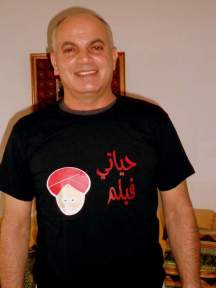


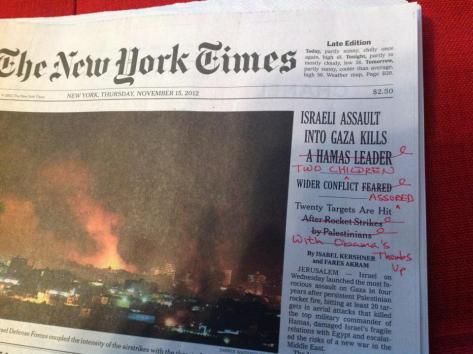



 On Sunday evening, November 4th, about 60 friends of Palestine — theatre persons, writers, artists, film makers, academics, students and activists — gathered outside Delhi’s Siri Fort auditorium, the venue for the Israeli state-sponsored performance by The Cameri Theatre. Their form of protest was an unusual one. All of them wore T shirts which said, in bold black letters on white, No to Israeli Apartheid. There were no slogans or placards. Instead, they stood around the entrance, distributing leaflets and talking to theatre goers about the boycott. A few theatre goers actually responded and did not go in. A couple even joined the protest. One woman, who took a T shirt to wear inside, found a different form of discrimination being practiced in the auditorium; the Israeli theatre goers were let in, but the Indians had to wait. She read the leaflet in her hand, came out to join the protestors.
 KAFILA - COLLECTIVE EXPLORATIONS SINCE 2006