All posts by Nivedita Menon
Gender Just, Gender Sensitive, NOT Gender Neutral Rape Laws

Statement by feminist and queer groups and individuals:
The report of the Parliamentary Standing Committee on the 2012 Criminal Law (Amendment) Bill as well as the 2013 Criminal Law (Amendment) Ordinance not only violates the letter and spirit of the Justice Verma Committee (JVC) recommendations but endangers and deepens women’s vulnerability in this country.
Representatives of women’s groups, democratic and human rights groups and activists are alarmed about major lacunae in current legislative protection to women, upheld by the Standing Committee report, and we insist on the following:
The Accused Must Be Male.
One pernicious provision of the Ordinance 2013, upheld by the Committee report, is blanket gender neutrality of the perpetrator of sexual harassment, assault and rape. Put simply: unlike in existing law where the accused is male, the Committee recommendations if enacted into a proposed new Bill, will make it possible for women to be charged with these offences. This is wholly unacceptable for the following reasons: Continue reading Gender Just, Gender Sensitive, NOT Gender Neutral Rape Laws
Indian Land Grab in Africa: Sputnik Kilambi

This is a guest post by SPUTNIK KILAMBI: The rise of China and India in Africa has important implications for the continent’s development. While the two Asian giants provide a much needed alternative to the old and until now sole paradigm of dependence on the West, both countries are accused of being part of the global land grabbing club. Many African governments are complicit in this whole sale plunder of their land, which the FAO has compared to the ‘wild west’. India’s role in the land take-over underway in Africa raises serious questions about the direction of south-south relations.
Just before the 2010 World Cup of soccer in South Africa, the Indian food and beverages giant Parle Agro ran an ad campaign to promote its new lemon drink LMN. One spot showed a couple of Bushmen digging in the sand for water when their stick breaks. Suddenly, they see a tap and wrench it off.
Fortunately, the Advertising Standards Council of India forced the company to make changes because the spot was racist and made fun of water scarcity, an acute problem in Africa and India.
The Parle ad is an apt metaphor for growing fears in Africa about India’s seemingly insatiable demand for the continent’s land and water. Water scarcity at home and global fears of a looming water and food crisis are among the reasons India has joined the club of land predators.
India now ranks third in the amount of land grabbed from other countries. It is, says environmental journalist Darrel De Monte, “the irony of a former British colony turning into a neo-coloniser”. Continue reading Indian Land Grab in Africa: Sputnik Kilambi
Aspirational India? Raj Nandy
Guest post by RAJ NANDY

Image of homeless children from For Donald
Mainstream media recently carried stories about Prema Jayakumar, daughter of an auto-rickshaw driver who topped the Chartered Accountancy exam, and of several other young men and women who have made the journey from village to city, overcoming ‘poverty, social discrimination and even political strife to succeed in life‘ and are now set to step into elite professions.
The same story linked to above, suggested that Prema-type examples also show that “this tale of personal courage and excellence is embedded in the ethos of aspirational India” and that the “idea of aspiration has proved to be one of the most binding factors in the country”.
I disagree. To glorify and salute such examples of exceptional hard work and determination is, of course, apt and well deserved. However, to present a tiny fraction – say, a few hundreds or thousands as reflecting the temper or character of millions muddling through crippling poverty and malnutrition seems like mistaking the shadow for the substance. Continue reading Aspirational India? Raj Nandy
Justice for a rape survivor: Majlis Legal Centre
As we note the unprecedented, if not always productive, attention being drawn to widespread sexual violence in India, we need to remember that in the shadows of media attention, legal activists routinely wage long, arduous and painful struggles in courts. One such set of activists located at MAJLIS LEGAL CENTRE, Mumbai, recently secured the conviction in Sessions Court, of a 60 year old man for the sexual assault of a toddler. Here is the inspiring (and infuriating!) account of this battle in the words of Majlis. Some of us have been making an argument for CCTV’s in police stations, to monitor the behaviour of the police towards complainants, especially of sexual violence. This case only reinforces our belief that the surveillance by citizens, of the coercive apparatus of the state is imperative.
It’s been two long years of trials and tribulations as we journeyed a difficult path with a very young rape survivor. In fact, this case started off the ‘Socio-Legal Support to Survivors of Sexual Assault’ Programme of Majlis.
The incident had taken place within the premises of Kalina Education Society in Kalina in February, 2011. When the mother noticed an injury on her child and rushed to the police station, the police, instead of registering a case, recording her complaint and sending the child for medical examination, preferred to call the school principal to the police station. The Principal, in the presence of the lady Police Sub-Inspector, threatened the mother that if she filed a complaint, her child would be thrown out of the school. This led to valuable medical evidence being lost. The next day the mother was asked to bring to the child to school by the lady Sub-Inspector, for “investigations”. While the mother was asked to wait outside the school compound, the child was interrogated alone by the principal and teachers in the presence of the police, and was threatened. The case was recorded only when the mother, on the third day, at her own initiative, took the child to a private doctor, who after noticing the injury referred the child to the Sion Hospital (which is a Government Hospital). Continue reading Justice for a rape survivor: Majlis Legal Centre
Ram Setu: The ecological argument against the Sethusamudram project
Science and discourses claiming the authority of Science routinely make their appearance in order to settle contentious issues in the domain of politics. The invocation of Science is meant to establish the truth of one position over another, even when, as often happens, conflicting views are expressed by different sets of experts all claiming the authority of Science. The Sethusamudram Ship Canal Project is a recent example.

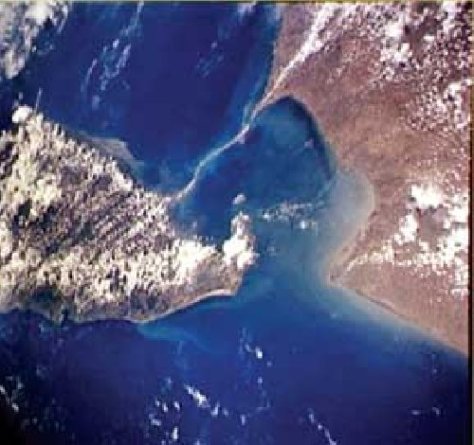
This project aims to reduce the shipping distance from the southern tip of the east coast of India to the northern parts of the coast, by constructing a route through the Gulf of Mannar to the Bay of Bengal. Ships will then be able to go northwards directly through the narrow Palk Strait between the east coast of India and the west coast of Sri Lanka, rather than swinging around Sri Lanka as at present. It is claimed that this project will save time and money for shipping companies, and is expected to radically increase the volume of traffic in that region.
In order to build the canal, an underwater bridge connecting India and Sri Lanka along the Palk Strait would have to be destroyed. Depending on your point of view this bridge is either a natural formation of limestone shoals (Adam’s Bridge), which linked Sri Lanka to the Asian continent in the last Ice Age, or it was built by Hanuman’s army to cross over to Sri Lanka to rescue Sita (Ram Setu as it tends to be referred to in English and North Indian media, but known locally as Ramar Sethu, in Tamil). Continue reading Ram Setu: The ecological argument against the Sethusamudram project
Even you are very beautiful: Nikitha Suryadevara
Guest post by NIKITHA SURYADEVARA
Bhopal: Janata Dal (United) President Sharad Yadav today stunned many at a press conference in Bhopal when he called a woman reporter “beautiful.”
The journalist asked him whether he prefers Madhya Pradesh or Bihar – he has represented both in Parliament.
The chief of the Janata Dal (United) dodged a bullet by saying, “The whole country is beautiful.”
Then came the unexpected remark – “Even you are very beautiful,” he said.
So I figuratively raised an eyebrow when I first read this (raising just one eyebrow is much harder than it looks, trust me I’ve tried). The reporter asked him a question designed to make the man fumble, but Mr Sharad Yadav is just too suave. When asked to pick between one of his two constituencies, he swiftly pointed to the reporters beauty instead. Well that seems like a logical conclusion. Continue reading Even you are very beautiful: Nikitha Suryadevara
Dalit and Adivasi Women Warriors Question Caste and Gender Oppression: Sujatha Surepally
Posted at Round Table India
SUJATA SUREPALLY shares her impressions from the first National Dalit and Adivasi Women’s Congress held on February 15-16, 2013, at Tata Institute of Social Sciences, Mumbai.
We live in nature! We die in Nature! It’s our life, if you occupy our land where should we go and how do we live? Whose land is this?

The hall is echoing with the furious voice of Dayamani Barla, veteran Adivasi activist from Jharkhand. She is trying to unite people against mining in Jharkhand, around 108 mining companies are waiting to destroy Adivasi life in the name of mining, first they come for coal, next they say power houses, it continues, we are pushed out and out further. How do we live without our land? Spectacular speech for an hour, pin drop silence all around, everyone is identifying with her pain and agony. At the end of it, what is she is trying to convey?
Humko Jeene Do! Let us live our own life! If this is called development, we care a damn about it! Blanket statement. [Continue reading]
Dear Sisters (and brothers?) at Harvard
Letter from Indian feminists VRINDA GROVER, MARY E JOHN, KAVITA PANJABI, SHILPA PHADKE, SHWETA VACHANI, URVASHI BUTALIA and others, to their siblings at Harvard
We’re a group of Indian feminists and we are delighted to learn that the Harvard community – without doubt one of the most learned in the world – has seen fit to set up a Policy Task Force entitled ‘Beyond Gender Equality’ and that you are preparing to offer recommendations to India (and other South Asian countries) in the wake of the New Delhi gang rape and murder. Not since the days of Katherine Mayo have American women – and American feminists – felt such a concern for their less privileged Third World sisters. Mayo’s concern, at that time, was to ensure that the Indian State (then the colonial State) did not leave Indian women in the lurch, at the mercy of their men, and that it retained power and the rule of the just. Yours, we see, is to work towards ensuring that steps are put in place that can help the Indian State in its implementation of the recommendations of the Justice Verma Committee, a responsibility the Indian State must take up. This is clearly something that we, Indian feminists and activists who have been involved in the women’s movement here for several decades, are incapable of doing, and it was with a sense of overwhelming relief that we read of your intention to step into this breach. Continue reading Dear Sisters (and brothers?) at Harvard
What is wrong with this picture? Carole Vance
Guest post by CAROLE VANCE
Two faculty members at Harvard, associated with gender studies, convene a Policy Task Force, designed to “to offer recommendations to India and other South Asian countries in the wake of the New Delhi gang rape and murder” and in this semester “to produce a working paper that advises on the implementation of the recommendations from the Verma Committee”. This is not a student initiative, though a meeting with students is scheduled to invite their input, along with that of the larger Harvard community. Continue reading What is wrong with this picture? Carole Vance
Unintended consequences of feminist action: Prabha Kotiswaran
Guest post by PRABHA KOTISWARAN
Taking off from the debate here on the Harvard Task Force, I’d like to flag some disagreements among feminists on law reforms. There are many strains to this debate – I will only engage with a few.
No feminist, whether of Indian origin or not, whether primarily located in India or not, is insecure about feminists/lawyers around the world working on rape in India. Circuits of feminist scholarship and activism become so inter-disciplinary and transnational that maintaining and policing turf (if at all that were possible) is an utterly useless endeavour. Continue reading Unintended consequences of feminist action: Prabha Kotiswaran
Harvard to the rescue!
Some good news for embattled and weary Indian feminists. All those endless submissions to the Verma Committee prepared and submitted, all those critiques of the Ordinance written and disseminated, all those street protests, all those meetings with students and the public, all those delegations to government officials, ministers…not to mention decades of efforts to amend the rape laws.
It’s been a long hard haul, so it’s a great relief that the Harvard Law School has stepped in to take this burden off our shoulders. Continue reading Harvard to the rescue!
Health professionals and sexual assault – some resources from CEHAT
These are some resources available from Centre for Enquiry into Health & Allied Themes (CEHAT)
Role of Health Systems in Responding to Sexual Assault – Frequently Asked Questions
What is the role of Health Professionals in responding to survivors of sexual assault?
Health professionals have a dual role to play in responding to survivors of sexual assault. Firstly, they are required to provide medical treatment and psychological care to survivors as sexual assault has short and long-term physical and psychological effects. Secondly, the health professional is required to perform a ‘medico-legal examination’. This entails accurate documentation, examination, collection of forensic evidence and provision of a medical opinion related to the assault, which can serve as evidence in the
court of law.
Read the rest of this manual here.
Links to more resources for health professionals dealing with sexual assault
Two Encounters with the Right Wing: Anonymous
I have never been so scared of being a minority before. Today I saw two Kashmiris (a girl and a boy) being chased by a mob in what was to be a silent protest. I don’t know when and what circumstances will bring me to running from a mob to save myself. No one deserves to live in fear. Not me, not the two Kashmiris, not even a fiend.
We remember Gujarat 2002. And we know you’re lying about development.

Don’t tell us stories about development, Narendra Modi. Your Vibrant Gujarat and claims of development are shameless hollow lies, and even if they were true, it would still be an unethical and blood-stained development.
But they are lies, Modi, lies.
Here’s a report by Pranjal Sharma in Business World that sees through the working of your aggressive PR machinery:
The Centre for Monitoring Indian Economy (CMIE) recently examined the investment statistics flaunted by the Gujarat. The Vibrant Gujarat investment summit held by the chief minister has been projected to have earned billions of dollars of fresh investment into India. But a closer look at the figures reveals a different story. Only a small percentage of projects announced in Vibrant Gujarat (VG) summits in 2009 and 2011 have actually moved on the ground. The details of many grand projects are missing… Continue reading We remember Gujarat 2002. And we know you’re lying about development.
A crumbling fourth pillar, and the forgotten politics of boycott: Manav Bhushan
Guest post by MANAV BHUSHAN
Assaulted as we are by the deafening cacophony of India’s 24-hour news channels (183 of them, as Manav Bhushan tells us below), there are some of us who for a long time now, have simply refused to appear on TV “debates”, to give them sound bytes to be seamlessly incorporated into their endlessly looping mindlessness. Essentially, we have exercised a politics of refusal – we will not add to the din. At a recent meeting on media ethics at the Indian Women’s Press Corps, I had expressed a fervent desire that every single 24-hour news channel should shut shop for one week while they went into deep introspection – one week of blessedly blank screens, one week of healing quiet in which people could once again learn to listen, to remember that there can be more than 2 or 3 sound-bytes through which to capture the complexities of the world in which we live. MANAV BHUSHAN makes a more radical suggestion below – that we exercise the only power we have under capitalism, our power as consumers, and exercise a week-long boycott of a news channel for specific reasons, to force drastic changes to its policy and style of functioning. “In an age where each channel depends more on our TRPs than we do on any one of them, we hold enormous, albeit unrealized power,” he says. Over to Manav:
In a speech delivered at the Reuters memorial lecture in November 2012 at Oxford University discussing the Indian news industry, Prannoy Roy candidly said that ”Indian news is currently in a race to the bottom”. He further added that upon comparing the average TV viewership in India (1 hour) to that in the US (5 hours), one is led to the utterly dismal conclusion that this race is far from over. Of course, this is nothing new, and anyone who has followed the ‘debates’ (if you can call them that) on the extremely unfortunate incidents at the LOC can testify that the shows conducted by Arnab Goswami and Barkha Dutt were less news and more war-mongering. In fact, the brutal truth about the flourishing news industry- which has gone from one state-run news channel to 183 independent news channels in just 25 years- is that many of its members are in the business of blackmail, of selling sex, violence and are prepared to go to any lengths for the sake of advertising revenues. And there is a difference, though subtle, between advertising revenues and television rating points (TRPs). Continue reading A crumbling fourth pillar, and the forgotten politics of boycott: Manav Bhushan
The Criminal Law Ordinance 2013 on Sexual Assault – Cut, Paste and Shock! Pratiksha Baxi
Guest post by PRATIKSHA BAXI
Once the Criminal Law Ordinance 2013 was uploaded, circulated and read many times, an overwhelming desire to mark the ordinance to all one’s students as an example on how not to frame laws has grown. Yet, explain one must, why the current law on sexual assault is so bizarre, even if we do not bring in the so-called controversial elements and keep to the text of the ordinance.
The Criminal Law Ordinance 2013 begins with the definition of sexual assault as a gender-neutral offence. It does not make an exception to state that women do not rape men in everyday contexts under s. 375. Since such an exception is not added, and the ordinance specifies that ‘sexual intercourse or sexual acts by a man with his own wife, the wife not being under sixteen years of age, is not sexual assault’, we are faced with a confounding and deeply misogynist legal consequence. Wives, we are told cannot prosecute husbands for sexually assaulting them. But since sexual assault is gender neutral without any exceptions and the marital rape exemption is not extended to husbands, now husbands can accuse wives of sexual assault but wives can never prosecute husbands for sexual assault! Continue reading The Criminal Law Ordinance 2013 on Sexual Assault – Cut, Paste and Shock! Pratiksha Baxi
Why the law on sexual offences must be changed: Madhu Mehra
Guest post by MADHU MEHRA
The public outrage in the wake of the Delhi gang rape has been as much a reaction to the brutality of the case, as it has been against the pervasiveness of sexual violence in our society. Instead of condemnation and action, rape cases frequently evoke public statements blaming the victims, and calls to reign in women’s freedom. That our social structures and mindsets remain patriarchal is well known. The question however is, to what extent does the law counter societal misogyny in the way it frames and responds to sexual violence? Do the criminal laws establish norms that uphold women’s bodily integrity and dignity in all situations, against all offenders without selectivity or discrimination? Continue reading Why the law on sexual offences must be changed: Madhu Mehra
“The impunity of every citadel is intact” – the taming of the Verma Committee Report, and some troubling doubts
Legal activist Vrinda Grover said in the FeministsIndia e-list about the Ordinance: “The impunity of every citadel is intact – family, marriage, public servants, army, police.” In effect, she said, the Ordinance is simply the pending Criminal Law Amendment Bill 2012, widely criticized by women’s organizations, which has been sneaked in as law without debate or consultation, in Parliament or outside. Feminists activists are rightly suspicious of the sudden sense of “emergency” that has gripped the government, when it has ignored our demands for criminal law reform on sexual violence for over twenty years.
Here I will document two press releases issued by women’s groups, and draw attention to some troubling and unresolved debates within the women’s movement in India today. The post will conclude with a useful table comparing the Ordinance and the JVC Report, issued by the Ministry of Home Affairs. Continue reading “The impunity of every citadel is intact” – the taming of the Verma Committee Report, and some troubling doubts
Sexual Violence, Consumer Culture and Feminist Politics – Rethinking the Critique of Commodification : Sreenanti Banerjee
Guest Post by SREENANTI BANERJEE
I will begin with the by now well-known interview of author and social activist Arundhati Roy, conducted by Channel 4 (a British Media House), about the widespread protests after the horrific December 16th incident of the brutal gangrape of the 23 year old medical student in Delhi. Permit me to quote Roy at length as I do not wish to take bits and pieces from her talk, and pluck them out of their context.
We are having an unexceptional reaction to an event which isn’t exceptional […] But the problem is that why is this crime creating such a lot of outrage is because it plays into the idea of the criminal poor, the vegetable vendor, the gym instructor, the bus driver actually assaulting a middle-class girl. But when rape is used as a means of domination by upper castes, by the army or the police it’s not even punished. Continue reading Sexual Violence, Consumer Culture and Feminist Politics – Rethinking the Critique of Commodification : Sreenanti Banerjee
Learning gender, learning caste: two reflections
We received two brief submissions separately sent by two women, reflecting on incidents in their childhood or youth that returned to haunt them more recently. Rethinking, reworking their own sense of self, they present before us questions both timely and urgent.
AYSHWARIA SEKHER looks back on her ignorance of caste, PRANETA JHA revisits a childhood game that taught her about sexual violence.
AYSHWARIA SEKHER
I was seventeen, and an undergraduate when I met this friend at hostel. She was from a southern district of Tamilnadu almost near Kanyakumari. I was always amused by her southern dialect and teased her immensely, for it was very different from what I was used to speaking, being a northerner. She lived next door at hostel, so we got into conversations every time we bumped into each other. One evening she was sweeping her room and cleaning it. I stopped by to see the way she swept so I could bully her. As I observed I did realise that she was so much better than me at it and did it with ease. As we got talking, she revealed that she always did it at her home, and it was not a task for her.
Ignorantly I enquired why they did not have a help at home, which according to me was something that every household possessed. She looked at me, and brushed aside the question plainly, saying simply that they just didn’t have any help. I pestered with the question giving her no space. She stopped sweeping and rested her hand against the wall and said that people would not come to her house to work. I was amazed at why people would not go to a home for work. So my cross questions persisted and she had no choice but to answer.
Continue reading Learning gender, learning caste: two reflections