All posts by Sohail Hashmi

Supporter of Causes no longer fashionable in these days of globalisation, script writer on documentaries on above causes and a chronic optimist

Playback of a golden voice

In this country of almost a billion and a quarter you might find some people who have not heard of Mohammed Rafi. In such a scenario, My Abba: A Memoir, a book on the great singer written by his daughter-in-law Yasmin Khalid Rafi in its stream of conscience kind of technique, connects one to his life like no other book. Yasmin is writing about someone she idolised and loved, like only a daughter can. When she talks of him, a jumble of memories comes rushing back and surrounds her—the songs she liked, the music directors who worked with Rafi Saheb, his simplicity, his generousness, his love for his family, his insecurities, his inability to be flamboyant, the metamorphosis that transformed him into a great performer the moment he set foot on the stage. Continue reading Playback of a golden voice
Chit-funded media

With the Sarandha chit fun scam in West Bengal, a side-effect has been the going bust of its media investments. Seema Guha, Delhi bureau chief of the recently shut down Bengal Post writes in The Hoot:

The executive editor Ranabir Roychowdhury and several of the core journalist team were known to us, but none of us had ever heard the name of Sudipta Sen, the owner. We in Delhi were far away, but our colleagues in Kolkata too did not know anything about him, except that he was a real estate tycoon with a land bank of 100 acres or more. He was also into chit funds. It was much later that we came to know that this was his main business, our money was basically derived from the collections Saradha made from the poorest people in Bengal and other eastern states. He had business in the north east as well as in Odisha. [Read the full article]

Statement by concerned academicians on the death of a student in police custody in Kolkata

We have watched with disgust and horror the brutal police assault on students during a peaceful demonstration organized by four Left students’ organizations on 2nd April, 2013 in Kolkata and the subsequent death of Sudipta Gupta, a participant in the demonstration, while in police custody.  Sudipta was a bright student and a leading activist of the Students’ Federation of India. We are shocked to see the Chief Minister of the state absolve the police of any responsibility for Sudipta’s death before a proper enquiry had even been initiated. We do not perceive this incident as an isolated one but rather as the egregious culmination of a series of systematic attacks on the civil and democratic rights of the academic community in West Bengal over recent months.  We strongly condemn this unprovoked singular attack on a peaceful students’ demonstration and the subsequent custodial death of Sudipta Gupta. We demand an immediate and impartial enquiry into the incident.  Continue reading Statement by concerned academicians on the death of a student in police custody in Kolkata

The love story of Quli Qutub and Bhagmati, and other tragic endings

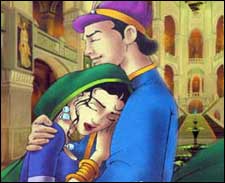
Still from an animation film, 'Bhaggmati'
Still from an animation film, ‘Bhaggmati’

For some strange reason, all, or almost all love legends have a tragic end. I cannot recall too many that end with “and they lived happily ever after”. In fact, Romeo-Juliet, Laila-Majnun, Heer-Ranjha, Sohini-Mahiwal, Sassi-Pannun, Dhola-Maru, Saif-ul-Malook-o-Badi-uj-Jamaal – the list of unhappy lovers separated by the cruel hands of society, scheming relatives, jealous rivals, misunderstandings and plain simple divine design is endless.

Amidst such tears and tragedies, poison-tipped swords and daggers, deceit and chicanery, there is a story of love that makes you believe that this world can’t be all bad. The most fascinating and enduring quality of this legend of love is that it is not a legend, it is fact, well mostly. And this is how it goes. Continue reading The love story of Quli Qutub and Bhagmati, and other tragic endings

Ageless chisel: The rock-cut caves of Ellora

Cross-section of a frieze in Cave 16, or the Kailasa Temple

The Ellora caves, locally known as ‘Verul Leni’ and located on the Aurangabad-Chalisgaon road, were, like the Ajanta caves,carved out of the terraces that were formed as a result of the great movements in the crust of the earth that began millions of years ago. A part of land that had broken off the Australian landmass drifted north and began to push against the Laurasian plate about 65 million years ago, giving birth to the Himalayas at one end and triggering hectic volcanic activity at the point of contact. The resulting waves of lava flow solidified into layers, or terraces, spread across hundreds of miles. Both Ajanta and Ellora are located on this massive lava flow known as the Deccan trap. Incidentally, the Deccan trap is full of man-made caves. Maha-rashtra alone has about 1,200 big or small caves or big and small cave clusters and close to 75 per cent of them (about 900) are Buddhist caves. Continue reading Ageless chisel: The rock-cut caves of Ellora

Petition – End the Scourge of Manual Scavenging

This statement is based on a Seminar attended by representatives of Safai Karamchari Andolan, Republic Trade Union of India, Centre of Indian Trade Unions, Tamil Nadu Untouchability Eradication Front; Advocates, Doctors and Health Activists; Faculty and Students of MIDS, IIT-M, New College, ACJ, MSE, Madras University among others. The discussion was one among many incidents happening across the country to support the struggle for abolishing manual scavenging and rehabilitation of manual scavengers.

Others who would wish to endorse this statement may please use the link attached along with this post (from change.org) to sign it.  http://www.change.org/en-IN/petitions/end-the-scourge-of-manual-scavenging-now.

More than a million people (mostly Dalit women and children) in India are still being ordained by the caste-ridden social order to clean the refuse of society with their bare hands. They are systemically forced to sell their labour-power, at a minimal price, to perform this inhuman task – what is termed as “Manual Scavenging”. People from particular Dalit communities, cutting across region and religion, are vulnerable to early death due to fatal infections, disease and exposure to toxic gases that manual scavenging entails. Further, age old casteism, continues to stigmatize and humiliate manual scavengers suppressing them to the status of “lesser humans”. Continue reading Petition – End the Scourge of Manual Scavenging

New Delhi: A heritage zone at 80!

In 1988 Lutyen’s Delhi, was declared a heritage zone by prohibiting building activity within the 26 square kilometre area out of the 43 Sq. Km. area that falls within the civic control of New Delhi Municipal Committee (NDMC). A move has now been initiated to get the entire area declared a World Heritage site.

The very logic of an area being declared a Heritage Zone should preclude any interference with the layout and design of the entire zone. Non-interference also means that, future building and development activity, if at all permitted, has to conform to the original parameters of design, materials, fittings and fixtures used, building techniques, landscaping and the kinds of trees planted in the heritage zone.

Even before the 1988 freeze on construction, there was a master plan for Delhi and it clearly identified the Lutyen’s Bungalow Zone as an area where high rises were not to be permitted.

The actual violations began when this rule was selectively relaxed beginning with permission given in the mid 70s to construct the high rise Sagar Apartments on Tilak Marg. High rises like Asha Deep and Dakshineshwar on Hailey Road followed shortly thereafter. Continue reading New Delhi: A heritage zone at 80!

दिल्ली बनाम बम्बई

भारत के दो महानगरों राष्ट्रिय राजधानी दिल्ली और बम्बई को यूनेस्को द्वारा विश्व धरोहर की सूची में नामांकित करने की तैयारियां चल रही हैं, कुछ मित्रों ने दिल्ली या बम्बई की बहस शुरू कर दी है जो वास्तव में पूर्णत: अनर्गल बात है.

में दिल्ली बनाम बम्बई के पचड़े में पड़ने के बजाये ये सवाल पूछना चाहता हूँ के ऐसा क्यों है के 65,436,552 की कुल आबादी और 6,74,800 वर्ग किलोमीटर के कुल क्षेत्रफल वाले फ्रांस में 35 स्थान, नगर, इमारतें प्राकृतिक स्थल आदि ऐसे हैं जो विश्व धरोहर की सूची में शामिल किये गए हैं मगर इस सूची में भारत का नाम केवल 29 बार ही आता है.

जो सवाल पूछना ज़रूरी है वो यह के सिर्फ दिल्ली या/और बम्बई ही क्यों? जोधपुर, जयपुर, अजमेर, इंदौर, उज्जैन, भोपाल, बनारस, इलाहबाद, लखनऊ, पटना, वैशाली, हैदराबाद, विदिशा कालिंजर, मदुरै, कांचीपुरम कलकत्ता और मद्रास क्यों नहीं ?, आप ने नोट किया होगा के बम्बई कलकत्ता और मद्रास के नए नाम में इस्तेमाल नहीं कर रहा हूँ और दिल्ली को भी देहली नहीं लिखा है. यह जान बूझ कर किया जा रहा है दरअसल विरासत कहीं अतीत में जड़ हो गयी कोई चीज़ नहीं है और इसलिए नाम बदलने की समस्त परियोजनाएं विरासत से छेड़ छाड करने की निन्दनीय प्रवर्ति का ही हिस्सा हैं. Continue reading दिल्ली बनाम बम्बई

हिंदी का संकट: कुलदीप कुमार

जनसत्ता के 23 सितम्बर, 2012 के अंक में प्रकाशित कुलदीप कुमार के स्तंभ “निनाद” को हम थोड़े संशोधन के साथ छाप रहे हैं.

दक्षिण अफ्रीका के जोहान्स्बर्ग शहर में विश्व हिन्दी सम्मेलन हो रहा है। पहला सम्मेलन 1975 में नागपुर में हुआ था जिसमें जवाहरलाल नेहरू विश्वविद्यालय की ओर से एक प्रतिनिधिमंडल शामिल हुआ था। मैं उन दिनों विश्वविद्यालय की साहित्य सभा का सचिव था और पंकज सिंह उसके अध्यक्ष थे। कवि मनमोहन भी प्रतिनिधिमंडल में शामिल थे। तब तक इमरजेंसी नहीं लगी थी। अगर मेरी स्मृति धोखा नहीं दे रही तो वह जनवरी का महीना था। देश में जेपी आंदोलन ज़ोरों पर था और प्रधानमंत्री इन्दिरा गांधी ख़ासी अलोकप्रिय हो चुकी थीं। हम इस सम्मेलन को तमाशा समझते थे और उसका विरोध करने ही नागपुर पहुंचे थे। दिल्ली से ही एक बयान साइक्लोस्टाइल कराके ले गए थे। जैसे ही इन्दिरा गांधी ने अपना उदघाटन भाषण देना शुरू किया, हम सबने उठकर विरोध में नारे लगाने शुरू कर दिये और उपस्थित प्रतिनिधियों के बीच विरोध-वक्तव्य की प्रतियाँ बांटने लगे। सुबह-सुबह कुछ प्रतिनिधियों के कमरों में दरवाजे के नीचे से हम अपने बयान की प्रतियाँ खिसका आए थे। जैसा कि होना था, बाद में हमें पुलिस ने धर लिया। Continue reading हिंदी का संकट: कुलदीप कुमार

Saving our heritage

The National Commission for Minorities (NCM) received a letter from the Jamiat-ul Ulama-e-Hind. The letter wanted 31 protected mosques to be opened for prayers. “Although the commission was not very keen that heritage monuments should be opened for prayers, it decided to suggest a joint survey for ascertaining the condition of these mosques.” Officials from the NCM, the Archaeological Survey of India (ASI) and the Wakf Board will carry out the joint inspection according to the suggestion made by the commission in its letter sent to the Ministry of Culture towards the end of July.

This reference made by the NCM needs to be looked at a little carefully, because the issue is not likely to remain restricted to these 31 mosques nor will it remain confined to Delhi. The reference impinges on questions of law and will eventually inform our attitude to the wider question of heritage protection. Continue reading Saving our heritage

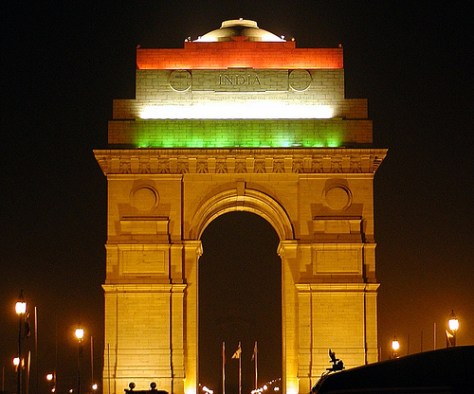
India Gate vs. India

August 15 marked the 65 anniversary of India’s Independence from foreign rule and colonialism. September 21 will mark the 155 anniversary of the recapture of Delhi by the British and the end of the first valiant rebellion against foreign rule.

Between May 11, 1857 and May 21, 1857, Delhi was free of the British. The rebel soldiers had chosen Bahadur Shah Zafar as their leader and since the Red Fort was where he lived, the Lal Qila came to be seen as the centre of the First War of Independence. Delhi was seen as the heart of India and Lal Qila was the heart of Delhi and that is why once the British recaptured Delhi they wasted no time in arresting Bahadur Shah Zafar and quickly moving into the fort. Continue reading India Gate vs. India

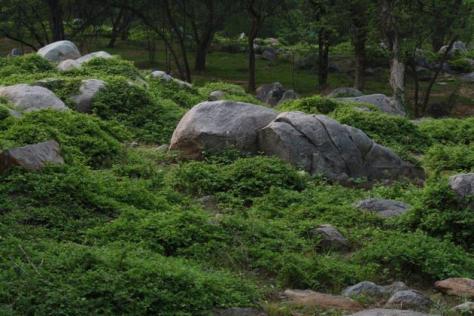
Can we save the last natural forest in the vicinity of Delhi?

The road that leads to Faridabad from Gurgaon used to be a sleepy little one before it was expanded into a four lane expressway. The local villagers for some reason call it the ‘Relaynce’ (Reliance) Road, I am not writing this piece to speculate on their reasons, but because I want to take you off this road.

Get to Andheria Mod and ask for directions to the Gurgaon-Faridabad Road. Once on this road be on the lookout for the Gwal Pahari Campus of TERI (Tata Energy Research Institute). It would appear to your left, keep driving. A little while later if another structure looms into view, this time to your right and if simultaneously your senses are assailed by the stench of garbage you should feel assured that you have successfully stuck to the right path. Whoever said that the search for the divine is fraught with great challenges was not joking.

Why the search for the divine, because that is where I am leading you. Continue reading Can we save the last natural forest in the vicinity of Delhi?

Discordant notes: A review of Sadia Dehalvi’s “The Sufi Courtyard: Dargahs of Delhi”

The Sufi Courtyard: Dargahs of Delhi by Sadia Dehlvi; pp 252; Harper Collins Publishers, India, 2012

There is a sudden spurt of interest in Sufism among a section of our population that did not have such an interest a decade or two ago. Some were introduced to Sufism and its spiritual philosophical moorings through interactions with those who knew something about it, and realised that the ideas of Wahdat-ul-Wujood had parallels in the Adwait philosophy and it was this consonance that intrigued many to an extent that they got interested in exploring Sufism a little more. There were others who discovered Sufism through the west. Just as many had discovered Hindustani classical music when George Harrison began to learn the Sitar from Pandit Ravi Shankar in the ’60s, there are those who discovered Rumi when there was a spurt of interest in Jalal-ud-Din Rumi in the west, particularly in the US, with several translations appearing within a short span. Rumi has been known for centuries in our parts as Maulana Room; his poetry was quoted by Persian-knowing Indians till the 1950s and early 1960s, in conversations and writings, almost as often as Mir and Ghalib are quoted by the Urduwallas. An introduction to Rumi in the last decade or so has led eventually and inevitably to Sufism and a kindling of interest in our own indigenous Sufis. Continue reading Discordant notes: A review of Sadia Dehalvi’s “The Sufi Courtyard: Dargahs of Delhi”

The Myth of the Muslim Vote Bank

The recently concluded assembly elections in U.P were marked once again by an intensified debate on ‘Vote Bank Politics’. The debate was not provoked by the emergence of any new trends in political mobilization but was the standard fare that is dished out by so called commentators, experts, political analysts and people who not only think that they have inside information about how entire communities think and react, they also claim that there are agencies capable of engineering conditions that programme these communities to go and vote for this or that party.

The essential argument behind this discourse hinges on two presuppositions, one that particular religion or caste based communities can be mobilised and made to move in one pre-determined direction and two that this becomes possible because such communities react and behave as one individual and therefore all that is required is to catch hold of a handful of community leaders and you can as good as have the entire community in your pocket. Continue reading The Myth of the Muslim Vote Bank

Mangoes and me

My childhood memories are so deeply intertwined with mango eating that it is difficult to separate the two. One reason for this is probably because the season of mangoes and the summer breaks in school coincided. We took our last exam and the schools closed their doors, to reopen after two and a half months. Educationists had not yet discovered Holiday Homework, the Summer Break torture, For parents and children and the summer vacations were an unmitigated joy. Those days we stayed at Aligarh, and every year we travelled to Delhi to spend time with our aunts and uncles, all cousins of our father.

Continue reading Mangoes and me

Life and its suburbs

The writings of Ismat Chughtai and Saadat Hasan Manto, perhaps two of the finest writers of the short story in any language, have begun to attract a much larger audience thanks to the many translations in English and other languages and transliterations in Hindi that have become available in recent years. All the translations are not as good as they should be but Asaduddin’s work is top-of-the-shelf stuff.
The title chosen by Ismat for her autobiography—Kaghazi Hai Pairahan, literally robes of paper—is an allusion to petitioners appearing in court dressed in paper robes with their complaints inscribed upon them. The phrase is iconic, drawn as it is from the first ghazal from Ghalib’s anthology. Asaduddin’s translation of the title, A Life in Words: Memoirs, is a little extended perhaps, but translating Ghalib, with all the hidden, multi-layered nuances, is next to impossible. Everything else about the book is worth treasuring. You can’t possibly commend a translation more than this; if there are faults, they are faults carried over from the original, like the mixing up of Sheikh Chilli and Sheikh Saleem Chishti in ‘Conflict’ or perhaps a little printer’s devil that has turned Majaz’s sister Safia Siraj, who was to marry Jan Nisar Akhtar, into Sufia Siraj. Continue reading Life and its suburbs

Where have all the ghosts gone?

Two friends and I had gone to interview an old lady born 90 years ago in 1922. We had hoped to jog her memory about events that she had seen unfold, and events that she had heard her parents and grandparents talk about. We were hoping to get a slice of history going back a century and a quarter, but things did not work out as well as we had thought. Nevertheless, we got lucky through Saeed-ur-Rehman, her 72 year old son. He told us much about Delhi and about a real life encounter that his maternal grandfather and uncle had with the Jinn of Ferozeshah Kotla.

 This is how he related the encounter:

 “My Nana [maternal grandfather] was a great one for fishing and his favourite spot for fishing was the Firozeshah Kotla. In those days the Jamuna used to flow right next to the Kotla wall, and my Nana would go there often. He would carry his huqqa with him, cast the line and sit puffing away at and wait for the fish to take the bait. He would spend the better part of the day there and return with a bagful of fish in the evening. One afternoon he asked our Mamu [maternal uncle] to accompany him and this is what our Mamu told us about the events of the day. Continue reading Where have all the ghosts gone?

Delhi 1803-2012: A Brief Biography

Delhi, Or Dilli has been a city and a capital for a long time and even when it was not the capital, during the Lodi and early Mughal period, and later between 1858 and 1911, it continued to be an important city. We are of course talking of what is historically established and not of myths and legends. During this period there have been 7 major and several minor cities within the territories now identified as the National Capital Territory of Delhi (NCR-Delhi). New Delhi is the eight city. This piece marking the hundred years of the shifting of the colonial capital to Delhi from Calcutta in 1912, will talk about both Shahjahanabad and New Delhi. We will see how  Shahjahanabad the once most powerful and rich city of its time and the last capital of the Mughals was gradually  ruined, plundered and virtually reduced to a slum  while next door arose, a new enclave of Imperial grandeur known now as New Delhi. Continue reading Delhi 1803-2012: A Brief Biography

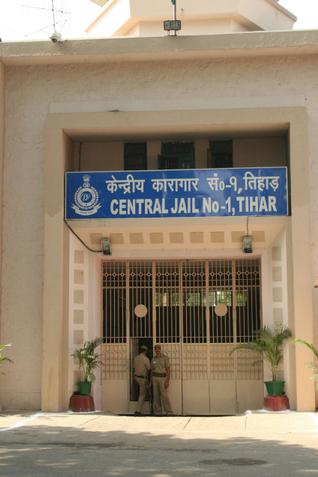
My Days in Tihar Jail

Mrs Gandhi, the then Prime Minister of India, represented the Rai Bareli seat in the Lok Sabha. On 12th June 1975 she was unseated on charges of election fraud and misuse of state machinery in a landmark judgement by Justice Jagmohan Lal Sinha of the Allahabad High Court.  Fakhr-ud-Din Ali Ahmad, the then President of India, declared internal emergency on the 25th of June,  on the recommendation of a pliable cabinet presided over by Mrs G. The people of India lost all civil liberties for a period of 21 months.
Trade unions were emasculated, political opponents were arrested, newspapers censored, the only place where a semblance of freedom survived, for a short while, were the universities, most were in turmoil and were being singled out for special attention. Students unions were being banned and activists were being picked up and thrown in jail.

Continue reading My Days in Tihar Jail

You can’t show light to those who have chosen darkness: The Case of Imam Bukhari

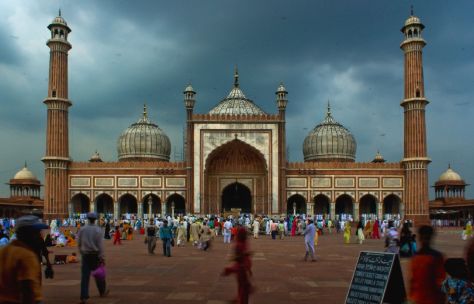
The Delhi Jama Masjid. Photo via Wikipedia.

The Imam of the Delhi Jama Masjid has issued a statement that calls upon the Muslim voters of Uttar Pradesh to vote for the Samajwadi Party of Mulayam Singh Yadav. A whole lot of poll experts are going to rejig their forecasts to factor in this new and hitherto unexpected development.

We would be told that this call is going to alter the political equations in UP in a very profound manner. We will be told that the Muslim electorate is going to shift to the SP and that this shift will create serious problems for the Bahujan Samaj Party in its bid for a comeback and for the Congress that is making serious efforts to emerge as Number Two.

The assumption behind these two assertions is that Muslims who voted for these parties in the last election are going to desert them now because of the statement issued by the Imam of Jama Masjid of Delhi.

Before the psephologists get down to business with their abacuses, their TINA factor analysis, their complex equations dealing with social demographics, voter fatigue,  identity markers and what have you, it might be useful for them to contemplate three questions: Continue reading You can’t show light to those who have chosen darkness: The Case of Imam Bukhari

From Dehli to New Delhi, it wasn’t 1911

Amidst the cacophony of celebrating 100 years of Delhi, several details seem to have escaped the attention of our ever vigilant media, both print and electronic. This post is to draw your attention to a few of these ‘details’ in an attempt to place the celebrations in what appears to this author to be the correct perspective.

The 12th of December, 2011, can not by any stretch of imagination be described the centenary of Delhi, because there were at least 7 Dehlis before New Delhi came up, in fact 9 Dehlis if one were to add Kilokhri and Kotla Mubarakpurpur, Dehlis in their own right, to the generally accepted list of Qila Rai Pithora, Siri, Tughlaqabad, Jahan Panah, Firozeshah Kotla, Din Panah or Sher Garh or Purana Qila and Shahjahanabad. All of these came up at different times from the  11th century to the 17th century and all of these were more than a 100 years ago.

All that the 12th of December 2011 can claim to be the centenary of, therefore, is New Delhi. Let us look at even that claim a little more closely. What exactly transpired on the 12th of December 1911 that is causing so much excitement a 100 years later? Continue reading From Dehli to New Delhi, it wasn’t 1911