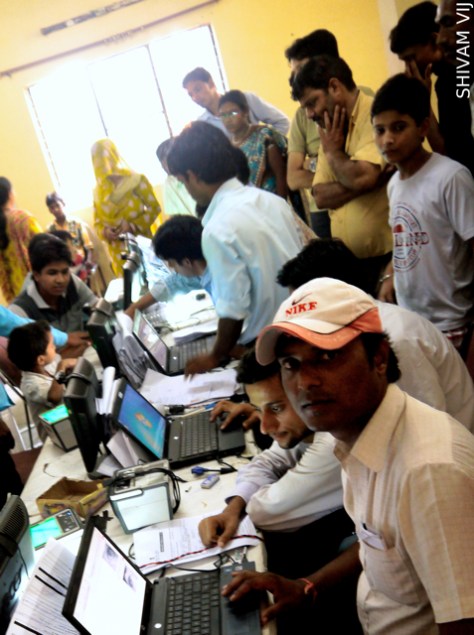
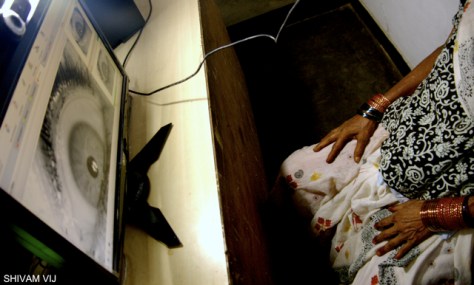
Contrary to what his name suggests, Bechu Lal Yadav, 29, isn’t a seller of goods. He is a recordist of identity. He is amongst a new breed of technical professionals that have come up overnight – the Biometricwallahs. Continue reading The Biometricwallah→
We write to protest the denial of entry to David Barsamian by Immigration Authorities at the New Delhi airport in the early hours of September 23, 2011, and we write to draw attention to the growing arbitrariness of the Indian Government in dealing with dissent of any kind.
David Barsamian is a veteran broadcaster, and founder and director of Alternative Radio, a weekly one-hour public affairs program offered free to all public radio stations in the US, Canada, Europe and beyond. For more than 25 years Alternative Radio has provided information, analyses and views that are frequently ignored in other media. Structured around intensive interviews conducted by David Barsamian, these programs are carried by over 125 radio stations and heard by millions of listeners. He is the author of numerous books with Edward Said, Eqbal Ahmad, Howard Zinn, Noam Chomsky, Arundhati Roy and Tariq Ali.
This release comes from theASSOCIATION OF PARENTS OF DISAPPEARED PERSONS The Bund Amira Kadal, Srinagar – 190001, Jammu and Kashmir
Press Release: 28th September 2011
Yesterday’s (27th September 2011) statement made by Chief Minister Omar Abdullah on unmarked graves and mass graves is hurtful and amounts to trivializing a serious issue of enforced disappearances and unmarked graves. Association of Parents of Disappeared Persons (APDP) believes that Omar Abdullah’s statement created an impression of him being an advocate of the culpable armed forces personnel as opposed to the representative of the people of Jammu and Kashmir.
Omar Abdullah has said, “The families would have to help us, indicating in which graveyard they suspect their member could be buried so that we will do the needful.” This is a shameless assertion. How would families know where their loved ones are buried? If the family members of the disappeared had any clue, as to where their family members are buried, then they would have already sought the permission for the exhumations from the District Magistrates. Continue reading ‘This obfuscation amounts to complicity’ – APDP response to Omar Abdullah’s speech on unmarked and mass graves→
As the session of the Jammu and Kashmir legislative assembly opens in Srinagar, Amnesty International is writing to all members of the legislative assembly (MLAs) to raise human rights concerns in the house and ensure that such issues are not ignored during the session.
Although there appears to be a consistent decrease in the overall numbers of members of armed groups operating in Jammu and Kashmir (J&K), human right violations continue to remain a significant and widespread concern in the state.
Amnesty International calls on all MLAs to raise human rights issues during the assembly session and call upon the state government to take immediate action required to remedy the situation. In particular, Amnesty International asks you to raise the specific issues below. While not an exhaustive list of human rights concerns in the state, discussion on these would indicate the commitment to human rights of the state legislative assembly and be an important step towards improving the human rights of all residents of Jammu and Kashmir.
This release comes from the INTERNATIONAL PEOPLE’S TRIBUNAL ON HUMAN RIGHTS AND JUSTICE IN INDIAN-ADMINISTERED KASHMIR (IPTK)
Srinagar, September 26, 2011
To: Honourable Members Jammu and Kashmir Legislative Assembly Government of Jammu and Kashmir
Re.: Unknown and Unmarked Graves of Kashmir: Investigation, Prosecution, and Reparation
We appeal to the Members of the Jammu and Kashmir State Legislative Assembly to address the following urgent issues in light of the findings put forward by the State Human Rights Commission of Jammu and Kashmir (SHRC) pertaining to unknown and unmarked graves. The SHRC investigated unmarked graves in Bandipora, Baramulla, Kupwara, and Handwara districts across 38 graveyards and verified 2,156 unidentified bodies in unidentified graves, as documented in its report of July 2011. Continue reading Unknown and Unmarked Graves of Kashmir: Investigation, Prosecution, and Reparation: IPTK→
In a damning revelation, a Right to Information application has revealed the Jihadi Literature that Delhi Police recovered from amongst the belongings of the slain terrorists killed in an encounter at Batla House in Delhi two years ago. The hateful, provocative and extremist nature of the recovered literature should be a matter of alarm for everyone. Given below is the cover of the book that contained the Jihadi Lit: Continue reading Revealed: The Jihadi Literature that Delhi Police Recovered from the Terrorists They Killed in Batla House→
Update: The Press Trust of India confirms the Kashmir angle. See more updates at the end of this post.
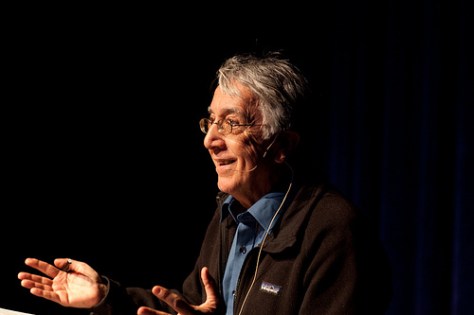
David Barsamian
David Barsamian, founder director of Alternative Radio, and independent radio legend, was deported on arrival from New Delhi airport in the early hours of Sept 23. Details are awaited since David is probably still on the plane back. But between his arrival sometime after midnight, and his being “put back” on a flight at 3am, David was able to only make a quick call to his ‘home’ here in Delhi, to the family of his longtime sitar guru, Debu Chaudhuri. Continue reading India deports radio broadcaster David Barsamian upon arrival at Delhi airport→
It is the sort of place you will not find unless you are looking for it. Even if you find the address in Hardevpuri near Shahdara, you will not know where to knock. There is no signboard that will tell you this is Gautam Book Center. “A signboard will attract the attention of those who don’t like our books,” explains AK Gautam.
This release comes from thePEOPLE’S UNION FOR CIVIL LIBERTIES, Rajasthan
Gopalgarh (Bharatpur, Mewat) Police Firing Incident Preliminary Findings of the Fact Finding Team released in the Press Conference on 19th Sept, 2011
Photo credit: PUCL Rajasthan
This preliminary report of the PUCL team pertains to the incident of the police firing in Gopalgarh, district Bharatpur, Rajasthan. As per the media reports, the police resorted to firing to quell rioting mobs. The government has acknowledged eight deaths and 23 injured in this incident. Following this, the PUCL, Rajasthan constituted a Fact Finding Team to conduct independent inquiry into this incident. The team comprised Kavita Srivastava, National Secretary, PUCL, Professor Shail Mayaram (Delhi), Professor Yogendra Yadav(Delhi), Ms. Nishat Hussain (Vice President, PUCL, Rajasthan) Mr. Sawai Singh (Organising Secretary PUCL, Rajasthan), Mr. Noor Mohammed (PUCL, Alwar), Mr Virendra Vidrohi (PUCL, Alwar), Adv. Ramjan Chowdhary (PUCL, Mewat district, Haryana), Mr Gaurav Srivastava(PUCL intern). Mr. Neelabh Mishra, Editor, Outlook (Hindi) and a section of progressive members of the Gurjar and Meo community also accompanied and assisted the fact finding team. Continue reading ‘Every eye-witness said there was no death before the police intervened’→
This release comes via theNATIONAL ALLIANCE FOR PEOPLE’S MOVEMENTS
Nellore, September 18 : “Government of Andhra Pradesh has given licenses to 28 companies to establish thermal power plants with a total capacity of 32,000 MW. How can a fragile coastal zone can take up so much of ecological pressure ? Is this the way to plan the needs of electricity for development ?” asked the delegates who had come from different parts of the State and joined by eminent social activists Medha Patkar, Sandeep Pandey, Banwari Lal Sharma, Gabriele Dietrich, Sister Celia, Manoj Tyagi, Viveknanad Mathane, P Chennaiah, Ramakrishnam Raju and others. Jan Sansad was hosted by NAPM and Jana Vigyan Vedika at the premises of Nehru Yuva Kendra, Nellore. Continue reading ‘Jan Sansad demands a Development Planning Act not an Act to Facilitate Land Acquisition’→
Wars, insurgencies, floods, an economy in the doldrums, and now dengue. If Pakistan is not a “failed state,” some credit must go to the Pakistani sense of humour.
There’s been terrible out break of Dengue fever in Lahore. 39 have died and the toll keeps rising – it was 36 when I began collecting the material for this post. Sohaib Gulbadan tweets: “My Hizb-ut-Tahrir friend is sharing articles suggesting dengue outbreak in Lahore is a CIA strategy. Acha.”
Perhaps it is in response to that sort of stuff that Haseeb Asif writes this hilarious blog post:
This is a statement put out by the JAMIA TEACHERS’ SOLIDARITY ASSOCIATION
Punish those guilty of misleading probes Compensate the victims NOW!
13 September 2011: The NIA has finally put the official seal on what many activists, the families of the accused and the people of Malegaon had been saying for long: that the arrest of nine Muslim men for the 2008 Malegaon blast was a result of a communal witch-hunt, which passes for investigations into terror charges. As a consequence of the investigating agencies’ hubris and prejudice, nine innocent men had to spend five long years in jail, while their families suffered and they were stigmatized. Continue reading Lessons from Malegaon: JTSA→
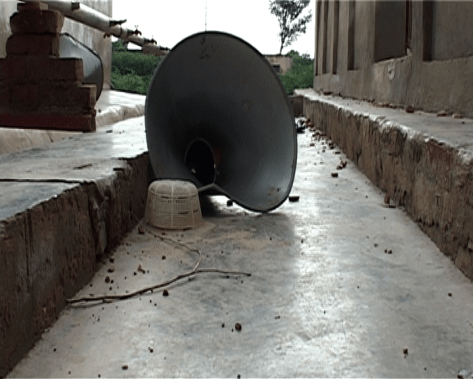
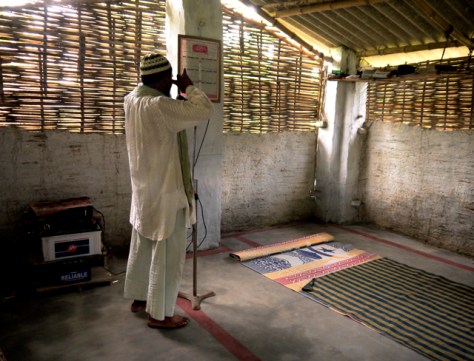
Imam Shamsuddin calls for prayer. Photo credit: Shivam Vij
Like nearly every village in South Asia, Allahpur, in the east Indian state of Bihar, is geographically divided on the lines of caste. On one side of a dirt track live the upper-caste Muslims (Syeds, Sheikhs and Pathans) and on the other side live the lower-caste Muslims (Ansaris, Dhunias and Raains). There are only four Hindu families in Allahpur, and they are all lower castes, their houses amid the low-caste Muslim houses.
For five years now, the low caste Muslims have been praying at a ramshackle mosque they built, boycotting the mosque in the upper-caste Muslim area, a stone’s throw away.
This guest post bySIMI CHACKOandPRATIKSHA KHANDURI is the full text of a booklet released in August 2011. A .pdf version of the booklet (41 pages, 304 KB) can be downloaded here.
A citizen gets her iris scanned for a UID 'Aadhar' card in Delhi.
Introduction
A. UID: The Basics
B. The Enrolment Process
C. Benefits of UID
D. Concerns: Biometrics, Privacy, Data security, Surveillance
Is the Jammu and Kashmir Police a private, leaderless, unaccountable militia force that can go about beating up anyone they like in the name of saving Kashmir for India?
Well known Indian author and journalist David Devadas, a fellow with the Nehru Memorial Museum and Library in Delhi and author of a book on Kashmir, was beaten up by personnel of the Jammu and Kashmir Police in Srinagar on September 5. Sheela Bhatt reports on Rediff.com:
In a letter written to Jammu and Kashmir Chief Minister Omar Abdullah, Devadas said that on September 5, when he was crossing the Rambagh bridge in his car in evening in heavy traffic, he heard a loud bang at the back of his car. His car was hit by another car. Continue reading Prominent Indian journalist beaten up by Jammu and Kashmir Police→
I woke up this morning in an utterly confused state of mind. During the night I dreamt about having the tour of the Harud Literary Festival. My first astonishment came while in a queue outside the venue. Like the French streaming Parisian streets in teary-eyed joy at the sight of American liberators after having secreted themselves in root cellars for months from the sniffing gaze of Nazi jackboots, I felt similar joy at observing Indian soldiers not hurling ritual abuses from vehicle rooftops while asserting the right to overtake from any side and any crevice on the busy Panthachowk intersection.
The venue, Delhi Public School, is stone’s throw away from the intersection and within the earshot of any moist abuse hurled from those ubiquitous army trucks. Kashmiris finally had a dry day. Continue reading On a Lit Note: Hilal Mir→
In a post on the Wall Street Journal’s India Realtime blog, journalist Tom Wright says at one point:
In the open letter, the signatories said it was impossible to have a literary festival in Kashmir [Link]
I asked him on Twitter as to where the open letter says that. He replied:
the opening graph says you can’t hold a literary festival in the context of kashmir [Link]
Given that he was being specific about the location of the “impossible to hold” claim in the open letter, I wondered for a moment if I was wrong. I checked the first two paragraphs of the open letter I had posted but found no such claim: Continue reading Harud Literary Festival: The Misrepresentation Continues→
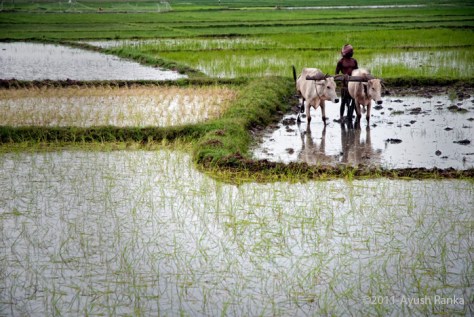
This is a guest post byARATI CHOKSIwith photographs byAYUSH RANKA
01. Odisha is scarcely known to most people as the state of rich agriculture. It is more famous for it's floods and droughts which occur once in a while. However, the entire state, barring a few small regions, is rich with fertile soil and apart from betel leaves and cashew, food grains like rice, wheat, jowar and pulses are also grown
POSCO catapulted out of nowhere into the periphery of my imagination last year. On May 15, 2010, in a brutal show of aggression and violence, armed police battalions attacked unarmed protesters at Balitutha opposing a forceful takeover of their lands by the state for a POSCO steel plant. Members of police force set fire to shops, eateries and thatched homes, including the dharna site of people’s peaceful protest. Police fired upon unarmed protesters with rubber bullets. One person died, and hundreds were severely injured in this firing, many of these were women and the elderly. Continue reading POSCO and the People: Ayush Ranka and Arati Choksi→
An elderly, bed-ridden man sentenced to life imprisonment in an ‘enemy’ country for a murder he didn’t commit awaits the signature on his clemency petition. By Beena Sarwar and Shivam Vij
Human rights activists in India are renewing their efforts for the release of the elderly Pakistani prisoner Dr Khalil Chishty lodged in Ajmer prison hospital, whose mercy petition awaits just one signature from the Rajasthan Governor Shivraj Patil. The mercy petition had earlier been approved by the state government and had reached Patil in June this year. At that point, it was expected that Dr Chishty, 78, a renowned virologist bed-ridden with various illnesses in jail, would soon be released.
Instead, Governor Patil raised a set of questions for the state government to answer. The Rajasthan government has answered all the queries, but has not submitted the file to the Governor again – perhaps because, according to sources, the Governor has already indicated that he will not sign the petition. Continue reading Bring Dr Chishty home – alive→
In the Courtyard of the Beloved is a visual and aural portrait of Nizamuddin Auliya Dargah, a Sufi shrine in New Delhi, India. Made from over 18,000 still images and ambient sounds recorded on-site, rapid-fire bursts of kaleidoscopic imagery assemble into fractured collages.
Each day, hundreds of pilgrims travel by airplane, train, car, rickshaw and foot to reach this shrine, which honors a 12th century Sufi mystic who believed in drawing close to God through renunciation of the world and service to humanity. Beginning with imagery from these journeys, the film then enters the physical space of the shrine; a unique nexus of marketplace, social space and spiritual haven, where devotees come to offer their prayers and find a moment of reflection away from the din of Delhi traffic. As the sun sets behind the dome, musicians begin the qawwali, a style of Sufi devotional music that ranges from contemplative religious elegy to raucous crescendo.
Executive Producer Samina Quraeshi
Original tabla score by Suphala
Audio post-production by Paul Bercovitch
Produced by Sadia Shepard
Photographed and edited by Andreas Burgess






 KAFILA - COLLECTIVE EXPLORATIONS SINCE 2006