All posts by Shivam Vij

Shivam Vij is a writer and journalist based in New Delhi.

On the Harud Literary Festival, setting the record straight

It is sad that a literature festival that was to be held in Srinagar later this month has been indefinitely postponed. What is even sadder is that while announcing its postponement on HarudLitFest.org, the organisers of the Harud Literature Festival (the same team that puts up the acclaimed Jaipur Literature Festival) have sought to blame those who signed an “open letter” expressing a set of concerns about the festival. The statement reads, “A few people who began the movement to boycott the festival have no qualms in speaking on and about Kashmir across international forums, but have refused to allow other voices, including writers, poets and theatre people from the Valley and across India to enjoy the right to express themselves at the Harud festival.”

As one of the over two hundred signatories of the open letter posted on Kafila.org, I am dismayed at the deliberate and disingenuous misrepresentation of the open letter as a “movement to boycott” What does such deliberate misrepresentation of dissent by the organisers of a literature festival say about them, their honesty and intent?

Two news reports appeared on 28 July 2011. One, by Agence France-Presse, quoted organiser Namita Gokhale as saying, “it will be an apolitical dialogue concerning literature”. The other report, by Randeep Singh Nandal in The Times of India, datelined Srinagar, did not quote anyone, and claimed: “There is speculation that Salman Rushdie might drop by…”

The term “apolitical” offended Kashmiris, who were seen objecting to it widely on Facebook and Twitter. Some of these were also aghast with the idea of Salman Rushdie, who they consider a blasphemer against Islam, sitting on a stage in Srinagar. Even though some of those named in these and subsequent news reports had told the festival organisers even before the news was in the papers that they would not be able to attend, their names were falsely put out in the media. They were thus forced to publicly state they would not attend a lit-fest termed “apolitical”.

Kashmir is a place where people live under the shadow of the gun, their political grievances against the Indian state silenced with draconian laws, criminalisation of dissent and heavy militarisation. You can get two years in jail without charge for a Facebook status update, a pamphlet, a mass gathering, a call for strike. Around the time the Harud controversy was gaining momentum, the Jammu and Kashmir Police beat up over several hours a photojournalist, allegedly because they didn’t like his work on the Al-Jazeera website.

Now, a group of people from the Indian capital decide to go to the place described above, to hold a literary festival, and announce that the festival would be “apolitical”. Were Kashmiri writers and journalists, including some acclaimed ones, wrong in feeling offended?

On 12 August 2011, Namita Gokhale was quoted as saying in the London-based newspaper The Guardian (no relation to this publication), “There was perhaps some misinterpretation of my use of the word ‘apolitical’.” She chose not to withdraw the word. If by apolitical she meant non-partisan, the choice of venues, Delhi Public School’s Srinagar franchise and the Kashmir University, was not seen as non-partisan in Srinagar. If your intent is to be neutral in a conflict zone, surely, you must attempt to be seen to be neutral?

he open letter, signed initially by fourteen people, including me, was published on 25 August. It said, “Our concerns are also heightened by reports that the festival is sought to be denoted as being an ‘apolitical’ event, that, yet, people will be free to speak what they want and that no one has the right to deny Kashmiris a chance to listen to writers. Beyond the absurdity of asserting that art and literature has nothing to do with politics, our issue is precisely that people are not allowed to speak their minds in Kashmir.” The open letter did not use the word boycott, did not urge anyone to not attend it, did not ask for it to be cancelled. It did say, “We would firmly support the idea of a literary/artistic festival in Kashmir if we were convinced that its organising was wholly free from state interference and designs, and was not meant to give legitimacy to a brutal, repressive regime.”

Two days later, their response on Kafila.org said, “We wish to categorically state that the Harud literature festival is not government sponsored.” It did not withdraw the word ‘apolitical’. An expanded version of this 27 July release, sent to the media, mentioned false rumours spread by a Facebook group about Rushdie coming to attend. Why did it put the blame of the Rushdie rumour on Kashmiris and not on The Times of India, and on themselves for choosing to not deny the rumour for a whole month?

Then, suddenly, on 29 August they announced indefinite postponement of the festival, in a dishonest release that blamed the signatories of the open letter for being against free speech! It also cited security threats emanating from that Facebook page with nearly 5,000 ordinary Kashmiris supporting the boycott call on account of Rushdie’s rumoured attendance.

Given that so many Kashmiris have expressed reservations about the festival’s intent, including many Kashmiri writers and journalists, even young, aspiring, as yet-unpublished ones, it is surprising that we are hearing patronising comments about how Kashmiris have been ‘denied an opportunity’. It is high time Kashmiris started their own literary festival, something they have tried to do before but were not allowed to by the state government. They should do it in Delhi or Jaipur, giving Indian writers an opportunity to learn what it means to be political.

(First published in The Sunday Guardian, Delhi, and The Friday Times, Lahore.)

From Kafila archives:


‘Muslim Quota’: Keep it Simple, Silly! – Khalid Anis Ansari

Guest post by KHALID ANIS ANSARI

In an interview last month, Mr. Salman Khursheed was posed the query: ‘There are reports that you are considering Muslim reservations within the OBC quota?’ He responded affirmatively: ‘Absolutely. Sachar described them as SEBC, socially and educationally backward classes. This is a special segment within OBC.’

Nowhere in the Sachar report are Muslims categorized as SEBC (Socially and Educational Backward Classes). They are categorised merely as one of many SRCs (Socio-Religious Communities). Moreover, the Sachar Report has acknowledged caste-based stratification within Muslims and has suggested quite unequivocally: ‘Thus, one can discern three groups among Muslims: (1) those without any social disabilities, the ashrafs; (2) those equivalent to Hindu OBCs, the ajlafs, and (3) those equivalent to Hindu SCs, the arzals. Those who are referred to as Muslim OBCs combine (2) and (3) [p. 193 (emphasis added)]’.

So, according to the Sachar Report all Muslims cannot be conceived as a socially and educationally backward class (OBC) because the forward Muslims (ashrafs) are ‘without any social disabilities’. Well, one may ask if the minister who exhorted everyone to read the Sachar Report critically and not as gospel truth, has failed to practice what he himself preached. The honorable minister seems to have read the report incorrectly.

Strange are the ways politics affects one’s judgment! Continue reading ‘Muslim Quota’: Keep it Simple, Silly! – Khalid Anis Ansari

Hypocrisy in Any Season: Mridu Rai responds to Rahul Pandita on the Harud Literature Festival

Guest post by MRIDU RAI

Rahul Pandita has written a misleading piece—in the tone of high dudgeon and ethical outrage no less—in the ‘essays’ section of the 3 September 2011 issue of Open magazine titled “The Autumn of Hypocrisy”. I think it is a piece that, nevertheless, requires some examination mostly because it makes several assertions in ways that queer any possibility of debate around the important question of what a literary festival held in Kashmir today might mean. Whether or not it was the author’s intention to do so, its effect is also to discredit, off-hand, several literary and artistic voices whose greatest sin would appear to be to have disagreed with the kind of literary festival in Kashmir Rahul Pandita and his fellow organizers had in mind. Of course, it is also troubling to hear from Mr. Pandita on this question since he is both an aggrieved party, deprived of his right to express himself at the festival, and also, as the credit at the bottom of his piece elaborates, a former “member of the advisory committee for the Harud literary festival”. I wonder if this conflict of interest bothers anyone other than me. Continue reading Hypocrisy in Any Season: Mridu Rai responds to Rahul Pandita on the Harud Literature Festival

Harud Literature Festival ‘postponed’

I think it is sad that the Harud Literature Festival has been “postponed“. Sadder still is that the organisers are blaming those who asked very valid questions. All they needed to do was answer those questions and allay those concerns. Their response, two days after the release of the open letter, did not address those concerns. They even refused to withdraw, leave alone apologise for, the offensive word “apolitical”, or explain how they planned to be “apolitical” while “celebrating” literature in the midst of unmarked graves, militarised bazars and lanes, draconian laws, imprisoned teenagers and the state’s refusal to dispense justice. Continue reading Harud Literature Festival ‘postponed’

Your government is removing your YouTube videos and you don’t even know about it

After reporting Google Transparency Tools’ latest revelations about how much India asks Google to delete content and pass government agencies private user data, Firstpost writes, “To put all this in its proper perspective, Indians still enjoy robust Internet freedom – and occasionally even an excess of freedoms…” And then it goes on to compare internet freedom with China, assuring all is well with the world.

There is no such thing as excess freedom. There is a way to deal with the “scurrilous postings and videos” the article talks about. It’s called the law.

I write an article in a newspaper that is seen as “scurrilous”. The offending party will go to court. The court will decide if it is scurrilous enough to violate the law of the land (be it defamation, libel, or whatever) and summon me. I get a chance to defend myself. Continue reading Your government is removing your YouTube videos and you don’t even know about it

A Response to SHRC’s Report on Unknown and Unmarked Graves of Kashmir: IPTK

This press statement comes from the INTERNATIONAL PEOPLE’S TRIBUNAL ON
HUMAN RIGHTS AND JUSTICE IN INDIAN-ADMINISTERED KASHMIR (IPTK) 
together with the ASSOCIATION OF PARENTS OF DISAPPEARED PERSONS

29 August 2011: We welcome the report of the State Human Rights Commission of Jammu and Kashmir (SHRC) on unmarked graves in north Indian-administered Kashmir (dated July 2011 and recently released; download 3.2 MB .pdf here), taking suo moto cognizance of the matter, and appreciate the courage and labour that this work signifies.

The SHRC’s report acknowledges and corroborates the research documented in the report, BURIED EVIDENCE, released by the International People’s Tribunal on Human Rights and Justice (IPTK) in December 2009. The SHRC investigated unmarked graves in Bandipora, Baramulla, Kupwara, and Handwara districts across 38 graveyards and verified 2156 unidentified bodies in unidentified graves.

Based on investigative research conducted between November 2006-November 2009, BURIED EVIDENCE had documented 2700 unknown, unmarked, and mass graves, containing 2943+ bodies, across 55 villages (in 62 sites within these villages) in Bandipora, Baramulla, and Kupwara districts of Kashmir. Of these, 2373 were unidentified and unnamed graves.   Continue reading A Response to SHRC’s Report on Unknown and Unmarked Graves of Kashmir: IPTK

The North-South Question in Punjab: Umair Javed

click to enlarge

‘Sayeen, ham nay toh kabhee 5,000 banday kaa jaloos bhi nahee nikaala. Siyaasat kay liyay aik laash kya, aik zakham bhi nahee hay hamaray paas toh. Aur aaj lag aisay raha hay kay hamaari dheemi dheemi baaton ko sun kar yay Punjab kay tukray karnay lagain hain’  (Sayeen, we’ve never taken out a rally with 5,000 people. Forget martyrs, we don’t even have a bruise to flaunt for political mileage. And today, it seems they’ve heard our whispers and taken them to heart. Today, they’re talking about splitting Punjab.)

While talking to a few last month, I realized that most independent Seraiki activists privately acknowledge that the issue of a new province, or at the very least, a wholesale recognition of Seraiki grievances, was a cause that could only be made actionable when the People’s Party thought it to be worthwhile – and 9 times out of ten, a cause’s worth for a national level party is determined by its weight in the electoral matrix.  Continue reading The North-South Question in Punjab: Umair Javed

A fax about Anna: Dilip D’Souza

Guest post by DILIP D’SOUZA

Of course everyone has their own take on the movement that’s got us all talking. It raises passions, it polarizes, it shakes the powerful, on and on. I have immense admiration for what Anna Hazare has achieved: the outrage against corruption where we had indifference before, the outlet for such outrage, the renewed hope where we had cynicism before, the way his movement has shamed brazen politicians and forced an entire government to listen.

Yet the movement sometimes reminds me, of all things, of fax machines. Continue reading A fax about Anna: Dilip D’Souza

The Lokpal debate from a Dalit-Bahujan perspective

The video above shows a protest in Delhi demanding a Bahujan Lokpal Bill, and protesting against Anna Hazare. This was hardly given any coverage in the media. The video was made and uploaded by KHALID ANIS ANSARI, who writes at the Round Table India:

A supra-parliamentary Jan Lokpal and a very interventionist and unaccountable judiciary are a horror for the dalit-bahujan masses. All said and done the legislature is most respectful of social diversity as far as the three organs of government are concerned. The executive is bad and the judiciary is the worst in this regard. So I am presently in favor of taking the ‘political’ route than the civil society one which is in any way a club of the chattering classes. [Read the full post]

Given below is a note expressing a Dalit-Bahujan perspective on the Lokpal debate. The note has been put out by DINESH MAURYA: Continue reading The Lokpal debate from a Dalit-Bahujan perspective

A Response from the Harud Literature Festival

In response to the open letter expressing a set of concerns about the forthcoming Harud Literature Festival, the festival organisers have responded:

We wish to categorically state that the Harud literature festival is not government sponsored. It has been conceived with the intent of creating a platform for free and open debate, discussion and dialogue through contemporary narratives, literary fiction and poetry.

The festival seeks to showcase writing in urdu, kashmiri, dogri and english from the region and other Indian writers. We seek support for the spirit of the festival which is plural, inclusive and supports freedom of speech and expression. [Link]

Some Thoughts from Ramlila Maidan

This slideshow requires JavaScript.

Some people at Ramlila Maidan

This slideshow requires JavaScript.

The People

Not enough people are asking what is motivating people to go to Ramlila Maidan in such large numbers. People like Ghazala Jamil and Anish Ahluwalia are not asking this question because for them the whole thing is an elite, middle-class conspiracy that is anti-Dalit, anti-OBC, anti-Muslim, anti-justice, anti-equality, anti-peace, anti-love and anti-sex.

These saviours of the marginalised, the poor and the vulnerable make the point that Anna Hazare’s means are showing contempt for the people by not letting people’s chosen representatives delay anti-corruption measures. They are making the point that unless Anna Hazare’s movements takes up issues of land reforms and justice for Gujarat’s Muslims, he should not be supported.  Continue reading The People

An open letter on the ‘Harud’ literary festival

Srinagar-based photojournalist Showkat Shafi is seen in this photograph being assaulted by the Jammu and Kashmir Police on 19 August 2011. He was carrying out his professional duties, as is clear from the camera in his hand that the police is trying to snatch away. He and his Mexican photographer colleague were detained at the police station and beaten up, allowed to go and be hospitalised only five hours later. The police said they mistook them for stone-pelters. Photo credit: Faisal Khan

*
Given below is an open letter signed by fourteen of us. Should you want to add your name to it, please do so in the comments section of this post. I shall update the names of the signatories on the post itself. Please clearly indicate that you want your name added, and write your full name and profession.

Continue reading An open letter on the ‘Harud’ literary festival

Why Jai Karan supports Anna Hazare

Jai Karan in The Times of India

My own feelings about the Anna Hazare movement are mixed, or you could say confused. I like the way the movement is bringing an arrogant government to its knees, and though I don’t know if their version of the Lokpal Bill is the best way to fight corruption, I appreciate how they have exposed the UPA’s farce of a bill. I get the point that fellow-travellers Nivedita Menon and Aditya Nigam are making about democracy and political movements, but as one unit of ‘the people’, I don’t see why I should support a movement just because it is popular. Perhaps it is my elitism and naivete and cynicism. Or perhaps I’m just confused by now. The taste of the pudding is in the eating, and I’d like to see where this takes us.

While I sort out my confusion, I see a message on Facebook, attributed to Anu Ramdas, that says:

Continue reading Why Jai Karan supports Anna Hazare

The Banality of Bengal: Jyoti Rahman on the Tribulations of the Bangladeshi Hindus

Guest post by JYOTI RAHMAN

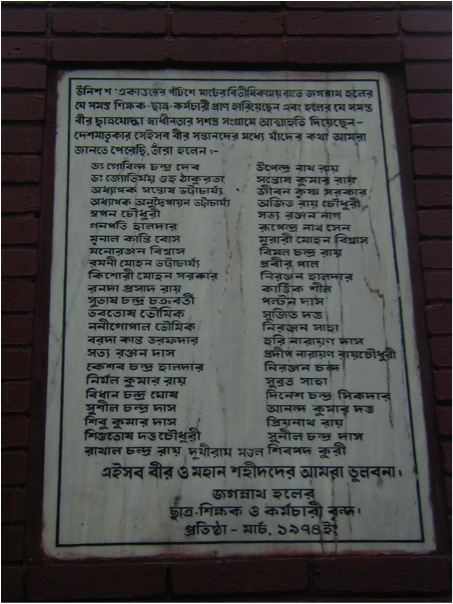
List of names of Hindu students and professors massacred at Jagannath Hall on night of 25th March, 1971 by the Pakistani Army. Click to enlarge. Photo credit: Udayan Chattopadhyay.

Nirad C Chaudhuri and Jatin Sarker were both born in Hindu families in the Mymensingh district of eastern Bengal, now Bangladesh. Chaudhuri, about four decades older than Sarkar, wrote his autobiography before India held its first election, and ceased to be an unknown Indian. Sarker also wrote his life story. Unlike Chaudhuri, Sarker’s was in Bangla, published in Bangladesh, never translated in English, and not available in India or beyond. He remains unknown. Which is a pity, because if you want to know what has happened to the land where both these men were born, Sarker is a far, far better guide than Chaudhuri.

Sarker, of course, stopped being an Indian on 14 August 1947, when Mymensingh became part of East Pakistan — the eastern wing of Jinnah’s moth-nibbled land of the pure. His family didn’t move to India. They were not atypical. Many Hindu families remained in East Pakistan. Perhaps it was the presence of Gandhi. Perhaps it was the fantastical belief that Subhas Chandra Bose would return in 1957 — a century after the Great Uprising, two centuries after the Battle of Plassey — to reunite Mother Bengal.   Continue reading The Banality of Bengal: Jyoti Rahman on the Tribulations of the Bangladeshi Hindus

Statement on the Martyrdom of Shehla Masood

To add your name to this statement write to Akhlak Ahmad – syed.akhlak at gmail dot com

16 August, 2011

“I am proud to be an Indian. Happy Independence Day.”
– Shehla Masood, 15 August, 2011

Gandhi “the purpose of civil resistance is provocation”. Anna has succeeded in provoking the Govt and the Opposition. Hope he wins us freedom from corruption. Meet at 2 pm Boat Club Bhopal”
– Shehla Masood, 16 August, 2011 few minutes before her martyrdom

Shehla Masood, a Madhya Pradesh based civil rights and environmental rights activist was was shot dead by an unidentified person in front of her residence in Koh-e-Fiza locality in Bhopal around 11 AM on 16th August, 2011.

We the undersigned aghast at the irony that tigers, tribals, trees and civil rights and environmental rights activists are being hunted and killed in the same manner. Continue reading Statement on the Martyrdom of Shehla Masood

When the State Celebrates the People’s Independence but the People Don’t: Twelve Questions for the Press Trust of India

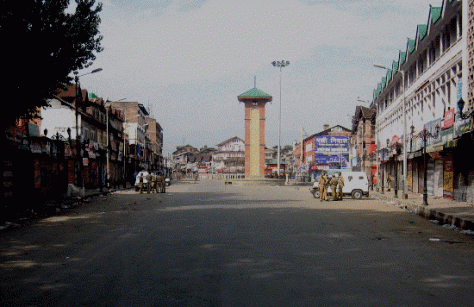
Srinagar's Lal Chowk on 15 August 2011. Photo credit: Zahoor Zargar / KashmirDispatch.com

To:

The Editor,
The Press Trust of India,
New Delhi.

Dear Editor:

This is regarding your news report, “I-Day Celebrated Peacefully in Kashmir Valley“.

While the news report tells us how the celebrations were held by the chief minister in Srinagar and the deputy chief minister in Jammu, and what arrangements were made for the celebrations to take place, there’s one line in that report that tells us:

Meanwhile, normal life was was affected in Kashmir Valley due to a shutdown called by both factions of Hurriyat Conference and tight security restrictions for the Independence Day.

I have a few questions for you.

Continue reading When the State Celebrates the People’s Independence but the People Don’t: Twelve Questions for the Press Trust of India

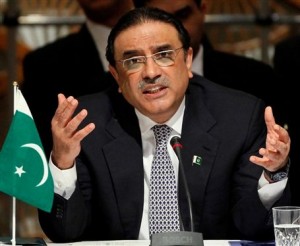
In Defence of Asif Ali Zardari: Abdullah Zaidi

Guest post by ABDULLAH ZAIDI

What comes to your mind with the mention of Asif Ali Zardari? “A cunning, vile, and corrupt man,” said my 19 year old cousin. This was a good summation of what the urban middle-class thinks of him. The more I hear people talking about him the more I am convinced of the power of propaganda. “Give the dog a bad name and hang him,” Zardai once said about himself. That is what is at work here.

Despite what has been said about him, Zardari did have a political background. His father Hakim Ali Zardari entered politics well before Partition and was a member of the Khaksaar Tehreek in 1931. He was first elected to the National Assembly in 1970s. All this talk of Zardari as a political orphan who hogged the Bhutto dynasty upon marriage with Benazir, is a non-starter. In Benazir’s husband, the Bhutto family wanted someone who would remain loyal to her. That is exactly what they got in him. For Zardari, family would always come first. This was the case at the time of Benazir’s death, when he kept the family together. Benazir would often tell close aides that despite his failings, Zardari always remained loyal to the family. Continue reading In Defence of Asif Ali Zardari: Abdullah Zaidi

Why Devender Pal Singh Bhullar should not be hanged

This public statement was issued by AMNESTY INTERNATIONAL in June

India: Amnesty International calls for death sentence on Devender Pal Singh not to be carried out

AI Index ASA 20/033/2011

Amnesty International calls on the Government of India not to carry out the death sentence imposed on Devender Pal Singh in 2001 after his conviction in an unfair trial. Under international law, the execution of a person convicted and sentenced to death in an unfair trial is a violation of the right to life. Continue reading Why Devender Pal Singh Bhullar should not be hanged

India and Pakistan: A Matter of Taste

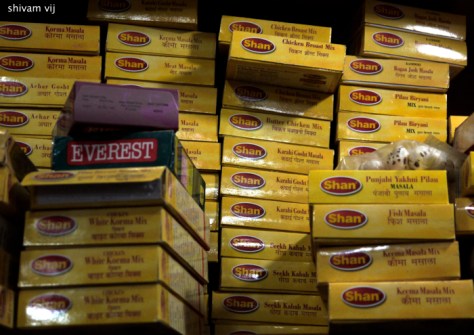
Imported from Karachi, Shan masalas are a hit in Delhi. They make sure anyone can make good Biryani or Korma. Photo taken at a grocery store in south Delhi by Shivam Vij
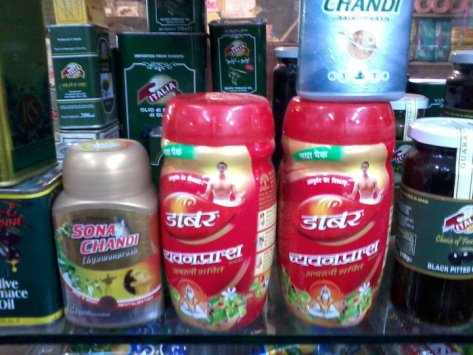
Dabur Chawanprash at a grocery store in Lahore. The Devnagiri script on the pack would be a rarity in Pakistan! Photo credit: Shiraz Hassan