All posts by Shivam Vij

Shivam Vij is a writer and journalist based in New Delhi.

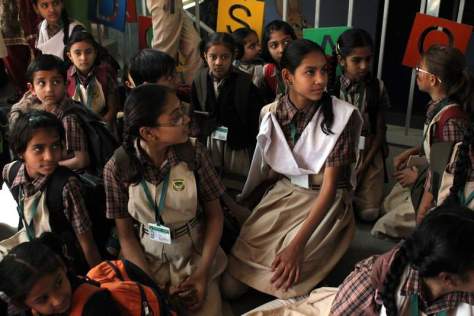
Prof VK Tripathi and the fight for Schools in Juhapura: Zahir Janmohamed

Guest post by ZAHIR JANMOHAMED

A school in Juhapura. Photo credit: Atish Patel

On Tuesday, February 19, the Ahmedabad Municipal Corporation ratified its budget and elected to build the first municipal school in Juhapura, the largest ghetto of Muslims in Ahmedabad. Juhapura was incorporated into the Ahmedabad Municipal Corporation five years ago and many residents wondered why the AMC took so long to build a school to serve Juhapura’s 350,000 residents. At the forefront of this struggle is IIT Delhi physics professor VK Tripathi. It was during a chance meeting with a sandwich shop owner in Washington DC that Professor Tripathi first learned about Juhapura. Continue reading Prof VK Tripathi and the fight for Schools in Juhapura: Zahir Janmohamed

Punishment by Procedure: Saurav Datta

Guest post by SAURAV DATTA

“An advocate, by the sacred duty which he owes to his client, knows in the discharge of that office but one person in the world- the client, and no other…to protect that client at all hazards and costs to all others, and among others to himself, is the highest and most unquestioned of his duties…..Nay, separating even the duties of a patriot from those of an advocate, and casting them if need be to the wind, he must go on reckless of the consequences…” – Lord Brougham, “Law and Other Things”, Cambridge University Press (1937)

“Beneath this face that appears so impassive hell’s tides continually run.” – Walt Whitman,“You Felons on Trial in Courts”

“Nothing rankles more in the human heart than a brooding sense of injustice.” Justice Brennan’s words keep on ringing in my ears when I see the manifestly violent injustice meted out to Mohammad Afzal- the Courts tore to smithereens his inalienable right to a fair trial. The Parliament attack case was the first litigation I had been part of – I was a student intern in the chambers of Ms. Kamini Jaiswal, who was briefing Mr. Ram Jethmalani. I got to see and understand the case from the closest of quarters, and that maybe that exacerbates my indignation at this egregious miscarriage of justice. Continue reading Punishment by Procedure: Saurav Datta

Capital Punishment – An Agenda for Abolition: Yug Mohit Chaudhry

This is (a slightly modified) text of the second Shahid Azmi Memorial Lecture, delivered at the Indian Law Institute on 9 February 2013 by advocate YUG MOHIT CHAUDHRY. The lecture and its topic had been scheduled days in advance, but co-incidentally, Mohd. Afzal Guru was hanged in the morning of the day of the lecture. The Shahid Azmi Memorial Lecture has been instituted by his friends, comrades and students, who want to keep alive the memory of his inspiring work. Advocate was shot dead in his office on 11 February 2010, at the age of 32. At the time of his murder, Shahid was fighting several terrorism cases, including of those falsely accused in the Malegaon blasts and the 26/11 Mumbai attacks.You can read tributes to Shahid Azmi in Kafila archives by Mahtab Alam, Arvind Narrain and Saumya Una, and Susan Abraham.

In Furman v. Georgia (1972), where the U.S. Supreme Court struck down the death penalty, Justice Marshall said that if citizens were fully informed about how people are sentenced to death, they would find capital punishment shocking, unjust and unacceptable. However, research on the death penalty and public awareness of the exact nature of the death penalty have been the most neglected areas in the abolition campaign in India. The last three challenges to the constitutionality of the death penalty in India were rejected by the Supreme Court, inter alia, on the grounds that there is no empirical data to support the abolitionists’ claims. Unfortunately, the situation has not changed at all, and even now there is hardly any research on this subject. Therefore, the highest priority in any abolition campaign is to produce empirical research on the death penalty. That, and doing our utmost to stop each proposed execution and, failing that, to make it as difficult as possible for the state to carry out an execution, adopting all legal, political and social means at our disposal.   Continue reading Capital Punishment – An Agenda for Abolition: Yug Mohit Chaudhry

I love the winter in your eyes: Uzma Falak

Guest post by UZMA FALAK

Winter of my eyes
took flight
Did you see?
These are not the same eyes
colors of which you would patiently decipher
sitting under the sun
for hours
gray dreams refusing to dissolve
in waters of Lethe. Continue reading I love the winter in your eyes: Uzma Falak

Arindam Chaudhuri promises to get Kafila page unblocked

kafila-arindam-c-iipm-blocked
The webpage http://kafila.org/2011/06/22/arindam-chaudhuri-silchar has been blocked by Internet Service Providers in India. Some users will see a blank page (like above) and others will see a note that the page has been blocked on the orders of the Department of Telecommunications.

Until Nikhil Pahwa of Medianama.com informed me, I had no clue that  India’s unjust and arbitrary internet censorship regime had finally affected Kafila. Medianama published on Friday 15 February a list of 78 URLs that the Department of Telecommunications had ordered ISPs to block. 73 of them were webpages critical of the Indian Institute of Planning and Management (IIPM), whose Arindam Chaudhuri has a long history of complaining about the Internet. Continue reading Arindam Chaudhuri promises to get Kafila page unblocked

PUCL statement on the President’s rejection of the mercy pleas of four Veerappan associates

Press release put out on the evening of 16 February by the PEOPLE’S UNION FOR CIVIL LIBERTIES

CHENNAI: The PUCL strongly condemns the rejection by the President of India of the commutation petitions of Simon, Meesakara Mathayan, Bilavendran and Gnanaprakasam. Equally condemnable is the action of the Prison Authorities of Belgaum Central Prison, Karnataka who in the morning of 13.2.2013 merely intimated orally to the convicts of the rejection of their mercy petitions without giving them the written orders of rejection. In sharp contrast, signed acknowledgements of receipt have been obtained from all 4 convicts! Continue reading PUCL statement on the President’s rejection of the mercy pleas of four Veerappan associates

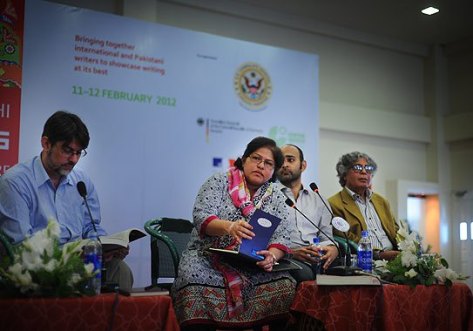
Who’s afraid of the Karachi Literature Festival?: Ayesha Siddiqa

Guest post by AYESHA SIDDIQA

Photo via Dawn.com

Here we are seemingly in an age of intellectual freedom, burgeoning media industry and literature festivals. There are numerous festivals held all over South Asia celebrating books new and old, bringing people together for exchange of ideas. But these festivals seem to be wrapped in their own politics. In some cases, certain cliques that want to encourage a peculiar perspective dominate the show. I understood this through my interaction with the Karachi Literature Festival. Continue reading Who’s afraid of the Karachi Literature Festival?: Ayesha Siddiqa

‘Death penalty in India is a legal lottery’

Justice Ajit Shah says that it has been proven beyond doubt that death sentence does not serve as a deterrent against crime; the reason why two third of the world has abolished it all together. He explains the bizarre nature of how the death sentence in India is judge centric and how under the same set of circumstances, some have received the death sentence, while others have been given life and still others acquitted. Death sentence is judge centric with many judges having a history of doling out death penalties and other being kind. Death sentence is thus nothing but a ‘legal lottery’ where if you are lucky you get a lenient judge you survive, else you end up at the gallows. He talks about the caste and class connection to death sentence, where the lower castes and lower classes are usually the ones sent to the gallows because they cannot afford proper legal aid. He says that this discriminatory nature renders death penalty unconstitutional and that there is the need for a larger debate on the same.  Continue reading ‘Death penalty in India is a legal lottery’

Death Penalty – an agenda for abolition: Yug Mohit Chaudhry

This is the audio of the Shahid Azmi Memorial Lecture delivered on 9 February 2013 by YUG MOHIT CHAUDHRY at the Indian Law Institute in Delhi. While the lecture date and topic – death penalty – were scheduled weeks in advance, it co-incidentally happened that Mohd Afzal Guru was hanged on the morning of the lecture. Shahid Azmi was a lawyer in Mumbai. He was 32 when he was shot dead on 11 February 2010.

On Shahid Azmi from Kafila archives:

Previously in Kafila by Yug Mohit Chaudhry:

See also:

More on Afzal Guru from Kafila archives:

Arindam Chaudhuri, Silchar

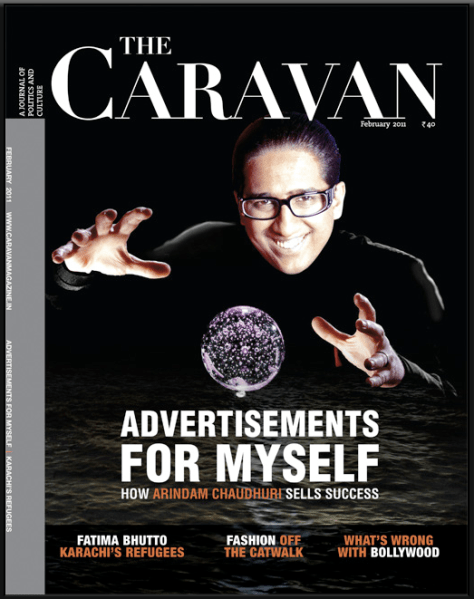
Given below is the text of a press release put out by THE CARAVAN magazine in 2011. This was first published in Kafila on 22 June 2011 and is being republished today for all those who may be interested in following up on the defamation case filed against The Caravan for a profile of Arindam Chaudhuri. The Supreme Court had stayed the case in August 2011.

When I read The Caravan‘s cover story on Arindam Chaudhuri some months ago, I wondered when he was suing them. And he’s done it! While a court injunction has made The Caravan remove the story from their wesbite, you can read it thanks to Google cache. No wonder Chaudhuri’s sued Google India as well! Given below is the full text of the press release put out by The Caravan. Unlike when Chaudhuri took on bloggers in 2005, I’m glad it is an organisation with the resources to fight the case and take him head on – not to say that requires some spine as well. After you’re done reading the release below, entertain yourself with all the Arindam jokes on Twitter.  

IIPM’s Rs500-million lawsuit against The Caravan
In response to our February profile of Arindam Chaudhuri, the IIPM has sued The Caravan. Here’s why we’re fighting the suit. Continue reading Arindam Chaudhuri, Silchar

When the Indian nation’s ‘conscience’ was satisfied: Gazala Peer

Guest post by GAZALA PEER

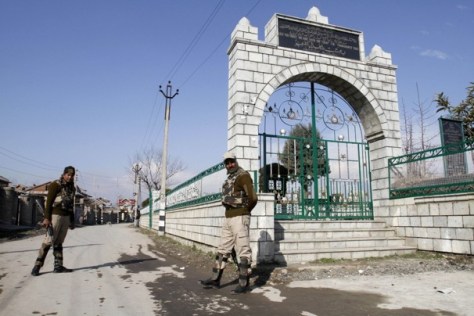
CRPF personnel stand guard at the martyrs' graveyard in Srinagar,preventing entry. The graveyard has a new empty grave, that of Afzal Guru. A similar empty grave waits for Maqbool Bhat, also buried in Tihar jail. Photo credit: Mukhtar Khan/Associated Press
CRPF personnel stand guard at the martyrs’ graveyard in Srinagar, preventing entry. The graveyard has a new empty grave, that of Afzal Guru. A similar empty grave waits for Maqbool Bhat, also buried in Tihar jail. Photo credit: Mukhtar Khan/Associated Press

People who mourn under siege are not supposed to write. We cry and beat our chests. Kashmiris have long faced such predicaments, always forced to find alternatives for everything. Anything that is normal and fair is denied to them! Like a fair trial, for instance. I am not sure if everybody knows Mohd. Afzal Guru’s story. I am not sure if I can be fair to him, but whatever I could gather from legal documents, commentaries and articles, is summarised here. Continue reading When the Indian nation’s ‘conscience’ was satisfied: Gazala Peer

Why the Delhi rapists should not be hanged

The shameless and cynical Manmohan Singh government has found an easy way out to appear strong, deflect attention from its failures and save itself from the opposition’s questioning. Just hang a death row convict before every Parliament session! It is very likely that if the 16 December Delhi rape-and-murder accused are placed on death row by this time next year, the UPA government will hang them just in time for the 2014 general elections.

I am opposed to death penalty in principle, and there are good reasons why so many democracies have abolished death penalty. But even if you do not agree that death penalty should be abolished, please consider why it should not be applied to the five accused in this case.

About a month ago I visited the Ravi Das “camp”, a slum colony near RK Puram where four of the six accused lived. I met the mother of one of them. Champa Devi’s son Vinay Sharma was the first to plead guilty and say he should be hanged; his father agreed on television. Continue reading Why the Delhi rapists should not be hanged

Lessons from Delhi and Dhaka: Nagesh Rao and Navine Murshid

Guest post by NAGESH RAO and NAVINE MURSHID

Photo credit: AFP/Getty Images

In the early hours of Saturday morning, a secret execution was carried out by the Indian government. Afzal Guru, a Kashmiri, was put to death for his alleged involvement in the 2001 attack on the Indian Parliament. Afzal’s family in Kashmir were cruelly denied a last visitation. They were informed that the Indian President had rejected his mercy petition, and of his imminent execution, by mail—the letter reached Afzal’s wife Tabassum two days after he was executed and buried in an unmarked grave inside Tihar Jail.

Meanwhile, across the border in Bangladesh, hundreds of thousands of Bangladeshis from all walks of life have occupied Shahbag Square near Dhaka University, outraged that a notorious war criminal might walk free after having been spared the death penalty by the Bangladeshi International War Crimes Tribunal. Abdul Quader Mollah, leader of the right-wing Islamist party Jamaat-i-Islami, and convicted of multiple counts of rape, torture and murder, was photographed flashing a victory sign as he left the court. Continue reading Lessons from Delhi and Dhaka: Nagesh Rao and Navine Murshid

‘In the land of Buddha and Gandhi, death penalty has no place’: 83 feminist activists

This public statement was put out on 13 February by a group of 83 feminist activists; names of signatories at the end.

We, women from various organizations in India, condemn the hanging of Afzal Guru in Tihar Jail early on the morning of 9.2.2013.

The tearing hurry and secrecy with which Afzal Guru was hanged, accompanied by the flouting of all established norms by not giving his family their legal right to meet him before taking him to the gallows, clearly indicates that there were political considerations behind taking this step. More shameful is the explanation of the Home department that the wife and family of Afzal Guru were intimated of the hanging by a mail sent by Speed Post and Registered Post. Decency and humanity demanded that the Union Government give prior intimation to the family and an opportunity to meet him. Such surreptitious action of the government also deprived the family of Afzal Guru to right to seek legal remedy. Continue reading ‘In the land of Buddha and Gandhi, death penalty has no place’: 83 feminist activists

A letter of protest to the President of India against the execution of Afzal Guru: JTSA

This letter, signed by 202 citizens whose names are given at the end, has been put out by the JAMIA TEACHERS SOLIDARITY ASSOCIATION

To,
The Hon’ble President of India

Respected Sir,

We write to you in deep anguish, despair but in outrage as well. Afzal Guru was hanged on Saturday (9th February 2013) in secrecy. We have been told – after the hanging – that you rejected the mercy petition filed by Guru’s wife Tabassum, on 3rd February. We believe that you made a grave error in rejecting the mercy petition. If you had perused the trial records and the lengthy documentation put together over the years by lawyers and civil rights activists, or even the Supreme Court judgement which sentenced Afzal to death, you would have known, that his guilt was never established beyond reasonable doubt. The fact that the Court appointed as amicus curiae (friend of the court) a lawyer in whom Afzal had expressed no faith; the fact that he went legally unrepresented from the time of his arrest till his so-called confession, the fact that the court asked him to either accept the lawyer appointed by the Court or cross examine the witness himself should surely have concerned you while considering his mercy petition. Continue reading A letter of protest to the President of India against the execution of Afzal Guru: JTSA

Freedom of speech in India is for the rich and the powerful

While freedom of speech and expression in India is under attack from all sides, have you noticed how the rich and the powerful can say what they like without getting arrested, facing FIRs and courts, hiring lawyers and so on?

While an innocuous tweet or Facebook status update can land you in police lock-up on a Saturday night or Sunday morning 5 am, a Digvijaya Singh can say sexist crap against Rakhi Sawant and get away with it.

Here’s another example from Twitter recently. Lalit Modi of IPL infamy, who wants us to believe his coming to India and facing the law is a security threat to him, tweeted that the BJP’s  Arun Jaitley would lose his deposit if he contested the Lok Sabha seat from Jaipur. (Lalit Modi thinks he’s the Maharaja of Rajasthan.) In response to that, one Ankush Jain replied… Continue reading Freedom of speech in India is for the rich and the powerful

Afzal Guru’s story – in his own words

Via Hindustantimes.com

Guru wrote in a letter in 2004:

In the Parliament attack case I was entrapped by Special Task Force of Kashmir. Here in Delhi the designated court sentenced me to death on the basis of special police version which works in nexus with STF, and also came under the influence of mass media in which I was made to accept the crime under duress and threat by special police ACP. Rajbir Singh. That threat even get confirmed to designated court by T.V. interviewer (Shams Tahir Aaj-Tak).

[…]

Special police told me that if I will speak according to their wishes they will not harm my family members and also gave me false assurance that they will make my case weak so that after sometime I will get released. Continue reading Afzal Guru’s story – in his own words

The Languages of Sexual Violence: Anupama Mohan

Guest post by ANUPAMA MOHAN

I teach a big word in my critical theory classes: phallogocentrism. It is the idea that our societies are centred by the phallus and language (logos) and is a word that often scares, perplexes, and disturbs my students, but I unpack it using an example. In English, the word seminal, which means something important and path-breaking, derives from “semen” and in contrast, the word hysterical or hysteria, which is a word that has for long been associated with peculiarly female physical and mental disorders (and often used for recommending women’s confinement), derives from “hystera” or the womb. What does such loading of the language – what a 20th century Russian thinker, Mikhail Bakhtin, called the formation of the verbal ideological world  – in terms of the perspective, validation, and supremacizing of one gender over the other do to/in our varied lives? Think of the word vanilla that, at least since the 1970s, has meant the ordinary and bland: its etymology derives from the Latin word for vagina (vaina) or “little vagina” for the pods of the plant that reminded someone of women’s genitals. The word porcelain – a thin, fragile kind of clay – too comes from the word for “cowrie shell” whose Italian links to porcella or young sow (a female pig) for someone recalled the shape of a piglet’s orifice. One more: the word amazon which refers to a legendary race of female warriors and has come to mean a strong woman derives possibly from many sources: from the Classical Greek a-mazos or breastless to the Iranian *ama-janah or “virility-killing” – a meaning that interprets the idea of women’s strength as both a mutilation of her physical self and/or as a threat to men. Continue reading The Languages of Sexual Violence: Anupama Mohan

When women ask for it: Veena Venugopal

Guest post by VEENA VENUGOPAL

To me, the most memorable scene in Dev D is the one where Paro takes a mattress from home and ties it to her cycle. When she reaches the edge of the field, she abandons the cycle, lifts the mattress on her shoulder and marches to the clearing where she lays it down and waits for her lover. There are no words spoken and the camera holds her face close. Her expression is one of intense seriousness. You can see her desire is a field force of intensity that fuels every step. She is determined to see it through, to let that desire take over herself completely; not surrender to it but to let it explode out of her. You know that when she meets Dev, the sex would be passionate and powerful.  And yet, in the south Delhi multiplex where I was watching the film, most of the audience burst into rapacious laughter. The women smiled embarrassedly at each other. Which made me wonder, why is female desire a laughing matter? Continue reading When women ask for it: Veena Venugopal

Secret hanging a major setback: Human Rights Watch on the execution of Afzal Guru

Statement put out on February 9 by HUMAN RIGHTS WATCH

(New York) –The hanging in New Delhi of Mohammad Afzal Guru makes it more urgent for India to reinstate its previous informal moratorium on executions as a step towards abolishing the death penalty, Human Rights Watch said today. Azfal Guru, executed on February 9, 2013, was convicted for his role in the attack on the Indian parliament in 2001.

In November 2012, India ended its eight-year unofficial moratorium on executions when it hanged Ajmal Kasab, convicted for his role in the 2008 Mumbai attacks. Continue reading Secret hanging a major setback: Human Rights Watch on the execution of Afzal Guru

Some questions for comrade Karat on the killing of Afzal Guru: Satya Sivaraman and Manisha Sethi

Guest post by SATYA SIVARAMAN and MANISHA SETHI

Shri Prakash Karat,

General Secretary,

Communist Party of India (Marxist)

Dear Comrade,

Afzal Guru was hanged yesterday in utter secrecy, denied in his last moments the right to meet his wife and children one final time. Denied to him also was the ultimate judicial resort, due to every condemned convict after his/her mercy petition has been rejected.

The entire legal proceedings against Afzal were shot through with contradictions, fabrications and travesties of legal procedure. The Supreme Court bench that finally sentenced him to death did so to ‘appease the national conscience’ despite inadequate evidence of his role in the Parliament attack case.    Continue reading Some questions for comrade Karat on the killing of Afzal Guru: Satya Sivaraman and Manisha Sethi