
It is hard to introduce E.V.R.Periyar. A good sign of the fact that his thoughts are broad based and radical is the way in which they can be used in different contexts. With each context, the description of the person also changes. For the purposes of this piece one may say, ‘he was a radical thinker who sought to question many aspects of the ‘nation’ that are taken for granted such as democracy, freedom, unity, integrity and so on’. This critique took many shapes and forms throughout his career based on his position in tamilnadu and the particularities of that history. In 1972, he reflects on the nation as it is today. And disheartening for us and even to him as he wrote these words, he stands by what he said the moment india got ‘independence’ in 1947. Continue reading Periyar on ‘independence’
Category Archives: Bad ideas
“I Am Still Alive”: Amitava Kumar
Guest post by AMITAVA KUMAR
Till a few days ago, I hadn’t heard of Aqeel Shatir. A friend sent me a link to a report in the Indian Express on December 20 about a poet who had been asked to pay for an anti-Narendra Modi remark in his anthology, Abhi Zindaa Hoon Main (I Am Still Alive). I got in touch with the reporter, in Ahmedabad, who had filed the story and soon after that spoke on the phone with Shatir.
Aqeel Shatir is his takhallus or literary alias. The name his parents gave him was Aqeel Ahmed. His ustad offered him a choice of two pen-names. One was Aazar, which means a sculptor, someone who carves beautiful forms from marble. The other was Shatir, whose literal meaning is chess-player but denotes someone who possesses cunning. Continue reading “I Am Still Alive”: Amitava Kumar
The Dead Need No Reification: Vasanth Kannabiran
Guest post by VASANTH KANNABIRAN
Kannabiran died on 30 December 2010. As per his wishes and ours, and based on previous discussions we declared that the last rites would be simple, speedy and secular. The secular part we ensured. There were no flowers, no lamps, no mantras, no ceremonies. But the clamour for progressive “traditions” was what I found troubling in the extreme. In doing away with religious orthodoxy, all we have done is replaced it with other orthodoxies. Continue reading The Dead Need No Reification: Vasanth Kannabiran
Full text: The Binayak Sen Judgement (English Translation)
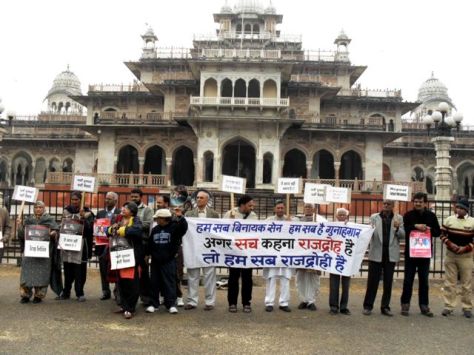
(Given below is the full text of the judgement sentencing Dr Binayak Sen for life. It is a translation from the Hindi. The translation has been done by the Free Binayak Sen Now campaign. You can download here (.pdf) the Hindi original. For updates on the Free Binayak Sen Now campaign, see BinayakSen.net. If you are on Facebook, you can join the Binayak Sen Solidarity Forum.)
Continue reading Full text: The Binayak Sen Judgement (English Translation)
The Logical Urges of Sedition
[An edited version of this article by me has appeared in the November-December 2010 issue of Conveyor, a magazine published from Srinagar.]
On 22 October 2010, there was a public seminar in Delhi, titled “Azadi: The Only Way”. I did not plan to attend it as I had important work that day. However, a day before the event, it was announced that the keynote speaker would be none other than Syed Ali Shah Geelani. How could one not go to hear what the man of the moment had to say?
I reached late, when two speakers had already spoken, Kashmiri Pandits had already created a scene, even getting into a physical fight with some Kashmiri Muslims. As I entered the precincts of the Little Theatre Group auditorium, I met Delhi University student Suvaid Yaseen who showed me a small cut in his hand, caused by the fisticuffs with the Pandits. Some of the Pandits had been taken away by the Delhi Police and detained for a few hours, many others still inside the auditorium. The auditorium was full of cries of “Hum kya chahtay? Azadi!” To hear that in central Delhi rather than Srinagar’s Lal Chowk is a little incredible. But it had happened before, on 7 August, at Jantar Mantar, the only place in the capital of the world’s largest democracy where protest is allowed. At Jantar Mantar too, Pandits were being restrained by the Delhi Police. Continue reading The Logical Urges of Sedition
Silence as Sedition
A true measure of being democratic is not the cycles of elections – it is the dignity given to disagreement, to dissent. Why must we dignify dissent? There are the arguments that we hear everyday: so that the views of the majority cannot silence the voices of a few; so that no one view or institution may becomes so dominant as to become authoritarian; and the value of freedom of speech and expression in and of themselves. Any memory of the Emergency in 1975-77 is testimony to why any of these are important. Yet there is a more fundamental reason why dissent is the cornerstone of a democracy: it is the action of a free citizen.
Speech is an action. An action within a democratic framework – an action that simultaneously shows a continuous faith in the polity, the state and the people even as one (often virulently) disagrees with it. An action that keeps a democratic system alive. You dissent as a citizen, in the name of your constitution. You dissent because you have the freedom to do so – not a freedom you have been “given” but one that you possess because you, as part of the people, are sovereign. This is more important than what we are taught in our textbooks – being able to voice our disagreement is as central as the ability to walk to a ballot box and cast our vote. This is a freedom we give to each other as democratic citizens and that we must protect, especially when we disagree.
An index of incompetence
 One of the issues that the Binayak Sen trial has revealed is the quality of the investigative process in the case and the nonchalance with which the police has flouted even routine guidelines, safeguards and rules.
In a series of “reaction interviews” I did after the verdict came out, Ajai Sahni called the investigative process “an index of the incompetence of the Chhattisgarh police.”
But, as an editorial in the The Hindu notes, an
“email referring to an occupant of the White House as a “chimpanzee” was introduced by the prosecutor as evidence of the kind of “code language” terrorists resort to. But tragically, it is the Chhattisgarh police that have had the last laugh in this round.”
The Definition Shortchanges India
Guest post by DILIP D’SOUZA
Responding to Rahul Gandhi’s recent Wikileaked comment, Sadanand Dhume asks “What Terrorizes India?” (Wall Street Journal, December 20). It’s a good question that deserves an answer. Did Dhume answer it?
As is well known now, Gandhi said this to US Ambassador Tim Roemer last year: “The bigger threat [to India] may be the growth of radicalized Hindu groups, which create religious tensions and political confrontations with the Muslim community.” Dhume’s essay is a severe criticism of Gandhi’s comment, and in the end of the man himself. The criticism, I’m not particularly interested in: people have their varying opinions about Gandhi and that’s fine with me. But I wonder if Dhume has thought through the implication of his own title. Indeed, what does terrorize India, and Indians? Continue reading The Definition Shortchanges India
Look who’s talking (to whom): FBI and Special Cell
This note comes from Manisha Sethi of the JAMIA TEACHERS’ SOLIDARITY ASSOCIATION
Wikileaks has exposed that there existed secret channels of communication between the US agency FBI and our very own Delhi Police Special Cell. FBI—which has witchhunted American democratic and civil rights organizations and leaders (including Martin Luther King Jr.), raids the homes of anti-war activists, and helps the overthrow of popular governments around the world—and Special Cell whose personnel have been indicted in the past, by none less than the CBI, for manufacturing ‘terrorists’ out of thin air by planting false evidence; an organization often accused by rights activists of killing in cold blood, a.k.a. ‘encounters’, for medals and promotions. What possible information were they sharing in secret? Who to frame and fix next? Or the merits of water-boarding over indigenous torture techniques? Continue reading Look who’s talking (to whom): FBI and Special Cell
6 दिसंबर : न्यायिक विस्मरण के विरुद्ध
एक बार फिर 6 दिसम्बर आ कर गुजर गया. लेकिन क्या ज़रूरी था कि हम इसे याद करें ही? क्या अठारह साल पहले हुई एक ‘भूल’ की बार- बार याद दिला कर हम अपने समाज को मानसिक रूप से आगे बढ़ने से रोक तो नहीं रहे? याद करना और याद रखना हमेशा स्वास्थ्यकर हो, आवश्यक नहीं. कई बार तो ज़िन्दगी में इत्मीनान के लिए भूलना बेहतर है. बल्कि,जैसा लातीन अमरीकी कवि जुआन रामोन हिम्नेज़ का कहना है , याद करना प्राय: कृत्रिम है जबकि भूलना या विस्मृति अधिक प्राकृतिक क्रिया है. ऐसा तो नहीं कि हम याद करने को भूलने के ऊपर इसलिए तरजीह देते हैं कि याद रखने में आयास करना होता है और विस्मरण अपनेआप होने वाली क्रिया है? क्या विस्मृति की निष्क्रियता उसे हीनतर बना देती है स्मृति के मुकाबले? और क्या इसी वजह से हम याद रखने को आधुनिक मनुष्य का नैतिक कर्तव्य मानते हैं? हिम्नेज़ लिखते हैं, ‘स्मृति शोर-शराबे की पुत्री है जबकि विस्मृति मौन की.’ वे कवि को यह कहते हैं कि स्मृति पर काबू पाना विजयी होना है और उसके आगे घुटने टेक देना पराजित होना है. सबसे ताकतवर व्यक्ति वह है जो सबसे अधिक भूलता है. हिम्नेज़ इसलिए विस्मृति का आदर करने की सलाह देते हैं क्योंकि वह हमें वर्तमान क्षण को विलक्षणता पर एकाग्र होने का अवसर देती है. कवि का मश्विरा है कि हमारे लिए ज़रूरी है अपनी ज़िंदगी के पैमाने पर स्मृति और विस्मृति को समान स्थान देना और दोनों के बीच संतुलन की तलाश करना.
Continue reading 6 दिसंबर : न्यायिक विस्मरण के विरुद्ध
“Are the stone pelters real heroes? Discuss.” Hundred marks?
Noor Mohammed Bhat, a college lecturer in Srinagar, who decided to get creative with the English examination paper. Amongst his essay topics: “Are the stone pelters real heroes? Discuss.”
It also asked students to translate this Urdu-language text into English: “Kashmir is burning once again. The warm blood of youth is being spilled like water. Police and soldiers are beating even small children to death. Bullets are being pumped into the chests of even girls and women. People in villages and towns are crying in pain. Rulers continue to be in a deep slumber. It appears they’ve turned dumb, deaf and blind.” [Associated Press]
Although the AP report linked above says he has been charged with promoting secession, it’s not clear if he’s been charged with sedition. Kashmir Dispatch reports say he’s been charged under section 13 of the Unlawful Activities (Prevention) Act.
Ironically, the college where Bhat taught (he’s already been sacked) is named after Gandhi. Univesity spaces in Kashmir are heavily controlled to prevent political expression and student unions are banned. So much so that when Kashmiri students see campus politics at the Jawaharlal University in Delhi, they often remark that they are seeing for the first time what freedom looks like!
Meanwhile, Rohini Hensman says Kashmiris should not have azadi until they ask India and Pakistan for azadi in equal measure, or something like that.
Uphold Freedom of Expression: Statement in support of KK Shahina
We the following organizations express our strong concern on the charges framed by Karnataka police against journalist Shahina KK for her investigative report on Bangalore bomb blast case. Her recent article which showed that witnesses in the Bangalore blast case were fragile, false and forced has led her to be implicated under charges of IPC 506 which can lead to seven years of imprisonment.
The accusation of Karnataka police is that she ‘ intimidated the key witnesses’ in the Bangalore bomb blast case during the course of her article. The accusations of the police were also carried by the local news papers as “suspicious” visit by a “group of Muslims” to the place. The newspapers said that police were not sure about the identity of the woman, though she had showed a TEHELKA identity card! Continue reading Uphold Freedom of Expression: Statement in support of KK Shahina
Of journalist citizens
With Kashmiris forcing us to take note of them on Facebook and Twitter, with the internet noise on the Radia tapes making a mockery of the media’s radio silence over them, with WikiLeaks assuring us that we’re well into the age of information anarchy, the old, dogged question rears afresh its banal head: Are citizen journalists, journalists?
I was at a Google conference in Budapest in September, called ‘Internet at Liberty 2010’, which had bloggers, activists and policywallahs from 70 countries. At one of the theme dinners, we were asked how many of us identified ourselves as citizen journalists. No hand went up, even as we were all conscious that any one of us could be the first one to see a plane crashing and be the first to report it on Twitter. Continue reading Of journalist citizens
On sedition: Sarim Naved
In this guest post, SARIM NAVED gives a chronological account of sedition in Indian law, and discusses the procedural aspects laid down for a magistrate to take cognisance of sedition
After the 1857 revolt, the Press Act of 1857 which prohibited all publications, without licensing, was passed. This Act known as Lord Canning’s Act applied to all kinds of publication, including books in all languages and other printed papers in all languages. 1860 saw the enactment of the Indian Penal Code, which remains in force today in a relatively unchanged manner. The Indian Penal Code, while not directly dealing with the press, does incorporate provisions that impinge upon and regulate the activities of the press. The code dealt with issues ranging from offences against a person’s body or property to criminal breach of trust to offences like defamation and obscenity that directly concerned editors. In the words of Rajeev Dhavan, “It was a comprehensive code. Not all these provisions were directed against free speech but virtually all could be used against it.” Amendments were later introduced to bring in the offence of sedition in 1870, the offence of promoting enmity between classes in 1898, the offence of outraging religious feelings in 1928 and imputations or assertions prejudicial to national integration, which were added by the government of independent India in 1972. Continue reading On sedition: Sarim Naved
Kitne aadmi the? We are all seditious now
Here is a very short, utterly incomplete, hastily compiled list of people charged under Section 124 A in the last two years alone.
Our very own Shuddhabrata Sengupta figures in this roll of honour.
(Incidentally, KK Shahina, who has guest posted with us, faces charges from the Karnataka Police under IPC 506 for intimidating witnesses. Her expose in Tehelka showed how the police case against Abdul Nasar Madani, head of the People’s Democratic Front (PDP), accused in 2008 Bengaluru blasts, was fragile and based on non-existent and false testimonies.)
There would be hundreds more, not named here, charged with sedition for “criticizing” the government, for exposing corruption and police nexus with mafias, or for expressing views that run counter to official wisdom on the “integrity” of India.
As if “integrity” is something pre-existing and eternal rather than something that has to be produced at every point. The existence of a nation is a daily plebiscite, said even historian Ernst Renan, a staunch supporter of the nation form. Not so Rabindranath Tagore, who was highly suspicious of the “fetish of nationalism”. He called the Nation nothing but the “the organization of politics and commerce” and warned that when this Nation “becomes all-powerful at the cost of the harmony of the higher social life, then it is an evil day for humanity.” (In his lectures on nationalism, published by Rupa and Co. 1994) Continue reading Kitne aadmi the? We are all seditious now
Will the Insecure Male at the News Desk Please Stand Up?
K.K. Shahina, of the Tehelka, some feel, may be a terrorist. No prizes for guessing who. After all, Shahina has been working, despite pressures of all sorts, to unravel the impossible web of lies that the police, the media, and political parties have been weaving around the figure of Abdul Nasar Madani, who was arrested again as an accused in the 2008 Bangalore blast case and denied bail. Madani, as is well-known, had already suffered enormous injustice at the hands of the Indian state but to the chagrin of the Hindutva ‘nationalists’, he re-entered the political arena. Whether one agrees with him on Islam or other matters, or about his choice of alliances, is a different matter. Choosing to demand space in the political public, he exercised his right as a citizen, and thereby indicated a preliminary implicit willingness to place his views before a critical public. Continue reading Will the Insecure Male at the News Desk Please Stand Up?
Don’t miss the Nigah Queer Fest in Delhi
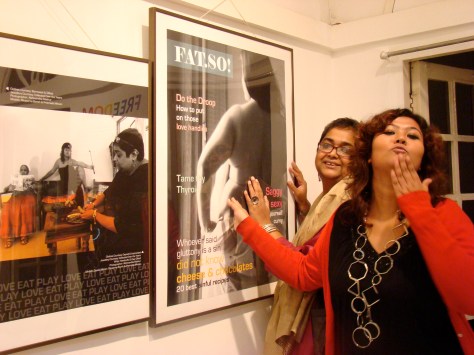
Artists: Neelima and Abhinandita
Models: (to put my nepotistic interests up-front) – my sister Pramada, my mother Devaki and friend Rituparna
This is just one panel of a visual arts exhibition at Max Mueller Bhavan, Delhi, and there are films and performances too. It’s on from 26th November to 5th December, 2010.
Check out the programme at http://www.thequeerfest.com/
Audacity of hypocrisy: Sameer Bhat
Guest post by SAMEER BHAT, written on 26 November in response to Kashmiri Pandits heckling the Mirwaiz in Chandigarh.
Aesop, the Hellenistic slave, narrated a profound tale in the winter of 6th century BC. The story is simple but the message remains relevant 2700 winters later. A Bee, queen of the hive, buzzed her way to Mt Olympus to present Jupiter some fresh honey. Jupiter, delighted with the offering, promised to give her whatever she wanted in return. The Bee thought for a while and then said, “Please give me a stinger, so that I can hurt whoever might come to take my honey.” Continue reading Audacity of hypocrisy: Sameer Bhat
Memories of another time: Dilip D’Souza
Guest post by DILIP D’SOUZA
The anniversary began, for me, with a phone call. Someone I haven’t heard from in some years, mother of a soldier who died fighting for India in Kashmir. Her voice faltered several times during our conversation, and I could hear her tears. “Look at the tamasha,” she said, “over remembering the people who died on November 26 2008. Yet do we remember my son? Do we remember so many others” — and here she named several soldiers — “who died facing bullets on our border? Really do we remember people who died for no reason?”
“If we have a remembrance for one,” she said, “I want it for all. I want it for everyone who dies like this. Otherwise we wonder, what did our sons die for?” Continue reading Memories of another time: Dilip D’Souza
Anti-National Thoughts
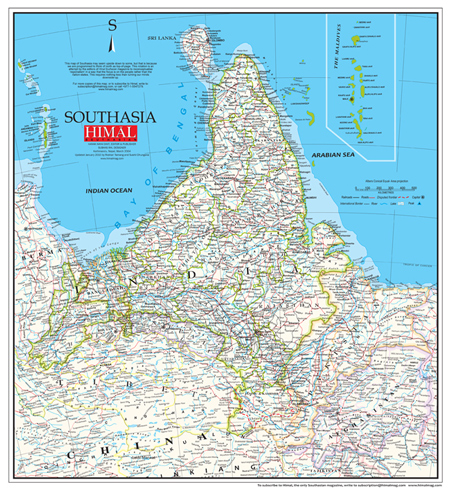
Nation-states have a logic of their own. So insidiously is this logic purveyed through the state’s institutions that it becomes common-sense, particularly among the educated. Perspectives that differ from this common-sense are then easily seen as signs of illiteracy, or more dangerously, treachery.
A woman employed for housework by a Pakistani living for a while in Delhi, could never quite understand where her employer was from. “Bahar se?” she would ask, “Amreeka se?” No, would come the patient reply: from outside, yes, but not from America, from Pakistan. Where is that? ‘Well, you know that “here”, yahan is Bharat? India? Hindustan? I am from vahan, there, Pakistan, another country’. But yet again, the domestic help’s bewildered response – yahan matlab Dilli? Here, meaning Delhi?
Scavengers: Hilal Mir
Guest post by HILAL MIR
Two monoliths of pro-India politics in Kashmir, Mufti Muhammad Sayeed and Dr Farooq Abdullah, are soaring high in the dark autumn skies of the valley like vultures. Below are the 110 bodies of warm-blooded children, boys, men and a lone woman. From these bodies will they and their offspring derive nourishment because serving a nation of 1 billion people is indeed an uphill task.
The way Madhu Kishwar and Prem Shankar Jha are lobbying for Mufti at every seminar in New Delhi demonstrates Mufti’s silence is really studied. What about Abdullah duo. They are neck deep in muck, which reminds one of those famous lines of Gunnery Sergeant Hartman in Kubrick’s masterpiece Full Metal Jacket—you are the lowest form of life on earth…
 KAFILA - COLLECTIVE EXPLORATIONS SINCE 2006